
Coastal Bush Lupine (Lupinus arboreus)
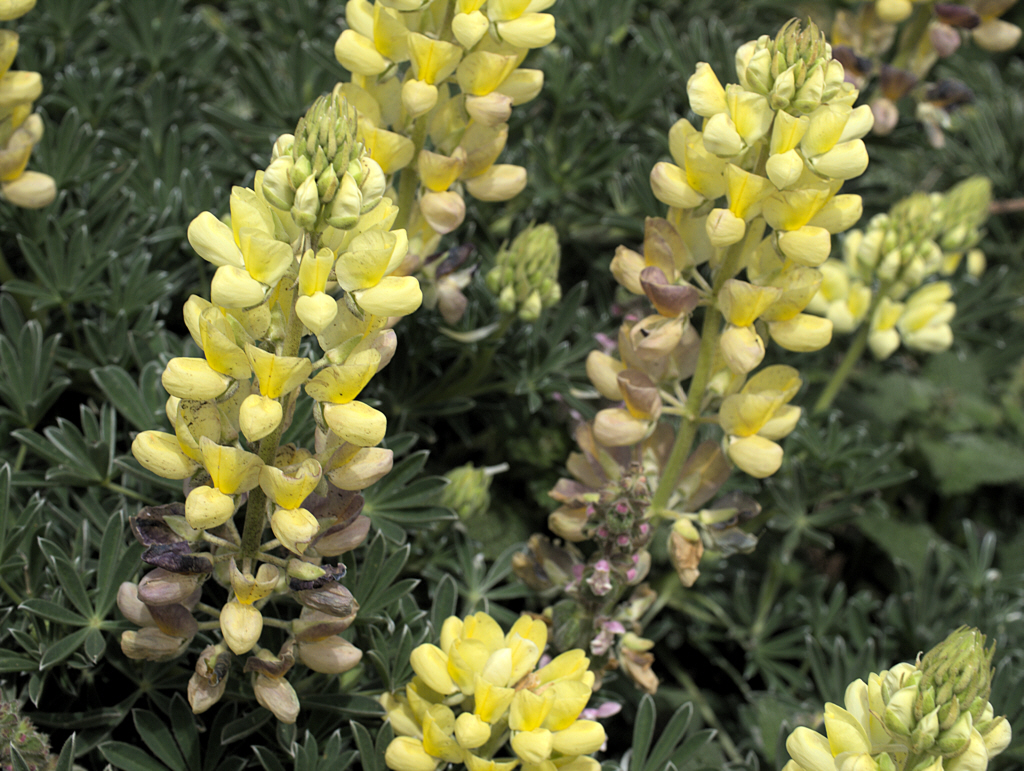
Lupinus arboreus, called Coastal Bush Lupine, yellow bush lupine (the USDA name) or tree lupine, is a fast-growing evergreen shrub of the California coast. It forms rounded mounds of silvery-green, finger-like leaves, and from spring into early summer it covers itself with upright spikes of fragrant, sulfur-yellow pea flowers. It belongs to the pea family (Fabaceae) and grows on coastal dunes, bluffs, sandy flats and the open edges of coastal scrub.
Bush lupine is a classic pioneer plant. Like other legumes it carries nitrogen-fixing bacteria in nodules on its roots, so it can grow in loose, nutrient-poor sand where few other shrubs can get started. Within its native range this makes it a valuable builder of dune and bluff communities. The same trait makes it a problem where it has been planted outside that range: on the dunes of northern California, Oregon, Washington and British Columbia it enriches the sand with nitrogen and opens the way for weedy grasses that crowd out rare dune plants.
This guide covers how to recognize coastal bush lupine, where it is native and where it is not, how to grow it responsibly in coastal California gardens, and why it matters to bumblebees, birds and the insects that feed on it. Like most lupines, its seeds and foliage contain toxic alkaloids, so read the safety notes before planting it where children or livestock graze.
Identification
Coastal bush lupine is one of the few shrubby lupines on the Pacific Coast, and the only common one with yellow flowers. Purple-flowered forms exist, especially in the north of its range, and these can be confused with the silver bush lupine or with hybrids between bush lupine and other coastal species.
Growth Habit
Bush lupine is a much-branched, rounded shrub usually 3 to 5 feet tall and somewhat wider. In sheltered spots it can reach about 7 feet. The stems are woody at the base and green and softly hairy toward the tips. It grows quickly and lives only a short time for a shrub, often around five to seven years, before old plants die back and are replaced by seedlings.
Leaves
The leaves are palmately compound, like an open hand. Each has 5 to 12 narrow leaflets about ¾ to 2½ inches long, green to gray-green above and lightly covered with silky hairs, especially below. The leaflets fold up along the midrib at night and in hot, dry wind. The plant keeps its leaves through the year in mild coastal climates.
Flowers
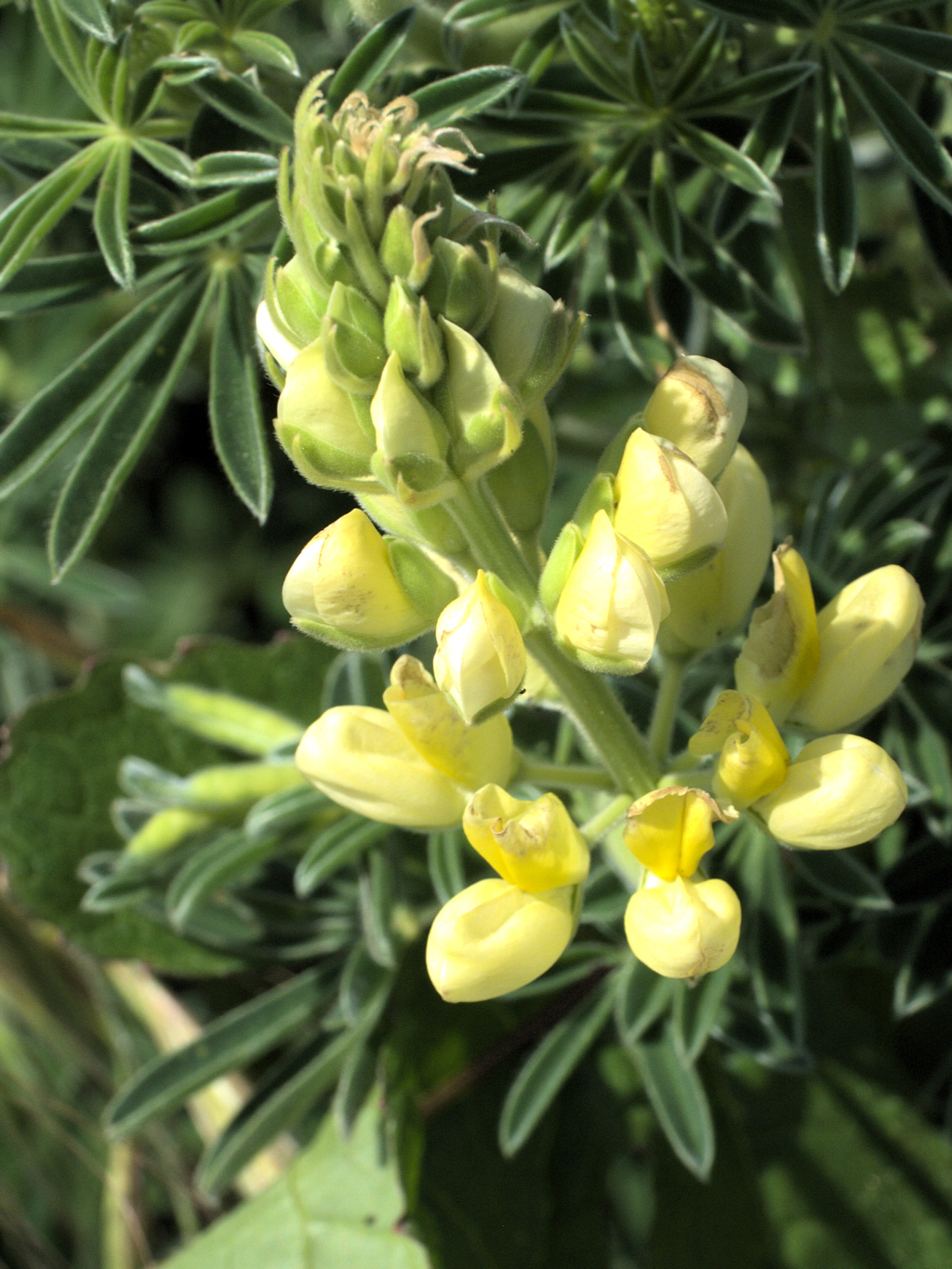
From about March to July the shrub produces many upright flower spikes (racemes) 4 to 12 inches long, held above the foliage. The flowers are loosely whorled along the spike, each about half an inch long, with the banner, two wings and pointed keel typical of the pea family. Most plants have bright sulfur-yellow flowers with a sweet fragrance. Some plants, particularly around San Francisco Bay and northward, have lilac, blue or purplish flowers, or yellow flowers tinged with purple. As the flowers age, the banner spot often darkens.
Fruit & Seeds
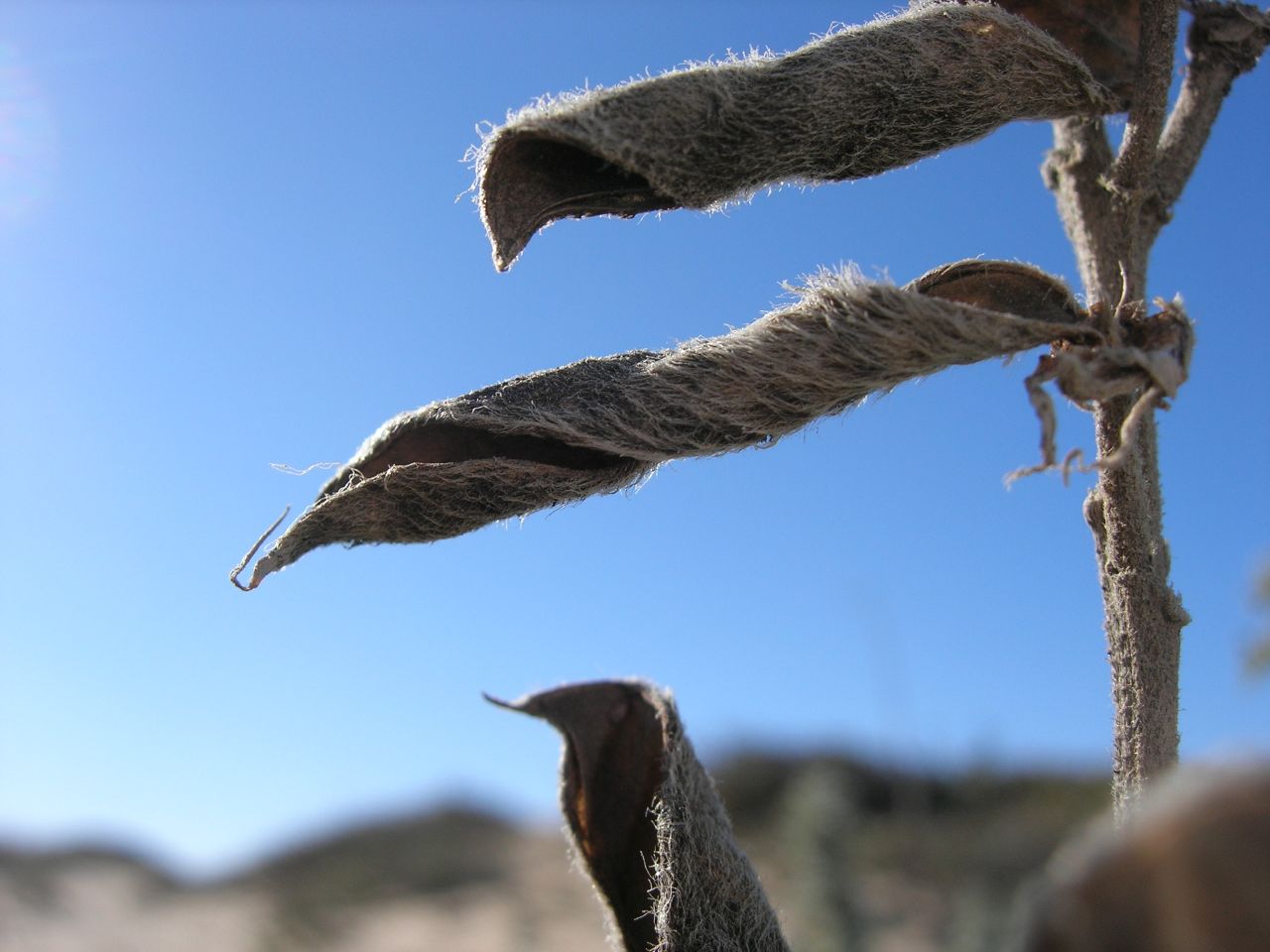
The flowers are followed by flattened, densely hairy pods 1½ to 3 inches long, each with about 8 to 12 seeds. As the pods dry in summer, their two halves twist apart suddenly and throw the hard, mottled seeds several feet from the plant. The seeds can stay alive in the soil for years and germinate after disturbance, which is why bush lupine fills in quickly after storms, fire or clearing.
Quick Facts
| Scientific Name | Lupinus arboreus |
| Family | Fabaceae (pea family) |
| Plant Type | Evergreen shrub; short-lived |
| Mature Height | 3–5 ft (to about 7 ft in shelter) |
| Mature Spread | 4–8 ft |
| Growth Rate | Fast |
| Sun Exposure | Full sun |
| Water Needs | Low; drought tolerant once established |
| Soil Type | Sand, sandy loam or rocky soil with fast drainage |
| Soil pH | About 5.5–8.0 |
| Bloom Time | March–July |
| Flower Color | Sulfur yellow; sometimes lilac, blue or purple-tinged |
| Fall Color | None; evergreen |
| Fruit | Hairy pods that split and throw their seeds |
| Deer Resistant | Usually; foliage and seeds contain bitter alkaloids |
| USDA Hardiness Zones | 8–10 |
Native Range
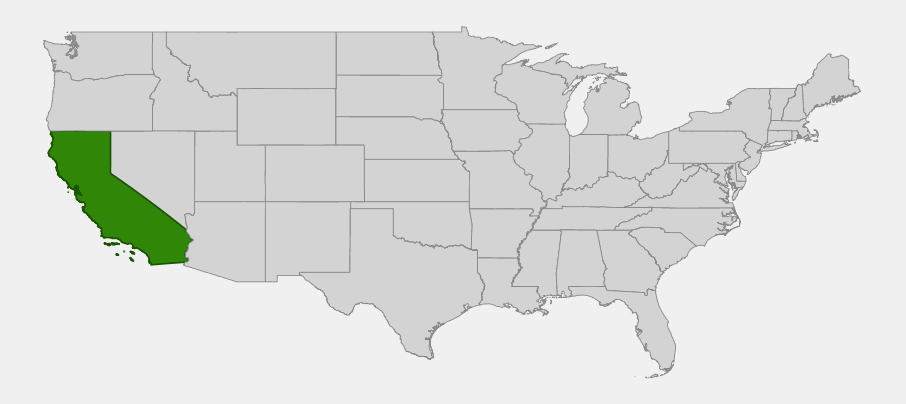
USDA PLANTS lists coastal bush lupine as native to California, Oregon and Washington, and records it in British Columbia as introduced. Botanists in the Pacific Northwest generally treat the Oregon, Washington and British Columbia populations as introduced, spread from plantings made to stabilize sand and from garden escapes, and they are managed as invasive on many dunes there. This guide therefore maps the plant as native only in California.
Even within California its natural range is uncertain, because the shrub has been planted for erosion control for more than a century. The Jepson eFlora and most California botanists consider it native along the central coast, roughly from the Point Reyes area south to San Luis Obispo County, in coastal dunes, bluffs and scrub. Populations on the north coast, including the dunes around Humboldt Bay, are considered naturalized introductions, and land managers have spent years removing bush lupine there to protect native dune mat communities. Plants in parts of southern California are also thought to be introduced.
Outside North America, bush lupine was widely planted to bind sand and is now an invasive weed in New Zealand, Australia, Chile, parts of western Europe and elsewhere. If you garden outside central coastal California, choose a lupine that is native to your own region instead.
📋 Regional plant lists featuring Coastal Bush Lupine: California & Nevada
Growing & Care Guide
Coastal bush lupine is easy to grow in its home climate: full sun, sandy soil and little summer water are all it needs. The real question is where to plant it. Grow it only within or close to its native central California coastal range. In northern California, Oregon, Washington, British Columbia and other mild coastal regions it seeds into dunes and grasslands and becomes invasive.
Light
Plant in full sun. Bush lupine tolerates wind and salt spray well and grows best in open, exposed sites. In shade it becomes leggy, flowers poorly and is more prone to disease.
Soil & Water
Sand, sandy loam or gravelly soil with fast drainage is ideal. Heavy clay that stays wet in winter leads to root rot. Because the plant makes its own nitrogen, do not fertilize. Water young plants every week or two through their first dry season. Once established, plants on the fog-cooled coast need little or no summer irrigation, and too much summer water shortens their already short lives.
Planting Tips
Plant from containers in fall or winter, when rains help roots establish. Lupines resent root disturbance, so plant small container stock and handle the root ball gently. Allow at least 5 to 6 feet between plants. Bush lupine works well as a fast “nurse” shrub that fills space and shelters slower plants while a coastal garden matures.
Pruning & Maintenance
Lightly shear spent flower spikes after bloom if you want to limit seeding and keep the shrub compact. Avoid cutting deeply into old bare wood, which rarely resprouts. Expect to replace plants every five years or so. Caterpillars of tussock moths and other insects sometimes strip the foliage in spring, and root-boring ghost moth larvae can kill older plants; both are natural parts of the plant’s life cycle and rarely need treatment.
Propagation
Grow bush lupine from seed. The hard seed coat must be nicked with a file or soaked in hot (not boiling) water overnight before sowing. Sow seeds directly where plants are wanted, or in deep pots, in fall or early spring. Seedlings grow fast and often flower in their second year. Do not collect or sow seed outside the plant’s native range.
Landscape Uses
- Coastal gardens: a fast, wind- and salt-tolerant shrub for bluff-top and beach gardens on the central California coast
- Dune and bluff restoration: within its native range, to stabilize sand and shelter slower-growing dune plants
- Pollinator gardens: an early, heavy source of pollen for bumblebees
- Erosion control: on sandy slopes and road cuts, only within its native range
- Habitat hedgerows: mixed with coyote bush, sagebrush and buckwheats for cover and nesting sites
Wildlife & Ecological Value
Within its native range, coastal bush lupine supports a surprising number of animals and has been the subject of well-known ecological studies on coastal dunes and grasslands.
For Pollinators
The flowers attract mostly bumblebees, which are heavy enough to push down the keel and expose the pollen. Bush lupine produces abundant pollen but little nectar, and bumblebees collect it to feed their larvae. Honeybees, solitary bees and hover flies also visit. The shrub is a larval food plant for several moths, including tussock moths and the lupine-feeding caterpillars that sometimes defoliate whole stands in spring.
For Birds
Dense bush lupine thickets give cover and nesting sites to wrentits, song sparrows, white-crowned sparrows and California quail in coastal scrub. Quail and other ground birds eat the fallen seeds, and insect-eating birds forage on the many caterpillars and aphids it supports.
For Mammals
Deer usually avoid the bitter foliage. Brush rabbits, voles and woodrats use the thickets for shelter, and some rodents eat and cache the seeds. Lupine seeds and foliage are toxic to livestock in quantity, see the FAQ below.
Ecosystem Role
Bush lupine is a nitrogen-fixing pioneer. Its roots host bacteria that turn atmospheric nitrogen into fertilizer, and when the short-lived shrubs die, their leaf litter and roots enrich the sand. On native central coast dunes and grasslands this helps build soil, and studies at Bodega Bay have followed how root-boring ghost moth caterpillars and soil nematodes that attack them drive cycles of lupine die-off and recovery. On northern dunes where the plant is introduced, the same nitrogen enrichment allows weedy annual grasses to replace rare, low-nutrient dune plant communities, which is why it is removed there.
Cultural & Historical Uses
The English botanist John Sims described Lupinus arboreus in 1803 from plants grown in England from Californian seed. The species name means “tree-like,” a reference to its woody, shrubby habit compared with most other lupines. In Britain it is still known as tree lupin.
From the late nineteenth century onward, bush lupine was planted on a large scale to stabilize drifting sand, along with European beachgrass. It was sown on dunes in northern California, including around Humboldt Bay, and in Oregon, and was exported to New Zealand and other countries for the same purpose. Many of today’s invasive populations come from these plantings. Restoration projects on the north coast now pull bush lupine and beachgrass to bring back native dune mat vegetation.
Like other lupines, bush lupine contains quinolizidine alkaloids, which make its seeds bitter and toxic. It was not a food plant for California Indigenous peoples. Its main value has always been ecological: holding sand, feeding bees and building soil on the windswept coast.
Frequently Asked Questions
Is coastal bush lupine poisonous?
Yes. Like most lupines, its seeds, pods and foliage contain alkaloids that are toxic if eaten in quantity. Livestock, especially sheep, cattle and horses, can be poisoned by grazing heavily on lupines, and the alkaloids in some lupine species can cause birth defects in calves when pregnant cows eat them. Keep children and pets from eating the seeds, and do not plant it in pastures.
Is bush lupine invasive?
Outside its native range, yes. It is considered invasive on the dunes of northern California, Oregon, Washington and British Columbia, and in New Zealand, Australia and parts of Europe and South America. Within its native central California coastal range it is a valuable native shrub.
Why do bush lupine plants die suddenly?
Bush lupine is naturally short-lived. Older plants are often killed by the larvae of ghost moths, which bore into the roots, and by heavy defoliation from caterpillars, root rot in wet winters, or drought. Seedlings usually replace them, so stands come and go over time.
Does bush lupine have purple flowers?
Most plants have yellow flowers, but some, especially north of San Francisco Bay, have lilac, blue or purplish flowers. Bush lupine also hybridizes with other coastal lupines, which adds to the variation in color.
Does it improve soil?
Yes. Bacteria in nodules on its roots fix nitrogen, and the leaf litter of old plants enriches poor sand. That is helpful in a garden or on native dunes being restored, but it harms naturally nutrient-poor dune communities where the plant is not native.

Looking for a nursery that carries Coastal Bush Lupine?
Browse our native plant nursery directory: California