
California Golden Violet (Viola pedunculata)
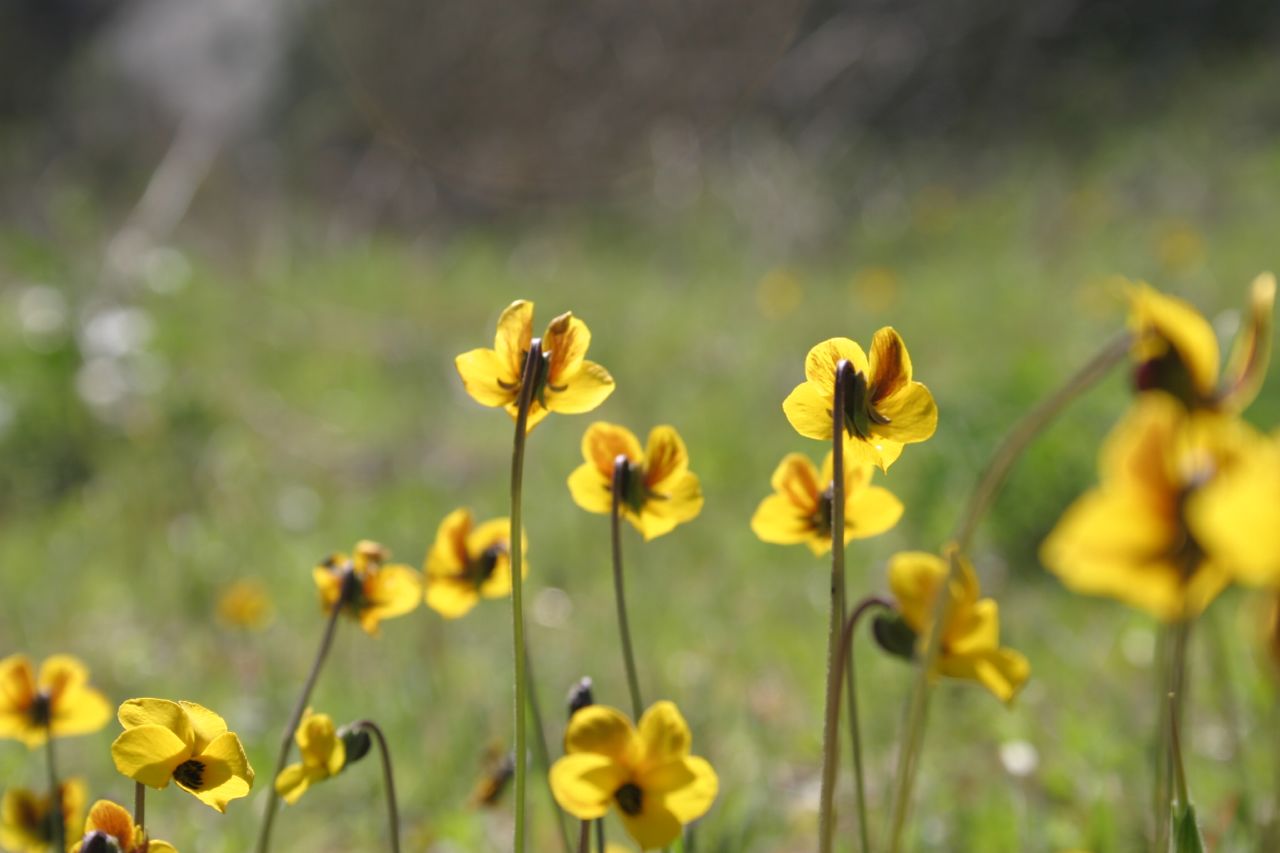
Viola pedunculata, known as California Golden Violet, Johnny-jump-up (the USDA name) or yellow pansy, is a native perennial violet of California’s grasslands and open oak woodlands. In late winter and spring it covers grassy hillsides with flowers about an inch across, bright golden-yellow with dark brown-purple veins at the center, held high above the leaves on long stalks. The species name pedunculata refers to those long flower stalks (peduncles).
It grows from a deep, thick root and is adapted to California’s Mediterranean climate: it grows and flowers in the cool, wet season and goes dormant in the dry summer, disappearing completely until the rains return. Its range runs through the Coast Ranges, the Sierra Nevada foothills and the mountains and valleys of Southern California into northern Baja California.
California golden violet is also an important butterfly plant. It is the main larval food plant of the callippe fritillary, including the federally endangered callippe silverspot of the San Francisco Bay Area. This guide covers how to identify it, where it grows and how to grow it from seed in a California native garden.
Identification
California golden violet is one of the largest-flowered yellow violets in the West, and its bright, pansy-like flowers on long stalks make it easy to spot in spring grasslands.
Roots & Habit
Each plant grows from a deep, thick, somewhat woody root. In winter it sends up a low clump of leaves and flowering stalks, usually 4 to 10 inches tall. By early summer the leaves wither and the plant is dormant underground until fall or winter rains.
Leaves
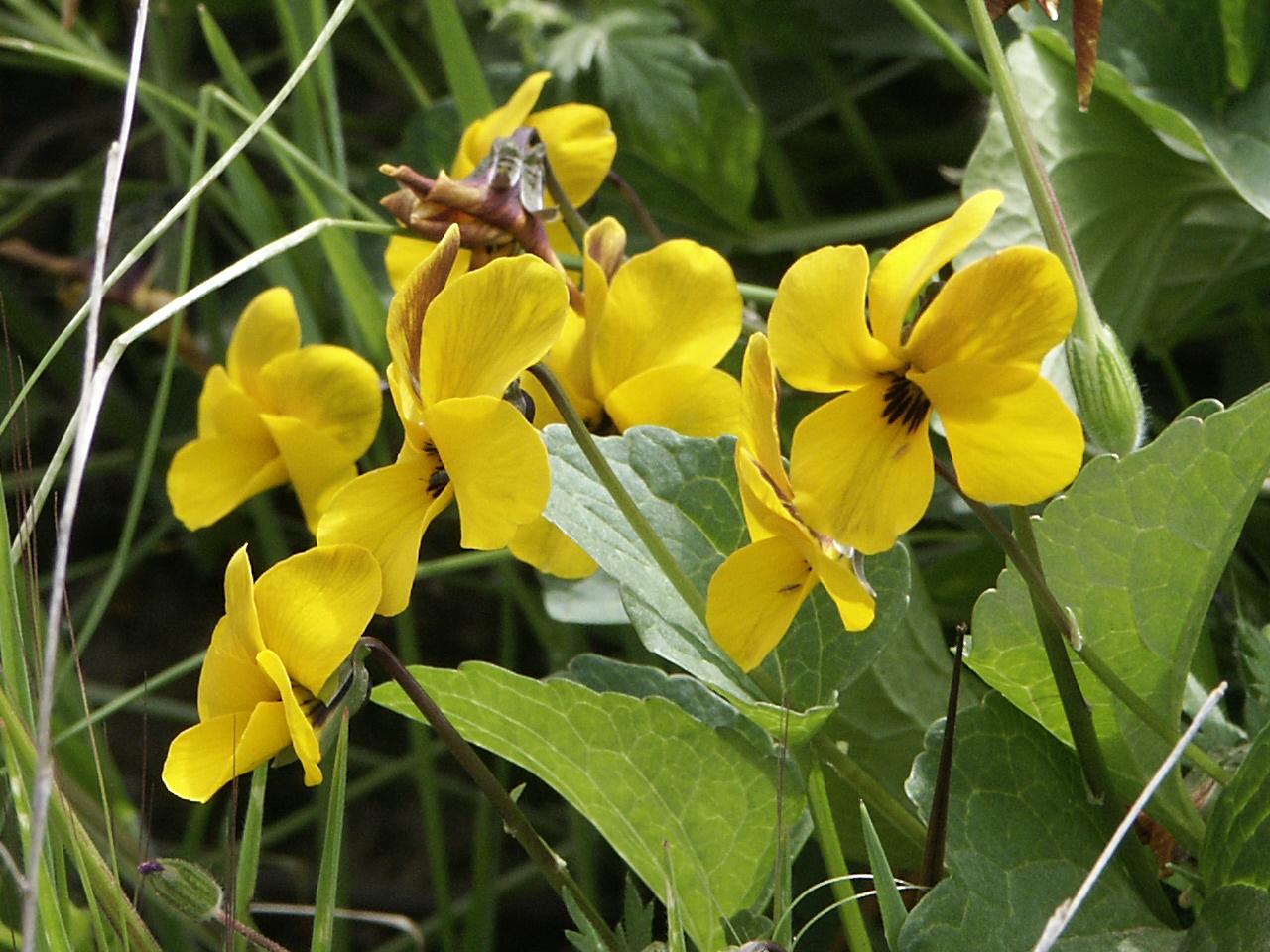
The leaves are broadly ovate to triangular, 1 to 2 inches long, with scalloped or shallowly toothed edges, on long stalks. They are green, smooth to finely hairy and somewhat fleshy.
Flowers
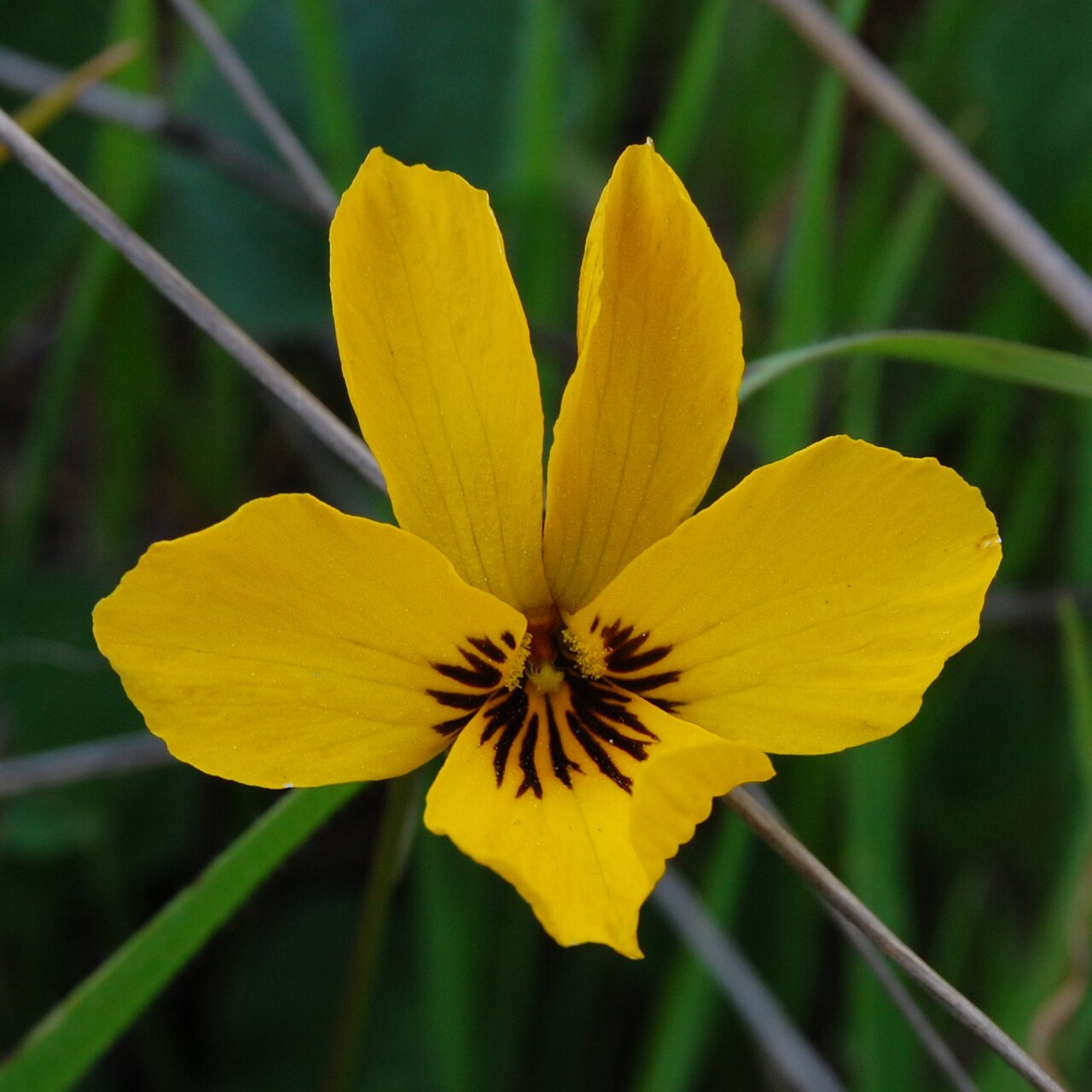
Flowers are borne singly on stalks that rise well above the leaves. Each is about ¾ to 1½ inches across, with five golden-yellow to orange-yellow petals. The lower three have dark brown to purple veins near the center, and the backs of the two upper petals are often brownish red, which shows when the flowers are viewed from behind. Bloom runs from about February to April, sometimes into May, depending on rains and elevation.
Fruit & Seeds
The fruit is a small, three-parted capsule that splits open and flings its seeds a short distance. Each seed carries a fatty appendage (an elaiosome) that attracts ants, which carry the seeds off and help spread them.
Quick Facts
| Scientific Name | Viola pedunculata |
| Family | Violaceae (violet family) |
| Plant Type | Herbaceous perennial; summer-dormant |
| Mature Height | 4–10 in |
| Mature Spread | 4–12 in |
| Growth Rate | Slow to moderate |
| Sun Exposure | Full sun to part shade |
| Water Needs | Low; moist in winter and spring, dry in summer |
| Soil Type | Well-drained loam, clay loam, sandy or rocky grassland soils |
| Soil pH | About 5.5–7.5 |
| Bloom Time | February–April (sometimes into May) |
| Flower Color | Golden-yellow with dark brown-purple veins |
| Fall Color | None; plants are dormant from early summer to the rains |
| Fruit | Small three-parted capsule; ant-dispersed seeds |
| Deer Resistant | No; deer and rabbits browse it |
| USDA Hardiness Zones | 8–10 |
Native Range
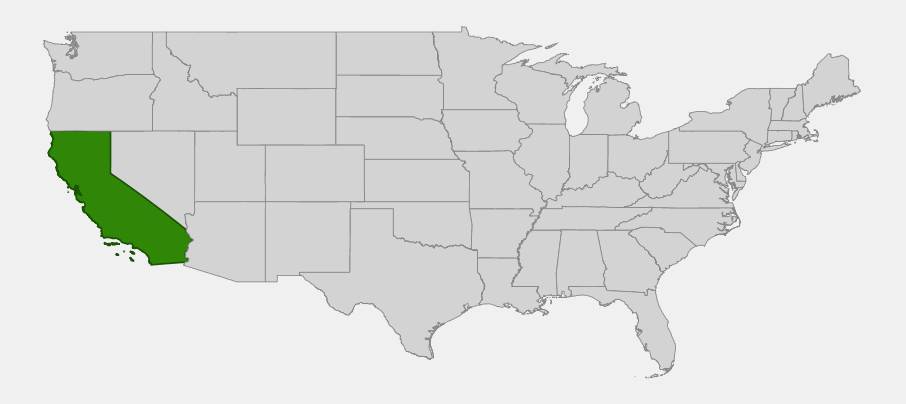
In the United States, California golden violet grows only in California, and USDA PLANTS lists it as native there. Its range extends south into northern Baja California, Mexico. It is found from the northern Coast Ranges and the Sierra Nevada foothills south through the San Francisco Bay Area, the Central Coast, the Transverse Ranges and the Peninsular Ranges.
It is a plant of grasslands, open oak woodlands, openings in chaparral and coastal scrub, and grassy slopes, usually below about 3,000 feet. It is most common on deep, well-drained soils in the Coast Ranges and foothills, where it can color whole hillsides in a wet spring.
Much of its grassland habitat has been lost to development, agriculture and invasion by non-native annual grasses, which crowd out low wildflowers. Where native grassland remains, as on the Santa Rosa Plateau, in Bay Area parks and in Sierra foothill oak woodlands, it is still common.
📋 Regional plant lists featuring California Golden Violet: California & Nevada
Growing & Care Guide
California golden violet is a charming plant for California native gardens, but it needs patience. It grows from a deep root, resents transplanting and goes dormant every summer. It does best when started from seed or small plants in a sunny, well-drained spot that stays dry in summer. Plants and seed are offered by some California native nurseries.
Light
Full sun to part shade. In hot inland gardens, light afternoon shade helps; near the coast it does well in full sun.
Soil & Water
Give it well-drained soil, including clay loam if it drains reasonably well. Water only during the rainy season if rains fail. Once plants go dormant in late spring, keep them dry; summer water can rot the roots.
Planting Tips
Sow seed in fall where you want plants to grow, or plant small container plants in fall or winter so they establish with the rains. Avoid disturbing established plants, since the deep root does not transplant well. Mark the spot so you do not dig into dormant plants in summer.
Pruning & Maintenance
Little care is needed. Keep competing grasses and weeds from crowding the low clumps in winter and spring. Let seed capsules ripen if you want seedlings. Leaves can be removed once they wither.
Propagation
Grow it from seed. Collect capsules just before they split, as they turn upward and pale, and keep them in a paper bag to catch the seeds. Sow outdoors in fall; seed benefits from cool, moist winter conditions. Seedlings may take a year or two to flower.
Landscape Uses
- California native gardens: early spring golden color in sunny, summer-dry beds
- Butterfly gardens: host plant for callippe fritillary caterpillars
- Grassland and meadow restoration: a characteristic wildflower of native California grasslands
- Oak woodland gardens: under and around native oaks with other summer-dormant wildflowers
- Rock gardens and containers: a small, bright perennial for well-drained spots
Wildlife & Ecological Value
California golden violet blooms early, when few other flowers are open, and it has an outsized role for a few native butterflies.
For Pollinators
Early native bees, bee flies and butterflies visit the flowers, guided by the dark veins on the lower petals to the nectar in the spur. Bloom begins in late winter, when nectar sources are scarce.
For Birds
The plant has little direct value for birds, though seeds and the insects drawn to the flowers are eaten by ground-feeding birds.
For Mammals
Deer and rabbits browse the leaves and flowers, and rodents eat seeds.
Ecosystem Role
California golden violet is the main larval host plant for the callippe fritillary (Speyeria callippe), including the callippe silverspot (S. callippe callippe), a federally endangered subspecies of the San Francisco Bay Area. The caterpillars hatch in late summer, overwinter without feeding and then feed on the violet leaves in spring. Protecting and restoring this violet is a key part of recovery plans for the butterfly. Ants that carry off its seeds also help spread the plant.
Cultural & Historical Uses
John Torrey and Asa Gray described the species in 1838 from specimens collected in California. The name “Johnny-jump-up” is shared with the European wild pansy (Viola tricolor) and other small violets, so “California golden violet” is less ambiguous.
Native Californians are reported to have eaten the young leaves of some violets as greens. Specific records for this species are limited, and it should not be collected for food from the wild.
Today California golden violet is a beloved spring wildflower and a symbol of healthy native grassland. Its role as the host of the callippe silverspot has made it a focus of habitat restoration on San Bruno Mountain and other Bay Area sites.
Frequently Asked Questions
Why did my California golden violet disappear in summer?
It is summer-dormant. The leaves wither by early summer, and the plant rests underground until fall or winter rains. Do not water it heavily in summer; it will return when the weather cools and rains begin.
Is California golden violet the same as Johnny-jump-up?
“Johnny-jump-up” is used for several violets, including the European wild pansy (Viola tricolor). USDA uses it for Viola pedunculata, but “California golden violet” avoids confusion.
Which butterflies use California golden violet?
It is the main caterpillar food plant of the callippe fritillary, including the endangered callippe silverspot in the San Francisco Bay Area. Other fritillaries may also use it.
Can I transplant it?
It has a deep root and does not transplant well. Start it from seed or small container plants, and never dig plants from the wild.
Does it grow outside California?
In the United States it grows wild only in California. It also occurs in northern Baja California, Mexico. Gardeners in other summer-dry, mild-winter climates can sometimes grow it.

Looking for a nursery that carries California Golden Violet?
Browse our native plant nursery directory: California