
Pearl Milkweed (Matelea reticulata)
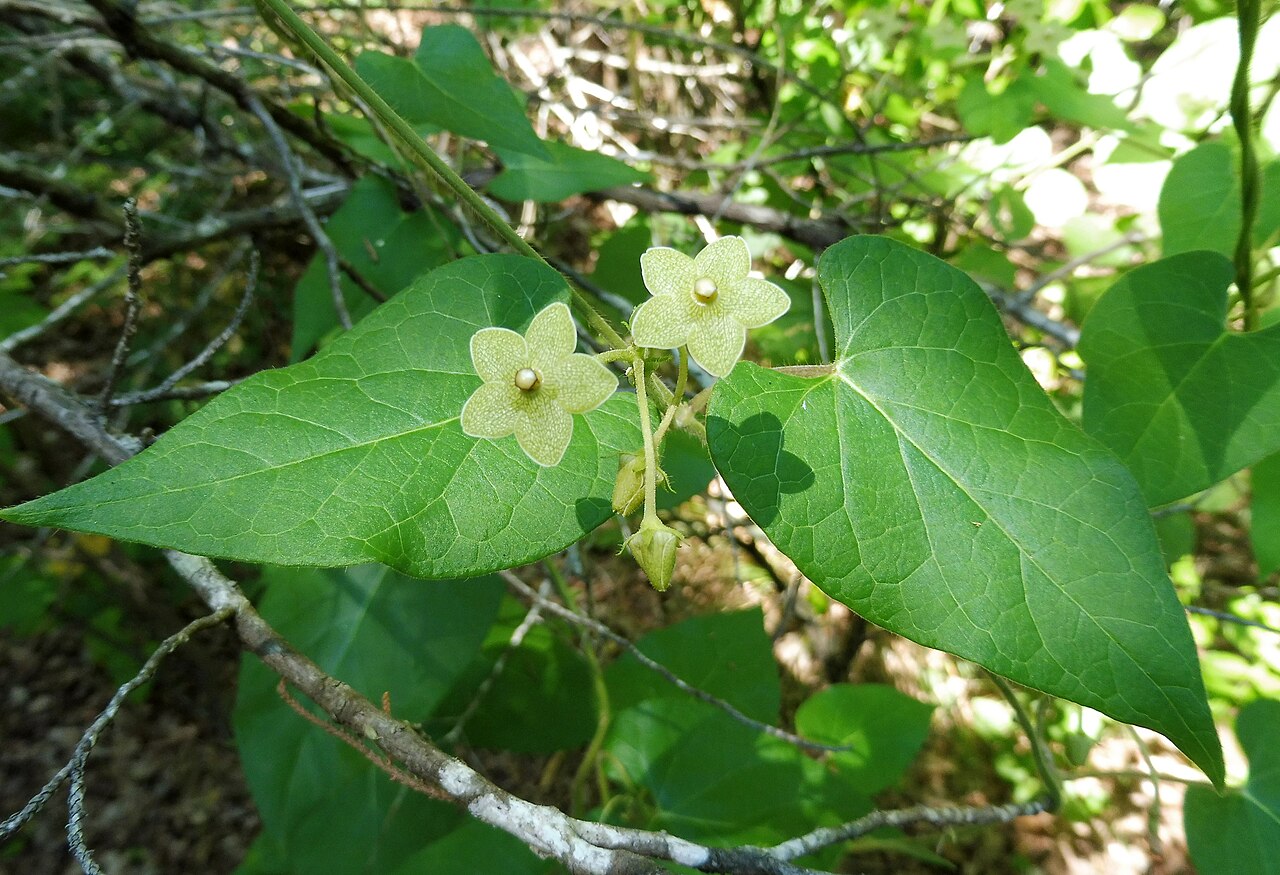
Matelea reticulata, known as Pearl Milkweed, pearl milkweed vine, netted milkvine or green milkweed vine, is a native twining vine of central, south and west Texas, in the dogbane and milkweed family (Apocynaceae). From a perennial root it sends up slender stems that climb through shrubs and fences up to about 12 feet, with soft, heart-shaped leaves and, from spring into fall, small star-shaped flowers that are among the most intricate of any Texas wildflower.
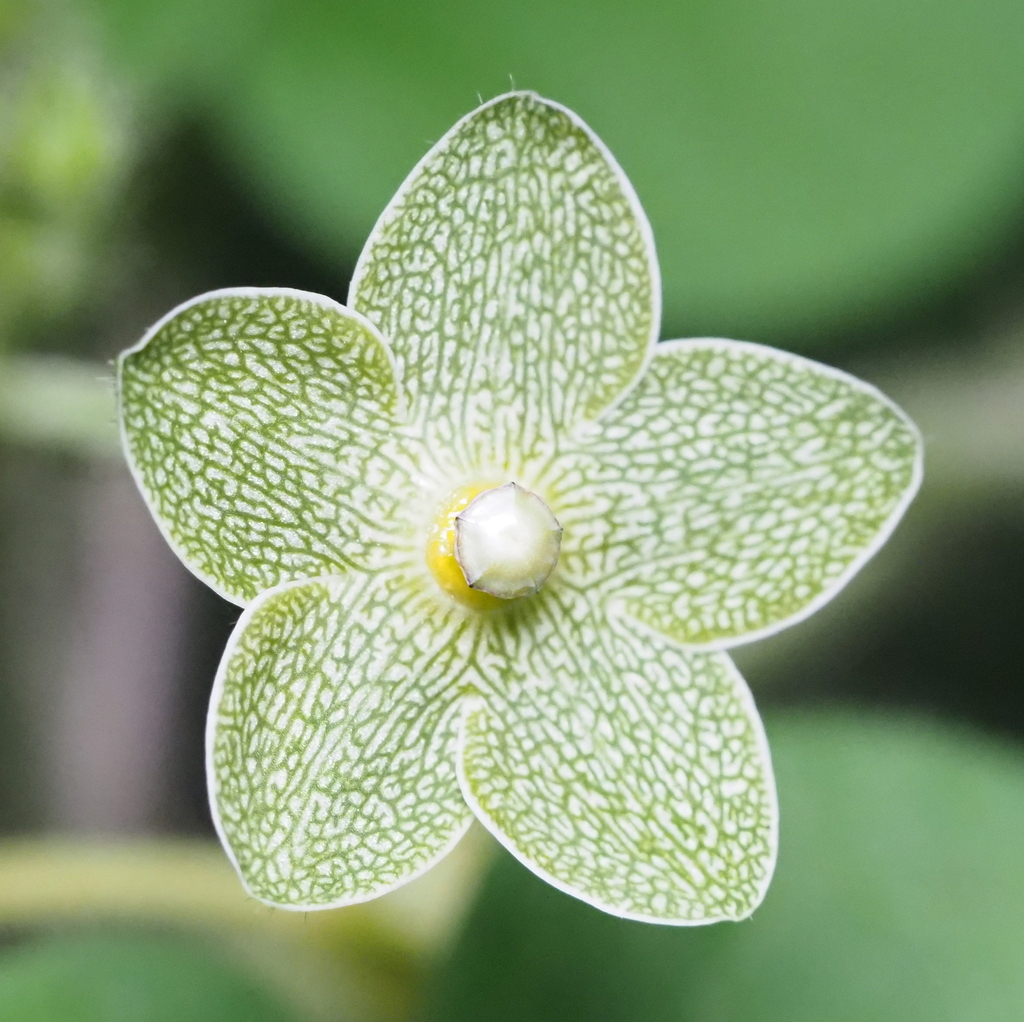
Each flower is pale green and finely netted with darker green veins, which gives the species its name reticulata, “netted.” At its center sits a small, shining, iridescent disk that looks remarkably like a pearl. The flowers are easy to miss among the leaves, but once found they are unforgettable.
Pearl milkweed is a relative of the true milkweeds (Asclepias), with the same milky sap and the same kind of large seed pods filled with silk-tufted seeds. This guide covers how to identify it, where it grows, how to grow it on a fence or trellis, its value for wildlife, and a safety note about its sap.
Identification
Pearl milkweed is a twining vine, not an upright milkweed. Look for opposite, heart-shaped leaves on twining stems, small green star flowers with a pearly center, and in late summer and fall, large warty pods.
Growth Form
A herbaceous perennial vine that dies back to a woody root in hard winters and sends up new twining stems each spring. Stems twist around shrubs, small trees and fences and usually reach 3 to 12 feet. The stems and leaves are softly hairy, and broken stems ooze milky sap.
Leaves
The leaves are opposite, broadly heart-shaped with a pointed tip, about 2 to 4 inches long, and soft to the touch. They are medium green and somewhat velvety.
Flowers
The flowers are borne in small clusters in the leaf axils. Each is a flat, five-pointed star about ½ to ¾ inch across, pale green to cream, with a fine net of darker green veins. In the center is a small, round, glossy, silvery-white disk (part of the corona) that shines like a pearl. Blooming runs from about March into November, with the main flush in spring and early summer.
Fruit & Seeds
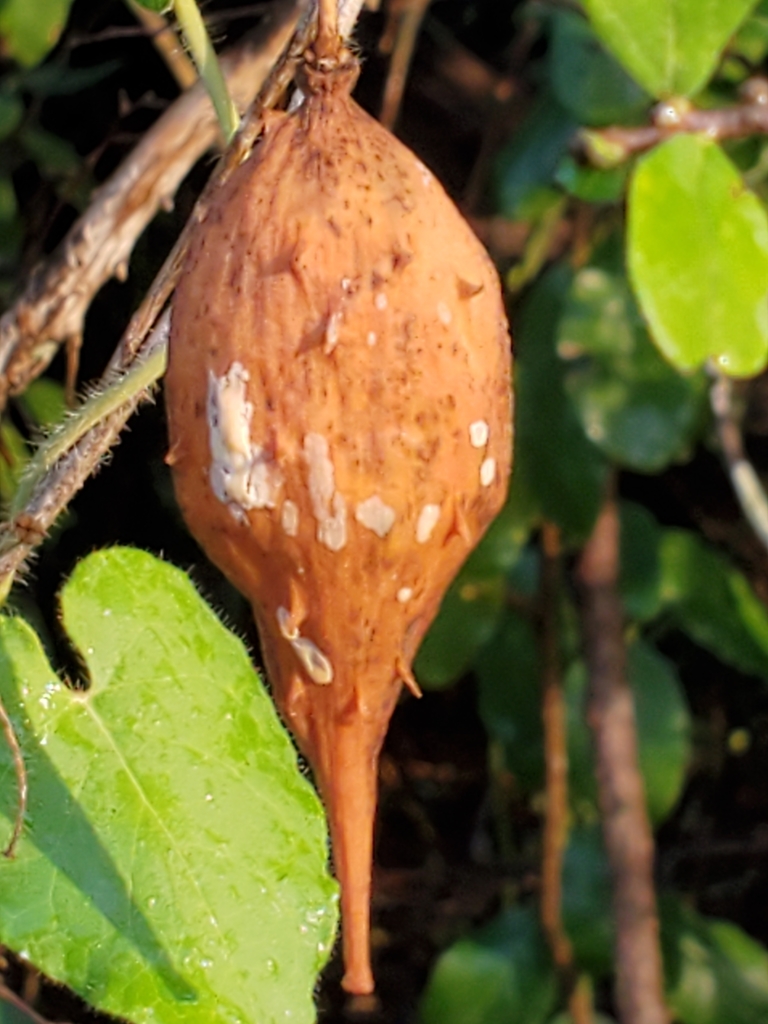
The fruit is a large pod (follicle) about 3 to 4 inches long, ribbed and covered with soft, warty projections, green ripening to brown. It splits along one side to release many flat brown seeds, each with a tuft of silky white hairs that carries it on the wind. Pods may be present from late spring well into winter.
Similar Species
Other milkvines in Texas, such as Matelea biflora, have dark maroon or brownish flowers and lack the pearly center. Climbing milkweed (Funastrum) has clusters of small white or pinkish flowers and smooth, narrow pods.
Quick Facts
| Scientific Name | Matelea reticulata |
| Family | Apocynaceae (dogbane and milkweed family) |
| Plant Type | Herbaceous perennial twining vine |
| Mature Height | Vines 3–12 ft long |
| Mature Spread | Climbs or sprawls 2–6 ft wide |
| Growth Rate | Moderate |
| Sun Exposure | Part shade to full sun |
| Water Needs | Low; drought tolerant |
| Soil Type | Well-drained sandy or rocky soil, including limestone |
| Soil pH | About 6.5–8.5 |
| Bloom Time | March–November (mainly spring to early summer) |
| Flower Color | Pale green with darker netted veins and a pearly center |
| Fall Color | None; stems die back in winter |
| Fruit | Large warty pods with silk-tufted seeds |
| Deer Resistant | Yes; seldom browsed |
| USDA Hardiness Zones | 8–10 |
Native Range
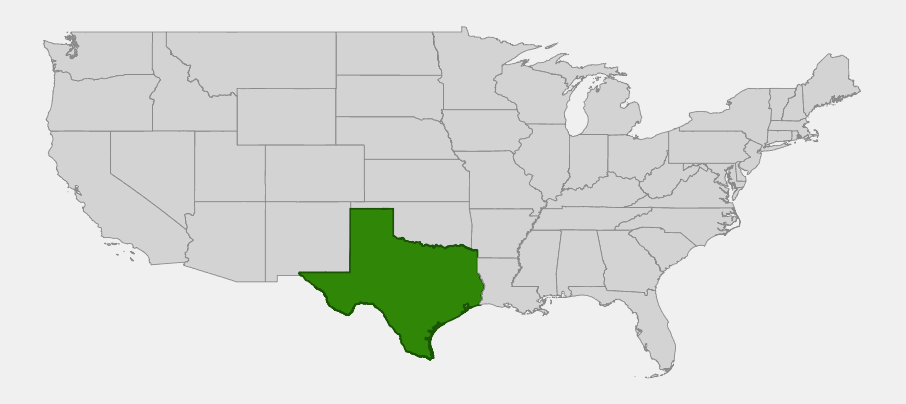
Pearl milkweed is native to Texas, and USDA PLANTS records it in no other U.S. state. It is most common in central Texas, especially the Edwards Plateau (Hill Country) and the Balcones Escarpment around Austin and San Antonio, and it extends into south Texas and parts of west Texas. It is also found in adjacent northeastern Mexico.
It grows in thickets, along the edges of woodlands and brush, on rocky hillsides and limestone bluffs, and along canyons and creek banks, typically climbing through shrubs and small trees in partly shaded spots. It is also common in older neighborhoods and greenbelts within its range, where it twines through fences and hedges.
It favors sandy or rocky, well-drained soils, including thin soils over limestone, and tolerates the long, hot, dry summers of central and south Texas.
📋 Regional plant lists featuring Pearl Milkweed: South & West Texas
Growing & Care Guide
Pearl milkweed is an unusual and charming vine for Texas native gardens, especially woodland edges and fences where you can see its flowers up close. It is tough, drought tolerant and deer resistant, and it needs little care once established.
Light
It grows in part shade to full sun. It blooms best with a good amount of sun but does well in the dappled light of a woodland edge, as it grows in the wild.
Soil & Water
Plant it in well-drained sandy, gravelly or rocky soil; thin soils over limestone are fine. Water regularly during its first growing season, then only during extended droughts. Avoid heavy, constantly wet soil.
Planting Tips
Give it something to climb: a fence, trellis, arbor or an open shrub such as Texas persimmon. Plant it near a path or window at eye level so the small flowers can be appreciated. It pairs well with other Hill Country natives such as Mexican buckeye and antelope horns.
Pruning & Maintenance
Little is needed. Cut back dead stems in late winter. Wear gloves when handling it, since the milky sap can irritate skin and eyes.
Propagation
Grow it from seed. Collect pods when they begin to split and turn brown, separate the seeds from the silk, and sow them in spring in pots or in place. Seedlings develop a deep root and are best planted out young.
Landscape Uses
- Fences, trellises and arbors: a fine-textured native vine
- Woodland-edge and shade gardens: climbing through shrubs in dappled light
- Butterfly and pollinator gardens: a milkweed relative for insects
- Children’s and conversation gardens: the “pearl” flowers and warty pods fascinate visitors
- Deer-resistant plantings: seldom browsed in Texas gardens
Wildlife & Ecological Value
Pearl milkweed supports a range of insects, and its silky seeds are part of the late-season landscape in central Texas.
For Pollinators
Small flies, bees and other insects visit the flowers. Like other members of the milkweed family, its flowers produce pollen in waxy packets (pollinia) that attach to visiting insects. It is reported as a larval host for queen and monarch butterflies, though both use true milkweeds (Asclepias) far more often.
For Birds
Small birds such as chickadees, titmice and goldfinches may use the silky seed hairs as nest-lining material. The vines also add cover along woodland edges and fencerows.
For Mammals
Deer rarely browse it, likely because of its milky sap and the bitter compounds typical of the family.
Ecosystem Role
As a native vine of thickets and woodland edges, it adds structure and diversity to Texas brushlands and supports specialized insects that feed on plants of the milkweed family.
Cultural & Historical Uses
The genus Matelea was named by the French botanist Jean Baptiste Aublet in his 1775 flora of French Guiana, and reticulata means “netted,” for the vein pattern on the flowers. The species was originally published in the nineteenth century as Gonolobus reticulatus, a name still found in older references.
Safety note: Like other members of the milkweed family, pearl milkweed has milky sap and should be treated as toxic. Do not eat any part of the plant, keep pets and livestock from eating it, and wash your hands after handling the stems. The sap can irritate skin and is especially irritating to the eyes.
Pearl milkweed has become a favorite of Texas native plant gardeners and naturalists, who prize its “hidden pearl” flowers as one of the small wonders of a Hill Country walk.
Frequently Asked Questions
Is pearl milkweed a real milkweed?
It is in the same family as the true milkweeds (Asclepias) and shares their milky sap, pollen packets and silk-tufted seeds, but it is a twining vine in a different genus, Matelea.
Why is it called pearl milkweed?
Each green, star-shaped flower has a small, shiny, iridescent disk in its center that looks like a pearl.
Do monarchs use pearl milkweed?
It is reported as a larval host for monarch and queen butterflies, but they use true milkweeds much more. If you want to support monarchs, plant native Asclepias species too, such as antelope horns or zizotes milkweed.
Is pearl milkweed poisonous?
Treat it as toxic. Like other plants in the milkweed family it has milky sap containing compounds that can be harmful if eaten and irritating to skin and eyes. Keep children, pets and livestock from eating it.
Where can I grow pearl milkweed?
It is native to central, south and west Texas and grows best in that region, in part shade to sun and well-drained soil, with a fence, trellis or shrub to climb.

Looking for a nursery that carries Pearl Milkweed?
Browse our native plant nursery directory: Texas