
Pacific Waterleaf (Hydrophyllum tenuipes)
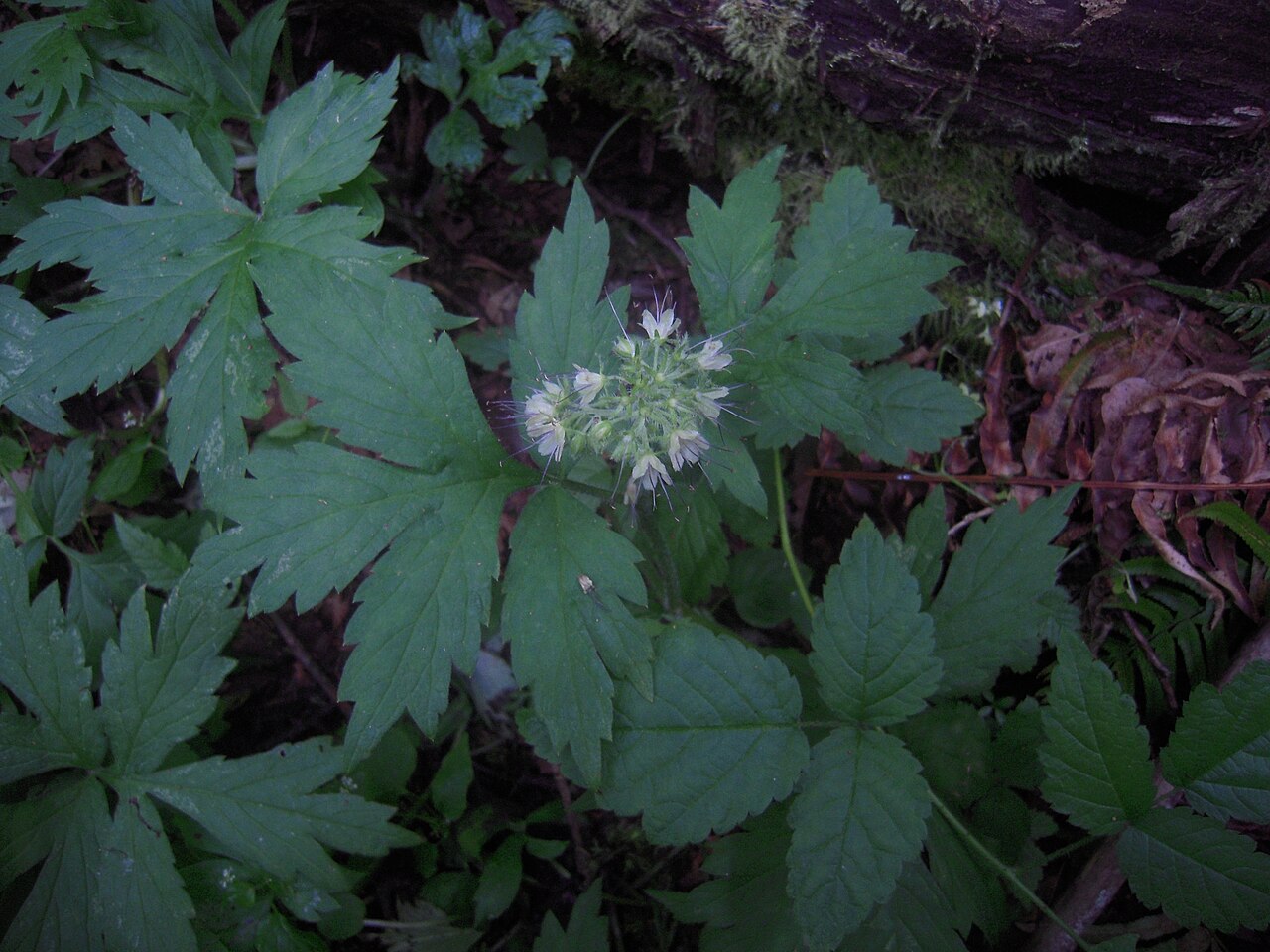
Hydrophyllum tenuipes, known as Pacific Waterleaf (also slender-stemmed waterleaf), is a shade-loving perennial of the moist forests of the Pacific Northwest, from southwestern British Columbia through western Washington and Oregon to northwestern California. It belongs to the borage family (Boraginaceae; formerly the waterleaf family, Hydrophyllaceae).
It grows 1 to 2 1/2 feet tall from spreading rhizomes and often forms large patches on the forest floor. The broad leaves are divided into 5 to 9 toothed lobes, and from May to July small clusters of greenish-white to pale lavender, bell-shaped flowers appear, each with long stamens that stick far out of the flower and give the clusters a fuzzy look. It often grows with youth-on-age, fringe cups and sword fern.
It is an easy, low-maintenance ground cover for shady native gardens in the Pacific Northwest, especially under trees in moist, humus-rich soil. The early flowers are visited by bumblebees and other native bees.
Identification
Look for patches of broad, deeply lobed, toothed leaves on single stems in shady, moist forest west of the Cascades, with small rounded clusters of greenish-white to lavender flowers whose long stamens stick far out, in late spring.
Stems & Habit
Pacific waterleaf is a herbaceous perennial, usually 12 to 30 inches (30 to 75 cm) tall, from a short, fleshy rhizome. Each plant usually has a single, slender, hairy stem with a few large leaves. Plants spread to form loose colonies.
Leaves
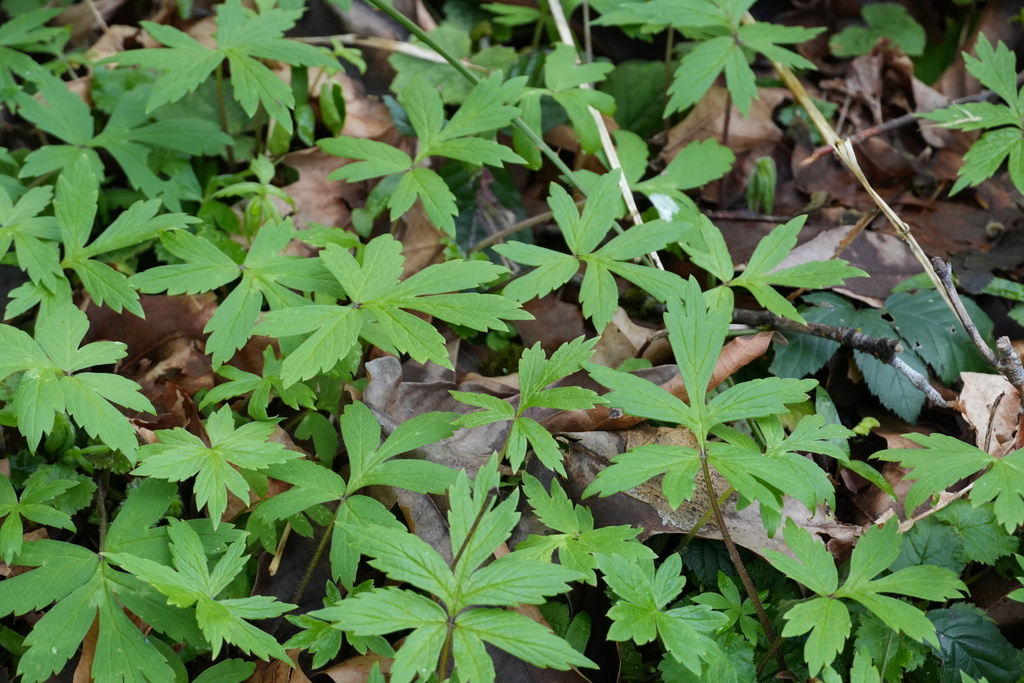
The alternate leaves are up to about 6 inches (15 cm) long and wide, on long stalks. They are pinnately divided into 5 (sometimes up to 9) broad, pointed, coarsely toothed lobes or leaflets, and are thin, bright to dark green and sparsely hairy. Young leaves can show pale mottling, as in other waterleafs.
Flowers
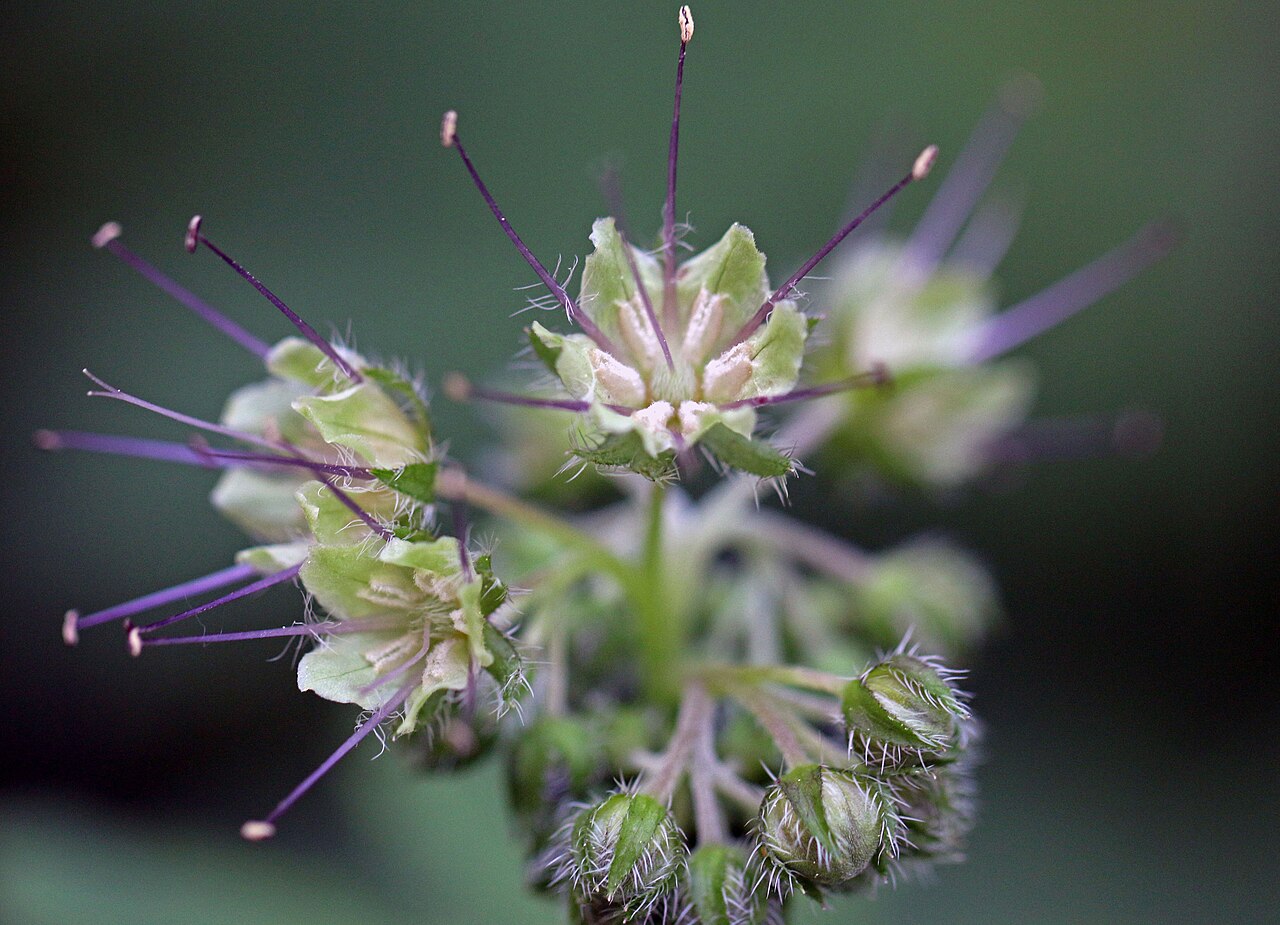
The flowers are borne in several small, rounded, coiled clusters on stalks from the upper leaf axils, usually held near or just above the leaves. Each flower is bell-shaped, about 1/4 inch (5 to 7 mm) long, greenish-white, cream or pale lavender to bluish. The five stamens and the style extend well beyond the petals, often more than twice their length, and the sepals are bristly on the margins. Bloom time is May to July.
Fruit & Seeds
Each flower produces a small round capsule with one to a few seeds. The plant goes dormant after midsummer in drier sites.
Look-alikes
Ballhead waterleaf (Hydrophyllum capitatum) and Fendler’s waterleaf (H. fendleri) grow mostly east of the Cascades or at higher elevations; ballhead waterleaf is shorter and has its flower heads tucked below the leaves. The eastern Virginia Waterleaf does not grow in the West. The deeply lobed leaves can resemble those of Fringe Cups or youth-on-age, but those have rounded, shallowly lobed leaves and very different flowers.
Safety & Conservation
No toxicity is commonly reported. The Cowlitz people are recorded as eating the roots. Pacific waterleaf is common within its range and is not of conservation concern.
Quick Facts
| Scientific Name | Hydrophyllum tenuipes |
| Family | Boraginaceae (borage family); formerly Hydrophyllaceae |
| Plant Type | Rhizomatous herbaceous perennial |
| Mature Height | 12–30 in |
| Mature Spread | 12–24 in; spreads into colonies |
| Growth Rate | Moderate |
| Sun Exposure | Part shade to full shade |
| Water Needs | Moderate to high; evenly moist soil |
| Soil Type | Rich, humusy, moist forest soils |
| Soil pH | About 5.0–6.5 |
| Bloom Time | May–July |
| Flower Color | Greenish-white, cream or pale lavender |
| Fall Color | None; dies back in late summer or fall |
| Fruit | Small round capsule |
| Deer Resistant | Moderate; occasionally browsed |
| USDA Hardiness Zones | 6–9 |
Native Range
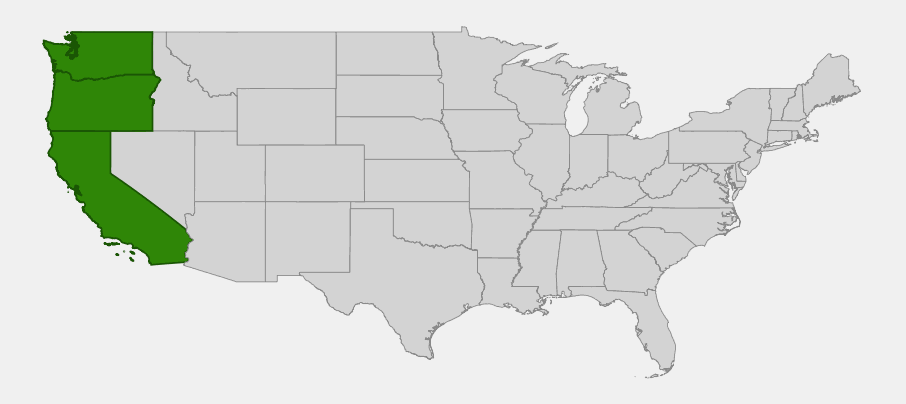
Pacific waterleaf is native to the Pacific Northwest. USDA PLANTS lists it as native in California, Oregon and Washington, and it also grows in southwestern British Columbia.
It grows mainly west of the Cascade Range: in the lowlands and foothills of western Washington, including the Puget Sound region and the Olympic Peninsula, the Willamette Valley margins and Coast Range of Oregon, the Columbia River Gorge, and south into the Klamath region and north coast ranges of northwestern California.
Its habitat is moist, shady, mature forest at low to middle elevations, especially Douglas-fir, western redcedar and red alder woods, stream terraces and seepy slopes. It is often found with youth-on-age (Tolmiea menziesii), which blooms at the same time.
📋 Regional plant lists featuring Pacific Waterleaf: Western Oregon & Western Washington · California & Nevada
Growing & Care Guide
Pacific waterleaf is an easy, adaptable ground cover for shady native gardens in the Pacific Northwest. It fills in quickly under trees and shrubs where lawn and many other plants fail.
Light
Part shade to full shade. Leaves scorch in hot afternoon sun.
Soil & Water
Grow it in moist, rich, humusy soil with plenty of leaf litter. It tolerates periodically wet soil but not long drought. In drier gardens it may go dormant early in summer, which is normal.
Planting Tips
Plant divisions or nursery plants in fall or early spring, about 12 to 18 inches apart. Combine it with sword fern, fringe cups, bleeding heart and vanilla leaf for a layered woodland floor. It can spread vigorously in ideal conditions, so give it room.
Pruning & Maintenance
Little care is needed. Cut back or leave the dying foliage in late summer, and keep a leaf-litter mulch.
Propagation
Divide rhizomes in fall or early spring. It can also be grown from fresh seed sown outdoors in fall; seed needs a cold, moist winter to germinate.
Landscape Uses
- Shade ground cover: fills in under trees in moist woodland gardens
- Woodland gardens: pairs with ferns and spring wildflowers
- Pollinator gardens: early-season flowers for bumblebees
- Restoration: native understory plant for riparian and forest projects
- Rain gardens (shady edges): tolerates seasonally moist soil
Wildlife & Ecological Value
Pacific waterleaf is a characteristic herb of the moist forest floor west of the Cascades.
For Pollinators
Bumblebees, mason bees and other native bees visit the flowers for nectar and pollen, and syrphid flies feed on them as well.
For Birds
Ground-foraging birds such as thrushes and towhees hunt insects in the cover of its leaves.
For Mammals
Deer and elk graze the leaves to some extent. Small mammals shelter beneath the patches.
Ecosystem Role
Its colonies cover and protect moist forest soils, cycle nutrients through their quickly decaying leaves and provide early-season food for pollinators in the forest understory.
Cultural & Historical Uses
The genus name Hydrophyllum means “water leaf,” probably from the pale, water-stained look of young leaves of some species or from the watery sap in the stems. The species name tenuipes means “slender-footed,” referring to the slender stems.
The Cowlitz people of southwestern Washington are recorded as cooking and eating the roots, according to Erna Gunther’s Ethnobotany of Western Washington.
Pacific waterleaf is a familiar plant along forest trails around Seattle, Portland and Olympia. Other plants of the same forests on this site include Pacific Bleeding Heart, Vanilla Leaf, Lady Fern and Dull Oregon Grape.
Frequently Asked Questions
Where does Pacific waterleaf grow?
In moist, shady forests west of the Cascades, from southwestern British Columbia through western Washington and Oregon to northwestern California.
Is Pacific waterleaf a good ground cover?
Yes. It spreads by rhizomes to cover shady, moist ground under trees and is easy to grow in Pacific Northwest gardens.
Why do the flowers look fuzzy?
The stamens stick out far beyond the small petals, and the sepals are bristly, giving the flower clusters a fuzzy look.
Does it go dormant?
Often, yes. In drier sites the leaves die back in late summer, and new leaves return the next spring.
Is Pacific waterleaf edible?
The Cowlitz people ate the cooked roots, but it is not a common food plant today. Forage only with expert knowledge and permission.

Looking for a nursery that carries Pacific Waterleaf?
Browse our native plant nursery directory: California · Oregon · Washington