
Ookow (Dichelostemma congestum)
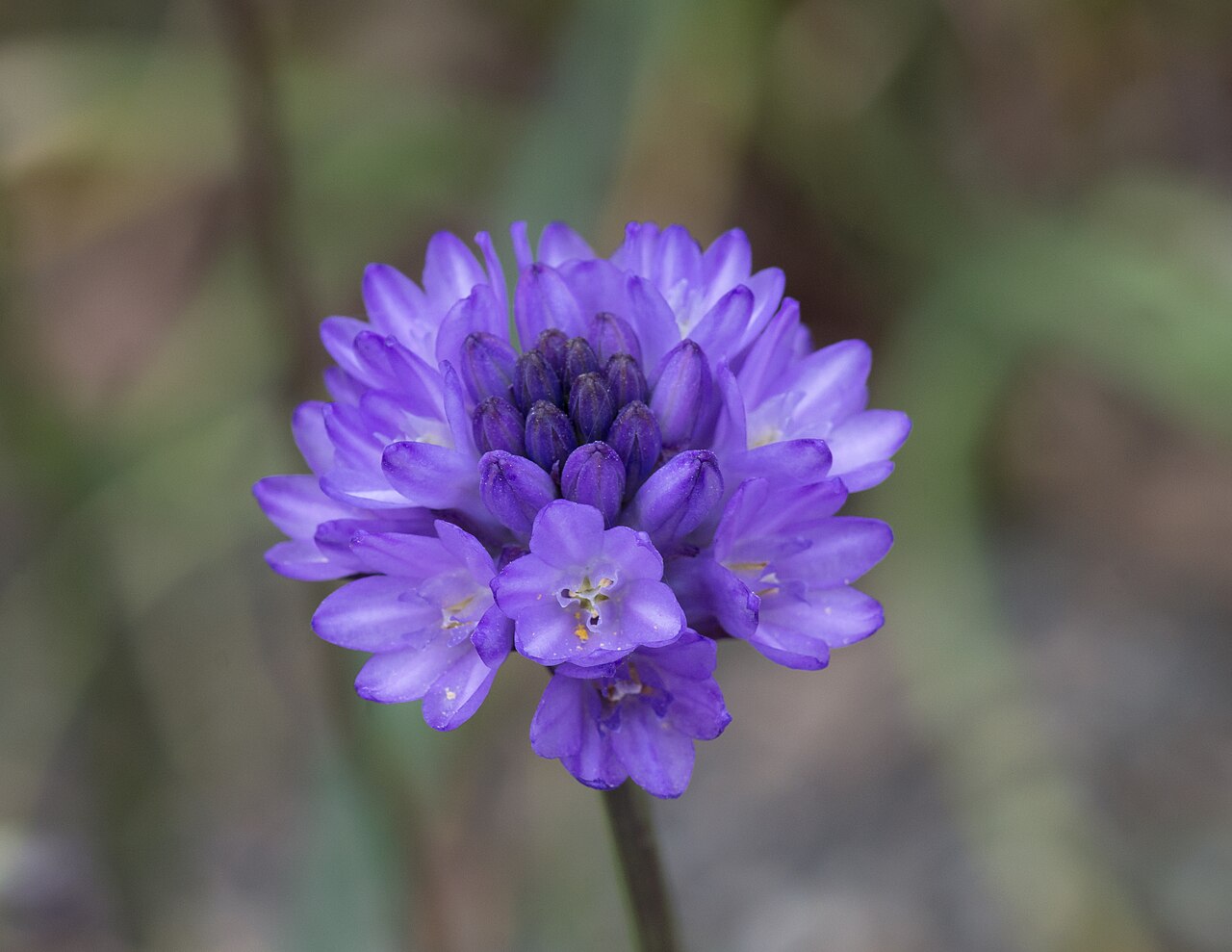
Dichelostemma congestum, known as Ookow (also fork-toothed ookow or northern saitas; formerly Brodiaea congesta), is a native wildflower that grows from a corm in the grasslands and open woodlands of the Pacific Coast, from western Washington to central California. It belongs to the brodiaea group, now placed in the asparagus family (Asparagaceae; sometimes treated as Themidaceae).
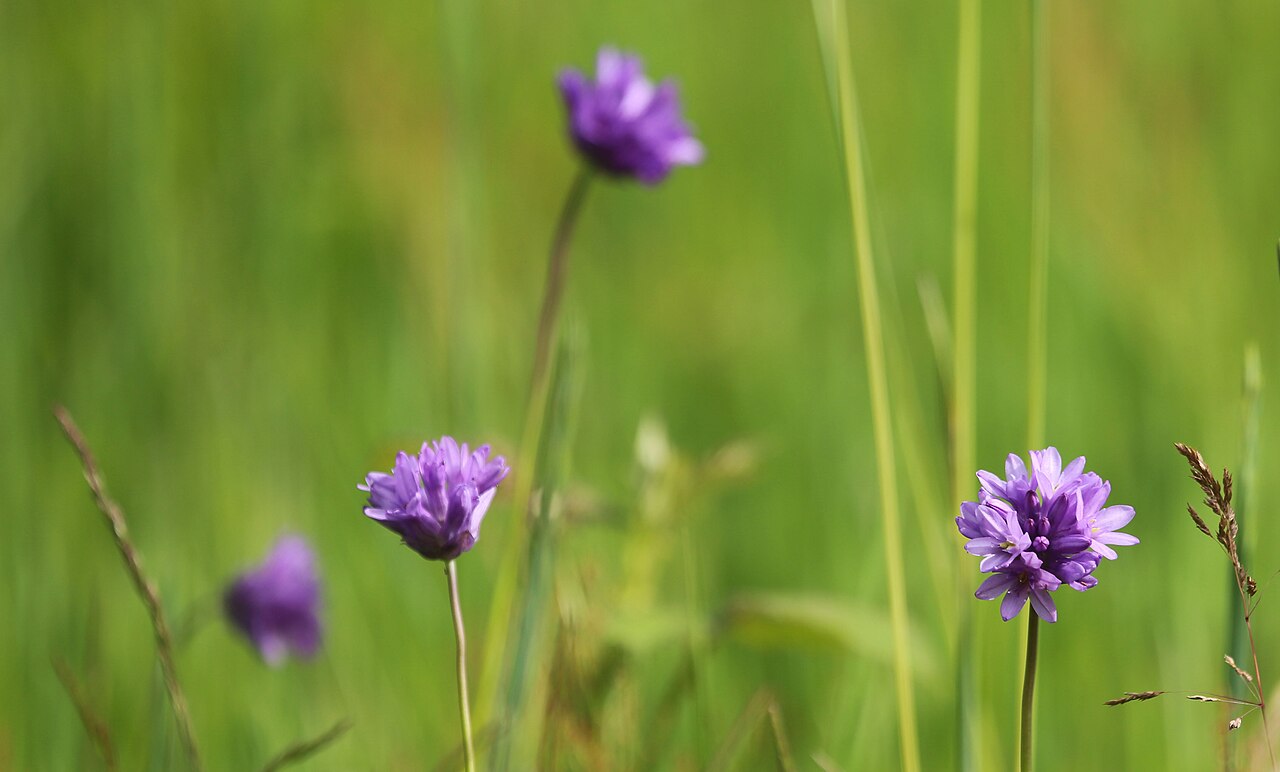
In late spring, as the grasses around it begin to turn gold, ookow sends up a slender, leafless stalk 1 to 3 feet tall topped by a dense, rounded head of blue-violet flowers. Its few grass-like leaves have usually withered by bloom time. It is a close relative of blue dicks and an important late-spring nectar source for bees and butterflies in prairies and oak savannas.
Ookow is a good choice for summer-dry native gardens in the West, where it can be grown from nursery-propagated corms or seed and needs no summer water. Its corms were traditionally harvested as food by Native peoples of California and the Pacific Northwest. Please do not dig wild plants.
Identification
Look for a single, leafless, slender stalk with a crowded, rounded head of blue-violet, six-tepaled flowers in late spring, in grassy places where the leaves have already withered.
Stems & Habit
Ookow grows from a small, rounded corm a few inches underground. Each corm produces a few leaves and one flower stalk (scape) 1 to 3 feet (30 to 90 cm) tall. The stalk is smooth, green and leafless, and it often leans or twists slightly.
Leaves
There are 2 to 4 narrow, grass-like leaves, 1 to 2 feet long and keeled along the back. They appear in winter or early spring and usually wither and dry before or during flowering, so the plant seems to have no leaves at bloom time.
Flowers
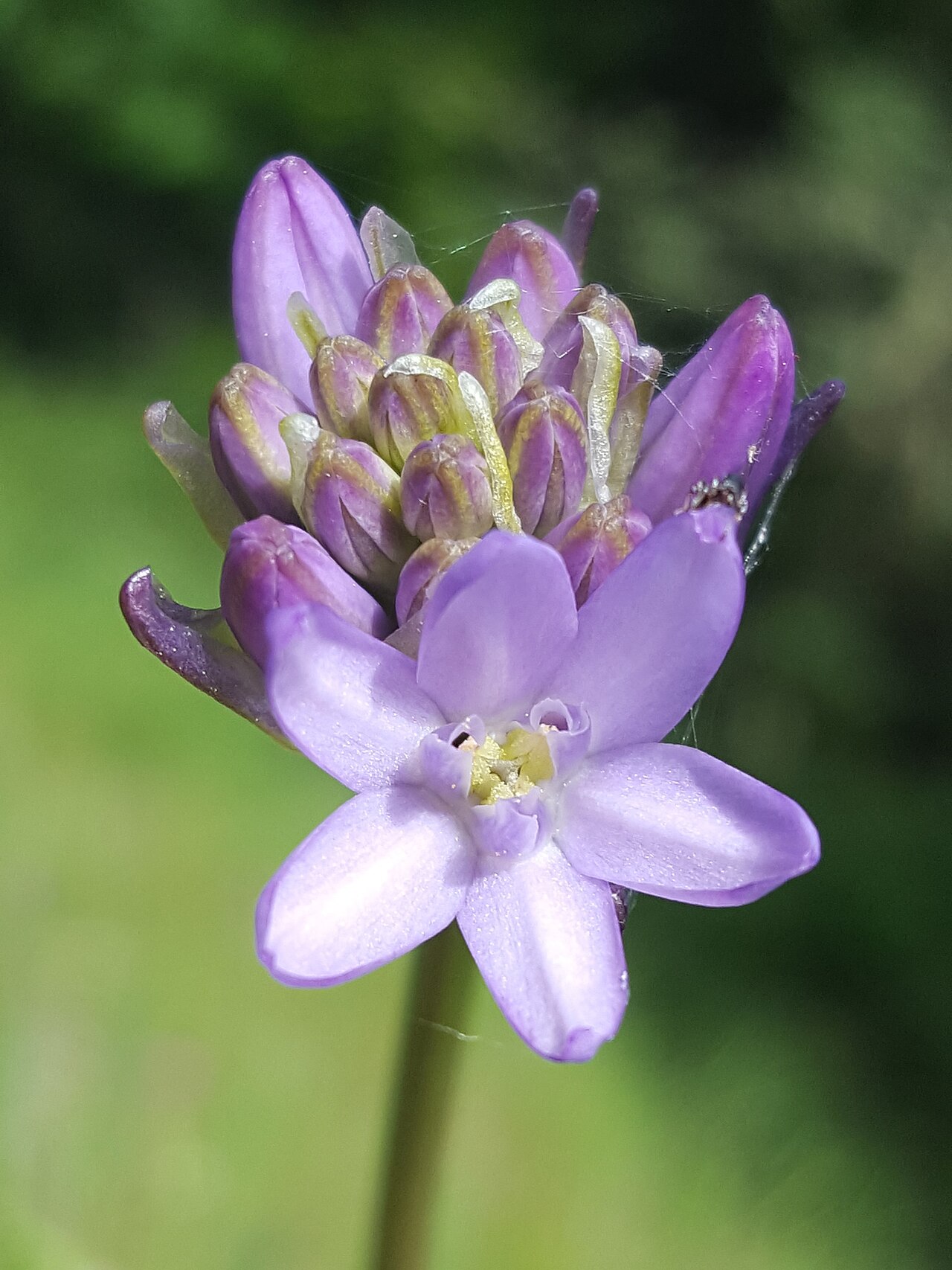
The flowers are packed into a tight, rounded umbel about 1 to 1 1/2 inches across, typically with 6 to 15 flowers on very short stalks, above a few papery, purplish bracts. Each flower is about 1/2 to 3/4 inch long, blue-violet to lavender, with a short tube and six spreading tepals. In the center are three fertile stamens and three pale, deeply forked crown appendages, the “fork teeth” of its common name. Bloom time is May to July, later than blue dicks.
Fruit & Seeds
The fruit is a small, three-sided capsule that splits to release shiny black seeds. Seedlings take several years to reach flowering size. Plants also multiply slowly by small cormlets.
Look-alikes
Blue dicks (Blue Dicks, D. capitatum) blooms earlier and has more lavender flowers with undivided crown scales and no forked teeth. Roundtooth ookow (D. multiflorum) has rounded crown scales. Harvest brodiaea (Harvest Brodiaea) and Ithuriel’s spear (Ithuriel’s Spear) have looser umbels of larger flowers on longer stalks. Common camas (Blue Camas) has its flowers in a spike, not a head.
Quick Facts
| Scientific Name | Dichelostemma congestum |
| Family | Asparagaceae (asparagus family); brodiaea group, sometimes Themidaceae |
| Plant Type | Perennial wildflower from a corm (geophyte) |
| Mature Height | 1–3 ft |
| Mature Spread | 3–6 in |
| Growth Rate | Slow to establish from seed |
| Sun Exposure | Full sun to light shade |
| Water Needs | Low; moist in winter and spring, dry in summer |
| Soil Type | Well-drained loam, clay loam, gravel or rocky soil |
| Soil pH | About 5.5–7.5 |
| Bloom Time | May–July |
| Flower Color | Blue-violet to lavender |
| Fall Color | None; summer dormant |
| Fruit | Small three-sided capsule with black seeds |
| Deer Resistant | Moderately; gophers and voles eat the corms |
| USDA Hardiness Zones | 6–9 |
Native Range
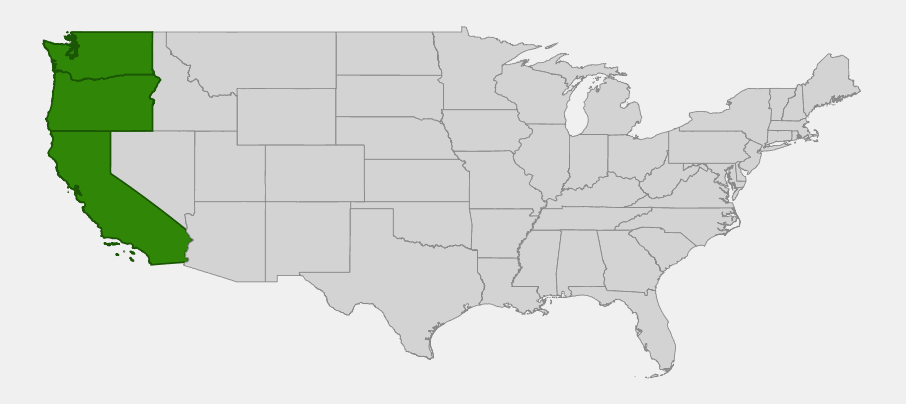
Ookow is native to the Pacific Coast of the United States. USDA PLANTS lists it as native in California, Oregon and Washington. USDA also has records from Georgia and Missouri, but those are not part of its natural range and are left off the map here.
Its range runs from the Puget Trough of western Washington south through the Willamette Valley, the Umpqua and Rogue valleys and the Klamath region of Oregon into northern and central California, mainly in the North Coast Ranges, the Sacramento Valley foothills and the Sierra Nevada foothills. It also follows the Columbia River Gorge east to the dry side of the Cascades around Mosier, The Dalles and Klickitat County.
It grows in open, grassy places that are wet in winter and dry in summer: prairies and meadows, oak savannas and woodlands, rocky balds and slopes, open pine forest and road banks, mostly at low to middle elevations.
📋 Regional plant lists featuring Ookow: Idaho, Eastern Oregon & Eastern Washington · Western Oregon & Western Washington · California & Nevada
Growing & Care Guide
Ookow is an easy, long-lived bulb for summer-dry gardens on the West Coast. Buy nursery-propagated corms or seed; never dig wild plants.
Light
Full sun to light shade. In full sun it flowers best and the stalks stand straighter.
Soil & Water
It needs well-drained soil and tolerates clay loam if drainage is good. Water falls naturally in winter and spring on the West Coast. After the leaves wither, the corms must stay dry; summer irrigation causes rot. Gravelly slopes, rock gardens and dry meadows suit it well.
Planting Tips
Plant corms in fall about 2 to 3 inches deep and 3 to 4 inches apart, in groups for best effect. Because the leaves wither early, plant ookow among bunchgrasses or low perennials that cover the bare spots in summer. In gopher country, plant corms in wire baskets.
Pruning & Maintenance
Little care is needed. Leave the stalks to ripen and drop seed, then remove them once they dry. Avoid summer watering and heavy mulch over the corms.
Propagation
Grow from seed sown in fall in pots or outdoors; seedlings take about three to five years to bloom. Established clumps can be divided in summer while dormant by separating the cormlets.
Landscape Uses
- Summer-dry native gardens: blooms after most spring flowers fade
- Prairie and meadow plantings: pairs with bunchgrasses and camas
- Rock gardens: tidy corms for gravelly ground
- Pollinator gardens: late-spring nectar for bees and butterflies
- Cut flowers: long-lasting heads on tall stems
Wildlife & Ecological Value
Ookow blooms at a valuable time, bridging the gap between spring wildflowers and summer bloom in western grasslands.
For Pollinators
Bumblebees, mason bees, long-tongued native bees, butterflies and skippers visit the flowers for nectar. In western Oregon and Washington prairies it is one of the late-spring nectar plants used by butterflies in restoration sites.
For Birds
Seed-eating birds may take the small seeds, and birds forage for insects drawn to the flowers.
For Mammals
Pocket gophers, voles and ground squirrels dig and eat the corms, and deer may nibble the flower heads.
Ecosystem Role
As a geophyte, ookow survives fire, grazing and summer drought underground, then re-emerges each winter. It is a characteristic plant of native prairies and oak savannas, habitats that are now rare in the Pacific Northwest.
Cultural & Historical Uses
The genus name Dichelostemma comes from Greek words meaning “toothed crown,” for the forked appendages in the flower. The species name congestum means “crowded,” for the tight flower head. The name ookow is borrowed from a Native Californian name for the plant.
Like camas and other brodiaea relatives, ookow was an important food for Native peoples of California and the Pacific Northwest, who dug the small corms with digging sticks and ate them roasted, boiled or raw. Regular harvesting and burning helped keep the prairies open.
Related plants on this site include Blue Dicks, Firecracker Flower and Harvest Brodiaea.
Frequently Asked Questions
What is the difference between ookow and blue dicks?
Ookow blooms later, in May to July, and has forked crown scales in the center of each flower. Blue dicks blooms in early spring and its crown scales are not forked.
Why are the leaves dead when it blooms?
Ookow is adapted to summer drought. Its leaves grow in winter and spring and dry up as the soil dries, while the flower stalk blooms on stored energy from the corm.
Can I grow ookow in my garden?
Yes, in summer-dry climates. Plant nursery-grown corms in fall in well-drained soil and full sun, and do not water in summer.
Is ookow edible?
Its corms were traditionally eaten by Native peoples, but wild plants should not be dug, and many similar-looking bulbs, such as death camas, are poisonous.
Where does ookow grow?
From western Washington through Oregon to central California, in prairies, meadows, oak woodlands and open rocky slopes.

Looking for a nursery that carries Ookow?
Browse our native plant nursery directory: California · Oregon · Washington