
White Pasqueflower (Pulsatilla occidentalis)
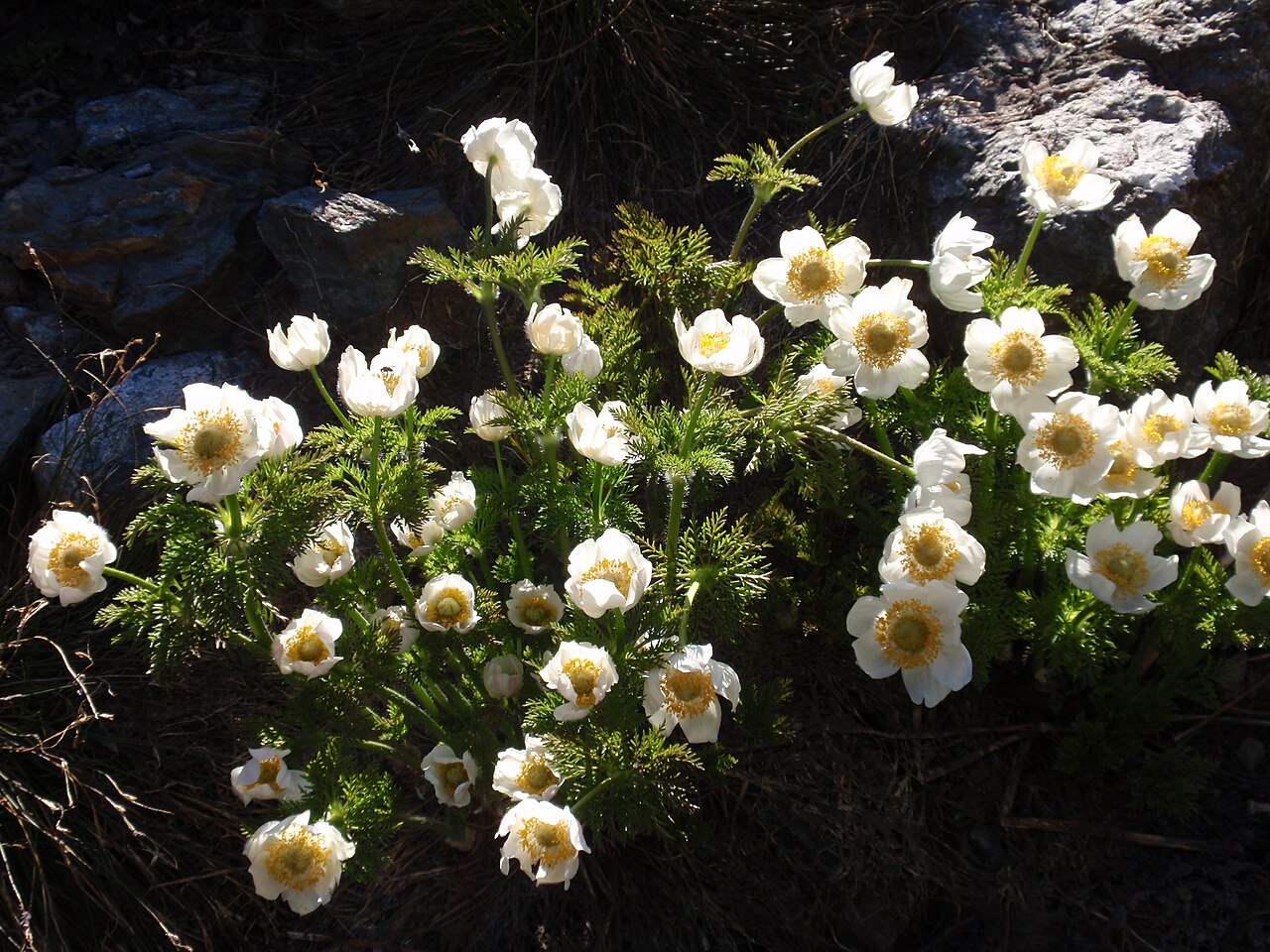
Pulsatilla occidentalis, known as White Pasqueflower (also western pasqueflower, western anemone, or towhead babies; synonym Anemone occidentalis), is a high-mountain wildflower of western North America. It belongs to the buttercup family (Ranunculaceae). It is one of the first flowers to bloom in subalpine and alpine meadows, often pushing up through the edges of melting snowbanks.
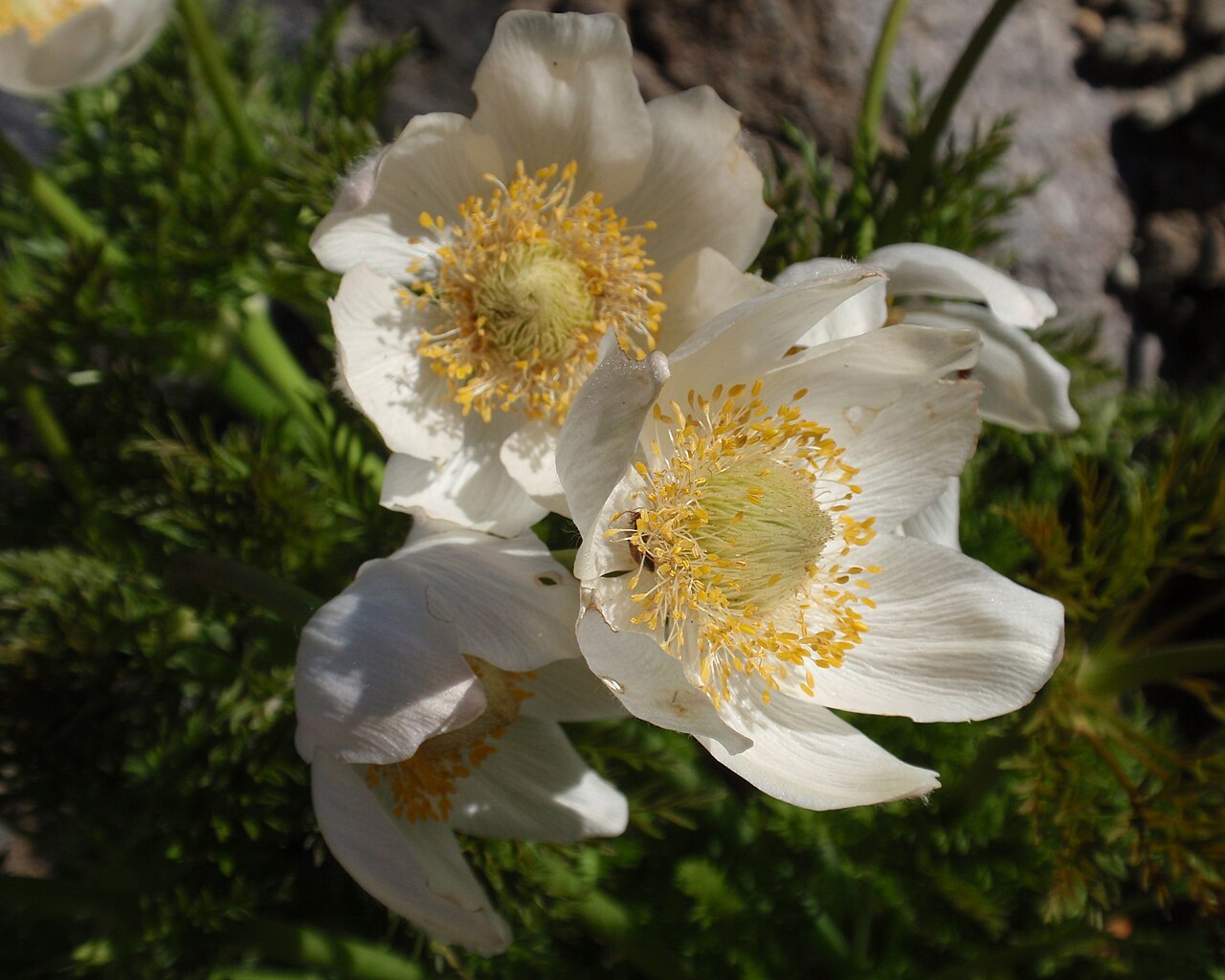
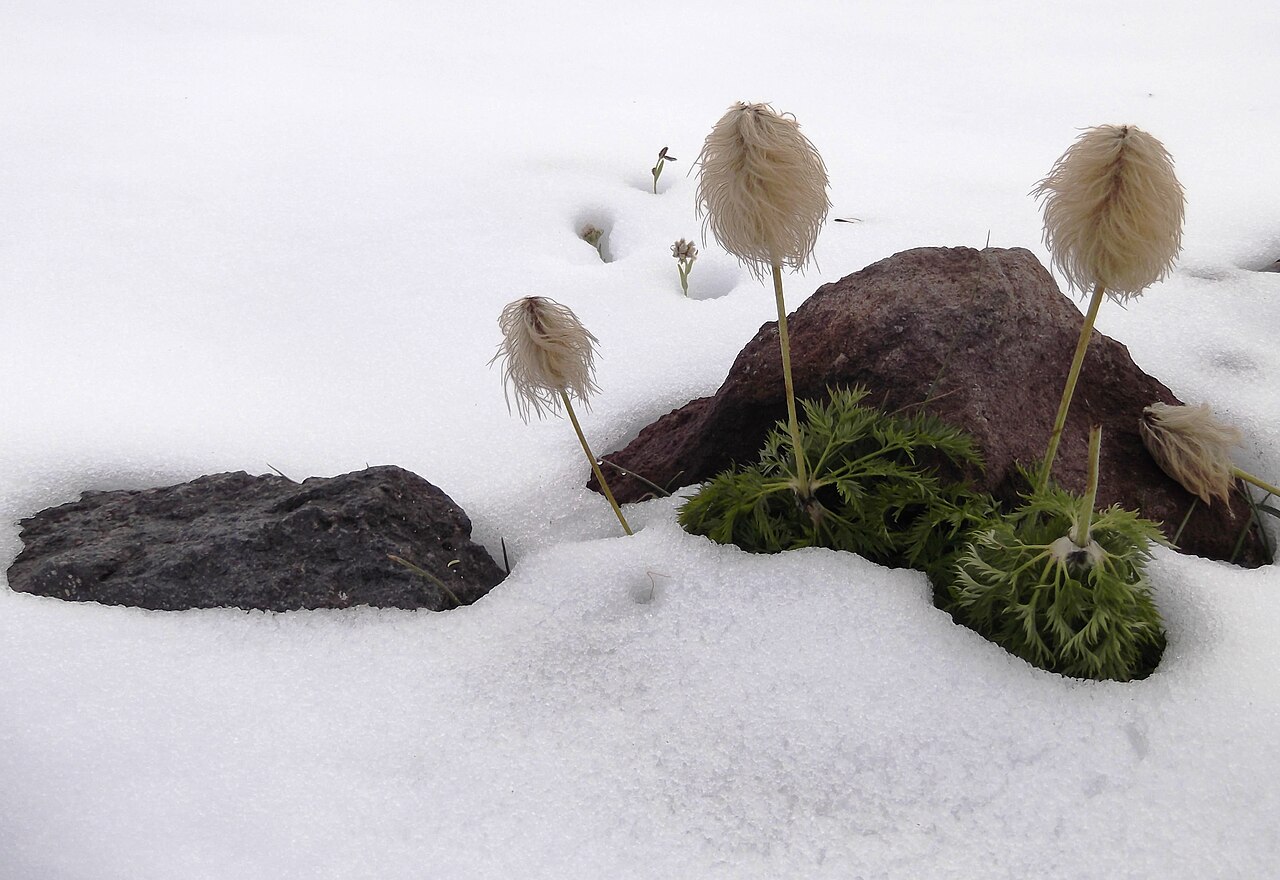
Its large, cup-shaped white flowers, 1 1/2 to 2 1/2 inches across with a center of bright yellow stamens, open on short, hairy stalks above finely divided, ferny leaves. After flowering, the stalks lengthen and each flower turns into a shaggy, feathery seed head that looks like a mop of wild hair, the source of its nicknames “towhead babies” and “old man of the mountain.” The seed heads are often more noticeable than the flowers and last well into late summer.
Safety note: like other pasqueflowers and many buttercups, all parts of the fresh plant contain protoanemonin, an irritant that can blister skin and cause mouth irritation, vomiting and diarrhea if eaten. Do not eat it, and wash after handling crushed plants. It is a wild mountain plant that is very hard to grow in gardens; never dig wild plants.
Identification
Look for a low, hairy clump of ferny, finely cut leaves with large white, yellow-centered flowers just after snowmelt, or later with shaggy, feathery seed heads, in mountain meadows and rocky slopes.
Stems & Habit
White pasqueflower is a clump-forming perennial from a thick, deep taproot and woody base. Flowering stems are 4 to 8 inches tall at bloom and lengthen to 12 to 24 inches as the seed heads mature. Stems, leaves and flower backs are covered in long, silky hairs.
Leaves
Most leaves are basal on long stalks, 2 to 4 inches wide and divided two or three times into many narrow segments, giving a ferny, parsley-like look. Partway up each flowering stem is a whorl of three stalkless, similarly dissected leaves (the involucre). The leaves expand fully after flowering.
Flowers
Each stem carries a single upward-facing flower 1 1/2 to 2 1/2 inches across. The five to seven “petals” are actually sepals, white to cream inside and often tinged bluish purple and hairy on the outside. There are no true petals. The center holds many yellow stamens around a cluster of pistils. Bloom begins as soon as the snow melts, from about May at lower elevations to August near timberline.
Fruit & Seeds
Each pistil develops into a small, hairy achene with a long, feathery style 1 to 2 inches long. Together they form a rounded, shaggy seed head 2 to 3 inches across. The plumes catch the wind and carry the seeds away in late summer.
Look-alikes
American pasqueflower (American Pasqueflower, P. nuttalliana) has lavender to purple flowers and grows mostly in prairies and lower mountain slopes. Cut-leaf anemone (Cut-Leaf Anemone) has smaller flowers and woolly, not feathery, seed heads. White marsh marigold (White Marsh Marigold) also blooms at snowmelt but has undivided, kidney-shaped leaves and grows in wet places.
Safety & Conservation
All parts of the fresh plant are toxic. Protoanemonin in the sap can cause skin redness and blisters, and eating the plant causes mouth irritation and stomach upset. Livestock usually avoid it. The species is widespread and secure overall, but it grows in fragile alpine and subalpine habitats. Admire it on the trail and never dig wild plants, which rarely survive transplanting.
Quick Facts
| Scientific Name | Pulsatilla occidentalis |
| Family | Ranunculaceae (buttercup family) |
| Plant Type | Herbaceous perennial with a deep taproot |
| Mature Height | 4–8 in in flower; 12–24 in in seed |
| Mature Spread | 6–12 in |
| Growth Rate | Slow |
| Sun Exposure | Full sun |
| Water Needs | Moderate; moist from snowmelt, drier later in summer |
| Soil Type | Well-drained gravelly, rocky or scree soils |
| Soil pH | About 5.0–7.0 |
| Bloom Time | May–August (at snowmelt) |
| Flower Color | White to cream, often tinged purple outside |
| Fall Color | Leaves turn yellow to tan |
| Fruit | Shaggy head of achenes with feathery plumes |
| Deer Resistant | Yes; toxic foliage is avoided |
| USDA Hardiness Zones | 3–6 |
Native Range
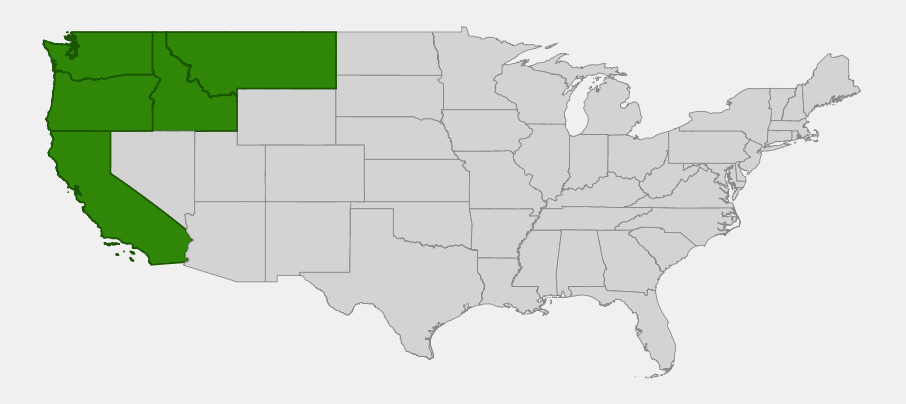
White pasqueflower is native to the mountains of western North America. USDA PLANTS lists it as native in California, Idaho, Montana, Oregon and Washington, and in British Columbia and Alberta.
It grows in the Cascade Range and Olympic Mountains of Washington and Oregon, including Mount Rainier and Mount Hood, south through the Klamath Mountains and Trinity Alps to the Sierra Nevada of California. Eastward it occurs in the Wallowa and Blue Mountains of northeastern Oregon, the mountains of northern and central Idaho and the Rocky Mountains of western Montana, and north through the Coast Mountains and Rockies of British Columbia and Alberta.
It is a plant of high elevations: subalpine and alpine meadows, rocky slopes, scree, ridges and openings in subalpine fir and mountain hemlock forest, especially on sites that hold snow late into spring and then dry out in summer.
📋 Regional plant lists featuring White Pasqueflower: Idaho, Eastern Oregon & Eastern Washington · Montana & Wyoming · Western Oregon & Western Washington · California & Nevada
Growing & Care Guide
White pasqueflower is admired far more often in the mountains than in gardens. It needs a cold winter, a long snow cover, cool summers and sharp drainage, and its deep taproot makes it hard to move. It is suited only to dedicated alpine and rock gardeners in cold climates.
Light
Full sun, with cool temperatures. In warm lowland gardens it struggles even with afternoon shade.
Soil & Water
Use a gritty, very well-drained scree or rock-garden mix, moist in spring and early summer and drier later. Avoid heavy, wet soil, which rots the crown, and avoid hot, dry summers.
Planting Tips
Grow it in a raised scree bed, trough or alpine garden. Plant small pot-grown seedlings and set them in place permanently; established plants resent disturbance because of their deep taproot. Never dig plants from the wild.
Pruning & Maintenance
No pruning is needed. Leave the feathery seed heads, which are ornamental, and remove dead foliage in fall. Wear gloves when handling the plant.
Propagation
Grow from seed. Sow fresh seed in late summer or fall in pots left outdoors over winter, and expect slow and uneven germination. Seedlings take several years to bloom. Collect seed only where it is permitted and in small amounts.
Landscape Uses
- Alpine and rock gardens: for cold-climate scree beds and troughs
- Mountain wildflower viewing: one of the first flowers after snowmelt
- Early pollinator food: pollen for bees and flies at high elevations
- Seed-head interest: striking feathery heads into late summer
- Photography: a classic subject of subalpine meadows
Wildlife & Ecological Value
In the short mountain growing season, white pasqueflower offers some of the first pollen of the year.
For Pollinators
The open, bowl-shaped flowers are visited by bumblebee queens, small native bees and flies. They make no nectar but offer abundant pollen, and the cup shape may warm insects by trapping sunlight.
For Birds
Its role for birds is minor, though some birds use the fluffy seed plumes, and insect-eating birds forage around blooming patches.
For Mammals
Deer, elk, mountain goats and livestock generally avoid it because of its toxicity.
Ecosystem Role
As an early-blooming, long-lived perennial of subalpine meadows, it marks the beginning of the mountain growing season and helps stabilize gravelly slopes with its deep taproot.
Cultural & Historical Uses
The name pasqueflower comes from the Old French pasque, “Easter,” because the European pasqueflower blooms around Easter. The genus name Pulsatilla may come from the Latin pulsare, “to beat” or “to shake,” for the flowers moving in the wind. Occidentalis means “western.”
The shaggy seed heads have earned many playful names from hikers, including towhead babies, old man of the mountain, mouse on a stick and hippie on a stick. In late summer, whole slopes can be covered with them.
Botanists have long debated whether pasqueflowers belong in Pulsatilla or in Anemone, so this species is often listed as Anemone occidentalis. A related prairie species on this site is American Pasqueflower.
Frequently Asked Questions
Is white pasqueflower poisonous?
Yes. The fresh plant contains protoanemonin, which can blister skin and cause mouth irritation, vomiting and diarrhea if eaten. Do not eat it, and wash after handling crushed plants.
Why is it called towhead babies?
After flowering, each bloom turns into a shaggy, feathery seed head that looks like a small head of tousled blond hair.
Where can I see white pasqueflower?
In subalpine and alpine meadows of the Cascades, Olympics, Sierra Nevada, Klamath Mountains and northern Rockies, for example at Mount Rainier, soon after the snow melts.
Can I grow white pasqueflower in my garden?
Only in a cold-climate alpine or scree garden, from seed. It needs cool summers, snow cover and excellent drainage, and it is difficult elsewhere.
Can I transplant it from the wild?
No. Its deep taproot rarely survives digging, and wild plants should be left in place.

Looking for a nursery that carries White Pasqueflower?
Browse our native plant nursery directory: California · Idaho · Montana · Oregon · Washington