
Bluewitch Nightshade (Solanum umbelliferum)
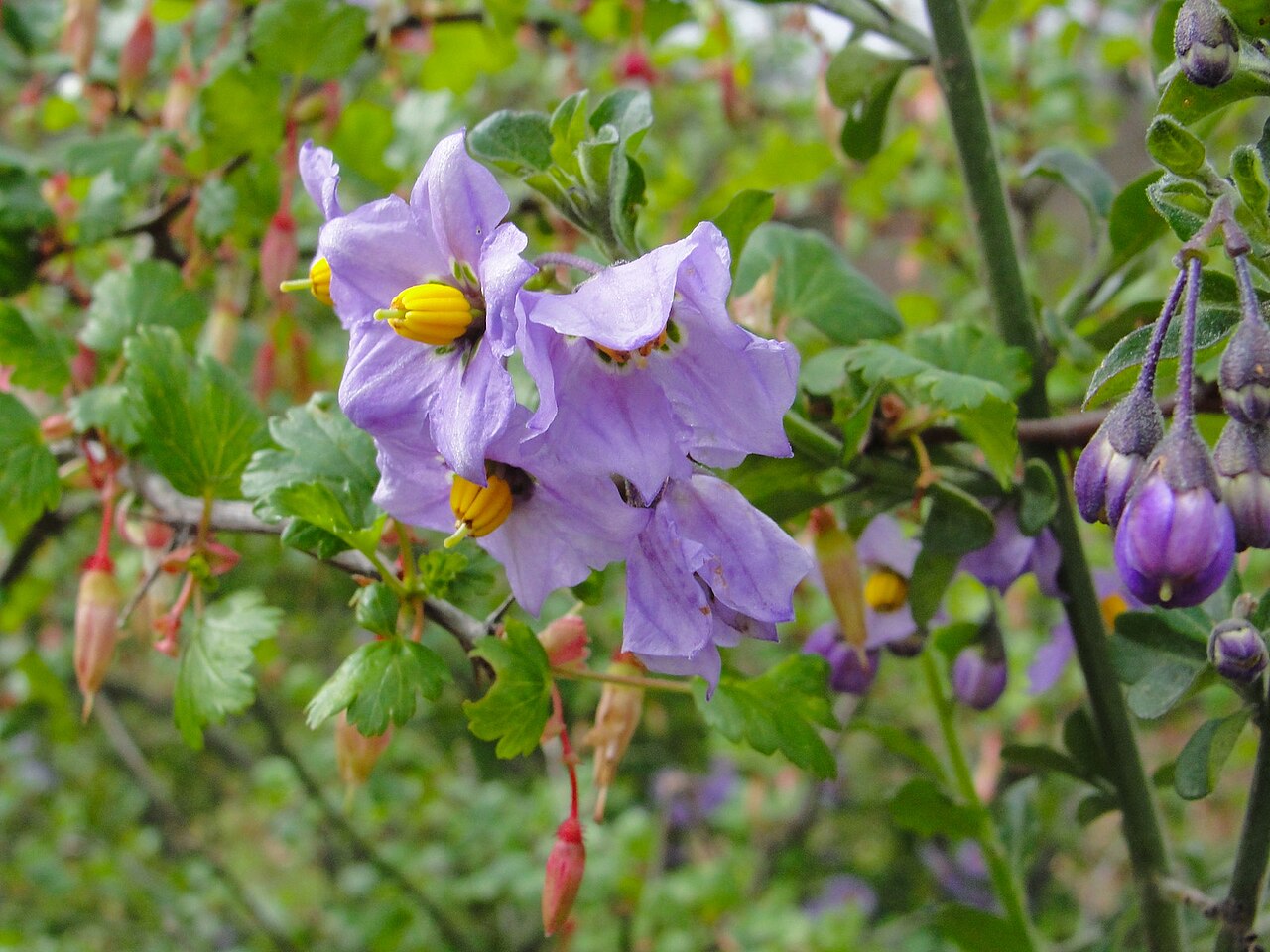
Solanum umbelliferum, known as Bluewitch Nightshade or blue witch, is a small, soft-wooded shrub in the nightshade family (Solanaceae). It grows 1 to 3 feet tall and produces clusters of starry, lavender to violet-blue flowers with a bright yellow cone of anthers in the center, mostly from late winter through spring. Its leaves and stems are covered in fine, branched hairs that give many plants a soft, gray-green look.
Bluewitch nightshade is a California native of chaparral, oak woodland and coastal scrub, ranging into southwestern Oregon and, in a few scattered records, Arizona. It often grows along trail edges, on rocky slopes and in openings in the brush, where its flowers stand out among the grays and greens of the dry hills.
It is a long-blooming, drought-tolerant plant for dry California gardens, and it attracts native bees that shake pollen from its flowers. Like most of its relatives, it is poisonous: all parts, especially the unripe berries, contain toxic glycoalkaloids. Plant it where children and pets will not be tempted to eat the berries.
Identification
Look for a low, open shrub with soft, gray-green, hairy leaves and clusters of lavender star-shaped flowers, each with a yellow cone of anthers and small green spots at the base of the petals.
Growth Habit
Bluewitch nightshade is a short-lived, much-branched subshrub, usually 1 to 3 feet tall and often as wide, with slender stems that are woody at the base. Plants may be upright and open in shade or more compact in sun. It grows mainly from late fall through spring, and many plants drop their leaves or partly die back in the summer drought.
Leaves
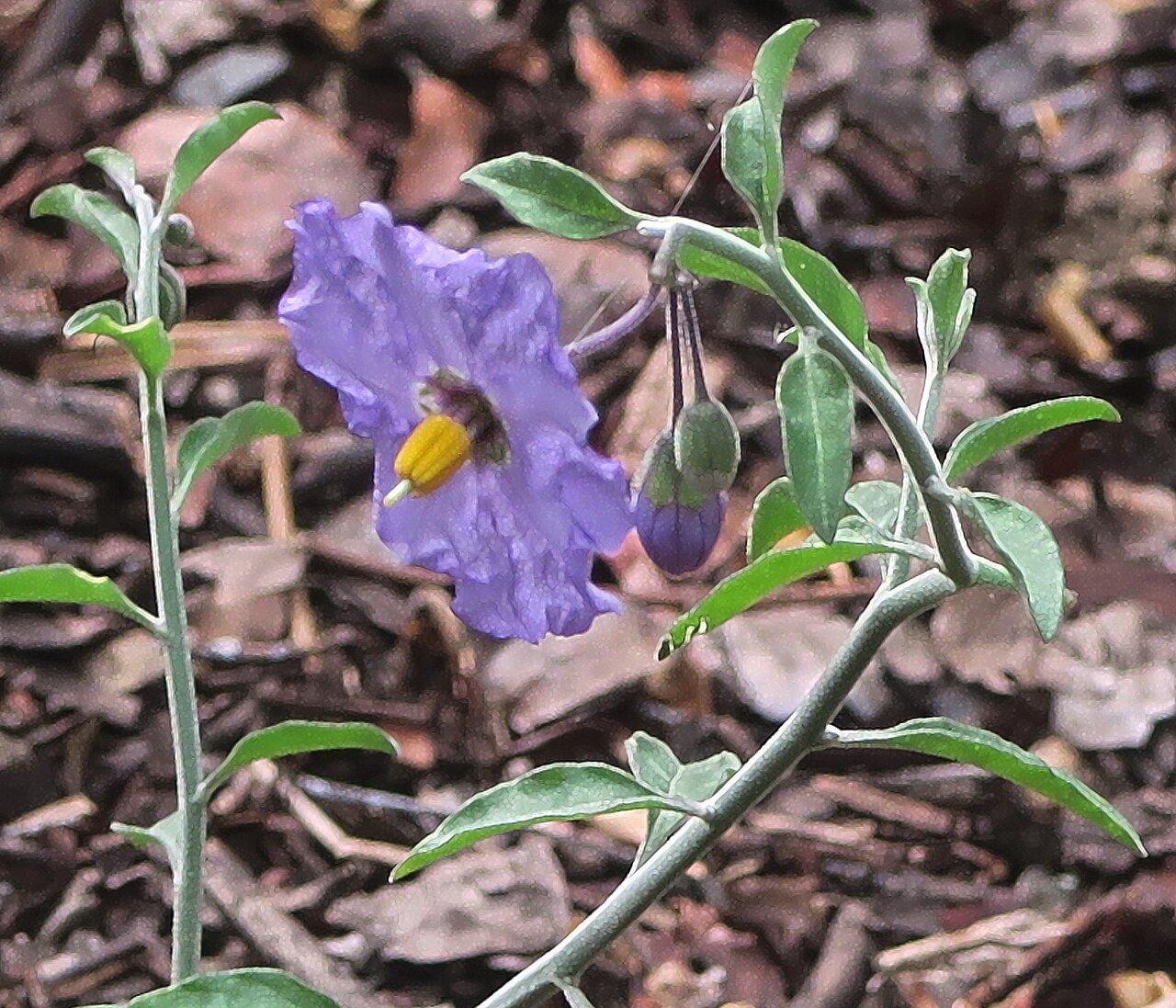
The leaves are simple, alternate, oblong to oval, usually 1/2 to 2 inches long, with smooth or slightly wavy edges. They are covered, along with the stems, in tiny branched (star-shaped) hairs, which make them feel soft and look gray-green to almost silvery.
Flowers
Flowers form in small, umbrella-like clusters (the source of the name umbelliferum, “bearing umbels”) at the ends of short side branches. Each flower is about 3/4 to 1 inch across, with five petals fused into a star or wheel shape. The color ranges from pale lavender to deep violet-blue, and occasionally white. At the base of each petal lobe is a small green spot edged in white, and in the center the five yellow anthers form a tight cone. The main bloom is from about February to June, with scattered flowers at other times.
Fruit
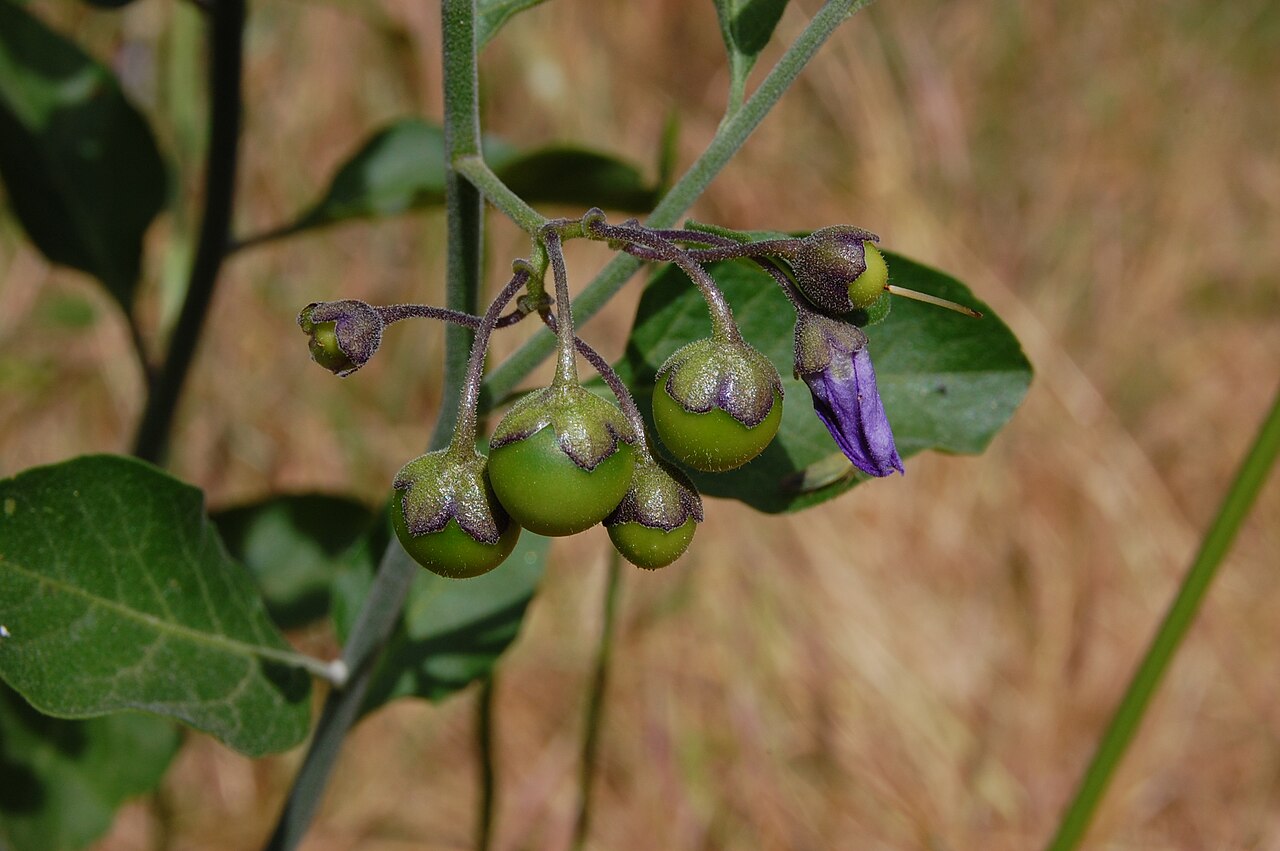
The fruit is a round berry about 1/3 to 1/2 inch across, green when young and sometimes turning purplish as it ripens. The berries contain many small seeds and are poisonous.
Related Nightshades
Bluewitch nightshade is closely related to purple nightshade (Solanum xanti) and Parish's nightshade (Solanum parishii). Purple nightshade usually has greener, less hairy leaves and deeper purple flowers, and Parish's nightshade grows mostly in Southern California. They intergrade, and some botanists combine them into one broad species; the Jepson eFlora and iNaturalist keep them separate. Greenspot nightshade (Solanum douglasii) has small white flowers and black berries.
Quick Facts
| Scientific Name | Solanum umbelliferum |
| Family | Solanaceae (nightshade family) |
| Plant Type | Evergreen to summer-deciduous subshrub |
| Mature Height | 1–3 ft |
| Mature Spread | 1–3 ft |
| Growth Rate | Moderate to fast |
| Sun Exposure | Full sun to part shade |
| Water Needs | Low; drought tolerant |
| Soil Type | Well-drained sandy, rocky, loam or clay soils |
| Soil pH | Slightly acidic to slightly alkaline (about 6.0–8.0) |
| Bloom Time | February–June, with scattered later flowers |
| Flower Color | Lavender to violet-blue, rarely white |
| Fall Color | None |
| Fruit | Round green berries (poisonous) |
| Deer Resistant | Yes; usually avoided |
| USDA Hardiness Zones | 8–10 |
Native Range
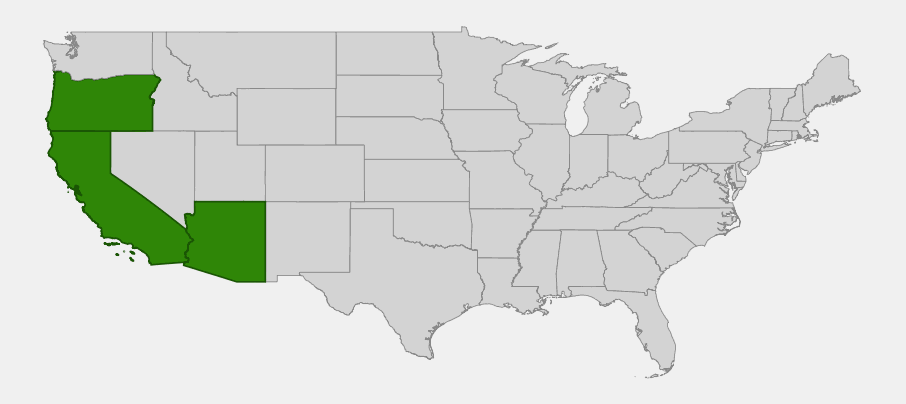
USDA PLANTS lists bluewitch nightshade as native in three states: California, Oregon and Arizona. It also extends south into northern Baja California, Mexico.
The heart of its range is cismontane California, where it grows in the Coast Ranges from the North Coast and Klamath region south through the San Francisco Bay Area and the Central Coast to Southern California, and in the foothills of the Sierra Nevada. In Oregon it is limited to the southwestern part of the state, in the Siskiyou region west of the Cascades. Arizona records are few and scattered, and most Arizona plants have traditionally been identified as the closely related purple nightshade.
It grows in chaparral, coastal sage scrub, oak woodland and grassland edges, often on rocky or disturbed slopes, along roadsides and trail cuts, and in openings after fire, from near sea level to roughly 5,000 feet.
📋 Regional plant lists featuring Bluewitch Nightshade: Arizona & New Mexico · Western Oregon & Western Washington · California & Nevada
Growing & Care Guide
Bluewitch nightshade is an easy, fast-growing native for dry gardens in California and southwestern Oregon. It blooms over a long season with little or no summer water, but it is short-lived, so expect to replace plants or let seedlings take over every few years.
Light
Full sun near the coast; part shade or afternoon shade in hot inland gardens. In deeper shade it becomes leggy and blooms less.
Soil & Water
It grows in most well-drained soils, from sand and decomposed granite to clay on a slope. Water young plants through their first dry season. Once established, it needs little or no summer water; occasional deep watering in summer keeps it leafier and blooming longer, but overwatering in heavy soil shortens its life.
Planting Tips
Plant in fall or winter so the roots can grow with the winter rains. Use it on dry slopes, at the edge of chaparral or oak plantings, or in a mixed bed with sages, buckwheats and monkeyflowers. Keep it away from play areas because of its poisonous berries.
Pruning & Maintenance
Cut plants back by about a third in late summer or fall to keep them compact and to encourage fresh growth and flowers. Remove dead stems as needed. It may look shabby in late summer if it is not watered; that is normal summer dormancy.
Propagation
Grow it from seed cleaned from ripe berries (wear gloves) and sown in fall, or from softwood or semi-hardwood cuttings. It sometimes self-sows in gardens. Several selections are sold by California native plant nurseries, including a pale-flowered form called 'Spring Frost'.
Landscape Uses
- Dry gardens: long bloom with little or no summer water
- Chaparral and oak woodland plantings: fits naturally with sages, ceanothus and toyon
- Slopes: grows well in lean, rocky or well-drained soils
- Pollinator gardens: a favorite of buzz-pollinating native bees
- Habitat restoration: quick cover on disturbed ground and trail cuts
Wildlife & Ecological Value
Bluewitch nightshade blooms early and for a long time, so its flowers are an important resource for native bees in chaparral and oak woodland.
For Pollinators
Nightshade flowers release pollen only through tiny pores at the tips of the anthers. Bumble bees and other native bees grab the anther cone and vibrate their flight muscles to shake the pollen out, a behavior called buzz pollination. Honeybees cannot do this, so the flowers are mainly used by native bees.
For Birds
Some birds may eat the berries and spread the seeds, and the shrubby growth gives cover to small birds such as wrentits and towhees.
For Mammals
The foliage and fruit are toxic and bitter, and deer usually leave the plant alone.
Ecosystem Role
Bluewitch nightshade quickly colonizes open and disturbed ground, including burned chaparral, where it helps hold soil while longer-lived shrubs regrow.
Cultural & Historical Uses
The genus Solanum is one of the largest plant genera, with well over 1,000 species. It includes important food plants such as potato, tomato and eggplant, as well as many poisonous wild species. Bluewitch nightshade is one of a small group of shrubby nightshades native to California.
The common name “blue witch” probably reflects the plant's attractive but poisonous nature, a theme shared with many nightshades in folklore. The species was described in the early 1800s by the Baltic German naturalist Johann Friedrich von Eschscholtz, who collected plants in California during a Russian voyage of exploration.
Safety note: All parts of bluewitch nightshade, especially the unripe berries and the leaves, contain solanine and related glycoalkaloids, which can cause vomiting, diarrhea, abdominal pain and, in larger doses, more serious poisoning in people, pets and livestock. Never eat the berries, and contact a doctor, veterinarian or poison control center if any part is swallowed.
Frequently Asked Questions
Is bluewitch nightshade poisonous?
Yes. All parts, especially the green berries and leaves, contain toxic glycoalkaloids. Do not eat any part of it, and keep children and pets away from the berries.
Does bluewitch nightshade need summer water?
No. Once established, it survives on winter rain alone, although it may go partly dormant in late summer. Occasional summer water keeps it greener.
How long does bluewitch nightshade live?
It is a short-lived shrub, often lasting only a few years in gardens. Cutting it back each year helps, and seedlings often replace older plants.
What is the difference between bluewitch nightshade and purple nightshade?
They are close relatives. Bluewitch nightshade usually has grayer, hairier leaves and paler lavender flowers, while purple nightshade (Solanum xanti) tends to be greener with deeper purple flowers. Some botanists combine them into one species.
Does bluewitch nightshade attract bees?
Yes. Bumble bees and other native bees buzz-pollinate the flowers, shaking pollen from the anthers.

Looking for a nursery that carries Bluewitch Nightshade?
Browse our native plant nursery directory: Arizona · California · Oregon