
California Pitcher Plant (Darlingtonia californica)
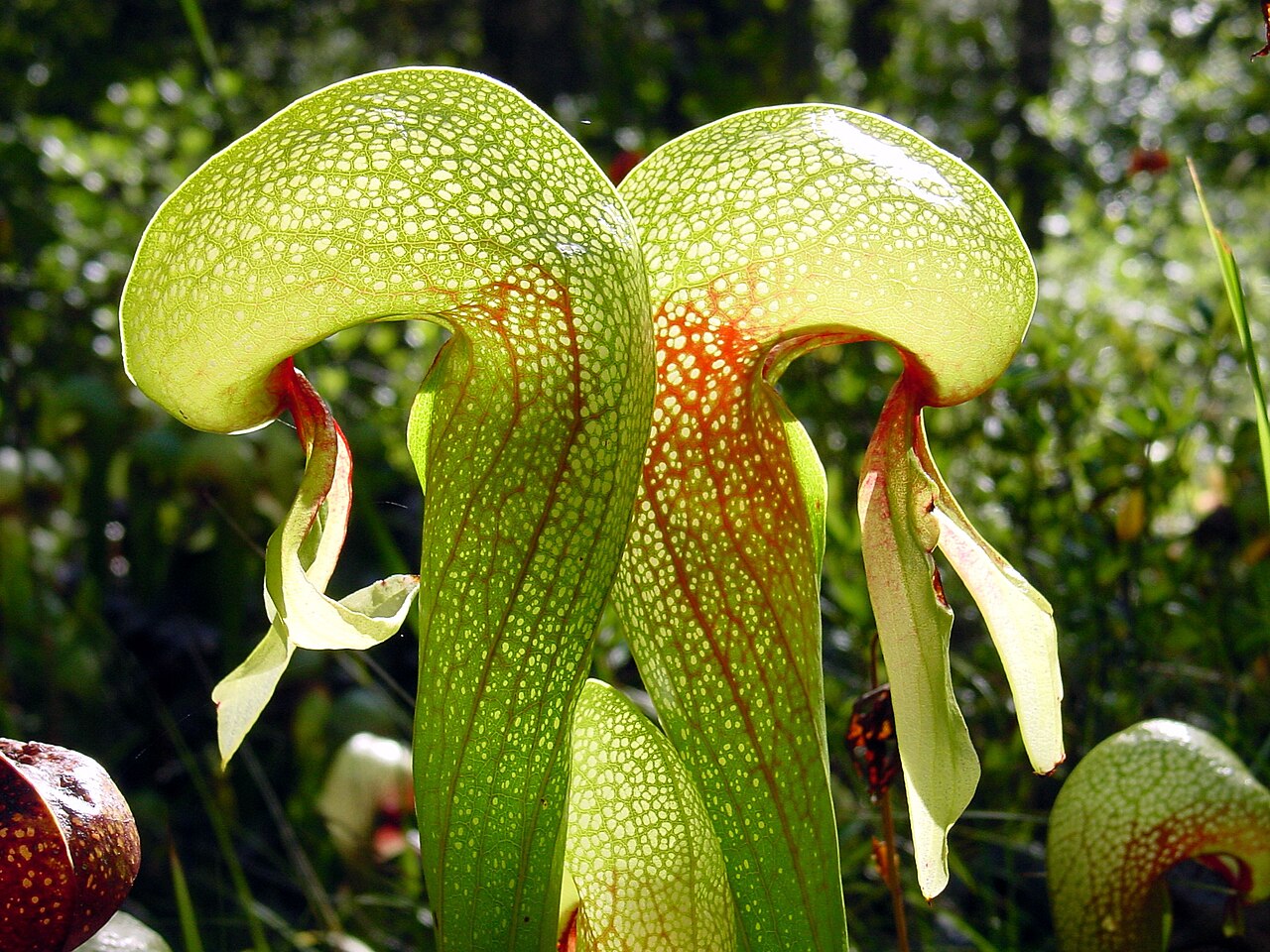
Darlingtonia californica, known as California Pitcher Plant (USDA: California pitcherplant) or cobra lily, is a carnivorous perennial of cold seeps and fens in northern California and southwestern Oregon. It is the only species in its genus and a member of the American pitcher plant family (Sarraceniaceae), alongside the eastern Sarracenia pitcher plants. Its tubular leaves rise 1 to 3 feet tall and twist as they grow, ending in a swollen, hooded dome with a forked, fang-like appendage below the opening. Together they look remarkably like a rearing cobra, which is the source of its most popular name.
The hood is dotted with translucent, window-like patches. Insects lured by nectar on the fang and around the mouth crawl inside, then fly up toward the false windows, tire, and fall down the slippery tube, where downward-pointing hairs keep them from climbing out. Unlike most pitcher plants, cobra lily does not produce its own digestive enzymes; bacteria and other organisms in the pitcher fluid break down the prey and the plant absorbs the nutrients.
Cobra lily grows only where cold water flows through the soil all year, often on serpentine rock. Wild populations are uncommon and their habitats are fragile. Never dig plants from the wild. Buy only nursery-propagated plants, and be ready to give them cool roots and pure, cold water.
Identification
No other North American plant looks quite like the cobra lily. Its hooded, twisted pitchers with forked “fangs” are unmistakable, even when the plant is not in flower.
Growth Habit
A clump-forming perennial that spreads by long, slender underground stolons (runners), producing new rosettes that often form large colonies. The root system is large and rambling for a carnivorous plant, and plants can regrow from roots after a fire.
Pitchers (Leaves)
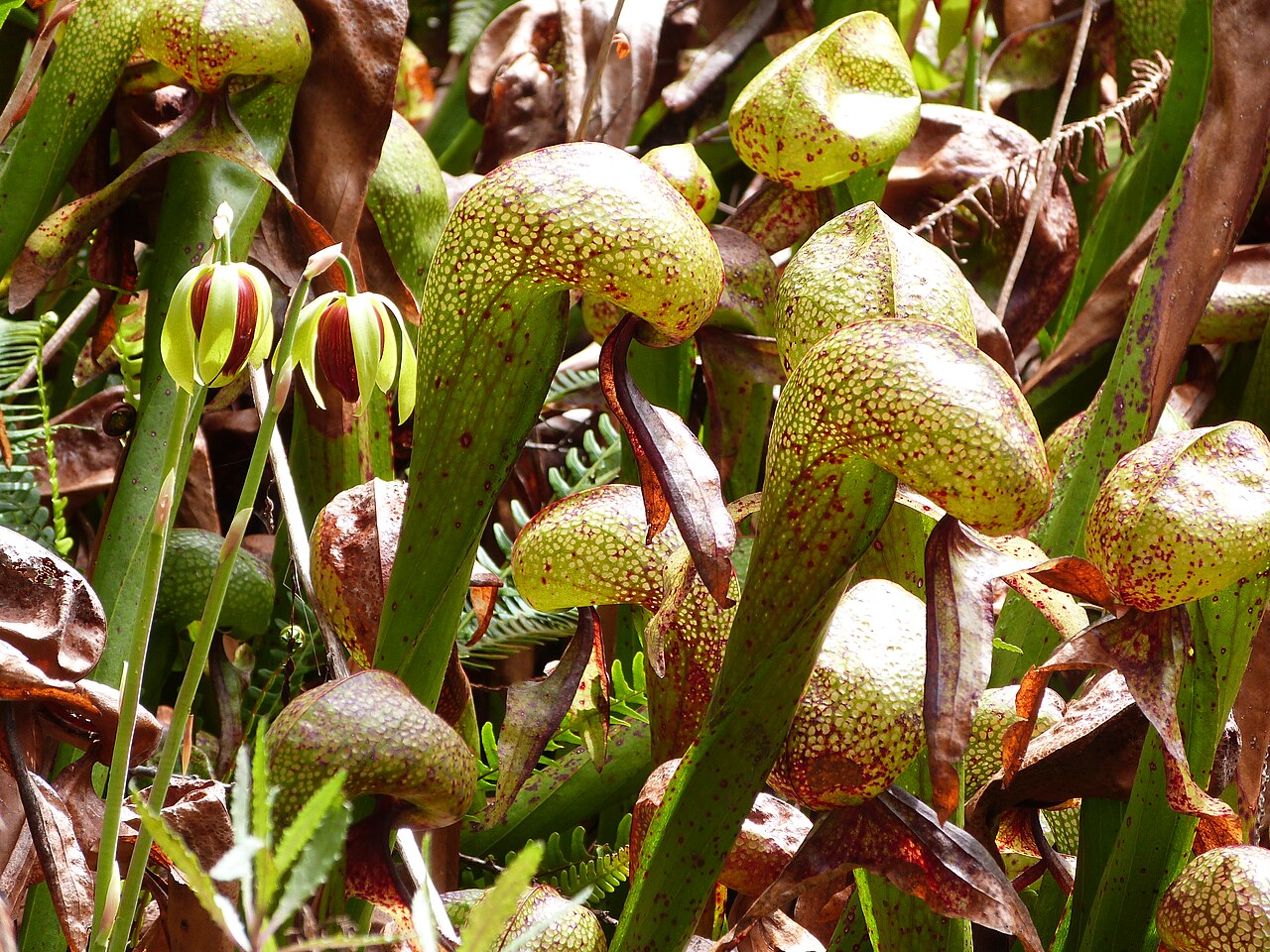
The leaves are hollow tubes, usually 1 to 3 feet tall (smaller in young plants), arising from a rosette. Each tube twists up to half a turn as it grows, so that the opening faces outward. The top swells into a rounded hood marked with many translucent white spots (areolae). Below the small entrance hangs a two-lobed, mustache- or fang-like appendage, green to yellow or reddish. In strong sun the hood and veins turn orange-red; in shade the pitchers stay greener.
Flowers
In spring and early summer (about April to June near the coast and into summer in the mountains), a single nodding flower rises on a leafless stalk 1 to 3 feet tall, usually above the pitchers. Each flower has five long, yellow-green sepals and five shorter, maroon to reddish-brown petals with darker veins, forming a lantern-like bell. Bees are thought to be the main pollinators.
Fruit & Seeds
The flowers become upright, club-shaped capsules about 1 1/2 inches long that split at the top to release many small, hairy seeds. Seedlings first produce small, tubular leaves without hoods.
Look-alikes
Eastern pitcher plants such as Purple Pitcher Plant (Sarracenia purpurea) and Yellow Pitcher Plant (S. flava) have open pitchers with a lid but no twisted, bulb-shaped hood and no forked appendage. Hooded Pitcher Plant (S. minor) has a hood with translucent spots but no fang, and grows only in the Southeast. No Sarracenia is native in the West.
Safety & Conservation
Cobra lily is harmless to people and pets. The main concern is for the plant: its seeps and fens are small, rare and easily damaged by trampling, digging, water diversion and grazing. Some populations are protected, for example at Darlingtonia State Natural Site in Oregon and Butterfly Valley Botanical Area in California. Never collect plants or seed from the wild; buy nursery-propagated plants from reputable carnivorous plant growers.
Quick Facts
| Scientific Name | Darlingtonia californica |
| Family | Sarraceniaceae (American pitcher plant family) |
| Plant Type | Carnivorous herbaceous perennial; spreads by stolons |
| Mature Height | 1–3 ft (pitchers and flower stalks) |
| Mature Spread | 1–2 ft per clump; forms colonies |
| Growth Rate | Slow to moderate |
| Sun Exposure | Full sun to partial shade (cool roots required) |
| Water Needs | High; constantly wet with cold, flowing water |
| Soil Type | Sphagnum, peat and sand; serpentine seeps in the wild |
| Soil pH | About 5.0–7.0 |
| Bloom Time | April–July |
| Flower Color | Yellow-green sepals, maroon petals |
| Fall Color | Pitchers redden in cool weather and sun |
| Fruit | Club-shaped capsule with many small seeds |
| Deer Resistant | Yes |
| USDA Hardiness Zones | 7–9 |
Native Range
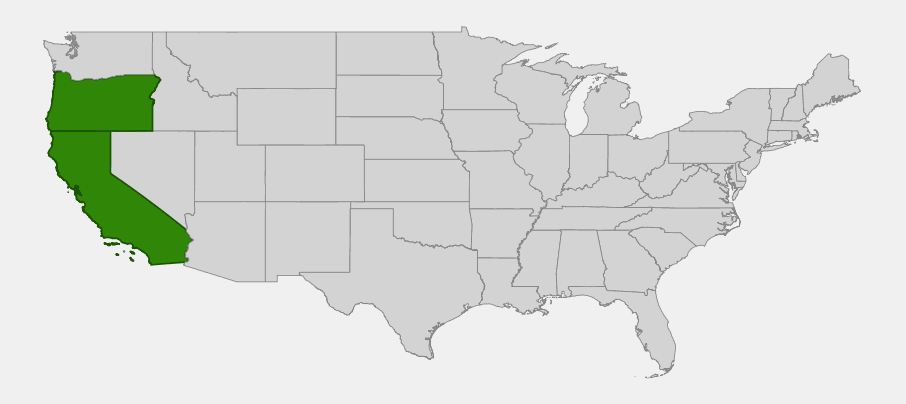
California pitcher plant is endemic to the Pacific Coast of the United States. It is native to northern California and southwestern Oregon, from the Sierra Nevada of Plumas, Sierra and Nevada counties and the Klamath and Siskiyou mountains, Trinity Alps and Mount Shasta area north and west to the coast of Del Norte County, California, and along the Oregon coast north to Tillamook County. The largest concentrations are in the Klamath-Siskiyou region of Josephine and Curry counties, Oregon, and Del Norte and Siskiyou counties, California.
USDA PLANTS also lists Washington, but the Burke Herbarium describes the Washington plants as introduced from Oregon and intentionally planted at a lake west of the Cascades, so Washington is not shown as native here. All native populations lie west of the Cascade crest in Oregon, so the plant is not part of the interior flora east of the Cascades.
It grows only where cold water flows through the soil year-round: serpentine seeps and springs, fens, wet meadows, boggy stream banks and coastal sphagnum bogs. Most inland populations grow on ultramafic (serpentine) rock, whose soils are low in nutrients and toxic to many plants, and others grow on nutrient-poor sands near the coast.
📋 Regional plant lists featuring California Pitcher Plant: Western Oregon & Western Washington · California & Nevada
Growing & Care Guide
California pitcher plant is one of the more demanding carnivorous plants to grow. It can thrive in a well-built bog garden or container in mild coastal climates, but its roots must stay cool. Buy nursery-propagated plants only; wild collection is unethical, often illegal and rarely successful.
Light
Give it bright light: full sun in cool coastal climates, or morning sun and afternoon shade where summers are hot. Good light colors the hoods orange-red. The tops tolerate heat, but the roots do not.
Soil & Water
Grow it in live or long-fiber sphagnum moss, or a mix of sphagnum peat with plenty of lime-free sand or perlite. Keep the medium constantly wet with rainwater, distilled water or reverse-osmosis water; minerals in tap water slowly harm it. The roots die back when they stay above about 50 to 60°F for long, so keep them cool: use a light-colored or double pot, mulch the surface with live sphagnum, water with cold water on hot days, or set up a slow trickle of cool water, as in its native seeps. Avoid stagnant, warm, standing water, which causes root rot. Never fertilize the soil.
Planting Tips
Plant in spring in a lined bog garden or a deep container with a cool, constant water supply. In hot inland climates, a shaded, north-facing site and a container that can be kept cool work better than an in-ground bog. Pair it with other bog plants such as sundews, but avoid taller plants that shade it out.
Pruning & Maintenance
It needs a cool winter dormancy of about three to four months, with temperatures near freezing; it tolerates light frost and snow but should be protected from hard, prolonged freezes in containers. Trim dead pitchers in late winter or early spring. Divide crowded clumps every few years.
Propagation
The easiest method is to separate young plants that form at the ends of stolons and pot them in wet sphagnum. Seed is slow: sow fresh seed on the surface of wet sphagnum peat after several weeks of cold, moist stratification, and expect several years to reach flowering size.
Landscape Uses
- Bog gardens: a dramatic centerpiece in a cool, constantly wet bog garden
- Container and water-feature plantings: grows well beside a gentle stream or in a pot with cool water trickling through
- Carnivorous plant collections: the only cobra lily, unlike any other pitcher plant
- Nature education: a striking example of insect trapping and plant adaptation
- Conservation display gardens: shows the value of protecting serpentine fens and seeps
Wildlife & Ecological Value
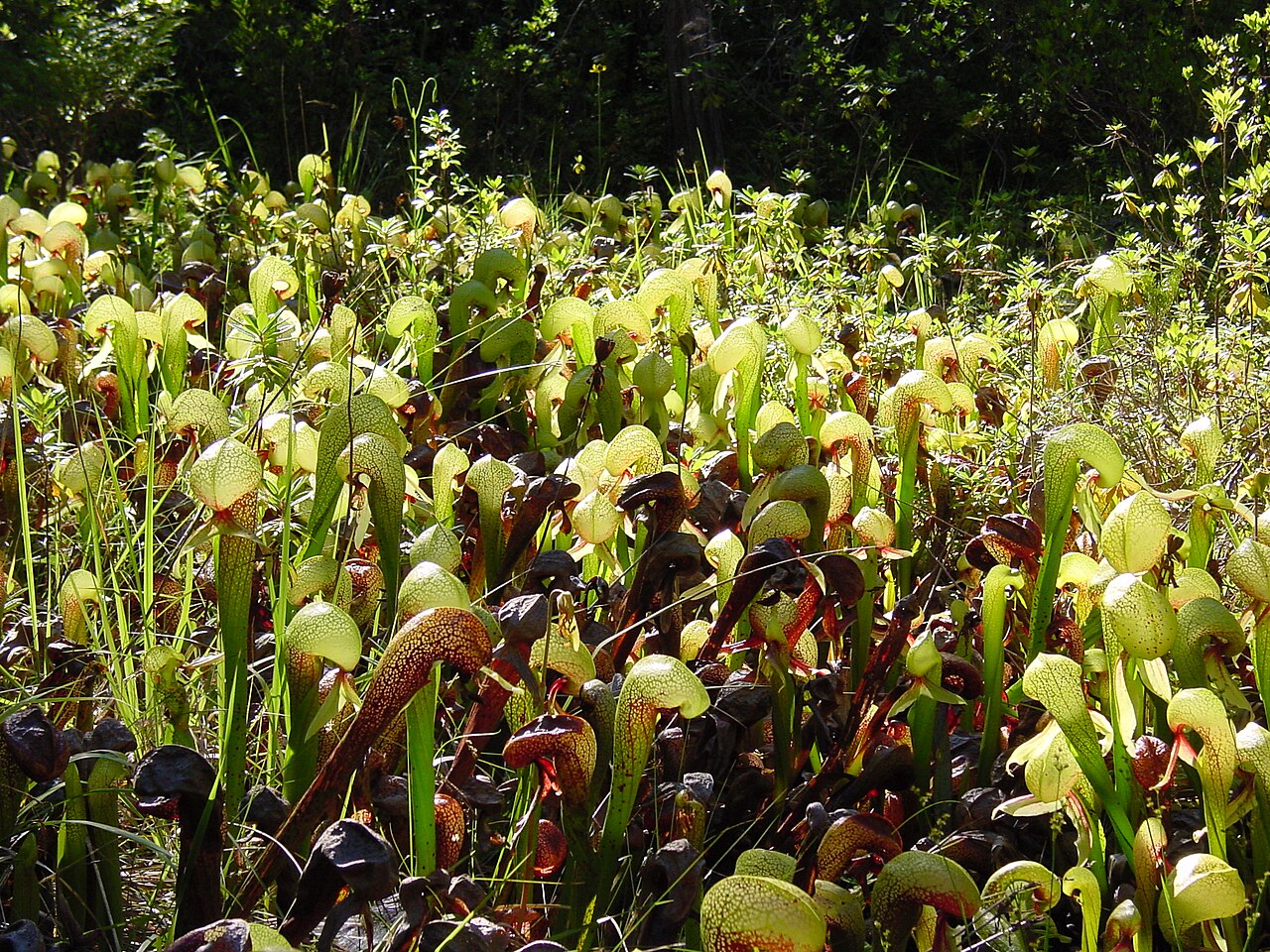
California pitcher plant is a predator of insects, but its pitchers also shelter a community of small organisms and its flowers feed pollinators.
For Pollinators
The nodding flowers are visited by bees, which are believed to be the main pollinators. The flowers bloom on tall stalks well above the pitchers, keeping pollinators away from the traps.
For Birds
Birds do not eat cobra lily, but some birds pick insects from the pitchers and the surrounding fens. The wet meadows where it grows support many birds.
For Mammals
Mammals rarely eat the plant. Trampling and grazing livestock can damage its fragile seeps, and the plants are protected in many places by fencing and boardwalks.
Ecosystem Role
Pitchers trap ants, flies, beetles, wasps and other insects, returning their nutrients to the plant in nutrient-poor serpentine and sandy soils. The fluid inside the pitchers supports bacteria, mites and the larvae of a specialized midge that live only in cobra lily pitchers, forming a tiny food web.
Cultural & Historical Uses
The plant was first collected for science in 1841 by William Dunlop Brackenridge, a botanist on the United States Exploring Expedition (the Wilkes Expedition), near Mount Shasta. In 1853 John Torrey described it and named the genus Darlingtonia after the Philadelphia botanist William Darlington (1782–1863).
Oregon set aside Darlingtonia State Natural Site north of Florence specifically to protect a coastal colony of cobra lilies, and a boardwalk lets visitors see it without damaging the fen. In California, Butterfly Valley Botanical Area in Plumas National Forest protects a large mountain population along with many other wetland wildflowers.
Cobra lily is popular in horticulture worldwide and has received the Royal Horticultural Society’s Award of Garden Merit. Growers have selected strains that tolerate warmer root temperatures, which has made it easier to grow outside its cool native climate.
Frequently Asked Questions
Why is it called cobra lily?
Its hooded, twisted pitchers with a forked, tongue-like appendage look like a cobra rearing up to strike.
How does the cobra lily catch insects?
Nectar lures insects into the small opening under the hood. Inside, they fly toward the translucent “windows,” tire and fall into the tube, where downward-pointing hairs keep them from escaping. Bacteria in the pitcher fluid digest them.
Is California pitcher plant native to Washington?
No. It is native to northern California and southwestern Oregon. The Washington plants were introduced by people.
Why do my cobra lily roots keep dying?
Its roots are very sensitive to heat. Keep them cool with cold, flowing or frequently refreshed rainwater, light-colored or double pots and a sphagnum mulch, and avoid warm, stagnant water.
Can I collect cobra lilies from the wild?
No. Wild populations are uncommon and their fens are fragile and often protected. Buy nursery-propagated plants from a reputable carnivorous plant grower.

Looking for a nursery that carries California Pitcher Plant?
Browse our native plant nursery directory: California · Oregon