
California Croton (Croton californicus)
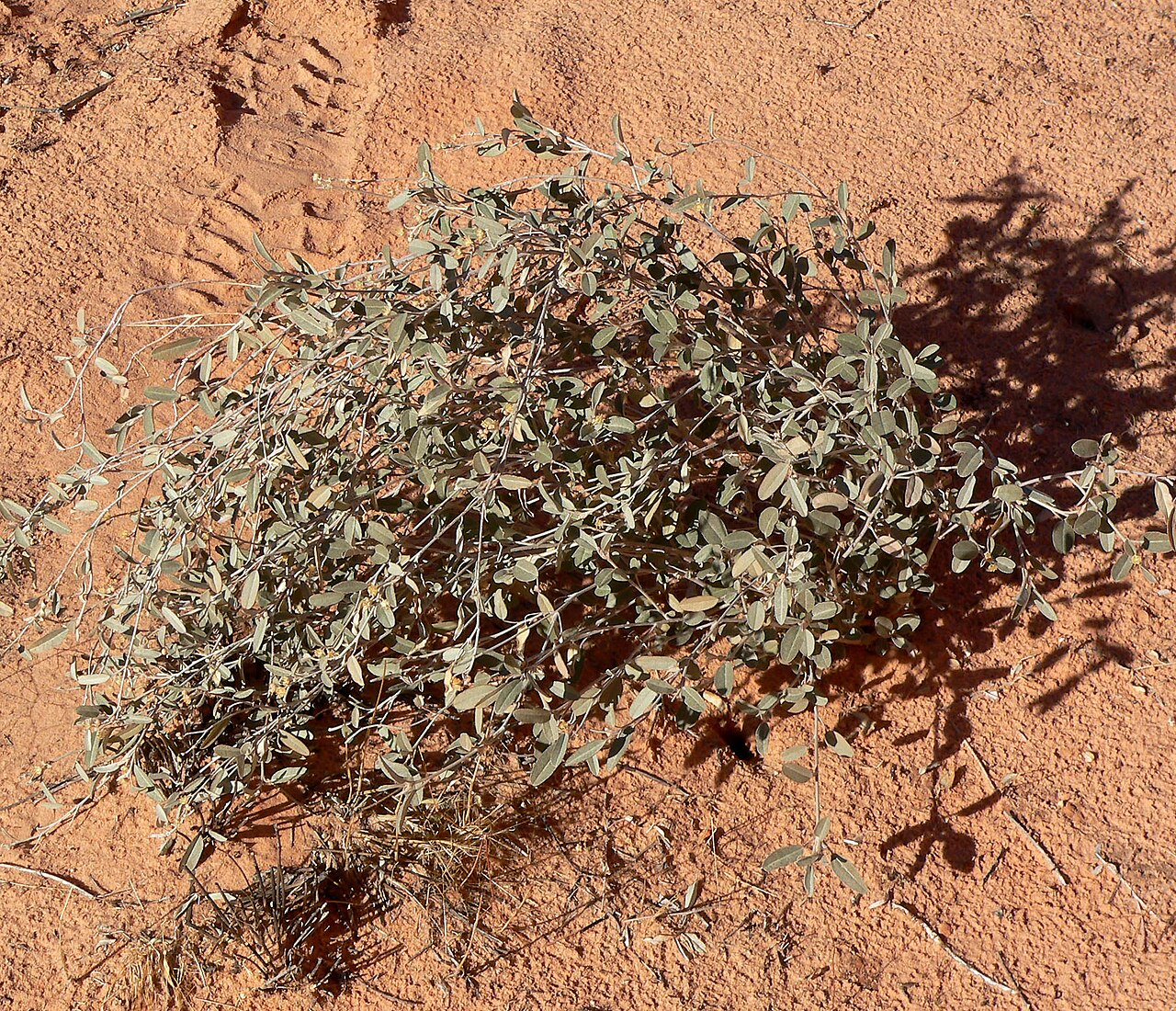
Croton californicus, known as California Croton (also sand croton), is a low, silvery perennial or small subshrub of the spurge family (Euphorbiaceae). It grows on sandy ground in two very different settings: the coastal dunes and sandy scrub of central and southern California, and the sandy washes, dunes and flats of the Mojave and Colorado deserts east into Nevada, Utah and Arizona. Plants are usually 1 to 3 feet tall, rarely to about 4 feet, with many branches and small, oblong leaves covered in a dense coat of star-shaped hairs that give the whole plant a soft, gray-green look.
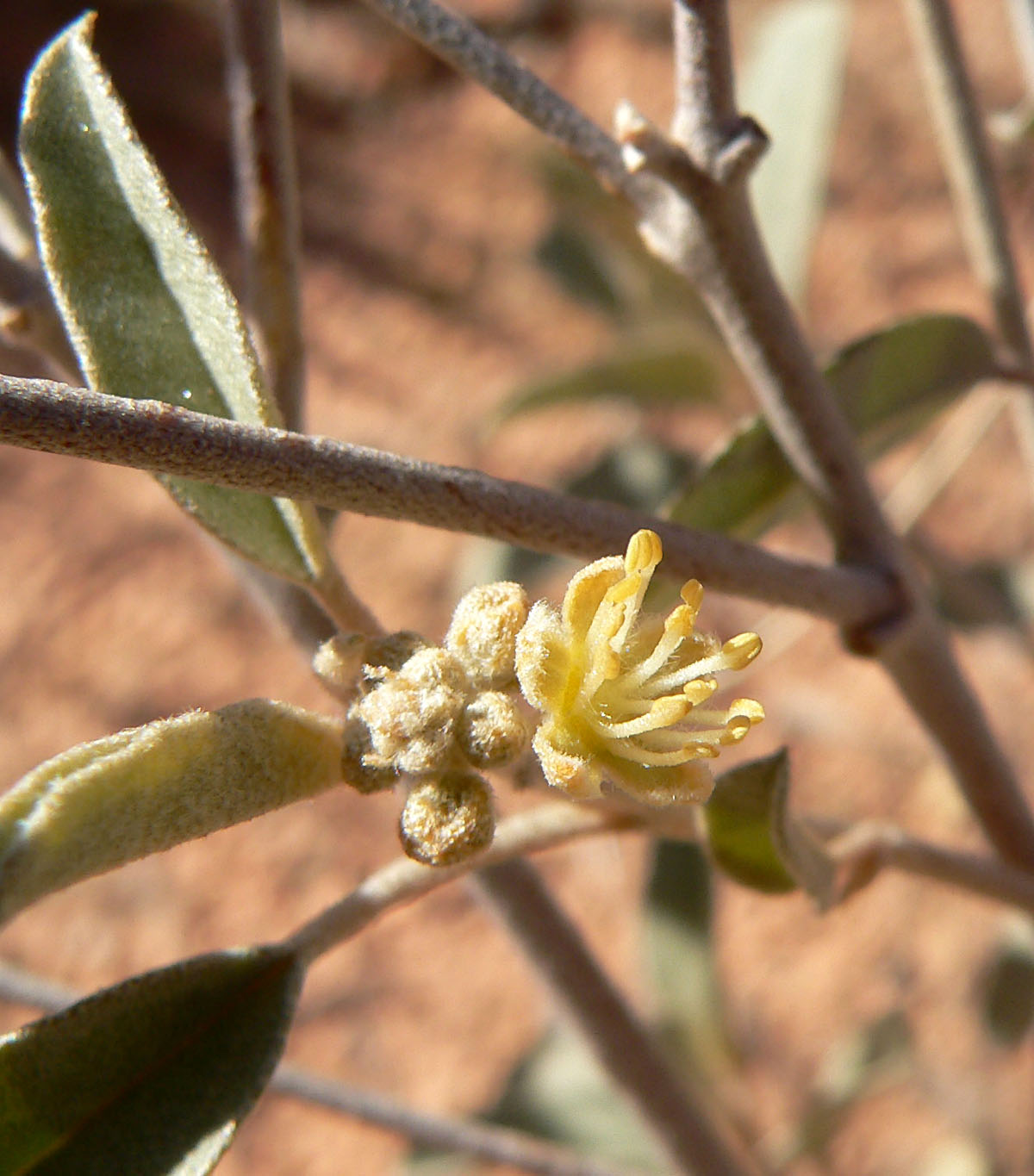
California croton is dioecious: each plant has either male or female flowers. The male flowers are tiny cups of cream-yellow stamens, and the female flowers develop into small, rounded, three-lobed capsules. Both are inconspicuous, but the plant is a dependable part of the sand plant community, helping to hold loose sand and providing seeds for birds and small mammals.
Safety note: like many plants in the genus Croton and the spurge family, California croton should be considered toxic. Its sap and especially its seeds contain irritant compounds that can cause skin irritation and severe vomiting and diarrhea if eaten. Keep children, pets and livestock from eating it, and wear gloves when handling it.
Identification
California croton is a gray, mounding plant of sandy places. Look for small, oblong, silvery-hairy leaves on branching stems, tiny flowers in short clusters near the branch tips, and separate male and female plants.
Growth Habit
It grows as a rounded to sprawling perennial or subshrub, 1 to 3 feet tall and often wider than tall, with many slender stems from a woody base. Stems and leaves are covered with dense, flattened, star-shaped (stellate) hairs. In dunes, plants can be partly buried by moving sand and grow up through it.
Leaves
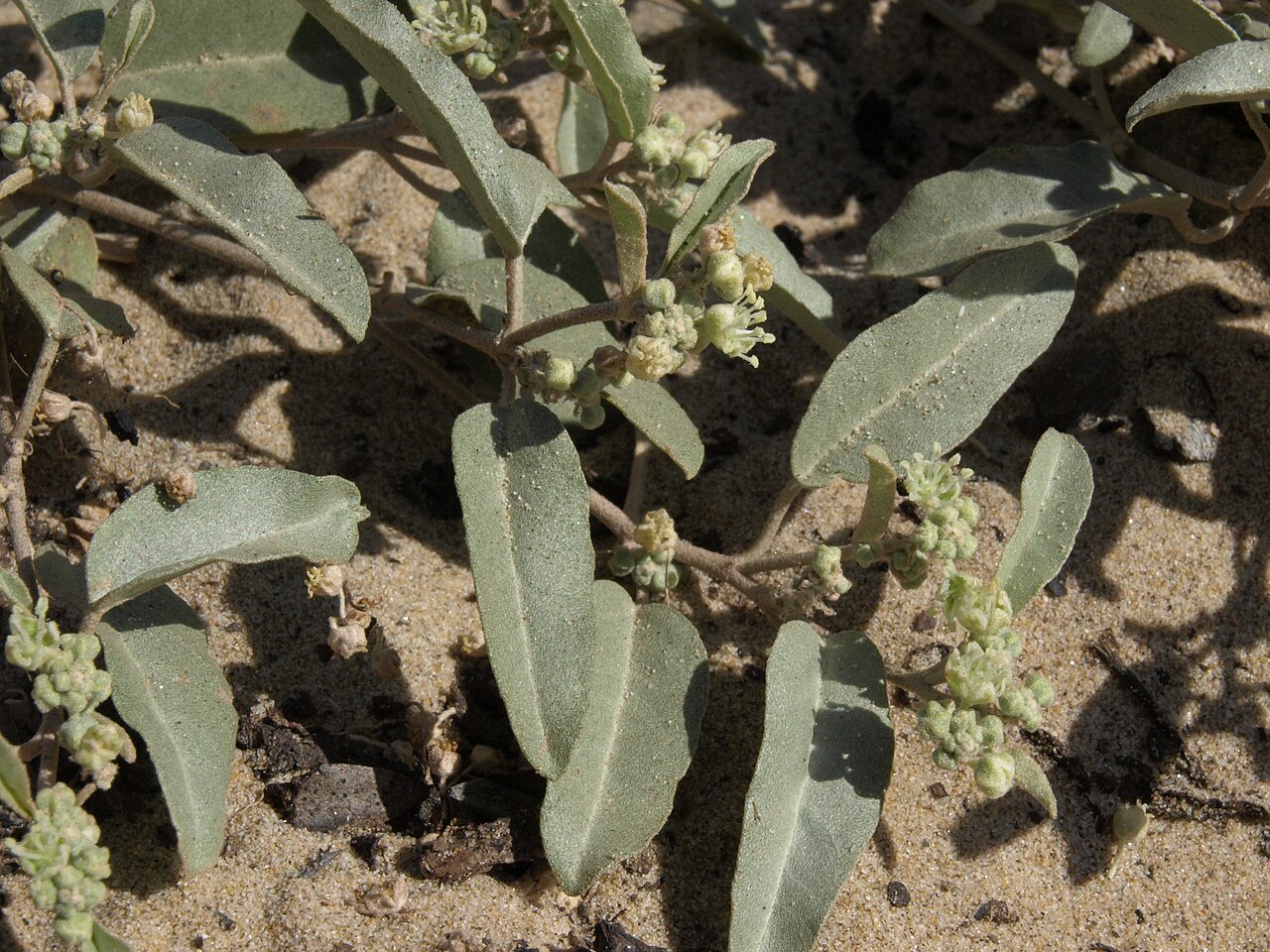
The leaves are alternate, oblong to elliptic, about 1/2 to 2 1/2 inches long, with smooth edges and short stalks. Both surfaces are covered in silvery to tan star-shaped hairs, so the leaves look gray-green or silvery. Under a hand lens, the hairs look like tiny white starbursts.
Flowers
Male and female flowers grow on separate plants in short spikes or clusters at the ends of branches. Male flowers are small cups of five sepals filled with many cream-yellow stamens. Female flowers have no petals, just small sepals around a hairy, three-lobed ovary with branched styles. Flowering can occur from late winter to fall, but it peaks in spring.
Fruit & Seeds
Female plants produce round, hairy capsules about 1/4 inch wide, with three lobes. When ripe, they split open and fling out three smooth, shiny seeds. The seeds are eaten by birds and rodents, which also help to spread them.
Look-alikes
Texas croton (Croton texensis), which reaches Arizona and Utah, is an annual with a strong smell. Desert croton (Croton wigginsii) of desert dunes in southeastern California and Arizona has narrower leaves and is much rarer. Silver beachweed and other dune plants can look similar from a distance, but the star-shaped hairs and tiny croton flowers are distinctive.
Safety
Treat California croton as toxic to people, pets and livestock. Croton species contain irritant compounds in their sap and seeds; some relatives were historically used as violent purgatives. Do not eat any part of the plant, keep children and pets from chewing it, and wash your hands after handling it. Livestock usually avoid it.
Quick Facts
| Scientific Name | Croton californicus |
| Family | Euphorbiaceae (spurge family) |
| Plant Type | Perennial herb or small subshrub; male and female plants |
| Mature Height | 1–3 ft (rarely 4 ft) |
| Mature Spread | 1–3 ft |
| Growth Rate | Moderate |
| Sun Exposure | Full sun |
| Water Needs | Very low; drought-tolerant once established |
| Soil Type | Sand, sandy loam, dunes and sandy washes |
| Soil pH | About 6.5–8.5 |
| Bloom Time | Mostly March–June; sporadically February–October |
| Flower Color | Cream to pale yellow (inconspicuous) |
| Fall Color | None; evergreen to semi-evergreen gray foliage |
| Fruit | Round, hairy three-lobed capsule with three seeds |
| Deer Resistant | Yes |
| USDA Hardiness Zones | 8–11 |
Native Range
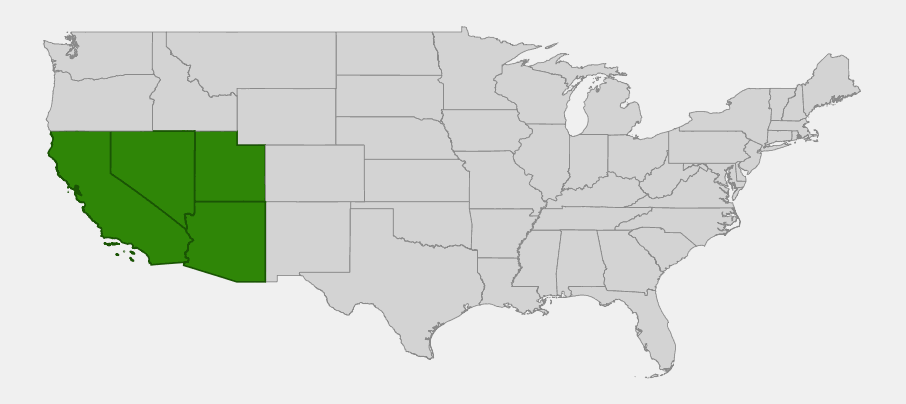
California croton is native to the southwestern United States and Baja California, Mexico. USDA PLANTS lists it as native in the lower 48 states and records it from four states: Arizona, California, Nevada and Utah.
In California it grows along the coast and in coastal valleys from the central coast south to the Mexican border, and in the deserts of the southern part of the state. In the Mojave and Colorado (Sonoran) deserts it extends east into southern Nevada, extreme southwestern Utah and western Arizona.
It is almost always found on sand: coastal dunes and sandy coastal sage scrub, sandy washes, sand fields, desert dunes and sandy flats among creosote bush. It tolerates salt spray near the coast and extreme heat and drought in the desert.
📋 Regional plant lists featuring California Croton: Utah & Western Colorado · Arizona & New Mexico · California & Nevada
Growing & Care Guide
California croton is occasionally offered by California native plant nurseries and is suited to sandy, dry gardens in mild-winter areas of the Southwest. It is best for dune restoration, sandy coastal gardens and desert landscapes, not for beds where children or pets might chew on plants. Remember that you need both a male and a female plant to get seeds.
Light
Full sun. It becomes leggy and weak in shade.
Soil & Water
Plant it in pure sand or very sandy, fast-draining soil. It does not tolerate heavy or poorly drained soil. Water young plants during their first summer; after that, rainfall is usually enough on the coast, with only occasional deep watering in the desert during long droughts.
Planting Tips
Plant in fall or winter so roots can grow during the rainy season. Combine it with sand verbenas, beach buckwheats, silver beachweed and dune grasses on the coast, or with bursage, creosote bush and desert sand verbena in the desert. Its silver foliage contrasts well with green and flowering plants.
Pruning & Maintenance
Little care is needed. Cut back old, woody stems in late winter to keep plants compact if desired. Wear gloves when pruning because of the irritant sap. Do not fertilize.
Propagation
Grow it from seed collected from female plants; sow it in sandy mix in fall or winter. Germination can be slow and uneven, so sow generously. Cuttings of young stems can also root in sand.
Landscape Uses
- Dune and coastal gardens: silver foliage that tolerates salt spray and sand
- Desert landscapes: a tough, low-water groundcover for sandy soils
- Habitat restoration: stabilizing sand in dune and wash restoration
- Wildlife gardens: seeds for quail, doves and small mammals
- Low-maintenance borders: away from paths where children or pets play
Wildlife & Ecological Value
California croton is a quiet but useful member of the sand plant communities of the coast and desert.
For Pollinators
The tiny flowers are visited by small bees, flies and wasps, which collect pollen from the male flowers.
For Birds
Croton seeds are eaten by quail, doves and other ground-feeding birds. The shrubby mounds also give cover to lizards and small birds on open sand.
For Mammals
Kangaroo rats, pocket mice and other desert rodents collect and store the seeds. Deer and livestock rarely browse it because of its irritant sap.
Ecosystem Role
Its roots and branching stems help hold loose sand, and it is part of the specialized plant communities of coastal dunes and desert sand fields, both of which have been reduced by development and off-road vehicles. Coastal dune populations are an important part of native dune restoration projects in California.
Cultural & Historical Uses
The genus name Croton comes from a Greek word for “tick,” a reference to the shape of the seeds of some species. The genus is very large, with well over 1,000 species worldwide, mostly in the tropics. California croton was described by the Swiss botanist Johannes Müller Argoviensis in the 1860s.
Croton relatives have a long history of use and misuse. Croton oil from the Asian Croton tiglium was once used as an extremely strong purgative and is highly toxic. This is one reason California croton should never be used as a home remedy. Note that the colorful houseplant sold as “croton” is a different plant, Codiaeum variegatum.
For naturalists, California croton is one of the signature plants of open sand, from the beaches of Pismo and Morro Bay to the red sand of Valley of Fire. Its silver foliage reflects sunlight and reduces water loss, a common feature of plants of both dunes and deserts.
Frequently Asked Questions
Is California croton poisonous?
Yes, treat it as toxic. The sap and seeds contain irritant compounds that can cause skin irritation and severe stomach upset if eaten. Keep children, pets and livestock away from it.
Is it related to the croton houseplant?
No. The houseplant called croton is Codiaeum variegatum. California croton is a true Croton, a native wildflower of sandy places.
Why does my plant never make seeds?
California croton has separate male and female plants. Only female plants make seeds, and they need a male plant nearby for pollination.
Where does it grow?
On sand: coastal dunes and sandy scrub in California, and sandy washes and dunes in the deserts of California, Nevada, Utah and Arizona.
Does it need water?
Very little once established. Water young plants in their first summer, then rely mostly on rainfall.

Looking for a nursery that carries California Croton?
Browse our native plant nursery directory: Arizona · California · Nevada · Utah