
Diogenes’ Lantern (Calochortus amabilis)
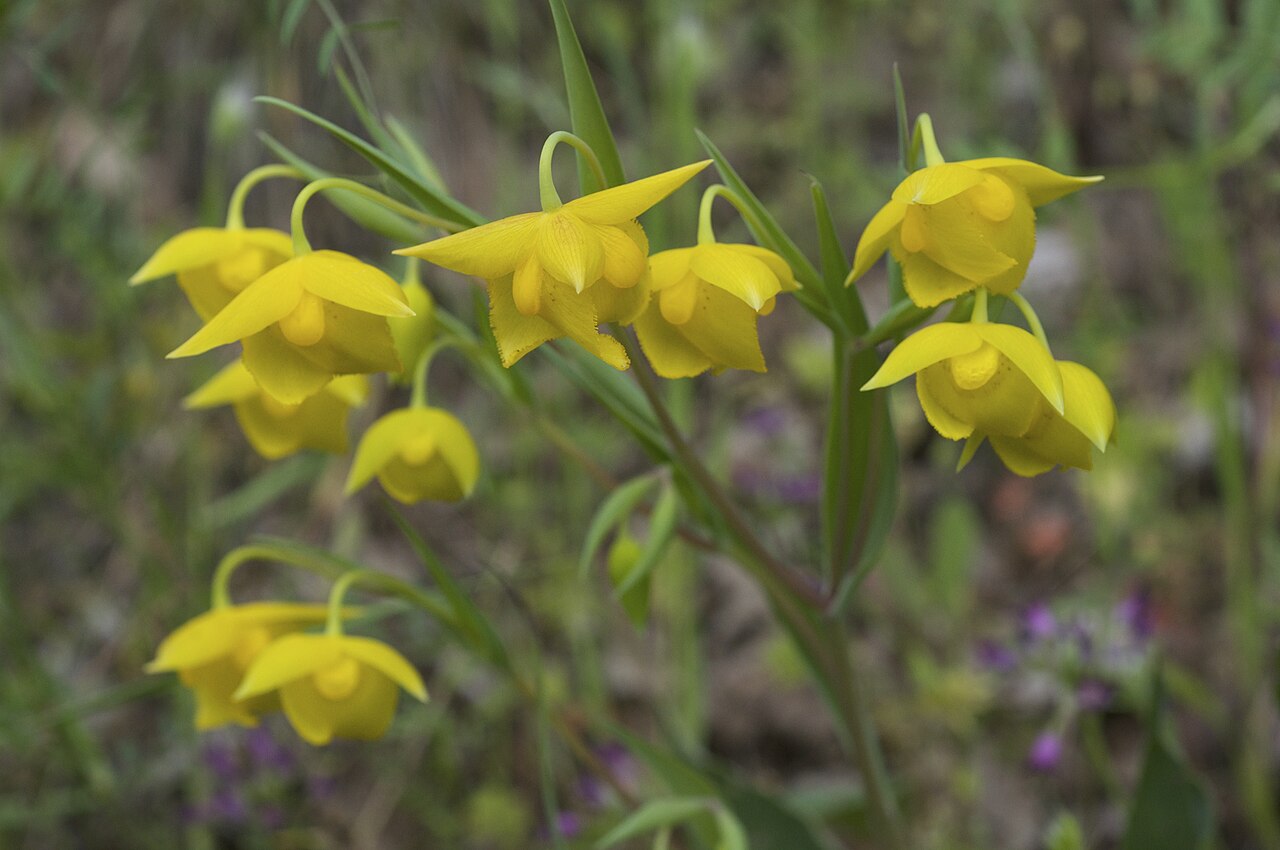
Calochortus amabilis, known as Diogenes’ Lantern (also golden fairy lantern or golden globe lily), is a bulb-forming wildflower found only in California. It belongs to the lily family (Liliaceae) and grows mainly in the North Coast Ranges and the hills around the north end of the San Francisco Bay region. In spring its slender, branching stems hang with nodding, globe-shaped flowers of clear golden yellow, each looking like a small lantern.
The common name refers to the Greek philosopher Diogenes, who, according to legend, walked about with a lantern in daylight looking for an honest man. The species name amabilis means “lovely,” and the genus name Calochortus means “beautiful grass,” a nod to the plant’s grass-like leaves. Its relatives include the mariposa lilies and the white fairy lantern.
Diogenes’ lantern grows on grassy and rocky slopes, in openings in oak woodland and chaparral, and on shaded road banks, usually blooming from April to June. Like other Calochortus, it goes dormant underground in summer. Never dig bulbs from the wild. They rarely survive, and the species is a California endemic. Buy seed or nursery-propagated bulbs from reputable native plant sources.
Identification
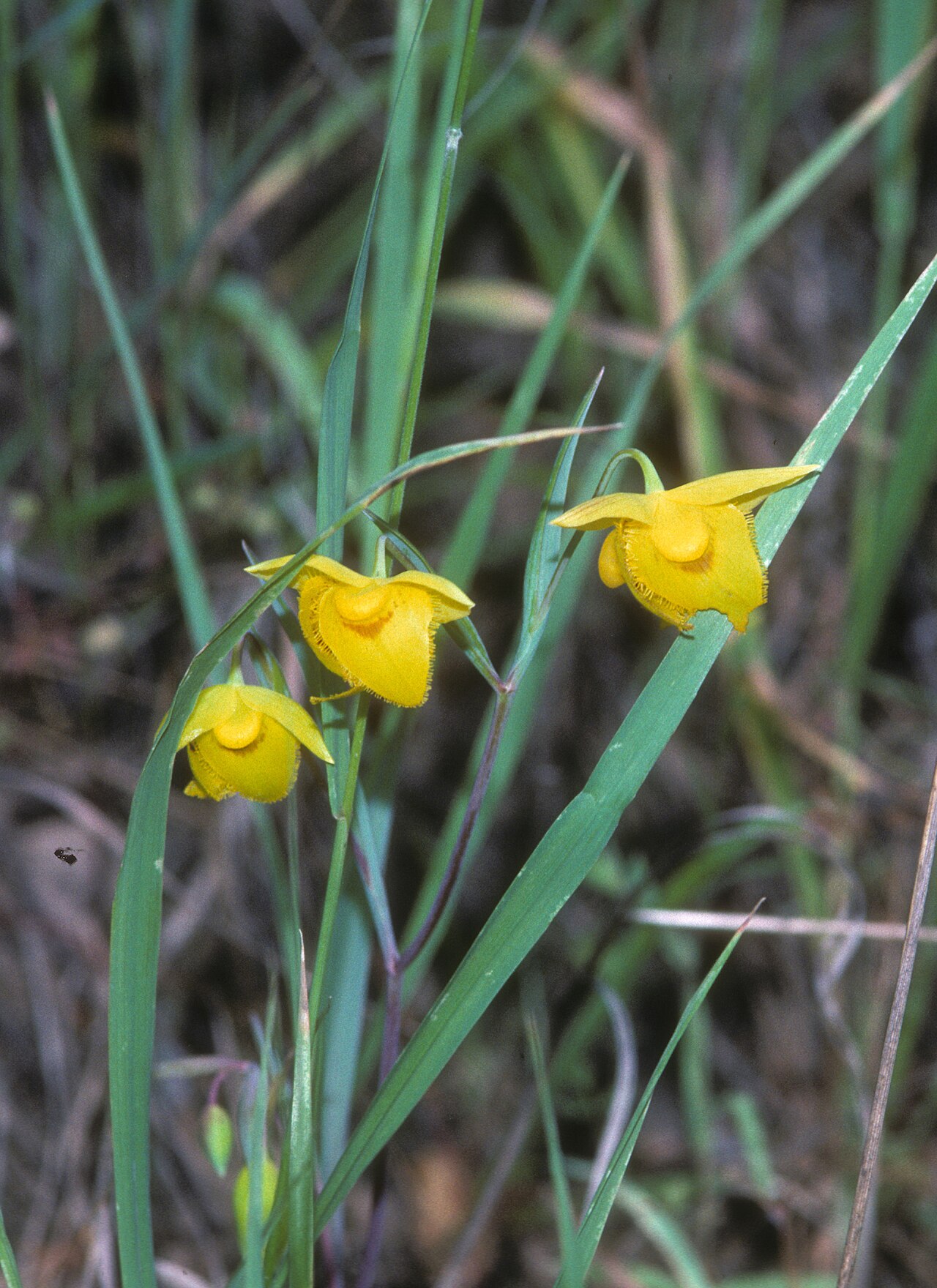
In bloom, Diogenes’ lantern is easy to recognize: nodding, closed, globe-shaped yellow flowers on branched stems, with fringed petals and pointed sepals that flare out above the globe.
Growth Habit
Each plant grows from a small, deep, fibrous-coated bulb. In winter it produces one long basal leaf. In spring it sends up a branching stem usually 4 to 20 inches tall that carries several to many flowers on curved stalks. After the seeds ripen the stem and leaf dry up, and the bulb rests through the dry summer.
Leaves
The single basal leaf is long and narrow, up to about 20 inches long and 1/2 to 1 1/2 inches wide, smooth and gray-green, and often longer than the flowering stem. Smaller, narrow leaves grow on the stem at the branch points.
Flowers
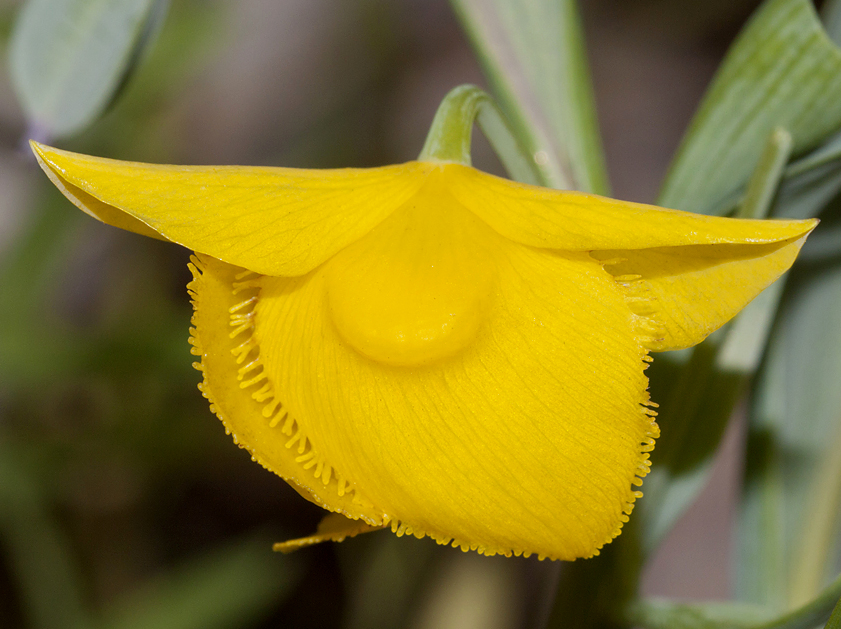
The flowers hang downward and are globe- to bell-shaped, about 3/4 to 1 inch long. Each has three broad, deep yellow petals that cup together into a closed globe, with edges finely fringed and a small hairy nectar gland inside near the base. Three narrower, pointed sepals, also yellow and sometimes tinged red or brown, spread out or curve back above the globe. Flowering is usually April to June.
Fruit & Seeds
After flowering, each flower forms a nodding, three-winged capsule about 1 inch long. It dries and splits open in early summer, releasing flat, light brown seeds.
Look-alikes
White Fairy Lantern (Calochortus albus) has very similar nodding globes but in white to pink; it is more widespread in the Coast Ranges and Sierra foothills. Golden globe tulip (C. pulchellus) of Mount Diablo has yellow globes too, but its petals are densely hairy inside and edged with long hairs. Mariposa lilies such as Yellow Mariposa Lily and Superb Mariposa Lily have open, upright, cup-shaped flowers instead of nodding globes.
Safety & Conservation
Diogenes’ lantern is not known to be toxic. Bulbs of many Calochortus species were traditionally eaten by California Native peoples, but wild bulbs should never be dug: digging kills the plant and harms local populations of this California endemic. Do not pick the flowers on public land. Grow it only from seed or from nursery-propagated bulbs.
Quick Facts
| Scientific Name | Calochortus amabilis |
| Family | Liliaceae (lily family) |
| Plant Type | Bulb-forming perennial; summer-dormant |
| Mature Height | 4–20 in |
| Mature Spread | 4–8 in |
| Growth Rate | Slow (several years from seed to bloom) |
| Sun Exposure | Partial shade to full sun |
| Water Needs | Low; moist in winter and spring, dry in summer |
| Soil Type | Well-drained loam, clay loam or rocky soil |
| Soil pH | About 6.0–7.5 |
| Bloom Time | April–June |
| Flower Color | Golden yellow |
| Fall Color | None; dormant from summer to winter |
| Fruit | Nodding, three-winged capsule |
| Deer Resistant | No; deer and rodents eat the plants and bulbs |
| USDA Hardiness Zones | 8–10 |
Native Range
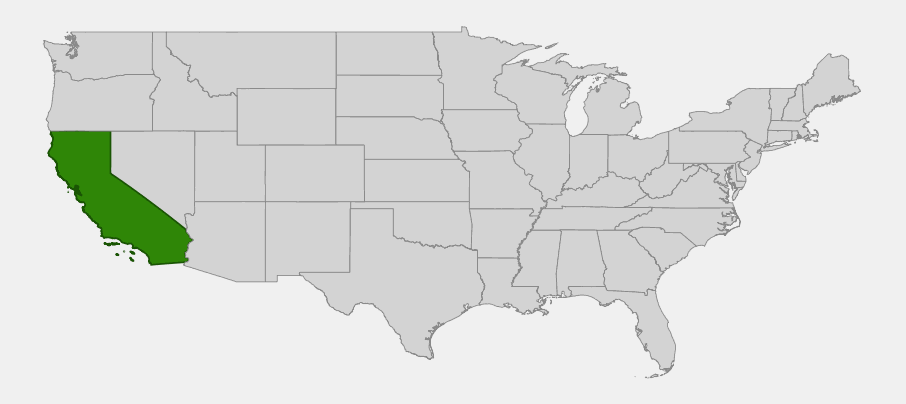
Diogenes’ lantern is endemic to California. USDA PLANTS lists it as native in the lower 48 states and records it only from California. It is not found in any other state or in Canada.
Most populations are in the North Coast Ranges, in Mendocino, Lake, Sonoma and Napa counties and neighboring parts of the inner Coast Ranges, and it reaches the hills north of the San Francisco Bay area. Within this range it can be locally common, but it is absent from most of the state.
It grows on grassy and brushy slopes, in openings in oak woodland, foothill pine woodland and chaparral, and on rocky or shaded road banks, often on north-facing slopes or in partial shade. Most sites are below about 3,300 feet.
📋 Regional plant lists featuring Diogenes’ Lantern: California & Nevada
Growing & Care Guide
Diogenes’ lantern can be grown in California and other mild, dry-summer climates, but it is a plant for patient gardeners. Buy seed or nursery-propagated bulbs from native plant societies and specialist bulb growers, and never dig bulbs from the wild. In wet-summer climates it is usually grown in pots kept dry in summer.
Light
Partial shade or dappled light, such as under oaks or on a north- or east-facing slope, suits it best. It also grows in full sun near the coast.
Soil & Water
Use well-drained soil; a gritty mix for containers. Water only during the cool season if winter rains fail. Once the leaves begin to yellow after flowering, stop watering completely: summer water causes the bulbs to rot. Avoid irrigated beds and lawns.
Planting Tips
Plant bulbs in fall about 2 to 4 inches deep, or sow seed in fall. Grow it among other summer-dry natives such as bunchgrasses, blue dicks, brodiaeas and California poppies, or under native oaks and shrubs. Protect bulbs from gophers with wire baskets, and from deer if they browse your garden.
Pruning & Maintenance
No pruning is needed. Let the leaves and stems die back naturally so the bulb can store energy. Mark the planting spot so you do not dig or water it during summer dormancy.
Propagation
Sow fresh seed in fall in a deep pot of gritty, well-drained mix and leave it outdoors for the winter. Seedlings form tiny bulbs and usually take three to five years to bloom. Keep pots dry in summer. Mature bulbs sometimes form small offset bulblets.
Landscape Uses
- Woodland gardens: nodding gold lanterns under native oaks
- Rock gardens and slopes: well-drained, summer-dry sites in partial shade
- Container bulbs: grown in pots and kept dry in summer
- Native wildflower plantings: with bunchgrasses, brodiaeas and poppies
- Wildflower viewing: a spring highlight of the North Coast Ranges
Wildlife & Ecological Value
Diogenes’ lantern is part of California’s remarkable spring bulb flora, which depends on wet winters and dry summers.
For Pollinators
The closed, nodding flowers are visited mainly by bees, especially bumblebees and other native bees that can push into the globe to reach the nectar glands and pollen. Beetles also visit Calochortus flowers.
For Birds
The plant has little direct value for birds, but the insects that visit it are food for insect-eating birds in oak woodland and chaparral.
For Mammals
Pocket gophers and other rodents eat the bulbs, and deer browse the stems and flowers. This is one reason it often grows on steep, rocky banks.
Ecosystem Role
As a summer-dormant bulb, Diogenes’ lantern is part of the native wildflower layer in California’s grasslands, oak woodlands and chaparral openings. Like many California bulbs, it may bloom more heavily after fire or other disturbance opens up the shrub and tree canopy.
Cultural & Historical Uses
The genus Calochortus includes about 70 species, most of them in California, and they are among the most admired native wildflowers in the state. Victorian-era nurseries such as Carl Purdy’s California bulb business in Ukiah sold Calochortus bulbs, including the fairy lanterns, to gardeners around the world.
Many California Native peoples gathered and ate the bulbs of Calochortus species, and “Indian potatoes” was a general name for edible native bulbs. Today, wild populations are too valuable and vulnerable to collect.
The early 20th-century botanical artist Mary Vaux Walcott painted the plant as the “golden fairy lantern,” and her watercolor is now in the Smithsonian American Art Museum. For hikers in the hills of Mendocino, Lake, Sonoma and Napa counties, finding a slope hung with its golden lanterns is a highlight of spring.
Frequently Asked Questions
Why is it called Diogenes’ lantern?
The nodding, closed yellow flowers look like small lanterns, recalling the legend of the Greek philosopher Diogenes, who carried a lantern by day looking for an honest man.
Where does Diogenes’ lantern grow?
Only in California, mainly in the North Coast Ranges and the hills north of the San Francisco Bay area, on grassy, rocky and wooded slopes.
Can I dig up the bulbs?
No. Never dig bulbs from the wild; they rarely survive and digging harms wild populations. Buy seed or nursery-propagated bulbs instead.
How do I keep it alive in the garden?
Give it fast-draining soil, partial shade, and water only in winter and spring. Keep it completely dry in summer, and protect the bulbs from gophers.
How is it different from white fairy lantern?
Both have nodding globe flowers, but Diogenes’ lantern is golden yellow and grows mainly in the North Coast Ranges, while white fairy lantern is white to pink and more widespread.

Looking for a nursery that carries Diogenes’ Lantern?
Browse our native plant nursery directory: California