
Mountain Holly (Ilex mucronata)
Ilex mucronata, known as Mountain Holly (USDA: catberry), is a deciduous shrub of the holly family (Aquifoliaceae). For most of its history it was placed in its own genus as Nemopanthus mucronatus, and many field guides still use that name; genetic studies showed it belongs within the hollies, Ilex. It is native to northeastern North America, from Newfoundland and the Maritime Provinces west through Quebec and Ontario to Minnesota, and south to the mountains of Pennsylvania, Maryland and West Virginia.
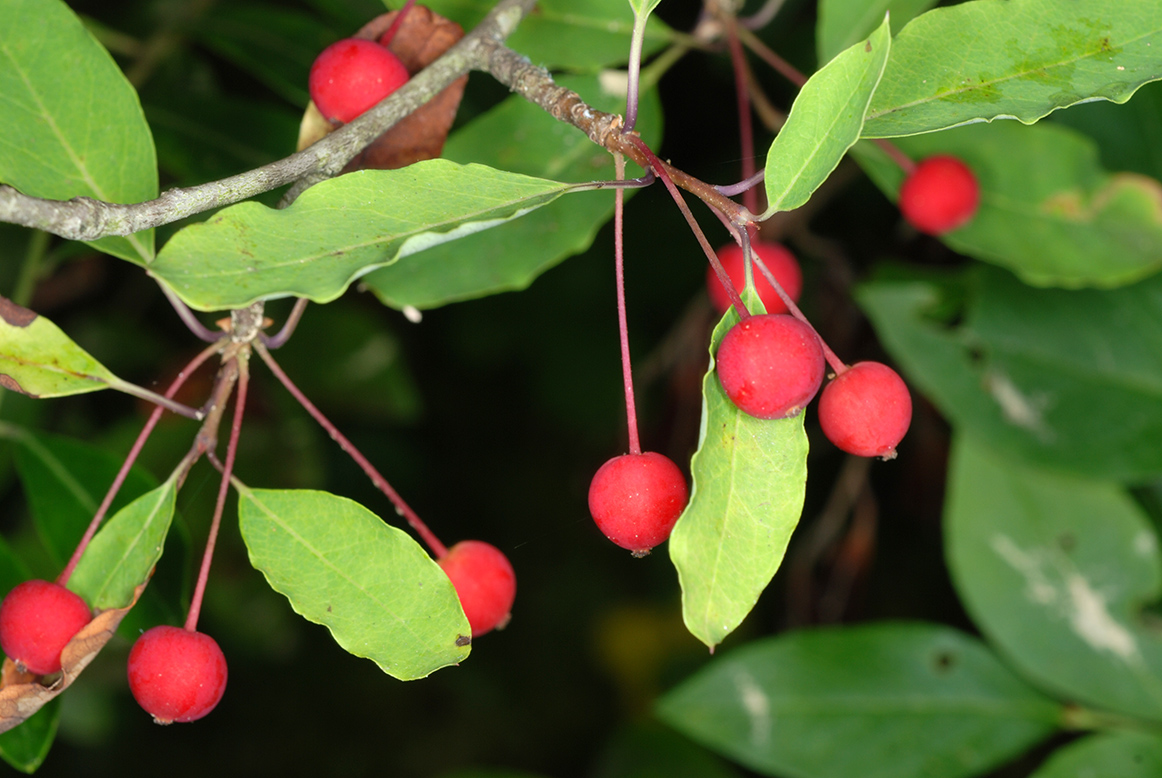
Unlike the familiar evergreen hollies, it has thin, smooth-edged leaves that drop in fall, each tipped with a tiny point (the mucro that gives it its name), on long, often purplish stalks. Small, pale yellow flowers appear in late spring on threadlike stalks, and female plants then bear round, bright red berries that hang on stalks up to an inch long in mid to late summer.
It grows in bogs, fens, swamps, wet acidic woods and cool, rocky uplands. It is an excellent native shrub for wet, acidic sites and northern gardens, offering red summer fruit for birds and yellow fall color. Its berries are not edible: like other holly fruit, they may cause stomach upset if eaten.
Identification
Mountain holly is a multi-stemmed shrub of northern wetlands and cool woods, best identified by its smooth, pointed-tipped leaves on long purplish stalks and its red berries dangling on long, thin stalks.
Growth Form
A deciduous, upright, multi-stemmed shrub, usually 3 to 10 feet tall, occasionally taller. The bark of young branches is smooth and gray to purplish gray, and the twigs often bear short spur shoots where leaves and flowers cluster.
Leaves
The leaves are alternate, simple and thin, elliptic to oblong, about 1 to 2 1/2 inches long, with smooth or very slightly toothed edges and a tiny, sharp point at the tip. They sit on slender stalks about 1/4 to 1/2 inch long that are often purplish. The leaves are dull green above, paler beneath, and turn yellow in fall.
Flowers
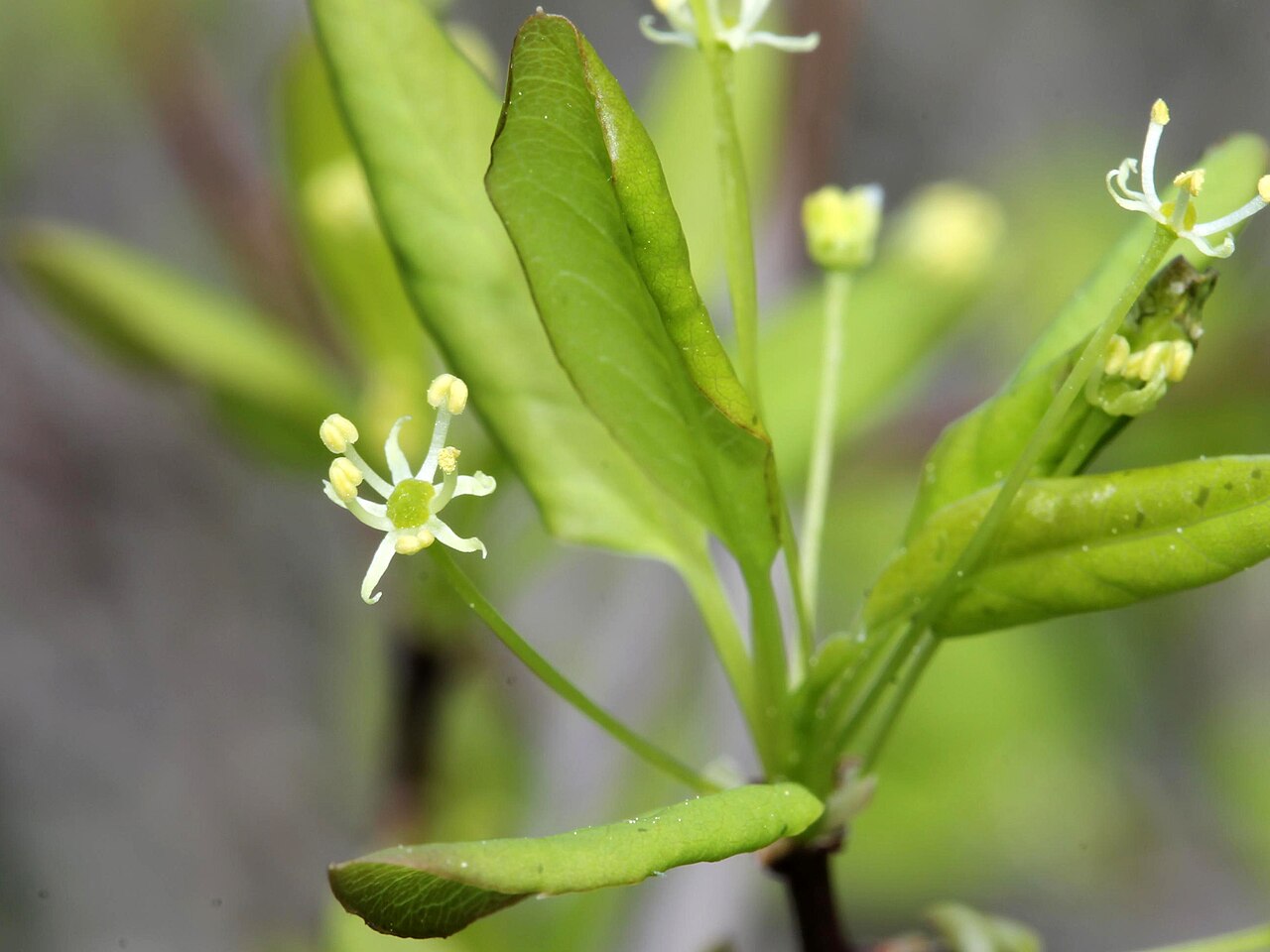
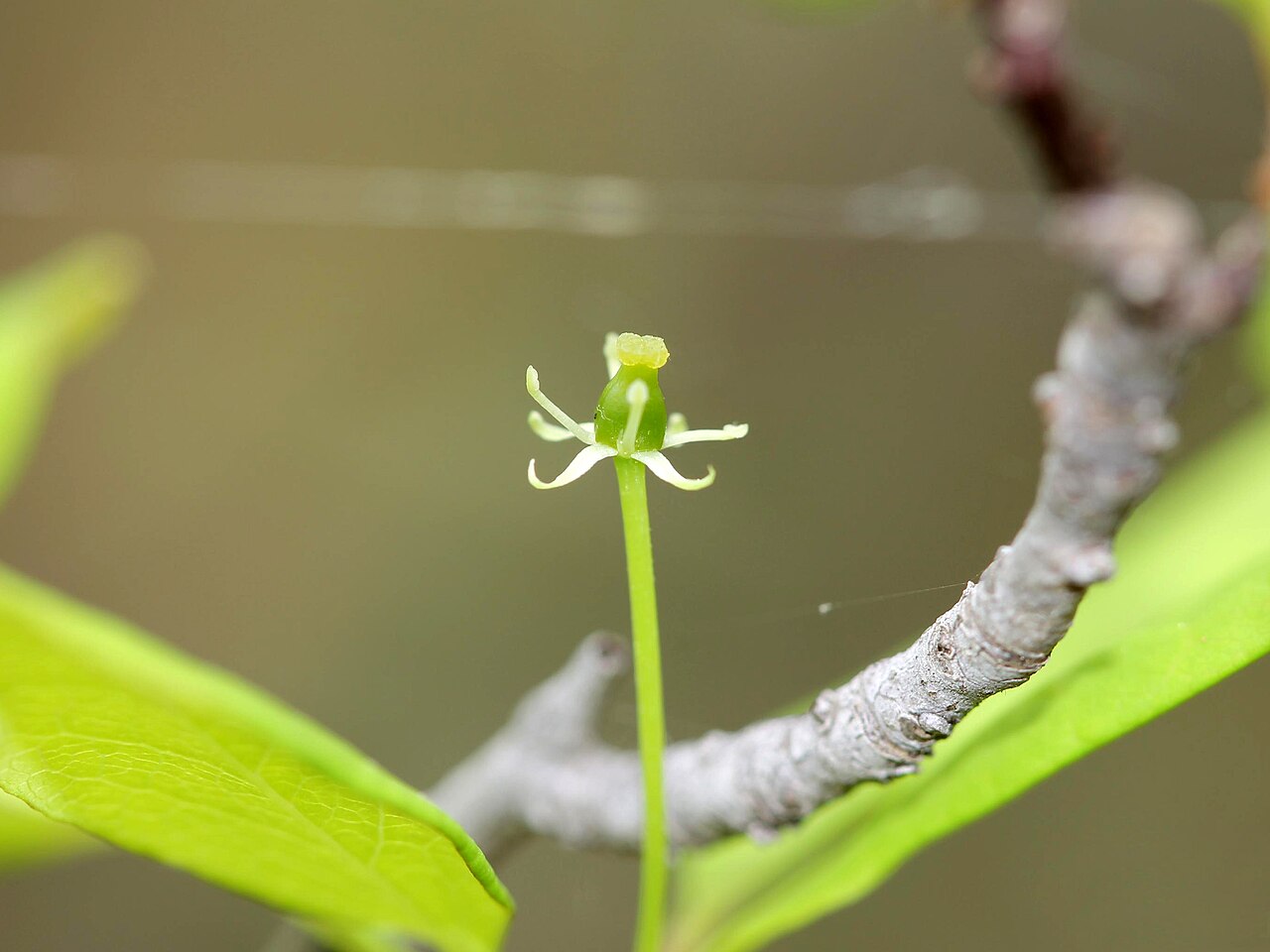
The flowers appear in May and June with or soon after the new leaves. They are small, pale yellow to greenish white, with four or five very narrow, separate petals, and hang singly or in small groups on threadlike stalks. Male and female flowers are on separate plants; female flowers have a green, round ovary in the center.
Fruit
Female plants produce round to slightly oblong, dull to bright red berries (drupes) about 1/4 to 3/8 inch across, each on a long, slender stalk up to about an inch long. They ripen from July to September, earlier than most hollies, and are eaten quickly by birds.
Look-alikes
Winterberry Holly (Ilex verticillata) has toothed leaves and red berries on very short stalks that persist into winter. Mountain Winterberry (I. montana) of the Appalachians has larger, toothed leaves. Deciduous shrubs such as Highbush Blueberry share its bog habitats but have bell-shaped flowers and blue fruit.
Safety
Mountain holly berries should not be eaten. Holly fruit contains compounds that can cause vomiting and diarrhea in people and pets, especially children. Its toxicity is considered mild, but plant it where small children will not snack on the berries, and contact a poison control center if any are swallowed.
Quick Facts
| Scientific Name | Ilex mucronata (formerly Nemopanthus mucronatus) |
| Family | Aquifoliaceae (holly family) |
| Plant Type | Deciduous shrub |
| Mature Height | 3–10 ft |
| Mature Spread | 3–6 ft |
| Growth Rate | Slow to moderate |
| Sun Exposure | Full sun to part shade |
| Water Needs | Moderate to high; moist to wet soil |
| Soil Type | Acidic peat, sand or loam; bog and swamp soils |
| Soil pH | About 4.0–6.0 |
| Bloom Time | May–June |
| Flower Color | Pale yellow to greenish white |
| Fall Color | Yellow |
| Fruit | Red berries on long stalks, July–September (female plants) |
| Deer Resistant | Moderately; occasionally browsed |
| USDA Hardiness Zones | 3–6 |
Native Range
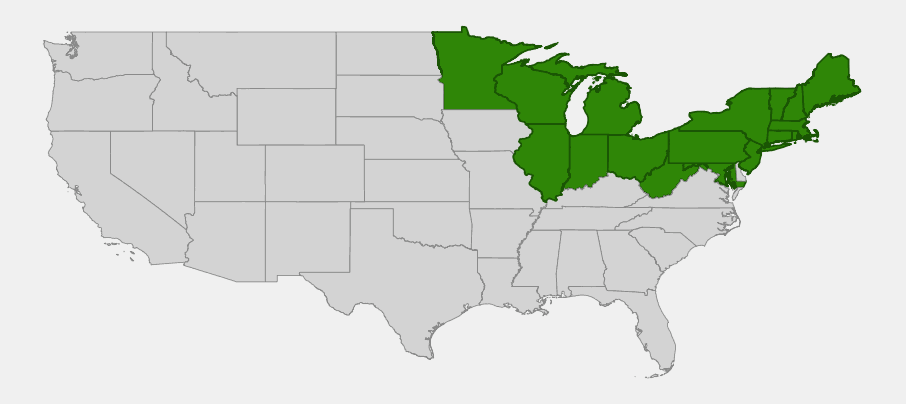
Mountain holly is native to northeastern North America. In Canada it ranges from Newfoundland, Nova Scotia, Prince Edward Island and New Brunswick west through Quebec and Ontario, and it is also native to Saint Pierre and Miquelon. In the United States it grows throughout New England and New York, west through Michigan, Wisconsin and northern Minnesota, and south to northern Ohio, Indiana and Illinois, New Jersey and Pennsylvania, with southern outliers in the Allegheny Mountains of western Maryland and West Virginia.
In the Midwest it is mostly limited to bogs and acidic wetlands in the northern parts of Ohio, Indiana and Illinois, where it is uncommon. In Minnesota it is found mainly in the northeastern and east-central parts of the state, not in the prairie west.
It grows in sphagnum bogs and fens, black spruce and tamarack swamps, acidic shrub swamps, the edges of ponds and lakes, and damp, acidic woods. In the northern part of its range and in the mountains it also grows on rocky, acidic uplands, as the name mountain holly suggests.
📋 Regional plant lists featuring Mountain Holly: New York, Pennsylvania & Northern New Jersey · Ohio & Indiana · Michigan, Wisconsin & Eastern Minnesota · Connecticut, Massachusetts & Rhode Island · New Hampshire, Maine & Vermont · Maryland, Virginia & West Virginia · Delaware, Southern New Jersey & Long Island · Illinois, Iowa & Missouri
Growing & Care Guide
Mountain holly is a tough, cold-hardy shrub for wet, acidic soils in northern gardens. It is offered by some native plant nurseries in the Northeast and Great Lakes region, though less often than winterberry.
Light
It grows in full sun to part shade. Plants in sun are denser and produce more fruit; in shade they become more open.
Soil & Water
Plant it in moist to wet, acidic soil with plenty of organic matter, such as peat, sandy loam or leaf mold. It thrives at pond edges, in rain gardens and in low, wet spots, and it also grows in average garden soil if it is acidic and never dries out completely. Avoid alkaline soils, which can cause yellowing leaves.
Planting Tips
Because it is dioecious, plant at least one male for every several females if you want berries; nurseries rarely label the sexes, so planting a small group raises the chance of getting both. Space shrubs 3 to 5 feet apart. It looks natural with leatherleaf, blueberries, chokeberries and cinnamon fern in a bog or wet garden.
Pruning & Maintenance
Little pruning is needed. Remove dead or crossing stems in late winter. Mulch with leaves or pine needles to keep the soil cool, moist and acidic. It has few pest problems.
Propagation
Grow it from seed cleaned from ripe fruit and sown outdoors in fall; like other hollies, it may take two winters to germinate. Softwood or semi-hardwood cuttings in summer can also be rooted, and they let you choose male or female plants.
Landscape Uses
- Bog and wet gardens: a native shrub for acidic, wet soil
- Bird gardens: red summer fruit for thrushes, catbirds and other birds
- Pond and stream edges: dense, multi-stemmed cover at the water’s edge
- Northern native hedges: very cold-hardy, with yellow fall color
- Wetland restoration: bog, fen and swamp edge plantings
Wildlife & Ecological Value
Mountain holly feeds birds in late summer, when its fruit ripens well before that of most hollies, and supports insects through the growing season.
For Pollinators
Its small flowers provide nectar and pollen to small native bees, flies and other insects in late spring. It is a larval host plant for the Columbia silkmoth (Hyalophora columbia), a large moth of northern bogs and conifer forests.
For Birds
Its red berries are eaten by thrushes, gray catbirds, American robins, cedar waxwings and other fruit-eating birds, and by ruffed grouse. Because they ripen in summer and early fall, they are an important food for birds preparing to migrate.
For Mammals
Small mammals eat fallen fruit, and deer and moose occasionally browse the twigs. Its dense stems give cover to small animals in wetlands.
Ecosystem Role
It is a typical shrub of the acidic, nutrient-poor wetlands of the North, where it helps form the shrub layer of bogs, fens and swamps along with leatherleaf, blueberries and other heaths.
Cultural & Historical Uses
For more than a century mountain holly was known as Nemopanthus mucronatus, the only member of its genus. The name Nemopanthus means “thread-stalked flower,” describing its long, slender flower stalks. DNA studies found that it is closely related to North American deciduous hollies, and it was moved to Ilex as Ilex mucronata.
The species name mucronata refers to the small, sharp point (mucro) at the tip of each leaf. USDA lists the plant under the common name catberry, while most field guides call it mountain holly or false holly.
Gardeners in the North sometimes use it as a lesser-known alternative to winterberry for wet, acidic sites. Its fruit is more appreciated by birds than by people, ripening and disappearing in summer rather than lasting into winter.
Frequently Asked Questions
Is mountain holly a true holly?
Yes. It was long placed in its own genus, Nemopanthus, but DNA evidence shows that it belongs in Ilex, the holly genus. It is deciduous and has smooth, not spiny, leaves.
Are the berries edible?
No. Holly berries can cause vomiting and diarrhea if eaten. Mountain holly is considered only mildly toxic, but its fruit should not be eaten by people or pets.
Why does my plant have no berries?
Mountain holly is dioecious: only female plants produce berries, and they need a male plant nearby for pollination. Male plants flower but never fruit.
Does it need wet soil?
It grows best in moist to wet, acidic soil, as in bogs and swamps, but it can grow in average garden soil if it is acidic and kept from drying out.
How is it different from winterberry?
Winterberry has toothed leaves and berries on very short stalks that last into winter. Mountain holly has smooth-edged, point-tipped leaves and berries on long stalks that ripen and are eaten in summer and early fall.

Looking for a nursery that carries Mountain Holly?
Browse our native plant nursery directory: Connecticut · Illinois & Indiana · Maine, Maryland, Massachusetts, Michigan & Minnesota · New Hampshire, New Jersey, New York & Ohio · Pennsylvania, Rhode Island & Vermont · West Virginia & Wisconsin