
Western Heart’s Ease (Viola ocellata)
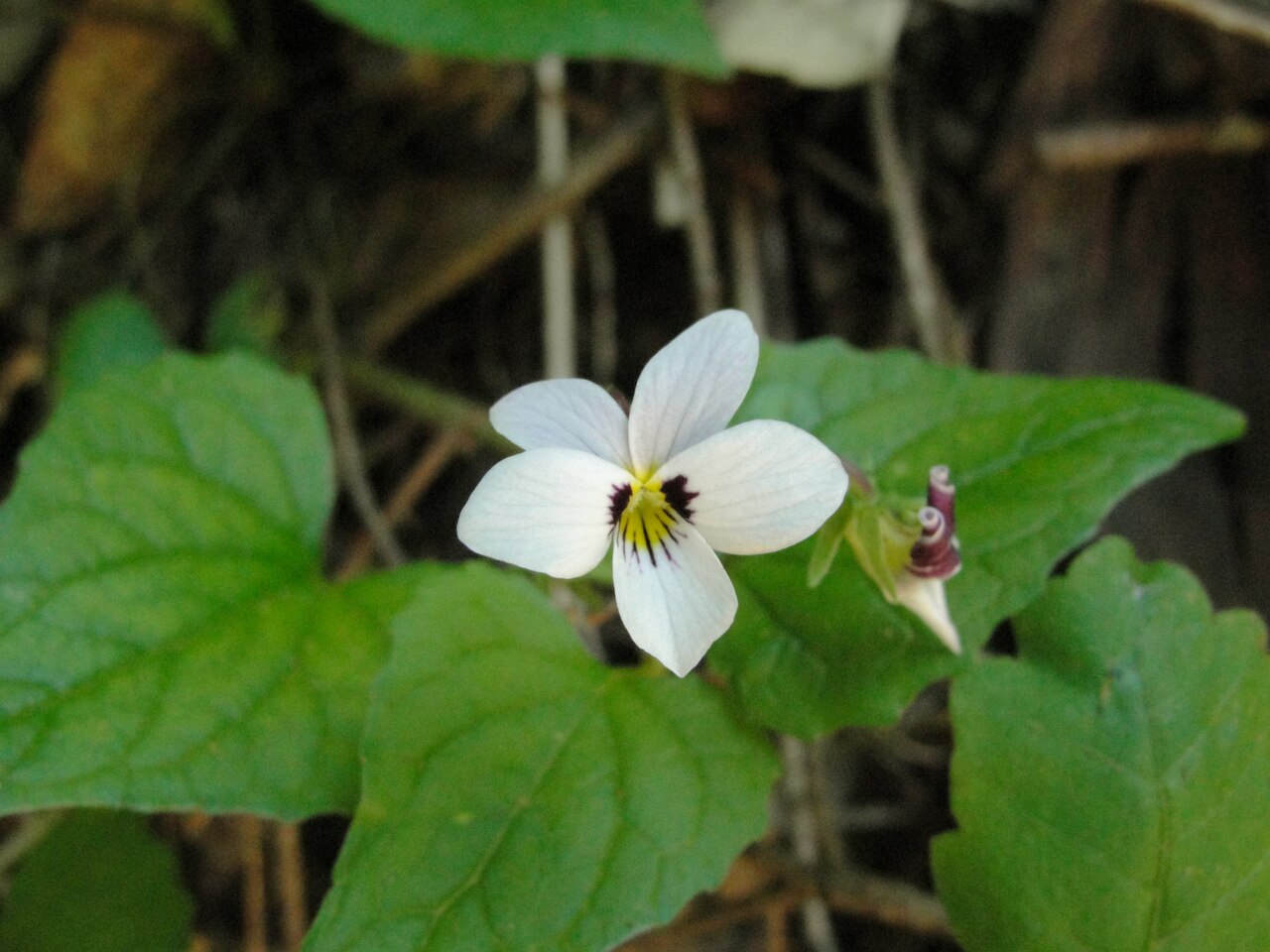
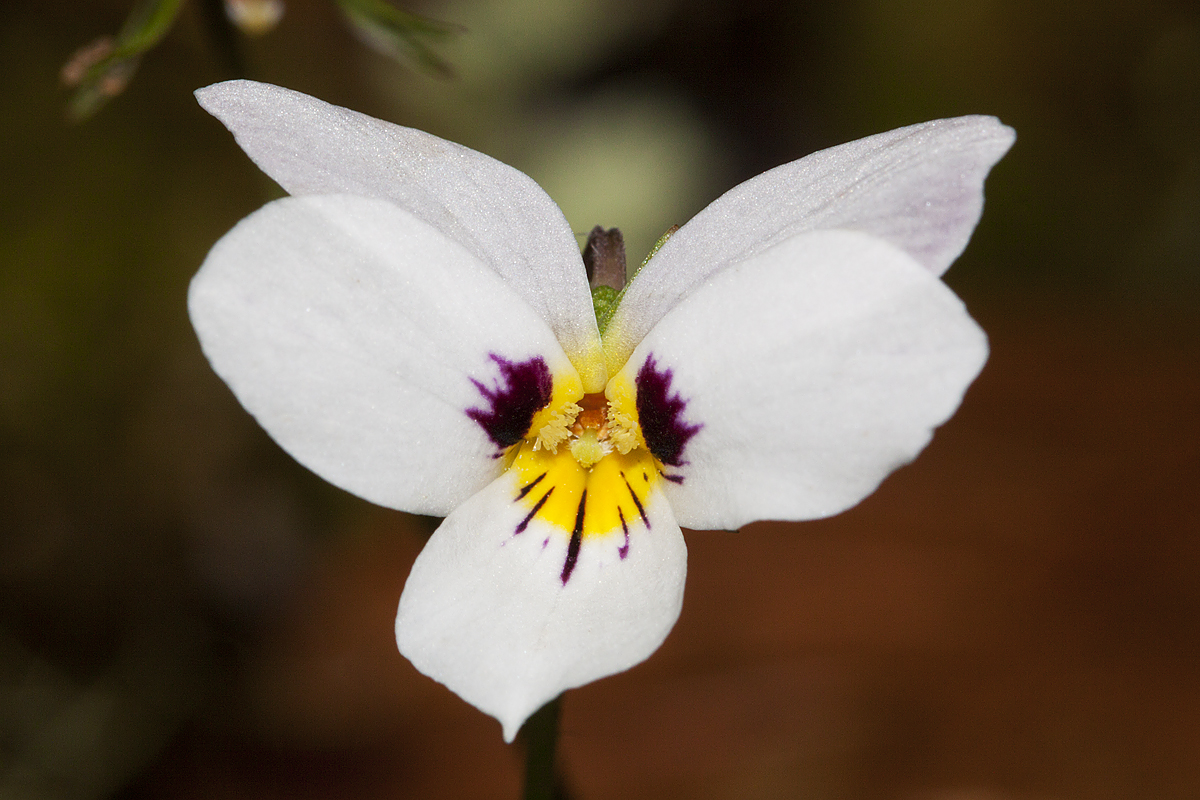
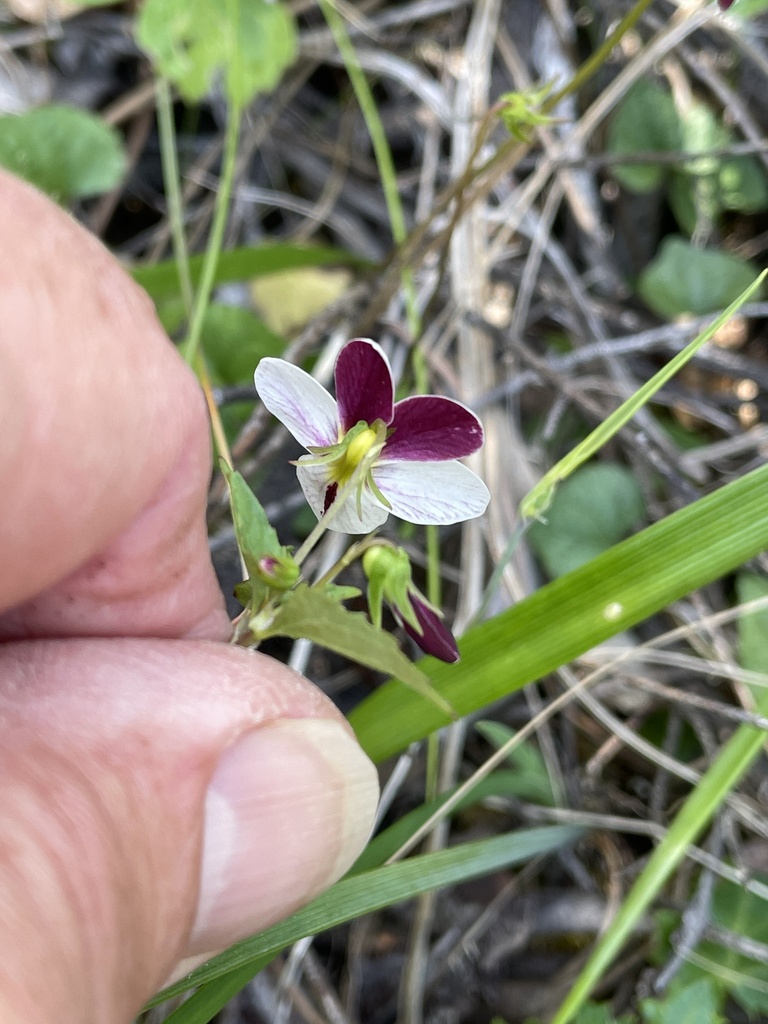
Viola ocellata, known as Western Heart’s Ease, pinto violet or two-eyed violet, is a small woodland violet of the Pacific Coast. Its flowers are white with a yellow throat, and each of the two side petals carries a dark purple spot, so the flower seems to look back at you with a pair of eyes. The two upper petals are deep maroon-purple on the back, which makes the plant easy to recognize even from the side.
It is a perennial that grows from a fleshy rhizome, with upright to sprawling leafy stems usually 2 to 12 inches tall and heart-shaped, toothed leaves. Unlike many violets, its flowers are carried on the leafy stems rather than straight from the ground.
Western heart’s ease grows in the coastal mountains and foothills of northern and central California and southwestern Oregon, in redwood, mixed-evergreen and oak woodland, on shaded banks and in thickets. It is a host plant for several fritillary butterflies, whose caterpillars feed only on violets.
Identification
Look for a low woodland violet with white flowers, a yellow center, two purple “eye” spots on the side petals and purple-backed upper petals, on leafy stems with heart-shaped leaves.
Growth Habit
A perennial herb with erect to ascending leafy stems, usually 2 to 12 inches (about 5 to 30 cm) tall, from a shallow to deep, fleshy rhizome. Plants can be smooth or finely hairy. Small patches form as new shoots rise from the spreading rootstock.
Leaves
The leaves are heart-shaped (cordate), with rounded to sharp teeth along the margin, and are carried on stalks up to about 4 inches long. Basal and stem leaves are similar in shape.
Flowers
Single flowers grow from the leaf axils on stalks 1/2 to 4 inches long. The five petals are white on the face, fading to yellow at the center. The two upper petals are dark purple on the back; the two side petals each have a dark purple spot at the base, and the lower petal is veined with purple. The side petals are bearded inside. Flowers appear mainly from March to June.
Fruit & Seeds
The fruit is a round to egg-shaped capsule about 1/4 inch long that splits into three boat-shaped parts and flings out round, brownish-purple seeds about 2 mm across. Like many violets, the seeds carry a small oily appendage that attracts ants, which help disperse them.
Look-alikes
Wedge-leaf violet (Viola cuneata), a close relative of serpentine areas in northwestern California and southwestern Oregon, also has white petals with purple spots, but its leaves are wedge-shaped or diamond-shaped at the base rather than heart-shaped. Early blue violet (Viola adunca), common in the same region, has blue-violet flowers.
Quick Facts
| Scientific Name | Viola ocellata |
| Family | Violaceae (violet family) |
| Plant Type | Herbaceous perennial wildflower |
| Mature Height | 2–12 in |
| Mature Spread | 6–12 in, slowly spreading by rhizomes |
| Growth Rate | Slow to moderate |
| Sun Exposure | Part shade to full shade |
| Water Needs | Moderate in winter and spring; tolerates summer dryness in shade |
| Soil Type | Humus-rich loam, rocky or clay woodland soils, including serpentine |
| Soil pH | Slightly acidic (about 5.5–7.0) |
| Bloom Time | March–June |
| Flower Color | White with a yellow throat, purple eye spots and purple-backed upper petals |
| Fall Color | None; may go dormant in dry summers |
| Fruit | Small three-parted capsule with ant-dispersed seeds |
| Deer Resistant | Moderate; violets are sometimes browsed |
| USDA Hardiness Zones | 8–10 |
Native Range
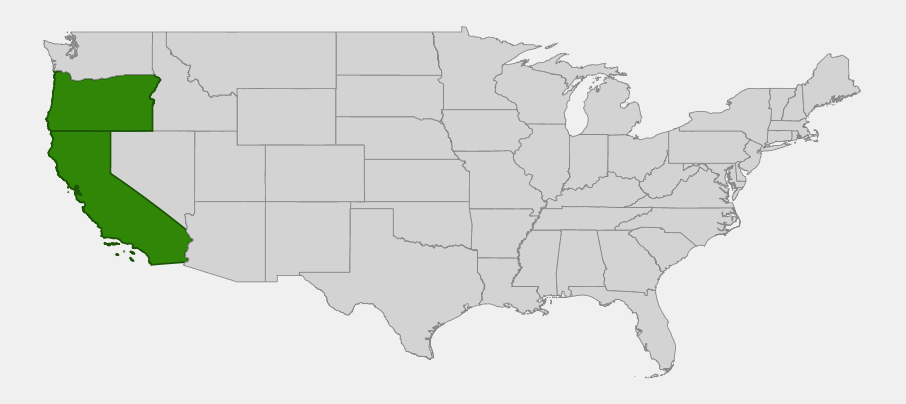
USDA PLANTS lists western heart’s ease as native in two states, California and Oregon. It has a fairly small range along the Pacific Coast, from southwestern Oregon south through the Coast Ranges of northern and central California.
In Oregon it grows in the southwestern corner of the state, in the Klamath-Siskiyou region and southern Coast Range, west of the Cascades. In California it is found in the North Coast Ranges, the Klamath Mountains, the San Francisco Bay Area (including the Santa Cruz Mountains) and the outer Central Coast Ranges.
Typical sites are shaded or partly shaded slopes and banks in redwood forest, Douglas-fir and mixed-evergreen forest, oak woodland and the edges of chaparral, as well as grassy openings and thickets. It also tolerates serpentine soils, which are low in calcium and high in heavy metals, and has been recorded around old mercury (quicksilver) mines.
📋 Regional plant lists featuring Western Heart’s Ease: Western Oregon & Western Washington · California & Nevada
Growing & Care Guide
Western heart’s ease is a charming small violet for shady native gardens in its home range. It is not often sold, so look for it at native plant society sales and specialty native nurseries, and never dig plants from the wild.
Light
Part shade to full shade. Dappled light under oaks, redwoods or tall shrubs suits it best; it scorches in hot afternoon sun.
Soil & Water
Give it humus-rich, well-drained woodland soil with a layer of leaf litter. Water regularly in winter and spring while it is growing and blooming. In summer it tolerates dry shade, as in its native forests, and may go partly dormant; occasional deep water keeps it green longer.
Planting Tips
Plant in fall or winter at the start of the rainy season, under trees or along a shady path or rock edge where the small flowers can be seen up close. Combine it with sword fern, wood sorrel, trilliums and other woodland natives.
Pruning & Maintenance
Very little care is needed. Leave fallen leaves around the plants as mulch, and let the seed capsules ripen so ants can carry seeds to new spots. Watch for snails and slugs on new growth.
Propagation
Grow it from fresh seed sown in fall in pots or a shaded seedbed; the seed needs a winter chill to germinate well. Established clumps can also be divided carefully in late winter. Use only garden-grown or nursery plants as a source.
Landscape Uses
- Woodland gardens: a small flowering groundcover under trees
- Shady path edges: where its “eyes” can be seen up close
- Butterfly gardens: larval food for fritillary butterflies
- Native habitat restoration: redwood and oak woodland understory
- Rock gardens: in shady pockets with rich soil
Wildlife & Ecological Value
Like other violets, western heart’s ease matters most to wildlife as food for butterfly caterpillars.
For Pollinators
Small bees and flies visit the flowers; the purple lines on the lower petal guide them to the nectar spur. Its foliage is a larval food for fritillaries, including the Great Basin (Egleis) fritillary, the Adiaste fritillary and the Pacific fritillary (Boloria epithore), whose caterpillars feed on violets.
For Birds
Ground-feeding birds such as juncos and quail may eat the seeds, and the plants are part of the leafy understory where many birds forage.
For Mammals
Deer, rabbits and rodents occasionally browse violet foliage, and small mammals may eat the seeds.
Ecosystem Role
Its seeds have an oily appendage (elaiosome) that ants carry to their nests, eating the appendage and leaving the seed to sprout. This helps the plant spread through the forest floor. Its tolerance of serpentine soil lets it grow in rocky places where few other plants thrive.
Cultural & Historical Uses
The species name ocellata means “with little eyes,” from the Latin ocellus, for the two purple spots on the side petals. The names pinto violet and two-eyed violet describe the same feature.
“Heart’s ease” is an old English name for the wild pansy (Viola tricolor) and other small violets, once believed to ease heartache. The name was later given to this western species.
Botanists place Viola ocellata in the same group as the Canada violet (Viola canadensis). Its closest relatives are the wedge-leaf violet (Viola cuneata) and the Olympic violet (Viola flettii), both also found only along the Pacific Coast.
Frequently Asked Questions
Why is it called western heart’s ease?
“Heart’s ease” is a traditional name for small wild pansies and violets. This species is the western, white-flowered one, also called pinto violet or two-eyed violet for its purple spots.
Where does western heart’s ease grow?
In the coastal mountains and foothills of northern and central California and southwestern Oregon, usually in shaded redwood, mixed-evergreen or oak woodland.
Can I grow western heart’s ease in my garden?
Yes, in a shady, humus-rich spot in its native region. Buy nursery-grown plants or grow it from seed; never dig it from the wild.
Is western heart’s ease good for butterflies?
Yes. Its leaves feed the caterpillars of several fritillary butterflies, which depend on violets as host plants.
How do I tell it from other violets?
Look for white petals with a yellow throat, two purple eye spots on the side petals, purple backs on the upper petals and heart-shaped leaves on leafy stems.

Looking for a nursery that carries Western Heart’s Ease?
Browse our native plant nursery directory: California · Oregon