
Carolina Vetch (Vicia caroliniana)
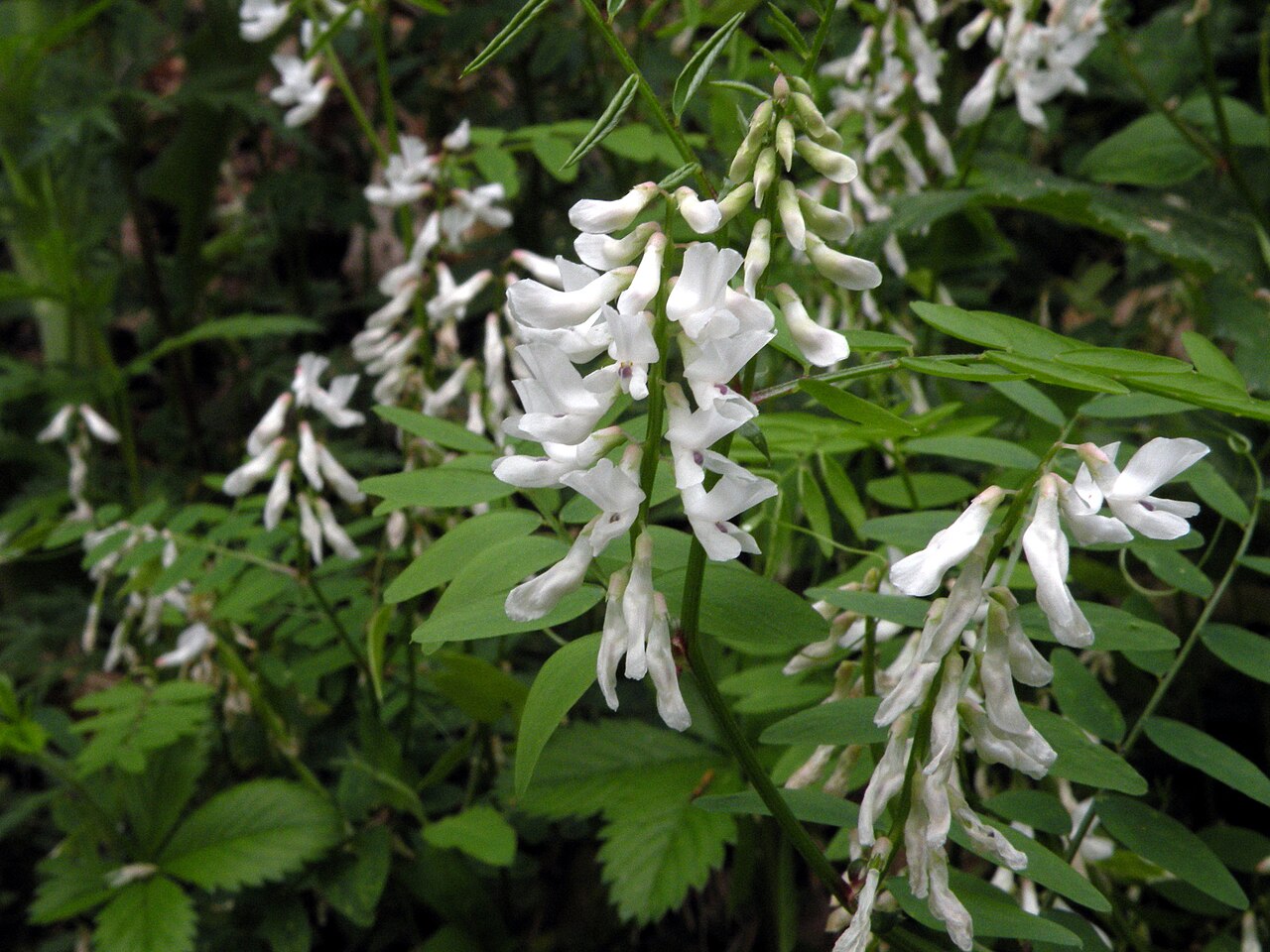
Vicia caroliniana, known as Carolina Vetch and also called Carolina wood vetch or wood vetch, is a native perennial vine of the pea family (Fabaceae). Its slender, sprawling stems climb through low shrubs and woodland plants with the help of tendrils at the tips of its compound leaves. In spring it carries loose, one-sided clusters of small white pea flowers, often tipped with pale blue or lavender.
This is a plant of open deciduous woods, wooded slopes and bluffs, stream banks and woodland edges across much of the eastern United States, from the Gulf Coast north to the Great Lakes and southern Ontario. It blooms from about April to June, then sets small, flat seed pods. Unlike the weedy vetches introduced from Europe, it is a well-behaved native that rarely becomes aggressive.
Like other legumes, Carolina vetch hosts nitrogen-fixing bacteria in its roots. Its flowers feed bumble bees and other native bees in spring, and its seeds and foliage are eaten by wildlife. It is a lovely, airy addition to a shady or partly sunny woodland garden, where it drapes over neighbors without smothering them.
Identification
Carolina vetch is a delicate climbing or trailing vine. Look for pinnately compound leaves with many small oblong leaflets and a tendril at the tip, and long-stalked, one-sided clusters of small white pea flowers in spring.
Stems & Growth Habit
The stems are slender, angled, mostly smooth and often reddish. They sprawl along the ground or climb through other plants, reaching about 2 to 5 feet long. The Lady Bird Johnson Wildflower Center describes the stems as sprawling or climbing up to about 5 feet. Plants spread slowly from a perennial base and often form loose patches.
Leaves
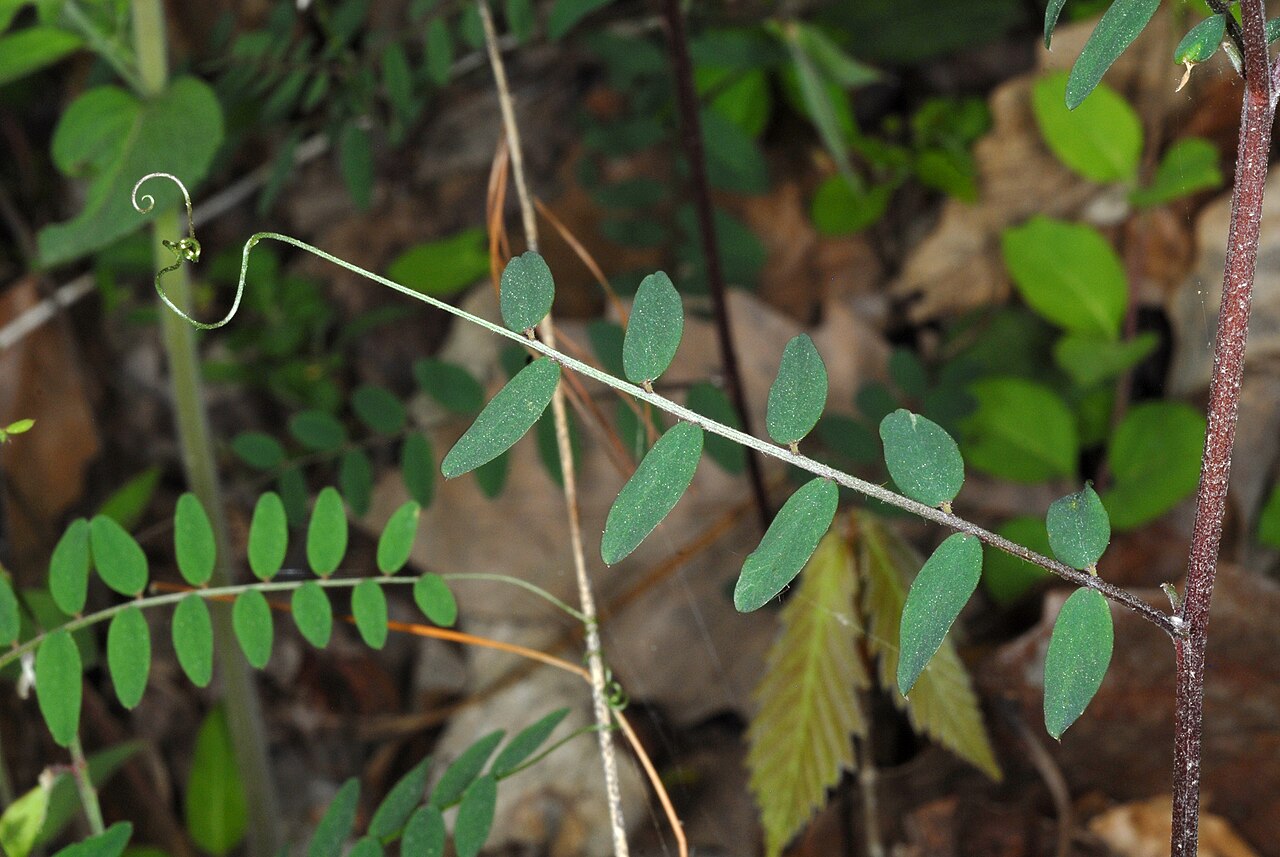
The leaves are alternate and pinnately compound, with roughly 8 to 18 small leaflets. The leaflets are oblong to elliptic, about 1/2 to 1 inch long, with rounded or slightly notched tips and often a tiny point. The leaf stalk ends in a simple or forked tendril. A pair of small, narrow stipules sits at the base of each leaf.
Flowers
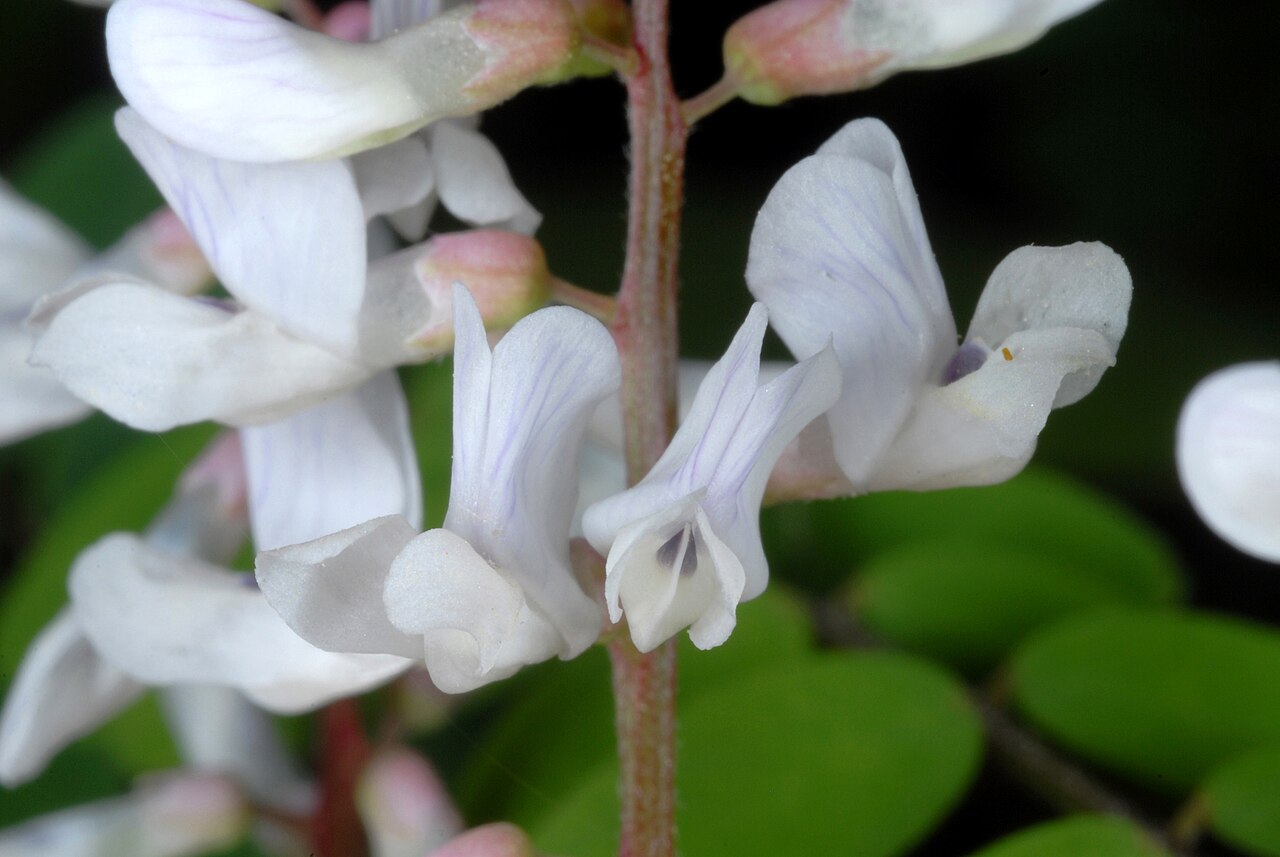
The flowers grow in loose, often one-sided racemes on long stalks from the leaf axils, with about 7 to 20 flowers in each cluster. Each pea-shaped flower is about 1/3 inch long. The petals are white, and the tip of the keel is usually pale blue or lavender, so the clusters can look faintly blue-tinged from a distance. Bloom time is about April to June, earlier in the South.
Fruit & Seeds
The fruit is a flat, smooth pod about 1 inch long, holding a few round seeds. The pods ripen in early summer, turn tan and split open to release the seeds.
Look-alikes
American vetch (Vicia americana) has larger, purple flowers in shorter clusters of 3 to 9. The introduced hairy vetch (Vicia villosa) and bird vetch (Vicia cracca) have dense, long, one-sided spikes of many purple to blue-violet flowers. Carolina vetch is the common native vetch of eastern woods with white flowers in loose, long-stalked clusters.
Safety
Carolina vetch is not known as a significant poisonous plant. As with other wild vetches, people should not eat the seeds, since seeds of some Vicia species contain compounds that can be harmful in quantity.
Quick Facts
| Scientific Name | Vicia caroliniana |
| Family | Fabaceae (pea family) |
| Plant Type | Herbaceous perennial vine |
| Mature Height | Stems 2–5 ft long, sprawling or climbing |
| Mature Spread | 2–4 ft |
| Growth Rate | Moderate |
| Sun Exposure | Part shade to full sun |
| Water Needs | Low to medium |
| Soil Type | Loamy, sandy or rocky; well-drained |
| Soil pH | Acidic to near neutral |
| Bloom Time | April–June |
| Flower Color | White, keel tipped pale blue or lavender |
| Fall Color | None; foliage fades in summer |
| Fruit | Flat, smooth pod about 1 in long |
| Deer Resistant | No; browsed by deer |
| USDA Hardiness Zones | 4–9 |
Native Range
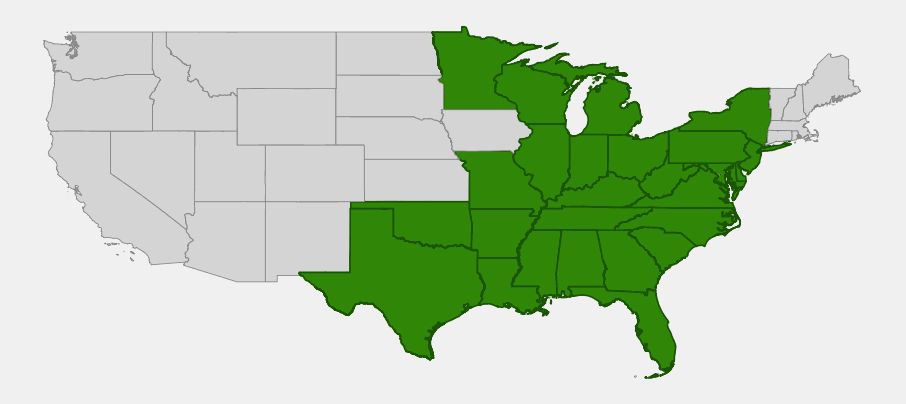
Carolina vetch is native to the eastern United States and southern Ontario. USDA PLANTS lists it as native in Alabama, Arkansas, Delaware, Florida, Georgia, Illinois, Indiana, Kentucky, Louisiana, Maryland, Michigan, Minnesota, Mississippi, Missouri, New Jersey, New York, North Carolina, Ohio, Oklahoma, Pennsylvania, South Carolina, Tennessee, Texas, Virginia, West Virginia and Wisconsin, as well as the District of Columbia.
It is most common in the Appalachian region, the Piedmont and the Ohio and Mississippi valleys. In the Deep South it reaches the Florida Panhandle and the Gulf Coastal Plain, and in the west it reaches eastern Oklahoma and East Texas. At the northern edge it becomes scattered, with records from southern Michigan, Wisconsin (including the Door Peninsula), southeastern Minnesota and southern Ontario. Toward the northeast it is uncommon: the New Jersey Natural Heritage Program tracks it as a rare plant.
It grows in rich to fairly dry deciduous and mixed woods, wooded slopes and bluffs, ravines, stream banks, woodland clearings and edges, and shaded roadsides. It often grows on well-drained, rocky or loamy soils and seems to favor partly open woods with some sunlight reaching the ground.
📋 Regional plant lists featuring Carolina Vetch: New York, Pennsylvania & Northern New Jersey · Ohio & Indiana · Michigan, Wisconsin & Eastern Minnesota · Kentucky & Tennessee · Maryland, Virginia & West Virginia · Delaware, Southern New Jersey & Long Island · Illinois, Iowa & Missouri · Alabama, Georgia & Mississippi · North & South Florida · North & South Carolina · Arkansas, Louisiana, Eastern Oklahoma & Eastern Texas
Growing & Care Guide
Carolina vetch is an easy, low-maintenance native for woodland gardens and shady edges. It is not widely sold, but seed and plants are sometimes offered by native plant nurseries in the Southeast and Mid-Atlantic. Give it something to climb and let it weave through its neighbors.
Light
Part shade is ideal, such as the dappled light under deciduous trees or the edge of a woodland. It also grows in full sun if the soil does not dry out completely, and it tolerates fairly deep shade, though it blooms less there.
Soil & Water
It prefers well-drained loamy, sandy or rocky soil with some leaf litter, and grows in acidic to near-neutral conditions. Once established it handles average rainfall and short dry spells well. It does not need fertilizer, since it fixes its own nitrogen.
Planting Tips
Plant it near low shrubs, ferns or sturdy woodland perennials it can scramble over, or let it trail down a slope or over a rock wall. Space plants about 2 feet apart. When sowing seed, nick or sand the hard seed coat or soak the seed overnight, then sow in fall or early spring about 1/4 inch deep.
Pruning & Maintenance
No pruning is needed. The foliage may yellow and fade after the seeds ripen in summer; you can leave it to break down or trim it back. A light mulch of shredded leaves keeps the soil cool and moist, as in its natural woodland home.
Propagation
Grow it from seed collected from pods as they turn tan in early summer, before they split. Scarify and sow in fall, or store the seed dry and sow in spring. Established clumps can also be divided carefully in early spring.
Landscape Uses
- Woodland gardens: a light, climbing companion for spring wildflowers and ferns
- Shady edges: draping over low shrubs and along woodland paths
- Pollinator gardens: spring nectar and pollen for bumble bees and other native bees
- Slopes and walls: trailing down banks, rocky slopes and stone walls
- Naturalizing: a native alternative to introduced, weedy vetches
Wildlife & Ecological Value
Carolina vetch is a quiet but useful wildlife plant in eastern woodlands, feeding bees in spring and adding nitrogen to the forest floor.
For Pollinators
The pea flowers are visited mainly by bumble bees and other sturdy native bees that can push open the keel to reach the nectar and pollen. Legumes such as vetches are larval host plants for various small butterflies and moths, whose caterpillars feed on the leaves and young pods.
For Birds
Wild turkeys, bobwhite quail, doves and sparrows eat legume seeds such as those of vetches, and the insects that feed on the plants provide food for insect-eating songbirds.
For Mammals
White-tailed deer and rabbits browse vetches, and the tender spring growth is a nutritious, protein-rich forage. Small mammals also eat the fallen seeds.
Ecosystem Role
Through root nodules that host nitrogen-fixing bacteria, Carolina vetch adds nitrogen to woodland soils. Its trailing stems help cover and hold the soil on slopes and banks, and its spring flowers bridge the gap between early ephemerals and summer bloomers.
Cultural & Historical Uses
The species was described in 1788 by Thomas Walter in his Flora Caroliniana, one of the first floras of the American South, based on plants he found in the Carolina Lowcountry. The name caroliniana refers to the Carolinas. It has also been known by older names, including Vicia hugeri and Vicia parviflora.
The Cherokee used Carolina vetch in traditional medicine. Ethnobotanical records describe it being rubbed on the skin for muscle pains and taken as a preparation for rheumatism, and it was reportedly taken for wind before a ball game. These are historical uses and not recommendations.
Vetches have been grown worldwide as forage and cover crops for their ability to enrich soil with nitrogen. Most vetches seen along roadsides in North America are introduced species from Europe and Asia that can become weedy. Carolina vetch is one of the few native eastern vetches, offering gardeners the soil benefits and charm of a legume vine without the risk of spreading an invasive plant.
Frequently Asked Questions
Is Carolina vetch native?
Yes. It is native to the eastern United States, from the Gulf Coast north to the Great Lakes, and to southern Ontario. Most other vetches seen along eastern roadsides, such as hairy vetch and bird vetch, are introduced.
Is Carolina vetch invasive?
No. It is a native perennial that grows in loose, modest patches in woodlands and does not overrun other plants the way some introduced vetches can.
What color are Carolina vetch flowers?
The flowers are white, with the tip of the keel usually tinged pale blue or lavender. They grow in loose, one-sided clusters on long stalks in spring.
Does Carolina vetch grow in shade?
Yes. It grows naturally in open deciduous woods and does well in part shade, though it blooms most heavily with a few hours of sun.
When does Carolina vetch bloom?
It blooms from about April to June, starting earliest in the Deep South and latest at the northern edge of its range.

Looking for a nursery that carries Carolina Vetch?
Browse our native plant nursery directory: Alabama & Arkansas · Delaware, Florida & Georgia · Illinois & Indiana · Kentucky, Louisiana, Maryland, Michigan, Minnesota, Mississippi & Missouri · New Jersey, New York, North Carolina, Ohio & Oklahoma · Pennsylvania, South Carolina, Tennessee, Texas & Virginia · West Virginia & Wisconsin
