
Perfoliate Bellwort (Uvularia perfoliata)
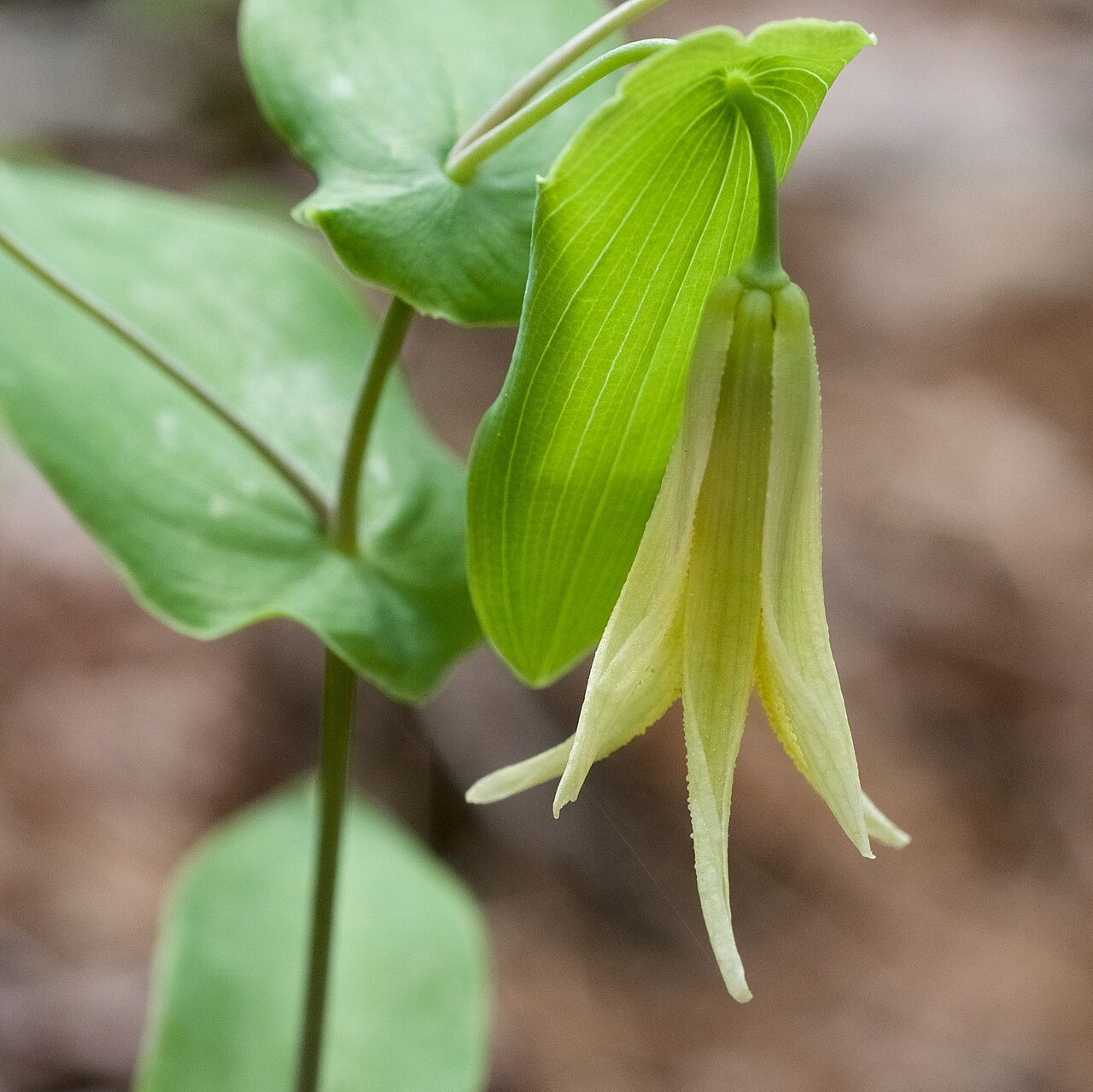
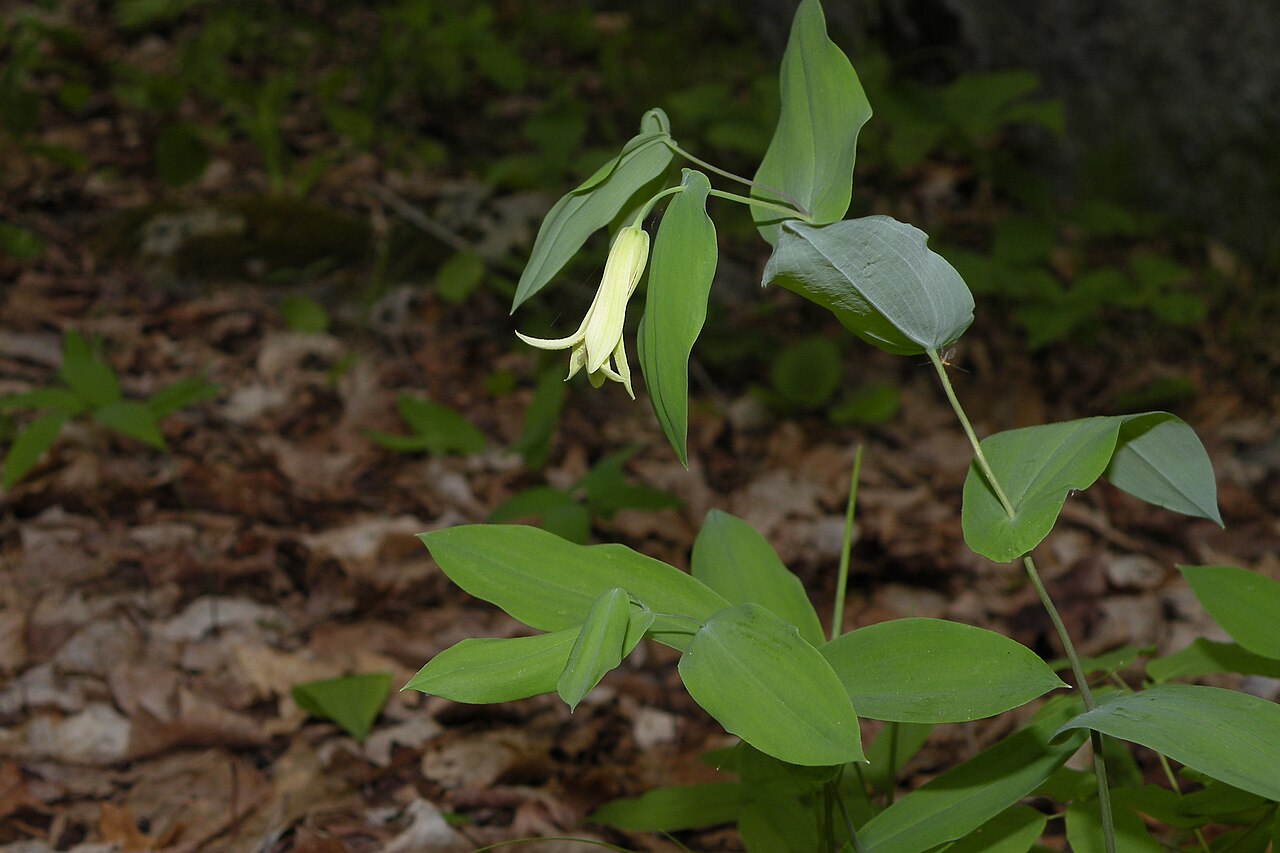
Uvularia perfoliata, the Perfoliate Bellwort, is a graceful spring wildflower of eastern woodlands. In April and May its slender, arching stems carry smooth, gray-green leaves that the stem seems to pierce, and a single pale yellow, bell-shaped flower hangs from the tip of each flowering stem. It is also called wood merrybells, mealy bellwort and perfoliate-leaved bellwort.
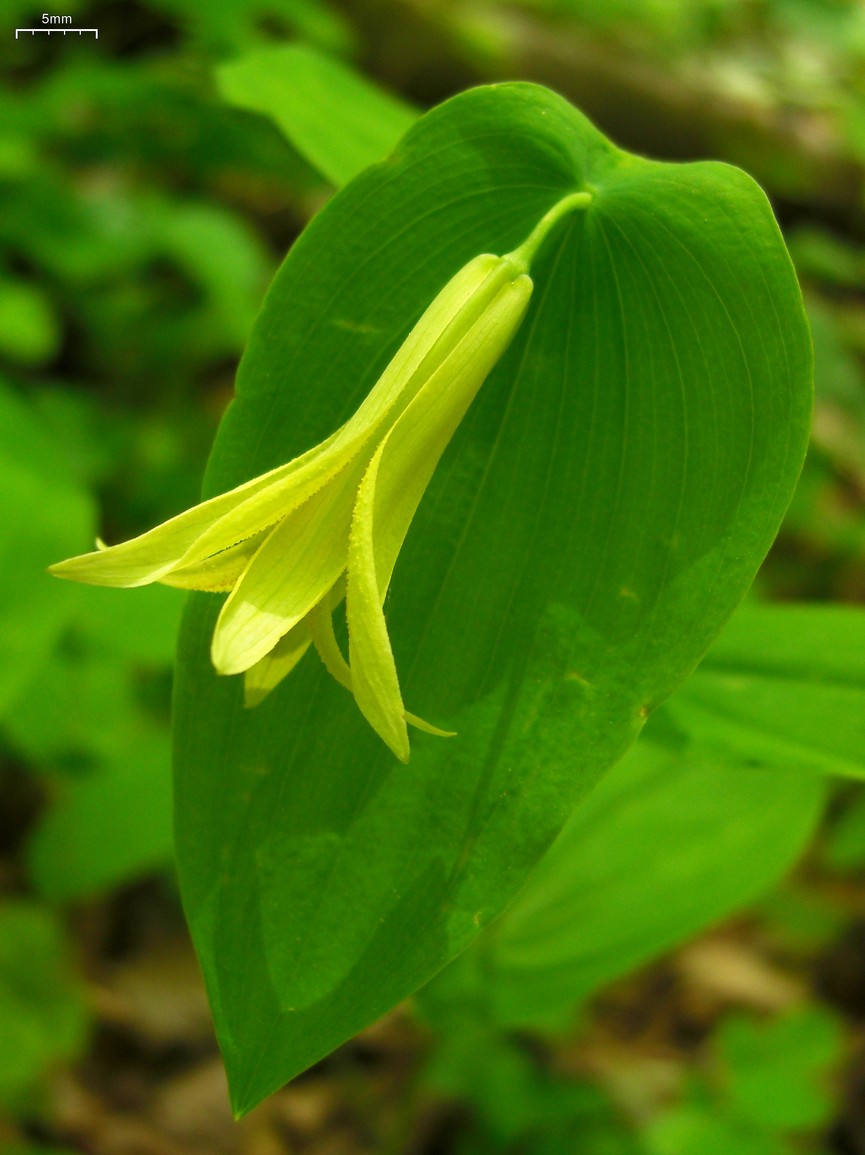
“Perfoliate” means “through the leaf”. The leaf base wraps completely around the stem, so the stem appears to grow straight through it. This feature, shared with largeflower bellwort, separates these two bellworts from sessile bellwort, whose leaves simply sit on the stem.
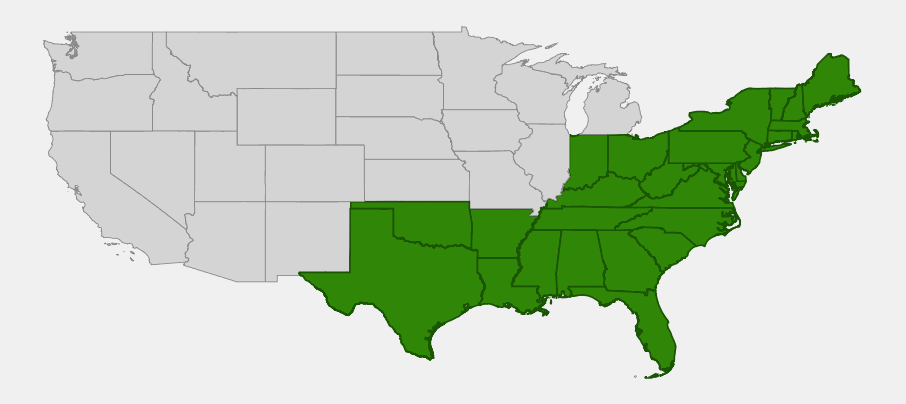
Perfoliate bellwort grows from New England and southern Ontario south to northern Florida and west to eastern Texas and Oklahoma, mostly in dry to moist, acid woods. It is a long-lived, low-maintenance plant for woodland and shade gardens, where it slowly forms small colonies and pairs well with ferns and other spring wildflowers.
Identification
Perfoliate bellwort is most often confused with largeflower bellwort, which also has perfoliate leaves. The texture of the inside of the flower and the leaf undersides settle the question.
Stems & Leaves
The stems are 6 to 20 inches tall, smooth and often forked once, arching at the top. The leaves are oval to lance-shaped, 2 to 4 inches long, smooth on both sides, gray-green and slightly whitened beneath, with the base wrapped around the stem. Young leaves are folded and drooping at flowering time and expand fully afterward.
Flowers
Each flowering stem carries one pale yellow, narrow, bell-shaped flower about 3/4 to 1 1/2 inches long, hanging from just below the uppermost leaves. The six tepals are slightly twisted, and their inner surface is covered with tiny orange-yellow grains (glandular bumps) that give it a rough, mealy look. Largeflower bellwort has larger, brighter yellow flowers that are smooth inside and leaves that are finely hairy beneath.
Fruit & Seeds
After flowering, a three-angled, flat-topped capsule forms and ripens in early summer. It splits open to release a few rounded seeds, each with a small fleshy appendage (elaiosome) that attracts ants, which carry the seeds away.
Roots
Plants grow from a short rhizome with fleshy roots and spread slowly by short runners to form loose clumps and colonies. The stems die back in mid to late summer.
Quick Facts
| Scientific Name | Uvularia perfoliata |
| Common Names | Perfoliate bellwort (USDA), wood merrybells, mealy bellwort |
| Family | Colchicaceae (autumn crocus family); formerly Liliaceae |
| Plant Type | Herbaceous perennial spring wildflower |
| Mature Height | 6–20 in |
| Mature Spread | 6–12 in; slowly forms colonies |
| Growth Rate | Slow |
| Sun Exposure | Part shade to full shade |
| Water Needs | Low to medium; dry to moist woodland soil |
| Soil Type | Well-drained, humus-rich loam or sandy loam |
| Soil pH | Acid to near neutral (about 5.0–7.0) |
| Bloom Time | April–May |
| Flower Color | Pale yellow |
| Fall Color | Foliage yellows and dies back by late summer |
| Fruit | Three-angled capsule; ant-dispersed seeds |
| Deer Resistant | Moderate; occasionally browsed |
| USDA Hardiness Zones | 4–9 |
Native Range
Perfoliate bellwort is native to the eastern United States and southern Ontario. USDA PLANTS records it from 27 states and the District of Columbia, from southern New England, New York and Pennsylvania south through the Atlantic and Gulf states to northern Florida, and west through Ohio, Indiana, Kentucky and Tennessee to Arkansas, Louisiana, eastern Oklahoma and eastern Texas. Records from Maine, New Hampshire and Vermont are at the northern edge of its range.
It is most common in the Appalachian Mountains and Piedmont from Pennsylvania to Georgia and Alabama, and in the uplands of Kentucky, Tennessee and the Ouachita and Ozark region of Arkansas. On the coastal plain and toward the western edge of its range it becomes more local.
It grows in dry to moist deciduous and mixed woods, especially oak, oak-hickory and beech forests on acid soils, on wooded slopes, ravines and stream terraces, and in open, rocky woods. It tolerates drier and more acid soils than largeflower bellwort.
📋 Regional plant lists featuring Perfoliate Bellwort: New York, Pennsylvania & Northern New Jersey · Ohio & Indiana · Kentucky & Tennessee · Connecticut, Massachusetts & Rhode Island · New Hampshire, Maine & Vermont · Maryland, Virginia & West Virginia · Delaware, Southern New Jersey & Long Island · Alabama, Georgia & Mississippi · North & South Florida · North & South Carolina · Arkansas, Louisiana, Eastern Oklahoma & Eastern Texas
Growing & Care Guide
Perfoliate bellwort is an easy, long-lived plant for shade once it is established. Give it woodland conditions, leave it undisturbed, and it will return every spring and slowly form a colony. Buy nursery-propagated plants from native plant nurseries, and never dig them from the wild.
Light
Plant in part to full shade under deciduous trees. Like many spring wildflowers, it does most of its growing in spring sun before the canopy fills in, so a spot under deciduous trees is ideal.
Soil & Water
It prefers well-drained, acid to near-neutral, humus-rich soil and tolerates fairly dry woodland conditions once established. A mulch of shredded leaves keeps the soil cool and moist and mimics the forest floor. Avoid heavy, waterlogged soil.
Planting Tips
Plant rhizomes or potted plants in early spring or fall, about 1 inch deep and 8 to 12 inches apart. Combine it with ferns, foamflower, wild ginger and other woodland plants that fill in after it goes dormant in summer. Mark its location so it is not disturbed while dormant.
Pruning & Maintenance
No pruning is needed. Let the foliage yellow and die back naturally in summer, and leave fallen leaves in place as mulch. It is rarely troubled by pests or diseases.
Propagation
Divide established clumps in early fall or very early spring, keeping a bud and roots with each piece. Seeds can be sown fresh in summer, as soon as the capsules split; they need a warm and then a cold period to germinate, and seedlings take several years to flower.
Landscape Uses
- Woodland gardens: a graceful, long-lived spring wildflower for shade
- Shade borders: pairs well with ferns and later-emerging perennials that hide its summer dormancy
- Naturalizing: slowly forms colonies under deciduous trees
- Restoration: suited to understory plantings in eastern oak and beech woods
Wildlife & Ecological Value
Perfoliate bellwort is a small part of the spring woodland community, offering early nectar to bees and seeds to ants.
For Pollinators
The nodding flowers are visited by bees, especially bumblebees and other native bees, which hang from the flowers to reach the nectar and pollen in early spring.
For Birds
It is not an important food plant for birds, but it adds to the woodland ground layer that supports the insects many forest birds eat.
For Mammals
Deer and rabbits browse it occasionally. Its small size and early dormancy keep it out of sight for much of the year.
Ecosystem Role
Its seeds carry a fleshy, oil-rich appendage that attracts ants, which carry the seeds back to their nests, eat the appendage and discard the seed. This process, called myrmecochory, is common among eastern spring wildflowers and helps spread the plant through the forest.
Cultural & Historical Uses
The genus name Uvularia comes from the uvula, the small flap at the back of the throat, which the hanging flowers were thought to resemble. Under the old “doctrine of signatures”, that likeness led to the use of bellworts for sore throats and mouth ailments.
Native American peoples used bellworts in various ways, including as medicine for sores and other ailments, and the young shoots of some bellworts were reportedly cooked and eaten. These historical uses are not recommendations; bellworts should not be used as food or medicine.
The common name “merrybells” reflects the plant’s cheerful, dangling flowers. Perfoliate bellwort and largeflower bellwort are the only two bellworts with perfoliate leaves, and hybrids between them have been grown in botanic gardens.
Frequently Asked Questions
How do I tell perfoliate bellwort from largeflower bellwort?
Look inside the flower. Perfoliate bellwort has paler yellow flowers with small orange grains on the inner surface of the tepals, and its leaves are smooth beneath. Largeflower bellwort has larger, brighter flowers that are smooth inside and leaves that are finely hairy beneath.
Is perfoliate bellwort easy to grow?
Yes, in shade with well-drained, humus-rich soil. It is slow to spread but long-lived and low-maintenance once established.
Why does perfoliate bellwort disappear in summer?
It is a spring wildflower that goes dormant after setting seed, usually by mid to late summer. The rhizome stays alive underground and sends up new shoots the next spring.
What does perfoliate mean?
It means the leaf base wraps completely around the stem, so the stem appears to grow through the leaf.
Will deer eat perfoliate bellwort?
Deer occasionally browse it, but it is not a favored food in most areas.

Looking for a nursery that carries Perfoliate Bellwort?
Browse our native plant nursery directory: Alabama & Arkansas · Connecticut, Delaware, Florida & Georgia · Indiana · Kentucky, Louisiana, Maine, Maryland, Massachusetts & Mississippi · New Hampshire, New Jersey, New York, North Carolina, Ohio & Oklahoma · Pennsylvania, Rhode Island, South Carolina, Tennessee, Texas, Vermont & Virginia · West Virginia