
Yerba Mansa (Anemopsis californica)
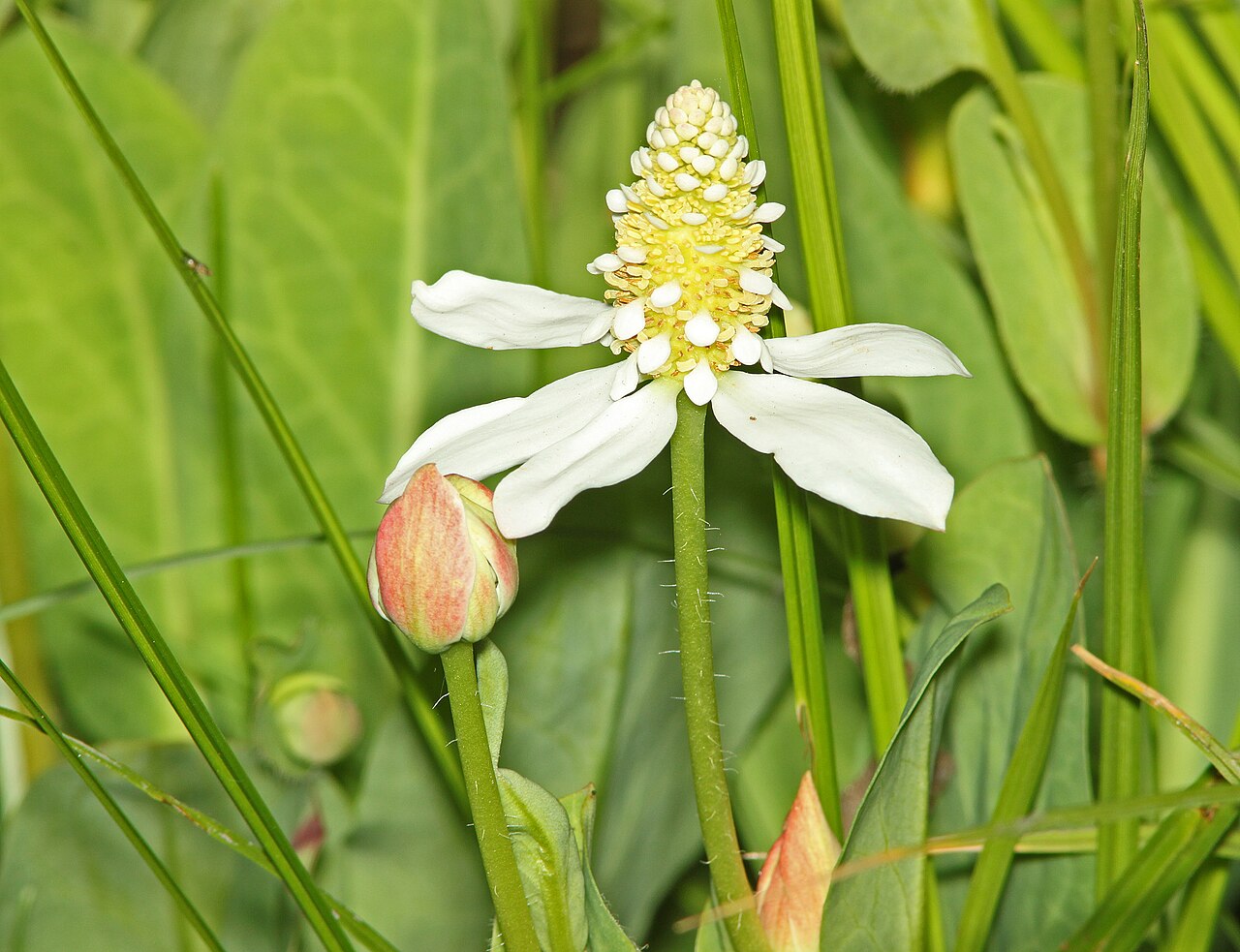
Anemopsis californica, known as Yerba Mansa or lizard tail, is a native perennial of wet ground in the arid Southwest. It belongs to the lizard’s-tail family (Saururaceae) and is the only species in its genus. From spring into late summer it sends up stalks topped by striking “flowers” 1 to 2 inches across: a ring of white, petal-like bracts around an upright cone of tiny true flowers. Broad, leathery leaves grow in basal clumps, and the plant spreads by reddish runners into dense colonies.
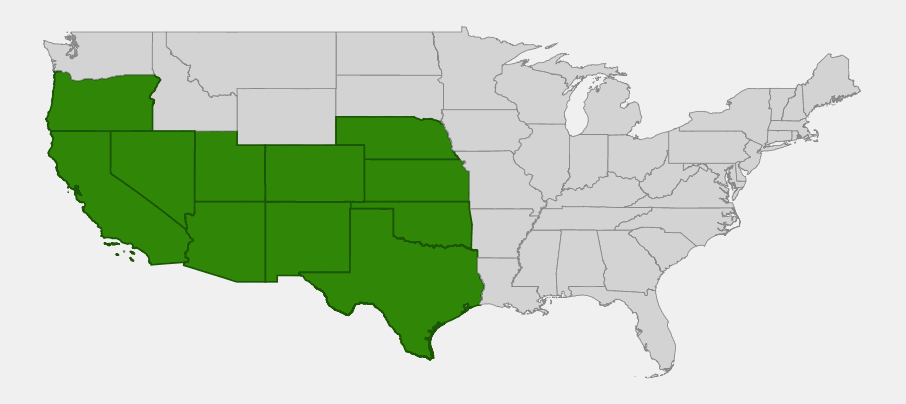
Yerba mansa grows in places where water stays at or near the surface for much of the year: springs, seeps, wet meadows, stream and river banks, marsh edges and alkaline flats. It is found from California, Nevada and southeastern Oregon east to Utah, Colorado, New Mexico, western Texas, Oklahoma and Kansas, and south into northern Mexico. It tolerates salty and alkaline soils that many wetland plants cannot.
Its name is Spanish, often translated as “tame herb” or “calming herb.” The aromatic roots have a long history of medicinal use by Native American and Hispanic communities in the Southwest. Today yerba mansa is also a favorite of native gardeners for rain gardens, pond edges and moist groundcovers. This guide covers how to identify it, where it grows and how to grow it.
Identification
Yerba mansa is unmistakable in flower. No other plant in the Southwest has the same combination of white bracts around a tall cone, broad basal leaves and spreading red runners.
Roots & Runners
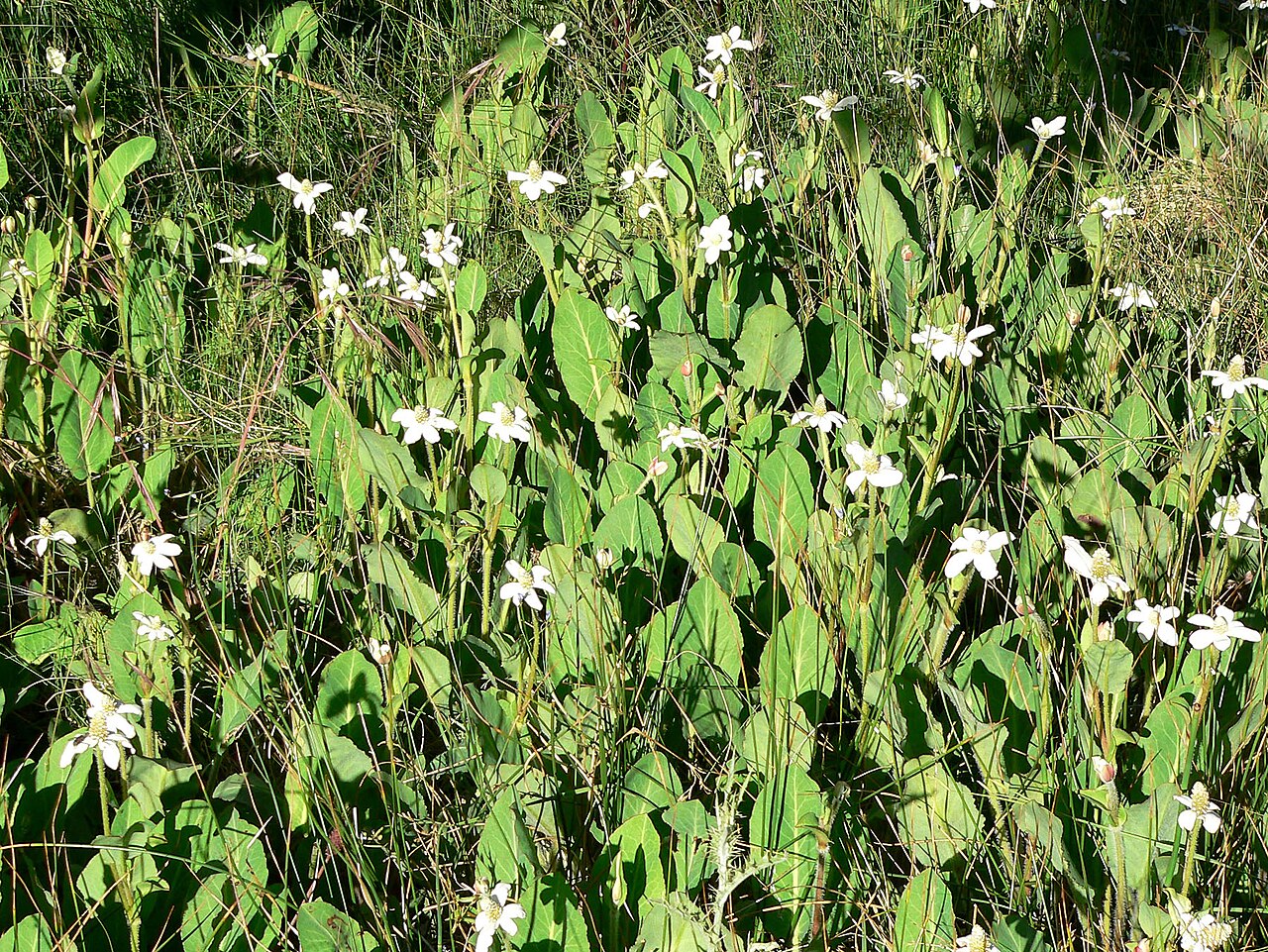
The plant grows from thick, aromatic rhizomes and sends out long, reddish runners (stolons) that root at the nodes, much like strawberry runners. A single plant can form a colony many feet across. The roots and rhizomes have a strong, spicy smell when broken, often compared to camphor, eucalyptus or ginger.
Leaves
Most leaves are basal, on stalks several inches long. The blades are oval to oblong, 2 to 6 inches long or more, thick, smooth-edged and somewhat leathery, with a slightly fleshy feel. A single smaller leaf usually clasps the flowering stem below the bracts. In fall, and in dry or salty conditions, the leaves often turn red and spotted.
Flowers
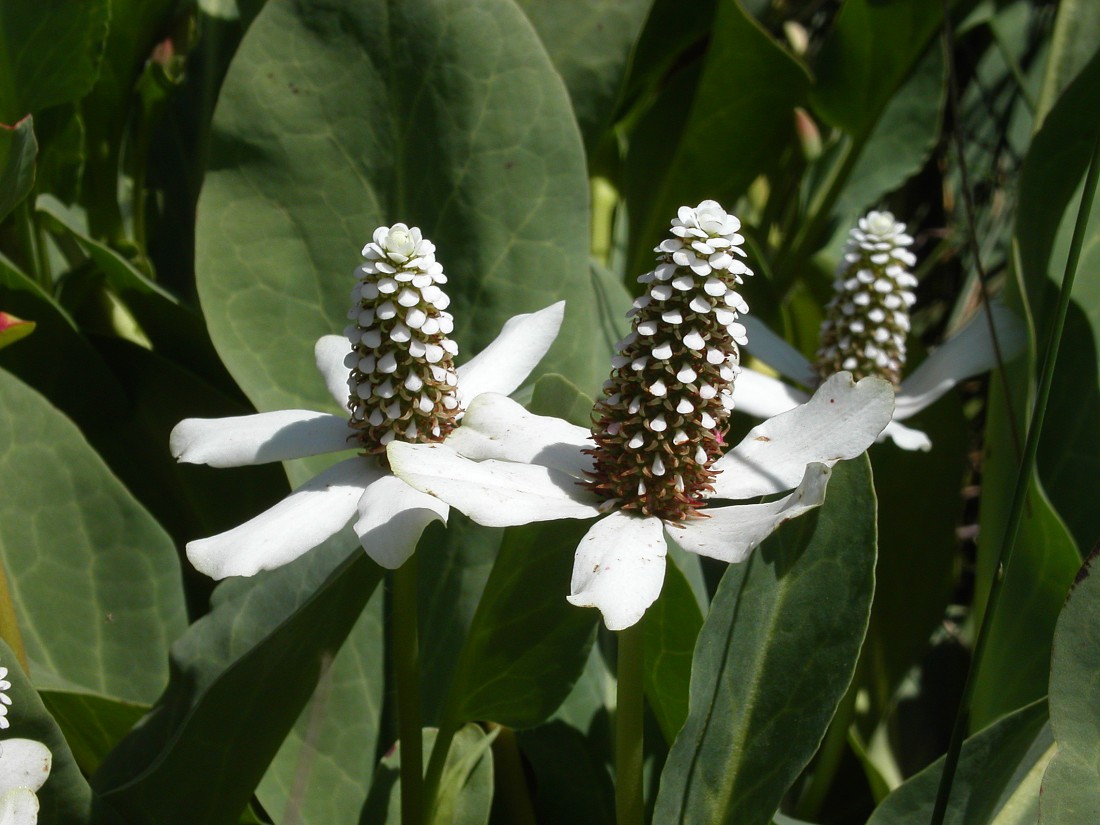
The flowering stems are usually 6 to 16 inches tall. What looks like a single flower is actually a cluster. At the top of the stem is a cone-shaped spike, ½ to 1½ inches tall, packed with tiny flowers, each with its own small white bract. At the base of the spike is a ring of 4 to 9 larger white bracts, giving the whole cluster the look of an anemone, which is what the genus name means. The bracts often develop red spots or blushes as they age. Bloom runs from March to September, peaking in spring and early summer.
Fruit & Seeds
After flowering, the cone enlarges and turns reddish brown and woody, holding many small seeds in fused capsules. The dry cones remain on the stalks for months and are a good field mark even out of bloom.
Quick Facts
| Scientific Name | Anemopsis californica |
| Family | Saururaceae (lizard’s-tail family) |
| Plant Type | Herbaceous perennial wetland plant; spreads by runners |
| Mature Height | 6–16 in in flower (leaves 4–12 in) |
| Mature Spread | Spreads indefinitely by runners; forms colonies |
| Growth Rate | Moderate to fast in wet soil |
| Sun Exposure | Full sun to part shade |
| Water Needs | High; moist to wet soil or shallow standing water |
| Soil Type | Wet loam, clay, sand or muck; tolerates alkaline and salty soils |
| Soil pH | About 6.5–9.0 (neutral to strongly alkaline) |
| Bloom Time | March–September (peak spring to early summer) |
| Flower Color | White bracts, often red-spotted with age, around a pale cone |
| Fall Color | Leaves often turn red to maroon in fall |
| Fruit | Woody, reddish-brown cone of fused capsules |
| Deer Resistant | Mostly; the aromatic leaves are seldom browsed |
| USDA Hardiness Zones | 6–10 |
Native Range
USDA PLANTS records yerba mansa as native in 11 states: California, Nevada, Oregon, Utah, Arizona, Colorado, New Mexico, Texas, Oklahoma, Kansas and Nebraska. It also grows in northern Mexico, including Baja California, Sonora and Chihuahua.
Its heartland is the desert and semi-arid Southwest, where it grows around springs, seeps, rivers and irrigation ditches in California, southern Nevada, Arizona and New Mexico. In Oregon it is known only from the southeastern corner of the state, and in Texas mainly from the western half. The records in Oklahoma, Kansas, Nebraska and Colorado are at the eastern and northern edge of its range, and some are outlying.
Because it depends on reliable water in dry country, yerba mansa has declined where springs have been pumped dry, rivers channelized or wet meadows drained. Where groundwater remains near the surface, it can still form colonies covering acres.
📋 Regional plant lists featuring Yerba Mansa: Arizona & New Mexico · California & Nevada · Idaho, Eastern Oregon & Eastern Washington · Utah & Western Colorado · Nebraska, Kansas & Eastern Colorado · South & West Texas
Growing & Care Guide
Yerba mansa is easy to grow wherever it gets steady moisture, and it is one of the best native groundcovers for wet spots in western gardens. Plants are sold by many native nurseries in California and the Southwest. Given water, it spreads into a lush carpet; given less, it stays smaller and may go dormant in summer.
Light
Full sun to part shade. In hot desert gardens, afternoon shade helps keep the leaves green. In full sun with ample water, it flowers most heavily.
Soil & Water
It needs consistently moist to wet soil and grows well in shallow water at pond margins. It tolerates heavy clay, sand and alkaline or somewhat salty soils, including soils too salty for many garden plants. In drier soil it survives but goes dormant in the heat and spreads slowly.
Planting Tips
Plant in spring or fall about 1 to 2 feet apart. It makes a fine groundcover in rain gardens, along downspouts, beside ponds and in low spots where water collects. In pots, use a container without drainage holes or set it in a saucer of water.
Pruning & Maintenance
Remove dead leaves in late winter. Cut back or pull runners if it spreads beyond its space. Leave the dry seed cones for interest, or trim them for a neater look. Plants are deciduous in cold winters and return from the roots in spring.
Propagation
The easiest method is to cut rooted runners or divide clumps in spring. Seed can be sown on the surface of moist soil; keep it wet until germination.
Landscape Uses
- Rain gardens and bioswales: a spreading groundcover for low spots that collect runoff
- Pond and stream edges: shallow-water and wet-margin planting in the Southwest
- Wetland and spring restoration: a native colonizer of seeps, wet meadows and alkaline flats
- Moist groundcover: a lush alternative to lawn in damp, sunny or partly shaded areas
- Ethnobotanical gardens: a traditional Southwestern medicinal plant for display and education
Wildlife & Ecological Value
In dry country every wet spot matters to wildlife, and yerba mansa is part of the green, flowering edge around desert springs, streams and marshes.
For Pollinators
The tiny flowers in the cone are visited by small native bees, flies and beetles, which collect pollen and nectar. Its long bloom season, from spring through summer, supplies food in desert wetlands over many months.
For Birds
The dense colonies give cover to small birds, and the moist ground they shade supports insects eaten by birds such as yellowthroats and flycatchers.
For Mammals
The aromatic leaves are seldom browsed, though small mammals shelter in the dense foliage.
Ecosystem Role
Yerba mansa helps hold soil around springs and stream banks with its rhizomes and runners, and it tolerates salty and alkaline conditions that limit many other wetland plants. Its colonies shade the soil and slow water flow, which helps keep desert seeps and wet meadows moist.
Cultural & Historical Uses
Yerba mansa has a long history in the traditional medicine of the Southwest. Native American peoples, including groups in California and the Southwest, and later Hispanic communities of New Mexico and northern Mexico used the roots and leaves in teas, washes and poultices for colds, sore throats, inflammation, wounds and other ailments. It remains a well-known plant in regional herbal traditions. These are historical and cultural uses, not medical recommendations.
The genus name Anemopsis means “like an anemone,” for the flower clusters. Thomas Nuttall first described the plant, and William Hooker and George Arnott gave it its current name around 1840. It is the only species in its genus and one of only a few members of the lizard’s-tail family in North America, along with lizard’s tail (Saururus cernuus) of the East.
Because its wetland habitat is scarce in the arid West, wild-harvesting of the roots for herbal products can harm local populations. Gardeners who want to use it should grow their own from nursery plants rather than dig from the wild.
Frequently Asked Questions
Is yerba mansa hard to grow?
No. It is easy in moist to wet soil, sun or part shade, and it spreads readily by runners. It struggles only in dry soil, where it goes dormant in summer.
Will yerba mansa spread too much?
It spreads by runners into colonies, which is ideal for wet groundcover areas. In small gardens, pull or cut runners to keep it in bounds, or grow it in a container.
Can yerba mansa grow in salty or alkaline soil?
Yes. It naturally grows in alkaline and somewhat salty wet meadows and is one of the best native choices for such soils in the West.
Is yerba mansa a medicinal plant?
It has a long history of traditional use in the Southwest. Consult a qualified health professional before using any herbal remedy, and grow your own rather than collecting from wild populations.
Does yerba mansa need standing water?
No. It does best in soil that stays moist to wet, and it also grows at pond edges in shallow water. In garden beds, regular watering is enough.

Looking for a nursery that carries Yerba Mansa?
Browse our native plant nursery directory: Arizona · California · Colorado · Kansas · Nebraska, Nevada, New Mexico & Oklahoma · Oregon · Texas & Utah