
Chaparral Pea (Pickeringia montana)
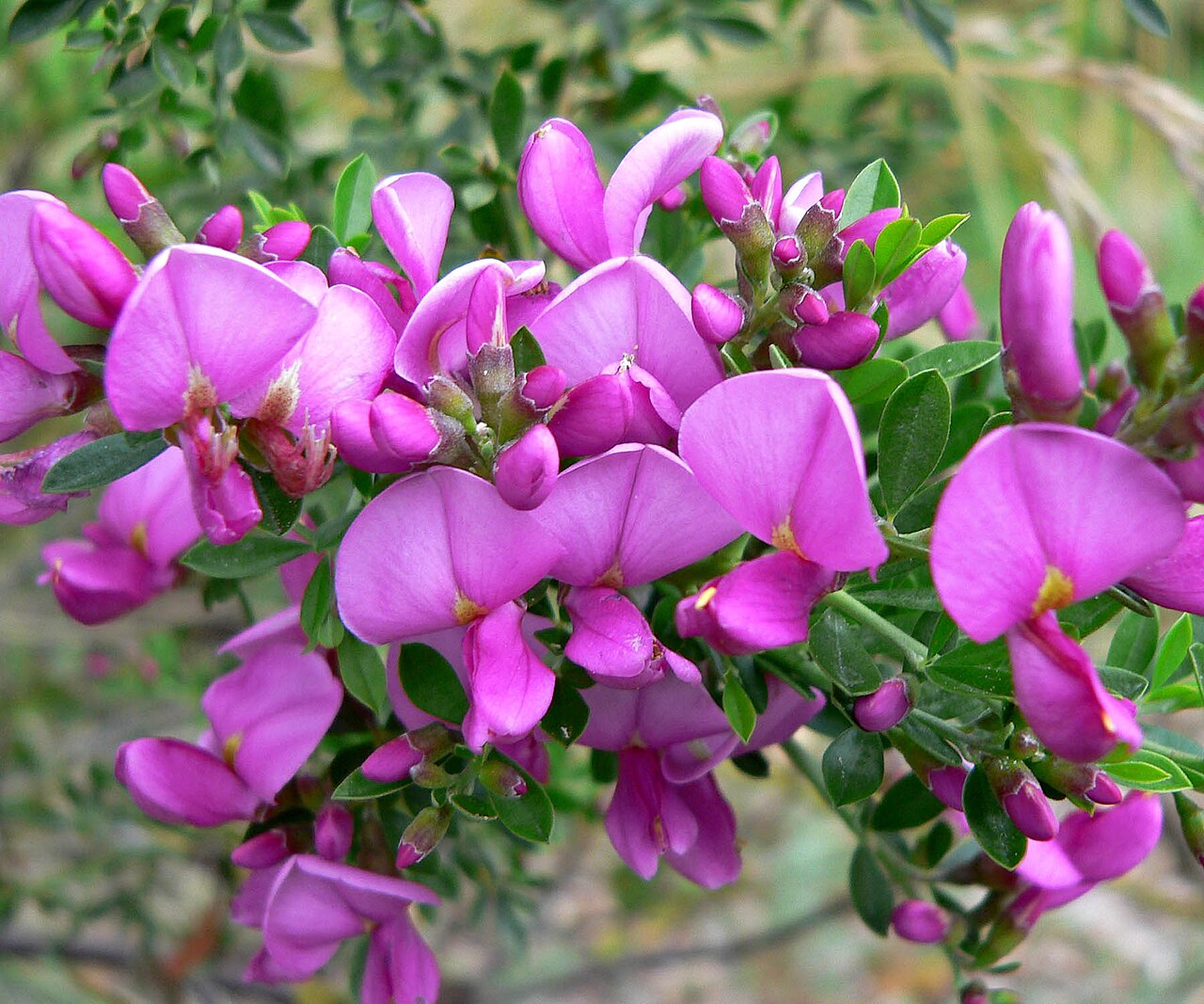
Pickeringia montana, known as Chaparral Pea, is a dense, spiny, evergreen shrub of California chaparral. In late spring and early summer it covers itself with bright magenta to reddish-purple pea flowers, making it one of the most colorful shrubs on dry chaparral slopes. It is the only species in its genus, Pickeringia, and it is found almost only in California, with a small extension into the mountains of northern Baja California.
Chaparral pea is one of the few members of the pea family (Fabaceae) that is a true chaparral shrub. Like many legumes, it hosts nitrogen-fixing bacteria in its roots, which helps it grow on poor, rocky soils. It is well adapted to wildfire: after a fire burns the tops, it resprouts vigorously from its roots, and it spreads by root sprouts to form low, thorny thickets. Plants rarely set fruit, and seedlings are seldom seen in the wild.
It is a striking shrub for large, dry, native gardens and slopes in California, but it is very hard to find in nurseries. Because it rarely produces seed and is slow to propagate, it is mostly grown in botanic gardens and by specialist native plant growers. Never dig plants from the wild.
Identification
Look for a dense, dark green, spiny shrub in chaparral with small leaves and, in late spring, clusters of bright magenta pea flowers at the branch tips.
Growth Habit
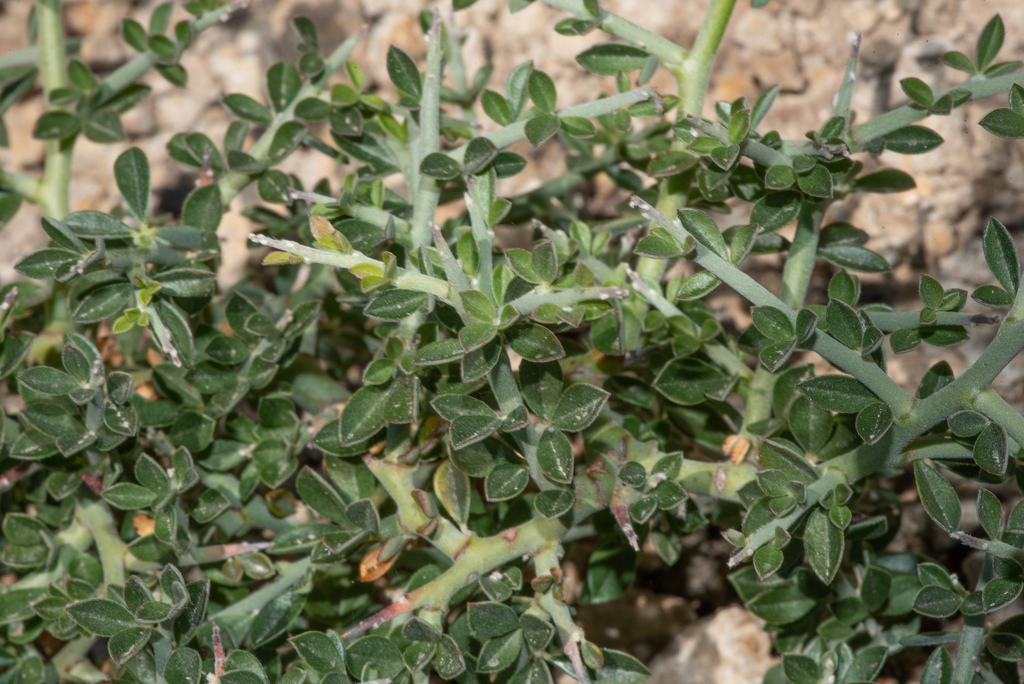
Chaparral pea is an evergreen shrub usually 3 to 7 feet tall, sometimes taller. It is densely and stiffly branched, and many of the short side branches end in sharp spines. Through root sprouting it often forms dense colonies or thickets that are difficult to walk through.
Leaves
The leaves are small and dark green, either simple or divided into three leaflets, each about 1/4 to 3/4 inch long and oval to oblong. They are leathery and evergreen. In the southern variety tomentosa, the leaves and young twigs are densely covered with soft hairs.
Flowers
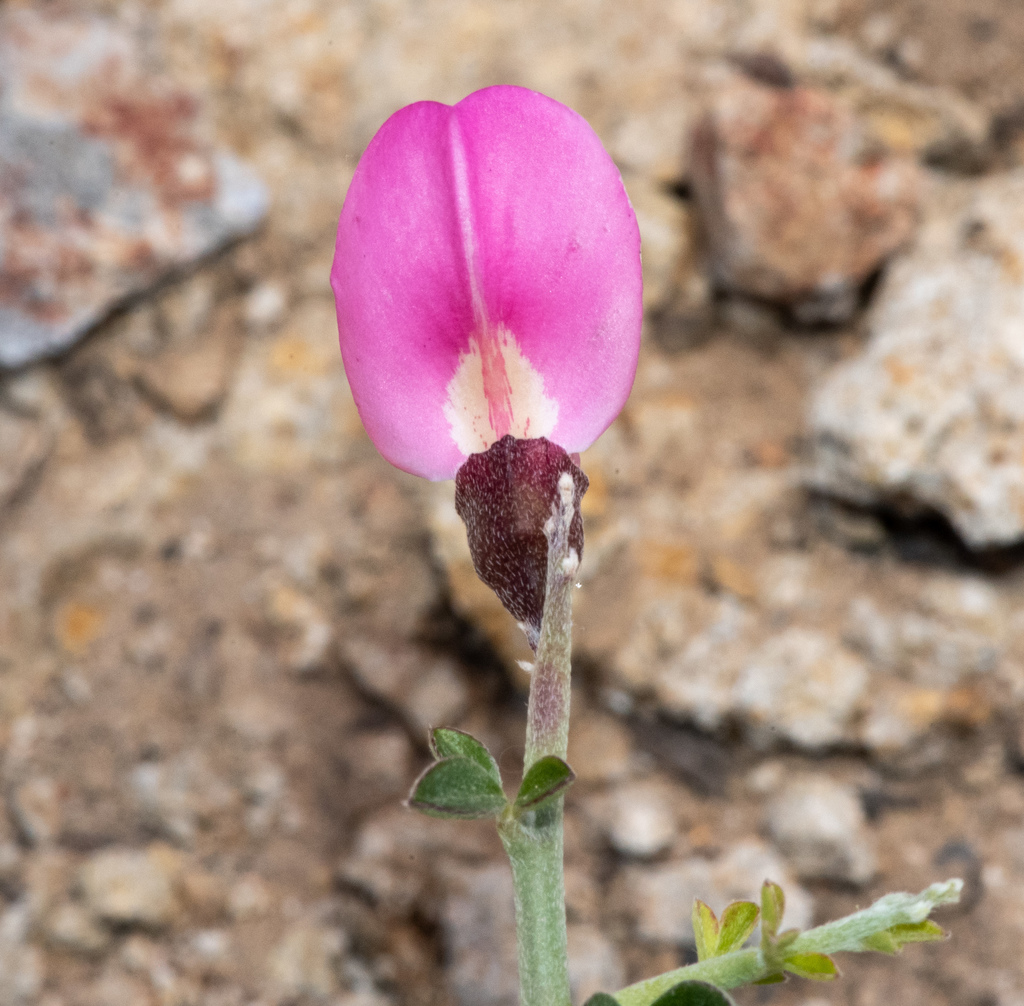
From about May to August, the shrub bears pea-shaped flowers about 3/4 inch long, singly or in small clusters near the branch tips. They are bright magenta to reddish purple, with a large, rounded banner petal that often has a pale spot near its base. The calyx is cup-shaped and often purplish.
Fruit
The fruit is a flat, straight pod about 1 1/2 to 2 inches long with several seeds. Pods are rarely produced; in many populations hardly any fruit is found, and the plant relies on root sprouts to spread.
Look-alikes
Its magenta flowers and spines are distinctive in California chaparral. Western redbud (Cercis occidentalis) has similar-colored pea flowers but is a much larger shrub or small tree with round leaves and no spines. Non-native brooms (Genista, Cytisus and Spartium) have yellow flowers.
Quick Facts
| Scientific Name | Pickeringia montana |
| Family | Fabaceae (pea or legume family) |
| Plant Type | Evergreen spiny shrub |
| Mature Height | 3–7 ft |
| Mature Spread | 4–10 ft; spreads by root sprouts |
| Growth Rate | Slow to moderate |
| Sun Exposure | Full sun |
| Water Needs | Very low once established |
| Soil Type | Rocky, gravelly or sandy, well-drained |
| Soil pH | Slightly acidic to neutral (about 5.5–7.5) |
| Bloom Time | May–August |
| Flower Color | Bright magenta to reddish purple |
| Fall Color | None; evergreen |
| Fruit | Flat pod; rarely produced |
| Deer Resistant | Yes; very spiny |
| USDA Hardiness Zones | 8–10 |
Native Range
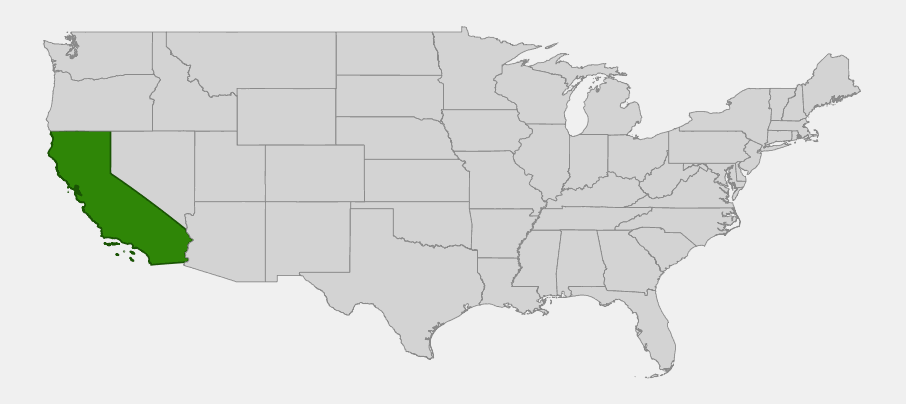
Chaparral pea grows in California and just across the border in northern Baja California, Mexico. USDA PLANTS lists it as native only in California, and the Lady Bird Johnson Wildflower Center describes it as the only species in a genus confined to California. It is widespread in the California Coast Ranges, from the North Coast Ranges south through the Santa Cruz Mountains and the Santa Lucia Range, and it also grows in the Sierra Nevada foothills, the Transverse Ranges and the Peninsular Ranges. It has also been recorded on Santa Cruz Island.
Two varieties are recognized. Variety montana is the widespread form, with nearly hairless leaves. Variety tomentosa, sometimes called woolly chaparral pea, has hairy leaves and twigs and grows in the mountains of southern California and northern Baja California.
It grows on dry, rocky or gravelly slopes and ridges in chaparral, often with chamise, manzanitas and ceanothus, and in openings in oak woodland and mixed evergreen forest. It is especially conspicuous in recently burned chaparral, where it resprouts and flowers heavily in the first years after fire.
📋 Regional plant lists featuring Chaparral Pea: California & Nevada
Growing & Care Guide
Chaparral pea is a tough, drought-adapted shrub once established, but it is uncommon in cultivation. Look for it at California native plant society plant sales, botanic garden sales and specialist native nurseries.
Light
Full sun. It flowers poorly and becomes sparse in shade.
Soil & Water
Plant in lean, rocky or gravelly soil with excellent drainage; it does not need fertilizer, since it fixes its own nitrogen. Water regularly through the first summer, then reduce to occasional deep watering in summer or none at all in cooler coastal areas. Overwatering in summer can lead to root rot.
Planting Tips
Plant in fall or winter so the rains help it establish. Give it room to spread, and keep it away from paths because of its spines. It works well on dry slopes and banks, where its spreading roots help hold soil, and as a barrier hedge.
Pruning & Maintenance
It needs little pruning. Wear heavy gloves if you remove dead wood. Old plants can be cut back hard, imitating the effect of fire, and will resprout from the roots. Remove suckers if they spread where you do not want them.
Propagation
Propagation is difficult. Seed is rarely available because the plant seldom sets fruit; when seed is found, it needs scarification (nicking or a hot-water treatment) before sowing. Specialist growers more often propagate it from root sprouts or root cuttings.
Landscape Uses
- Chaparral gardens: a colorful shrub for dry, native plantings
- Slope stabilization: root sprouts help hold soil on banks
- Barrier hedges: dense and very spiny
- Fire-adapted landscapes: resprouts after burning
- Pollinator gardens: magenta flowers attract bees
Wildlife & Ecological Value
Chaparral pea adds nitrogen to poor chaparral soils and provides flowers late in the spring, after many chaparral shrubs have finished blooming.
For Pollinators
The flowers are visited by large bees, such as bumblebees and carpenter bees, which are strong enough to open the pea flowers and reach the nectar and pollen inside.
For Birds
Its dense, spiny thickets provide shelter and nesting cover for chaparral birds such as wrentits, towhees and California thrashers.
For Mammals
The spiny branches deter browsing by deer. Small mammals such as woodrats and brush rabbits use the thickets for cover.
Ecosystem Role
As a nitrogen-fixing legume, it adds nitrogen to nutrient-poor chaparral soils. Its ability to resprout from roots after fire helps chaparral recover quickly and protects burned slopes from erosion.
Cultural & Historical Uses
The genus Pickeringia honors Charles Pickering, a naturalist on the United States Exploring Expedition (the Wilkes Expedition) of 1838 to 1842, which visited California. John Torrey and Asa Gray described the species, and its name montana means “of the mountains.”
Chaparral pea is botanically isolated: it is the only species in its genus, and DNA studies place it in a group of legumes related to yellowwood (Cladrastis) rather than to the brooms or lupines it resembles. It is one of the special plants that make California’s flora so distinctive.
Because it seldom produces seed, chaparral pea depends on root sprouting, especially after fire. Large stands may be old clones that have spread from the same root system over many years.
Frequently Asked Questions
Is chaparral pea native only to California?
Almost. USDA PLANTS lists it only in California, but it also grows in the mountains of northern Baja California, Mexico.
Why is chaparral pea hard to find in nurseries?
It rarely sets seed and is slow to propagate, so few nurseries grow it. Look for it at botanic garden and native plant society sales.
Does chaparral pea survive wildfire?
Yes. It resprouts vigorously from its roots after fire and often blooms heavily in the years after a burn.
Is chaparral pea spiny?
Yes. Many short branches end in sharp spines, so plant it away from paths and wear gloves when handling it.
When does chaparral pea bloom?
Usually from May to August, later than many other chaparral shrubs.

Looking for a nursery that carries Chaparral Pea?
Browse our native plant nursery directory: California