
Common Yellow Chaenactis (Chaenactis glabriuscula)
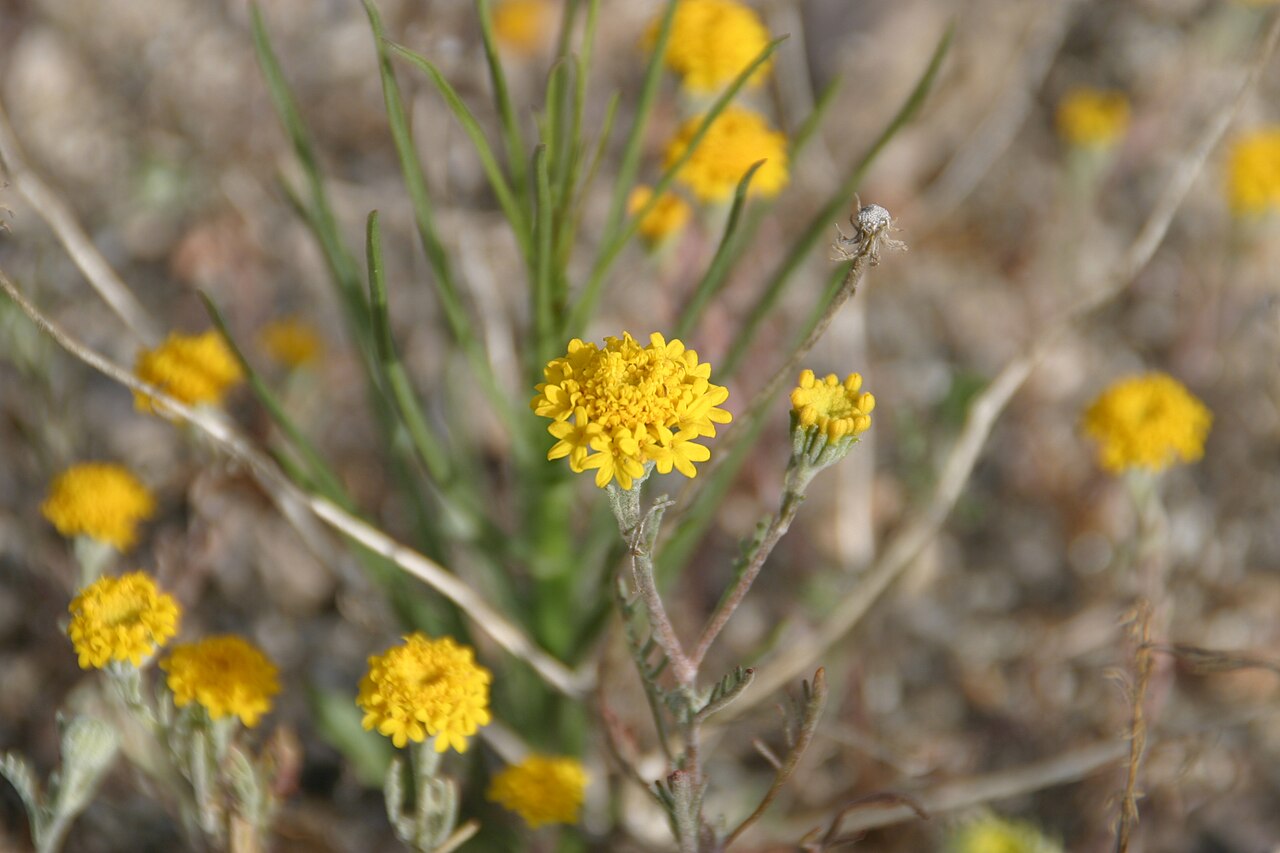
Chaenactis glabriuscula, known as Common Yellow Chaenactis or yellow pincushion, is a spring-blooming annual wildflower of California and northern Baja California. It grows 4 to 20 inches tall, with slender, branching stems, narrow leaves divided into thread-like lobes, and round, button-like heads of bright golden-yellow flowers about 1/2 to 1 inch across. Young plants are often covered in white wool that wears off as they mature, which is the source of the species name glabriuscula, “somewhat hairless.”
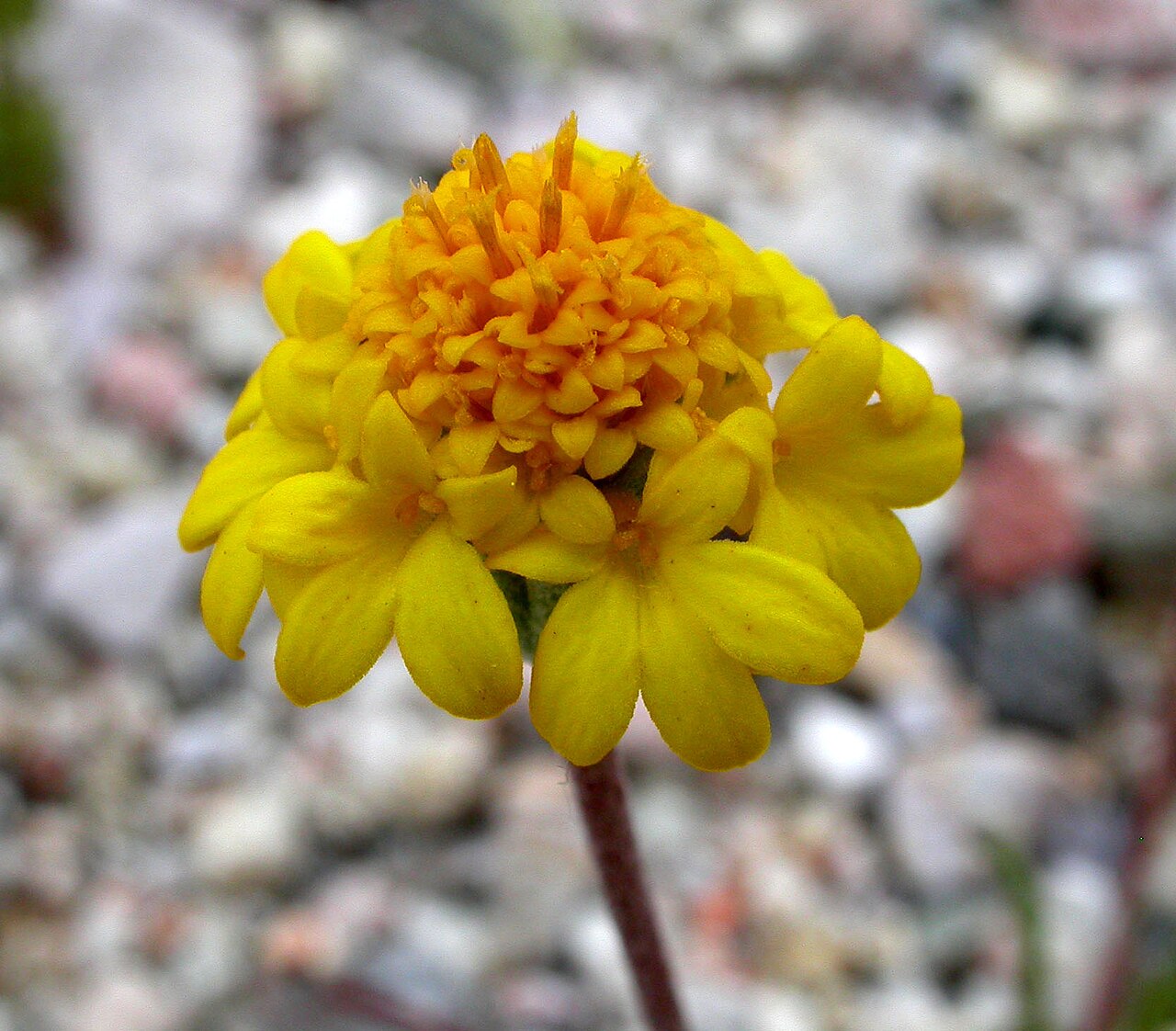
It is a member of the sunflower family (Asteraceae), and like other pincushions its flower heads contain only disk flowers, with no true rays. The outer disk flowers are enlarged and flare outward, giving the head a neat pincushion shape. It is one of the most widespread yellow annuals in California, blooming in grassland, chaparral, oak woodland, coastal sage scrub and the edges of the Mojave and Colorado deserts.
Common yellow chaenactis is easy to grow from seed in a sunny, well-drained spot and makes a cheerful addition to California wildflower mixes, where it blooms with poppies, goldfields and lupines. It reseeds in open, sandy ground. Note that USDA PLANTS also lists Massachusetts, but the plant was only collected there as a short-lived introduction; it is native only to California and Baja California.
Identification
Look in spring for a slender annual with gray-green, finely divided leaves and round golden heads with no petals, only tubular flowers, the outer ones larger and spreading.
Growth Habit
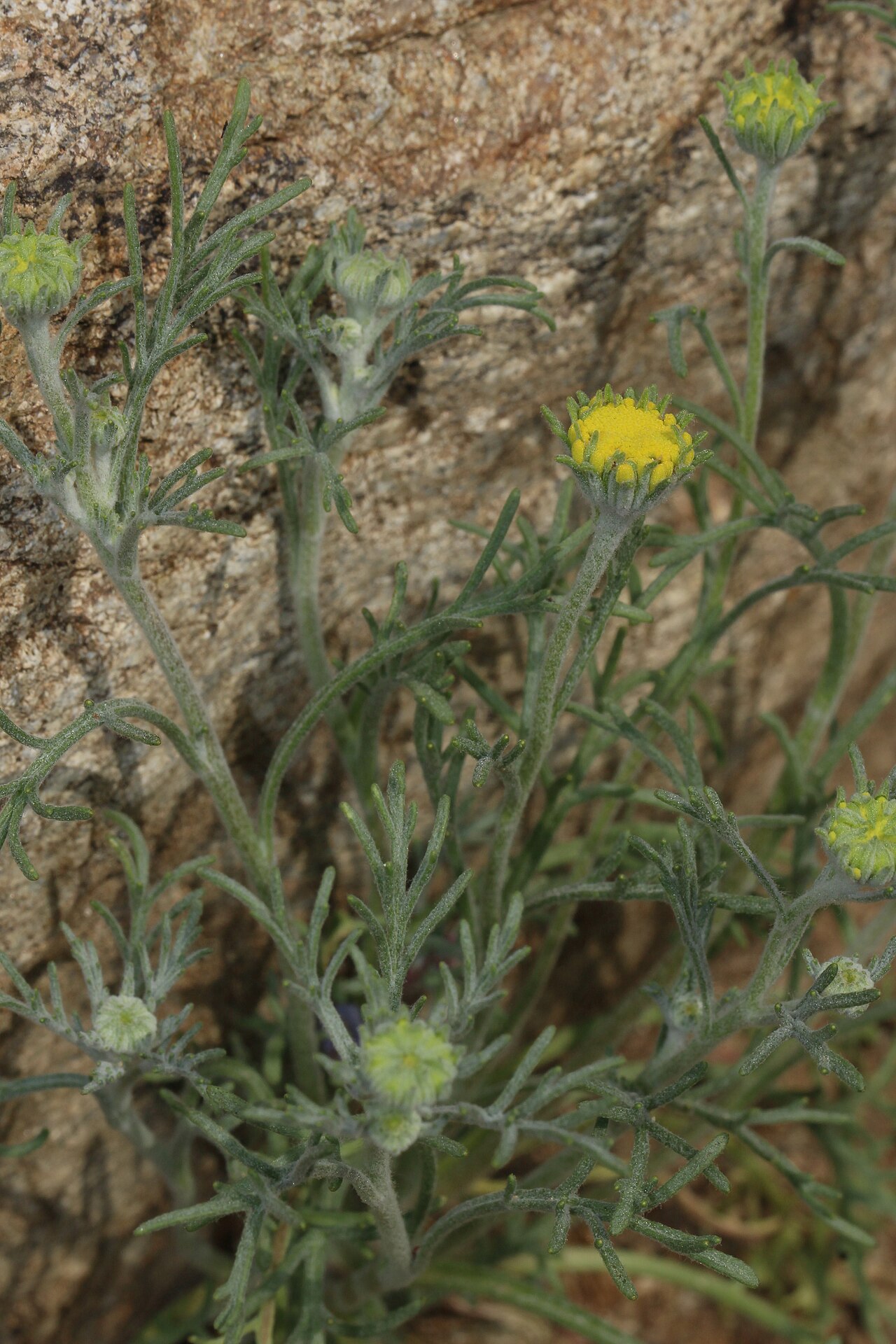
An erect annual 4 to 20 inches tall, with one to several stems branching from the base or above. Young plants are often loosely woolly, becoming nearly smooth with age. Plant size varies a lot with rainfall: in dry years plants may be only a few inches tall with a single head, while in wet years they branch freely and carry dozens of heads.
Leaves
The leaves are mostly along the lower stem, 1 to 4 inches long, and divided once or twice into narrow, linear lobes, often slightly fleshy and curled. They are gray-green and woolly when young.
Flowers
The flower heads are solitary at the tips of the branches, about 1/2 to 1 inch wide, bright yellow to golden. Each head is made up entirely of small, tubular disk flowers; the outer ones are enlarged and slightly irregular, so the head looks like a fluffy yellow button. The heads sit in a cup of narrow, often woolly bracts. Bloom time is mainly March to June.
Fruit
The fruits are slender, club-shaped achenes, each topped with a pappus of four scales (sometimes absent in some varieties), released as the heads dry in late spring and early summer.
Varieties & Look-alikes
Several varieties are recognized, differing in woolliness, head size and pappus. One coastal variety of San Diego County and Baja California, Orcutt’s pincushion (var. orcuttiana), is rare. Other pincushions, such as Fremont’s pincushion and Esteve’s pincushion, have white to pinkish flowers. Goldfields (Lasthenia) have true yellow rays, and many other yellow composites have both rays and disk flowers.
Quick Facts
| Scientific Name | Chaenactis glabriuscula |
| Family | Asteraceae (sunflower family) |
| Plant Type | Annual wildflower |
| Mature Height | 4–20 in |
| Mature Spread | 4–12 in |
| Growth Rate | Fast |
| Sun Exposure | Full sun |
| Water Needs | Low; winter-spring rain only |
| Soil Type | Sandy, gravelly or rocky, well-drained soils |
| Soil pH | Neutral to slightly alkaline (about 6.5–8.0) |
| Bloom Time | March–June |
| Flower Color | Bright yellow |
| Fall Color | None; dies after seeding |
| Fruit | Slender achene with scale-like pappus |
| Deer Resistant | Moderately |
| USDA Hardiness Zones | Annual (cool-season; grown in zones 7–10) |
Native Range
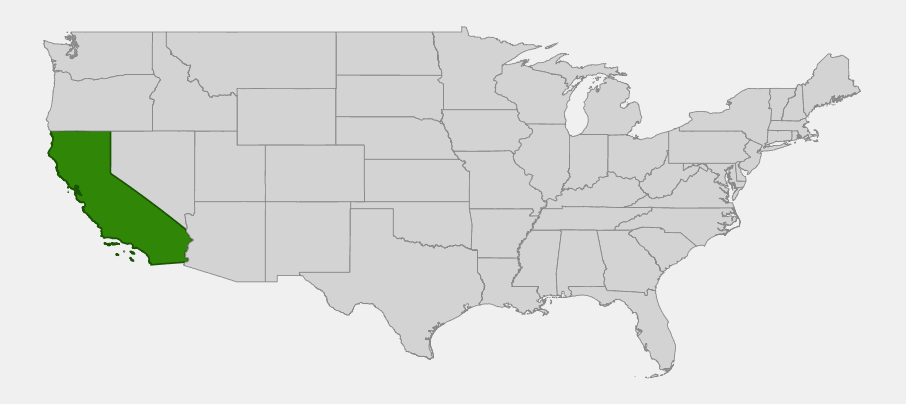
Common yellow chaenactis is native to California and northern Baja California, Mexico. It grows through much of California west of the Sierra Nevada crest, including the Coast Ranges, the foothills of the Sierra Nevada and the Central Valley edges, the Transverse and Peninsular ranges of Southern California, and the western edges of the Mojave and Colorado deserts. It is especially common in Southern California.
USDA PLANTS also records it from Massachusetts. Go Botany describes those records as collections of a plant that is unlikely to persist there; they were adventive introductions, and Massachusetts is not part of its native range. The range map on this page shows California only.
Its habitats are open and sunny: sandy and gravelly flats, dry washes, grassland, burns and openings in chaparral and coastal sage scrub, oak and juniper woodland, and the margins of the desert. It often appears in great numbers after fires or wet winters.
📋 Regional plant lists featuring Common Yellow Chaenactis: California & Nevada
Growing & Care Guide
Common yellow chaenactis is a quick, easy annual for California gardens. It follows the natural Mediterranean cycle: seeds germinate with fall and winter rains, plants bloom in spring and die in early summer after setting seed. Native seed suppliers in California sometimes offer it on its own or in wildflower mixes.
Light
Full sun. In shade, plants grow lanky and flower poorly.
Soil & Water
Sandy, gravelly or rocky soil with good drainage is best; heavy, rich soil produces weak plants. Winter and spring rain is usually enough. In a dry winter, water occasionally until flowering. No summer water is needed, because the plants die after setting seed.
Planting Tips
Scatter seed in fall, before the winter rains, on bare, weed-free ground, and rake it in lightly. Mix it with other California annuals such as poppies, goldfields, tidy tips and chia for a long spring display. Keep competition from non-native grasses and weeds low, since they easily crowd out small annuals.
Pruning & Maintenance
No pruning is needed. Leave the plants standing until the seed heads have dried and shed seed if you want it to reseed, then pull the dry stems in summer.
Propagation
Grow from seed. Collect dry seed heads in late spring and store the seed dry until fall sowing. It needs no special treatment beyond fall sowing and winter rain.
Landscape Uses
- Wildflower meadows: golden button flowers among poppies, goldfields and lupines
- Pollinator gardens: spring nectar for native bees and butterflies
- Dry gardens and gravel beds: thrives in lean, sandy soil without summer water
- Habitat restoration: an annual for coastal sage scrub, grassland and burn sites
- Containers: small pots or troughs for a spring display
Wildlife & Ecological Value
Common yellow chaenactis is one of many spring annuals that feed pollinators across California during the brief wildflower season.
For Pollinators
The densely packed disk flowers are visited by many small native bees, bee flies, beetles and butterflies, which can reach the nectar and pollen easily. Its long bloom across many habitats makes it a useful spring resource.
For Birds
Seed-eating birds such as sparrows, finches and quail forage on the seeds of spring annuals, including pincushions, after the plants dry.
For Mammals
Small rodents eat and cache the seeds. The foliage is grazed occasionally but is not a major forage plant.
Ecosystem Role
As a fast-growing annual, it quickly covers bare ground after fire or disturbance, helps hold loose soil and adds to the soil seed bank that keeps native wildflower displays coming back in wet years.
Cultural & Historical Uses
The genus name Chaenactis comes from Greek words meaning “gaping” and “ray,” a reference to the enlarged, open outer disk flowers that take the place of true rays. The species name glabriuscula means “somewhat smooth,” because plants lose much of their early woolliness.
Its common names, “yellow pincushion” and “common yellow chaenactis,” describe the round, button-like heads. Pincushions are among the familiar spring annuals of California and are often seen in wildflower displays in Southern California foothills and deserts after wet winters.
Orcutt’s pincushion (var. orcuttiana), a coastal variety of this species, is rare and considered at risk by the California Native Plant Society because of coastal development. Gardeners can help by buying seed from reputable suppliers and never collecting from wild populations of rare varieties.
Frequently Asked Questions
Is common yellow chaenactis an annual?
Yes. It germinates with fall or winter rain, flowers in spring and dies in early summer after setting seed.
Is it native to Massachusetts?
No. USDA PLANTS lists Massachusetts because of old collections, but those were introductions that did not persist. It is native to California and Baja California.
Why are there no petals on the flowers?
The heads have only disk flowers. The outer ones are enlarged and spread outward, which gives the head its pincushion look without true ray petals.
How do I grow it from seed?
Sow seed on bare, sunny, well-drained ground in fall, rake it in lightly and let winter rain do the rest.
Does it attract pollinators?
Yes. Native bees, bee flies, beetles and butterflies visit the flowers for nectar and pollen in spring.

Looking for a nursery that carries Common Yellow Chaenactis?
Browse our native plant nursery directory: California
