
Strawberry Hedgehog Cactus (Echinocereus stramineus)
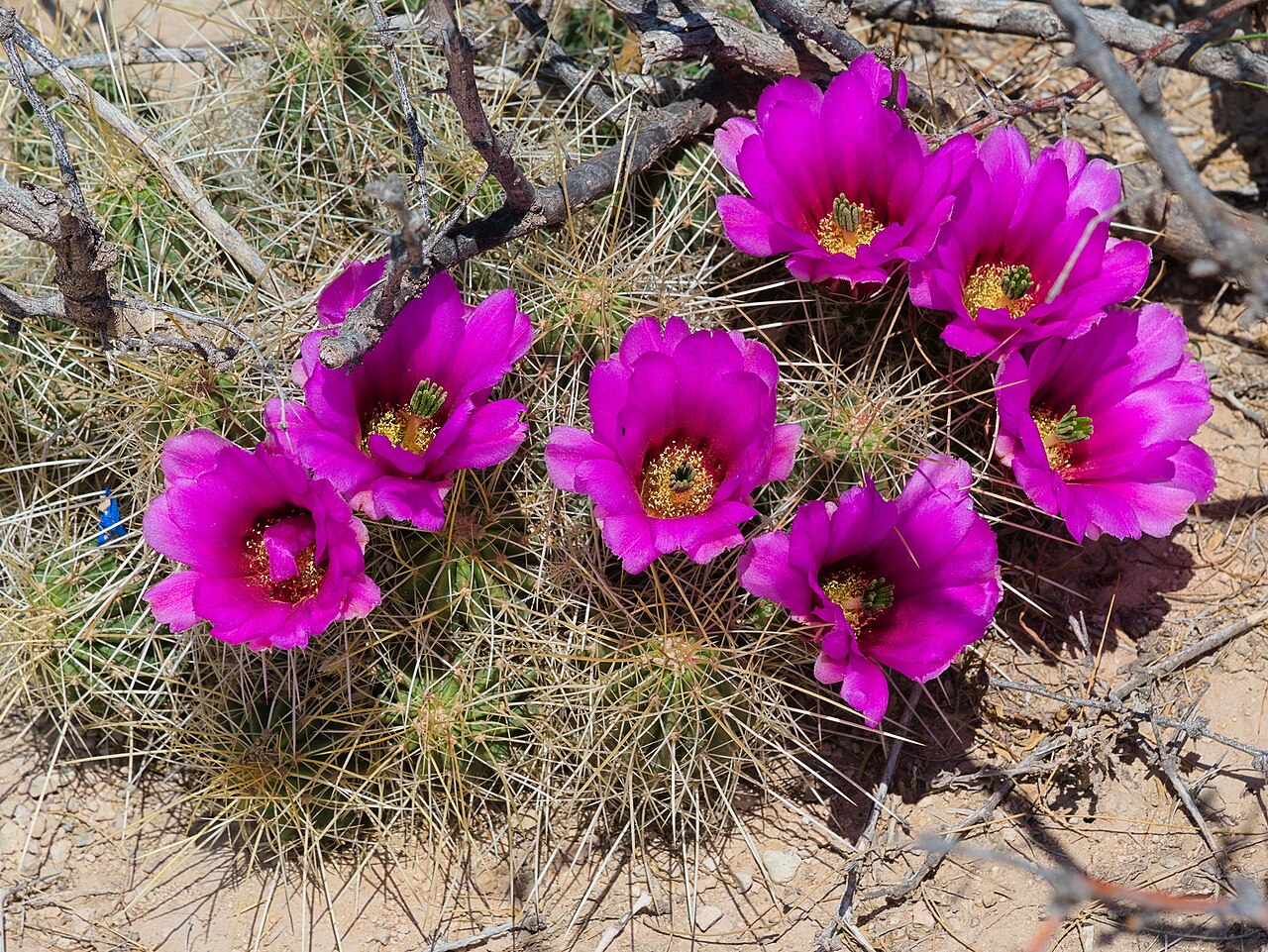
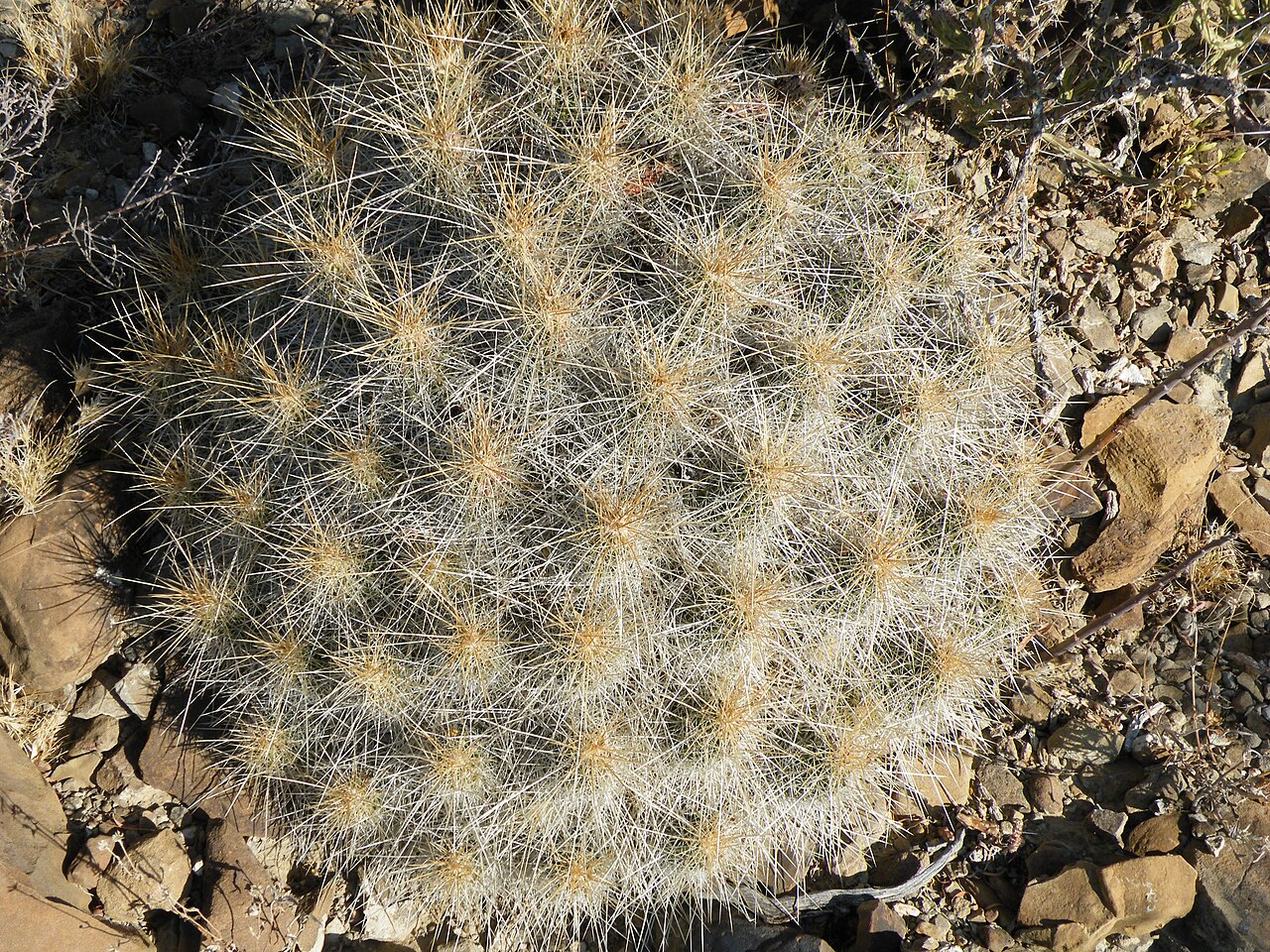
Echinocereus stramineus, the Strawberry Hedgehog Cactus, also called strawberry cactus, straw-spine hedgehog or pitaya, is a mound-forming cactus of the Chihuahuan Desert. Over many years a single plant branches into a dense, rounded clump of dozens or even more than a hundred upright stems, each bristling with long, pale, straw-colored spines.
In spring the clumps are crowned with big, satiny, magenta to rose-pink flowers, 3 to 5 inches across. They are followed by round red fruits whose spines fall away as they ripen. The juicy pulp is sweet, and its flavor gives the plant its common name.
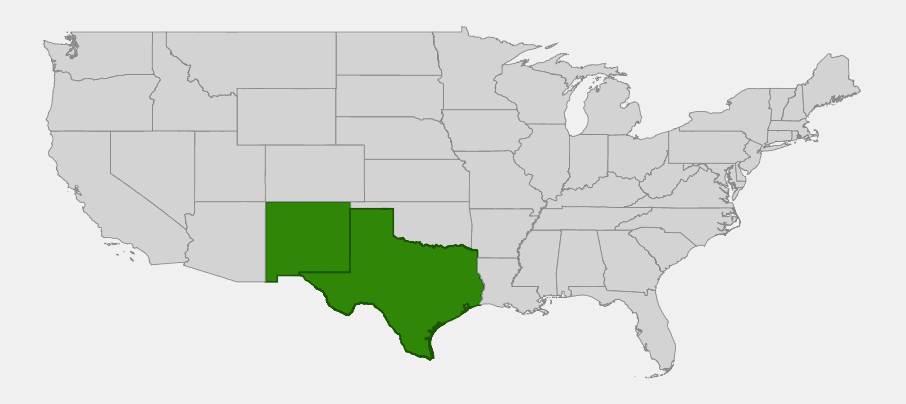
In the United States it grows only in the Trans-Pecos region of western Texas and in southern New Mexico, on sunny, rocky, often limestone slopes. It is a striking plant for dry, well-drained desert gardens. Buy only nursery-grown plants and never dig cacti from the wild. Large wild clumps are decades old, and collecting harms native populations.
Identification
Look for a large, rounded mound of many cylindrical, ribbed stems almost hidden under long, pale yellowish to whitish spines, with big magenta flowers on the sides of the stems in spring.
Growth Habit
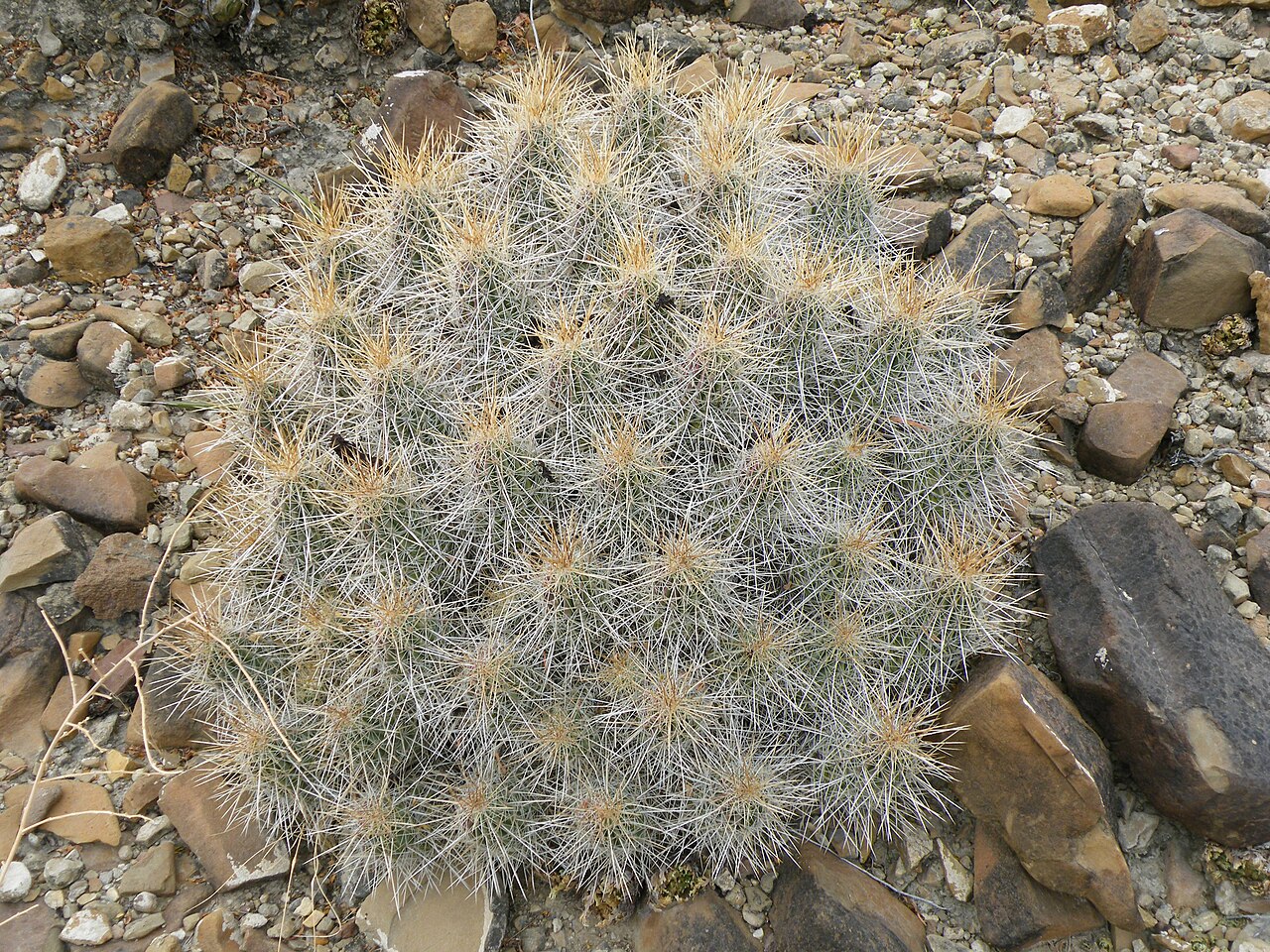
Stems are cylindrical, usually about 4 to 10 inches tall (occasionally taller) and 2 to 3 1/2 inches thick, and branch from the base to form dense, rounded mounds. Mature clumps are commonly 2 to 3 feet across and can be even larger, with dozens to more than a hundred stems.
Stems & Spines
Each stem has about 10 to 13 ribs. The areoles carry several spreading radial spines and a few much longer central spines, up to about 3 inches long. New spines are often pinkish, tan or straw-yellow and age to whitish or gray, so the whole clump looks pale and bristly from a distance.
Flowers
Funnel-shaped flowers about 3 to 5 inches across open from the sides of the stems in spring (mainly March to May, sometimes later after rain). They are magenta to rose-pink, often darker at the base, with a green stigma and many yellow stamens. They open in the day and close at night.
Fruit
The round fruit is about 1 to 2 inches across, bright red when ripe and covered at first with clusters of spines that drop off or rub away easily. The pulp is white and juicy with small black seeds.
Look-alikes
Echinocereus enneacanthus (strawberry pitaya) has greener, less densely spined stems that sprawl more, and some botanists treat the two as close relatives or varieties of one species. Claret cup (Echinocereus triglochidiatus) has scarlet, waxy flowers pollinated by hummingbirds. Texas rainbow cactus (Echinocereus dasyacanthus) has mostly single stems with short, comb-like spines and yellow flowers.
Quick Facts
| Scientific Name | Echinocereus stramineus |
| Family | Cactaceae (cactus family) |
| Plant Type | Clump-forming cactus |
| Mature Height | 6–18 in |
| Mature Spread | 2–3 ft (sometimes more) |
| Growth Rate | Slow |
| Sun Exposure | Full sun |
| Water Needs | Very low; extremely drought tolerant |
| Soil Type | Rocky, gravelly or sandy, very fast-draining soil |
| Soil pH | Neutral to alkaline (limestone tolerant) |
| Bloom Time | Spring (March–May) |
| Flower Color | Magenta to rose-pink |
| Fall Color | None |
| Fruit | Round red, spiny berry that loses its spines when ripe; edible |
| Deer Resistant | Yes |
| USDA Hardiness Zones | 7–10 (when kept dry in winter) |
Native Range
Strawberry hedgehog cactus is a Chihuahuan Desert species. USDA PLANTS records it as native in two states, Texas and New Mexico, and its range continues south into northern Mexico, including Chihuahua, Coahuila, Durango, Nuevo León and Zacatecas.
In Texas it grows in the Trans-Pecos region west of the Pecos River, including the Big Bend country of Brewster and Presidio counties and the mountains and desert basins toward El Paso. In New Mexico it reaches the far southern part of the state. It is one of the characteristic cacti of the Big Bend region.
It grows on sunny, open, rocky slopes, ledges and gravelly hills in desert scrub and desert grassland, very often on limestone, generally below about 5,000 feet. These sites have hot summers, mostly summer rain and mild but sometimes freezing winters.
📋 Regional plant lists featuring Strawberry Hedgehog Cactus: South & West Texas
Growing & Care Guide
Strawberry hedgehog cactus is easy to grow in hot, dry climates if it has full sun and sharp drainage. Its main enemies are wet soil and cold, wet winters. In the desert Southwest it can go straight into a rock garden; in wetter or colder regions grow it in a raised, gravelly bed, under a rain shelter or in a container.
Light
Full sun. In deep shade the stems stretch, the spines get thin and flowering is poor. In the hottest low-desert gardens a little afternoon shade is acceptable.
Soil & Water
Use a lean, gritty soil of crushed rock, decomposed granite, coarse sand or pumice. It tolerates limestone and alkaline soils. Water deeply but infrequently in spring and summer, letting the soil dry completely between waterings, and keep it dry in winter. Established plants in the Chihuahuan Desert usually need little or no extra water.
Planting Tips
Plant nursery-grown plants in spring or early summer, setting the base slightly high and finishing with a gravel mulch. Handle with folded newspaper, carpet strips or thick gloves. Leave room for the clump to widen over the years.
Pruning & Maintenance
No pruning is needed. Remove leaves and debris that collect in the clump, which can hold moisture and lead to rot. Remove any soft, discolored stems promptly.
Propagation
Grow from seed, which germinates readily on a warm, well-drained surface, or by taking individual stems from a cultivated clump. Let cut stems dry and callus for one to two weeks before rooting them in dry, gritty mix.
Landscape Uses
- Desert and rock gardens: forms a striking pale mound among rocks
- Xeriscapes: needs little or no supplemental water once established
- Containers: a good choice for large, well-drained pots and troughs
- Spring color: big magenta flowers cover the clump in spring
- Edible fruit: the red fruits are sweet once the spines are removed
Wildlife & Ecological Value
In the Chihuahuan Desert, strawberry hedgehog cactus supplies nectar, pollen, fruit and shelter in a harsh landscape.
For Pollinators
The large, open, bowl-shaped flowers are visited by native bees, including large solitary bees, and by beetles, which collect pollen from the many stamens.
For Birds
Birds eat the ripe red fruits and help disperse the seeds. The spiny mounds also offer shelter and lookout perches for small birds and lizards.
For Mammals
Rodents, ground squirrels and other desert mammals eat fallen fruits and seeds. The dense spines protect the stems from most browsing.
Ecosystem Role
Large old clumps are long-lived features of desert slopes. Their fruits are a seasonal food source for many animals, and their spiny shelter creates small cooler, shaded spots used by insects, reptiles and seedlings of other plants.
Cultural & Historical Uses
The species name stramineus is Latin for “straw-colored,” a reference to the pale yellowish spines. The genus name Echinocereus combines the Greek echinos (hedgehog) with Cereus, an older cactus genus, for the spiny stems.
Like other hedgehog cacti with sweet fruit, it is often called pitaya in the borderlands. The fruits were eaten fresh by people living in the Chihuahuan Desert, and they are still sampled by hikers today. The flavor is often compared to strawberries.
The species was first described in the 1850s from collections made during the U.S. and Mexican boundary surveys. It is common in parts of Big Bend National Park, where all plants are protected.
Frequently Asked Questions
Is strawberry hedgehog cactus fruit edible?
Yes. The ripe red fruits are sweet and juicy, and the spines brush off easily once the fruit is ripe. Collect fruit only where it is allowed. Harvesting plants or fruit is not permitted in national parks and many other protected areas.
How big does strawberry hedgehog cactus get?
Individual stems are usually 4 to 10 inches tall, but old plants form mounds 2 to 3 feet across with dozens to more than a hundred stems.
When does strawberry hedgehog cactus bloom?
Mainly in spring, from about March to May. Plants sometimes flower again after good summer rains.
How cold-hardy is it?
It tolerates the occasional hard freeze of the Chihuahuan Desert when the soil is dry. Wet, cold winters are much more dangerous than cold alone, so it is best suited to dry climates or protected, raised beds.
Where does strawberry hedgehog cactus grow wild?
In the United States, only in the Trans-Pecos region of western Texas and in southern New Mexico. Its range continues into northern Mexico.

Looking for a nursery that carries Strawberry Hedgehog Cactus?
Browse our native plant nursery directory: New Mexico · Texas

