
Sagebrush Mariposa Lily (Calochortus macrocarpus)
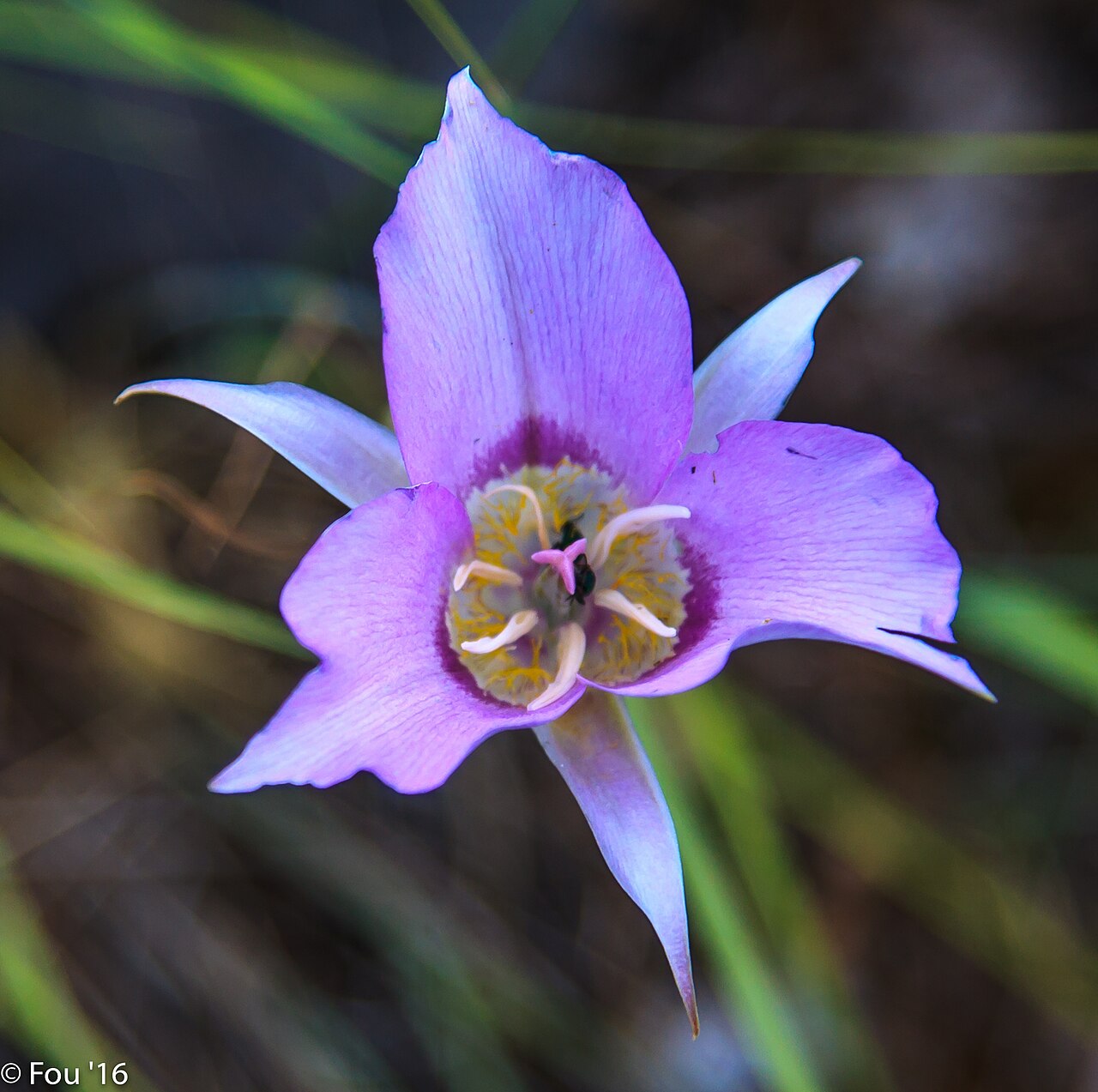
Calochortus macrocarpus, known as Sagebrush Mariposa Lily (also green-banded mariposa lily), is a slender, bulb-forming wildflower of the dry interior Northwest. It belongs to the lily family (Liliaceae). In late spring and early summer it opens large, cup-shaped flowers, 2 to 4 inches across, in shades of lavender, pinkish purple or nearly white, on wiry stems 8 to 20 inches tall. It often blooms in June and July, after the hills have started to turn brown.
It grows in sagebrush steppe, bunchgrass grassland and open ponderosa pine woods east of the Cascades, from southern British Columbia south through eastern Washington and Oregon, Idaho and western Montana to northern Nevada and northeastern California. The species name macrocarpus means “large fruit” and refers to its long, narrow seed capsules.
Like most mariposa lilies, it is a beautiful but difficult garden plant. It needs a completely dry summer dormancy, takes several years to bloom from seed and resents disturbance. It is best enjoyed in the wild or grown from seed by patient gardeners in dry climates. Never dig wild bulbs.
Identification
Look for a single grass-like stem topped by one to three large, lavender, three-petaled cups, with long, narrow, pointed sepals that stick out between and beyond the petals.
Growth Habit
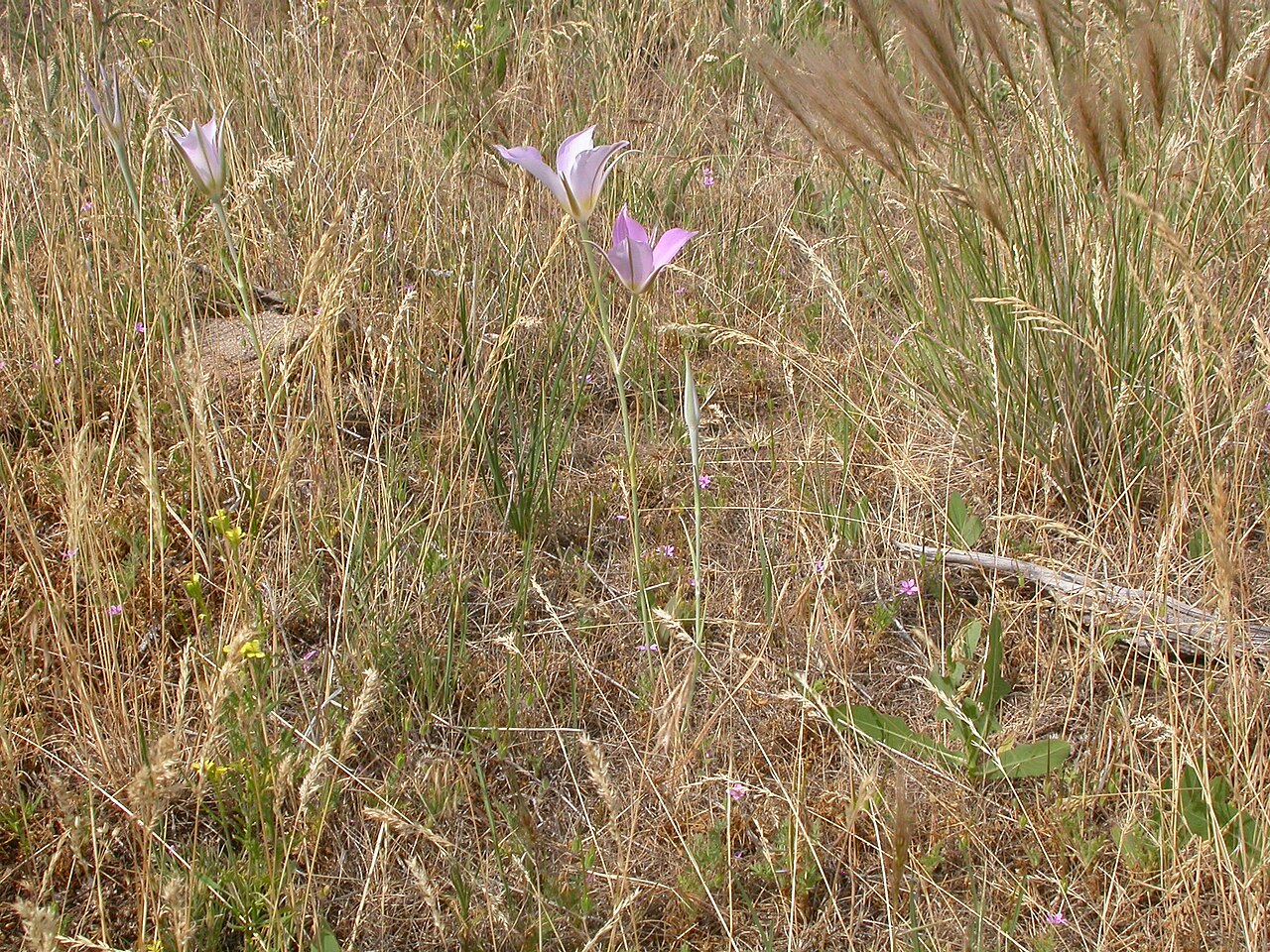
Sagebrush mariposa lily grows from a small, deep, egg-shaped bulb. Each year it sends up a single, slender, often slightly zigzag stem 8 to 20 inches tall (sometimes taller), usually with small bulblets at its base. Plants grow scattered among grasses and shrubs rather than in dense clumps.
Leaves
There is usually one narrow, grass-like basal leaf, 2 to 4 inches long, plus a few smaller leaves on the stem. The leaves wither early, often by the time the plant flowers, so blooming plants can look leafless.
Flowers
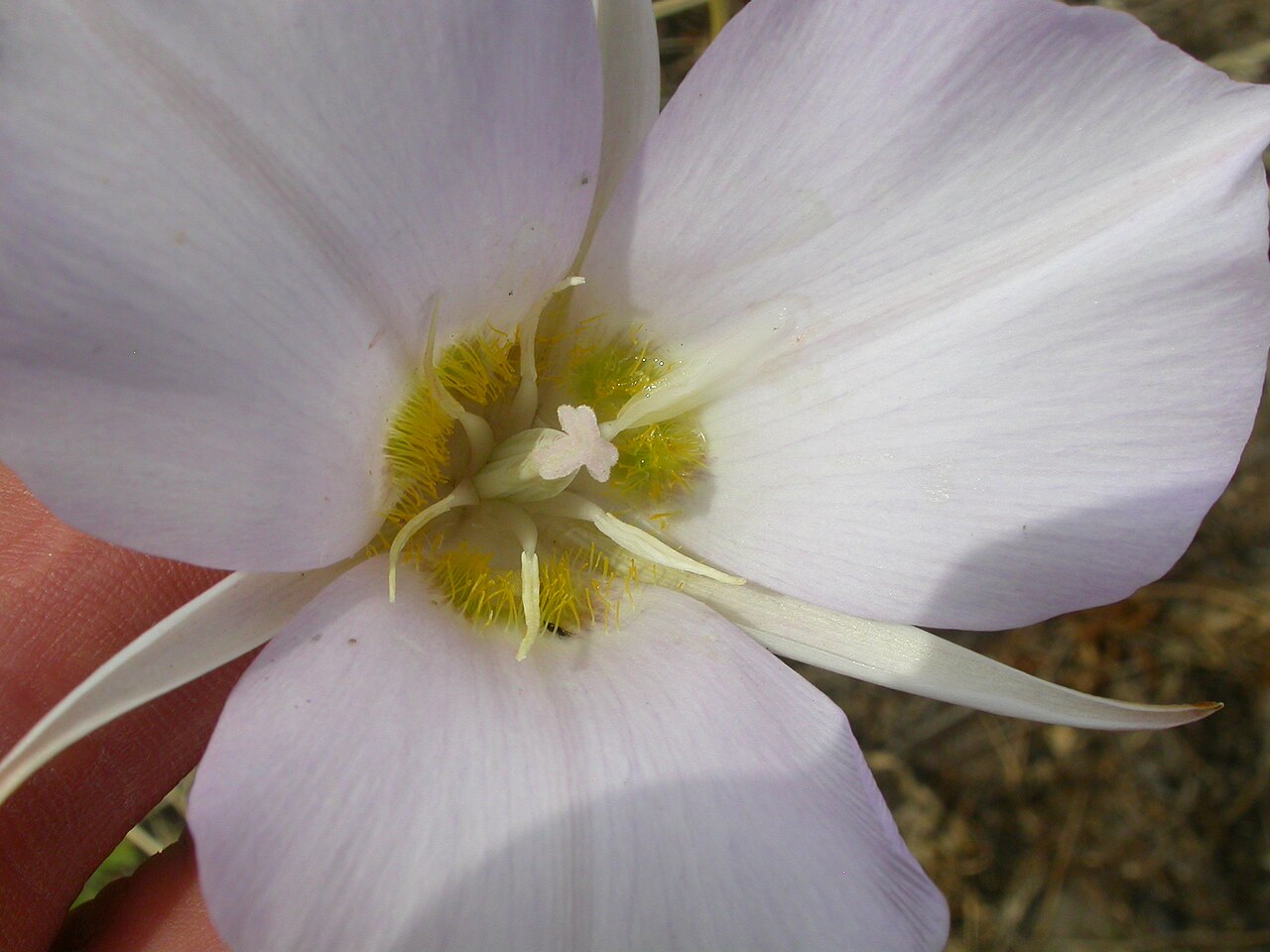
The flowers are erect, bell- to cup-shaped and 2 to 4 inches across, borne one to three per stem. The three broad petals are lavender to pinkish purple, sometimes white, usually with a green stripe down the middle of the back. Near the base of each petal is a nectar gland covered with yellowish hairs, often with a purple band above it. The three sepals are narrow, lance-shaped, pointed and usually longer than the petals, a good feature for telling it from other mariposa lilies. Flowering runs from late May to August, mostly June and July.
Fruit
The fruit is an erect, narrow, three-angled capsule, about 2 to 4 inches long, that splits open in late summer to release flat, pale seeds.
Look-alikes
Sego lily (Calochortus nuttallii) is usually white with a round gland and has short sepals; it grows mostly farther east and south. Butterfly mariposa lily (C. venustus) of California has dark blotches on its petals and shorter sepals. Other Northwest mariposa lilies, such as Lyall’s mariposa lily (C. lyallii), have fringed petals.
Quick Facts
| Scientific Name | Calochortus macrocarpus |
| Family | Liliaceae (lily family) |
| Plant Type | Bulb-forming perennial wildflower |
| Mature Height | 8–20 in |
| Mature Spread | 2–4 in |
| Growth Rate | Slow; several years from seed to bloom |
| Sun Exposure | Full sun |
| Water Needs | Low; must be dry in summer |
| Soil Type | Dry, well-drained sandy, gravelly or rocky soil |
| Soil pH | Near neutral to slightly alkaline (about 6.5–8.0) |
| Bloom Time | Late May–August (mostly June–July) |
| Flower Color | Lavender to pinkish purple, sometimes white |
| Fall Color | None; dormant by late summer |
| Fruit | Narrow, erect capsule, 2–4 in long |
| Deer Resistant | No; deer and rodents eat the plants and bulbs |
| USDA Hardiness Zones | 4–8 |
Native Range
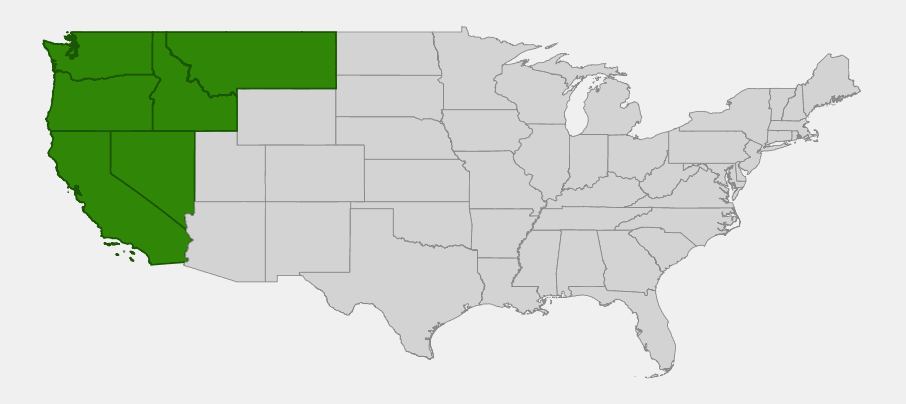
Sagebrush mariposa lily is native to the interior of the Pacific Northwest and the northern Great Basin. USDA PLANTS lists it as native in Washington, Oregon, Idaho, Montana, Nevada and California. In Canada it grows in the dry southern interior of British Columbia, in places such as the Thompson and Okanagan valleys.
In Washington and Oregon it grows east of the Cascade crest, from the eastern Cascade foothills across the Columbia Plateau, the Blue Mountains and the high desert of central and southeastern Oregon. It extends into Idaho and western Montana, south into northern Nevada and into northeastern California on the Modoc Plateau. It is not part of the wetter forests and valleys west of the Cascades.
Its habitats are dry, open places: sagebrush flats and slopes, bunchgrass grassland, juniper woodland and the edges of open ponderosa pine forest, from low valleys to about 7,500 feet. It is often common in years with good spring rain and may be scarce in dry years, when many bulbs stay dormant.
📋 Regional plant lists featuring Sagebrush Mariposa Lily: Idaho, Eastern Oregon & Eastern Washington · Montana & Wyoming · California & Nevada
Growing & Care Guide
Sagebrush mariposa lily is a plant for experienced bulb growers in dry-summer climates. It needs sun, perfect drainage and a long, dry summer rest. In gardens with summer irrigation, the bulbs usually rot. Grow it from seed or buy bulbs from a nursery that propagates them; never dig plants from the wild.
Light
Full sun. It grows in open sagebrush and grassland and will not bloom well in shade.
Soil & Water
Use deep, very well-drained sandy, gravelly or rocky soil. Moisture in fall, winter and spring followed by a completely dry summer suits it best. Do not water once the leaves wither. In rainy-summer climates, grow it in a deep pot or bulb frame that can be kept dry from July to fall.
Planting Tips
Sow fresh seed in fall in deep pots of gritty mix and leave them outdoors for winter cold; seedlings appear in spring. Grow them on in the same pot for two or three years before moving the small bulbs, planted 3 to 5 inches deep, to a dry, sunny spot such as a rock garden, gravel bed or steppe garden. Plants usually take three to five years from seed to bloom.
Pruning & Maintenance
Leave the stems until the seed capsules ripen and split. Keep it away from irrigated lawns and beds. Protect bulbs from gophers and voles with wire mesh if needed, and avoid crowding it with vigorous plants.
Propagation
Grow it from seed, collected from garden plants or bought from native seed suppliers. Older bulbs produce small bulblets that can be separated during dormancy. Collecting wild bulbs harms local populations and is often illegal on public land.
Landscape Uses
- Steppe and dry gardens: a summer-blooming bulb among native bunchgrasses and sagebrush
- Rock gardens: an elegant accent in gritty, unwatered beds
- Restoration plantings: sown as seed in sagebrush and grassland restoration
- Pollinator gardens: its open cups attract native bees and beetles
- Bulb frames and containers: a way to grow it in rainy-summer climates
Wildlife & Ecological Value
Sagebrush mariposa lily is part of the rich bulb flora of the sagebrush steppe, which feeds pollinators, rodents and grazing animals.
For Pollinators
The hairy nectar glands attract native bees, including bumble bees and solitary bees, as well as beetles and flies. Its late bloom helps pollinators in early summer, when fewer flowers are open in the steppe.
For Birds
Birds use the open grasslands and shrublands where it grows, but they rarely eat the plant itself.
For Mammals
Pocket gophers, ground squirrels and other rodents dig up and eat the starchy bulbs. Deer, elk and livestock graze the stems and flowers.
Ecosystem Role
It is a native component of healthy bunchgrass and sagebrush communities. Its numbers tend to drop where grazing is heavy, where invasive annual grasses such as cheatgrass take over, or where habitats are plowed or developed.
Cultural & Historical Uses
The genus name Calochortus comes from Greek words meaning “beautiful grass,” describing the grass-like leaves and lovely flowers. “Mariposa” is Spanish for butterfly, a name early Spanish-speaking Californians gave to these colorful flowers.
The bulbs of sagebrush mariposa lily and related species were eaten by Indigenous peoples of the Columbia Plateau and Great Basin, who dug them in spring and early summer and ate them raw, roasted or steamed. They were a minor food compared with camas and bitterroot.
The species was described by the Scottish botanist David Douglas, who collected many plants in the Columbia River region in the 1820s. Botanists recognize two varieties: the widespread var. macrocarpus and var. maculosus, which has a more limited range.
Frequently Asked Questions
When does sagebrush mariposa lily bloom?
Mostly in June and July, later than most spring wildflowers of the sagebrush steppe. Blooming starts in late May at low elevations and can continue into August in the mountains.
How do you tell it from other mariposa lilies?
Look for long, narrow, pointed sepals that are longer than the petals, lavender petals with a green stripe on the back, and a hairy gland with a purple band above it.
Can I grow sagebrush mariposa lily in my garden?
Yes, in dry, sunny, well-drained sites with no summer water. It is slow and challenging, so start with seed or nursery-propagated bulbs and be patient.
Can I dig up wild bulbs?
No. Wild bulbs rarely survive transplanting, and digging harms native populations. Collecting plants on public land usually requires a permit.
Does it grow west of the Cascades?
No. It is a plant of the dry interior, east of the Cascades, and does not grow in the wet valleys and forests west of the mountains.

Looking for a nursery that carries Sagebrush Mariposa Lily?
Browse our native plant nursery directory: California · Idaho · Montana · Nevada · Oregon · Washington

