
California Phacelia (Phacelia californica)
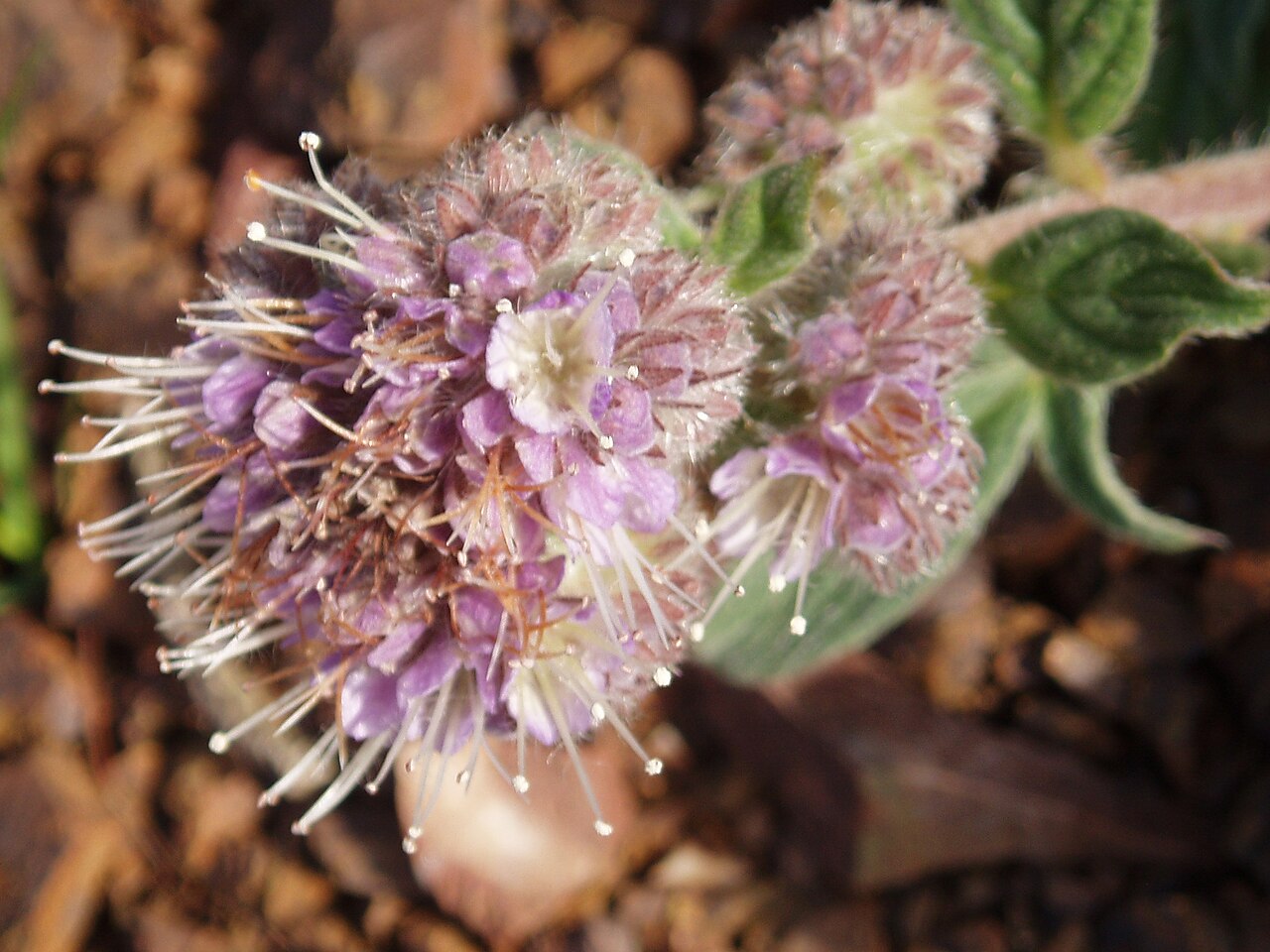
Phacelia californica, known as California Phacelia, California scorpionweed or rock phacelia, is a short-lived perennial wildflower of the Pacific coast. It belongs to the waterleaf group of the borage family (often listed under Hydrophyllaceae). It grows on coastal bluffs, rocky slopes, grassland, chaparral and open woodland in northern and central coastal California and in Oregon.
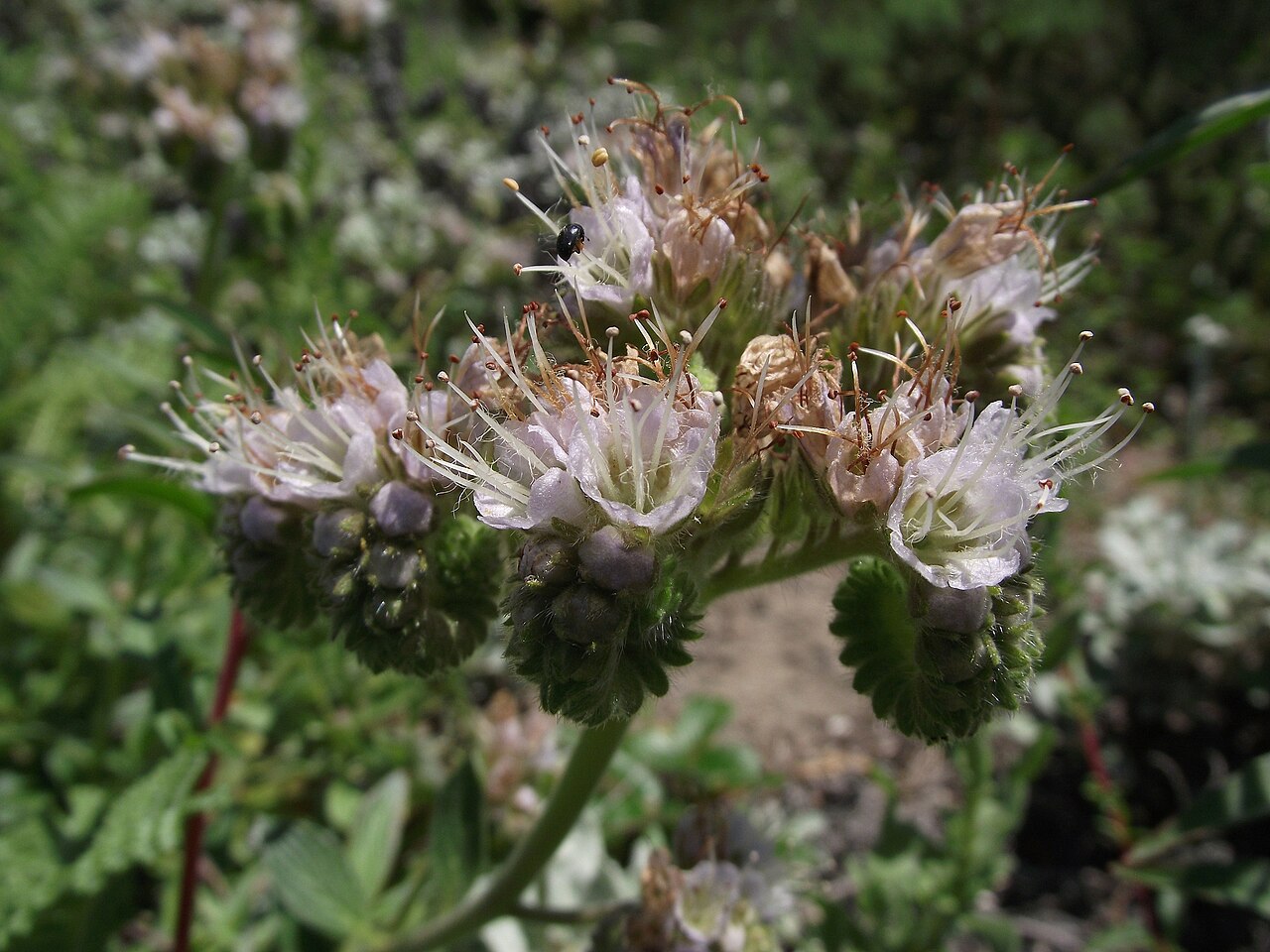
The plant forms a rosette of rough, hairy, gray-green leaves, the lower ones divided into several leaflets. From spring into summer it sends up hairy stems topped with tightly coiled clusters of small, bell-shaped flowers in lavender, pale blue or white. The clusters unroll like a fiddlehead or a scorpion’s tail as the flowers open, which is where the name “scorpionweed” comes from.
California phacelia is a strong bee plant and an important nectar source for the endangered Mission blue butterfly in the San Francisco Bay Area. The Presidio of San Francisco is the type locality, the place where the species was first collected. In gardens it is an easy, drought-tolerant plant for sunny, well-drained spots near the coast.
Identification
Look for a low, hairy, gray-green plant with divided lower leaves and coiled clusters of small lavender to white bells held on hairy stems.
Growth Habit
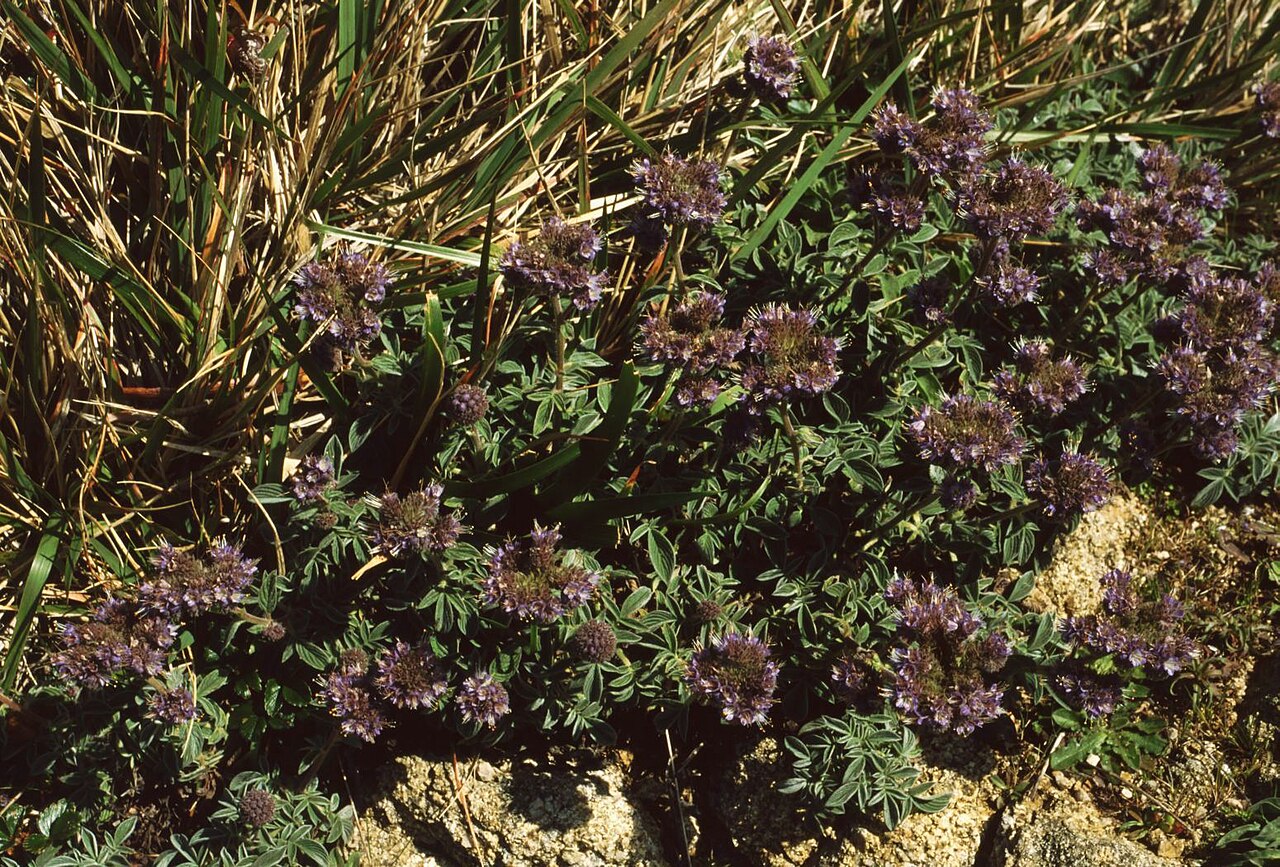
California phacelia is a perennial herb that may live only a few years. Stems grow upright or lie along the ground and branch from the base, reaching up to about 3 feet long. On exposed coastal bluffs it stays low, often under 6 inches; in sheltered spots it can reach about 2 feet tall. Older plants have a short, woody base.
Leaves
The leaves are up to about 8 inches long, rough and hairy, and gray-green to silvery. The lower leaves are divided into several leaflets, often one large end leaflet and a few smaller side leaflets; the upper leaves are smaller and may be undivided. Most of the leaves are in a basal rosette.
Flowers
Flowers appear from about March to August, mainly in spring. They are borne in dense, hairy, one-sided clusters that are coiled at the tip and slowly straighten. Each flower is a small bell less than 1/2 inch wide, with five lobes in lavender, pale blue or white. Long stamens stick out past the petals and give the clusters a fuzzy look.
Fruit & Seeds
The fruit is a small, hairy capsule that holds a few seeds. Seeds ripen in summer and drop near the parent plant.
Look-alikes
Several other perennial phacelias, such as imbricate phacelia (Phacelia imbricata), look very similar and grow inland in California; they are told apart by small details of the leaves and flower parts, and by location. Annual phacelias such as lacy phacelia have finely cut, fern-like leaves and die after one season. Silverleaf phacelia is a similar gray-leaved perennial found mostly in drier, inland parts of the West.
Safety Notes
California phacelia is not known to be poisonous, but like many phacelias it is covered in stiff, glandular hairs. Some people get an itchy rash after handling phacelias, so wear gloves when weeding around or cutting it.
Quick Facts
| Scientific Name | Phacelia californica |
| Family | Boraginaceae (borage family; waterleaf group, Hydrophyllaceae) |
| Plant Type | Short-lived perennial wildflower |
| Mature Height | 6–18 in (to about 2 ft in shelter) |
| Mature Spread | 1–2 ft |
| Growth Rate | Fast |
| Sun Exposure | Full sun to partial shade |
| Water Needs | Low; no summer water once established |
| Soil Type | Well-drained sandy, rocky or clay-loam soils |
| Soil pH | About 6.0–7.5 |
| Bloom Time | March–August (mainly spring) |
| Flower Color | Lavender, pale blue or white |
| Fall Color | None; gray-green rosette, partly summer-dormant |
| Fruit | Small hairy capsules |
| Deer Resistant | Generally; rough hairy foliage |
| USDA Hardiness Zones | 8–10 |
Native Range
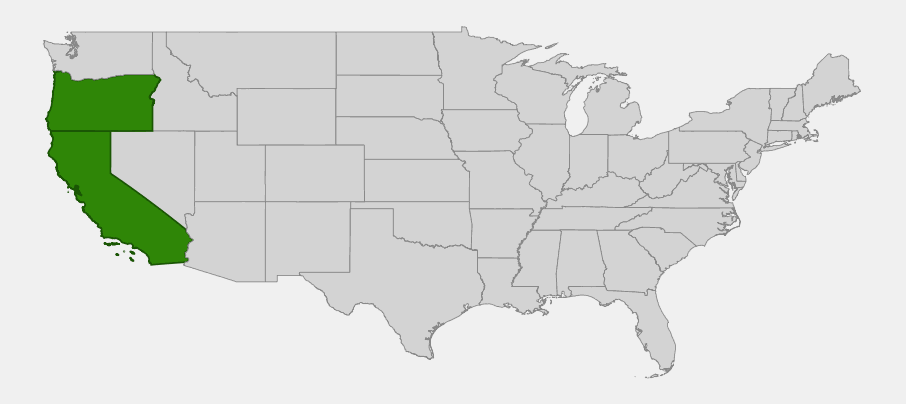
California phacelia is native to the Pacific coast of California and Oregon. USDA PLANTS lists it as native in both states. In California it grows mainly in the North Coast and Central Coast regions, including Marin County, the San Francisco peninsula and the coastal hills around the Bay Area. In Oregon it reaches the southwestern part of the state.
It is most common within sight or sound of the ocean, on coastal bluffs, rocky outcrops and coastal prairie, but it also grows in chaparral, coastal scrub and open woodland in the hills a short way inland.
Typical sites are sunny, open and well drained: rocky slopes, road cuts, bluff tops and grassy openings. Plants on wind-blasted bluffs stay low and compact, while those in more sheltered spots grow taller and looser.
📋 Regional plant lists featuring California Phacelia: Western Oregon & Western Washington · California & Nevada
Growing & Care Guide
California phacelia is sold by many California native plant nurseries and is easy to grow in coastal and mild-winter gardens. It wants sun, good drainage and little water once established.
Light
Full sun is best on the coast. Inland, give it some afternoon shade. In deep shade it gets leggy and flowers poorly.
Soil & Water
It needs well-drained soil and is fine in sandy, rocky or lean clay-loam soils. Water new plants through their first dry season, then stop summer watering once they are established. Wet, heavy soil in summer shortens its life. In dry summers plants may go partly dormant and look tired; that is normal.
Planting Tips
Plant in fall or early winter so the roots grow with the winter rains. Space plants about 1 1/2 to 2 feet apart. It looks best in drifts on a sunny slope, in a meadow or coastal garden, or along the front of a dry border with seaside daisy, yarrow and blue-eyed grass.
Pruning & Maintenance
Cut back spent flower stems after bloom to tidy the plant and encourage new rosettes, or leave some to set seed for bees and for new seedlings. Wear gloves, since the hairs can irritate skin. Do not fertilize. Plants are short-lived, so let a few seedlings grow on as replacements.
Propagation
Grow it from seed sown in fall, either in place or in pots. Seed usually needs the cool, moist conditions of a winter to sprout well. Plants often self-sow lightly in open, gravelly soil.
Landscape Uses
- Pollinator and butterfly gardens: one of the best bee plants of the coast; nectar for Mission blue butterflies
- Coastal gardens: tolerates wind, salt spray and sandy soil
- Dry slopes and meadows: low-water cover for sunny, well-drained banks
- Habitat restoration: coastal bluff, prairie and scrub restoration in California and Oregon
- Rock gardens: compact form on lean, rocky soil
Wildlife & Ecological Value
California phacelia is a busy plant in bloom. Its fuzzy flower clusters draw a steady stream of bees, butterflies and other insects for months.
For Pollinators
The flowers are visited by many native bees, including bumble bees such as the yellow-faced bumble bee, as well as honey bees, hoverflies and butterflies. It is an important nectar source for the endangered Mission blue butterfly (Icaricia icarioides missionensis), whose caterpillars feed on lupines; the adults visit California phacelia and other wildflowers on San Bruno Mountain, the Marin Headlands and the Presidio.
For Birds
Seed-eating birds such as sparrows and finches pick up seeds from the ground, and insect-eating birds hunt among the busy flowers.
For Mammals
The rough, hairy leaves are not a favored food, though deer and rabbits may nibble young growth.
Ecosystem Role
As a long-blooming nectar plant on coastal bluffs and grasslands, it supports a large share of the pollinator community in its habitat. Its low rosettes also help hold soil on exposed bluffs and slopes.
Cultural & Historical Uses
The species was described by the German poet and naturalist Adelbert von Chamisso from plants collected at the Presidio of San Francisco, which is its type locality. Chamisso visited San Francisco Bay in 1816 on a Russian voyage of exploration. The genus name Phacelia comes from the Greek word for “cluster,” for the crowded flower heads.
According to the National Park Service, the Pomo used juice from crushed fresh leaves to treat skin problems, and the Ohlone made a tea from the boiled roots for fevers and colds. This is noted for history only; do not use it as a remedy.
Today California phacelia is planted in habitat restoration projects in the Bay Area, especially where the Mission blue butterfly still lives, and is a common sight on coastal trails in spring.
Frequently Asked Questions
Why is California phacelia called scorpionweed?
Its flower clusters are tightly coiled at the tip, like a scorpion’s tail or a fiddlehead, and they slowly unroll as the flowers open.
Is California phacelia an annual or perennial?
It is a perennial, though often short-lived. Many other phacelias are annuals, so check the label when buying seed.
Does California phacelia attract bees?
Yes. It is a favorite of bumble bees and other native bees, and it is a nectar source for the endangered Mission blue butterfly.
Can California phacelia make your skin itch?
It can. Like many phacelias it is covered in stiff, glandular hairs that may cause an itchy rash in sensitive people, so wear gloves when handling it.
Where does California phacelia grow?
It grows along the coast of northern and central California and in Oregon, on bluffs, rocky slopes, grassland, chaparral and open woodland.

Looking for a nursery that carries California Phacelia?
Browse our native plant nursery directory: California · Oregon

