
Weed’s Mariposa Lily (Calochortus weedii)
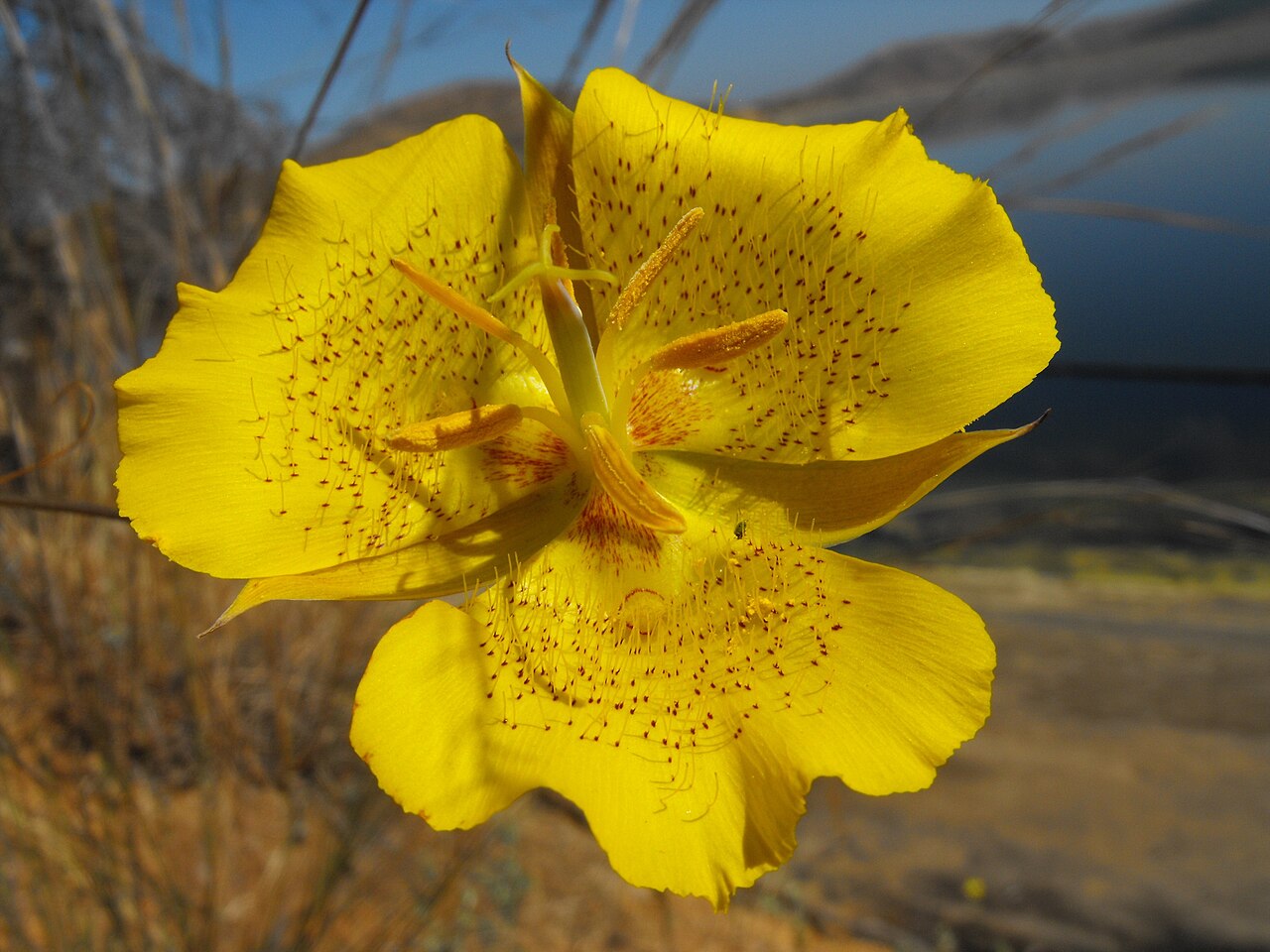
Calochortus weedii, known as Weed’s Mariposa Lily or Weed’s mariposa tulip, is a summer-blooming bulb of the chaparral and coastal sage scrub of southern California and northern Baja California. It belongs to the lily family (Liliaceae). It grows on dry, rocky or gravelly slopes, often in openings among shrubs, from Santa Barbara County south to San Diego County and into Mexico.
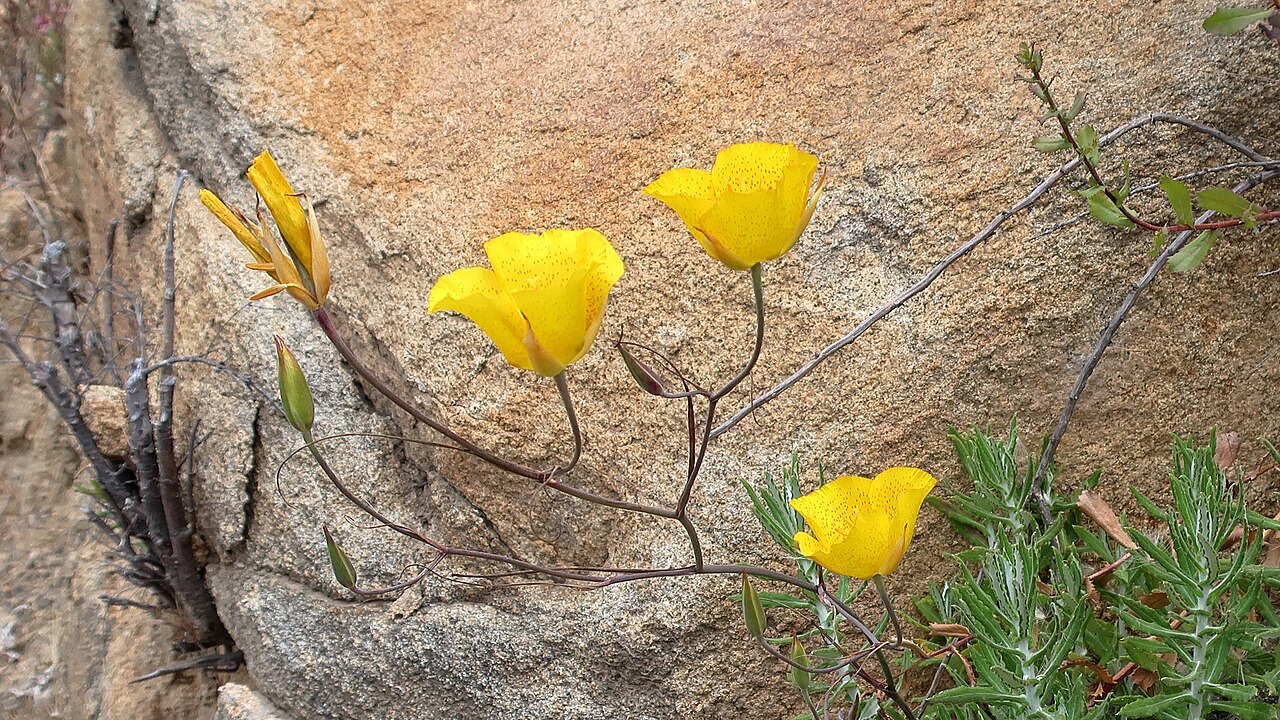
A single slender, often branching stem 1 to 3 feet tall rises from a small bulb and carries two to six open, cup-shaped flowers. The petals are usually deep golden yellow, though they range from cream to orange or reddish purple, and they are densely hairy on the inside and often edged or flecked with reddish brown. It blooms late, from about May into August, when the hills have already dried and few other wildflowers are in flower.
Weed’s mariposa lily is a wild plant of undisturbed chaparral and scrub, and one variety, the intermediate mariposa lily, is on the California Native Plant Society’s rare plant inventory. Never dig the bulbs from the wild. Buy only nursery-propagated bulbs or seed if you want to grow it.
Identification
Look for tall, wiry stems in dry chaparral openings in early summer, topped by several open, golden-yellow cups whose petals are furry inside and often rimmed or speckled with reddish brown.
Growth Habit
Weed’s mariposa lily is a perennial herb that grows from a small, deep bulb. In winter it puts up one long, grass-like basal leaf; in spring it sends up a slender, stiff stem 1 to 3 feet tall that often branches near the top. After the seeds ripen the plant dies back to the bulb for the rest of the dry season.
Leaves
The single basal leaf is narrow and grass-like, up to about 16 inches long, and withers by flowering time. A few small, narrow leaves grow along the stem.
Flowers
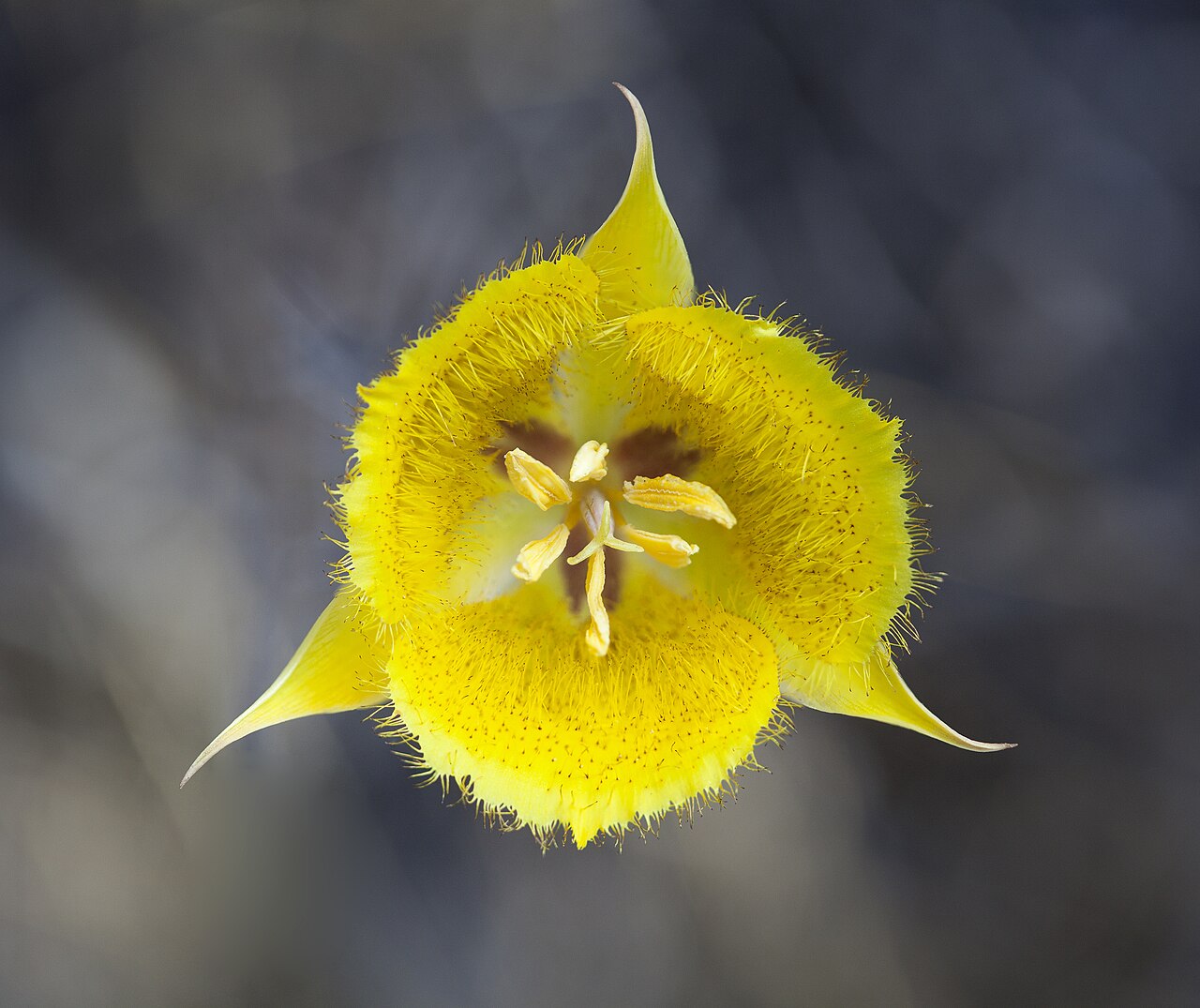
The flowers open from about May to August. Each stem has two to six erect, widely bell-shaped to spreading flowers about 1 1/2 to 2 inches across. The three narrow, pointed sepals alternate with three broad, rounded or wedge-shaped petals up to about 1 1/4 inches long. Petals are usually deep yellow but may be cream, orange or reddish purple. The inner surface is covered in fine hairs, and many plants have reddish-brown flecks or a dark, fringed margin on the petals.
Fruit & Seeds
The fruit is an upright, angled capsule about 1 1/2 to 2 inches long that dries and splits in late summer to release flat seeds.
Look-alikes
Yellow mariposa lily is also yellow but has smoother petals with much less hair, is most common in central and northern California, and blooms earlier. Clay mariposa lily and butterfly mariposa lily have white to lavender, cup-shaped flowers with a dark central blotch. Desert mariposa lily has orange to yellow, nearly hairless petals and grows in the deserts. The very hairy, often brown-edged petals and the summer bloom mark Weed’s mariposa lily.
Safety Notes
Mariposa lilies are not known to be toxic. Native Californians ate the bulbs of several species, but never dig wild bulbs: Weed’s mariposa lily includes a rare variety, and bulbs are easy to confuse with toxic ones such as death camas.
Quick Facts
| Scientific Name | Calochortus weedii |
| Family | Liliaceae (lily family) |
| Plant Type | Perennial bulb (summer-dormant after flowering) |
| Mature Height | 1–3 ft |
| Mature Spread | 4–8 in |
| Growth Rate | Slow |
| Sun Exposure | Full sun to light shade |
| Water Needs | Very low; no summer water |
| Soil Type | Dry, rocky, gravelly or sandy; granitic and other well-drained soils |
| Soil pH | About 6.0–7.5 |
| Bloom Time | May–August |
| Flower Color | Golden yellow (cream to orange or reddish purple), often brown-flecked |
| Fall Color | None; dormant in late summer and fall |
| Fruit | Upright angled capsule |
| Deer Resistant | No; deer and gophers eat mariposa lilies |
| USDA Hardiness Zones | 9–10 |
Native Range
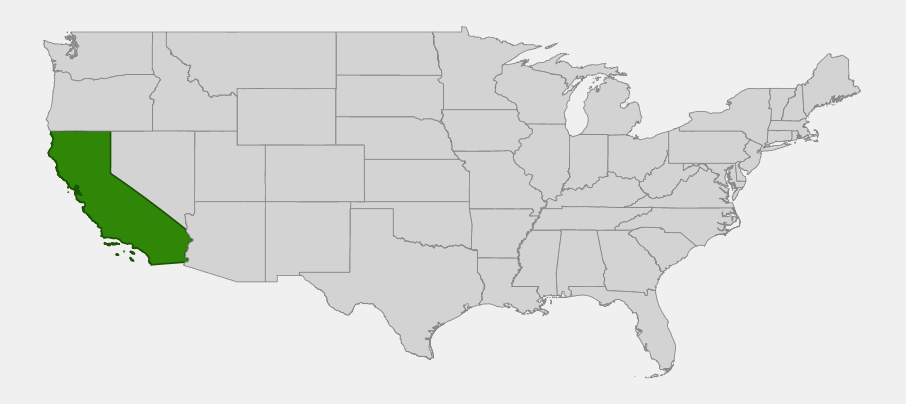
Weed’s mariposa lily is native to southern California and northern Baja California, Mexico. USDA PLANTS lists it in California only among U.S. states. It grows in the outer South Coast Ranges, the Transverse Ranges and the Peninsular Ranges, with most sites between Santa Barbara County and San Diego County. There is also a report of an isolated population along Salmon Creek in southern Monterey County.
Three varieties are recognized. Variety weedii is the widespread form of southern California and Baja California. Variety intermedius, the intermediate mariposa lily, grows in Orange, Los Angeles and Riverside counties and is on the California Native Plant Society’s Inventory of Rare and Endangered Plants. Variety peninsularis is found in Baja California.
It grows in chaparral and coastal sage scrub, usually on dry, rocky or gravelly slopes and in openings between shrubs, from the coastal hills to the lower mountains. Many populations are on granitic soils in the Peninsular Ranges.
📋 Regional plant lists featuring Weed’s Mariposa Lily: California & Nevada
Growing & Care Guide
Weed’s mariposa lily is rarely sold and is best admired in the wild. Specialist bulb growers sometimes offer seed or nursery-raised bulbs; never use wild-dug plants, and leave the rare intermediate variety to conservation programs.
Light
Give it full sun or the light, broken shade of an opening among shrubs.
Soil & Water
It needs very well-drained, rocky, gravelly or sandy soil. Water only during the cool, rainy season. Once the flowers fade and the stem dries, keep it completely dry until fall; summer watering rots the bulbs.
Planting Tips
Plant bulbs in fall about 3 to 4 inches deep in a dry, unirrigated part of the garden, among low chaparral or sage scrub shrubs, or in a deep pot of gritty mix. Use a wire basket where gophers are a problem.
Pruning & Maintenance
Leave the stems to ripen seed, then remove them once dry. Do not fertilize. Protect bulbs and buds from gophers, deer, rabbits and snails.
Propagation
Sow seed in fall in deep pots or in place; it sprouts with winter rains. Seedlings take several years to bloom. Do not collect seed or bulbs from wild populations, especially of the rare variety, without permission.
Landscape Uses
- Chaparral and sage scrub gardens: late color in unirrigated native gardens
- Rock gardens and containers: sharp drainage and summer-dry care in pots
- Wildflower viewing: a highlight of early-summer hikes in southern California
- Habitat restoration: part of the native bulb flora of chaparral and coastal sage scrub
- Pollinator support: open cups for native bees when little else is blooming
Wildlife & Ecological Value
Because it flowers so late in the season, Weed’s mariposa lily offers pollen and nectar when the surrounding chaparral has mostly gone dry.
For Pollinators
Native bees and beetles visit the open flowers, crawling across the hairy petals to reach the nectar glands at their base. The hairs and markings help guide insects into the cup.
For Birds
The plant is of minor importance to birds, though some seed-eaters may take the seeds.
For Mammals
Pocket gophers eat the bulbs, and deer and rabbits nibble the stems and buds.
Ecosystem Role
Native bulbs like Weed’s mariposa lily are part of the herbaceous flora that grows in openings and after fires in chaparral and coastal sage scrub. Their presence is a sign of healthy, undisturbed native habitat.
Cultural & Historical Uses
The species was described by the American botanist Alphonso Wood. The genus name Calochortus comes from Greek words meaning “beautiful grass,” for the grass-like leaves, and “mariposa” is Spanish for butterfly.
Several plants once treated as varieties of Weed’s mariposa lily are now generally recognized as separate species, including the San Luis mariposa lily (Calochortus obispoensis) and the late-flowered mariposa lily (Calochortus fimbriatus).
Bulbs of several mariposa lilies were roasted or eaten by Native Californians. Today much of the habitat of Weed’s mariposa lily lies in the fast-growing coastal counties of southern California, so protected open spaces such as parks and wildlife refuges are important for its survival.
Frequently Asked Questions
When does Weed’s mariposa lily bloom?
From about May to August, later than most southern California wildflowers.
Is Weed’s mariposa lily rare?
The species as a whole is not listed, but the intermediate mariposa lily (variety intermedius) is on the California Native Plant Society’s rare plant inventory. Never dig any wild mariposa lilies.
Where can I see Weed’s mariposa lily?
In chaparral and coastal sage scrub of southern California, from Santa Barbara County to San Diego County, including parks and open spaces in the Peninsular Ranges.
Can I grow it in my garden?
Possibly, from nursery-propagated bulbs or seed, in sharp drainage with no summer water and protection from gophers. Never use wild-collected bulbs.
How is Weed’s mariposa lily different from yellow mariposa lily?
Weed’s mariposa lily has very hairy petals, often with brown edges or flecks, blooms in summer and grows in southern California. Yellow mariposa lily has smoother petals, blooms earlier and is most common farther north.

Looking for a nursery that carries Weed’s Mariposa Lily?
Browse our native plant nursery directory: California

