
Stemless Evening Primrose (Oenothera triloba)
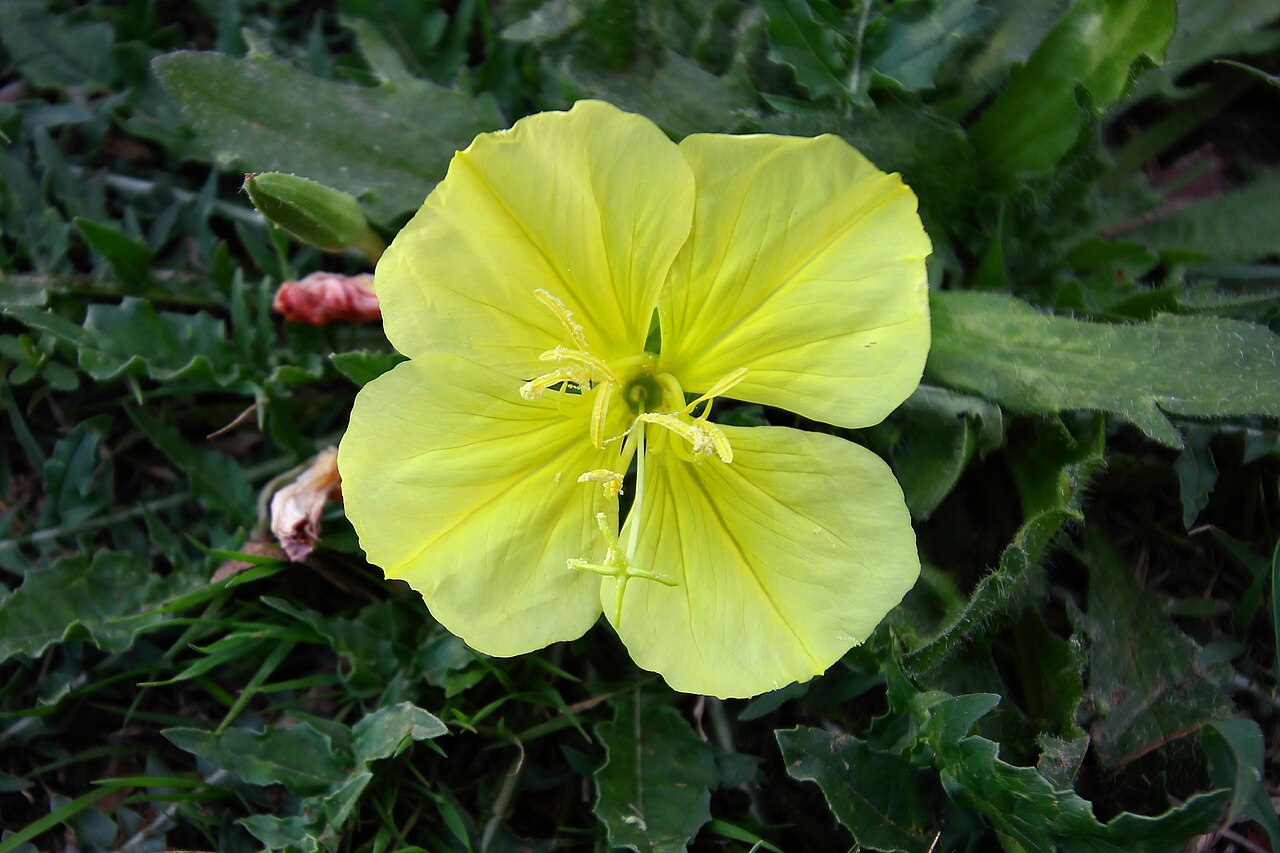
Oenothera triloba, known as Stemless Evening Primrose, sessile evening primrose or three-lobe evening primrose, is a low, rosette-forming wildflower of the evening primrose family (Onagraceae). It is native to the south-central United States and northern Mexico, with scattered populations north and east to the Ohio Valley.
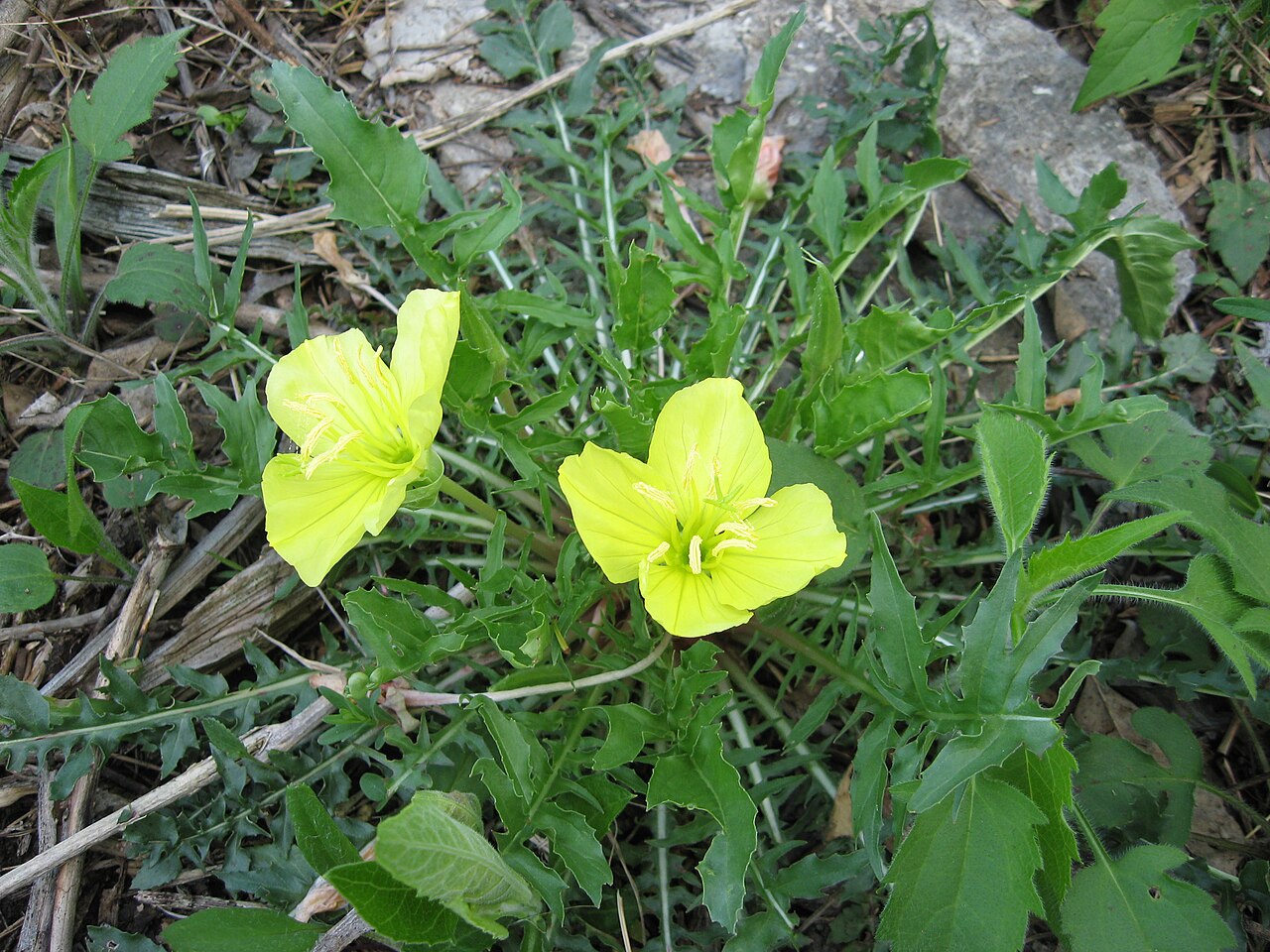
True to its name, the plant has no visible stem. Large, pale yellow, four-petaled flowers 1 1/2 to 3 inches across seem to sit directly in a flat rosette of deeply toothed, dandelion-like leaves; each actually stands on a long, slender floral tube. The flowers open near sunset, are pollinated by night-flying moths, and fade to apricot or pink by the next morning.
Stemless evening primrose is mostly a winter annual. It sprouts in fall, overwinters as a rosette and blooms from late winter to late spring on limestone glades, prairies, pastures and even lawns, especially on clay and calcareous soils. It is a charming, self-sowing addition to rock gardens and meadow plantings in its home range.
Identification
Look for a flat rosette of deeply toothed leaves in early spring with large, pale yellow, four-petaled flowers sitting right in the middle, and, later, a tight cluster of hard, winged seed pods at the center.
Growth Habit
Stemless evening primrose is a winter annual, sometimes a biennial or short-lived perennial, with a stout taproot. It forms a single rosette, usually 4 to 12 inches across and only a few inches tall. There is no leafy flowering stem; flowers and fruits arise from the center of the rosette.
Leaves
The leaves are basal, 2 to 8 inches long and narrowly oblong to lance-shaped, with irregular, deep teeth or backward-pointing lobes much like a dandelion leaf. They are green, smooth or finely hairy, and often have a pale midrib.
Flowers
Flowers appear from about February to May. Each has four broad, pale lemon-yellow petals, 3/4 to 1 1/2 inches long, eight stamens and a cross-shaped stigma. The flower is held on a slender floral tube 2 to 6 inches long that grows from the rosette, so the flower stands just above the leaves. Flowers open near dusk, last one night and wither to an orange or pinkish color the next day.
Fruit & Seeds
The fruits are hard, woody capsules about 1/2 to 1 inch long with broad wings, packed tightly together at the base of the rosette. They persist long after the plant dies and release seeds slowly, a useful clue for identifying the plant out of season.
Look-alikes
Missouri evening primrose (Oenothera macrocarpa) has larger, brighter yellow flowers on leafy stems and is a long-lived perennial. Yellow evening primrose (Oenothera flava) is also stemless but has narrower leaves and grows mainly farther west. Tufted evening primrose (Oenothera caespitosa) has white flowers. Dandelion leaves are similar, but dandelions have small, many-rayed flower heads.
Safety Notes
Stemless evening primrose is not known to be toxic. Some Indigenous peoples used the roots as food or medicine, but we do not recommend eating wild plants without expert guidance.
Quick Facts
| Scientific Name | Oenothera triloba |
| Family | Onagraceae (evening primrose family) |
| Plant Type | Winter annual or short-lived biennial |
| Mature Height | 2–8 in |
| Mature Spread | 4–12 in |
| Growth Rate | Fast |
| Sun Exposure | Full sun |
| Water Needs | Low; dry to medium soil |
| Soil Type | Clay, limestone or rocky calcareous soil |
| Soil pH | About 6.5–8.5 |
| Bloom Time | February–May |
| Flower Color | Pale yellow, fading to apricot or pink |
| Fall Color | None; new rosettes appear in fall |
| Fruit | Hard, winged capsules clustered at the base |
| Deer Resistant | Moderate |
| USDA Hardiness Zones | 5–9 |
Native Range
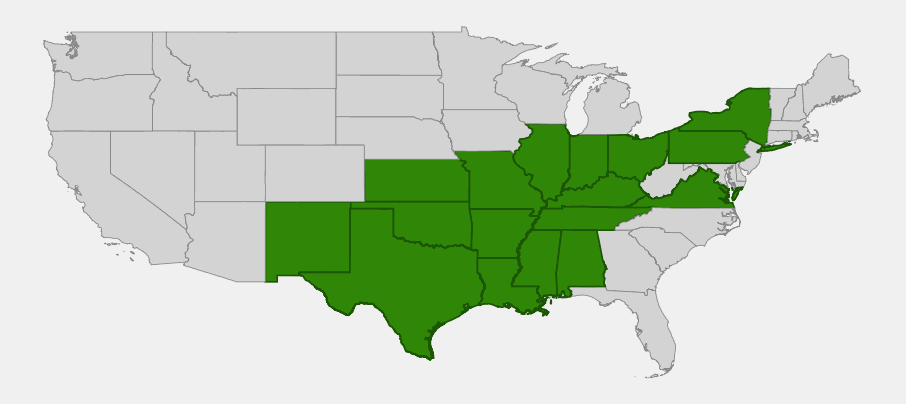
Stemless evening primrose is native mainly to the south-central United States and northern Mexico. USDA PLANTS lists it as native in Alabama, Arkansas, Illinois, Indiana, Kansas, Kentucky, Louisiana, Mississippi, Missouri, New Mexico, New York, Ohio, Oklahoma, Pennsylvania, Tennessee, Texas and Virginia.
It is most common in Texas, Oklahoma, Kansas, Missouri, Arkansas, Tennessee and Kentucky, especially on the limestone of the Edwards Plateau, the Blackland Prairie, the Ozarks and the cedar glades of the Nashville Basin. The records from New York, Pennsylvania, Ohio, Indiana and Virginia are outlying, scattered populations at the edge of the range.
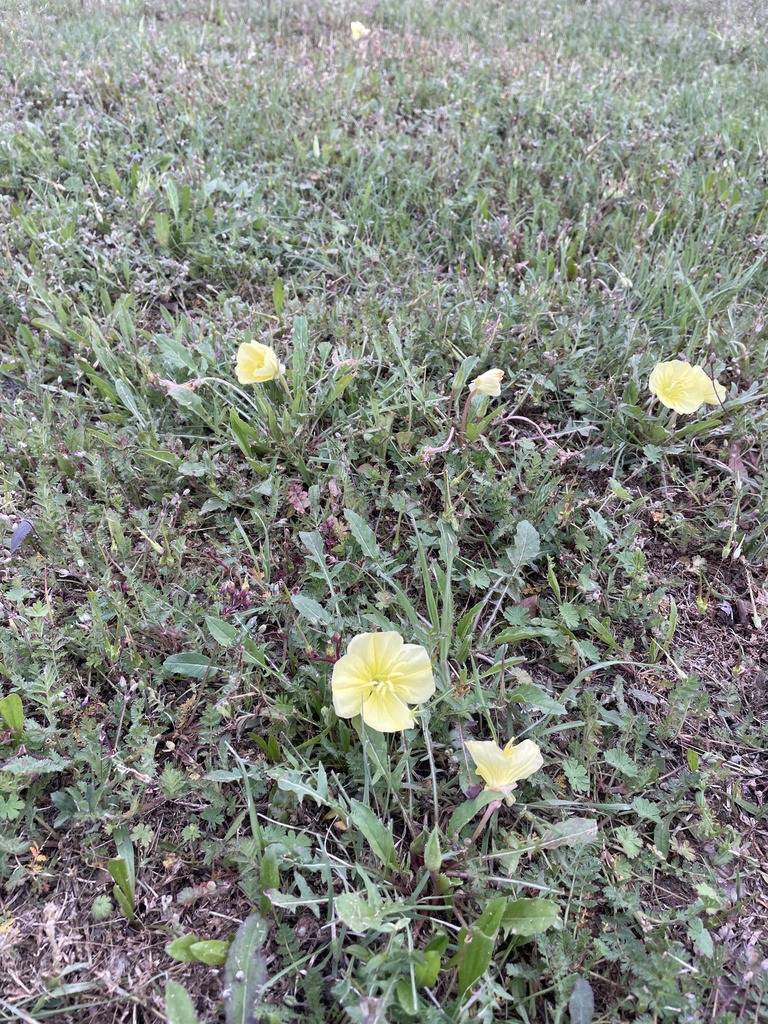
Typical habitats are open, sunny ground with thin or clay soils: limestone and cedar glades, rocky prairies, pastures, floodplain terraces, roadsides, mowed fields and lawns. It responds well to light disturbance and often appears where competing grasses are kept short.
📋 Regional plant lists featuring Stemless Evening Primrose: South & West Texas · Arkansas, Louisiana, Eastern Oklahoma & Eastern Texas · Alabama, Georgia & Mississippi · Kentucky & Tennessee · Illinois, Iowa & Missouri · Ohio & Indiana · Nebraska, Kansas & Eastern Colorado · Maryland, Virginia & West Virginia · New York, Pennsylvania & Northern New Jersey
Growing & Care Guide
Stemless evening primrose is sold by some native seed companies in Texas and the southern Plains. It is easy to grow from seed in sunny, lean ground and self-sows to return each spring.
Light
Give it full sun. It tolerates very light shade but flowers best with sun most of the day.
Soil & Water
It does best in clay, limestone or rocky soil with good surface drainage, and it tolerates alkaline soil. Rain is usually enough during its cool-season growth. It needs no summer water; the plant dies after setting seed.
Planting Tips
Sow seed in early fall where you want it to grow, in a rock garden, gravel bed, short meadow or the edge of a path. Keep tall grasses and mulch away from it, since the rosettes need open ground and light. Its evening flowers are best seen from a patio or path at dusk.
Pruning & Maintenance
No pruning is needed. Leave the woody seed clusters in place so the plant can reseed. In lawns, delay mowing in spring until after it blooms if you want to keep it.
Propagation
Grow it from seed. Sow fresh or stored seed outdoors in fall; seeds germinate with cool, moist weather and the rosettes overwinter. Plants do not transplant well once the taproot forms.
Landscape Uses
- Rock gardens: large flowers on a ground-hugging rosette in lean, rocky soil
- Moon and evening gardens: pale yellow flowers open at dusk
- Meadows and short prairies: early spring color among short grasses
- Wildflower lawns: blooms in mowed grass if mowing is delayed in spring
- Glade restoration: a typical annual of limestone and cedar glades
Wildlife & Ecological Value
Blooming in late winter and early spring, stemless evening primrose provides an early night-time nectar source and seeds in open, rocky habitats.
For Pollinators
The long floral tube holds nectar that only long-tongued insects can reach. The flowers are pollinated mainly by hawkmoths (sphinx moths) that visit at dusk. Bees, including some that specialize on evening primroses, may visit the open flowers early in the morning for pollen.
For Birds
Ground-feeding birds may pick seeds from the capsules as they slowly open.
For Mammals
Rabbits and deer may nibble the rosettes, but the low plants usually escape heavy browsing.
Ecosystem Role
As a winter annual of thin soils, stemless evening primrose fills open patches in glades and prairies before taller perennials leaf out. Its long-lasting woody capsules release seeds over several years, helping it persist in a variable climate.
Cultural & Historical Uses
Thomas Nuttall described Oenothera triloba in 1821. It was later placed in a separate genus as Lavauxia triloba, and some older manuals use that name. The genus name Oenothera comes from Greek words often translated as “wine-seeker,” an old name of uncertain meaning.
The Zuni people of New Mexico used the plant in food and medicine. They ground the roots for food, used it as an ingredient in a ceremonial cake and applied it externally for swelling and rheumatism.
Because the flowers open at dusk and close by mid-morning, many people only notice the plant on cloudy days or early in the morning, when fading, apricot-tinted flowers are still visible in lawns and pastures.
Frequently Asked Questions
Why is it called stemless evening primrose?
The plant has no leafy stem. Its flowers sit on long floral tubes that rise straight from the leaf rosette, so they appear to grow right out of the leaves.
When do the flowers open?
They open around sunset, stay open through the night for moths, and wither by the next day, often turning orange or pink as they fade.
Is stemless evening primrose an annual?
It is usually a winter annual. Seeds sprout in fall, the rosette overwinters, and the plant blooms in spring, sets seed and dies.
Can I grow it in my lawn or garden?
Yes, in full sun on clay, rocky or limestone soil. Sow seed in fall and let it reseed. In lawns, wait until after it blooms in spring to mow.
How is it different from Missouri evening primrose?
Missouri evening primrose has leafy stems, larger and brighter yellow flowers and is a long-lived perennial. Stemless evening primrose has no stem and is usually an annual.

Looking for a nursery that carries Stemless Evening Primrose?
Browse our native plant nursery directory: Alabama & Arkansas · Illinois, Indiana & Kansas · Kentucky, Louisiana, Mississippi & Missouri · New Mexico, New York, Ohio & Oklahoma · Pennsylvania, Tennessee, Texas & Virginia

