
Diapensia (Diapensia lapponica)
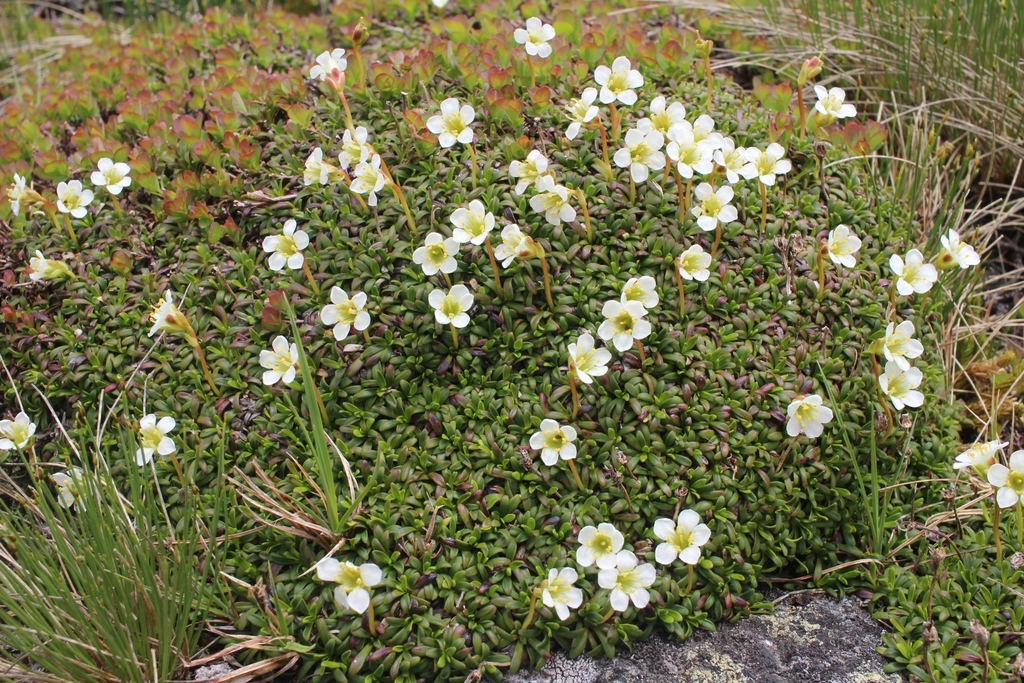
Diapensia lapponica, known simply as Diapensia or as pincushion plant, is a tiny evergreen cushion plant of arctic tundra and windswept alpine summits. It grows as a tight, rounded mound of small, leathery leaves, only an inch or two high, that hugs bare rock and gravel where few other plants can survive.
In early summer the cushions are dotted with white, five-lobed, bell-shaped flowers held just above the leaves. It is one of the first alpine flowers to bloom on the northeastern mountains, often flowering in late May or early June while snowbanks still linger nearby.
In the lower 48 states it grows only on a handful of alpine summits in New York, Vermont, New Hampshire and Maine, where it is rare and protected. It also grows in Alaska and across arctic Canada, Greenland and northern Eurasia. Diapensia is an identification and appreciation plant: it is almost impossible to grow away from alpine conditions, and it should never be dug or disturbed in the wild.
Identification
Look on exposed, rocky alpine ridges and summits for small, firm, dome-shaped cushions of tiny, glossy, dark green leaves, with white bell-shaped flowers held singly on short stalks in late spring and early summer.
Growth Habit
A dwarf, evergreen subshrub that forms dense, firm, rounded cushions or mats, usually 1 to 4 inches tall and up to about a foot across. The woody stems are short and densely branched, with old leaves persisting below the living ones.
Leaves
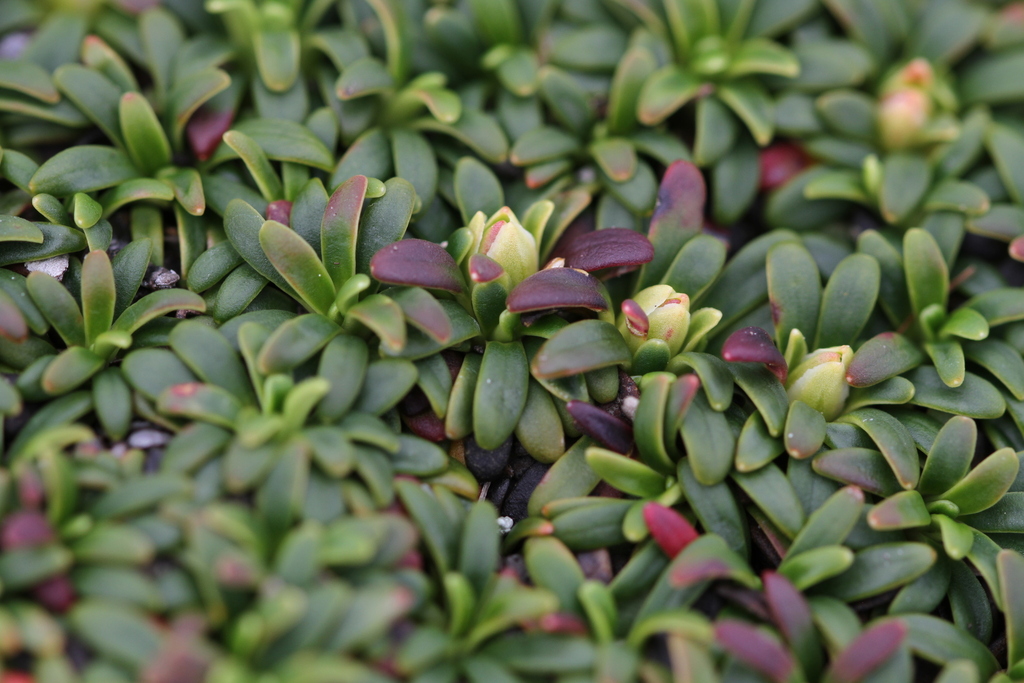
The leaves are tiny, about 1/4 to 1/2 inch long, narrowly spoon-shaped, thick, leathery and smooth, crowded in tight rosettes at the branch tips. They are dark green in summer and often turn bronze or reddish in fall and winter.
Flowers
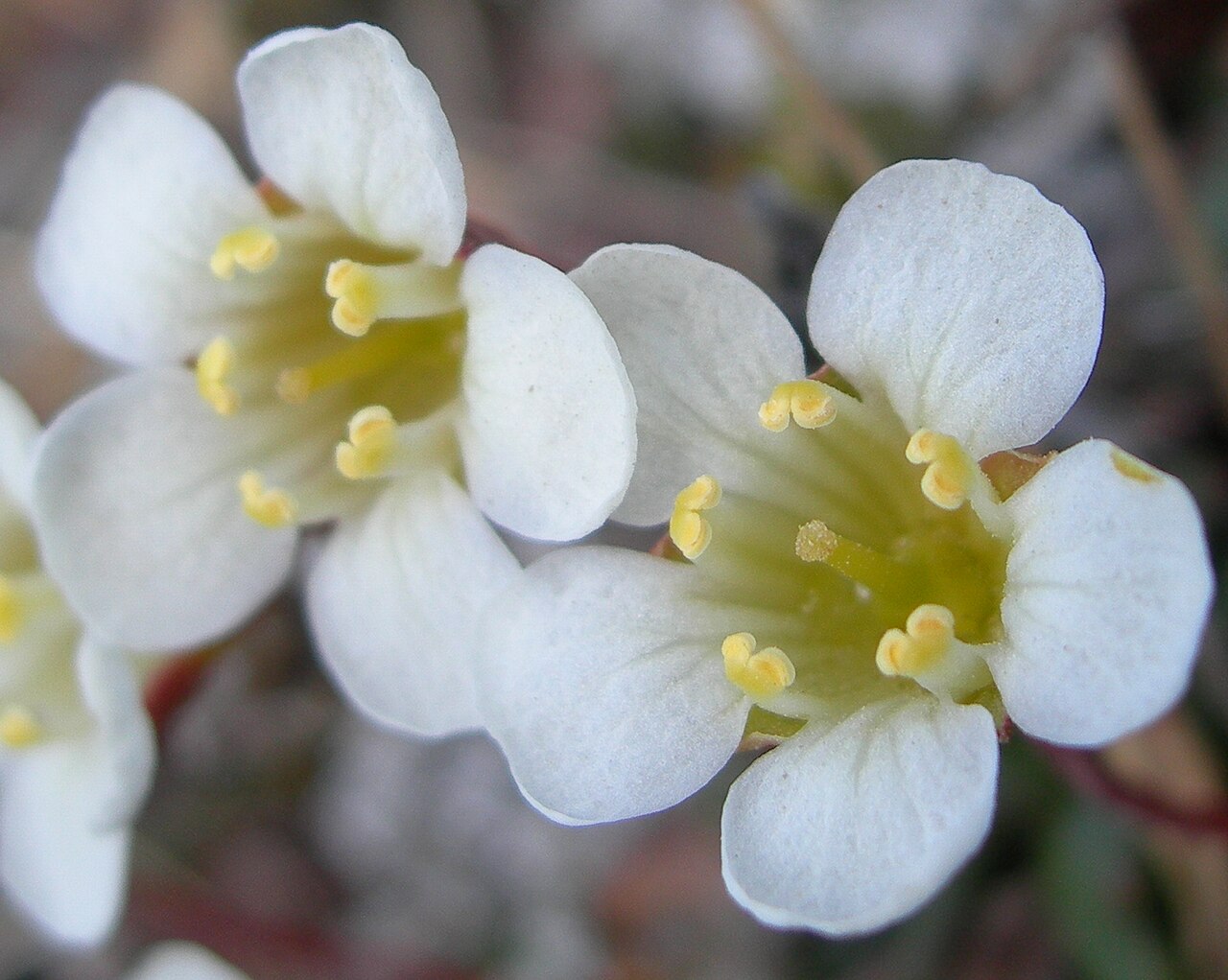
Flowers are borne singly on short stalks that rise about 1/2 to 1 inch above the cushion and lengthen as the fruit develops. Each flower is about 1/2 to 3/4 inch across, white (rarely pinkish), with a short bell-shaped tube and five broad, rounded lobes, five yellow stamens and three green sepals behind it. Bloom is mainly from late May to early July.
Fruit
The fruit is a small, round, three-parted capsule held on the lengthened stalk, splitting in late summer to release small seeds.
Look-alikes
Moss campion (Silene acaulis) forms similar cushions but has needle-like leaves and pink flowers. Alpine azalea (Kalmia procumbens) is a low, mat-forming shrub with tiny pink flowers. Three-toothed cinquefoil has white flowers but three-toothed compound leaves and a looser habit. Lapland rosebay (Rhododendron lapponicum) has purple-magenta flowers.
Quick Facts
| Scientific Name | Diapensia lapponica |
| Family | Diapensiaceae (diapensia family) |
| Plant Type | Evergreen cushion-forming subshrub |
| Mature Height | 1–4 in |
| Mature Spread | Up to about 12 in |
| Growth Rate | Very slow |
| Sun Exposure | Full sun |
| Water Needs | Moderate; cool, constantly moving moisture with sharp drainage |
| Soil Type | Thin, gravelly, acidic mineral soil and rock crevices |
| Soil pH | Acidic (about 4.5–6.0) |
| Bloom Time | Late spring to early summer (late May–July) |
| Flower Color | White |
| Fall Color | Leaves bronze to reddish in fall and winter |
| Fruit | Small three-parted capsule |
| Deer Resistant | Not applicable (grows above treeline) |
| USDA Hardiness Zones | 1–4 (alpine and arctic conditions) |
Native Range
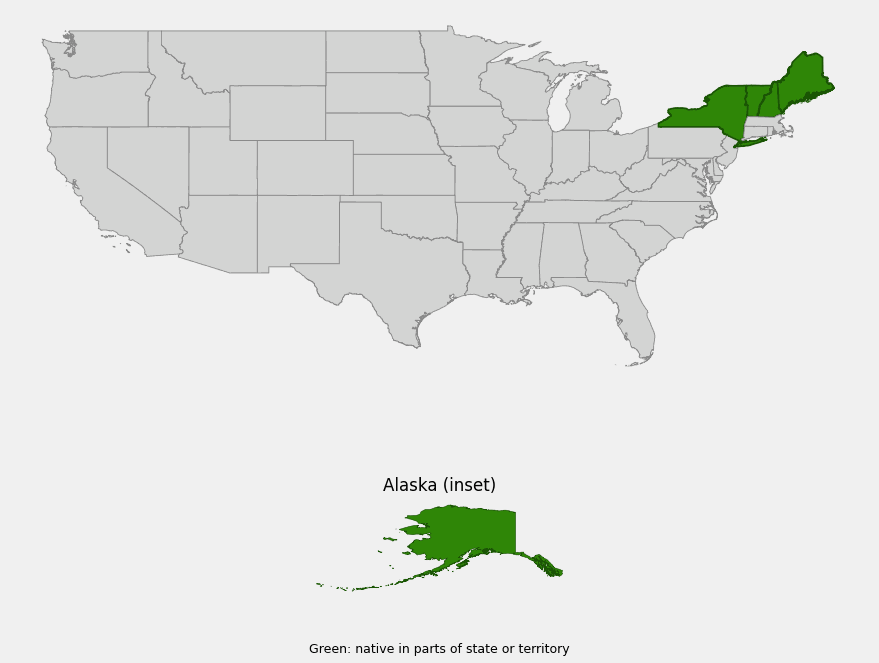
Diapensia has a circumpolar range in the Arctic and on northern mountains. USDA PLANTS records it as native in Alaska and four northeastern states: New York, Vermont, New Hampshire and Maine. It is widespread in arctic and subarctic Canada and Greenland, and also grows in northern Europe and Asia.
In the Northeast it is restricted to treeless alpine zones on the highest peaks: the Adirondack High Peaks in New York, Mount Mansfield and a few other summits in Vermont, the Presidential Range and Franconia Ridge in New Hampshire’s White Mountains, and Mount Katahdin and a few other high peaks in Maine. These are relict populations left behind when the glaciers retreated. Alaska plants belong to the Asian and western American subspecies obovata, which some botanists treat as a separate species, Diapensia obovata.
It grows in the harshest alpine and tundra sites: exposed ridges, summits, fellfields, gravelly slopes and rock ledges, often where wind blows away the winter snow cover. In the Northeast it mostly occurs above about 4,000 feet; in the Arctic it descends nearly to sea level.
📋 Regional plant lists featuring Diapensia: New York, Pennsylvania & Northern New Jersey · New Hampshire, Maine & Vermont · Delaware, Southern New Jersey & Long Island · Alaska
Can You Grow It?
Diapensia is admired in the wild far more than in gardens. It is adapted to constant wind, cold, cool summers and thin, acidic gravel, and it does not survive in ordinary garden conditions. It is rarely offered by nurseries, and wild plants must never be dug.
Light
In the wild it grows in full, unshaded sun on open summits. In cultivation it needs bright light but cool temperatures, a combination that is very hard to provide outside alpine or arctic climates.
Soil & Water
It needs lean, acidic, gritty mineral soil with perfect drainage and cool, steady moisture at the roots. Warm summer nights, humidity, heat and wet crowns quickly kill it.
Planting Tips
Only specialist alpine growers in cool climates attempt it, usually from seed in an alpine house or a carefully built scree or crevice bed. For most gardeners, the best way to enjoy diapensia is to visit it in bloom on a northeastern summit or in the Arctic in early summer.
Pruning & Maintenance
None. In the wild, the greatest threat is trampling. Stay on marked trails and rock surfaces above treeline, as the cushions take decades to grow and can be destroyed by a few footsteps.
Propagation
Grown from seed by a few specialist alpine gardeners and botanic gardens. Seedlings are extremely slow. Never collect plants or seeds from wild populations, which are rare and protected in the Northeast.
Where to See It
- Alpine wildflower viewing: a highlight of early summer hikes above treeline
- Specialist alpine collections: grown by a few alpine gardeners in cool climates
- Ecological indicator: a sign of intact, exposed alpine tundra
- Nature education: a classic example of a cushion plant adapted to wind and cold
- Conservation focus: protected rare plant on northeastern summits
Wildlife & Ecological Value
Diapensia is a key member of the small, fragile plant community that survives on exposed summits and tundra.
For Pollinators
Its early flowers are visited by flies, including hover flies, and by small bees and bumble bees active in the short alpine summer. The plant can also set seed by self-pollination when insects are scarce.
For Birds
It provides little direct food for birds, but alpine and arctic birds forage for insects among its cushions.
For Mammals
It is too small and tough to be a significant food for mammals.
Ecosystem Role
Its dense cushions create a warmer, sheltered microclimate inside, trap fine soil and organic matter, and protect bare ground from wind erosion. In the Northeast, its alpine populations are relicts of the Ice Age and are sensitive to trampling and a warming climate.
Cultural & Historical Uses
Linnaeus named Diapensia lapponica in 1753 from plants he saw during his famous 1732 journey to Lapland. The species name means “of Lapland.” The genus name Diapensia is an old plant name of uncertain origin that Linnaeus reused for this plant.
It belongs to the small diapensia family, which also includes galax (Galax urceolata), Oconee bells (Shortia galacifolia) and pyxie-moss (Pyxidanthera) of the eastern United States.
On Mount Washington, Mount Katahdin, Mount Mansfield and the Adirondack High Peaks, summit stewards and trail crews work to protect diapensia and other alpine plants from trampling. Its early June bloom is a favorite sight for hikers on those summits.
Frequently Asked Questions
Where can I see diapensia in bloom?
In the lower 48 states, on alpine summits such as the Adirondack High Peaks in New York, Mount Mansfield in Vermont, the Presidential Range and Franconia Ridge in New Hampshire, and Mount Katahdin in Maine, mostly from late May to mid-June.
Can I grow diapensia in my garden?
Almost certainly not. It needs cold, windy, alpine conditions and is very rarely available from nurseries. Wild plants must never be dug.
Is diapensia rare?
It is widespread in the Arctic, but in the northeastern United States it grows only on a few alpine summits and is considered rare and protected there.
Why does diapensia grow as a cushion?
The compact cushion shape reduces wind damage and water loss, traps heat and soil inside, and helps the plant survive on exposed, windswept summits.
How should hikers protect diapensia?
Stay on marked trails and walk on bare rock above treeline. Alpine cushion plants grow very slowly and can be killed by trampling.

Looking for a nursery that carries Diapensia?
Browse our native plant nursery directory: Alaska · Maine · New Hampshire & New York · Vermont

