
Smallflower Fishhook Cactus (Sclerocactus parviflorus)
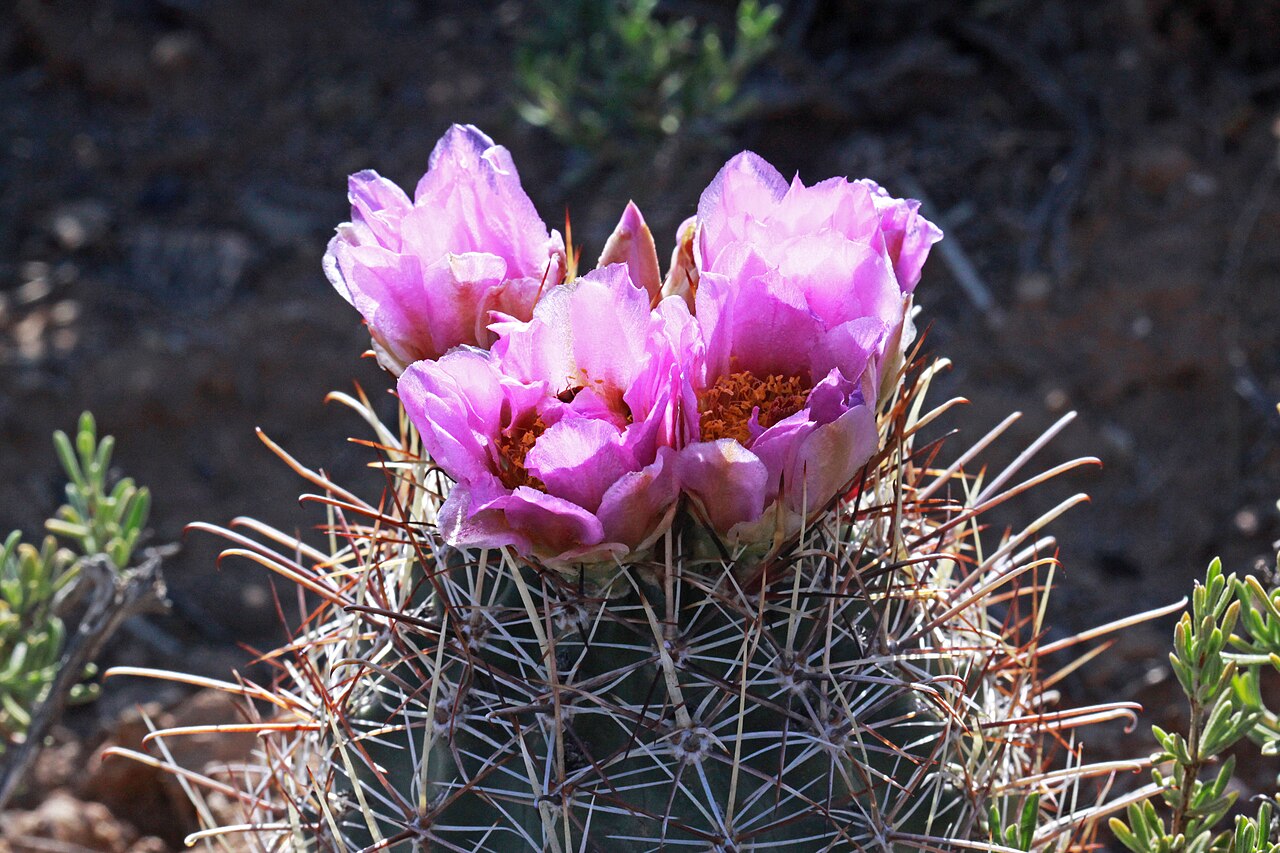
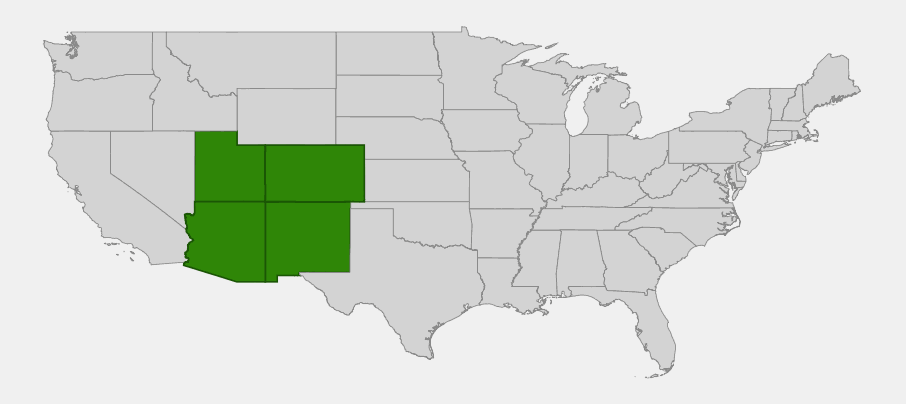
Sclerocactus parviflorus, known as Smallflower Fishhook Cactus, small-flower fishhook cactus or little barrel cactus, is a small, very spiny cactus of the Colorado Plateau and Four Corners region. It belongs to the cactus family (Cactaceae). It grows in desert grassland, blackbrush, sagebrush and saltbush scrub and pinyon-juniper woodland in Arizona, Colorado, New Mexico and Utah.
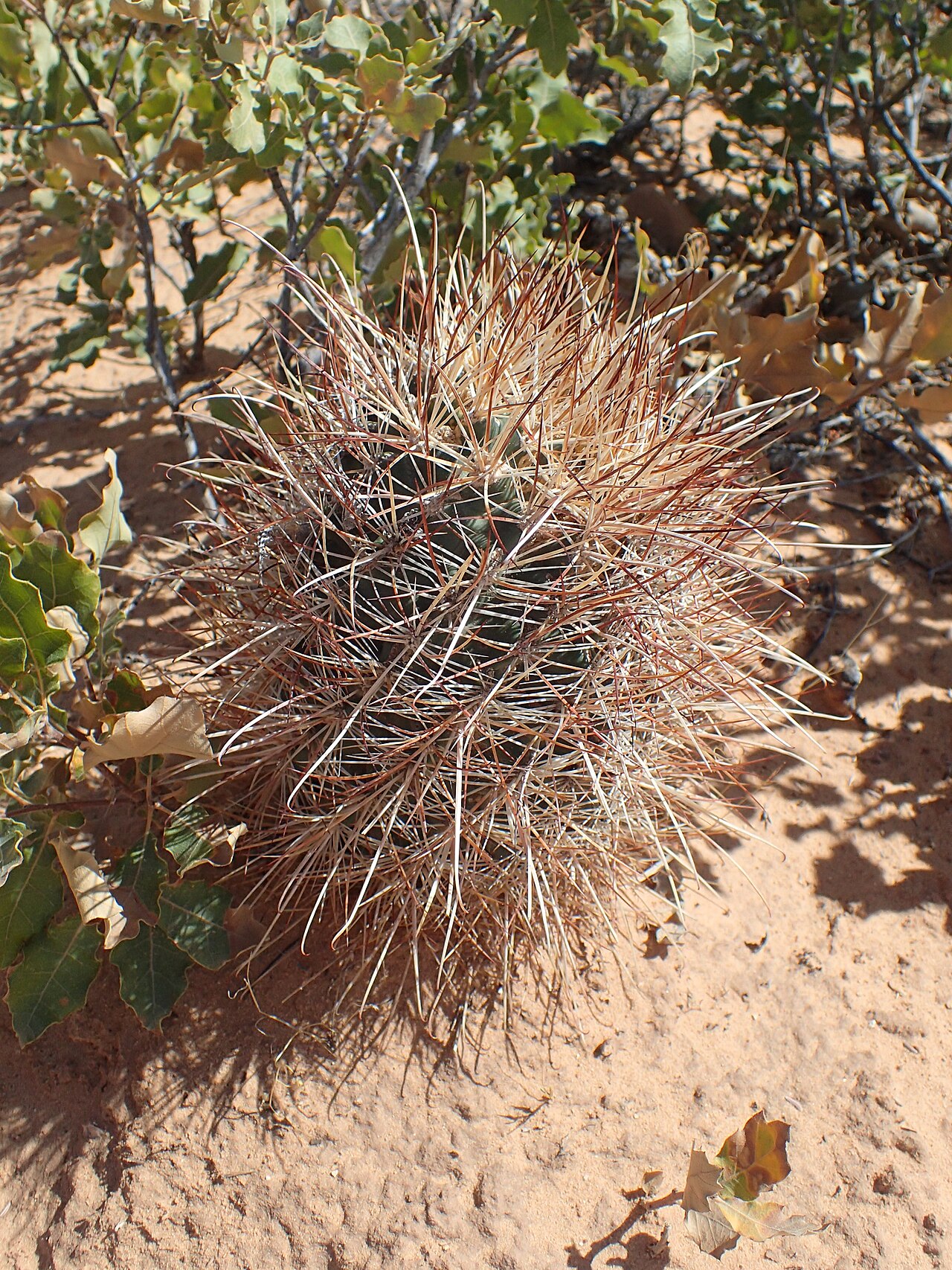
The plant is a single or clustered, barrel- to cylinder-shaped stem, usually a few inches to about a foot tall, so densely covered in spines that the green stem is hard to see. Each spine cluster has long white spines and several darker central spines, at least one of them hooked like a fishhook. In late April and May it bears funnel-shaped flowers, most often rose-pink to magenta, sometimes yellow or white. The name “smallflower” is misleading: the flowers are commonly 1 1/2 to 2 inches across.
Like all wild cacti, smallflower fishhook cactus should never be collected from the wild. Several of its close relatives are federally listed as threatened or endangered, and wild cacti are protected by state laws in parts of its range. Admire it in place, and buy only nursery-propagated plants grown from cultivated seed.
Identification
Look for a small, spiny barrel cactus on dry plateaus and mesas, its stem nearly hidden by long white spines, with dark, hooked central spines and pink to magenta flowers in spring.
Growth Habit
Smallflower fishhook cactus grows as a single stem or a small cluster of stems. Stems range from flattened-round to tall and cylindrical, about 2 to 18 inches tall and 1 1/2 to 6 inches wide, with about 13 ribs. Like its relatives, it shrinks and pulls down toward the soil in winter as it loses water, then swells again in spring.
Spines
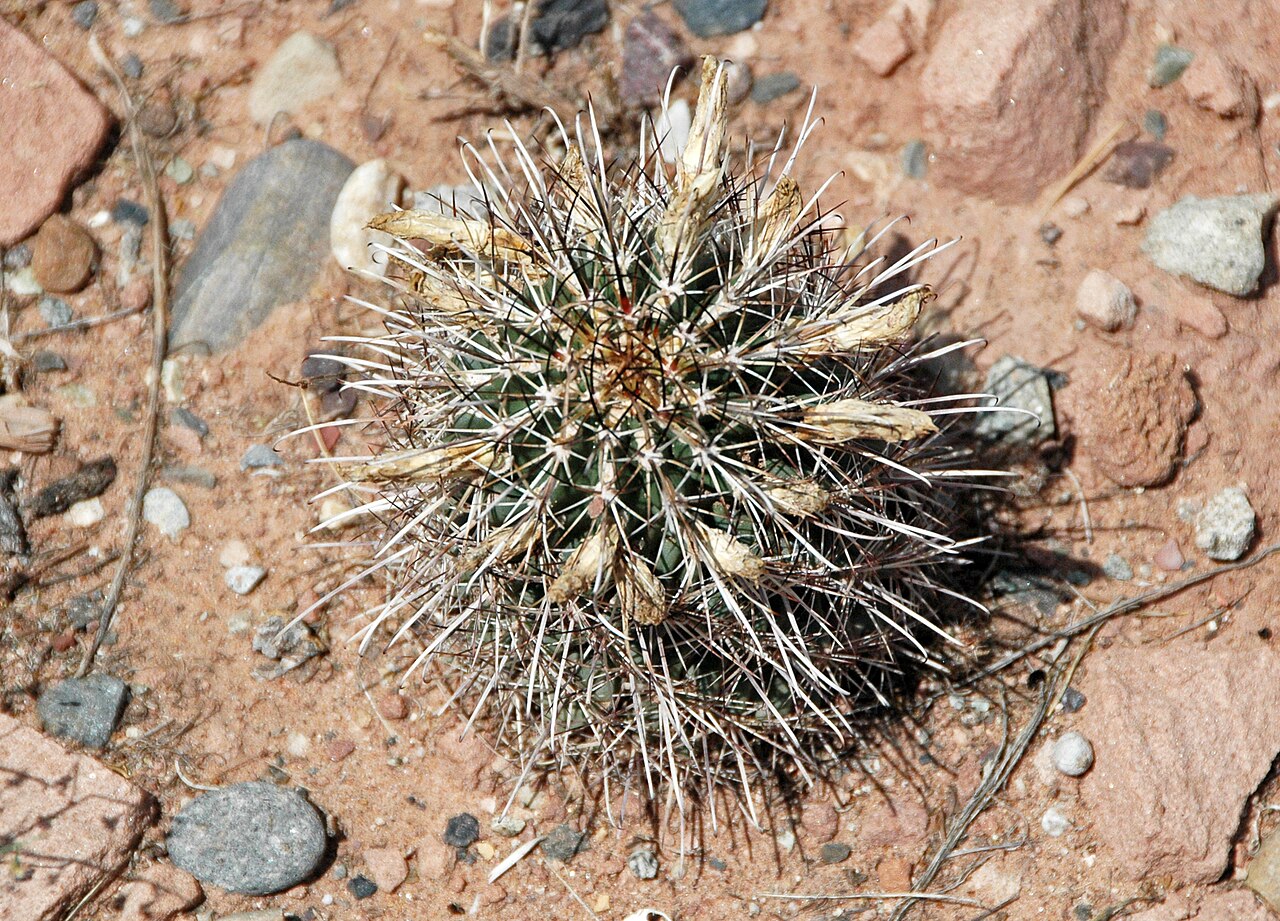
The spines are the best field mark. Each areole has 8 to 17 radial spines, usually white, and 4 to 6 central spines. The lower central spine is usually purple-black and hooked at the tip, and some of the side centrals may be hooked too. The upper central spine is long, straight, flattened and usually white. Together they often hide the stem completely.
Flowers
Flowers bloom from late April into May (into June at higher elevations). They are funnel- to bell-shaped, about 1 1/4 to 2 1/4 inches long and wide. The inner tepals are usually rose to purple or pink, sometimes yellow or rarely white, and the outer tepals have darker greenish or brownish-purple midstripes. The anthers are yellow.
Fruit & Seeds
The fruit is a short, barrel-shaped berry about 1/2 to 1 inch long, green ripening to reddish pink, with a few papery scales. It splits irregularly to release small, dark brown to black seeds.
Look-alikes
Several close relatives in the same region are rare and federally protected, including Colorado hookless cactus (Sclerocactus glaucus), Uinta Basin hookless cactus (S. wetlandicus), Mesa Verde cactus (S. mesae-verdae) and Wright fishhook cactus (S. wrightiae). These are generally smaller or have fewer or unhooked spines, so leave identification of any small fishhook cactus to experts and never disturb it. Its relative Mojave fishhook cactus has many more hooked spines and grows farther west, in the Mojave Desert and Great Basin edge. Claret cup and other hedgehog cacti have straight spines and grow in mounds. Mountain ball cactus is a small, round cactus without hooked spines that blooms earlier, at higher elevations.
Safety Notes
The hooked spines catch skin and clothing easily and are hard to remove. Handle potted plants with thick gloves, folded newspaper or tongs, and keep them away from paths and play areas.
Quick Facts
| Scientific Name | Sclerocactus parviflorus |
| Family | Cactaceae (cactus family) |
| Plant Type | Perennial cactus (single or clustered stems) |
| Mature Height | 2–18 in (often under 8 in) |
| Mature Spread | 2–6 in per stem |
| Growth Rate | Slow |
| Sun Exposure | Full sun |
| Water Needs | Very low; dry in winter |
| Soil Type | Sandy, gravelly or clay; very well drained |
| Soil pH | About 7.0–8.5 (alkaline) |
| Bloom Time | Late April–May (to June) |
| Flower Color | Rose-pink to magenta, sometimes yellow or white |
| Fall Color | None; stem shrinks in winter |
| Fruit | Small green-to-pink berries |
| Deer Resistant | Yes; heavily spined |
| USDA Hardiness Zones | 5–8 |
Native Range
Smallflower fishhook cactus is native to the Four Corners region of the southwestern United States. USDA PLANTS and Flora of North America list it in Arizona, Colorado, New Mexico and Utah. Most populations are on the Colorado Plateau, in northern Arizona, southeastern and central Utah, western Colorado and northwestern New Mexico, including the Grand Canyon, Canyonlands and Arches areas.
Flora of North America gives its elevation range as about 1,000 to 2,100 meters (roughly 3,300 to 6,900 feet). It is a highly variable species, and several subspecies have been described, such as subsp. intermedius, subsp. terrae-canyonae and subsp. havasupaiensis; Flora of North America treats them all as one species.
It grows on sandy, gravelly or clay hills, mesas and washes, in desert grassland and in saltbush, sagebrush, rabbitbrush and blackbrush communities, and in pinyon-juniper woodland. Plants are usually scattered in open, rocky or sandy ground between shrubs.
📋 Regional plant lists featuring Smallflower Fishhook Cactus: Arizona & New Mexico · Utah & Western Colorado
Growing & Care Guide
Smallflower fishhook cactus is occasionally offered by specialist cactus nurseries as seed-grown plants. It is a challenging plant for collectors in dry, cold-winter climates. Never buy wild-collected plants; ask the seller to confirm plants are propagated from cultivated seed.
Light
Give it full sun. In low light it stretches and rarely blooms.
Soil & Water
Use a very gritty, fast-draining mix of mineral soil, coarse sand, gravel or pumice, with little organic matter. Water sparingly in spring and early summer when it is actively growing, and keep it dry from fall through winter. Wet soil in cold weather quickly rots the roots.
Planting Tips
Grow it in a deep pot or a raised, gravelly bed or crevice garden in an arid, cold-winter climate. It needs a cold, dry winter rest to flower well. In humid or rainy climates, grow it in a pot under cover.
Pruning & Maintenance
No pruning is needed. Remove fallen leaves and debris carefully with tongs. Do not fertilize heavily; a weak feeding in spring is enough.
Propagation
Propagation is from seed, which is notoriously slow and erratic to germinate. Seeds contain germination inhibitors and may need soaking, cold stratification or scarification, and can take more than a year to sprout. Seedlings grow slowly for several years. Use only seed from cultivated plants; never collect plants or seed from the wild.
Landscape Uses
- Rock and crevice gardens: for arid, cold-winter regions with sharp drainage
- Cactus collections: showy spring flowers on a spiny, compact plant
- Wildflower viewing: a spring highlight on Colorado Plateau hikes
- Native pollinator support: large flowers visited by native bees
- Education: an example of the specialized cacti of the Colorado Plateau
Wildlife & Ecological Value
Smallflower fishhook cactus is a small plant, but its large spring flowers are a rich food source for native bees on the dry plateaus.
For Pollinators
The open, funnel-shaped flowers are pollinated mainly by native bees, which gather the abundant pollen and nectar. Many native bees of the Colorado Plateau specialize on cactus flowers.
For Birds
Some birds may eat the ripe fruits or seeds, and small birds may perch on nearby shrubs while foraging.
For Mammals
The dense spines protect it from most grazing animals, though rodents and rabbits sometimes eat the stems in drought and may also take the fruits and seeds. Trampling by livestock and off-road vehicles can damage plants.
Ecosystem Role
As one of the characteristic cacti of the Colorado Plateau, it is part of the diverse plant community of desert grassland and shrubland, and its flowers support pollinators in spring.
Cultural & Historical Uses
Smallflower fishhook cactus was described in 1941 by botanists Elzada Clover and Lois Jotter. In 1938 they became the first women to raft the full length of the Colorado River through the Grand Canyon, collecting plants as they went. From that trip they described several new cacti, including this species and the Grand Canyon claret cup.
Their 1938 plant collections were the only botanical survey of the river corridor before Glen Canyon Dam changed it, and later researchers used them as a baseline to study change along the river.
The genus name Sclerocactus means “hard cactus,” for its tough, dry fruits, and parviflorus means “small-flowered,” although the flowers are large for the size of the plant. It has also been placed in Pediocactus and Ferocactus and confused with Whipple’s fishhook cactus (Sclerocactus whipplei).
Frequently Asked Questions
Can I dig up a fishhook cactus to plant at home?
No. Never collect cacti from the wild. Several close relatives are federally protected, wild cacti are protected by state laws in parts of its range, and wild-dug plants rarely survive. Buy seed-grown plants only.
Why is it called smallflower fishhook cactus?
“Fishhook” refers to the hooked central spines. The “smallflower” name came from its scientific name, parviflorus, although its flowers are often 1 1/2 to 2 inches across.
When does it bloom?
From late April into May, sometimes June at higher elevations, with pink to magenta, sometimes yellow or white, flowers.
Where does smallflower fishhook cactus grow?
On the Colorado Plateau in Arizona, Colorado, New Mexico and Utah, on dry hills, mesas and washes from about 3,300 to 6,900 feet.
Is it hard to grow?
It is slow and difficult from seed and needs a very gritty soil, full sun and a cold, dry winter. It does best in arid, cold-winter climates.

Looking for a nursery that carries Smallflower Fishhook Cactus?
Browse our native plant nursery directory: Arizona · Colorado · New Mexico · Utah

