
Sand Fringepod (Thysanocarpus curvipes)
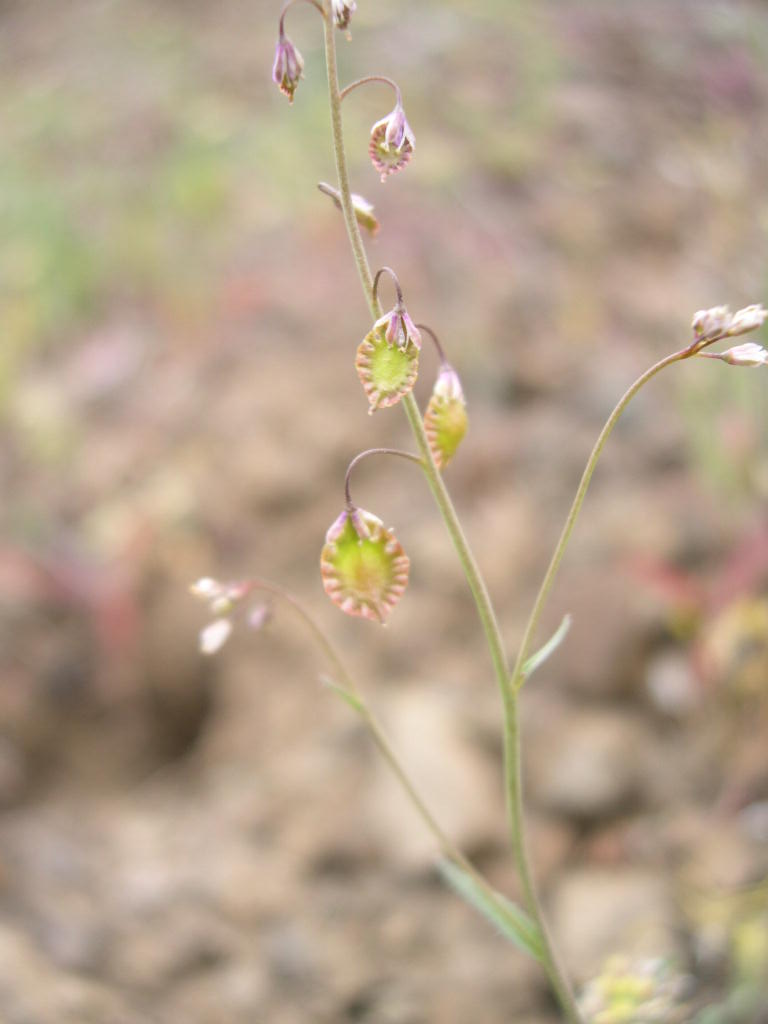
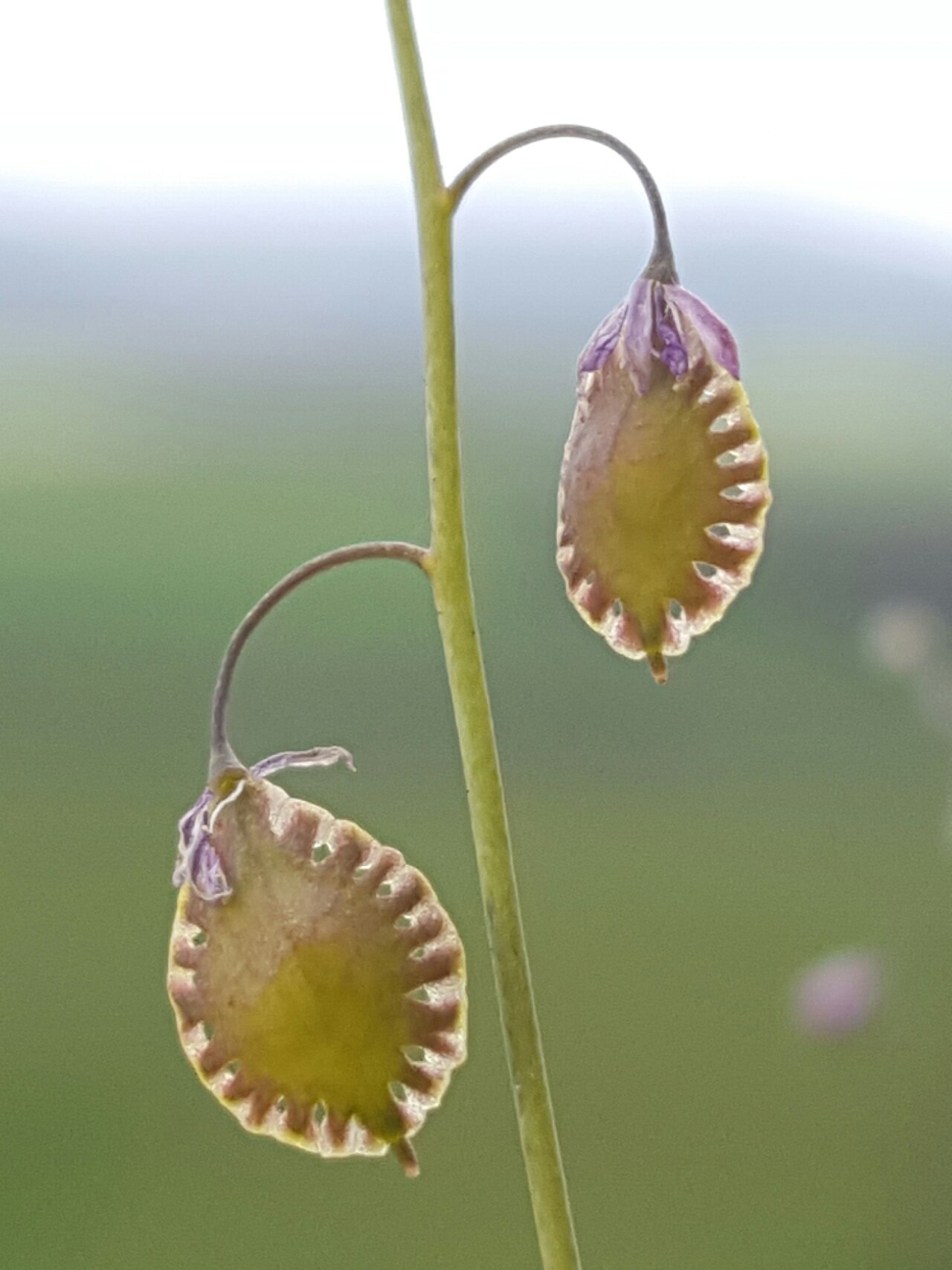
Thysanocarpus curvipes, known as Sand Fringepod or lacepod, is a small native annual of the mustard family (Brassicaceae). In early spring it sends up slender stems 4 to 20 inches tall with tiny white to purplish flowers, but its real charm is its fruit: flat, round pods about 1/4 inch across, each surrounded by a thin wing with a scalloped, often perforated edge, hanging from curved stalks like tiny lace pendants.
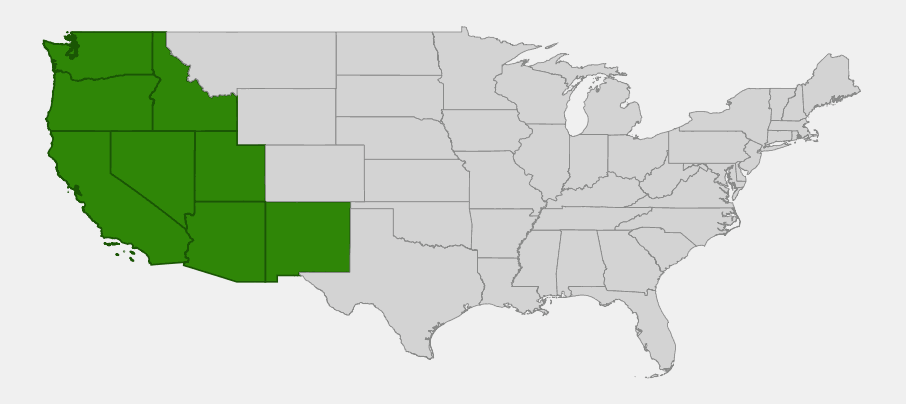
Sand fringepod is widespread in the western United States, from Washington, Idaho and Oregon south through California and Nevada to Utah, Arizona and New Mexico, and into British Columbia and Baja California. It grows on open grassy slopes, in sagebrush and juniper woodland, on rocky hillsides, in chaparral and oak woodland openings and on sandy flats, often coming up in large numbers after a wet winter.
Like many western spring annuals, it completes its life cycle quickly, flowering in late winter and spring and setting seed before the summer drought. It is not a typical garden plant, but it is a fascinating member of native wildflower communities and is easy to recognize once you look closely at its pods.
Identification
Look for a slender, upright annual with tiny flowers and, below them, many flat, round, one-seeded pods with a lacy, scalloped wing, hanging from curved stalks.
Growth Habit
Sand fringepod is an upright annual, usually 4 to 20 inches tall and occasionally taller, with a single stem or a few branches. The lower stem is often hairy, and the upper stem is smooth.
Leaves
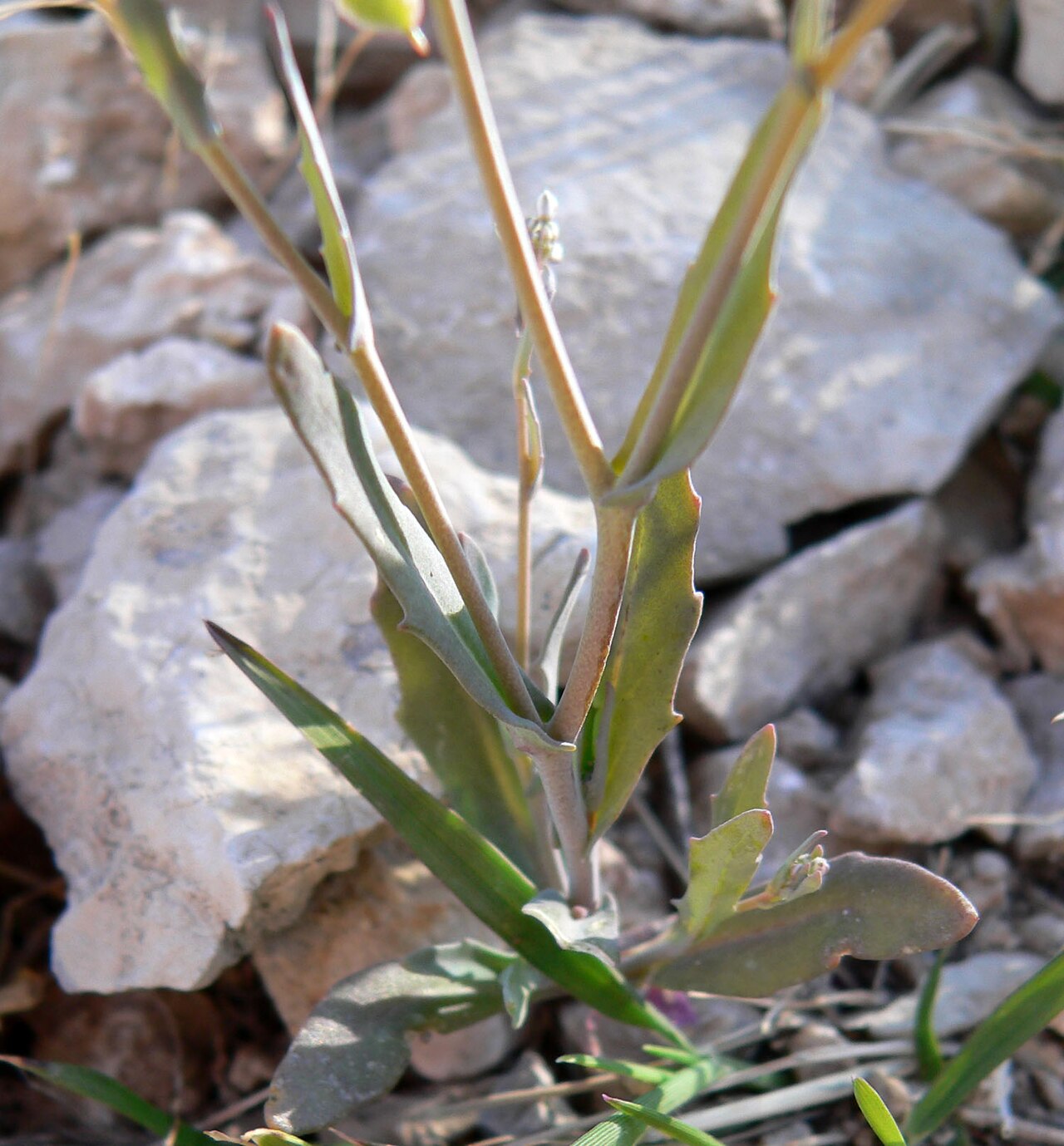
The basal leaves form a small rosette. They are narrow, 1/2 to 2 1/2 inches long, entire or wavy-toothed, and often hairy. The stem leaves are narrow and arrow-shaped, with two small lobes at the base that clasp the stem.
Flowers
The flowers are tiny, about 1/16 inch across, with four white to purplish petals, and are borne in a loose, elongating raceme at the top of the stem. They bloom from about February to May, depending on elevation.
Fruit
The fruit is a flat, round to oval, one-seeded pod about 1/8 to 1/4 inch across, hanging from a slender, downward-curved stalk (the name curvipes means “curved foot”). The pod is surrounded by a wing that is scalloped, toothed or perforated with small holes, giving it a lacy or fringed look. The center of the pod can be smooth or hairy.
Look-alikes
Other fringepods, such as lacepod (Thysanocarpus laciniatus), have narrower, more deeply divided leaves and wings with fewer or no perforations. Pennycress and shepherd’s purse are weedy, nonnative mustards with notched pods that lack the lacy, fringed wing.
Quick Facts
| Scientific Name | Thysanocarpus curvipes |
| Family | Brassicaceae (mustard family) |
| Plant Type | Annual wildflower |
| Mature Height | 4–20 in |
| Mature Spread | 2–6 in |
| Growth Rate | Fast |
| Sun Exposure | Full sun to part shade |
| Water Needs | Low; winter and spring moisture |
| Soil Type | Sandy, gravelly, rocky or clay-loam soils |
| Soil pH | Slightly acidic to alkaline (about 6.0–8.0) |
| Bloom Time | February–May |
| Flower Color | White to purplish |
| Fall Color | None; dies back in early summer |
| Fruit | Flat, round, fringed one-seeded pod |
| Deer Resistant | Moderately |
| USDA Hardiness Zones | Annual; grows in zones 5–10 |
Native Range
Sand fringepod is native to western North America. USDA PLANTS lists it in Washington, Oregon, Idaho, California, Nevada, Utah, Arizona and New Mexico, and it also grows in southern British Columbia and northern Baja California. It is most common in California and in the Columbia Basin and the canyons of the inland Northwest.
In Oregon and Washington it is especially common east of the Cascades, in the Columbia River Gorge, the Palouse and the canyons of the Snake River and its tributaries. West of the Cascades it is less common, growing mainly in the Rogue and Umpqua valleys of southwestern Oregon, and in scattered places in western Washington. In the Southwest it grows in the mountains and canyons of Arizona, southern Nevada, southern Utah and western New Mexico.
It grows on open grassy slopes, in sagebrush steppe, juniper and pinyon woodland, chaparral and oak woodland openings, on rocky hillsides and talus, and on sandy flats and washes, often in partial shade under shrubs. It is common in years with good winter rain.
📋 Regional plant lists featuring Sand Fringepod: Idaho, Eastern Oregon & Eastern Washington · Utah & Western Colorado · Arizona & New Mexico · Western Oregon & Western Washington · California & Nevada
Growing & Care Guide
Sand fringepod is mostly enjoyed in the wild, but it can be added to native wildflower seed mixes or grown in a dry, sunny garden from seed. Treat it as a cool-season annual that grows in winter and spring and disappears in summer.
Light
Full sun to part shade. It often grows in the partial shade of shrubs and rocks.
Soil & Water
It grows in many well-drained soils, from sand and gravel to rocky clay loam. Rely on natural winter and spring rain; it needs no summer water and does not like fertilizer.
Planting Tips
Sow seed directly in fall on bare or lightly disturbed soil, where winter rains will water it. It works best in naturalistic dry gardens, meadow plantings and restoration seed mixes, among bunchgrasses and other spring wildflowers.
Pruning & Maintenance
No maintenance is needed. Let the plants dry and drop their seeds in early summer if you want them to return.
Propagation
Only by seed. Collect the dry pods in late spring and sow them in fall. Plants reseed where the soil stays open.
Landscape Uses
- Native seed mixes: an early spring annual for dry sites
- Dry, naturalistic gardens: delicate texture among bunchgrasses
- Habitat restoration: helps cover bare ground in sagebrush and grassland
- Nature study: its lacy pods are a favorite for close-up observation
- Rock gardens: grows in gravelly pockets and between stones
Wildlife & Ecological Value
Sand fringepod is one of the many early spring annuals that support insects and seed-eating wildlife in western grasslands and shrublands.
For Pollinators
The tiny flowers are visited by small bees, flies and other small insects, and it can also self-pollinate.
For Birds
Seed-eating birds such as sparrows, finches and quail eat the small seeds of spring annuals like sand fringepod.
For Mammals
Small mammals such as ground squirrels and mice eat the seeds, and grazing animals may eat the young plants.
Ecosystem Role
As an early-season annual, it quickly uses winter moisture, covers bare soil and provides food before most perennials are active, then leaves a seed bank for the following year.
Cultural & Historical Uses
The genus name Thysanocarpus comes from the Greek thysanos, “fringe,” and karpos, “fruit,” describing the fringed pods. Curvipes means “curved foot,” for the curved pod stalks.
Unlike most mustards, whose pods split open to release many seeds, each fringepod pod holds a single seed and falls as a unit. The flat, winged pod is thought to help it catch the wind or float on water, carrying the seed away from the parent plant.
Botanists have long noted how variable the pods of sand fringepod are, ranging from wings with a simple, smooth margin to wings so perforated that they look like lace. Several varieties have been named, though many botanists now treat it as a single, variable species.
Frequently Asked Questions
What does sand fringepod look like?
It is a slender annual with tiny white to purplish flowers and flat, round pods with a lacy, fringed wing, hanging from curved stalks.
Is sand fringepod an annual?
Yes. It germinates in fall or winter, flowers in spring and dies in early summer after setting seed.
Where does sand fringepod grow?
Across the western United States, from Washington and Idaho to California, Arizona and New Mexico, as well as British Columbia and Baja California.
Is sand fringepod a weed?
No. It is a native wildflower. Some nonnative mustards look similar at first, but none have its lacy, winged pods.
When does sand fringepod bloom?
From about February to May, depending on elevation and rainfall.

Looking for a nursery that carries Sand Fringepod?
Browse our native plant nursery directory: Arizona · California · Idaho · Nevada & New Mexico · Oregon · Utah · Washington

