
Western Buttercup (Ranunculus occidentalis)
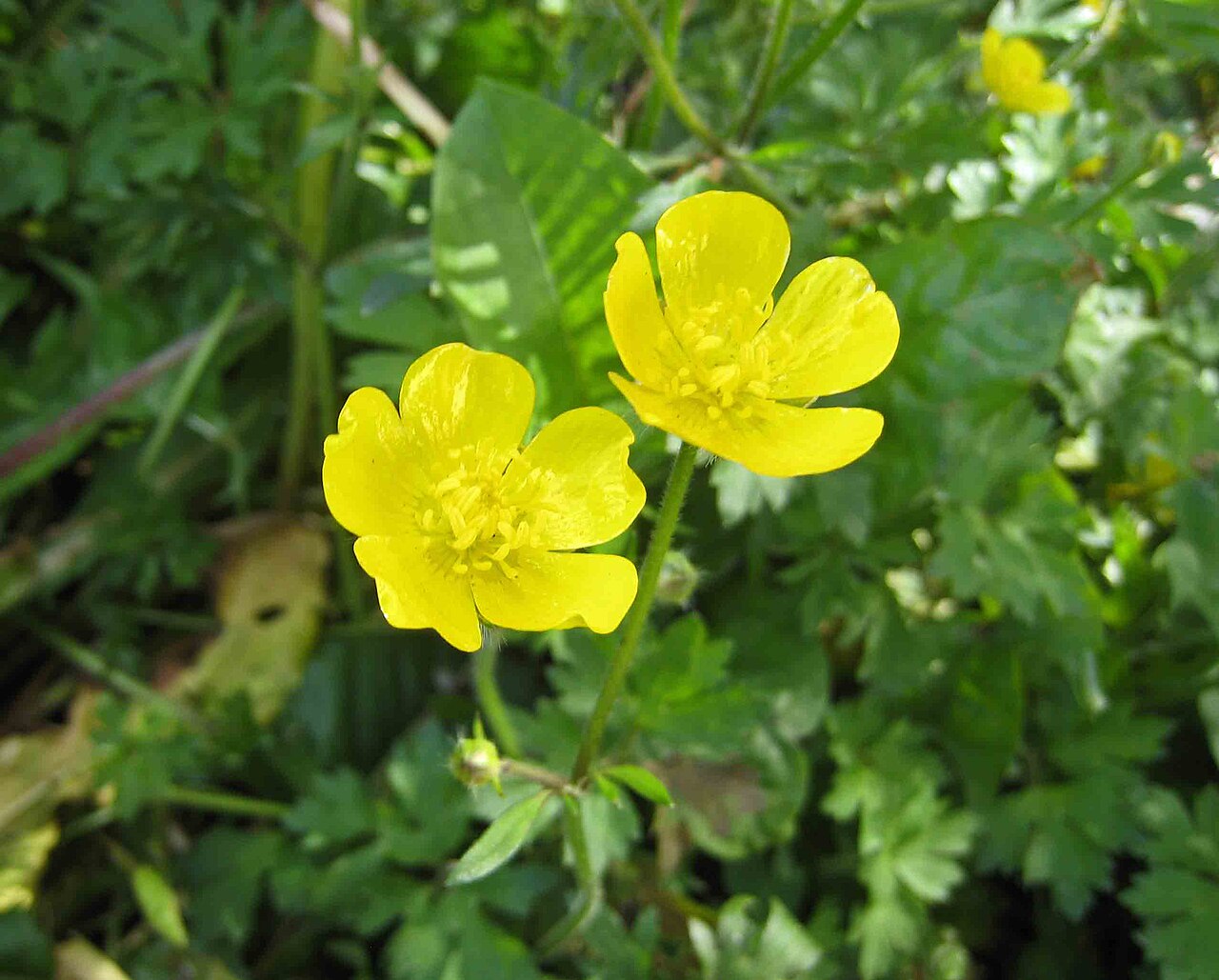
Ranunculus occidentalis, known as Western Buttercup, is a native perennial buttercup of the Pacific coast, ranging from southern Alaska through British Columbia, Washington and Oregon to California and the western edge of Nevada. In spring it lights up grassy meadows, prairies, oak woodlands and coastal bluffs with glossy, bright yellow flowers, usually with five or six petals, held on branching stems about 6 to 24 inches tall above deeply lobed leaves.
It is one of the most familiar spring wildflowers of the Pacific Northwest and northern California, often blooming alongside camas, shooting stars and blue-eyed grass in the remnant prairies of the Willamette Valley, the Puget Trough and the Columbia River Gorge. Botanists recognize several varieties, from the robust coastal plants of Alaska and British Columbia to the smaller, grayer interior form of the Sierra Nevada and eastern Oregon.
Like most buttercups, western buttercup is mildly poisonous, and it is avoided by grazing animals and deer. For gardeners it is an easy, long-lived perennial for a sunny meadow or prairie planting with wet winters and dry summers. This guide covers identification, range, growing conditions, safety and its value to pollinators.
Identification
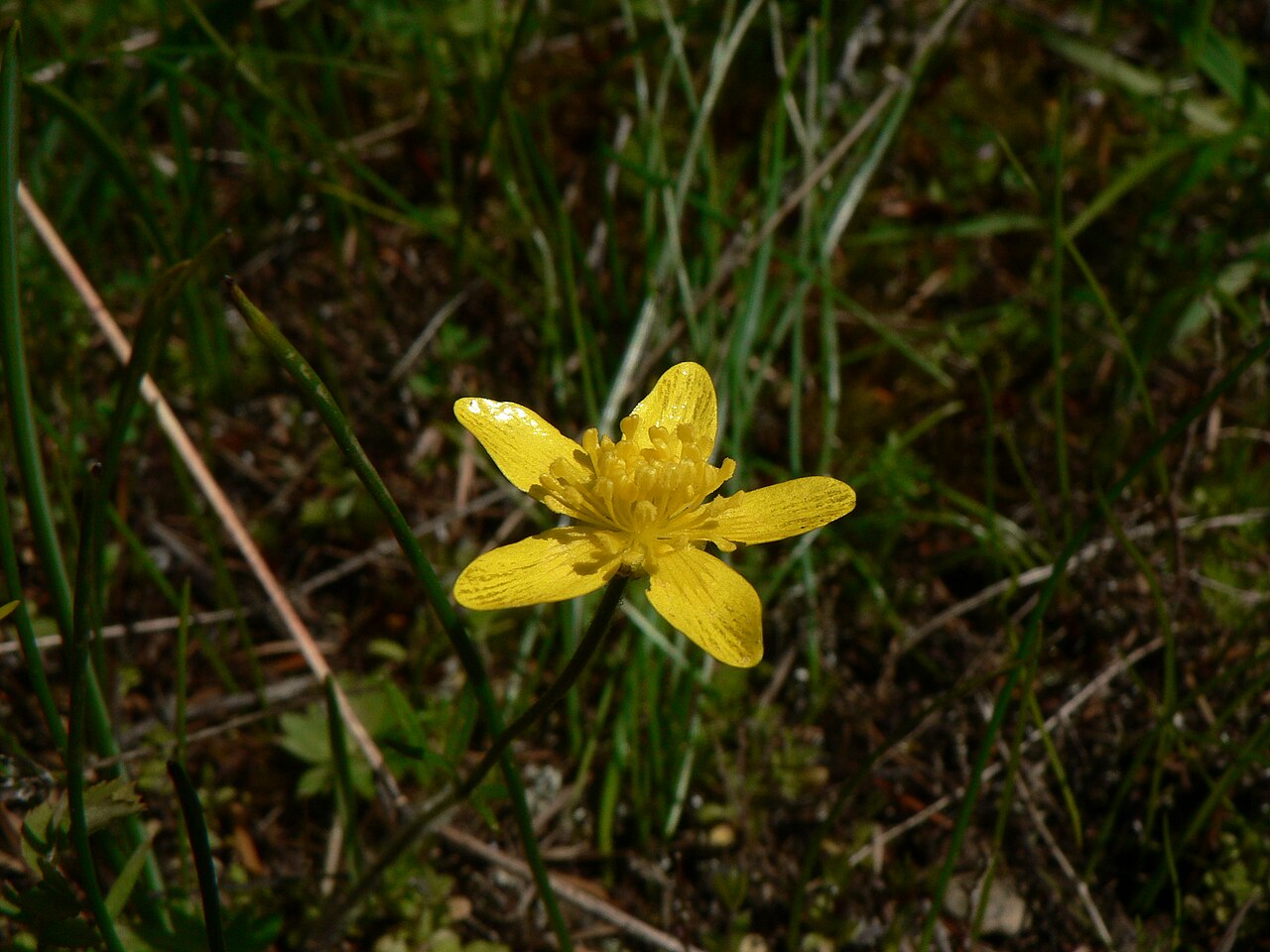
Western buttercup is a typical buttercup: glossy yellow petals, many stamens and a round cluster of seeds in the center. The best clues are the small number of broad petals, the deeply three-lobed leaves, and the lack of creeping runners.
Growth Habit
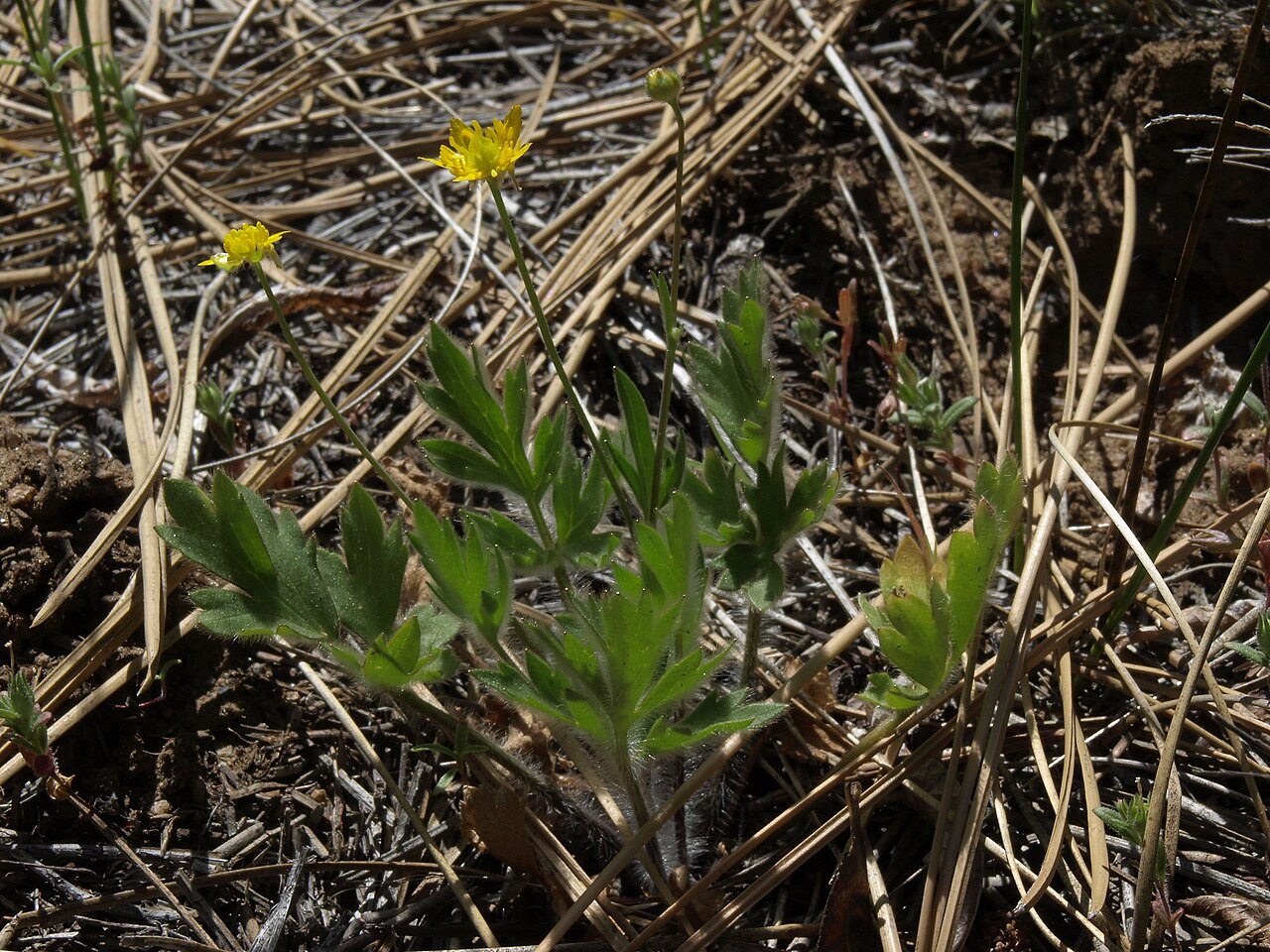
Each plant grows from a cluster of thick, fibrous roots and forms a loose clump. The stems are upright to spreading, branched, and usually 6 to 24 inches tall; they may be smooth or covered in soft, spreading hairs. The plant does not spread by runners, which helps separate it from the introduced creeping buttercup.
Leaves
The basal leaves have long stalks and broad blades, roughly round to heart-shaped in outline, that are deeply divided into three main lobes. Each lobe is further cut or toothed. The stem leaves are smaller and more finely divided toward the top of the plant. Leaves may be bright green or, in dry interior forms, grayish and hairy.
Flowers
The flowers are about 3/4 to 1 1/4 inches across, with usually five or six (occasionally more) broad, glossy, bright yellow petals. The petals have a mirror-like sheen produced by a special reflective layer in their cells, a trait shared with other buttercups. The center holds a ring of many yellow stamens around a small dome of green pistils. Flowering runs from February at low elevations in California to June or July in the mountains and in Alaska.
Fruit & Seeds
After flowering, the pistils develop into a rounded head of small, flattened, one-seeded fruits (achenes), each with a short, straight or slightly hooked beak. The heads ripen in late spring and early summer and drop their seeds near the parent plant.
Look-alikes
California buttercup (Ranunculus californicus) usually has 9 to 17 narrow petals instead of five or six broad ones. Sagebrush buttercup (Ranunculus glaberrimus) is smaller, blooms very early, and has thick, shallowly lobed leaves. Creeping buttercup (Ranunculus repens) and tall buttercup (Ranunculus acris) are European introductions; creeping buttercup spreads by long runners and favors wet, disturbed ground.
Quick Facts
| Scientific Name | Ranunculus occidentalis Nutt. |
| Family | Ranunculaceae (buttercup family) |
| Plant Type | Herbaceous perennial wildflower |
| Mature Height | 6–24 in |
| Mature Spread | 6–12 in |
| Growth Rate | Moderate |
| Sun Exposure | Full sun to partial shade |
| Water Needs | Moist in winter and spring; tolerates summer dryness |
| Soil Type | Loam, clay or rocky soils of meadows, prairies and open woods |
| Soil pH | About 5.5–7.5 |
| Bloom Time | February–July (varies with elevation and latitude) |
| Flower Color | Glossy bright yellow |
| Fall Color | None; summer-dormant in dry climates |
| Fruit | Rounded head of small beaked achenes |
| Deer Resistant | Yes; foliage is acrid and mildly toxic |
| USDA Hardiness Zones | 5–9 |
Native Range
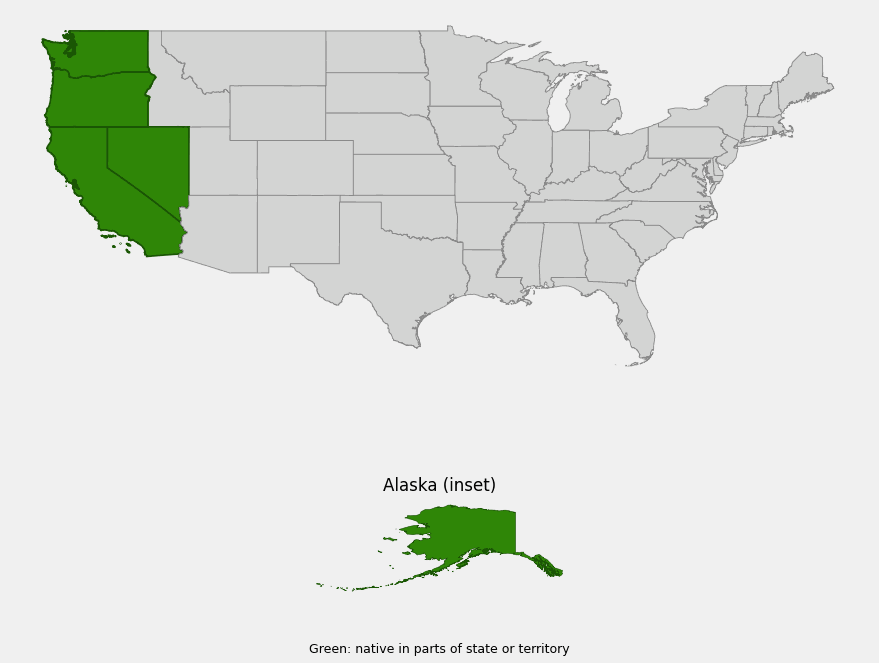
Western buttercup is native to western North America along the Pacific side of the continent. USDA PLANTS lists it in Alaska, Washington, Oregon, California and Nevada, and in British Columbia; the Lady Bird Johnson Wildflower Center describes the range as Alaska south through western Washington and Oregon to California and Nevada, extending into southern Yukon. In Alaska it grows mainly in the southeastern panhandle and along the south-central coast.
In Washington and Oregon it is common west of the Cascades, in the Puget Trough, the Willamette Valley, the Coast Range and the Columbia River Gorge, and it also occurs on the east side of the mountains, where the grayer var. ultramontanus grows in open pine forest and sagebrush edges. In California it is widespread in the North Coast Ranges, the Klamath Mountains, the Cascades and the Sierra Nevada, extending south along the coast and in the hills to the central part of the state. Nevada records come from the Sierra Nevada and Carson Range along the California border.
Typical habitats are grassy meadows, upland prairies, oak woodlands and savannas, coastal bluffs and headlands, open coniferous forest and moist rocky slopes, from sea level to subalpine elevations. It favors soils that are wet in winter and spring and that dry out in summer.
📋 Regional plant lists featuring Western Buttercup: Alaska · California & Nevada · Western Oregon & Western Washington · Idaho, Eastern Oregon & Eastern Washington
Growing & Care Guide
Western buttercup is an easy native for meadow, prairie and woodland-edge gardens in the Pacific Northwest and northern California. It is occasionally sold by native plant nurseries and is included in some regional prairie seed mixes. Plant it where its early yellow flowers can mix with camas and other spring wildflowers.
Light
Give it full sun to partial shade. It flowers most heavily in open, sunny meadows, but it also grows well under oaks and along the edges of conifer woods, where it gets bright light in spring.
Soil & Water
It grows in a wide range of soils, from heavy prairie clays to rocky loams, as long as they are moist through winter and spring. It does not need summer water: in dry-summer climates the leaves wither after seed set and the plant rests until fall rains. In gardens with summer irrigation it simply stays green longer. Avoid soils that stay saturated all year.
Planting Tips
Sow seed in fall directly onto bare, weed-free soil, or set out nursery plants in fall or early spring about 8 to 12 inches apart. Seedlings usually flower in their second or third spring. It combines well with blue camas, shooting stars, blue-eyed grass, Idaho fescue and other prairie natives of similar height.
Pruning & Maintenance
No pruning is needed. Let seeds ripen if you want it to spread, then mow or cut the dry stems in summer. In meadow plantings, a mowing or light disturbance in late summer helps keep competing grasses in check. Wear gloves when handling large amounts of foliage, because the sap can irritate sensitive skin.
Propagation
Grow it from fresh seed sown in fall, which germinates after the cool, moist winter. Established clumps can also be divided carefully in fall when the plant is dormant or just starting to grow.
Landscape Uses
- Prairie and meadow gardens: western buttercup is one of the first flowers of the season in a Pacific Northwest prairie planting, blooming with camas and shooting stars.
- Oak woodland and savanna understory: it tolerates the light shade under Oregon white oak and California black oak and fills open ground in spring.
- Pollinator gardens: its open, glossy flowers feed early native bees, flies and beetles when little else is blooming.
- Restoration plantings: it is a common component of prairie and oak savanna restoration seed mixes in western Oregon and Washington.
- Deer-resistant plantings: its acrid foliage is generally left alone by deer, rabbits and livestock.
Wildlife & Ecological Value
Western buttercup is valuable mostly as an early-season food source for small pollinators.
For Pollinators
The open, bowl-shaped flowers offer easy access to pollen and nectar, which is produced in a small pocket at the base of each petal. Visitors include small native bees such as sweat bees and mining bees, syrphid flies, other flies and small beetles. Because it blooms so early, it is a useful resource for queen bumble bees and solitary bees emerging in late winter and early spring.
For Birds
The small achenes are occasionally eaten by ground-feeding birds such as sparrows and juncos, but the plant is not a major bird food. Insects visiting the flowers provide food for spring migrant songbirds.
For Mammals
Grazing mammals, deer and rabbits usually avoid the foliage because of its acrid, irritating sap. Rodents may eat some of the seeds.
Ecosystem Role
Western buttercup is a characteristic species of the Pacific Northwest prairies and oak savannas, a habitat that has largely been lost to farming, development and tree encroachment. Its presence often marks remnant native grassland worth protecting.
Cultural & Historical Uses
The genus name Ranunculus comes from the Latin for “little frog”, because many buttercups grow in wet places where frogs live. The species name occidentalis means “western”.
The shiny “varnish” of buttercup petals comes from a thin layer of cells over a reflective layer of starch, which acts like a mirror. The children’s game of holding a buttercup under the chin to see if someone “likes butter” works because of this reflected yellow light.
Safety note: all parts of western buttercup contain ranunculin, which breaks down into the irritant protoanemonin when the plant is crushed or chewed. The Lady Bird Johnson Wildflower Center notes that eating it can cause burning of the mouth, abdominal pain and vomiting, and the sap can redden or blister the skin. Do not eat it, keep it away from children who might chew it, and wear gloves if your skin is sensitive. Drying destroys most of the toxin, so dried plants in hay are much less harmful.
Frequently Asked Questions
Is western buttercup native?
Yes. It is native to the Pacific coast of North America from Alaska and British Columbia to California and western Nevada. Do not confuse it with creeping buttercup or tall buttercup, which are introduced European weeds.
Is western buttercup poisonous?
Yes, mildly. Like other buttercups it contains compounds that irritate the mouth, stomach and skin. Livestock and deer usually avoid it. Keep children and pets from chewing it.
How is it different from creeping buttercup?
Creeping buttercup spreads by long, rooting runners and often carpets wet lawns and ditches. Western buttercup forms upright clumps without runners and grows mainly in native meadows, prairies and open woods.
When does western buttercup bloom?
From late winter at low elevations in California and Oregon to early summer in the mountains and in Alaska. In the Willamette Valley and Puget Sound area it usually peaks in April and May.
Does it need summer water?
No. It is adapted to wet winters and dry summers and goes dormant after setting seed. Summer watering is not needed and can encourage weeds around it.

Looking for a nursery that carries Western Buttercup?
Browse our native plant nursery directory: Alaska · California · Nevada · Oregon · Washington

