
Water Parsley (Oenanthe sarmentosa)
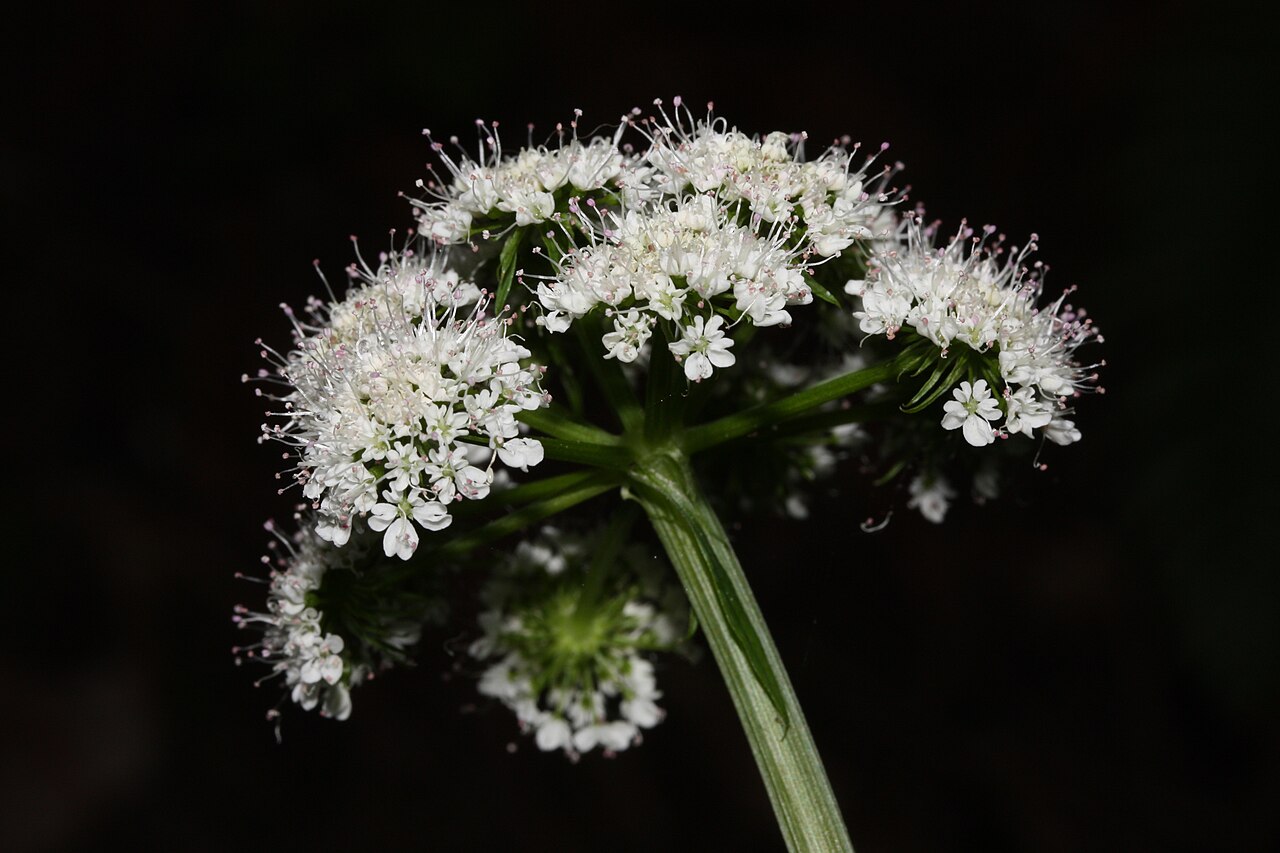
Oenanthe sarmentosa, known as Water Parsley, Pacific water dropwort or Pacific oenanthe, is a sprawling perennial of shallow water and wet ground along the Pacific Coast of North America. It belongs to the carrot or parsley family (Apiaceae). Its weak, hollow stems trail through marshes, ditches and stream edges and root where they touch the mud, and they carry bright green leaves divided into toothed, parsley-like leaflets. In summer it bears flat-topped to rounded umbels of tiny white flowers.
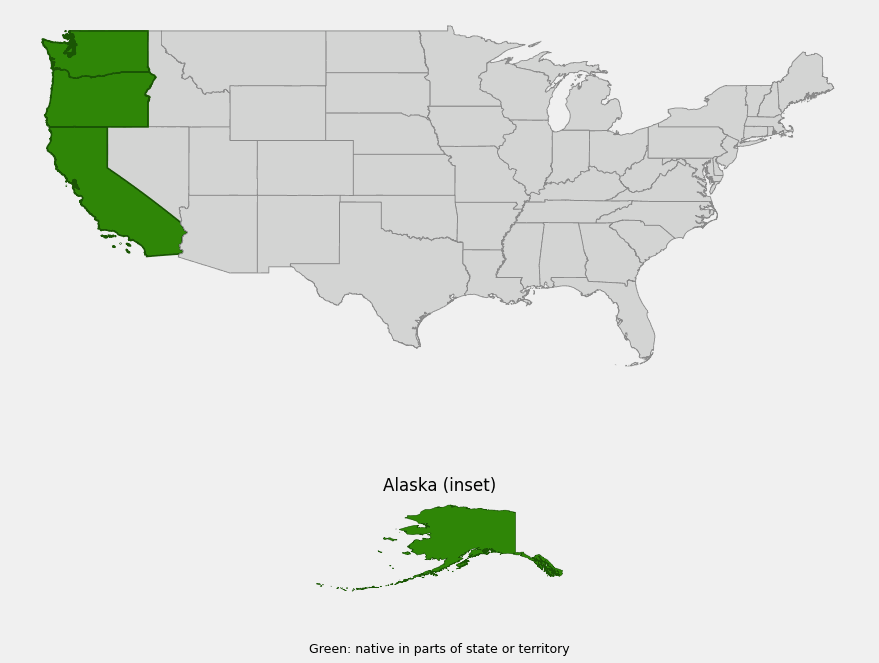
Water parsley is native from southern coastal Alaska through British Columbia, western Washington and Oregon to California. It is one of the most common wetland plants in the Pacific Northwest lowlands, growing in marshes, swamps, wet forests, slow streams, ponds, ditches and beaver wetlands. It is widely used in wetland restoration and in rain gardens and bioswales west of the Cascades.
Safety note: Oenanthe is a toxic genus. Its European relative hemlock water dropwort (O. crocata) is one of the most poisonous plants in Europe, and water parsley grows in the same habitats as the deadly water hemlocks (Cicuta). Never eat water parsley or any wild plant in the carrot family unless an expert has identified it with certainty, and keep children and pets from chewing it.
Identification
Look for a sprawling, hollow-stemmed plant with bright green, parsley-like leaves in shallow water or wet mud, with umbels of tiny white flowers in summer.
Growth Habit
Water parsley is a perennial with weak, hollow, sprawling or trailing stems up to about 3 to 5 feet long. The stems lean on other plants or lie on the mud or water and root at the nodes, so plants can form tangled mats. Upright parts are usually 1 to 3 feet tall.
Leaves
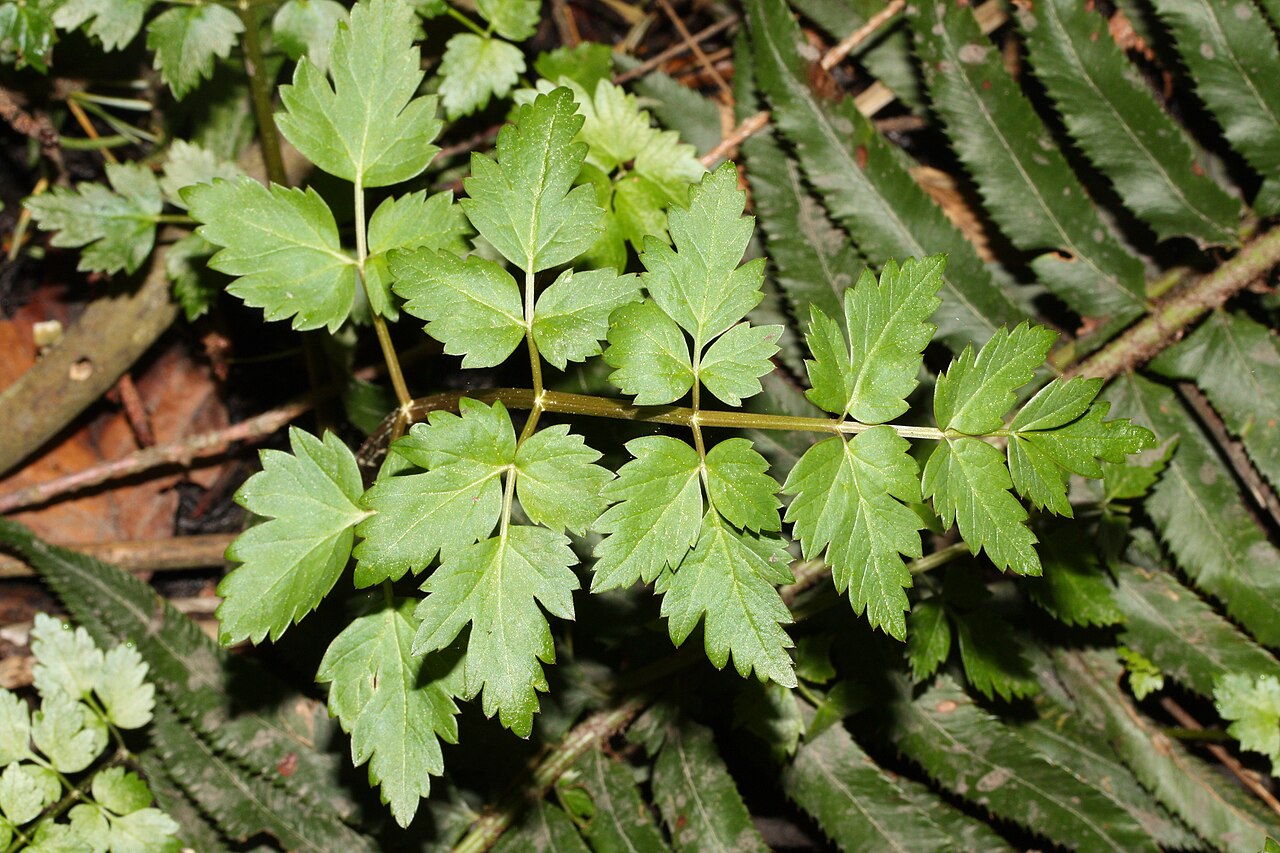
The leaves are alternate and two or three times pinnately divided. The leaflets are about 1/2 to 2 inches long, ovate, with toothed or lobed edges, and bright green and smooth. Leaf stalks have a sheath at the base where they join the stem. The overall look is much like flat-leaved parsley or celery leaves.
Flowers
The tiny white flowers grow in compound umbels about 2 to 4 inches across, with 10 to 20 rays, each ending in a small, rounded cluster of flowers. The umbels sit at the stem tips or opposite the leaves. It blooms from late spring through summer, mainly June to August.
Fruit
The fruits are small, oblong to cylindrical, about 1/8 inch long, with thick, corky ribs. They float and are carried by water.
Look-alikes
Western water hemlock (Cicuta douglasii) is deadly poisonous. It is more upright, with leaflets that are longer and narrower, leaf veins that run to the notches between the teeth, and a chambered base. Water parsnip (Sium suave) has once-divided leaves with long, narrow leaflets. Cow parsnip is much larger, with huge, lobed leaves. Because these plants are hard to tell apart, never use the shape of the leaves alone to decide that a carrot-family plant is safe.
Quick Facts
| Scientific Name | Oenanthe sarmentosa |
| Family | Apiaceae (carrot family) |
| Plant Type | Sprawling herbaceous wetland perennial |
| Mature Height | 1–3 ft (stems to 5 ft long) |
| Mature Spread | 2–4 ft, spreading |
| Growth Rate | Fast |
| Sun Exposure | Full sun to shade |
| Water Needs | High; wet soil to shallow water |
| Soil Type | Wet mud, muck or silty loam |
| Soil pH | Slightly acidic to neutral (about 5.5–7.5) |
| Bloom Time | June–August |
| Flower Color | White |
| Fall Color | None notable; may stay green in mild winters |
| Fruit | Small, corky-ribbed, floating fruits |
| Deer Resistant | Moderate; browsed by elk and deer at times |
| USDA Hardiness Zones | 5–9 |
Native Range
Water parsley is native to the Pacific Coast of North America. USDA PLANTS lists it as native in Alaska, California, Oregon and Washington, and in Canada it grows in British Columbia. It does not grow east of the Rocky Mountains.
In Alaska it grows in the southeast and along the southern coast. In British Columbia it is common in the coastal lowlands and on Vancouver Island. In Washington and Oregon it grows chiefly west of the Cascade crest, from the Puget Sound lowlands and Olympic Peninsula through the Willamette Valley to southwestern Oregon, with only scattered records east of the Cascades. In California it grows along the coast and in the Coast Ranges, south to about Southern California, and in a few places inland.
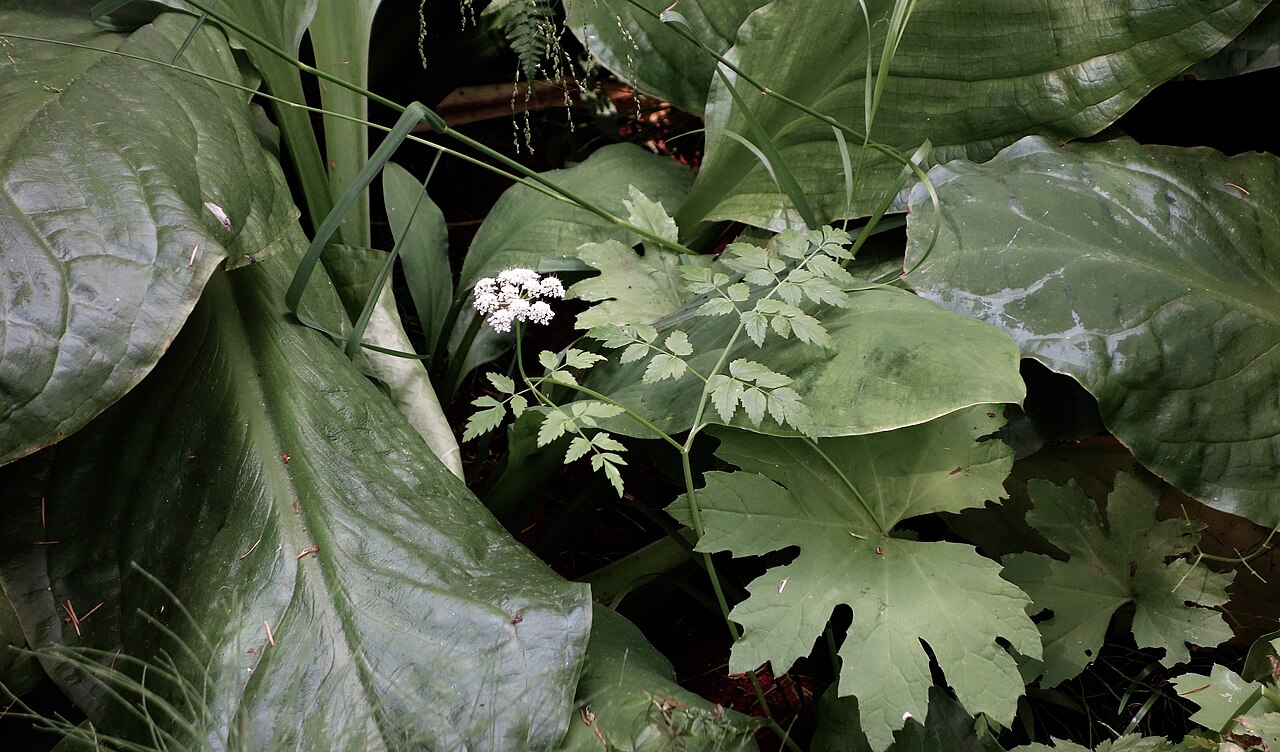
It grows at low to middle elevations in marshes, swamps, wet forests and forested wetlands, along slow-moving streams, spring runs and pond edges, in ditches and wet meadows, and in beaver ponds. It tolerates shade under alder, willow and ash and often grows with western skunk cabbage, slough sedge and other sedges.
📋 Regional plant lists featuring Water Parsley: Alaska · Western Oregon & Western Washington · California & Nevada · Idaho, Eastern Oregon & Eastern Washington
Growing & Care Guide
Water parsley is a fast, easy plant for wet places in Pacific Coast gardens. It is best used in ponds, rain gardens, bioswales and wetland restorations rather than in formal beds, because it sprawls and spreads by rooting stems.
Light
Full sun to full shade. It flowers best with some sun but grows well in the shade of alders and willows.
Soil & Water
Plant in wet, mucky or silty soil that stays saturated, or in shallow water up to a few inches deep. It tolerates seasonal flooding and grows in wet ground that dries somewhat in late summer, though it may die back then.
Planting Tips
Plant rooted pieces or plugs in spring or fall, about 1 to 2 feet apart, at the edge of a pond, stream or rain garden. It fills in quickly and helps hold soft soil. Keep it away from vegetable gardens and herb beds, where it could be confused with edible parsley or celery.
Pruning & Maintenance
Cut back or pull out stems that spread beyond where you want them. Wear gloves when handling large amounts, as a precaution with any toxic carrot-family plant. Old stems can be left in place over winter to protect the soil.
Propagation
It roots easily from stem pieces with a node, placed in wet soil or water. It also grows from seed sown fresh in fall in wet soil.
Landscape Uses
- Rain gardens and bioswales: tolerates flooding and helps filter runoff
- Pond and stream edges: sprawling stems stabilize soft banks
- Wetland restoration: a common native forb for Pacific Northwest wetlands
- Shade wetlands: grows under alder and willow where few flowers bloom
- Wildlife plantings: cover and food for insects and wetland animals
Wildlife & Ecological Value
Water parsley is a common and important plant in Pacific Coast wetlands, where it provides cover and food for many animals.
For Pollinators
Its umbels attract many small pollinators, including flies, small native bees, wasps and beetles. Like other carrot-family plants, it can serve as a larval host for the anise swallowtail butterfly.
For Birds
Waterfowl and other marsh birds use the tangled stems for cover, and insects living on the plants feed wrens, flycatchers and other birds.
For Mammals
Elk and deer browse it at times, and beavers and muskrats eat wetland plants including water parsley. Mats of stems provide cover for small mammals and amphibians.
Ecosystem Role
Its trailing stems stabilize mud along streams and ponds, slow the flow of water and trap sediment. Along salmon streams it shades the water and supports aquatic insects that young fish eat.
Cultural & Historical Uses
The genus name Oenanthe comes from Greek words meaning “wine flower,” possibly for the scent of the flowers of some species. The species name sarmentosa means “bearing runners,” for its trailing, rooting stems.
Some Indigenous peoples of the Pacific Northwest are reported to have eaten the roots or stems of water parsley in the past, and it has been used in traditional medicine. Because related plants are deadly and identification is difficult, it should never be gathered or eaten by people without expert knowledge.
Today water parsley is one of the standard plants in wetland restoration and stormwater projects in western Washington and Oregon, where it quickly covers wet ground and helps filter runoff before it reaches streams.
Frequently Asked Questions
Is water parsley poisonous?
Oenanthe is a toxic genus, and the toxicity of water parsley is not well studied. It grows alongside the deadly water hemlocks and looks similar to them. Never eat it, and keep children and pets from chewing it.
Can water parsley grow in shade?
Yes. It grows well in shady wet forests and under alders and willows, although it flowers more in sun.
Is water parsley good for a rain garden?
Yes, in the Pacific Coast region. It tolerates flooding and saturated soil and spreads to cover wet ground quickly.
How do I tell water parsley from water hemlock?
Water hemlock is more upright, with long, narrow leaflets whose veins run to the notches between the teeth, and a chambered base. Because mistakes can be fatal, never rely on your own identification to decide that a plant is safe to eat.
Where does water parsley grow?
Along the Pacific Coast from southern Alaska to California, mainly west of the Cascades, in marshes, swamps, wet forests, ditches and stream edges.

Looking for a nursery that carries Water Parsley?
Browse our native plant nursery directory: Alaska · California · Oregon · Washington

