
Great Plains Ladies’ Tresses (Spiranthes magnicamporum)
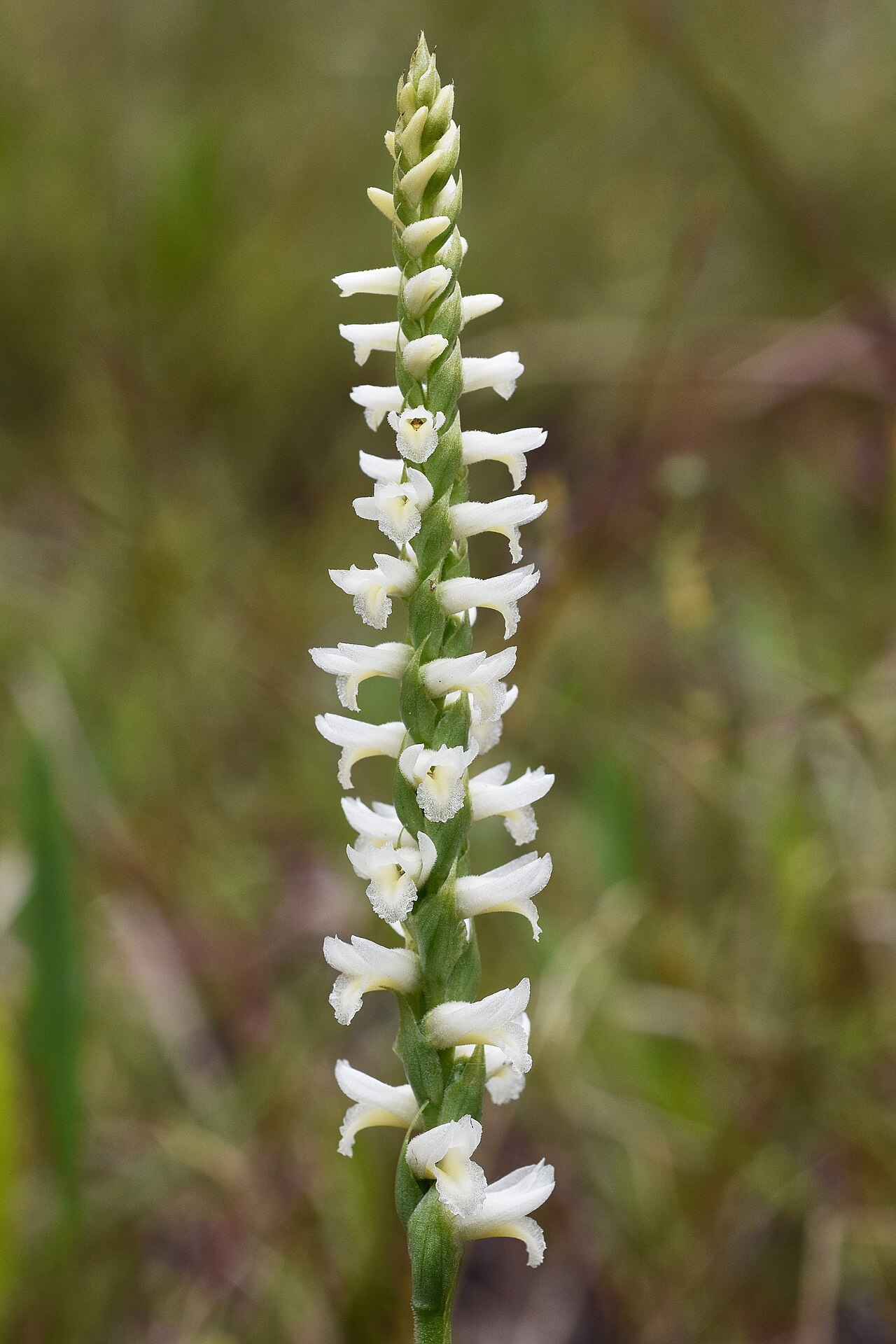
Spiranthes magnicamporum, known as Great Plains Ladies’ Tresses, is a small, fall-blooming native orchid of prairies, fens and limestone glades in the central United States and south-central Canada. Its slender spikes of small, white, sweetly fragrant flowers, arranged in spiraling rows like a braid of hair, appear from late summer into November, often after most prairie wildflowers have finished.
The species name magnicamporum means “of the great plains.” It was described as a separate species only in 1973; before that it was included in nodding ladies’ tresses (Spiranthes cernua). It is a plant of calcareous, often moist soils, from tallgrass and mixed-grass prairies and wet limestone fens to dry glades and barrens.
Like all native orchids, it depends on specific soil fungi to germinate and grow, and it almost never survives transplanting. Never dig it from the wild. The best way to enjoy it is to look for it in fall in protected prairies and to manage prairie remnants with fire or mowing so it can persist.
Identification
Look for a slender, leafless-looking spike of small white, fragrant flowers in tight spirals, rising from grasses in a calcareous prairie, fen or glade in September to November.
Growth Habit
A small perennial orchid from a cluster of thick, fleshy roots. Each plant sends up a single flowering stem about 4 to 24 inches tall. Plants may skip flowering in dry years and stay dormant underground.
Leaves
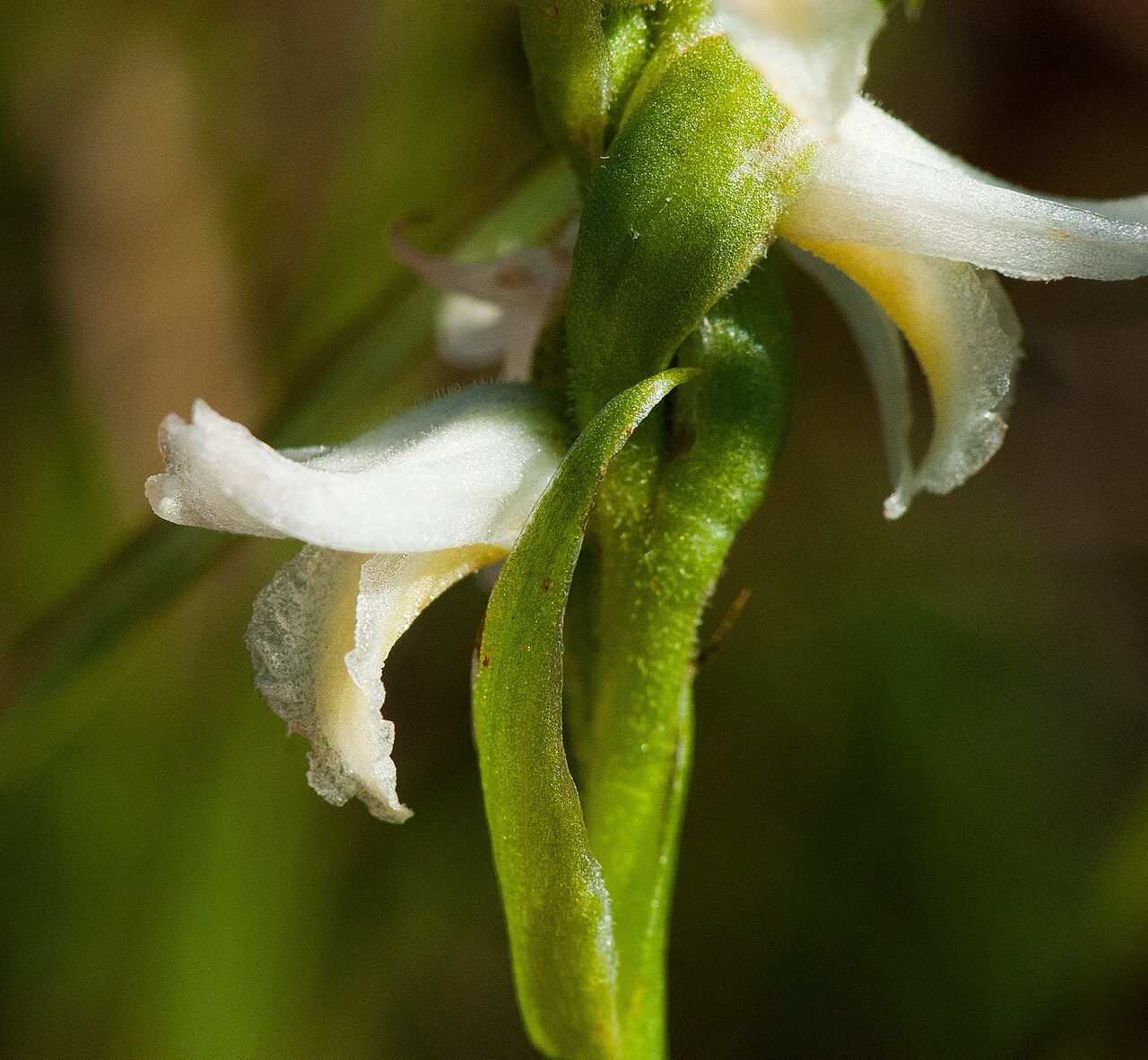
Two to four narrow, grass-like basal leaves grow in spring and summer, up to about 6 inches long. They usually wither or are gone by the time the plant flowers, which helps separate it from nodding ladies’ tresses, whose leaves are typically still present at flowering.
Flowers
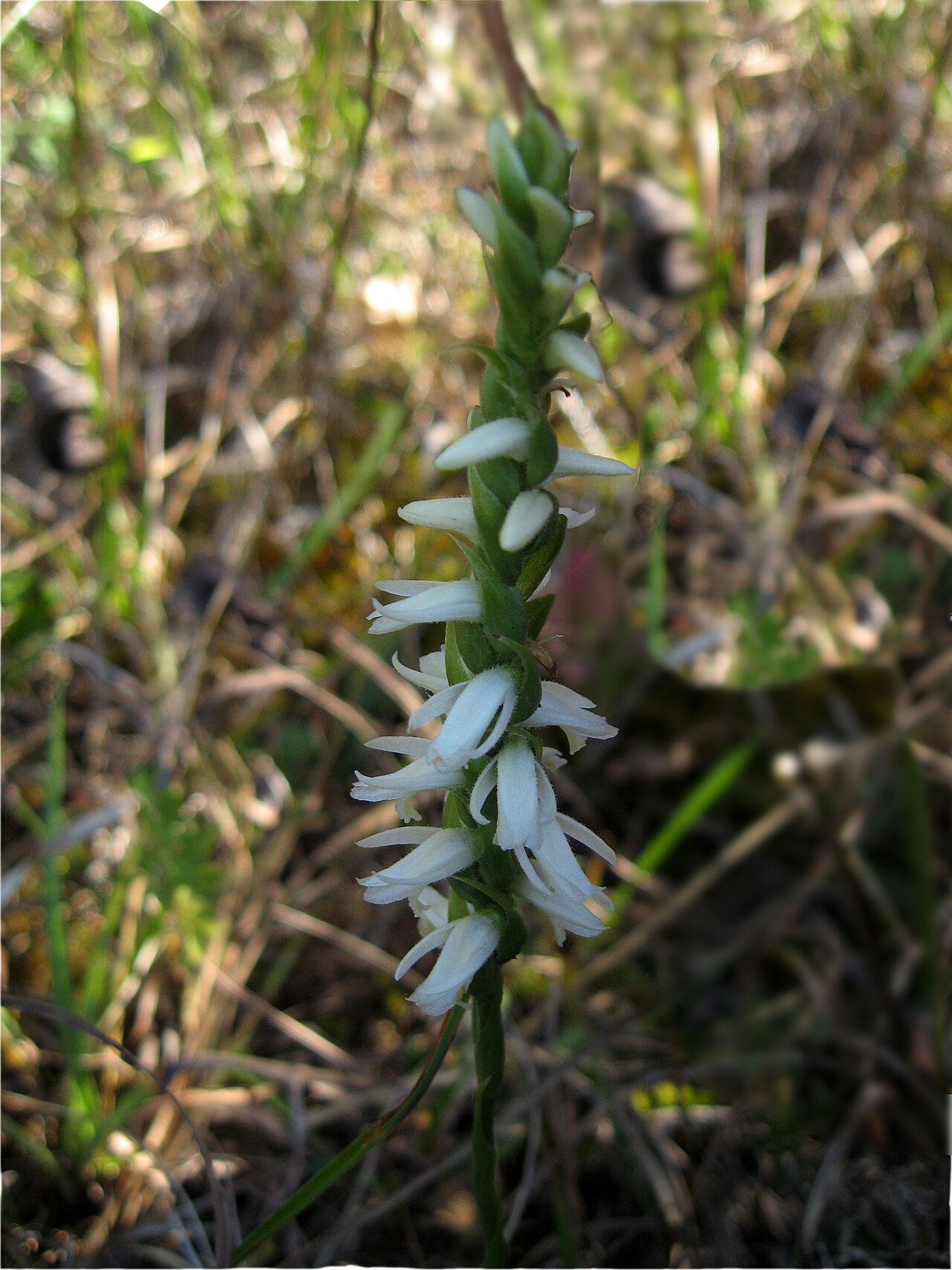
The flowers are arranged in three or four tightly to loosely spiraled rows on a spike 2 to 6 inches long. Each flower is about 1/3 to 1/2 inch long, white to creamy white, with a lip that is yellowish to cream in the center. The lateral sepals often spread upward and arch over the flower. The flowers have a strong, sweet fragrance often compared to vanilla, almond or coumarin. Flowering runs from late August or September into November, usually after the first cool nights.
Fruit
The fruit is a small capsule that releases thousands of dust-like seeds. The seeds need to be colonized by specific mycorrhizal fungi to germinate.
Look-alikes
Nodding ladies’ tresses (Spiranthes cernua) grows in wetter, often more acidic sites, usually keeps its leaves at flowering, has sepals held close to the flower and is less fragrant. Fragrant ladies’ tresses (S. odorata) is larger, grows in southern swamps and wet woods and spreads by stolons. Spring ladies’ tresses (S. vernalis) blooms in late spring and summer and has a single spiral row of flowers.
Quick Facts
| Scientific Name | Spiranthes magnicamporum |
| Family | Orchidaceae (orchid family) |
| Plant Type | Terrestrial perennial orchid |
| Mature Height | 4–24 in |
| Mature Spread | 2–4 in |
| Growth Rate | Slow |
| Sun Exposure | Full sun |
| Water Needs | Medium; moist to seasonally dry |
| Soil Type | Calcareous loam, clay, gravel or fen muck |
| Soil pH | Neutral to alkaline (about 7.0–8.5) |
| Bloom Time | September–November |
| Flower Color | White to cream |
| Fall Color | None; leaves wither before bloom |
| Fruit | Small capsule with dust-like seeds |
| Deer Resistant | No; deer and rabbits sometimes eat the spikes |
| USDA Hardiness Zones | 3–8 |
Native Range
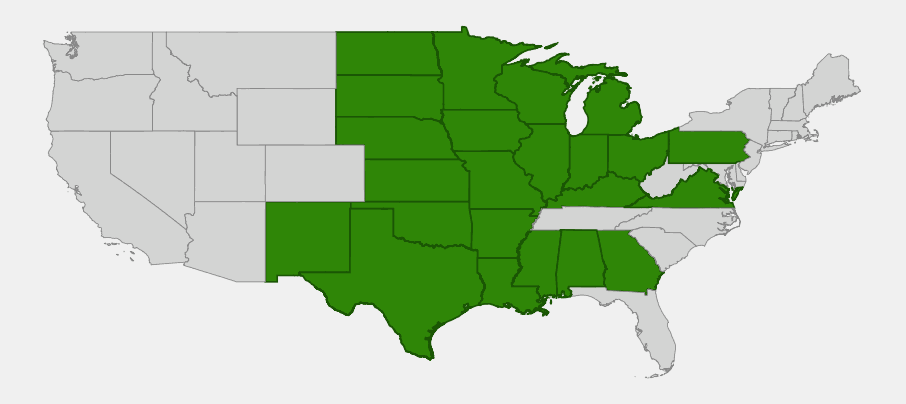
Great Plains ladies’ tresses is native to the central United States and south-central Canada. USDA PLANTS records it from 23 states, centered on the Great Plains and Midwest: North Dakota, South Dakota, Nebraska, Kansas, Oklahoma, Texas and New Mexico, east through Minnesota, Iowa, Missouri, Arkansas, Louisiana, Wisconsin, Illinois, Michigan, Indiana, Ohio and Kentucky. In Canada it grows in Manitoba and southern Ontario.
Records from Pennsylvania, Virginia, Georgia, Alabama and Mississippi are scattered and outlying, mostly on limestone or other calcareous soils, and the plant is rare in those states. In Texas it is widespread in the central part of the state, including the Edwards Plateau and Hill Country, where it can be common on limestone in fall, and it reaches eastern New Mexico. In the Dakotas and western Minnesota it grows in calcareous prairies and fens.
Its habitats include dry to moist calcareous prairies, wet prairies, fens and seeps, limestone and dolomite glades and barrens, lakeshores, and occasionally roadsides and old fields on lime-rich soils. It needs open, sunny conditions and declines when prairies become overgrown with shrubs.
📋 Regional plant lists featuring Great Plains Ladies’ Tresses: New York, Pennsylvania & Northern New Jersey · Ohio & Indiana · Michigan, Wisconsin & Eastern Minnesota · Kentucky & Tennessee · Nebraska, Kansas & Eastern Colorado · Maryland, Virginia & West Virginia · Illinois, Iowa & Missouri · Alabama, Georgia & Mississippi · Arkansas, Louisiana, Eastern Oklahoma & Eastern Texas · South & West Texas · North Dakota, South Dakota & Western Minnesota
Growing & Care Guide
Great Plains ladies’ tresses is not a typical garden plant. It needs specific soil fungi, calcareous soil and open prairie conditions. Occasionally nurseries offer laboratory-propagated plants; never buy plants that may have been dug from the wild.
Light
Full sun. In the wild it disappears when prairies and glades become shaded by shrubs and trees.
Soil & Water
It needs lime-rich, neutral to alkaline soil, either well-drained prairie loam or gravel, or constantly moist fen soil. Avoid fertilizers, which favor competing plants.
Planting Tips
If you obtain lab-propagated plants, plant them in an existing prairie or a prairie-style planting of short grasses on calcareous soil, where suitable soil fungi are more likely to be present. Mark the spot, since plants are inconspicuous outside the flowering season.
Pruning & Maintenance
In prairies, periodic prescribed fire or mowing in late fall to early spring keeps the habitat open; avoid mowing from late summer through fall, when it flowers and sets seed. Remove invading shrubs and tall non-native plants.
Propagation
Propagation is done in laboratories by sowing the dust-like seeds on sterile media, sometimes with a compatible fungus. Home propagation from seed is rarely successful. Never dig or transplant wild plants: orchids almost always die when moved.
Landscape Uses
- Where to see it: fall walks in calcareous prairies, fens and glades
- Prairie restoration: a sign of high-quality, lime-rich prairie remnants
- Wildflower photography: fragrant spiral spikes in September to November
- Native orchid gardens: only with lab-propagated plants and the right soil
- Conservation: protect remnant prairies and fens where it grows
Wildlife & Ecological Value
Great Plains ladies’ tresses is a late-season nectar source and an indicator of healthy calcareous prairie and fen habitat.
For Pollinators
Bumble bees are the main pollinators. They land at the bottom of the spike and work their way up the spiral; the fragrant flowers offer nectar late in the season, when bumble bee queens are fattening up before winter.
For Birds
It provides little direct food for birds, but it grows in prairie habitat used by grassland birds.
For Mammals
Deer and rabbits sometimes nip off the flowering spikes. Small mammals may eat the fleshy roots.
Ecosystem Role
Like all orchids, it lives in partnership with soil fungi, which supply nutrients to the seedlings. Its presence signals a relatively undisturbed calcareous prairie, fen or glade, many of which have been lost to agriculture and development.
Cultural & Historical Uses
The genus name Spiranthes comes from the Greek for “coil” and “flower,” describing the spiral spike. The common name “ladies’ tresses” compares the spike to a braid of hair.
Great Plains ladies’ tresses was described in 1973 by the botanist Charles J. Sheviak, who showed that the fragrant, fall-blooming prairie plants differed from nodding ladies’ tresses in flower shape, scent, habitat and chromosome number.
Fall-blooming ladies’ tresses are some of the last wildflowers of the prairie season, and their sweet scent on a cool autumn day is a favorite find for prairie enthusiasts.
Frequently Asked Questions
When does Great Plains ladies’ tresses bloom?
From late August or September into November, usually after the first cool nights. It is one of the last prairie wildflowers to bloom.
Can I transplant Great Plains ladies’ tresses?
No. Wild orchids depend on specific soil fungi and almost always die when moved. Never dig it from the wild.
How do I tell it from nodding ladies’ tresses?
Great Plains ladies’ tresses grows in drier or lime-rich sites, usually has no leaves left at flowering, has spreading lateral sepals and a strong sweet fragrance.
Is Great Plains ladies’ tresses fragrant?
Yes. The flowers have a strong, sweet scent often compared to vanilla or almond.
Where can I see it?
In fall, in calcareous prairies, fens and limestone glades of the Great Plains and Midwest, and on limestone in central Texas.

Looking for a nursery that carries Great Plains Ladies’ Tresses?
Browse our native plant nursery directory: Alabama & Arkansas · Georgia · Illinois, Indiana, Iowa & Kansas · Kentucky, Louisiana, Michigan, Minnesota, Mississippi & Missouri · Nebraska, New Mexico, North Dakota, Ohio & Oklahoma · Pennsylvania, South Dakota, Texas & Virginia · Wisconsin

