
Fragrant Ladies’ Tresses (Spiranthes odorata)
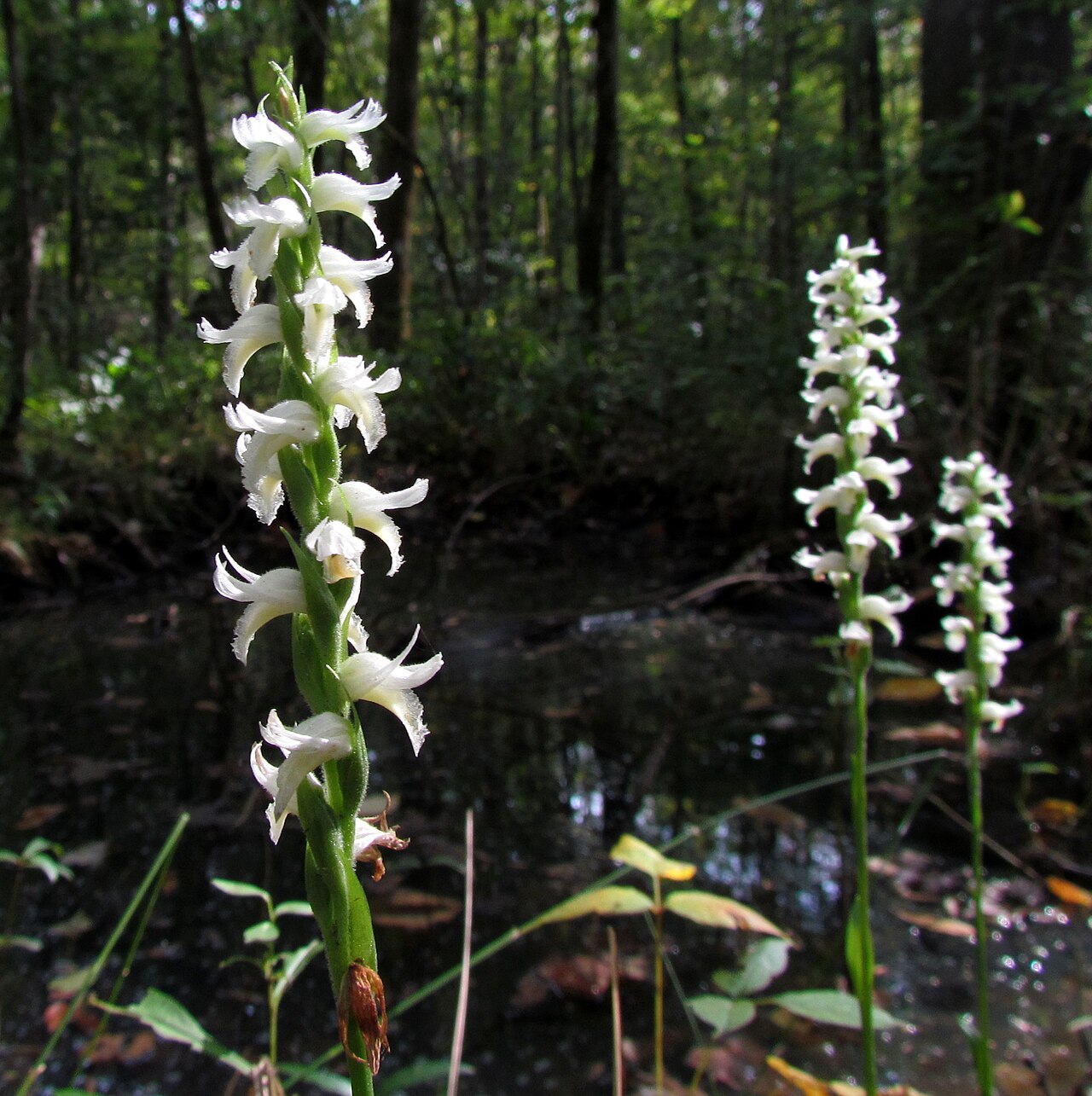
Spiranthes odorata, Fragrant Ladies’ Tresses, also called marsh lady’s tresses (the USDA PLANTS name) or fragrant ladiestresses, is a sturdy native orchid of Southeastern swamps, marshes and wet woods. In fall, when few other orchids are in bloom, it raises stout green spikes 1 to 2 feet tall, occasionally more, packed with white, hooded flowers arranged in neat spiraling rows. The flowers have a sweet fragrance, often compared to vanilla or jasmine, which gives the species its name. It belongs to the orchid family (Orchidaceae).
For many years it was treated as a variety of the widespread nodding ladies’ tresses, under the name Spiranthes cernua var. odorata, and older books and nurseries may use that name. Botanists now recognize it as a separate species. It is larger and more robust than nodding ladies’ tresses, spreads by underground stolons into colonies, and grows in wetter places, sometimes in standing water. One of the common names given by the Atlas of Florida Plants is underwater orchid.
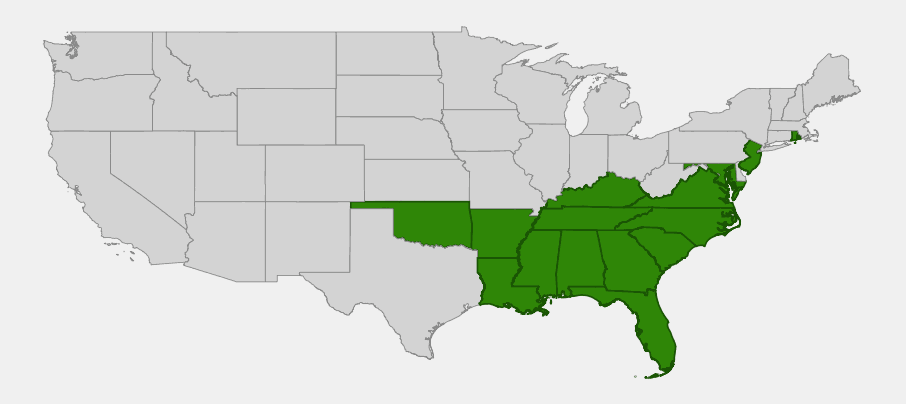
Fragrant ladies’ tresses ranges across the Southeast, from Oklahoma and Louisiana east to Florida and north along the Coastal Plain to Maryland, New Jersey and Rhode Island. It is one of the easier native orchids to grow in a moist, partly shaded garden, but only from nursery-propagated plants. This guide covers identification, range, growing conditions and its role in Southeastern wetlands.
Identification
About a dozen Spiranthes species grow in the Southeast, and most have white, spiraling flowers. Fragrant ladies’ tresses stands out for its large, thick spikes, its strong scent, its leaves that stay green at flowering time, and its wet, often shaded habitat.
Roots & Leaves
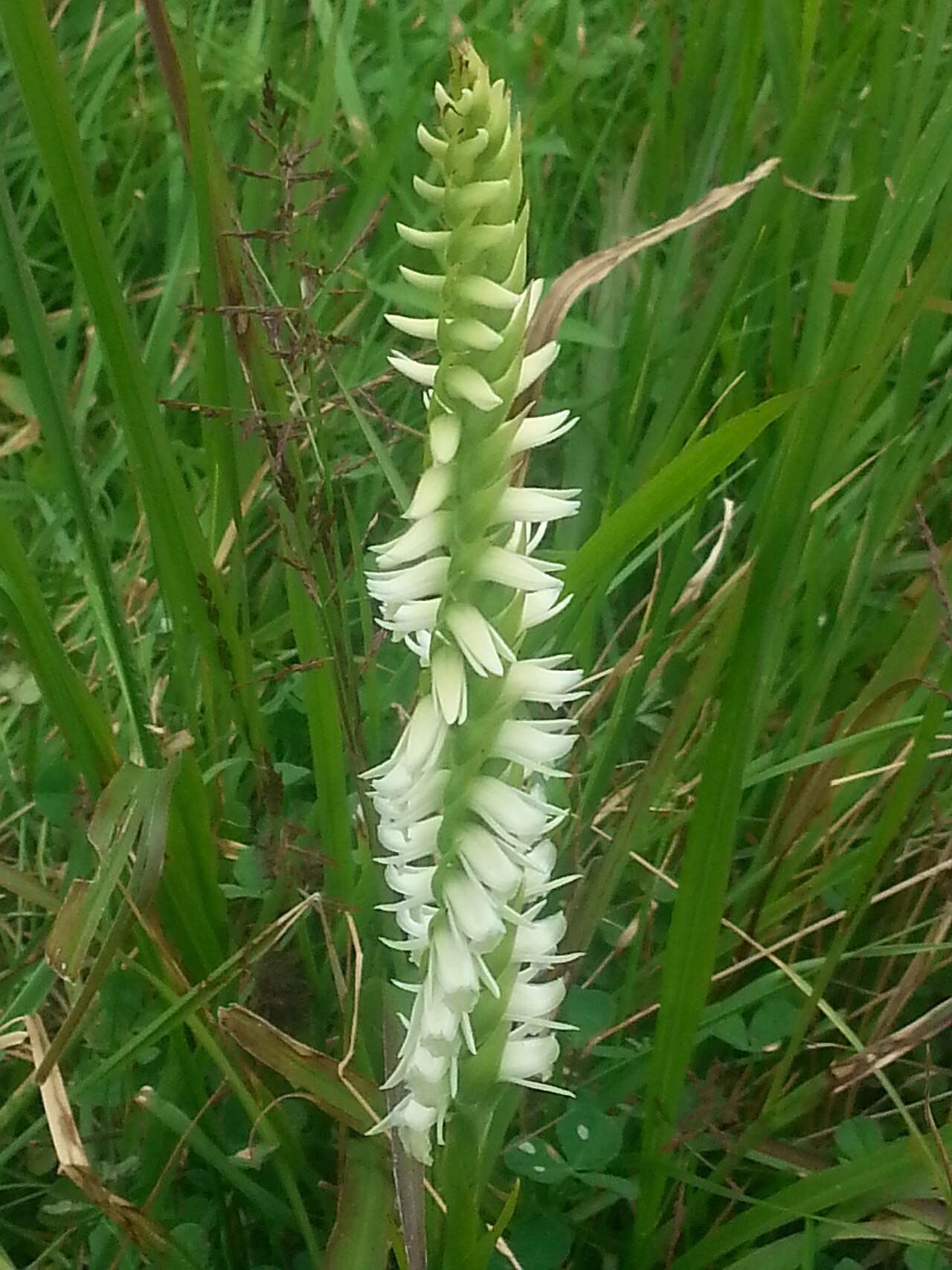
Each plant grows from a cluster of thick, fleshy roots and produces underground stolons that form new plants nearby, so it often grows in loose colonies. The leaves are basal, linear to narrowly lance-shaped and somewhat fleshy, typically several inches up to about a foot long. Unlike some ladies’ tresses, whose leaves wither before flowering, fragrant ladies’ tresses usually keeps its leaves through bloom, and a leaf rosette may persist through the winter in mild climates.
Stems
The flowering stem is stout, green and slightly hairy above. The Lady Bird Johnson Wildflower Center gives a height of up to about 3 feet in southern marshes and swamps, but most plants are 1 to 2 feet tall.
Flowers
The flower spike is dense and thick, with many flowers in several (often three or four) spiraling rows that make it look braided, like a lady’s plaited hair. Each flower is about ½ inch long, white to creamy white, tubular and hooded, with the sepals and petals forming a hood over the lip. The lip is cream to pale yellow or greenish in the center. The flowers are strongly fragrant, especially in warm afternoons. Bloom time runs from September through December, often peaking in October.
Fruit & Seeds
Pollinated flowers form small, upright capsules that release thousands of dust-like seeds. As with all orchids, the seeds need a compatible soil fungus to germinate.
Similar Species
Nodding ladies’ tresses (Spiranthes cernua) is smaller and more slender, has weaker fragrance or none, and grows in drier, sunnier meadows and roadsides. Long-lip ladies’ tresses (S. longilabris) has fewer, longer-lipped flowers in a single row. The garden cultivar ‘Chadd’s Ford’, long sold as S. odorata, has been shown to belong to a different species, Spiranthes bightensis.
Quick Facts
| Scientific Name | Spiranthes odorata (Nutt.) Lindl. (syn. Spiranthes cernua var. odorata) |
| Family | Orchidaceae (orchid family) |
| Plant Type | Terrestrial orchid; herbaceous perennial from fleshy roots and stolons |
| Mature Height | 1–2 ft (up to about 3 ft) |
| Mature Spread | 6–12 in per plant; slowly forms colonies |
| Growth Rate | Moderate |
| Sun Exposure | Part shade to full sun |
| Water Needs | High; moist to wet soil, tolerates shallow water |
| Soil Type | Moist, humus-rich muck, sand or loam |
| Soil pH | Acidic to neutral (about 5.0–7.0) |
| Bloom Time | September–December |
| Flower Color | White to cream, with a pale yellow or greenish lip center |
| Fall Color | Leaves remain green into winter in mild areas |
| Fruit | Small capsule with dust-like seeds |
| Deer Resistant | No; deer sometimes eat the flower spikes |
| USDA Hardiness Zones | 6–10 |
Native Range
Fragrant ladies’ tresses is a Southeastern orchid. USDA PLANTS and the Lady Bird Johnson Wildflower Center record it from 15 states: Florida, Georgia, Alabama, Mississippi, Louisiana, Arkansas, Oklahoma, Tennessee, Kentucky, South Carolina, North Carolina, Virginia, Maryland, New Jersey and Rhode Island. Some references also include eastern Texas and Delaware.
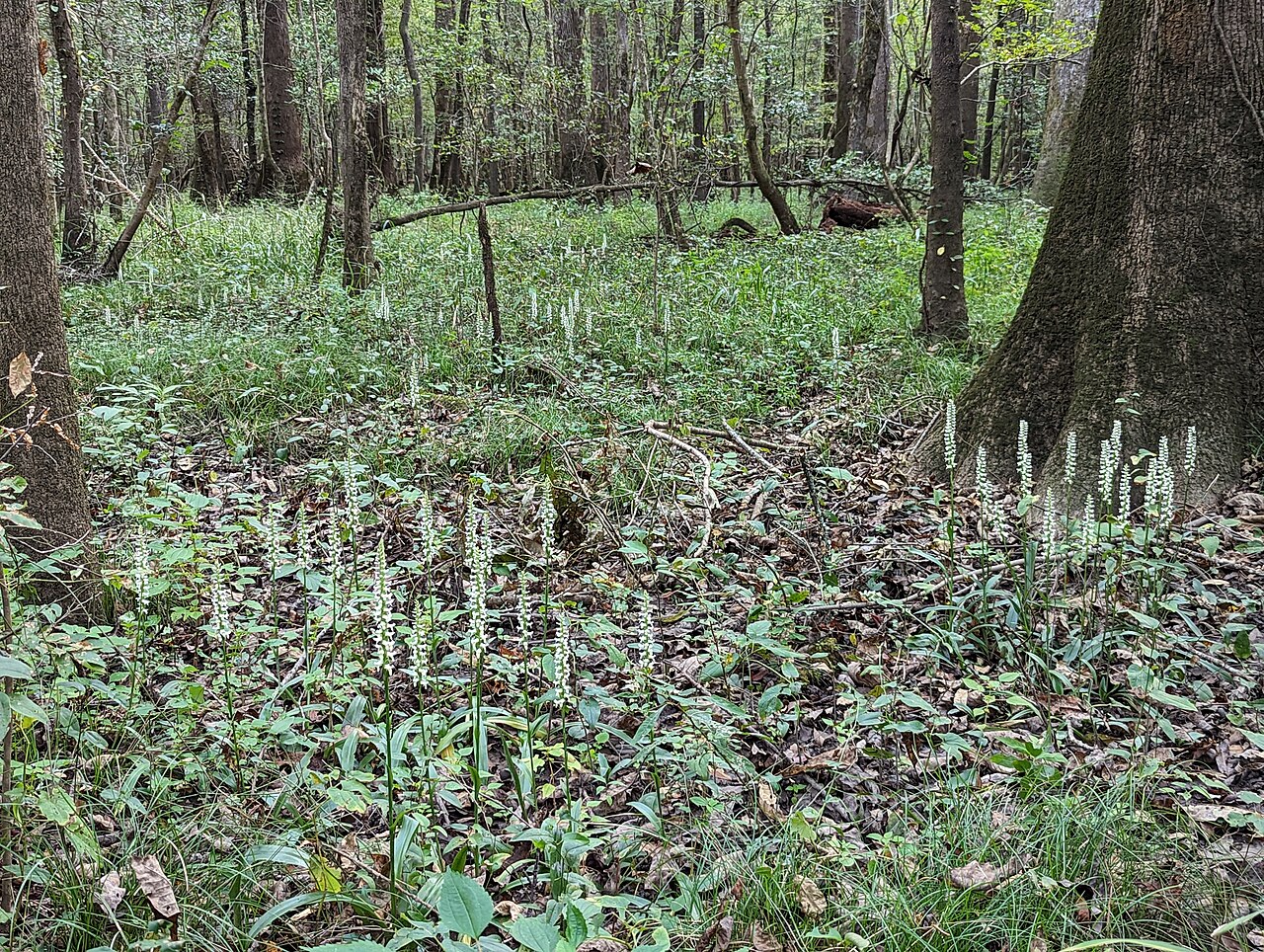
It is most common on the Atlantic and Gulf Coastal Plain, where it grows in cypress and tupelo swamps, freshwater and tidal marshes, wet floodplain forests, ditches and the edges of ponds, lakes and streams. It also extends up major river valleys into the interior, including Tennessee, Kentucky and Arkansas. At the northern edge of its range, in New Jersey and Rhode Island, it is rare.
In Florida it grows throughout much of the state in swamps, marshes and wet hammocks. It tolerates periodic flooding and may flower while partly submerged, which is the origin of the name underwater orchid. Large flowering colonies can appear on the floodplain forest floor of places like Congaree National Park in South Carolina in good years.
📋 Regional plant lists featuring Fragrant Ladies’ Tresses: North & South Florida · Alabama, Georgia & Mississippi · North & South Carolina · Maryland, Virginia & West Virginia · Kentucky & Tennessee · Arkansas, Louisiana, Eastern Oklahoma & Eastern Texas · Delaware, Southern New Jersey & Long Island · Connecticut, Massachusetts & Rhode Island
Growing & Care Guide
Fragrant ladies’ tresses is one of the most adaptable native orchids for gardens, and nursery-propagated plants are sold by native orchid and specialty perennial nurseries. Buy only propagated plants: dug plants rarely establish, and digging wild orchids damages native populations and may be illegal. Its fragrant fall flowers make it a rewarding plant for a moist, partly shaded spot.
Light
Part shade to full sun. In the wild it often grows in the dappled light of swamp forests. In gardens, morning sun with afternoon shade works well in hot climates. Plants in deep shade grow but flower less.
Soil & Water
Plant it in moist to wet, humus-rich soil that never dries out, such as the edge of a pond or stream, a rain garden, or a bog garden. It tolerates short periods of standing water. Avoid heavy fertilizer. A light mulch of leaf litter or pine needles helps keep the roots cool and moist.
Planting Tips
Plant in spring or early fall, setting the crown at soil level and spreading the fleshy roots out horizontally just below the surface. Space plants about 6 to 12 inches apart. Mark their positions, since the leaves are small and easy to overlook outside the bloom season.
Pruning & Maintenance
Cut the flower stalks after the seed capsules open, or leave them for natural seeding. Keep aggressive neighbors from crowding the small rosettes. Clumps increase slowly by stolons and need little other care.
Propagation
Established clumps can be divided in early spring or fall, keeping several roots with each crown. Seed requires sterile lab culture or a compatible fungus and is best left to specialist nurseries.
Landscape Uses
- Rain and bog gardens: a fragrant fall bloomer for moist, partly shaded spots
- Pond and stream edges: in wet, humus-rich soil near water
- Woodland wet spots: in dappled shade under swamp trees and shrubs
- Native orchid collections: one of the easiest Southeastern orchids to grow from propagated stock
- Fall pollinator gardens: late-season nectar for bumblebees
Wildlife & Ecological Value
Fragrant ladies’ tresses adds late-season flowers to Southeastern wetlands, at a time when bumblebee queens and workers are building up food stores before winter.
For Pollinators
Bumblebees are the main pollinators. Species recorded visiting the flowers include the American bumblebee (Bombus pensylvanicus), the golden northern bumblebee (B. fervidus) and the common eastern bumblebee (B. impatiens). The bees work their way up each spiral spike from the bottom, where older flowers in the female stage receive pollen, to the top, where young flowers attach pollen packets to the bee’s tongue. This pattern promotes cross-pollination between plants.
For Birds
The plant has no direct food value for birds, but its swamp and marsh habitats support many wetland birds, including prothonotary warblers, wood ducks and herons.
For Mammals
Deer and rabbits sometimes eat the flower spikes. The plant is otherwise of little importance to mammals.
Ecosystem Role
Like all orchids, fragrant ladies’ tresses depends on soil fungi for germination and early growth. It is a characteristic plant of intact floodplain and swamp communities, and its colonies are a sign of healthy, natural water levels. Drainage, development and invasive plants in floodplains have reduced it in parts of its range.
Cultural & Historical Uses
Thomas Nuttall first described this orchid in 1818 as Neottia odorata, and the English orchid specialist John Lindley later moved it to Spiranthes, giving the name used today. The genus name comes from the Greek speira, coil, and anthos, flower, describing the spiraling spike. The common name ladies’ tresses compares the spike to braided hair.
In the twentieth century many botanists lumped it into nodding ladies’ tresses as Spiranthes cernua var. odorata. Modern studies of Spiranthes, including genetic work, have restored it as a distinct species and clarified the identity of several garden plants.
Fragrant ladies’ tresses has become a popular garden orchid in North America and Europe. A vigorous, fragrant plant sold for years as S. odorata ‘Chadd’s Ford’ earned the Royal Horticultural Society’s Award of Garden Merit. Research by Matthew Pace and colleagues showed that it is actually Spiranthes bightensis, a separate species. True S. odorata is offered by native orchid nurseries in the Southeast.
Frequently Asked Questions
Is fragrant ladies’ tresses really fragrant?
Yes. The flowers have a sweet scent, often compared to vanilla or jasmine, that is strongest on warm afternoons. The species name odorata means fragrant.
Is it the same as nodding ladies’ tresses?
No. It was once treated as a variety of nodding ladies’ tresses (Spiranthes cernua var. odorata), but it is now recognized as a separate species. It is larger and more fragrant, spreads by stolons, and grows in wetter, shadier places.
When does it bloom?
In fall, from about September through December, with a peak in October in much of the Southeast.
Can I grow it in my garden?
Yes, in moist to wet, humus-rich soil with part shade or morning sun. Buy nursery-propagated plants from a reputable native orchid nursery, and never dig plants from the wild.
Is ‘Chadd’s Ford’ a Spiranthes odorata?
Not according to recent research. The popular cultivar ‘Chadd’s Ford’ has been shown to be Spiranthes bightensis, although it is still often sold under the name S. odorata.

Looking for a nursery that carries Fragrant Ladies’ Tresses?
Browse our native plant nursery directory: Alabama & Arkansas · Florida & Georgia · Kentucky, Louisiana, Maryland & Mississippi · New Jersey, North Carolina & Oklahoma · Rhode Island, South Carolina, Tennessee & Virginia