
Soft Prairie Clover (Dalea mollissima)
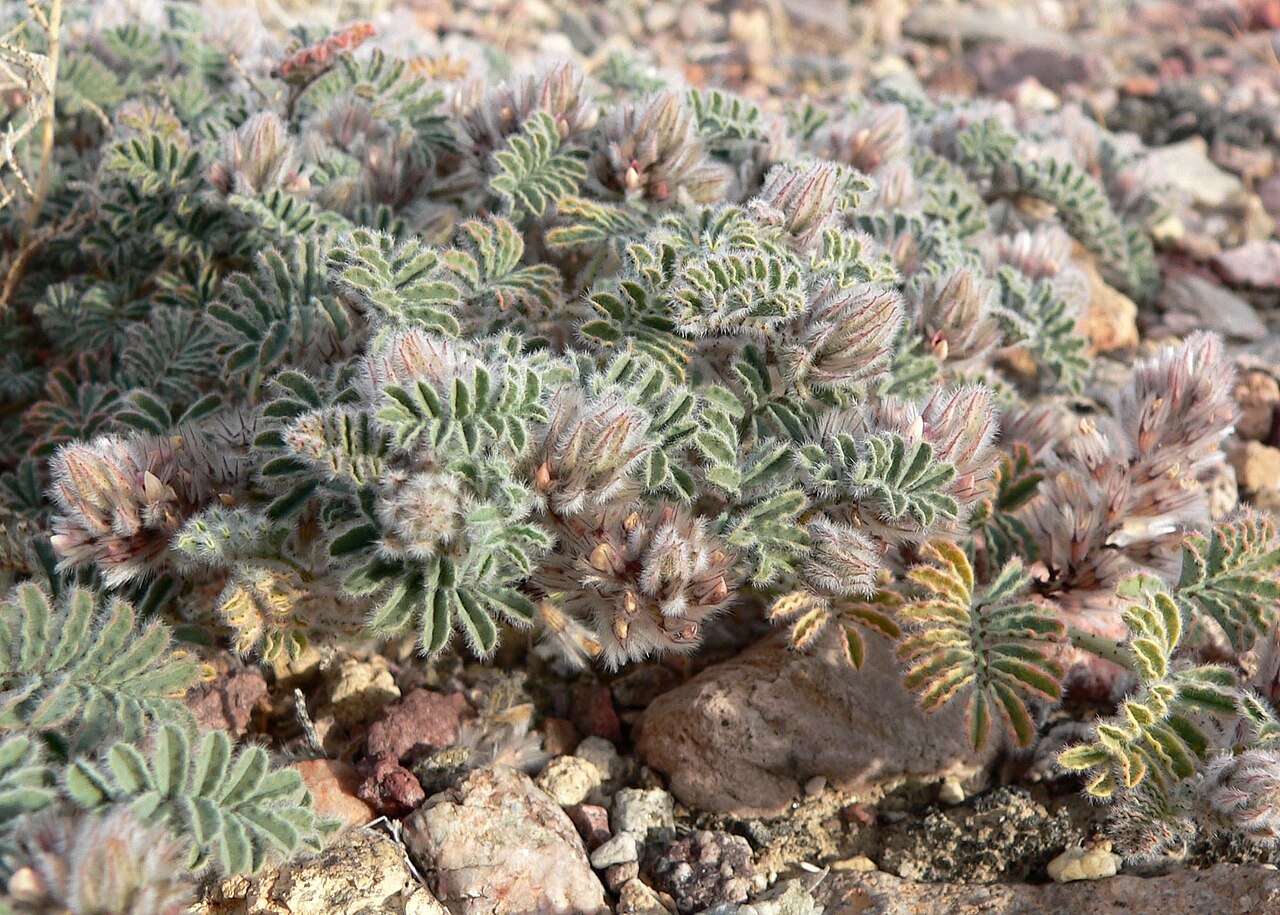
Dalea mollissima, known as Soft Prairie Clover, silky dalea, desert silk or downy dalea, is a small, low-growing wildflower of the Mojave and Sonoran deserts. Its sprawling stems form gray-green mats on sandy and gravelly desert flats and washes, and in late winter and spring they carry fuzzy spikes of small, cream to pale lavender pea flowers. The whole plant is covered with soft, silky hairs, which gives it both its common and scientific names.
It belongs to the pea family (Fabaceae), in the same genus as the familiar purple prairie clover of the Great Plains. The species name mollissima means “softest”, describing the dense, velvety hairs on its leaves, stems and flower spikes. It grows as an annual or a short-lived perennial, depending on rainfall.
Soft prairie clover is a common sight in wet years in places such as Death Valley, Joshua Tree and Anza-Borrego, often growing with other spring desert wildflowers. It is a nitrogen-fixing legume that helps enrich poor desert soils and feeds native bees. This guide covers how to identify it, where it grows, how to grow it and its value to wildlife.
Identification
Soft prairie clover is easiest to recognize by its low, gray, hairy mats and its fuzzy flower spikes. Get close and look for the tiny dark glands on its leaves, a feature of the genus Dalea.
Growth Habit
It is a low, spreading annual or short-lived perennial, usually 4 to 12 inches across and only a few inches tall. The stems lie flat on the ground or curve upward at the tips. All parts of the plant are covered with soft, spreading hairs, giving it a grayish color.
Leaves
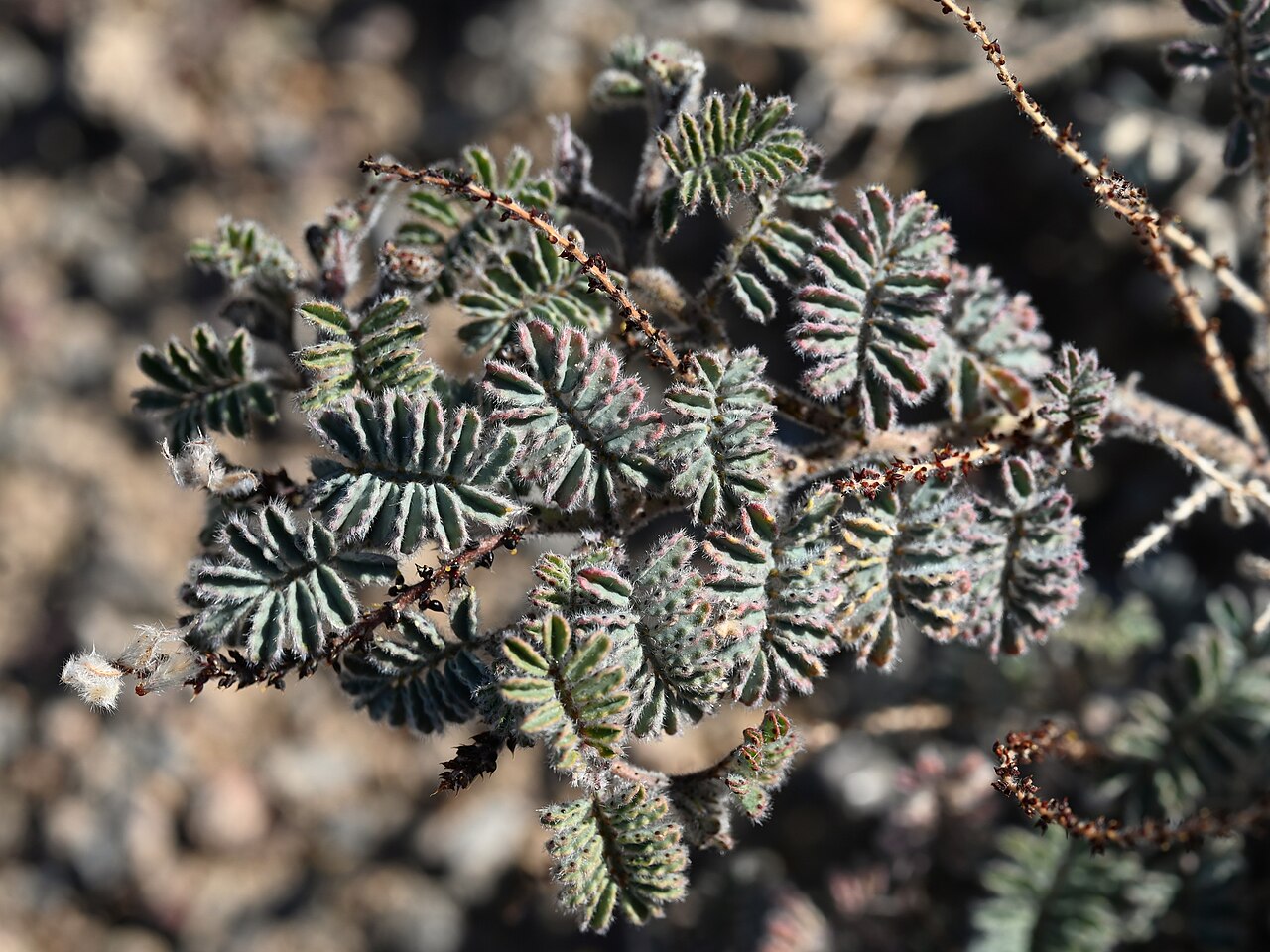
The leaves are pinnately compound, about 1/2 to 1 1/2 inches long, with several pairs of small, rounded to wedge-shaped leaflets. The leaflets are gray-green, hairy, and dotted with tiny dark glands, especially near the edges and on the underside. Crushed leaves have a faint, resinous smell.
Flowers
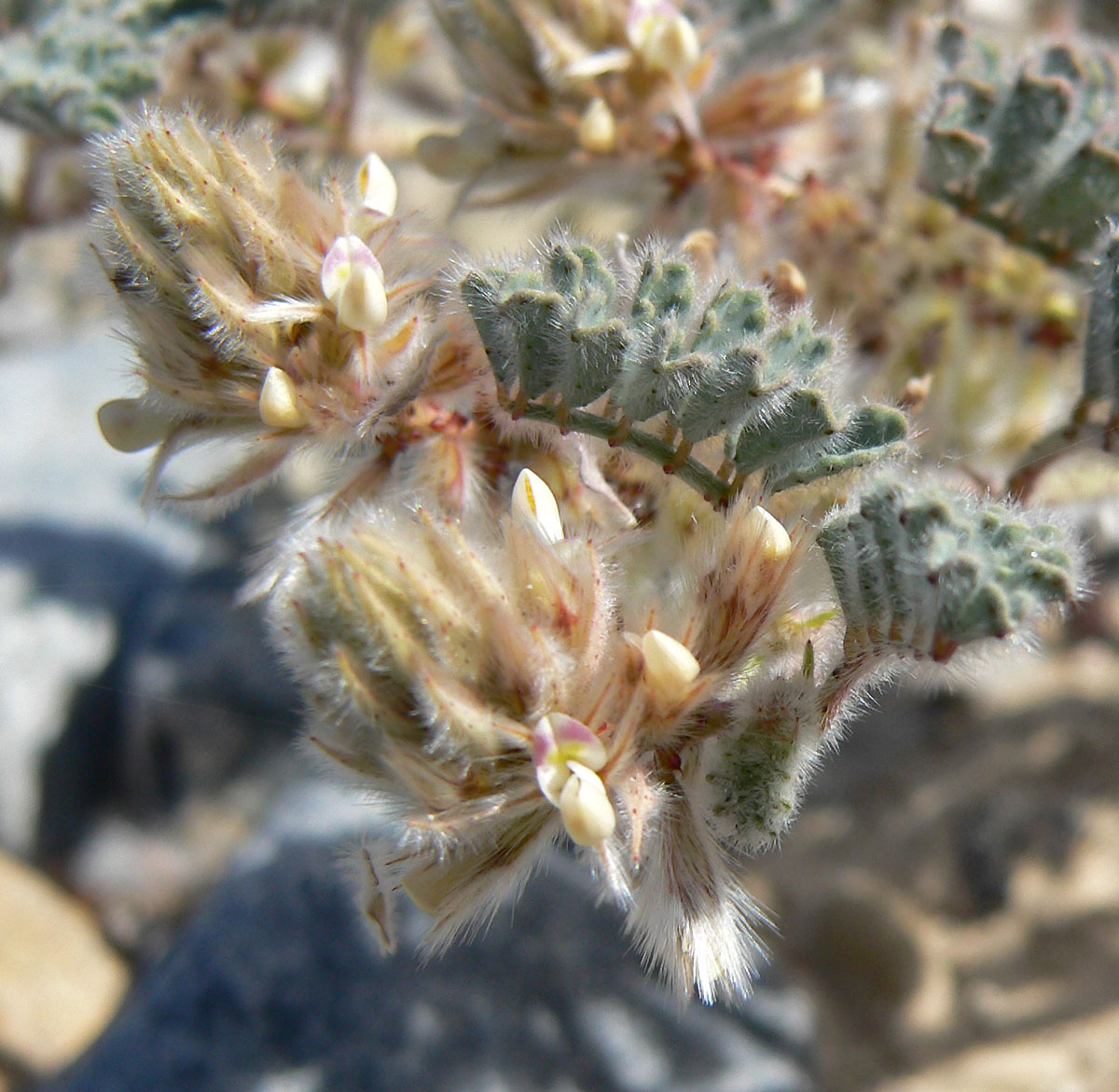
The flowers are borne in dense, cylindrical spikes 1/2 to 2 inches long at the ends of the stems. Each spike is wrapped in long, silky hairs from the calyces and bracts, so it looks fuzzy or feathery. The small pea flowers are whitish to cream with pink or lavender tints. Bloom time is mainly February to May, and occasionally after late summer or fall rains.
Fruit & Seeds
Each flower produces a tiny, one-seeded pod enclosed in the hairy calyx. The seeds are small and smooth, and many stay on or near the parent plant.
Look-alikes
Other low desert Dalea species, such as Parry’s dalea (Dalea parryi), have deeper purple flowers and less silky spikes. Shrubby desert relatives, such as Schott’s indigo bush and Fremont’s indigo bush, are woody shrubs with deep blue to purple flowers. Soft prairie clover is identified by its low, gray-hairy mats, gland-dotted leaflets and fuzzy, cream to lavender flower spikes.
Quick Facts
| Scientific Name | Dalea mollissima (Rydb.) Munz |
| Family | Fabaceae (pea family) |
| Plant Type | Annual or short-lived perennial wildflower |
| Mature Height | 2–6 in |
| Mature Spread | 4–12 in (larger in wet years) |
| Growth Rate | Fast |
| Sun Exposure | Full sun |
| Water Needs | Very low; winter and spring rain only |
| Soil Type | Sandy, gravelly or rocky, well-drained desert soils |
| Soil pH | About 7.0–8.5 |
| Bloom Time | February–May (sometimes after fall rains) |
| Flower Color | Whitish to cream with pink or lavender tints |
| Fall Color | None |
| Fruit | Tiny one-seeded pod in a hairy calyx |
| Deer Resistant | Not well documented |
| USDA Hardiness Zones | 8–11 |
Native Range
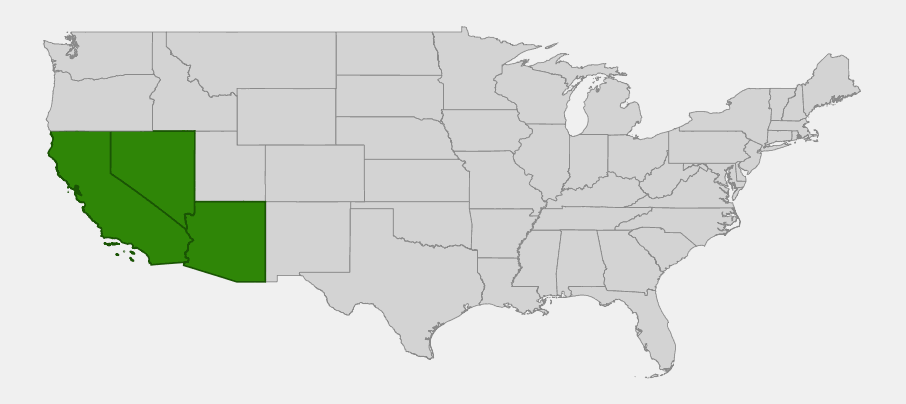
Soft prairie clover is native to the deserts of the southwestern United States and northwestern Mexico. USDA PLANTS lists it in California, Nevada and Arizona, and it also grows in Baja California and Sonora.
In California it grows throughout the Mojave and Colorado deserts, from Inyo County and Death Valley south through San Bernardino and Riverside Counties to Imperial and eastern San Diego Counties, including Anza-Borrego Desert State Park. It reaches southern Nevada around Las Vegas and Lake Mead, and western Arizona in the lower Colorado River valley and the Sonoran Desert around Yuma.
It grows on sandy and gravelly desert flats, washes, alluvial fans and roadsides, often among creosote bush and bursage. It is a low-elevation plant, found from below sea level in Death Valley to the lower slopes of the desert mountains.
📋 Regional plant lists featuring Soft Prairie Clover: Arizona & New Mexico · California & Nevada
Growing & Care Guide
Soft prairie clover is a charming, low wildflower for desert gardens, gravel gardens and wildflower plantings in the low deserts of California, Nevada and Arizona. Seed is occasionally offered by southwestern native seed suppliers. It needs full sun, very good drainage and little water, and it does best in hot, dry climates.
Light
Give it full sun. It is a plant of open desert flats and will not grow well in shade.
Soil & Water
Plant it in sandy, gravelly or rocky soil with excellent drainage. It relies on winter and spring rain, and a little extra water in a dry winter can help seeds germinate and plants flower. Avoid summer watering and rich soil, which can rot the roots.
Planting Tips
Sow seed in fall or early winter, just before the rainy season, scattering it on bare, open soil and raking it in lightly. Like many legumes, the seeds germinate better if they are lightly scratched or soaked before sowing. It pairs well with desert sand verbena, desert sunflower and other spring annuals.
Pruning & Maintenance
No pruning is needed. Leave the plants in place after flowering so they can drop seed. Keep weedy grasses such as red brome and Mediterranean grass under control, since they compete with native desert wildflowers.
Propagation
It is grown from seed. Collect seed heads when they dry in late spring, and store seed dry until fall. Plants sometimes reseed in suitable sandy or gravelly spots.
Landscape Uses
- Desert gardens: a low, silvery wildflower for sandy or gravel beds
- Wildflower plantings: spring color with other desert annuals
- Pollinator gardens: pollen and nectar for native bees
- Habitat restoration: a nitrogen-fixing legume for desert flats and washes
- Rock and gravel gardens: a soft-textured plant among stones
Wildlife & Ecological Value
Like other desert legumes, soft prairie clover supports bees and other insects and helps enrich poor desert soils.
For Pollinators
The small pea flowers are visited mainly by native bees, which work up and down the spikes for pollen and nectar. Dalea species are important pollen sources for many solitary bees.
For Birds
Seed-eating birds such as sparrows and quail may eat the seeds, and Gambel’s quail forage on desert legumes in spring.
For Mammals
Desert rodents such as kangaroo rats and pocket mice gather seeds of desert annuals, and rabbits and desert tortoises graze on spring wildflowers.
Ecosystem Role
As a legume, soft prairie clover hosts nitrogen-fixing bacteria in its roots, adding nitrogen to sandy and gravelly desert soils. In wet years it is part of the carpet of annual wildflowers that feeds pollinators and desert wildlife.
Cultural & Historical Uses
The genus name Dalea honors Samuel Dale, an English apothecary and botanist of the late seventeenth and early eighteenth centuries. The species was first described by Per Axel Rydberg in another genus and later transferred to Dalea by Philip Munz, the author of A California Flora.
Its many common names, including silky dalea, desert silk, downy dalea and soft prairie clover, all refer to its dense, soft hairs. The name prairie clover comes from the genus as a whole, most of which grows in the grasslands of the Great Plains rather than in the desert.
Soft prairie clover is one of the wildflowers that appear in the deserts of the Southwest after good winter rains. In wet years, visitors to Death Valley and Anza-Borrego may find it carpeting the ground with other spring annuals, while in dry years it may not appear at all.
Frequently Asked Questions
Why is it called soft prairie clover?
Its stems, leaves and flower spikes are covered with dense, soft hairs, and it belongs to Dalea, a genus commonly called prairie clovers.
Is soft prairie clover an annual?
It grows as an annual or a short-lived perennial, depending on rainfall. In dry years it may live only a few months.
Where does soft prairie clover grow?
It grows in the Mojave and Sonoran deserts of California, southern Nevada and western Arizona, and in Baja California and Sonora, on sandy and gravelly flats and washes.
When does soft prairie clover bloom?
It blooms mainly from February to May, after winter rains, and sometimes again after late summer or fall rains.
Can I grow soft prairie clover?
Yes, in low-desert gardens. Sow seed in fall in sandy or gravelly soil in full sun, and avoid summer water.

Looking for a nursery that carries Soft Prairie Clover?
Browse our native plant nursery directory: Arizona · California · Nevada

