
Pine Violet (Viola lobata)
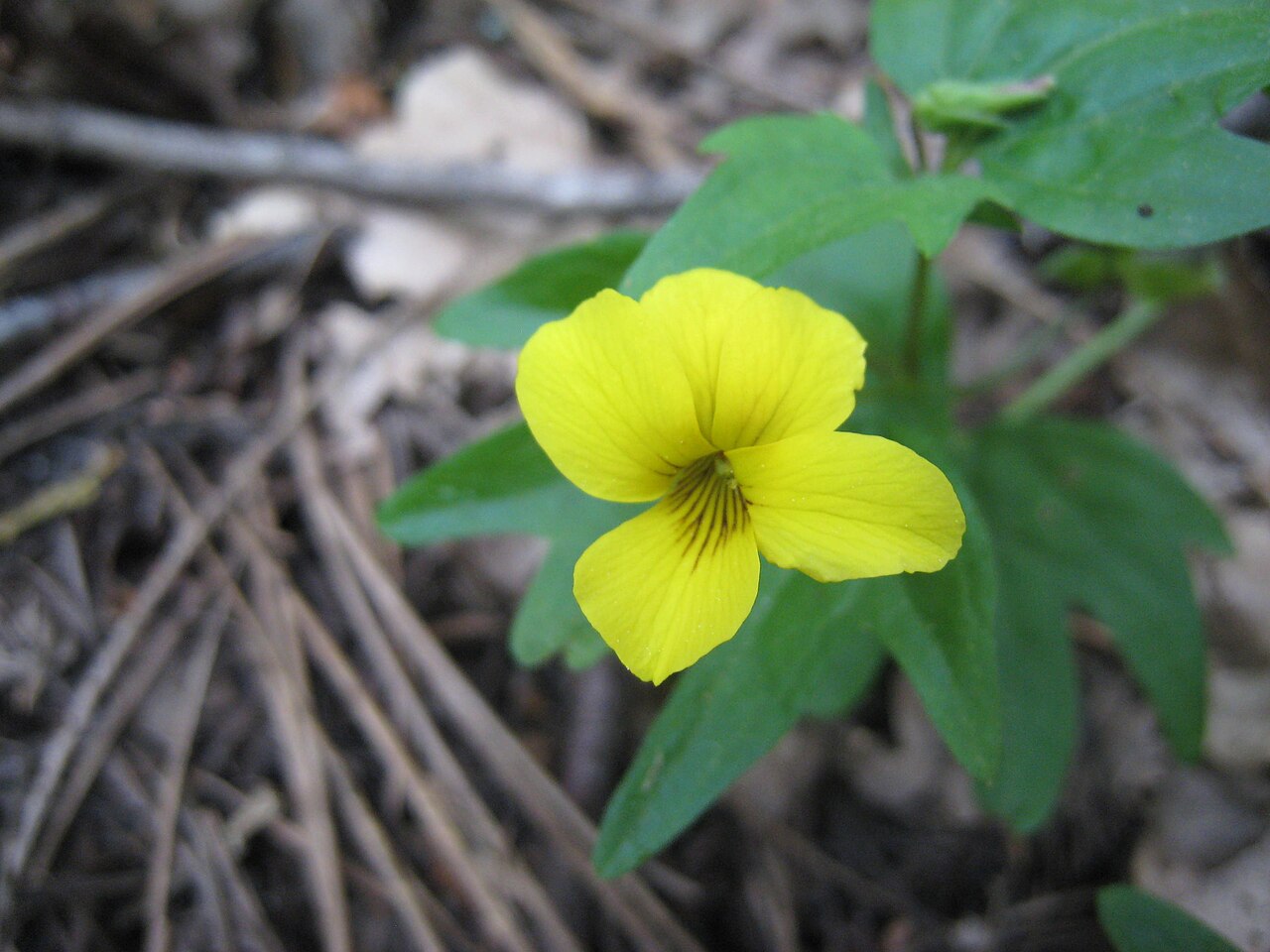
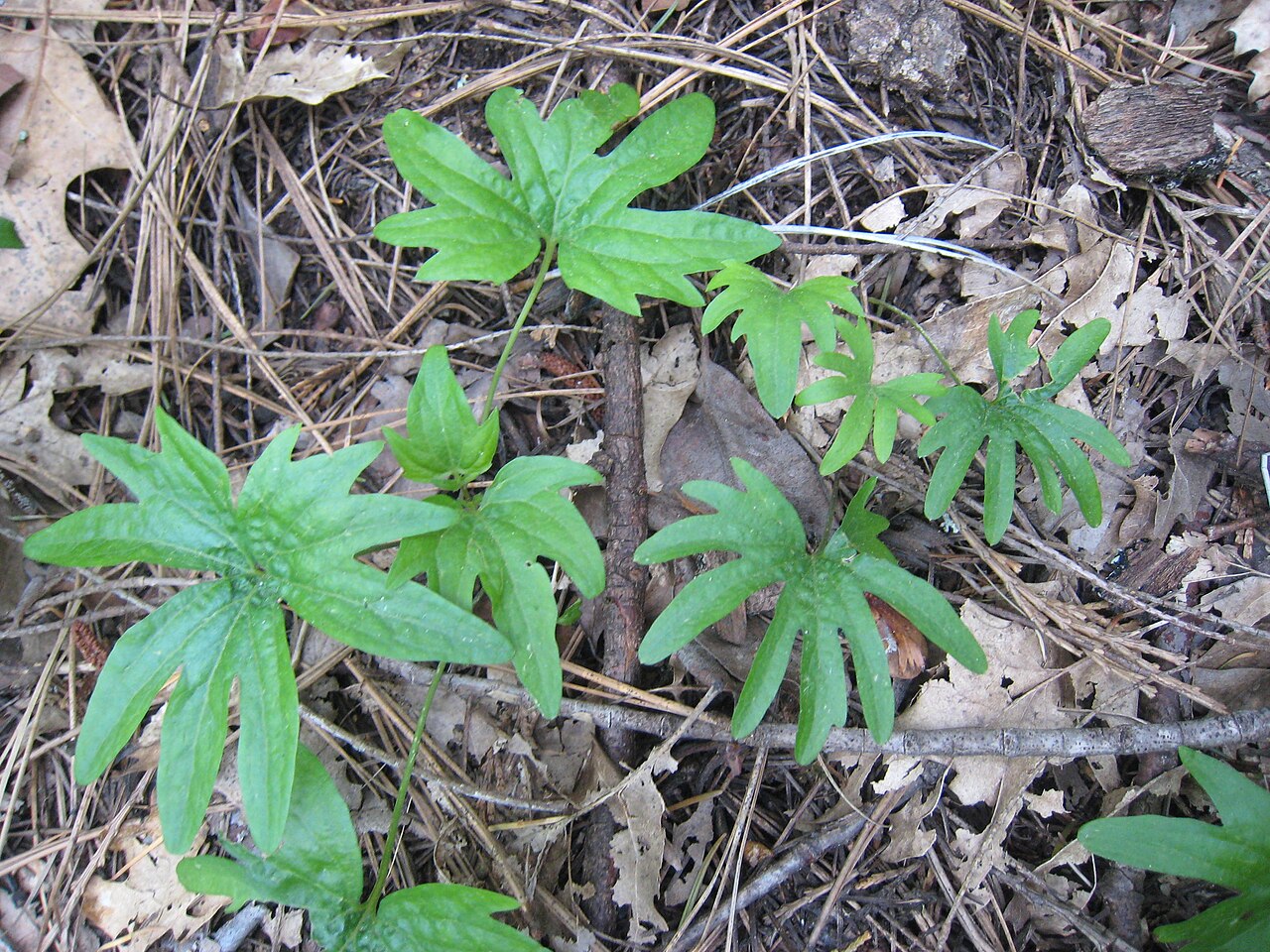
Viola lobata, known as Pine Violet, is a yellow-flowered violet of open conifer and oak forests from southwestern Oregon through the mountains of California. Unlike the familiar heart-leaved violets of lawns and woods, it has upright, leafy stems topped with fan-shaped leaves that are usually deeply cut into five to nine narrow lobes, so it can look more like a small buttercup or larkspur than a violet until it blooms. It belongs to the violet family (Violaceae).
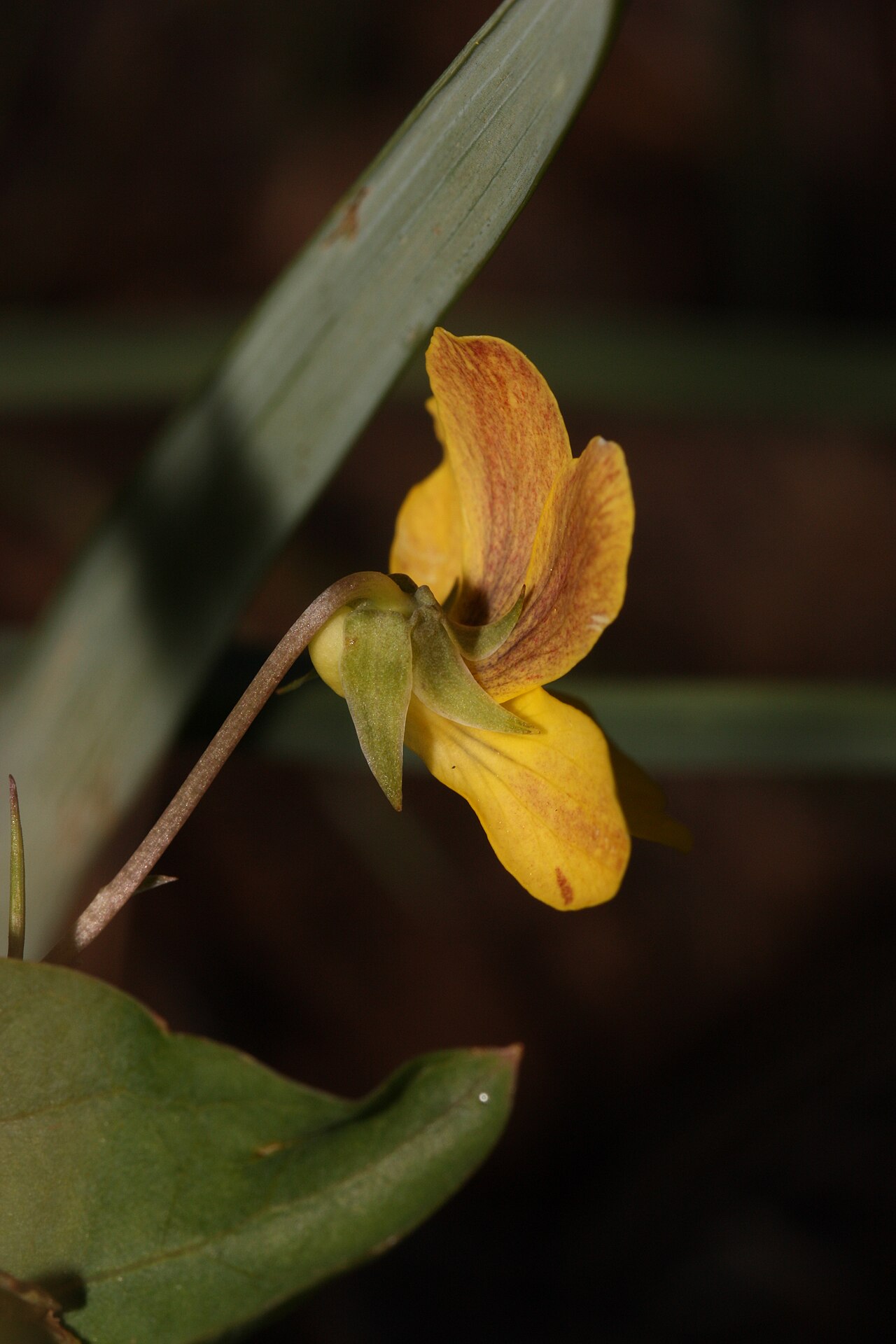
In spring and early summer it opens bright lemon-yellow flowers about 3/4 inch across, the lower petals marked with fine purple-brown lines and the backs of the upper petals tinged reddish-brown or purple. It is a common wildflower in the dry, open understory of ponderosa pine, black oak and mixed conifer forests, often growing in pine needle litter, which gives it its common name.
Two subspecies are recognized: subspecies lobata, with deeply lobed leaves, and subspecies integrifolia, with leaves that are merely toothed. Pine violet is a lovely plant for dry woodland gardens within its native range, though it is seldom sold. Never dig it from the wild; grow it from seed or nursery-grown plants.
Identification
Look in open pine and oak woods for a small, upright, leafy-stemmed violet with fan-shaped, deeply lobed leaves crowded near the top of the stem and bright yellow flowers with purple-brown lines.
Growth Habit
Pine violet is an herbaceous perennial that grows from a short, thick, vertical rhizome. Each plant sends up one to several erect, leafy stems about 4 to 14 inches tall, usually with no leaves or only small ones in the lower part and the main leaves clustered near the top. It dies back to the ground in summer drought and reappears in spring.
Leaves
The leaves are long-stalked and roughly fan-shaped or kidney-shaped, about 1 to 3 1/2 inches wide. In subspecies lobata they are palmately divided into five to nine narrow, lance-shaped lobes, sometimes again toothed; in subspecies integrifolia they are undivided, with coarse teeth along the edge. They are smooth or slightly hairy and medium to gray-green.
Flowers
The flowers arise on slender stalks from the upper leaf axils from about April to July, depending on elevation. Each is about 1/2 to 3/4 inch across with five bright yellow petals. The three lower petals have dark purple-brown veins, the two side petals are often bearded near the center, and the backs of the two upper petals are washed with reddish-brown to purple. The short spur at the back holds nectar.
Fruit
The fruit is a small, oval capsule that splits into three boat-shaped valves. As the valves dry they squeeze the smooth brown seeds and shoot them a short distance. Each seed carries a small oily appendage that attracts ants, which carry the seeds away and help disperse them.
Look-alikes
Most other yellow violets in its range, such as goosefoot violet (Viola purpurea), have undivided, often purple-tinged leaves. Shelton’s violet (V. sheltonii) and Douglas’s violet (V. douglasii) also have divided leaves, but they are finely dissected and mostly basal, on short plants without the tall leafy stems of pine violet. Non-flowering plants can be mistaken for buttercups or larkspurs, but those have different flowers and are poisonous.
Quick Facts
| Scientific Name | Viola lobata |
| Family | Violaceae (violet family) |
| Plant Type | Herbaceous perennial wildflower |
| Mature Height | 4–14 in |
| Mature Spread | 6–12 in |
| Growth Rate | Slow to moderate |
| Sun Exposure | Part shade to light shade |
| Water Needs | Low to medium; dry in summer |
| Soil Type | Well-drained loam, gravelly or rocky soil with leaf and needle litter |
| Soil pH | Slightly acidic to neutral (about 5.5–7.0) |
| Bloom Time | April–July |
| Flower Color | Bright yellow with purple-brown lines |
| Fall Color | None; dormant by late summer |
| Fruit | Three-valved capsule |
| Deer Resistant | Moderate; occasionally browsed |
| USDA Hardiness Zones | 6–9 |
Native Range
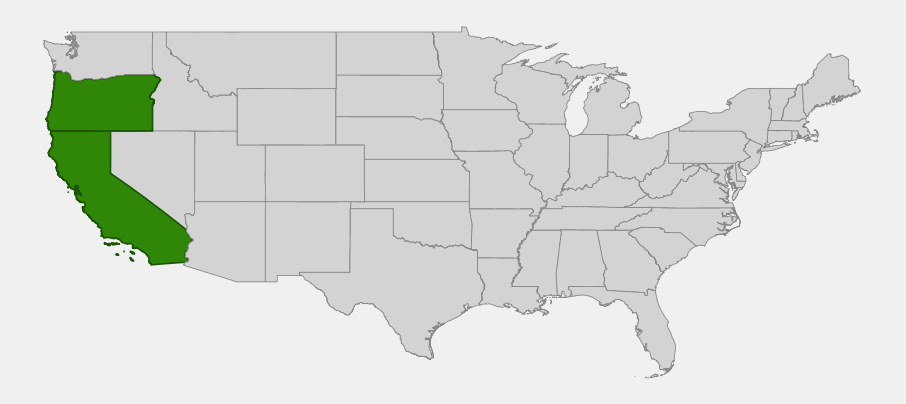
Pine violet is native to the Pacific states. USDA PLANTS records it from Oregon and California. In Oregon it grows only in the southwest, in the Siskiyou and Klamath Mountains of Josephine, Jackson and Curry counties, west of the Cascade crest. Many observations come from the Illinois River valley and the serpentine woodlands along the T. J. Howell Botanical Drive.
In California it is widespread in the Klamath Ranges, the North Coast Ranges, the southern Cascades and the western slope of the Sierra Nevada, and it continues south into the mountains of Southern California. It is most common at middle elevations, from about 1,000 to 7,000 feet.
Its habitats are dry to moderately moist, open forests and woodlands: ponderosa pine, Jeffrey pine, mixed conifer, black oak and canyon live oak forests, including stands on serpentine soils in the Klamath region. It favors partly shaded slopes with well-drained soil and a layer of needles and leaves.
📋 Regional plant lists featuring Pine Violet: Western Oregon & Western Washington · California & Nevada
Growing & Care Guide
Pine violet is a charming plant for dry, shady woodland gardens in California and southwestern Oregon. It is seldom available in nurseries, so most plants are grown from seed. Never dig it from the wild.
Light
Part shade to light shade, such as under high pines or oaks, or morning sun with afternoon shade. It does not do well in hot, full sun in low-elevation gardens.
Soil & Water
Give it well-drained, gravelly or loamy soil with a mulch of pine needles or oak leaves. Water during its spring growing season if rain is short, then let it go dry in summer when it goes dormant. Summer watering and heavy, wet soil invite rot.
Planting Tips
Plant seed or small plants in fall so they can establish with winter rain. Pine violet looks best in small groups among other woodland wildflowers, under shrubs or along a shady path. Mark its location so the dormant crowns are not disturbed in summer.
Pruning & Maintenance
Little care is needed. Let the foliage die back naturally in summer. Keep a light layer of needle or leaf litter over the soil, as in its natural habitat, and avoid heavy fertilizer.
Propagation
Sow fresh seed in fall outdoors or in containers, where winter cold and moisture break dormancy; seeds can take a year or more to germinate. Seed explodes from the capsules, so collect capsules just as they turn upright and pale and let them finish drying in a paper bag. Mature clumps can be carefully divided in fall.
Landscape Uses
- Dry woodland gardens: spring color under pines and oaks
- Shady rock gardens: fine-textured, lobed foliage among stones
- Native wildflower plantings: pairs with irises, trilliums and bulbs
- Habitat gardens: supports fritillary butterflies and native bees
- Wildflower viewing: a common spring flower along trails in the Siskiyous and Sierra foothills
Wildlife & Ecological Value
Like other violets, pine violet supports a specialized group of insects and helps feed forest wildlife in spring.
For Pollinators
Bees, especially small native bees and bumble bees, visit the flowers, guided by the dark lines on the lower petals to the nectar in the spur. Violets also produce closed, self-pollinating flowers at times, which ensures some seed even when pollinators are scarce.
For Birds
Ground-foraging birds such as quail and towhees may eat violet seeds.
For Mammals
Deer and small mammals occasionally browse the leaves. Ants carry the seeds to their nests, where they eat the oily appendage and discard the seed, often in a good spot for germination.
Ecosystem Role
Violets are the caterpillar host plants of fritillary butterflies (Speyeria), and western fritillaries use various native violets, including those of open pine forests. Their ant-dispersed seeds help them persist and spread slowly through forest understories.
Cultural & Historical Uses
The species name lobata means “lobed,” describing its unusual, deeply divided leaves. The common name pine violet refers to its frequent home in pine forests.
The species was described by the English botanist George Bentham from plants collected in California by Karl Theodor Hartweg in the 1840s. California has more than a dozen yellow-flowered violets, and pine violet’s divided leaves make it one of the easiest to recognize.
Violet flowers and young leaves of some species have been eaten, but pine violet grows with poisonous plants that have similar lobed leaves, such as larkspurs and buttercups. Enjoy it as a wildflower rather than as food.
Frequently Asked Questions
Why does pine violet have lobed leaves?
It is one of a few violets with deeply divided leaves. The species name lobata means “lobed.” One subspecies, integrifolia, has leaves that are only toothed.
Where does pine violet grow?
In open pine and oak forests from southwestern Oregon through the Klamath Mountains, North Coast Ranges, Cascades and Sierra Nevada of California to the mountains of Southern California.
When does pine violet bloom?
From about April to July, earlier at low elevations and later in the mountains.
Can I grow pine violet in my garden?
Yes, in a shady, well-drained spot with a dry summer, within or near its native range. Start it from seed sown in fall.
Is pine violet a host plant for butterflies?
Yes. Like other violets, it can feed the caterpillars of fritillary butterflies.

Looking for a nursery that carries Pine Violet?
Browse our native plant nursery directory: California · Oregon

