
Red Sand-Verbena (Abronia maritima)
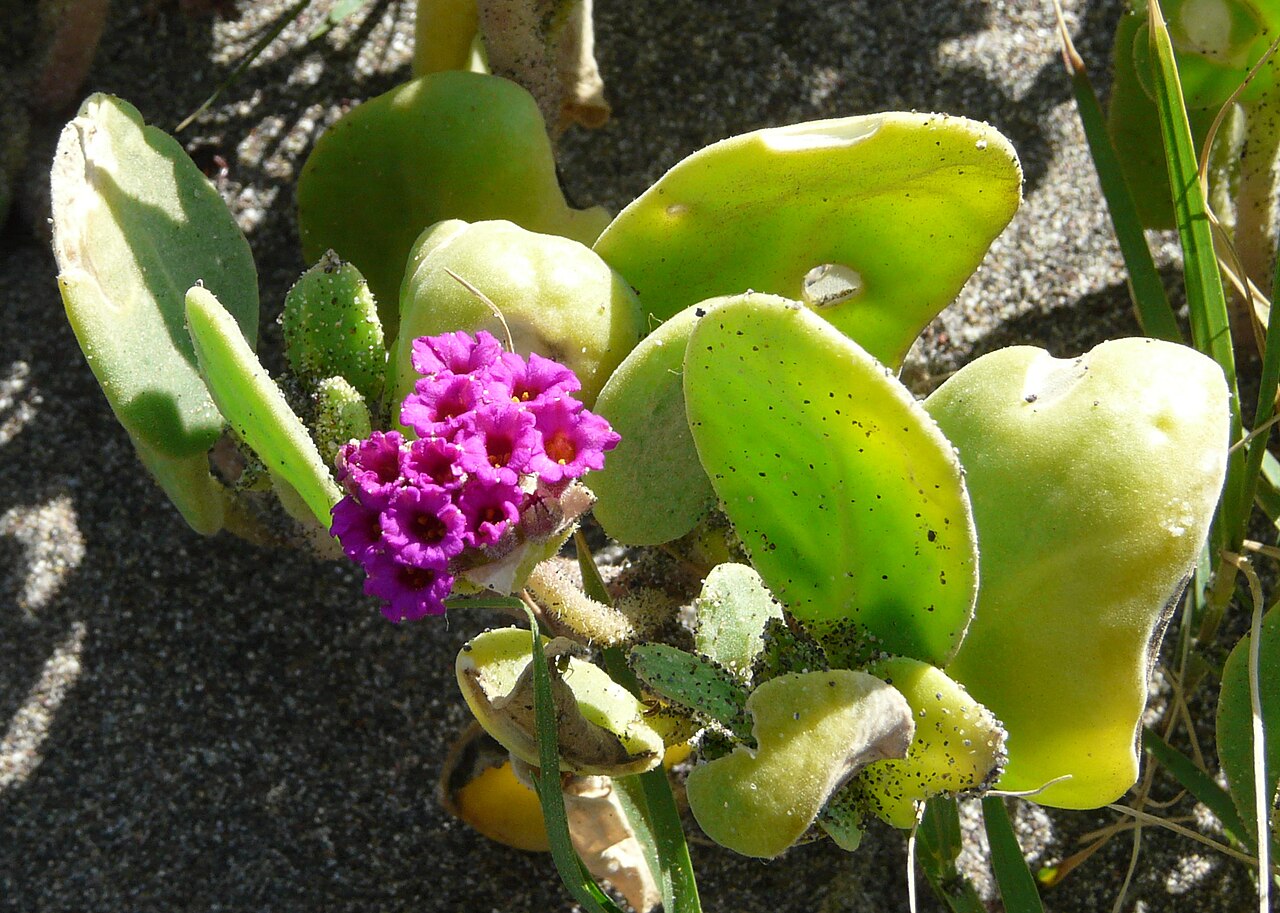
Abronia maritima, known as Red Sand-Verbena, is a sprawling, succulent perennial of the four o’clock family (Nyctaginaceae) that grows on the beaches and coastal dunes of central and southern California, the Channel Islands, and Baja California and Sonora in Mexico. Despite its name, it is not related to garden verbenas.
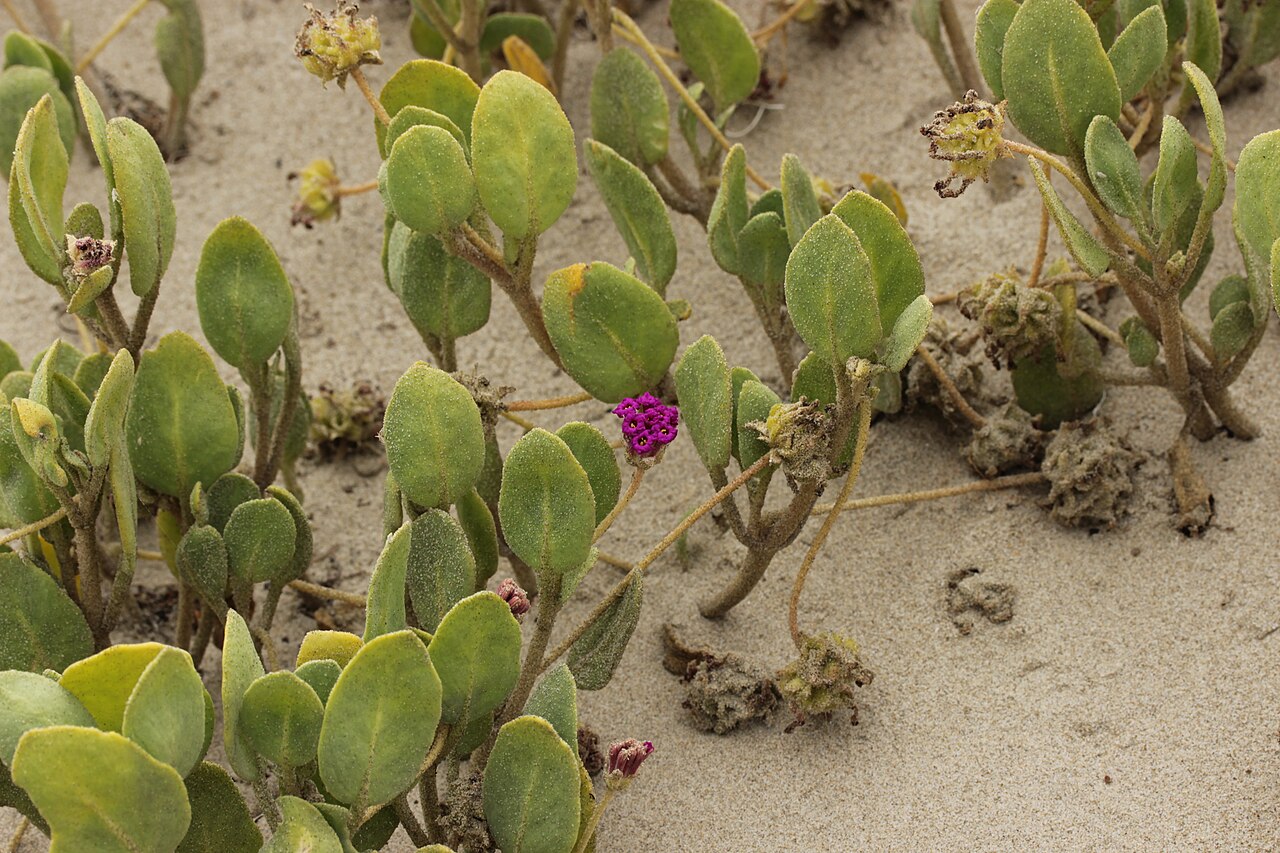
Red sand-verbena forms low mats of trailing stems several feet long, with thick, fleshy, rounded leaves that store water and salt. Through much of the year, and most heavily in spring and summer, it bears rounded clusters of small, trumpet-shaped flowers in deep magenta, wine red or purplish red, one of the richest colors on any California beach. It grows on the upper beach and foredunes, just above the reach of the waves, where it is exposed to wind, salt spray and moving sand.
Because its beach habitat is heavily used and developed, red sand-verbena has become uncommon in parts of its range, and NatureServe ranks it as vulnerable in California. It is a good choice for coastal dune restoration and seaside gardens on sand. This guide covers how to identify it, where it grows, how to grow it and its value to wildlife.
Identification
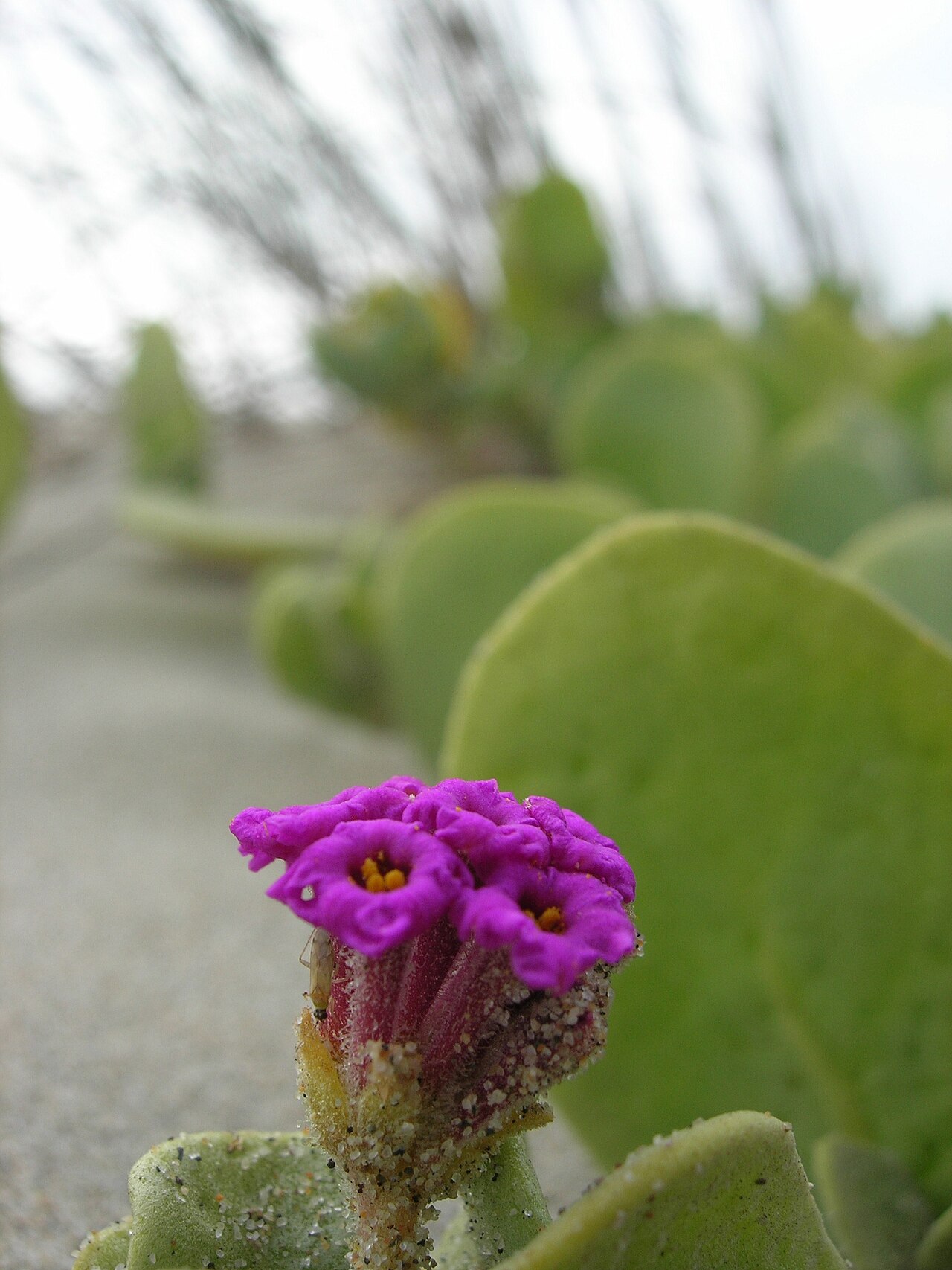
Red sand-verbena is easy to recognize on southern California beaches: look for thick, fleshy leaves on trailing stems and dense, dome-shaped heads of dark magenta flowers.
Growth Habit
It is a prostrate perennial that grows from a deep, thick taproot. Its stout, succulent stems trail across the sand for 3 feet or more, often partly buried, forming open to dense mats. Plants rarely rise more than a few inches above the sand, except for the flower stalks.
Leaves
The leaves are opposite, thick and fleshy, oval to nearly round, about 1 to 2 1/2 inches long, on short stalks. They are green to gray-green and often have sand stuck to their slightly sticky surfaces. The succulent tissues store water and help the plant cope with salt.
Flowers
The flowers are small, about 1/4 to 1/2 inch across, trumpet-shaped, and packed into rounded heads 1 to 2 inches wide on stalks that rise from the leaf axils. Their color ranges from deep magenta to wine red or dark purplish red. Flowering can occur in almost any month on the mild coast, peaking from late winter through summer.
Fruit & Seeds
Each flower develops a dry, one-seeded fruit enclosed in a hard, winged covering. The thick, corky wings help the fruits roll and blow across the sand, and they may also float, spreading the plant along the beach.
Look-alikes
Beach sand verbena (Abronia umbellata) has pink to lavender flowers and thinner leaves, and yellow sand verbena (Abronia latifolia) has yellow flowers and grows mainly farther north. Inland, desert sand verbena has pink-purple flowers and hairy, sticky leaves. Where red and beach sand verbenas grow together, hybrids with intermediate colors can occur.
Quick Facts
| Scientific Name | Abronia maritima Nutt. ex S. Watson |
| Family | Nyctaginaceae (four o’clock family) |
| Plant Type | Prostrate, succulent herbaceous perennial |
| Mature Height | 2–6 in |
| Mature Spread | 3–6 ft or more |
| Growth Rate | Moderate |
| Sun Exposure | Full sun |
| Water Needs | Low; fog, sea spray and occasional winter rain |
| Soil Type | Loose, fast-draining beach and dune sand |
| Soil pH | About 7.0–8.5 (tolerates salt) |
| Bloom Time | Most of the year; peak February–August |
| Flower Color | Deep magenta to wine red |
| Fall Color | None; evergreen in mild coastal climates |
| Fruit | Hard, thick-winged, one-seeded fruits |
| Deer Resistant | Not well documented; rarely exposed to deer on open beaches |
| USDA Hardiness Zones | 9–11 (frost-free coastal climates) |
Native Range
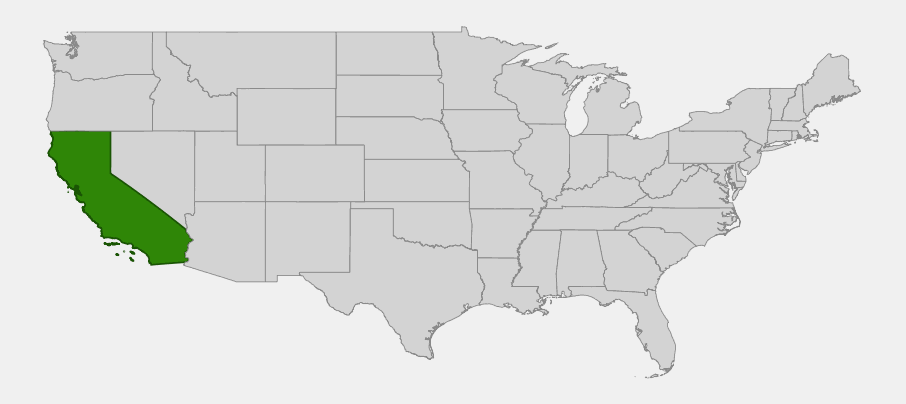
Red sand-verbena is native to the Pacific Coast of California and Mexico. In the United States it grows only in California, where USDA PLANTS lists it as native. Its range extends from southern San Luis Obispo County, around Morro Bay and Cayucos, south along the coasts of Santa Barbara, Ventura, Los Angeles, Orange and San Diego counties, and on several of the Channel Islands.
South of the border it continues along the beaches of Baja California and reaches the Gulf of California coast in Sonora. It is most common on less disturbed beaches and dune systems, such as those protected in state parks, national wildlife refuges and military lands. On many urban beaches, raking, trampling and development have reduced or eliminated it.
Its habitat is the upper beach and the seaward face of coastal foredunes, above the high tide line, in loose sand exposed to wind and salt spray. NatureServe ranks it as vulnerable (S3) in California because this narrow coastal habitat is so heavily used.
📋 Regional plant lists featuring Red Sand-Verbena: California & Nevada
Growing & Care Guide
Red sand-verbena is a specialist of coastal sand, and it does best in gardens that imitate a beach: full sun, loose sand and mild, frost-free weather. Native nurseries in coastal southern California occasionally offer it, and seed is sometimes available. Buy nursery-grown plants or seed, and never dig plants from beaches.
Light
Give it full sun. In shade it becomes leggy and flowers poorly.
Soil & Water
Plant it in deep, loose sand or very sandy, fast-draining soil. It tolerates salt spray and salty sand. In the wild it lives on fog, sea spray and winter rain, so water only to establish young plants and during long dry spells. Heavy or wet soil and frequent watering lead to rot.
Planting Tips
It is best suited to gardens on or near the coast in southern and central California. Use it in a dune garden, on a sandy slope or in a large container of sand, where its trailing stems can spread. Combine it with beach sand verbena, beach evening primrose, silver beachweed and other dune plants.
Pruning & Maintenance
Little care is needed. Remove dead stems in winter if you want a tidier look, and avoid walking on the mats. Sand drifting over the stems is natural, and the plant grows up through it.
Propagation
Sow seed in pure sand, ideally in the cool season. Sand verbena seeds can be slow and irregular to germinate, and some growers remove or soak the winged covering first. It can also be grown from stem cuttings taken in spring and rooted in sand. Seedlings form a deep taproot, so plant them out young.
Landscape Uses
- Coastal dune restoration: stabilizes loose sand on foredunes and upper beaches
- Seaside gardens: tolerates wind, salt spray and sandy soil on the immediate coast
- Groundcover on sand: a low, spreading mat with year-round color in frost-free climates
- Pollinator gardens: nectar for bees, butterflies and moths on the coast
- Educational plantings: an example of a rare beach-adapted wildflower of southern California
Wildlife & Ecological Value
On the beach, where few plants can grow, red sand-verbena provides flowers, shelter and stability for a surprising amount of life.
For Pollinators
Calscape lists the urban digger bee and the California bumble bee as confirmed visitors, and butterflies such as the painted lady and moths such as the white-lined sphinx moth as likely visitors. Like other sand verbenas, its tubular flowers are well suited to long-tongued insects.
For Birds
The flowers and mats attract insects that shorebirds and other birds feed on. The mats are part of the upper beach habitat used by beach-nesting birds such as the western snowy plover, which nests on open sand near dune vegetation.
For Mammals
Small mammals may shelter in dune vegetation, but red sand-verbena is not an important food plant for mammals.
Ecosystem Role
Its trailing stems trap blowing sand and help build and stabilize small dunes. The thick mats shelter beetles and other small beach-dwelling animals, and the plant is part of the native foredune community that is often replaced by non-native iceplant and European beachgrass.
Cultural & Historical Uses
The genus name Abronia comes from the Greek abros, “delicate” or “graceful”, referring to the flowers. The species name maritima means “of the sea”. Thomas Nuttall named the plant, and the name was published by Sereno Watson.
Sand verbenas are not related to true verbenas (Verbena). They belong to the four o’clock family, together with bougainvillea and the garden four o’clock, and their colorful “petals” are actually the tube-shaped calyx of each flower.
Red sand-verbena has been part of beach and dune restoration projects in southern California, where native dune plants are planted to replace iceplant and to rebuild habitat for rare animals.
Frequently Asked Questions
Is red sand-verbena a true verbena?
No. It belongs to the four o’clock family (Nyctaginaceae) and is not related to garden verbenas.
Where does red sand-verbena grow?
On sandy beaches and coastal foredunes from San Luis Obispo County south through southern California and the Channel Islands to Baja California and Sonora, Mexico.
Is red sand-verbena rare?
It has declined on many developed beaches, and NatureServe ranks it as vulnerable in California. Never dig it from the wild.
Can I grow red sand-verbena in my garden?
Yes, in coastal southern and central California, in full sun and deep, loose sand with very little water. It does poorly in heavy soil and frosty inland climates.
When does red sand-verbena bloom?
It can bloom almost year-round on the mild coast, with the heaviest flowering from late winter through summer.

Looking for a nursery that carries Red Sand-Verbena?
Browse our native plant nursery directory: California

