
California Jacob’s Ladder (Polemonium californicum)
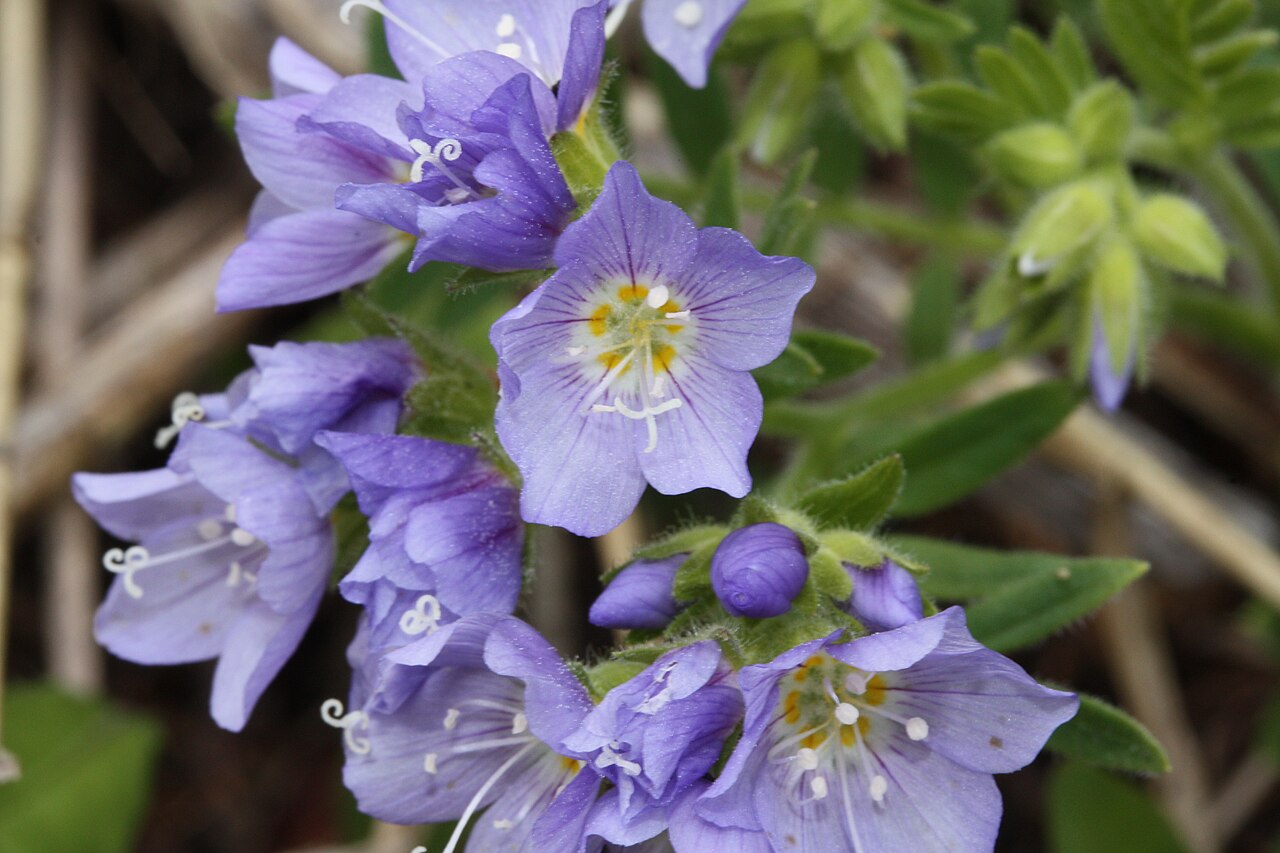
Polemonium californicum, known as California Jacob’s Ladder, low Jacob’s ladder or moving polemonium (the USDA name), is a low, clump-forming native wildflower of mountain forests in the Pacific Northwest, the Sierra Nevada and nearby ranges. In early to midsummer it bears loose clusters of cup-shaped, sky-blue to lavender flowers with yellow centers above tufts of ladder-like leaves, usually only 4 to 12 inches tall.
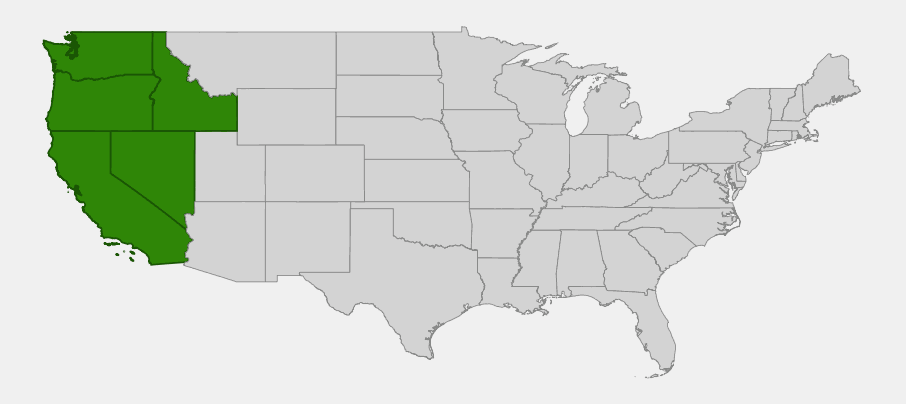
It belongs to the phlox family (Polemoniaceae). The common name Jacob’s ladder refers to the leaves, whose many paired leaflets look like the rungs of a ladder, recalling the biblical ladder to heaven in Jacob’s dream. Despite its name, it is not limited to California: it ranges from western Idaho and Washington south through Oregon to the Sierra Nevada and the Carson Range of Nevada.
California Jacob’s ladder grows in the shade and dappled light of montane and subalpine conifer forests, often along forest edges, openings and meadow margins. It is a lovely plant for cool, shady native gardens within its range. This guide covers how to identify it, where it grows, how to grow it and its value to pollinators.
Identification
California Jacob’s ladder is a small, tidy plant. Look for low clumps of ladder-like leaves on the forest floor, topped in early summer by a few open, blue flowers with a yellow eye.
Growth Habit
It is a perennial that grows from a slender, creeping rootstock and forms small clumps or loose patches. The flowering stems are usually 4 to 12 inches tall and lean or arch outward. The stems and upper parts are finely hairy and somewhat glandular.
Leaves
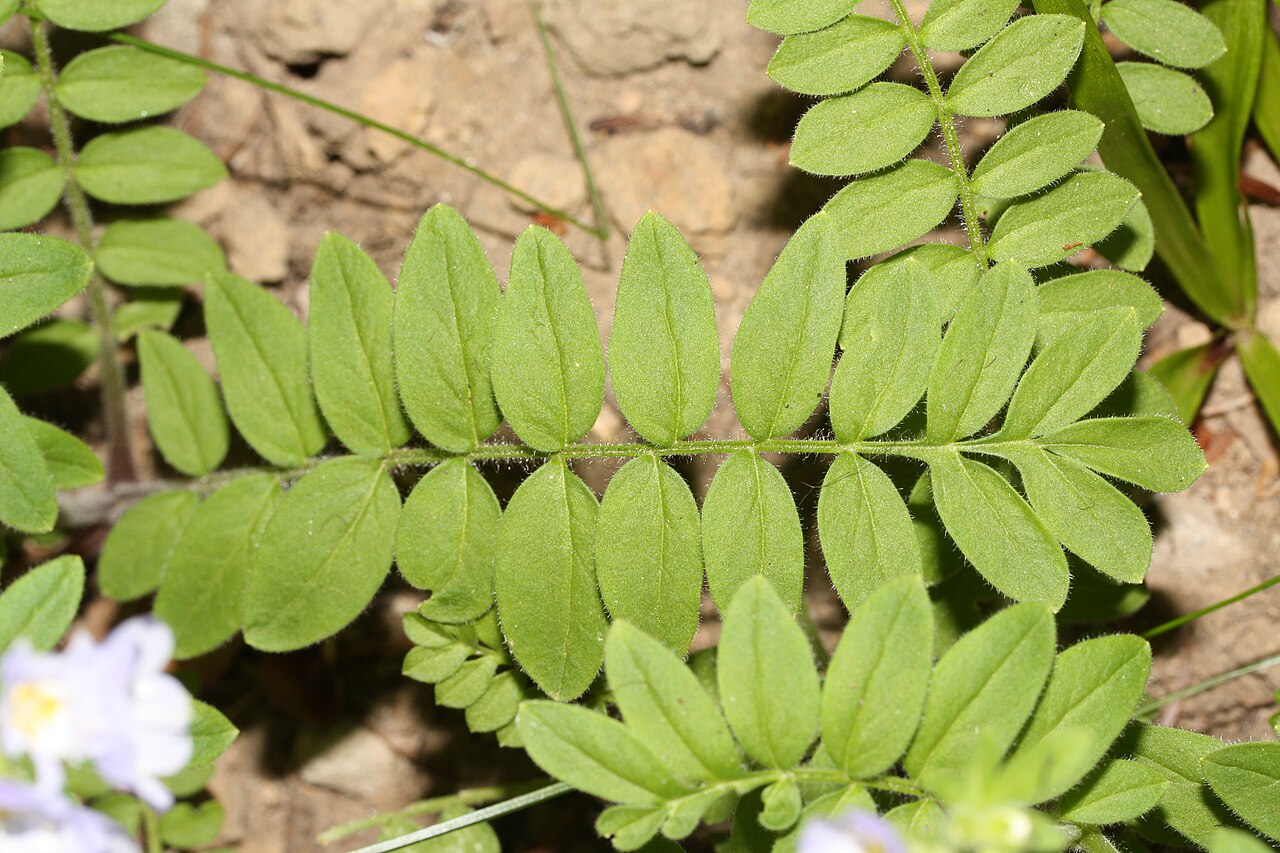
Most leaves are basal, 2 to 8 inches long, and pinnately compound, with about 11 to 25 small, oval to lance-shaped leaflets arranged in pairs along the stalk like the rungs of a ladder. The stem leaves are fewer and smaller.
Flowers
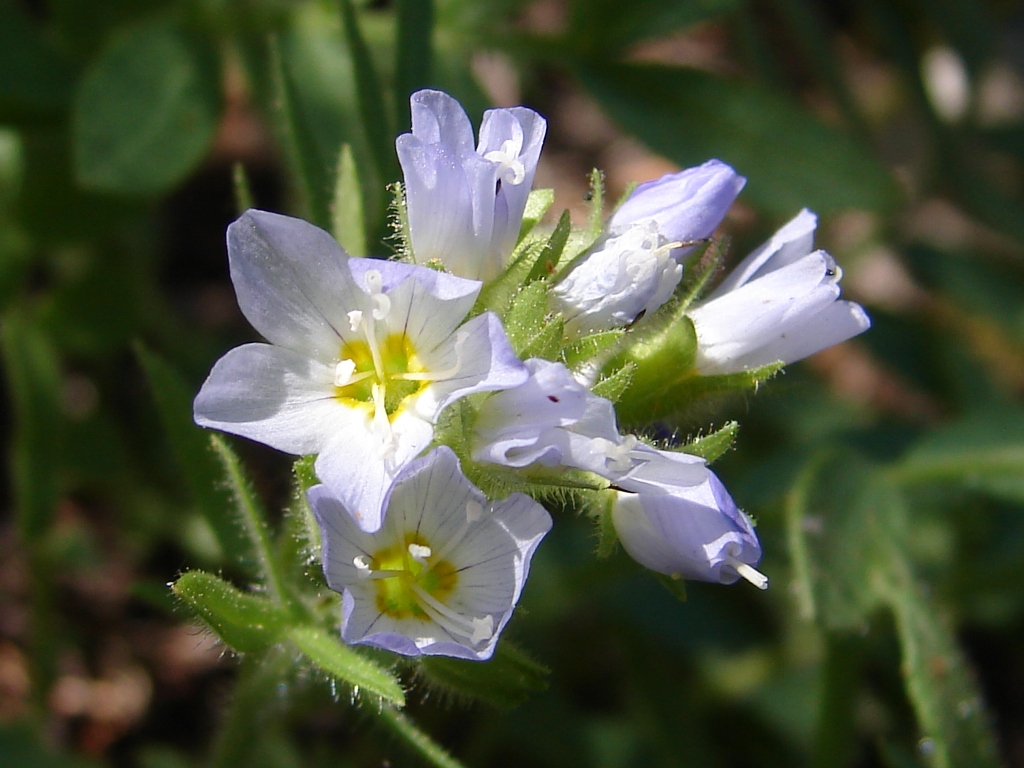
The flowers are borne in loose, few-flowered clusters at the stem tips. Each is open bell- to saucer-shaped, about 1/2 inch across, with five rounded lobes that are blue to lavender, sometimes pale blue or nearly white, and a yellow throat. Five white stamens with whitish anthers stand out from the center. Bloom time is mainly June to August, following snowmelt.
Fruit & Seeds
Each flower produces a small, three-chambered capsule held within the persistent calyx. It splits to release a few small seeds, which become sticky when wet.
Look-alikes
Several other Jacob’s ladders grow in western mountains. Western Jacob’s ladder (Polemonium occidentale) is a taller plant, often 1 to 3 feet, of wet meadows and streambanks, with many more flowers in a crowded cluster. Showy Jacob’s ladder (Polemonium pulcherrimum) has smaller, more crowded leaflets and grows mostly in rocky, open places. Sky pilot and other alpine species have dense, sticky leaves and grow above treeline. In the East, spreading Jacob’s ladder (Polemonium reptans) is a similar woodland plant, but its range does not overlap.
Quick Facts
| Scientific Name | Polemonium californicum Eastw. |
| Family | Polemoniaceae (phlox family) |
| Plant Type | Herbaceous perennial |
| Mature Height | 4–12 in |
| Mature Spread | 6–12 in |
| Growth Rate | Moderate |
| Sun Exposure | Part shade to light shade |
| Water Needs | Moderate; moist in spring and early summer |
| Soil Type | Moist, well-drained, humus-rich forest soils |
| Soil pH | About 5.0–7.0 |
| Bloom Time | June–August |
| Flower Color | Blue to lavender, sometimes pale or white, with a yellow throat |
| Fall Color | Not notable; foliage dies back in fall |
| Fruit | Small capsule with sticky seeds |
| Deer Resistant | Not well documented |
| USDA Hardiness Zones | 4–8 |
Native Range
California Jacob’s ladder is native to the mountains of western North America. USDA PLANTS lists it in Washington, Oregon, Idaho, Nevada and California.
In Washington it grows in the Olympic Mountains, the Cascades from the North Cascades to Mount Rainier and the Columbia River Gorge, and in the mountains of eastern Washington, including the Okanogan Highlands and the Blue Mountains. In Oregon it occurs in the Cascades, the Siskiyou region and the Blue and Wallowa Mountains in the northeast. In Idaho it is found in the northern panhandle and central mountains. In California it grows in the Klamath Mountains, the southern Cascades including Lassen, and the Sierra Nevada south to Fresno County, and it crosses into Nevada in the Carson Range near Lake Tahoe.
It grows in montane and subalpine conifer forests, usually in partial shade under fir, hemlock and pine, along forest edges and openings, in moist meadow margins and on shady slopes. It is found at about 3,000 to 10,000 feet, lower in the north and higher in the Sierra Nevada.
📋 Regional plant lists featuring California Jacob’s Ladder: Idaho, Eastern Oregon & Eastern Washington · Western Oregon & Western Washington · California & Nevada
Growing & Care Guide
California Jacob’s ladder is an attractive, low-growing native for shady gardens in cool, mountain-influenced climates. It is occasionally available from native plant nurseries and seed suppliers in the Pacific Northwest and northern California. It is best suited to gardens with cool summers and cold winters.
Light
Give it part shade or dappled light, such as under conifers or on the north side of a building. It tolerates morning sun in cool climates, but hot afternoon sun scorches the leaves.
Soil & Water
Plant it in moist, well-drained soil rich in organic matter, like a forest floor with leaf litter or conifer duff. Keep it evenly moist in spring and early summer; it tolerates some dryness later in summer once established, as it does in the wild. Avoid waterlogged soil.
Planting Tips
Plant nursery-grown plants in spring or fall, about 8 to 12 inches apart. It fits well at the front of a shade border or woodland garden with heartleaf arnica, wintergreens, ferns and other forest natives. Mulch with leaf litter or conifer needles to keep the roots cool.
Pruning & Maintenance
Remove spent flower stems to tidy the plant or leave them to set seed. Divide clumps in early spring if they become crowded. It needs little other care.
Propagation
Grow it from seed sown outdoors in fall; a period of cold, moist winter conditions improves germination. Established clumps can be divided carefully in early spring.
Landscape Uses
- Shade and woodland gardens: soft blue flowers and ferny foliage under trees
- Mountain and cabin landscapes: a native groundcover for conifer settings
- Pollinator gardens: early-summer nectar for bees and flies
- Rock garden edges: a tidy, low clump for shaded pockets
- Habitat restoration: a native forb of montane forest understories
Wildlife & Ecological Value
California Jacob’s ladder adds early-summer flowers to the forest floor and supports pollinators in mountain forests.
For Pollinators
The open, blue flowers are visited by bumblebees and other native bees, as well as syrphid flies and other small insects that gather nectar and pollen.
For Birds
The small seeds may be eaten by ground-foraging birds, but the plant is not a major food source for birds.
For Mammals
Its foliage may be grazed lightly by deer, elk and small mammals in mountain forests.
Ecosystem Role
As a forb of montane and subalpine forest understories, it contributes to the diversity of the herb layer, offering early-summer nectar after snowmelt and helping to cover and hold forest soils.
Cultural & Historical Uses
The species was described by the California botanist Alice Eastwood, longtime curator of botany at the California Academy of Sciences. The genus name Polemonium is an ancient Greek plant name whose origin is uncertain.
The name Jacob’s ladder refers to the biblical story of Jacob’s dream of a ladder reaching to heaven, as the paired leaflets resemble the rungs of a ladder. The USDA name, moving polemonium, is unusual, and most field guides use California Jacob’s ladder or low Jacob’s ladder.
Hikers in the Cascades and the Sierra Nevada often meet it along forest trails in early summer, where its blue flowers brighten the shaded ground as the snow melts.
Frequently Asked Questions
Why is it called Jacob’s ladder?
Its leaves have many paired leaflets arranged like the rungs of a ladder, recalling the ladder in the biblical story of Jacob’s dream.
Does California Jacob’s ladder only grow in California?
No. It grows in the mountains of Washington, Oregon, Idaho, Nevada and California.
When does California Jacob’s ladder bloom?
Mainly from June to August, soon after the snow melts in mountain forests.
Can I grow California Jacob’s ladder in my garden?
Yes, in cool-summer areas. Plant it in part shade in moist, humus-rich, well-drained soil.
What does California Jacob’s ladder look like?
It is a low clump of ladder-like leaves, 4 to 12 inches tall, with clusters of blue to lavender flowers with a yellow center.

Looking for a nursery that carries California Jacob’s Ladder?
Browse our native plant nursery directory: California · Idaho · Nevada · Oregon · Washington

