
Columbian Larkspur (Delphinium trolliifolium)
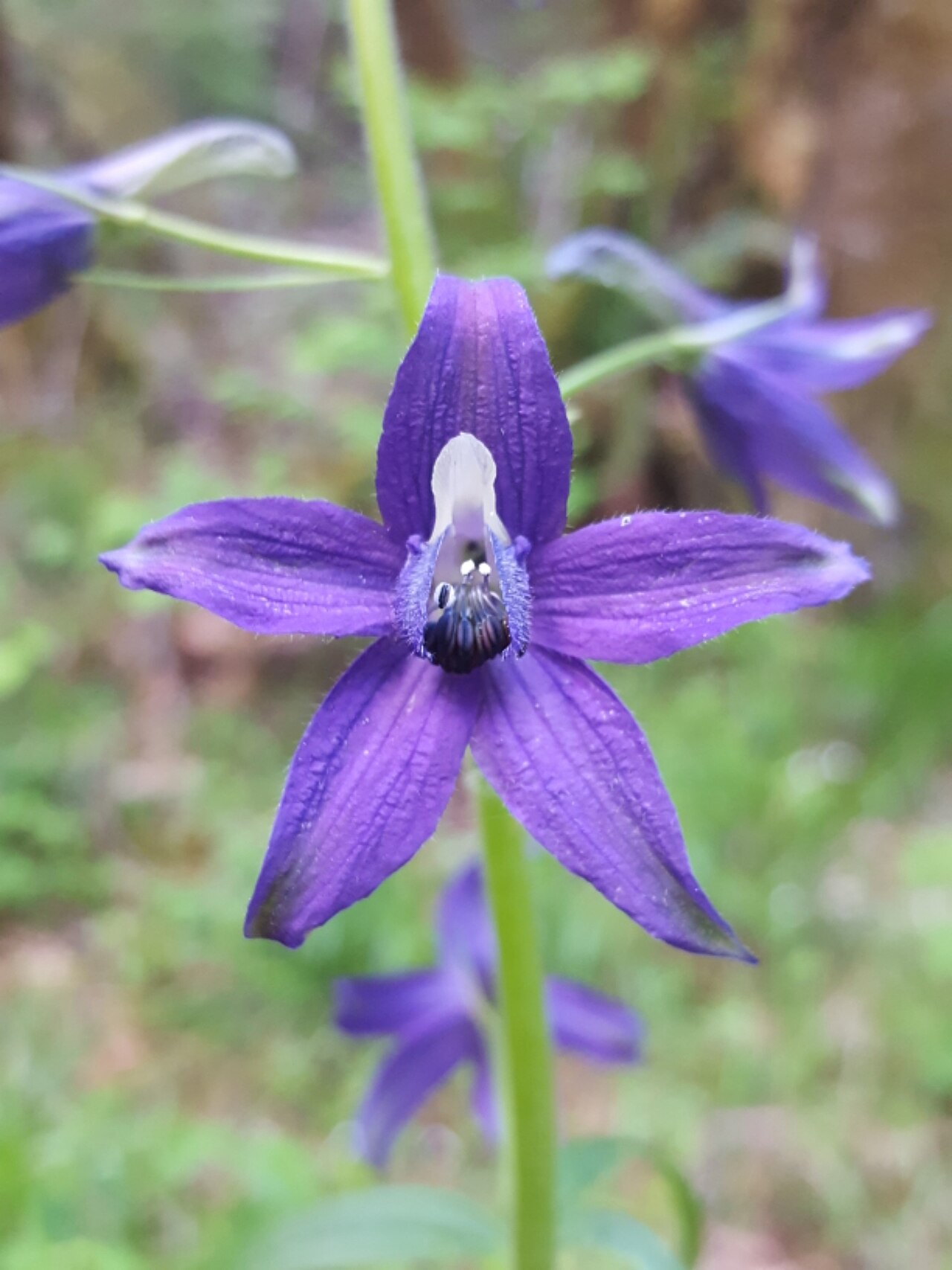
Delphinium trolliifolium, known as Columbian Larkspur (also cow poison or poison larkspur), is a tall woodland larkspur of the Pacific Northwest and northern California. In spring its hollow, leafy stems rise 2 to 5 feet from a short, thick rootstock and open long, loose spikes of deep violet-blue flowers with straight spurs and white upper petals. It is a member of the buttercup family (Ranunculaceae) and grows in moist, shady woods, along streams and on wet banks, mostly west of the Cascades.
Unlike the many short larkspurs of dry western grasslands, this is a lush plant of damp forests. Its large, shiny, deeply cut leaves resemble those of a globeflower, and a big clump in full bloom under alders or bigleaf maples is one of the finest wildflower sights of a Northwest spring. Bumblebees are the main visitors, and hummingbirds also feed at the long spurs.
Safety note: Columbian larkspur is poisonous. Like other larkspurs, all parts contain toxic diterpenoid alkaloids, especially the young growth and the seeds, and its common names “cow poison” and “poison larkspur” come from livestock losses. Never eat any part of the plant, wear gloves if your skin is sensitive, and do not plant it where children, pets or grazing animals could eat it.
Identification
Look for a tall, leafy larkspur, usually 2 to 5 feet high, with large, glossy, deeply cut leaves and a loose spike of widely spaced, deep blue to violet, spurred flowers with white upper petals, growing in moist shade in spring.
Leaves
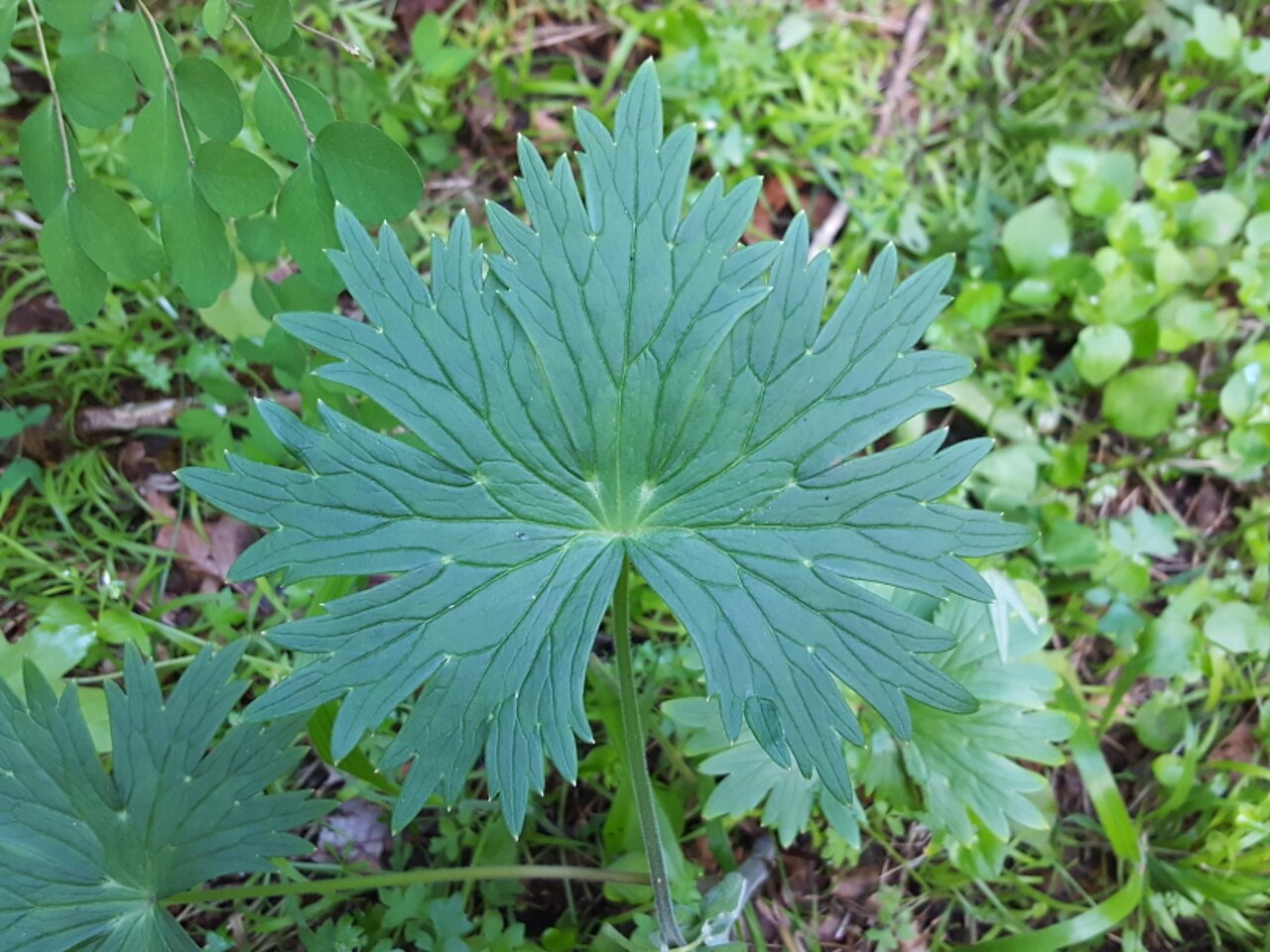
The leaves are numerous and spaced evenly along the stem, becoming smaller upward. The lower leaf blades are large, often 4 to 8 inches across, rounded in outline and cut nearly to the base into three main lobes. The side lobes are divided again, and each segment is broadly wedge-shaped and coarsely toothed. The leaves are bright green and somewhat shiny, and they stay green through the bloom period, unlike those of many dryland larkspurs.
Stems
Several stout, hollow, erect stems grow from each clump. They are smooth or sparsely hairy below, and the upper stem and flower stalks are often covered with fine, spreading, yellowish hairs. The stems are usually unbranched below the flower spike.
Flowers
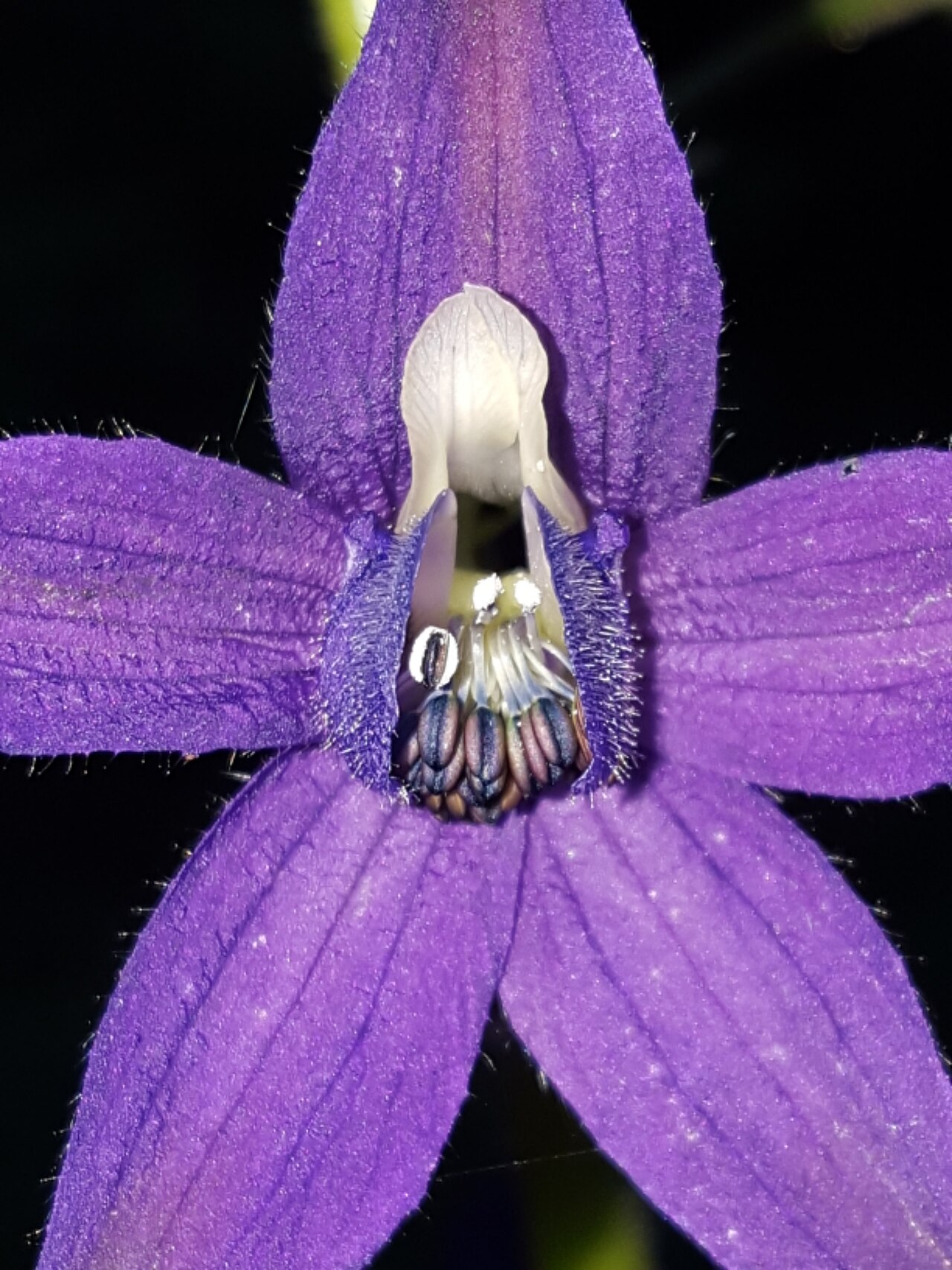
The flowers grow in a long, open raceme on spreading stalks that are often longer than the flowers themselves. Each flower is about 1 to 1½ inches across. The five petal-like sepals are deep blue to violet, oblong and pointed, about 3/4 to 1 inch long, and the upper sepal is drawn out into a straight spur about as long as the sepal blade. Inside are four small petals: the lower two colored like the sepals and the upper two white. Bloom runs from about April to June, depending on elevation.
Fruit & Seeds
Each flower forms three smooth, upright, pod-like follicles about 1/2 to 3/4 inch long. They dry and split along one side in summer to release small, dark, angular seeds.
Look-alikes
Columbian Monkshood (Aconitum columbianum) also has tall stems, blue-violet flowers and cut leaves in moist places, but its flowers have a hood instead of a spur. Tall Larkspur (Delphinium glaucum) is a taller, mountain species with many smaller flowers crowded in a dense spike, and its leaves are pale beneath. Upland Larkspur (D. nuttallianum) is a short plant of dry, open ground with few leaves. Columbian larkspur is told by its big, leafy stems, loose spike of large flowers and its moist, shady habitat west of the Cascades.
Quick Facts
| Scientific Name | Delphinium trolliifolium |
| Family | Ranunculaceae (buttercup family) |
| Plant Type | Herbaceous perennial |
| Mature Height | 2–5 ft |
| Mature Spread | 1–2 ft |
| Growth Rate | Moderate |
| Sun Exposure | Part shade to full shade |
| Water Needs | Medium to high; moist soil |
| Soil Type | Rich, moist, humusy loam |
| Soil pH | About 5.5–7.0 |
| Bloom Time | April–June |
| Flower Color | Deep blue to violet, white upper petals |
| Fall Color | None; dies back in late summer |
| Fruit | Cluster of three smooth follicles |
| Deer Resistant | Yes; toxic and rarely browsed |
| USDA Hardiness Zones | 6–9 |
Native Range
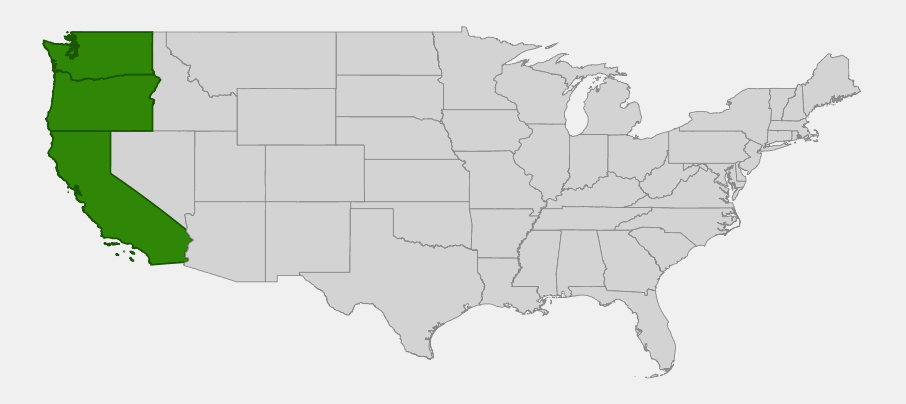
Columbian larkspur is native to the Pacific Coast states, from southwestern Washington south through western Oregon to northwestern California. USDA PLANTS maps it in Oregon and California. The Burke Herbarium’s Washington flora also treats it as native in Washington, west of the Cascade crest and in the Columbia River Gorge, so Washington is included on the map.
In Oregon it grows in the Coast Range, the Willamette Valley margins, the western Cascades, the Columbia River Gorge and the Klamath and Siskiyou Mountains. In California it reaches the North Coast Ranges and the Klamath region of the northwestern part of the state.
Its habitat is moist, shady woods at low to middle elevations: stream banks, wet slopes, seepy road cuts, waterfall spray zones and the edges of moist meadows and thickets. It often grows under red alder, bigleaf maple and Douglas-fir, among ferns and other moisture-loving wildflowers.
📋 Regional plant lists featuring Columbian Larkspur: Western Oregon & Western Washington · California & Nevada
Growing & Care Guide
Columbian larkspur is a handsome, tall perennial for moist, shady native gardens in the maritime Northwest and northern California. Give it rich soil, steady moisture and shelter from wind, and keep its toxicity in mind when choosing a spot.
Light
Part shade is ideal, such as dappled light under deciduous trees or morning sun with afternoon shade. It tolerates fairly deep shade but flowers less there. In full sun it needs constantly moist soil and usually looks stressed by midsummer.
Soil & Water
Plant in deep, rich, humusy loam that stays moist through spring. Water during dry spells while it is growing and blooming. It tolerates seasonally wet soil along streams but not stagnant, waterlogged ground. A leaf-litter or compost mulch keeps the roots cool and moist.
Planting Tips
Set out container plants in fall or early spring, about 18 to 24 inches apart, at the back of a shade border, in a woodland garden or beside a stream or rain garden. The tall stems can lean or break in wind, so plant it among shrubs or ferns that give support. Keep it away from children’s play areas, pet runs and pastures because it is poisonous.
Pruning & Maintenance
Cut flower stalks back after bloom if you do not want seed, or leave a few to ripen for self-sowing. The foliage yellows and dies back in late summer; cut it down then. Slugs and snails may chew emerging shoots in spring. Wear gloves when handling it if your skin is sensitive.
Propagation
Grow from fresh seed sown outdoors in fall, or in pots left outside over winter; larkspur seed usually needs a cold, moist period before it sprouts, and old seed germinates poorly. Seedlings often take two or three years to flower. Established clumps can be divided carefully in early spring, but the thick roots resent disturbance. Do not dig plants from the wild.
Landscape Uses
- Woodland gardens: tall blue spikes for moist, partly shaded beds
- Streamside and rain gardens: thrives in moist soil along banks
- Pollinator gardens: bumblebees and hummingbirds visit the spurred flowers
- Back of the border: 2 to 5 feet tall; good behind ferns and low perennials
- Restoration plantings: riparian and moist forest-edge projects within its range
Wildlife & Ecological Value
Columbian larkspur is an important spring nectar plant for long-tongued bees in moist western forests.
For Pollinators
The long nectar spur rewards long-tongued insects, and bumblebees are the main pollinators, working the flowers from bottom to top of the spike. Hummingbirds also feed at the flowers. Some short-tongued bees rob nectar by biting holes in the spur. Butterflies and flies visit occasionally.
For Birds
Hummingbirds, especially rufous hummingbirds on their spring migration and nesting grounds, take nectar from the flowers. The toxic seeds are not an important bird food.
For Mammals
Deer and elk generally avoid it because of its toxic alkaloids. Cattle are the animals most often poisoned by larkspurs, which is why this species is called cow poison.
Ecosystem Role
As a tall, early-blooming perennial of streamsides and moist forest openings, it adds nectar and structure to riparian plant communities. Its leafy clumps also help hold soil on wet banks.
Cultural & Historical Uses
The genus name Delphinium comes from the Greek delphis, dolphin, from the shape of the flower buds. The species name trolliifolium means “with leaves like Trollius,” the globeflower genus, because of its large, deeply divided leaves. Asa Gray described the species in 1872. The common name Columbian larkspur refers to the Columbia River region where it was collected.
Larkspurs are among the leading causes of cattle deaths from poisonous plants in the western United States. Their alkaloids act on the nerves and muscles, and the plants are most toxic in spring. Names like cow poison and poison larkspur reflect the experience of early ranchers in the Northwest.
On this site, related plants include Red Larkspur, Tall Larkspur and Columbian Monkshood, as well as the globeflower whose leaves it resembles, White Globeflower.
Frequently Asked Questions
Is Columbian larkspur poisonous?
Yes. All parts contain toxic alkaloids, especially young shoots and seeds. It is poisonous to people, pets and livestock if eaten, and it has killed cattle. Never eat it and keep it away from grazing animals and children.
Where does Columbian larkspur grow?
In moist, shady woods, along streams and on wet banks from southwestern Washington and the Columbia River Gorge through western Oregon to northwestern California.
How tall does Columbian larkspur get?
Usually 2 to 5 feet tall, with leafy, hollow stems and a long, loose spike of deep blue flowers in spring.
Can I grow Columbian larkspur in my garden?
Yes, in part shade with rich, moist soil, especially in the maritime Northwest. Grow it from fresh seed or nursery plants and plant it away from pets, children and livestock.
What pollinates Columbian larkspur?
Mainly bumblebees, which reach the nectar in the long spur. Hummingbirds also visit the flowers.

Looking for a nursery that carries Columbian Larkspur?
Browse our native plant nursery directory: California · Oregon · Washington

