
Common Goldfields (Lasthenia gracilis)
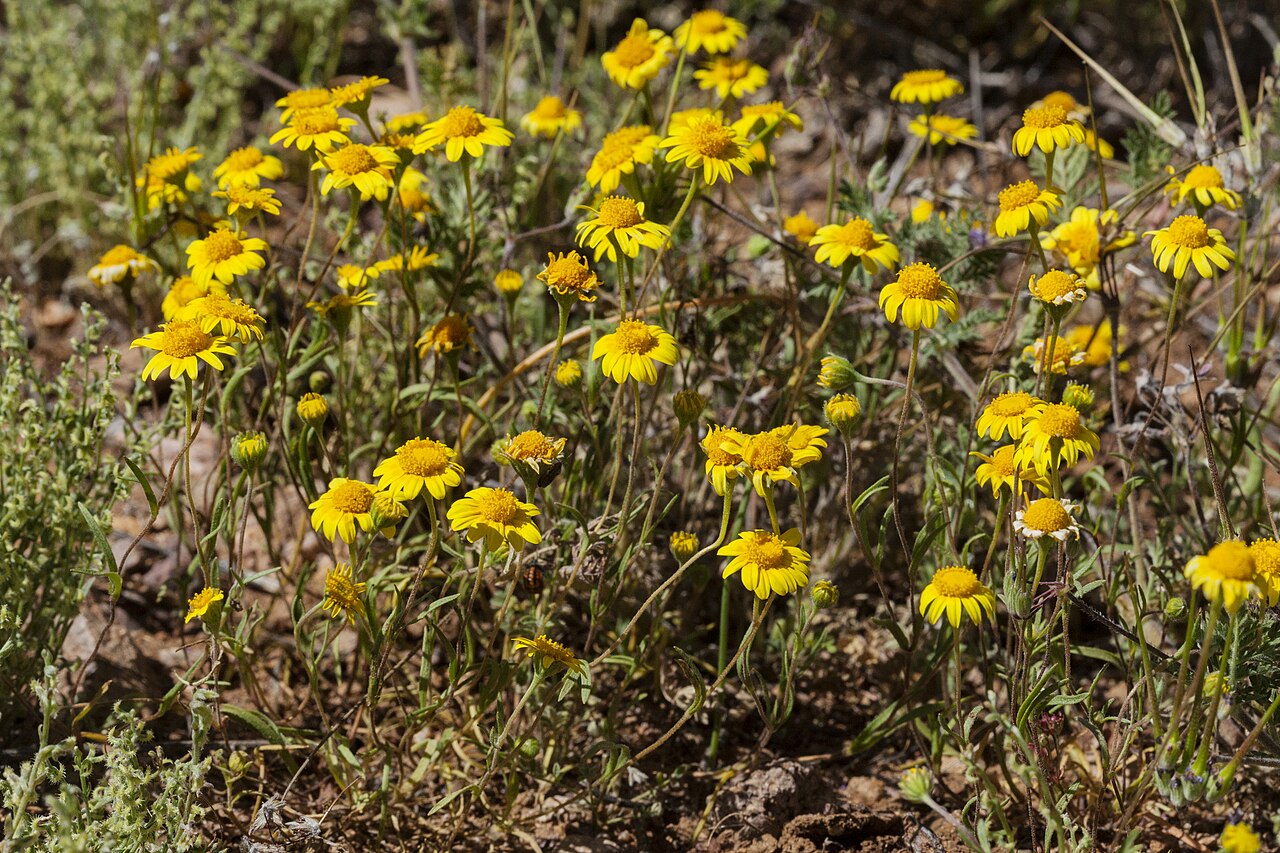
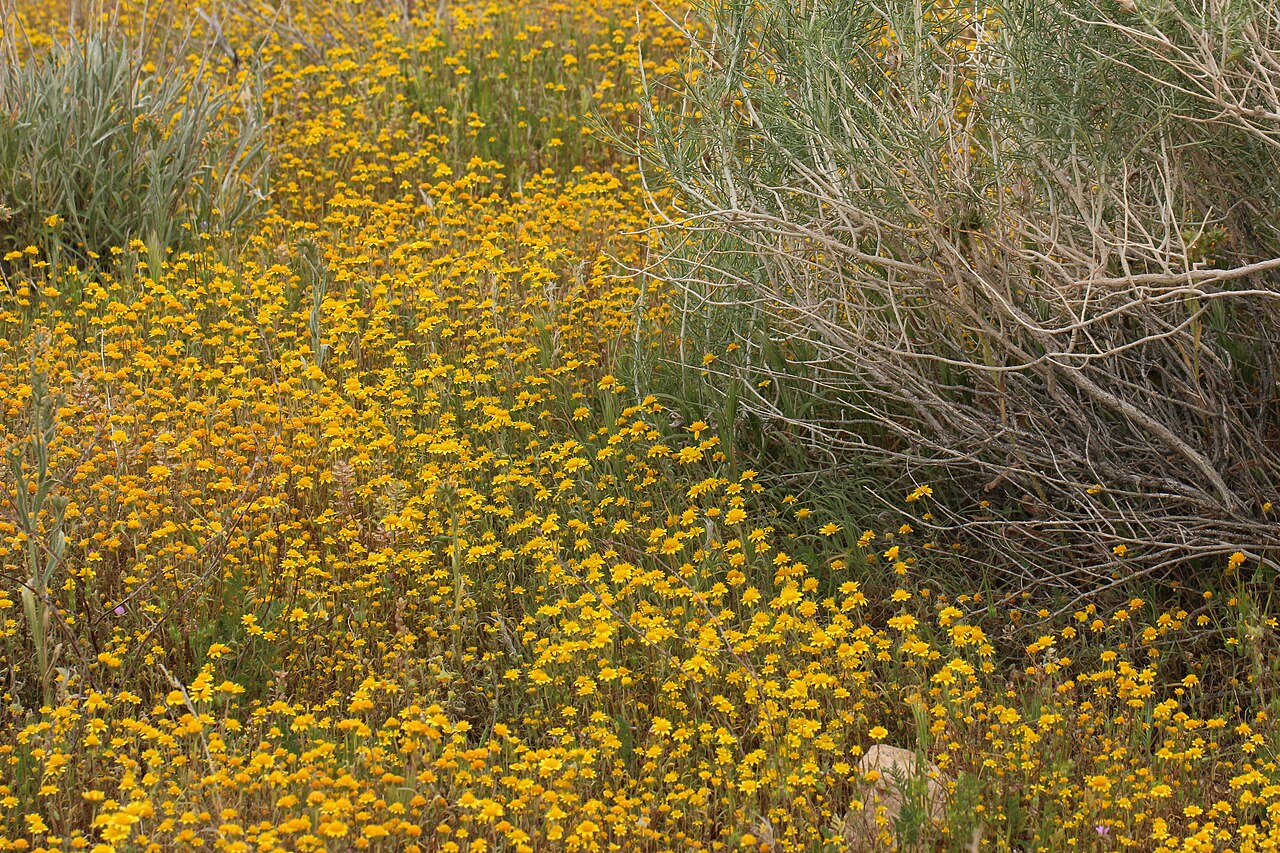
Lasthenia gracilis, known as Common Goldfields (also needle goldfields), is a small spring annual in the aster family (Asteraceae). In wet years it blooms in such numbers that whole valley floors, hillsides and desert flats turn solid yellow, which is how goldfields got their name. Plants are usually 4 to 16 inches tall, with slender, often reddish stems, narrow opposite leaves and a single golden, daisy-like flower head at the tip of each branch.
For most of the 20th century this plant was lumped into Lasthenia californica. DNA, chromosome and flower-pigment studies around 2001 showed that “California goldfields” was really two species that look almost the same. The widespread inland plant of the Central Valley, foothills, Mojave Desert edges and Arizona is now L. gracilis, while California goldfields (L. californica in the narrow sense) grows mainly near the coast and on serpentine. Many older books and seed packets use the name L. californica for both.
Common goldfields is native to California, Arizona and Baja California. It is one of the easiest native annuals to grow from seed: sow it in fall on bare, sunny ground, let winter rain do the work, and enjoy a carpet of gold from late winter into spring before the plants set seed and vanish for the summer.
Identification
In the field, look for low, slender annuals with very narrow opposite leaves and solitary golden flower heads, usually growing in dense colonies on open ground in spring.
Growth Habit
A winter annual that germinates with fall or winter rain and dies after setting seed in late spring. Stems are thin, erect to sprawling, simple or branched, and usually 4 to 16 inches tall. They are often reddish and covered with fine, soft hairs. In crowded colonies plants stay small and unbranched; with space and moisture a single plant can branch into a little bouquet.
Leaves
Leaves are opposite, linear to very narrowly oblanceolate, about 1/3 to nearly 3 inches long, with smooth (untoothed) edges and a covering of fine hairs. The paired leaves join slightly around the stem at their bases.
Flowers
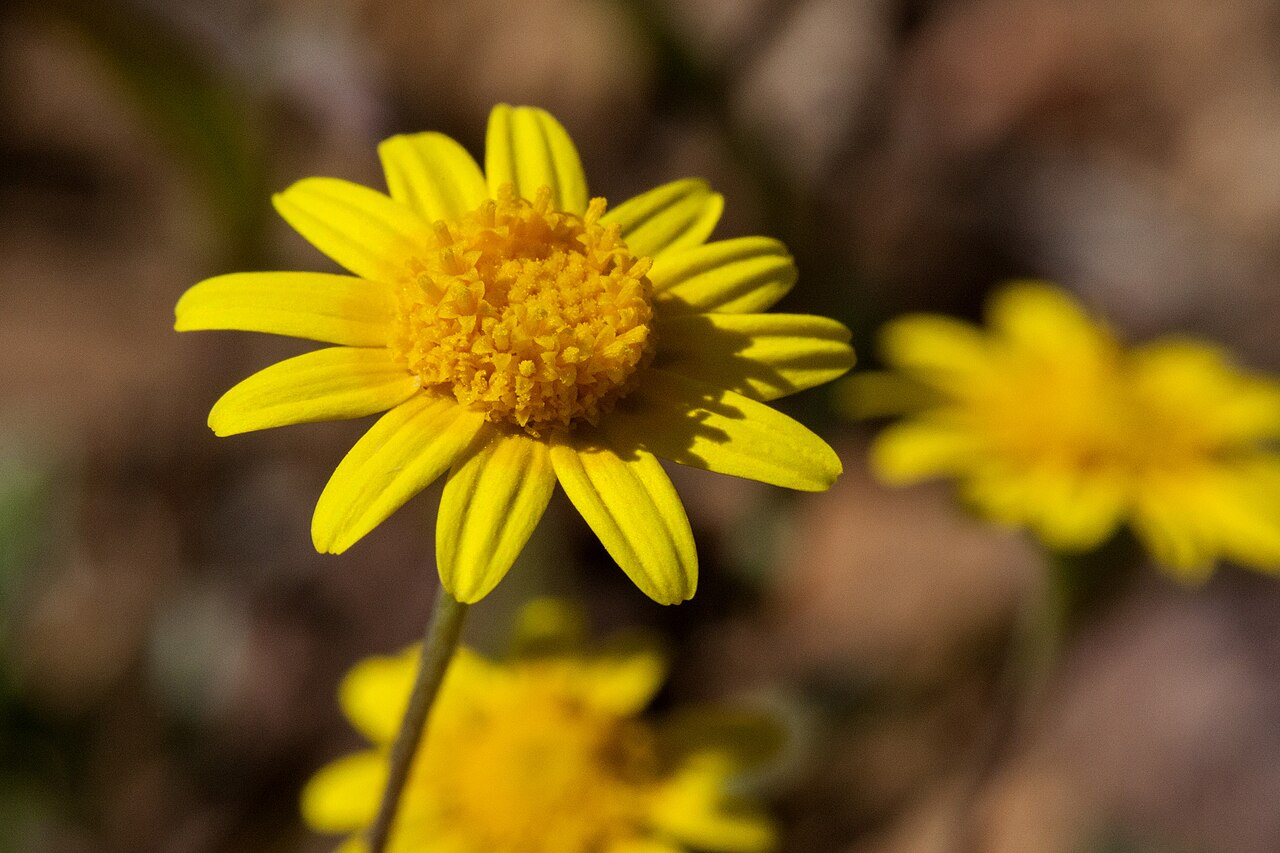
Each stem ends in one flower head on a slender stalk. The cup-shaped involucre is about 1/4 to 3/8 inch tall. Around it are 6 to 13 golden-yellow ray flowers, each about 1/4 to 3/8 inch long, surrounding a raised dome of many small yellow disk flowers. Flowers open from about February to June, earlier in the deserts and later in the hills.
Seeds
The small, dark, narrow achenes (technically cypselae) ripen within a few weeks of flowering. They may carry a few small, awn-tipped pappus scales or none at all. Seeds stay dormant in the soil through the dry summer and can persist for several years.
Look-alikes
California goldfields (L. californica) is nearly identical and is best separated by location and by technical characters. Yellowray goldfields (L. glabrata) is hairless and fleshy, with leaves joined in pairs at the base, and grows in wet alkaline flats and vernal pools. Other yellow spring daisies, such as tidy tips (white-tipped rays) and coreopsis or desert dandelions (larger heads, different leaves), are usually easy to tell apart.
Quick Facts
| Scientific Name | Lasthenia gracilis |
| Family | Asteraceae (aster family) |
| Plant Type | Cool-season annual wildflower |
| Mature Height | 4–16 in |
| Mature Spread | 2–6 in per plant; forms dense colonies |
| Growth Rate | Fast (germination to bloom in a few months) |
| Sun Exposure | Full sun |
| Water Needs | Low; moist in winter and spring, dry in summer |
| Soil Type | Sandy, gravelly, clay or alkaline soils; open ground |
| Soil pH | Neutral to alkaline (about 6.0–8.5) |
| Bloom Time | February–June |
| Flower Color | Golden yellow |
| Fall Color | None; plants die back by early summer |
| Fruit | Small, dark achenes, with or without tiny pappus scales |
| Deer Resistant | Moderately; rarely a favored browse plant |
| USDA Hardiness Zones | Annual; best as a fall-sown annual in zones 7–10 |
Native Range
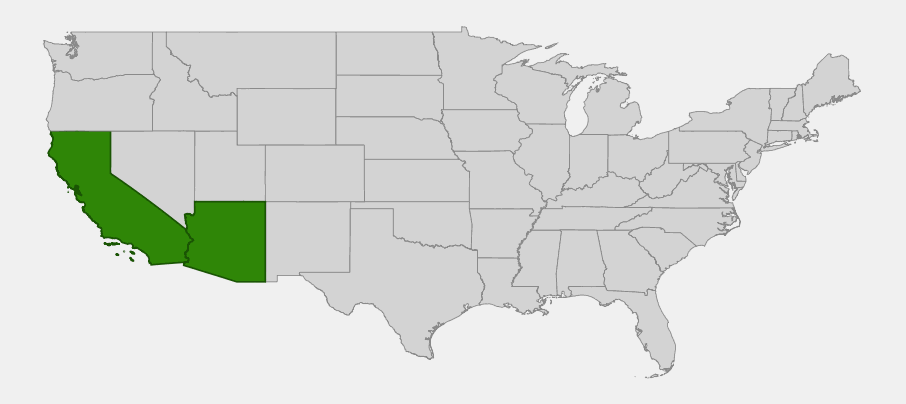
USDA PLANTS lists common goldfields as native to California. Botanical treatments and herbarium records also place it in southern and central Arizona, and it extends south into Baja California, Mexico. Some treatments also report it from southwestern Oregon, but most northern records of goldfields there belong to L. californica.
In California it is one of the most common spring wildflowers, found in the Central Valley, the foothills of the Sierra Nevada and Coast Ranges, the Transverse and Peninsular Ranges, the interior valleys of southern California and the western edge of the Mojave and Colorado deserts. The famous goldfields displays at the Antelope Valley California Poppy State Natural Reserve and Carrizo Plain National Monument are largely this species.
In Arizona it grows on desert flats, bajadas and grassland edges, mostly at low to middle elevations in the southern and central part of the state. Across its range it favors open sites with little competition: grasslands, oak savanna openings, desert washes and flats, alkaline sinks, burned areas and disturbed ground.
📋 Regional plant lists featuring Common Goldfields: Arizona & New Mexico · California & Nevada
Growing & Care Guide
Common goldfields is grown from seed sown directly where it is to bloom. It needs sun, open ground and winter moisture, and it does best when it is not fertilized or pampered.
Light
Full sun. In shade the plants become thin and floppy and bloom poorly.
Soil & Water
Any well-drained soil works, from sand to clay, including somewhat alkaline soils. Poor, lean soil is best; rich, fertilized soil favors weeds and leggy plants. Rely on winter rain where possible. In dry winters, water every week or two until flowering. Stop watering once the plants begin to set seed; summer water only helps weeds.
Planting Tips
Sow seed in fall or early winter, just before the rainy season, onto bare, weed-free soil. Rake it in lightly or just press it onto the surface, because the seed is tiny. Sow thickly for a solid carpet; mixing the seed with sand makes even sowing easier. It combines well with California poppy, baby blue eyes, tidy tips and other spring annuals.
Pruning & Maintenance
Pull weeds, especially non-native grasses, while the seedlings are small. After the plants turn brown in late spring, leave them standing for a few weeks to drop their seed, then cut or rake them off. Disturb the soil lightly in fall to help the next generation reseed.
Propagation
By seed only. Collect seed heads as they dry and turn tan in late spring, store the seed dry, and sow it the next fall. Established patches often reseed themselves year after year if the ground stays open.
Landscape Uses
- Wildflower meadows: a carpet of gold in spring seed mixes
- Bulb and annual beds: a low foreground for spring-blooming natives
- Pollinator gardens: early nectar and pollen for small native bees
- Restoration: quick cover on open, disturbed or burned ground
- Containers: a cheerful spring pot for sunny patios
Wildlife & Ecological Value
Common goldfields is a key early-season food source in California and Arizona grasslands and deserts, when few other plants are blooming.
For Pollinators
The open flower heads offer easy-to-reach nectar and pollen to small native bees, flies, beetles and butterflies. Goldfields are among the most important early pollen plants in western grasslands, and several native bees depend heavily on them in spring.
For Birds
Finches, sparrows and other seed-eating birds forage on the small seeds after the plants dry.
For Mammals
Kangaroo rats, pocket mice and other seed-eating rodents harvest goldfields seed. Rabbits and grazing animals sometimes eat the young plants.
Ecosystem Role
Like other native annuals, common goldfields quickly covers open soil between perennials and helps hold it in place during winter rains. Its seed bank lets populations survive drought years and return in wet years, producing the famous mass blooms.
Cultural & Historical Uses
The genus Lasthenia is named for Lasthenia of Mantinea, a woman who, according to tradition, disguised herself as a man to attend Plato’s lectures. The species name gracilis means slender or graceful, describing the thin stems.
Goldfields are among the most photographed wildflowers in California. Spring “superblooms” at places such as Carrizo Plain and the Antelope Valley draw large crowds, and goldfields often provide much of the gold in those displays. Visitors are asked to stay on trails so they don’t trample the plants.
The 2001 split of California goldfields into two species is a well-known example of “cryptic species” in botany: plants that look almost the same but have separate evolutionary histories, revealed through DNA and chemistry.
Frequently Asked Questions
Is common goldfields the same as California goldfields?
Not quite. Both were long called Lasthenia californica, but botanists now treat the widespread inland plant as L. gracilis and the mainly coastal plant as L. californica. They look almost identical, and seed sold as “California goldfields” may be either.
Is common goldfields an annual?
Yes. It sprouts with fall or winter rain, blooms in spring and dies by early summer, returning the next year from seed.
When should I sow goldfields seed?
In fall or early winter, before the rainy season, on bare soil in full sun.
Does it need summer water?
No. It finishes its life cycle before summer. Summer water mainly encourages weeds.
Is common goldfields good for bees?
Yes. It is an important early spring source of pollen and nectar for many small native bees and other pollinators.

Looking for a nursery that carries Common Goldfields?
Browse our native plant nursery directory: Arizona · California

