
Talayote (Cynanchum racemosum)
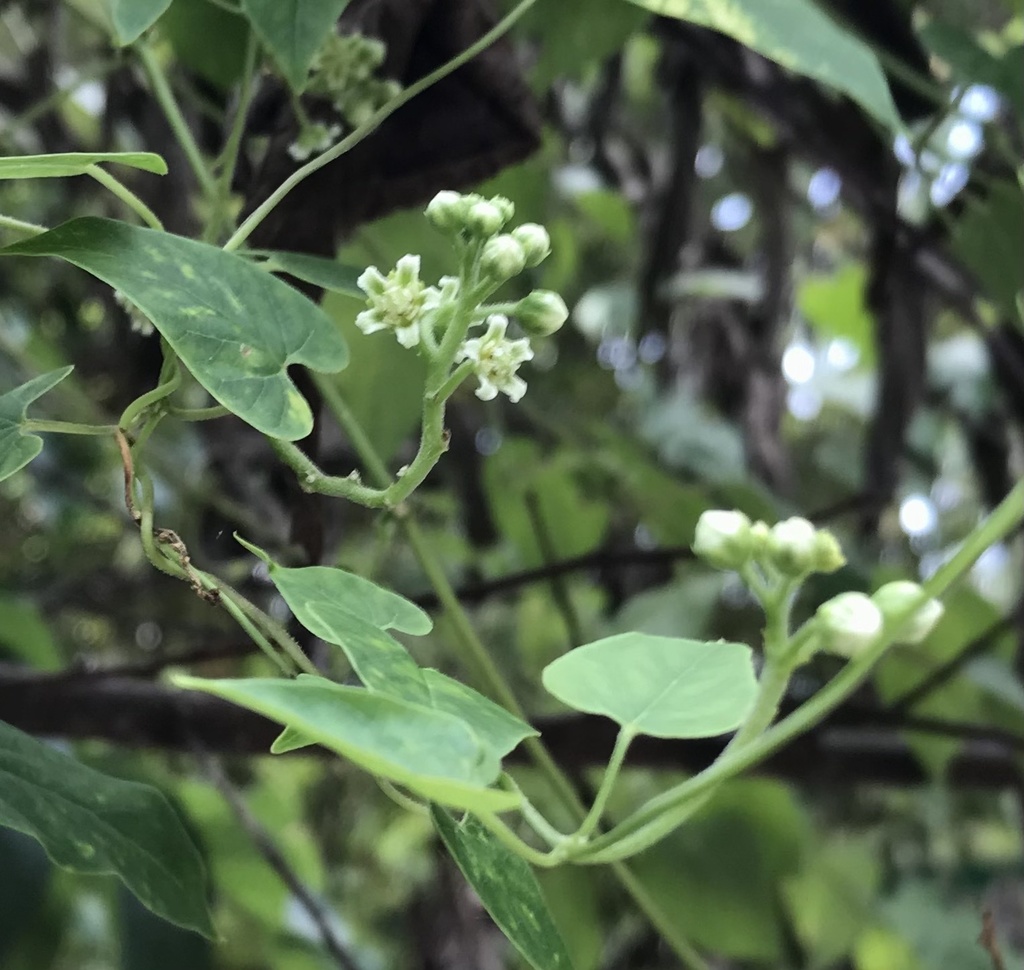
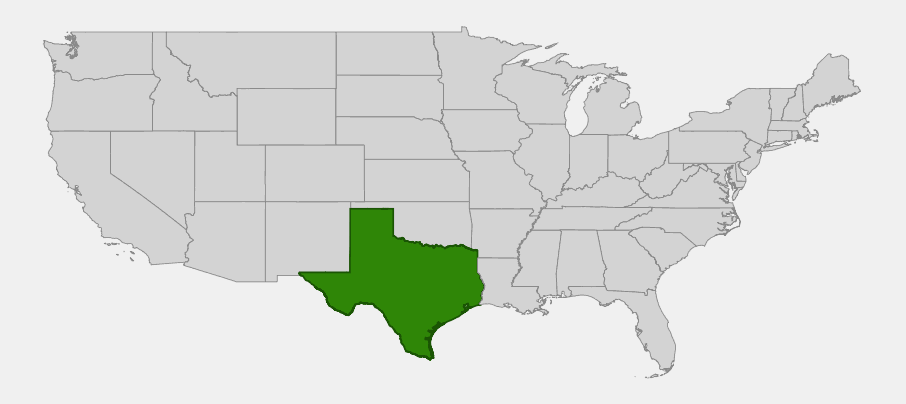
Cynanchum racemosum, known as Talayote, is a slender, twining perennial vine of the milkweed subfamily (Asclepiadoideae) of the dogbane family, Apocynaceae. It climbs through shrubs, fences and small trees on stems up to about 15 feet long, with opposite, heart-shaped leaves and small clusters of greenish-white to cream flowers. In the United States it grows only in Texas, and it continues south into Mexico.
The plants in Texas belong to variety unifarium, which USDA PLANTS lists under the symbol CYRAU. Some botanists, and iNaturalist, now treat this variety as its own species, Cynanchum unifarium; older books may call it Metastelma racemosum. Whatever the name, it is an easy vine to recognize once you know it: thin, twining green stems, heart-shaped leaves and, in season, little starry flowers with a central crown typical of milkweeds.
Talayote is not a showy garden plant, but it is a fine native for wildlife gardens in Central and South Texas, where it scrambles through brush and adds a light, green screen. Like other milkweed vines it has milky sap, so wear gloves when handling it and keep it away from pets and livestock that might chew on it.
Identification
Look for a thin, twining vine with paired, heart-shaped leaves, milky sap and small, star-shaped greenish-cream flowers in short clusters at the leaf joints.
Growth Habit
Talayote is a herbaceous to slightly woody perennial vine that dies back or loses its leaves in cold or very dry weather. The slender stems twine counterclockwise around twigs, fence wire and other plants and can climb 10 to 15 feet. Several stems often twist around each other into rope-like strands, which turn pale and fibrous with age.
Leaves
The leaves are opposite, simple and heart-shaped (cordate) to broadly ovate, with a pointed tip and a deep notch at the base where the leaf stalk attaches. They are usually 1 1/2 to 4 inches long, thin, smooth and medium green. Broken leaves and stems ooze white, milky sap.
Flowers
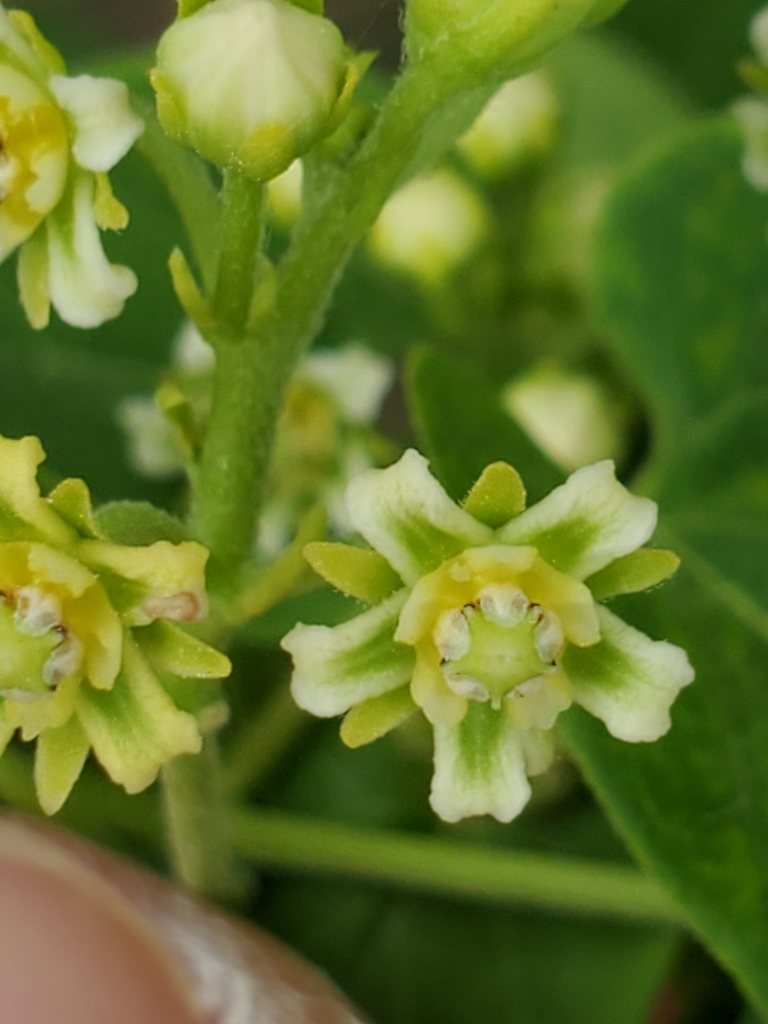
Small flowers, about 1/4 inch across, are borne in short, stalked clusters (racemes or umbel-like groups) in the leaf axils. Each has five spreading, greenish-white to cream petals and a small central corona, the crown-like structure found in milkweeds. In Texas, the main flowering is in late summer and early fall, but plants can bloom from spring into fall after rain.
Fruit & Seeds
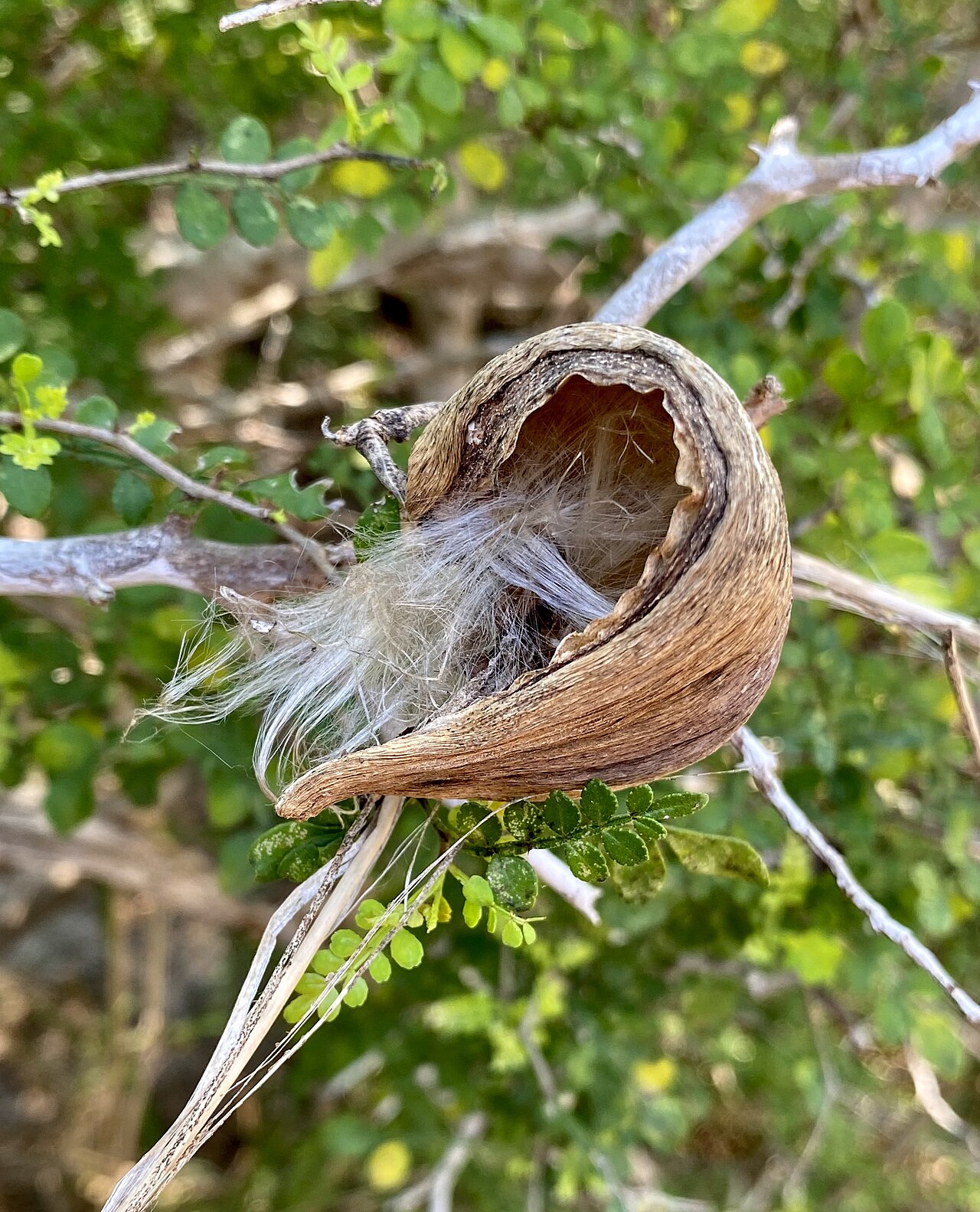
The fruit is a smooth, tapering pod (follicle) that splits along one side when ripe. It releases flat brown seeds, each with a tuft of silky white hairs that carries it on the wind, just like the seeds of milkweeds. Dry, split pods often remain on the vine for months.
Look-alikes
Honeyvine climbing milkweed (Cynanchum laeve) is a close relative with similar heart-shaped leaves; it has larger, white, more fragrant flowers and much larger, plump pods, and in Texas grows mainly in the eastern half of the state. Pearl milkweed (Matelea reticulata) has hairy leaves and flat green flowers with a shiny pearl-like center. Hartweg’s climbing milkweed (Funastrum cynanchoides) has narrow leaves and rounded clusters of white to pinkish flowers. Wild morning glories have similar leaves but no milky sap in the leaves and large funnel-shaped flowers.
Quick Facts
| Scientific Name | Cynanchum racemosum (Texas plants: var. unifarium) |
| Family | Apocynaceae (dogbane family; milkweed subfamily) |
| Plant Type | Twining perennial vine |
| Mature Height | Climbs to about 15 ft |
| Mature Spread | 3–6 ft |
| Growth Rate | Moderate to fast |
| Sun Exposure | Part shade to full sun |
| Water Needs | Low to medium; drought tolerant |
| Soil Type | Well-drained limestone, clay, loam or sandy soils |
| Soil pH | Neutral to alkaline (about 6.5–8.5) |
| Bloom Time | Mainly August–September; also spring to fall after rain |
| Flower Color | Greenish-white to cream |
| Fall Color | None notable |
| Fruit | Smooth, tapering pod with silky-haired seeds |
| Deer Resistant | Usually; milky sap discourages browsing |
| USDA Hardiness Zones | 8–10 |
Native Range
Talayote ranges from Texas south into Mexico. USDA PLANTS lists it as native only in Texas within the United States, where it is represented by variety unifarium, the variety that extends into northeastern Mexico. It is not found in Canada.
In Texas it is most common on the Edwards Plateau and along the Balcones Escarpment, from Austin and San Marcos through New Braunfels and San Antonio west to the Hill Country around Bandera and Rocksprings. It also grows south through the South Texas Plains to the Lower Rio Grande Valley, including Laguna Atascosa National Wildlife Refuge, and reaches the Trans-Pecos in Brewster County. The Illustrated Flora of North Central Texas covers it as well, and there are scattered records north to the Rolling Plains and into the eastern edge of the Post Oak Savanna.
It grows in thickets, brushy limestone slopes, wooded creek banks and canyon edges, oak-juniper woodland, and along fencerows and shady city greenbelts, usually twining up through shrubs such as hackberry, persimmon, bumelia and mesquite.
📋 Regional plant lists featuring Talayote: South & West Texas · Arkansas, Louisiana, Eastern Oklahoma & Eastern Texas
Growing & Care Guide
Talayote is an undemanding vine for Central and South Texas gardens. It is rarely sold, but it often arrives on its own in brushy, wild corners, and it can be grown from seed collected responsibly from plants you are allowed to harvest.
Light
It grows in part shade to full sun. In the wild it usually climbs through shrubs at the edge of woodland, with its roots shaded and its leaves reaching the light. In hot, exposed sites it appreciates afternoon shade.
Soil & Water
Any well-drained soil works, including thin limestone soils, clay and sandy loam. Once established it is very drought tolerant and may drop its leaves in long dry spells, then leaf out again after rain. Water a new plant during its first summer.
Planting Tips
Plant it next to a native shrub, a fence or a simple trellis it can twine around. It is a light vine that will not smother sturdy shrubs, and it combines well with native hedgerows and wildlife thickets. It is a good choice for a habitat garden where you want insects and caterpillars to feed.
Pruning & Maintenance
Little care is needed. Cut back dead stems in late winter if they look untidy. If it wanders too far, pull or clip the twining stems; wear gloves because of the milky sap.
Propagation
Sow fresh seed in fall or spring on the surface of a well-drained mix and keep it lightly moist; milkweed-family seeds usually germinate readily in warm weather. Collect the pods just as they begin to split, before the silky seeds blow away. Stem cuttings in late spring may also root.
Landscape Uses
- Wildlife gardens: a native nectar and host plant for insects
- Hedgerows and thickets: twines lightly through native shrubs
- Fences and trellises: a delicate green cover for wire fences
- Naturalized areas: fills brushy, wild corners in Central and South Texas
- Butterfly gardens: a milkweed-family vine for curious gardeners
Wildlife & Ecological Value
As a member of the milkweed subfamily, talayote supports a community of insects that specialize in milkweed-family plants.
For Pollinators
The small flowers produce nectar and are visited by bees, wasps, flies and small butterflies. Like milkweeds, they package their pollen in waxy sacs (pollinia) that attach to the legs of visiting insects.
For Birds
Birds eat the insects that live on the vine, and the tangled stems add cover to thickets where birds nest. Some birds use the silky seed hairs as nest lining.
For Mammals
The milky sap makes the vine unpalatable to most browsers, so deer usually leave it alone.
Ecosystem Role
Talayote is reported as a larval host plant for the monarch butterfly, and other milkweed-feeding insects use it as well. It is one of several native milkweed-family vines that give these insects food in Texas brushland when herbaceous milkweeds are scarce.
Cultural & Historical Uses
The name Cynanchum comes from Greek words meaning “dog strangler,” an old name for poisonous twining milkweed relatives. The name racemosum refers to the flowers, which are arranged in racemes, and unifarium means “in one row.”
The common name talayote is a Mexican Spanish name applied to several milkweed-family vines. In Mexico, the young fruits of some of these vines are traditionally cooked and eaten. Because the sap of many relatives is toxic, do not eat talayote unless you are certain of the plant and of a safe traditional preparation.
Safety note: Talayote has milky sap, like other milkweeds. The sap can irritate skin and eyes, and many members of the family contain compounds that are toxic if eaten. Wear gloves when cutting it, wash your hands afterward and keep pets and livestock from eating it.
Frequently Asked Questions
Is talayote a milkweed?
Yes, in the broad sense. It belongs to the milkweed subfamily of the dogbane family (Apocynaceae), with similar flowers, milky sap and silky-haired seeds, but it is a vine rather than an upright milkweed (Asclepias).
Where does talayote grow in Texas?
It is most common in the Hill Country and along the Balcones Escarpment from Austin to San Antonio, and it also grows in South Texas, the Lower Rio Grande Valley and the Trans-Pecos.
Do monarch butterflies use talayote?
It is reported as a larval host for monarchs, as several milkweed-family vines are. Planting it alongside native Asclepias species gives caterpillars more options.
Is talayote poisonous?
Treat it as potentially toxic. The milky sap can irritate skin and eyes, and relatives contain toxic compounds. Do not eat it, and keep pets and livestock away from it.
Will talayote take over my garden?
No. It is a slender vine that twines lightly through shrubs and fences. It can reseed, but seedlings are easy to pull.

Looking for a nursery that carries Talayote?
Browse our native plant nursery directory: Texas

