
Hartweg’s Climbing Milkweed (Funastrum cynanchoides)
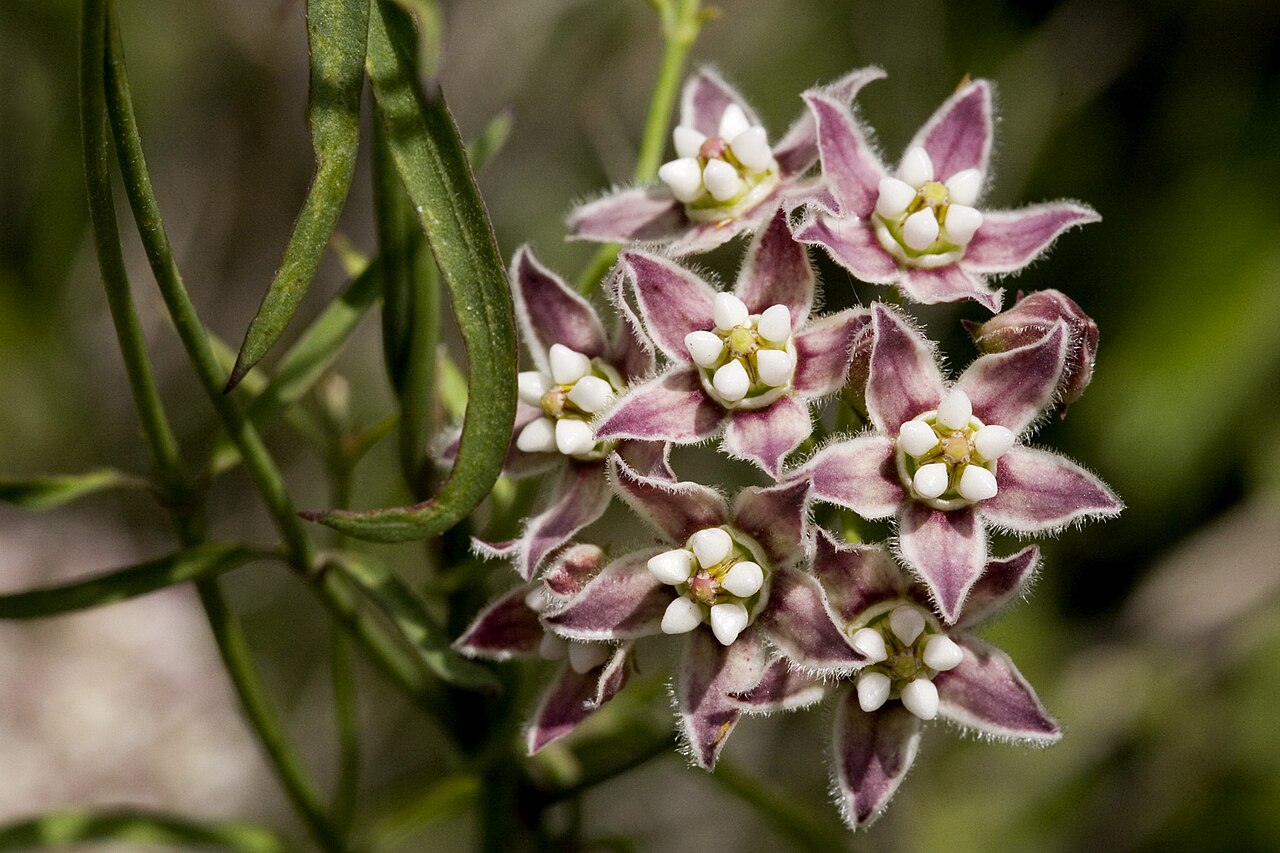
Funastrum cynanchoides is a twining, milky-sapped vine of the milkweed subfamily (family Apocynaceae) found across the desert Southwest. This page focuses on its western subspecies, Hartweg’s Climbing Milkweed, Funastrum cynanchoides subsp. heterophyllum (USDA: Hartweg’s twinevine; also called climbing milkweed or twinevine, and formerly Sarcostemma cynanchoides subsp. hartwegii). Its slender stems climb 6 to 10 feet through shrubs and fences or sprawl over the ground, with long, narrow leaves and rounded clusters of star-shaped, fragrant flowers.
The flowers are pink, purplish or white, often with a white central crown, and appear from spring into fall, especially after rains. They are followed by slender pods that split to release seeds carried by tufts of silky hair, like those of other milkweeds. Hartweg’s climbing milkweed grows from southern California and southern Nevada east through Arizona and southern Utah to New Mexico and West Texas, and south into Mexico. The eastern subspecies, fringed twinevine (subsp. cynanchoides), with broader, arrow-shaped leaves, grows farther east, in Texas, Oklahoma and Arkansas.
Like true milkweeds, it is a caterpillar host for queen and monarch butterflies, and its flowers feed many bees, wasps and butterflies. It is a good choice for covering a fence or trellis in a desert wildlife garden. Its milky sap may irritate skin, and the plant should not be eaten.
Identification
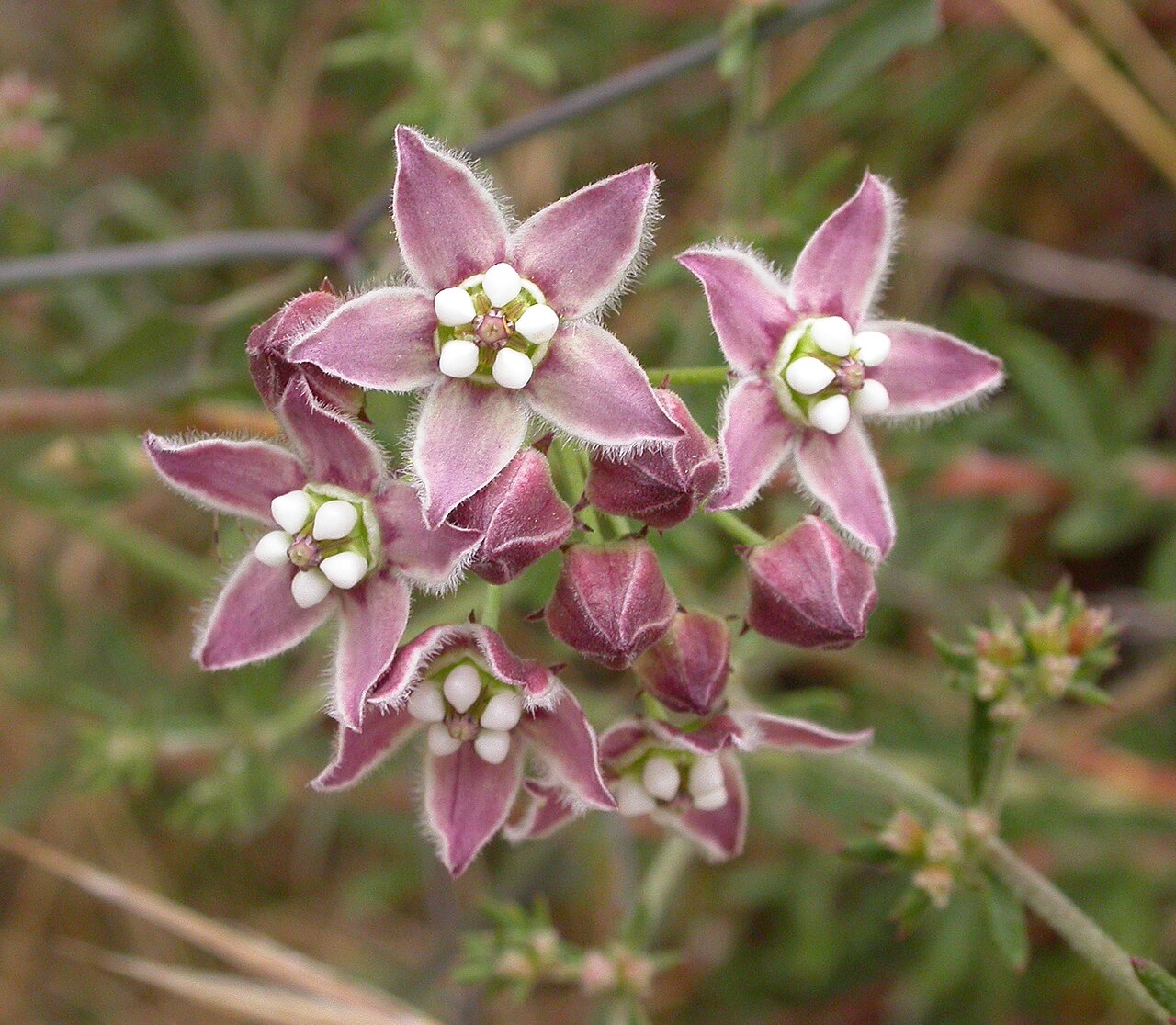
Hartweg’s climbing milkweed is a thin, twining vine with milky sap, opposite, narrow leaves and round clusters of five-pointed, hairy flowers. Breaking a leaf or stem releases white latex, a quick way to separate it from other desert vines.
Growth Habit
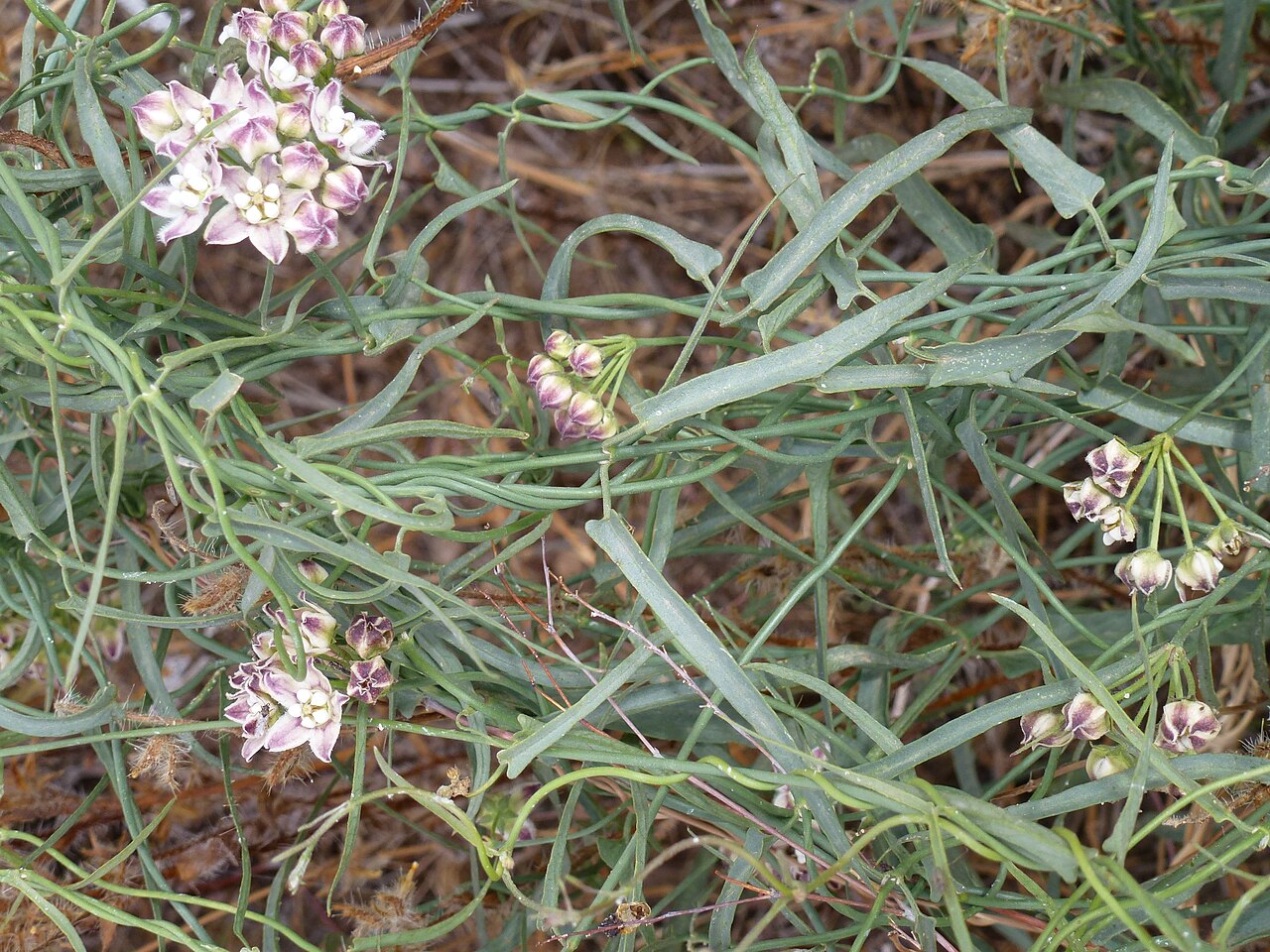
A perennial vine with slender, green to grayish stems that twine around shrubs, fences and other supports or trail across the ground, reaching about 6 to 10 feet long. The stems die back in cold or very dry periods and resprout from a woody base. All parts contain milky sap. The crushed foliage has a scent some people compare to hot rubber.
Leaves
The leaves are opposite. In subsp. heterophyllum they are narrowly linear to narrowly lance-shaped, about 1 to 3 inches long and often less than 1/4 inch wide, sometimes with small lobes at the base. They are smooth to finely hairy and dark to grayish green. The eastern subsp. cynanchoides has broader, triangular to arrow-shaped (hastate) leaves.
Flowers
Flowers grow in rounded, umbrella-like clusters (umbels) of 10 to 20 or more on stalks from the leaf axils. Each flower is about 1/2 inch across, with five pointed, hairy petals that are pink to purplish, greenish or white, and a small central crown (corona) of white, cushion-like lobes. The flowers are often fragrant. Flowering begins in spring and continues into fall, especially after rains.
Fruit & Seeds
The fruit is a slender, smooth pod (follicle) 2 to 4 inches long that tapers to a point. When ripe it splits along one side to release flat brown seeds, each with a tuft of silky white hair that carries it on the wind.
Look-alikes
Honeyvine Climbing Milkweed (Cynanchum laeve) is a different plant of the eastern and central U.S., with broad, heart-shaped leaves and small white flowers. Other Funastrum species of the Southwest, such as wavyleaf twinevine (F. crispum), have wavy-edged leaves and greenish-purple flowers. Upright milkweeds such as Arizona Milkweed do not climb.
Safety
Use caution. Like many members of the milkweed group, it has milky sap that can irritate skin and is especially painful in the eyes, so wash your hands after handling it. Do not eat any part of the plant. Plants in this group may be toxic to livestock and pets if eaten in quantity, although animals usually avoid it when other forage is available.
Quick Facts
| Scientific Name | Funastrum cynanchoides subsp. heterophyllum (Hartweg’s twinevine) |
| Family | Apocynaceae (dogbane family; milkweed subfamily) |
| Plant Type | Twining herbaceous to semi-woody perennial vine |
| Mature Height | Climbs 6–10 ft |
| Mature Spread | 3–6 ft, sprawling or climbing |
| Growth Rate | Fast with warmth and water |
| Sun Exposure | Full sun to part shade |
| Water Needs | Low; occasional water in long droughts |
| Soil Type | Sandy, rocky, gravelly or loamy; tolerates caliche |
| Soil pH | Neutral to alkaline (about 6.5–8.5) |
| Bloom Time | Spring to fall (about April–October), after rains |
| Flower Color | Pink to purplish, white or greenish, with white center |
| Fall Color | None; stems may die back in winter or drought |
| Fruit | Slender pod, 2–4 in, with silky-haired seeds |
| Deer Resistant | Yes; milky sap discourages browsing |
| USDA Hardiness Zones | 7–11 |
Native Range
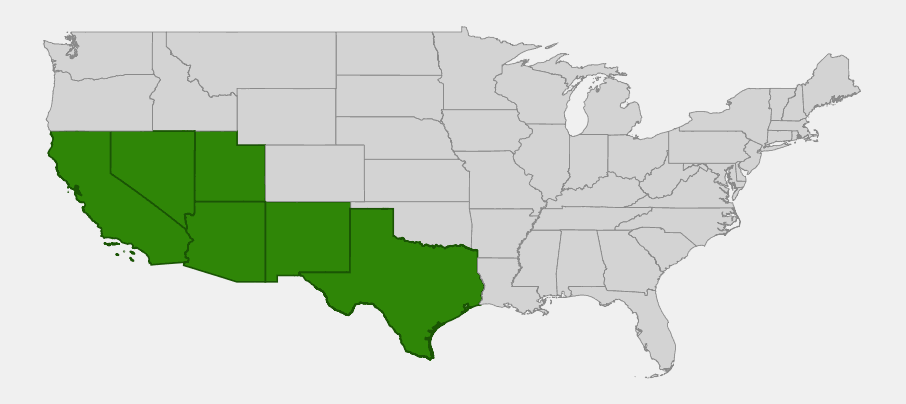
USDA PLANTS lists Hartweg’s twinevine (Funastrum cynanchoides subsp. heterophyllum) as native in Arizona, California, Nevada, New Mexico, Texas and Utah. It also extends into northern Mexico. The species as a whole ranges from southern California east to Oklahoma, Arkansas and Texas, but the eastern subspecies, fringed twinevine (subsp. cynanchoides), is the one found in Arkansas, Oklahoma and most of Texas.
Hartweg’s climbing milkweed is common in the Sonoran and Mojave deserts of Arizona, southeastern California and southern Nevada, and in southern California’s coastal and inland valleys. It reaches southwestern Utah, much of southern New Mexico, and the Trans-Pecos and western Texas. It is especially common along washes and in desert towns, where it climbs over fences and shrubs.
It grows on desert flats and slopes, in sandy and rocky washes, canyons, riparian thickets, roadsides and fencerows, typically climbing into shrubs such as mesquite, creosote bush and wolfberry. It is most frequent below about 5,000 feet.
📋 Regional plant lists featuring Hartweg’s Climbing Milkweed: Utah & Western Colorado · Arizona & New Mexico · South & West Texas · California & Nevada
Growing & Care Guide
Hartweg’s climbing milkweed is an easy, low-water vine for desert and dry-climate gardens. It is fast-growing with warmth and occasional water, and it is one of the best native host plants for queen butterflies in the Southwest.
Light
Give it full sun to part shade. In the low desert it does well with some afternoon shade or when climbing through a shrub, which keeps its roots cool.
Soil & Water
It grows in almost any well-drained soil, including sand, gravel, rocky soil, clay loam and caliche. Water regularly while it establishes. After that, an occasional deep watering in long dry spells keeps it leafy and flowering; it can survive on rainfall in much of its range but may go dormant in drought.
Planting Tips
Plant it in spring or at the start of the summer rains next to a fence, trellis, wire mesh or a sturdy native shrub that it can climb. Allow 3 to 6 feet of space. It looks good tumbling over walls or covering chain-link fences. Place it where you can watch the caterpillars and butterflies it attracts.
Pruning & Maintenance
Little care is needed. Cut back dead stems in late winter. Expect aphids, especially bright yellow oleander aphids, at times; they rarely do lasting harm, and predators such as lady beetles usually control them. Avoid pesticides, which also kill caterpillars.
Propagation
Grow it from seed collected from ripe pods before the seeds blow away. Seed sown in warm soil in spring or summer germinates readily without special treatment. Plants may also self-sow nearby.
Landscape Uses
- Butterfly gardens: caterpillar host for queen and monarch butterflies
- Fences and trellises: a light, twining native screen
- Desert wildlife gardens: nectar for bees, wasps and butterflies
- Wash and riparian restoration: climbs through native shrubs along washes
- Naturalistic plantings: scrambling over shrubs and walls
Wildlife & Ecological Value
Hartweg’s climbing milkweed is an important wildlife plant in the desert Southwest, especially for milkweed butterflies and the many insects that visit its flowers.
For Pollinators
The fragrant flowers attract many bees, wasps, flies and butterflies. Like other milkweeds, they package pollen in sacs (pollinia) that attach to the legs of visiting insects. Native wasps and bees are frequent visitors.
For Birds
Birds use the silky seed hairs and fine stems as nesting material, and some granivorous birds eat the seeds, according to the Lady Bird Johnson Wildflower Center. Vine-covered shrubs provide shady cover.
For Mammals
Mammals seldom browse it because of its bitter, milky sap.
Ecosystem Role
Climbing milkweeds are caterpillar host plants for queen butterflies (Danaus gilippus) and monarchs (Danaus plexippus). In the low deserts of Arizona and California, where true milkweeds can be scarce, Funastrum vines are among the most important host plants for queens. The plant also supports milkweed specialists such as milkweed bugs and oleander aphids, which in turn feed predators and parasitic wasps.
Cultural & Historical Uses
The subspecies’ older name, hartwegii, honors Karl Theodor Hartweg (1812–1871), a German botanist and plant collector who explored Mexico, Central America and California for the Horticultural Society of London in the 1830s and 1840s and sent many plants back to Europe.
The plant has had several scientific names, including Sarcostemma cynanchoides, Funastrum heterophyllum and Philibertia heterophylla. Funastrum comes from Latin for “rope” or “cord,” a reference to the twining stems, and cynanchoides means “like Cynanchum,” another genus of vining milkweeds.
Desert gardeners in Arizona and southern California increasingly grow it to support queen and monarch butterflies, and it is a common sight on fences and washes in desert cities such as Tucson and Phoenix.
Frequently Asked Questions
Is Hartweg’s climbing milkweed a real milkweed?
Yes, in the broad sense. It belongs to the milkweed subfamily of the dogbane family (Apocynaceae), along with true milkweeds (Asclepias). It has milky sap, similar flowers and pods, and hosts milkweed butterflies.
Will monarchs and queens use it?
Yes. Queen butterflies use it heavily in the desert Southwest, and monarchs also lay eggs on it.
Is it the same as honeyvine?
No. Honeyvine (Cynanchum laeve) is a different vine of the eastern and central U.S. with broad, heart-shaped leaves.
Is it toxic?
Its milky sap can irritate skin and eyes, and it should not be eaten. Plants in the milkweed group may be toxic to animals in quantity, though they usually avoid it.
How do I tell the two subspecies apart?
Hartweg’s climbing milkweed (subsp. heterophyllum) of the West has long, narrow leaves. Fringed twinevine (subsp. cynanchoides) of Texas, Oklahoma and Arkansas has broader, arrow-shaped leaves.

Looking for a nursery that carries Hartweg’s Climbing Milkweed?
Browse our native plant nursery directory: Arizona · California · Nevada & New Mexico · Texas & Utah