
Winding Mariposa Lily (Calochortus flexuosus)
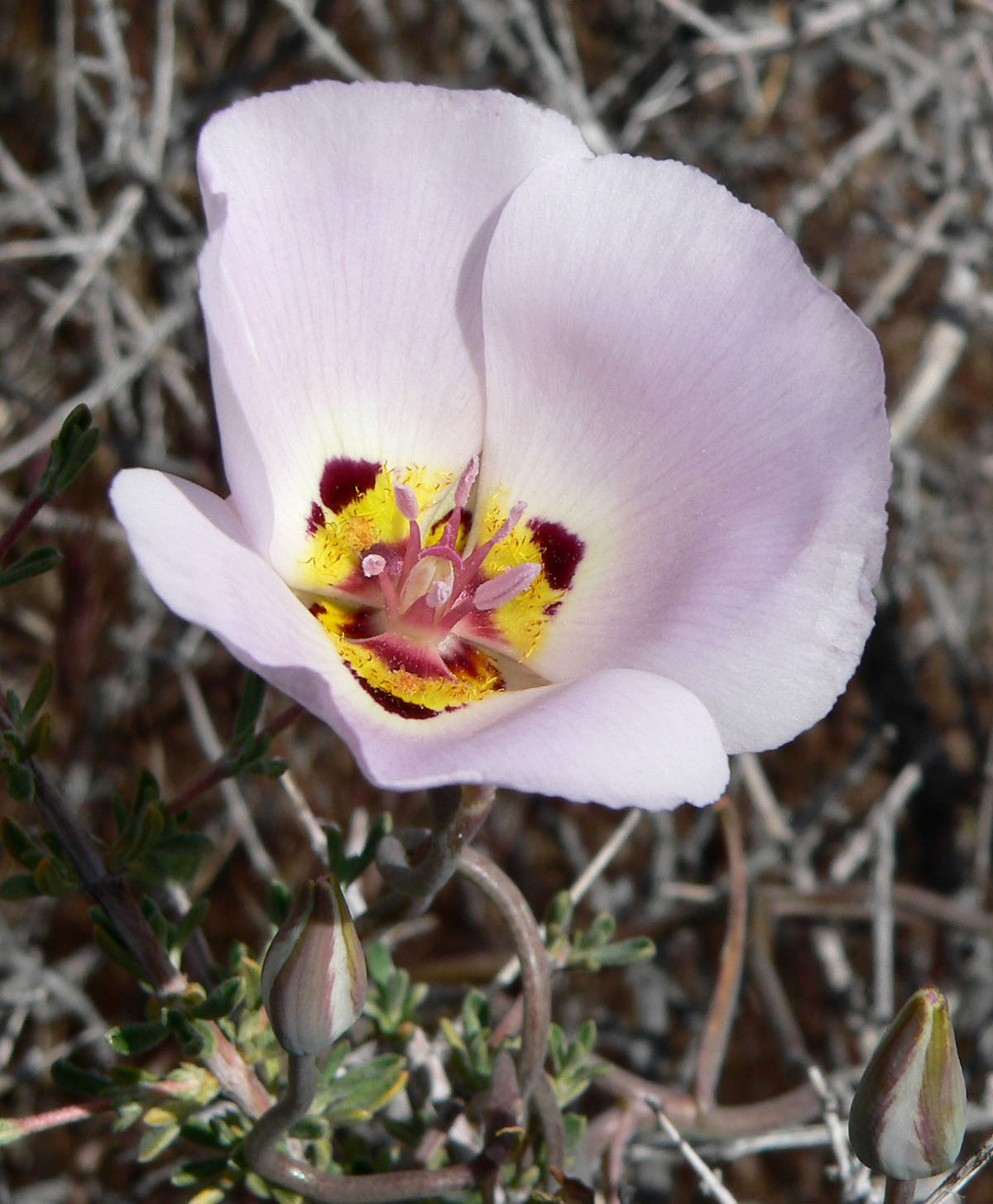
Calochortus flexuosus, known as Winding Mariposa Lily, straggling mariposa lily or weakstem mariposa lily, is a bulb-forming perennial of the lily family (Liliaceae) native to the deserts and canyon country of the southwestern United States. Its slender, weak stems twist, sprawl and lean on nearby shrubs, sometimes winding through their branches, and in spring carry one to several cup-shaped flowers that are white to pale lilac with a yellow center and maroon markings.
It grows on dry rocky and gravelly slopes, sandy flats and canyon benches in desert scrub, blackbrush and pinyon-juniper woodland, from the Mojave Desert of California and Nevada east across southern Utah and Arizona to western Colorado and New Mexico.
Like other mariposa lilies, it grows from a small bulb that stays dormant underground for most of the year. Its flowers appear only after enough winter and spring rain. Enjoy it where it grows; never dig the bulbs, which rarely survive transplanting.
Identification
Look for pale lilac to white, tulip-like flowers on thin, twisting stems that sprawl on the ground or lean into desert shrubs in spring.
Growth Habit
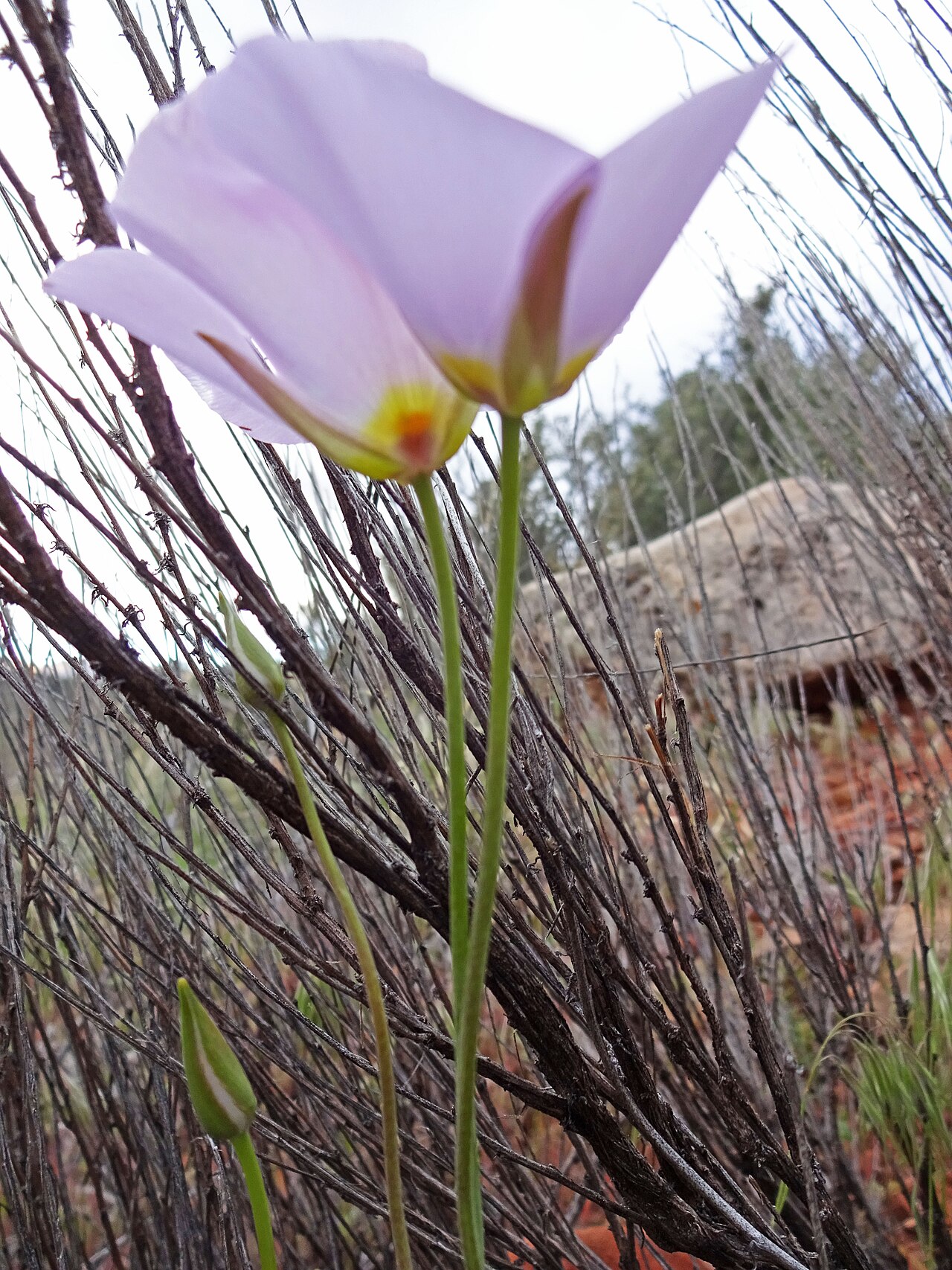
It is a perennial from a small, deep bulb. A single slender stem 4 to 20 inches long rises in spring, bending and twisting (flexuous) as it grows. Rather than standing upright, it usually sprawls or leans on shrubs and grasses for support.
Leaves
There is one narrow, grass-like basal leaf, 4 to 8 inches long, that often withers by flowering time, plus a few smaller leaves on the stem. The leaves are easy to overlook among grasses.
Flowers
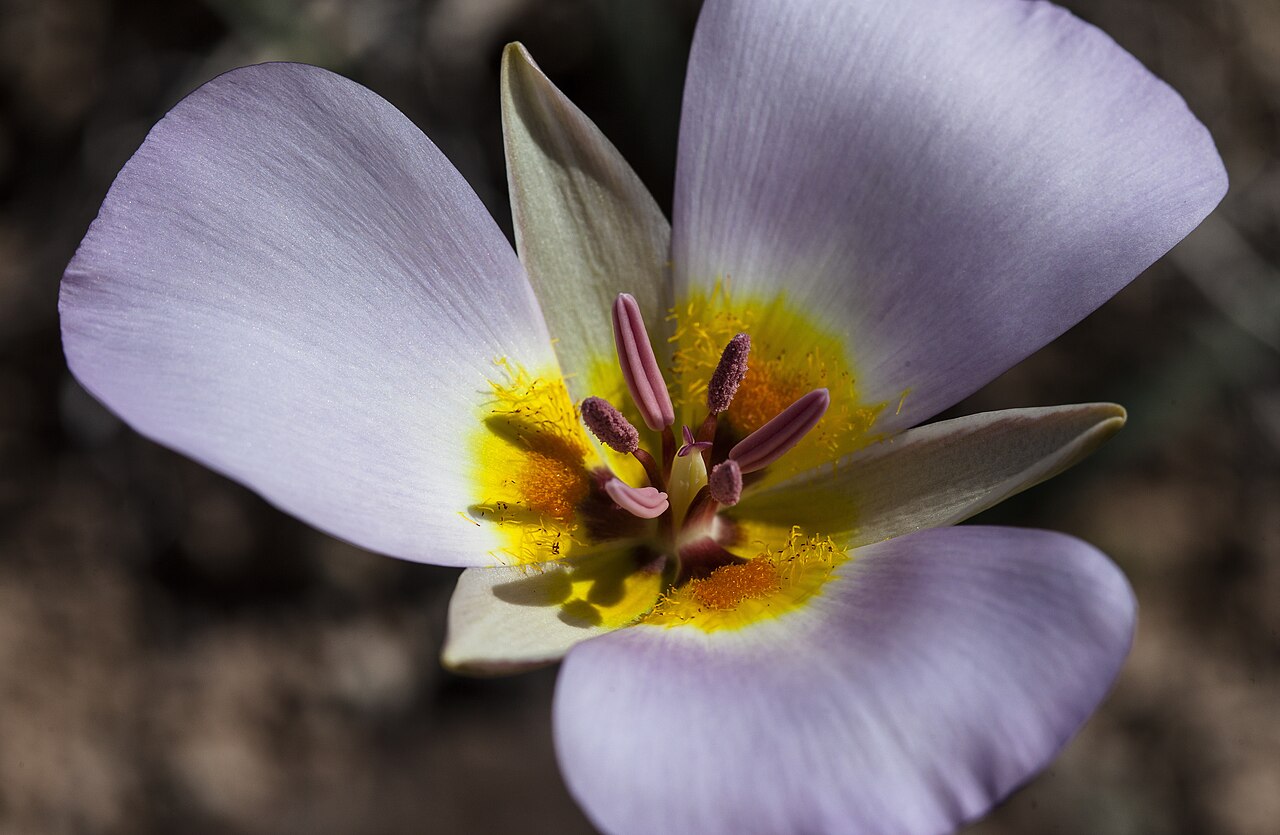
Each stem carries one to four upright, bell- to cup-shaped flowers about 1 1/2 to 2 inches across. The three broad petals are white to pale lilac or lavender, with a yellow band near the base and a maroon or purple band or spots above it. Each petal has a small round nectar gland surrounded by short hairs. Three narrow green sepals sit between the petals. Bloom time is March to June, depending on elevation.
Fruit
The fruit is a narrow, angled, upright capsule 1 to 2 inches long that splits open to release flat seeds.
Look-alikes
Sego lily (Calochortus nuttallii) and Gunnison’s mariposa lily have stiff, upright stems. Desert mariposa lily has bright orange to red flowers. The weak, twisting stem is the best way to recognize winding mariposa lily.
Quick Facts
| Scientific Name | Calochortus flexuosus |
| Family | Liliaceae (lily family) |
| Plant Type | Bulbous perennial wildflower |
| Mature Height | 4–20 in (stems often sprawling) |
| Mature Spread | 6–12 in |
| Growth Rate | Slow |
| Sun Exposure | Full sun |
| Water Needs | Very low; dry summer dormancy |
| Soil Type | Rocky, gravelly or sandy; very well drained |
| Soil pH | Neutral to alkaline (about 7.0–8.5) |
| Bloom Time | March–June |
| Flower Color | White to pale lilac with yellow and maroon center |
| Fall Color | None (dormant) |
| Fruit | Narrow angled capsule with flat seeds |
| Deer Resistant | No; bulbs and flowers are eaten by wildlife |
| USDA Hardiness Zones | 5–9 |
Native Range
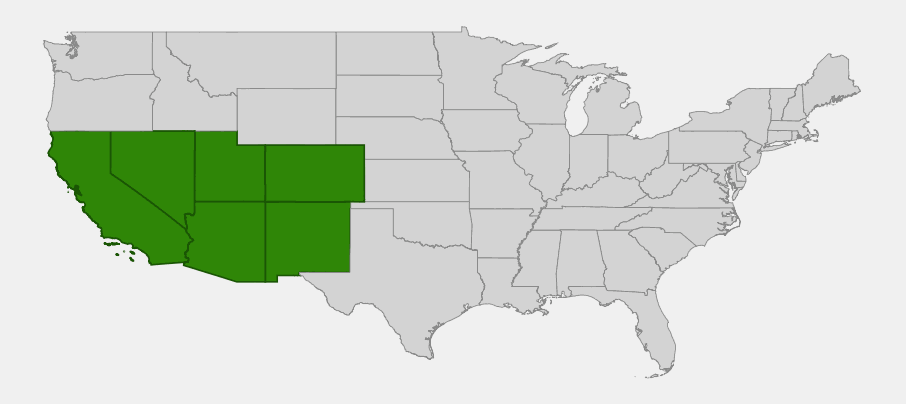
Winding mariposa lily is native to the American Southwest. USDA PLANTS lists it as native in Arizona, California, Colorado, Nevada, New Mexico and Utah.
In California it grows in the mountains and canyons of the eastern Mojave Desert. It is widespread in southern Nevada, including Red Rock Canyon near Las Vegas, and across southern Utah, including Zion National Park. In Arizona it grows mainly in the north and west, including the Grand Canyon. It reaches far southwestern Colorado on the Colorado Plateau, including Hovenweep National Monument, and grows in western New Mexico.
It grows on dry, rocky and gravelly slopes, sandy flats, canyon benches and washes in creosote and blackbrush scrub, grasslands and pinyon-juniper woodland, from about 2,000 to 8,000 feet.
📋 Regional plant lists featuring Winding Mariposa Lily: Arizona & New Mexico · Utah & Western Colorado · California & Nevada
Growing & Care Guide
Winding mariposa lily is rarely grown, and its bulbs need a hot, completely dry summer rest. It is best enjoyed in the wild or grown from seed by patient gardeners in dry Southwestern climates.
Light
Full sun.
Soil & Water
Very well-drained rocky, gravelly or sandy soil. It needs moisture only from fall through spring. Summer water causes the bulbs to rot. In wetter climates, grow it in a pot or bulb frame kept dry in summer.
Planting Tips
Sow seed in fall in deep pots of gritty mix or directly in a dry, sunny rock garden. Plant near low shrubs or grasses that the stems can lean on. Never dig bulbs from the wild; buy seed or bulbs from native seed suppliers.
Pruning & Maintenance
No pruning is needed. Let the leaves and stems wither naturally after flowering, and do not water during dormancy. Protect bulbs from gophers with wire baskets where needed.
Propagation
Grow from seed. Seedlings form tiny bulbs and usually take three to five years to reach flowering size. Bulbs occasionally form small offsets.
Landscape Uses
- Desert rock gardens: spring flowers among stones and low shrubs
- Native bulb collections: for dry-summer pot or bulb-frame culture
- Pollinator habitat: spring nectar and pollen for native bees
- Wildflower viewing: look for it in spring in Red Rock Canyon, Zion and the Grand Canyon
- Habitat restoration: part of native desert and pinyon-juniper communities
Wildlife & Ecological Value
Winding mariposa lily blooms in spring, when desert insects and animals are most active.
For Pollinators
Native bees, including small solitary bees and bumble bees, collect pollen and nectar from the flowers, and beetles visit the open cups. The hairy nectar glands at the base of each petal reward visitors.
For Birds
Quail and other ground-feeding birds may eat the seeds.
For Mammals
Rodents, gophers and other small mammals dig and eat the starchy bulbs, and rabbits and deer may graze the stems and flowers.
Ecosystem Role
As a spring bulb, it adds to the brief burst of desert flowers after wet winters and spends the hot months dormant underground, a typical strategy of desert perennials.
Cultural & Historical Uses
The genus name Calochortus comes from Greek words meaning “beautiful grass,” a reference to the grass-like leaves. “Mariposa” is Spanish for butterfly, describing the colorful, wing-like petals. The species name flexuosus means bending or zigzag, describing its twisting stems.
The bulbs of several mariposa lilies, especially the sego lily, were roasted or boiled and eaten by Native peoples of the Great Basin and Colorado Plateau. Winding mariposa lily bulbs are small, and the plant is too scattered to harvest today.
For many desert hikers, finding a winding mariposa lily leaning on a blackbrush or creosote bush in spring is a highlight. It is one of several mariposa lilies that make Southwestern national parks favorite destinations for wildflower lovers.
Frequently Asked Questions
Why is it called winding mariposa lily?
Its slender, weak stems twist and bend as they grow and often wind through or lean on nearby shrubs. Other names include straggling and weakstem mariposa lily.
When does winding mariposa lily bloom?
From March to June, depending on elevation and rainfall. Low-desert plants bloom first.
Can I grow winding mariposa lily?
It can be grown from seed in very well-drained soil in dry climates, but it needs a completely dry summer and takes several years to flower.
Can I dig up the bulbs?
No. Wild bulbs are deep, rarely survive transplanting, and digging damages wild populations. Buy seed from native seed suppliers instead.
How is it different from sego lily?
Sego lily has stiff, upright stems and usually white flowers. Winding mariposa lily has weak, twisting stems and white to lilac flowers.

Looking for a nursery that carries Winding Mariposa Lily?
Browse our native plant nursery directory: Arizona · California · Colorado · Nevada & New Mexico · Utah

