
Alpine Azalea (Loiseleuria procumbens)
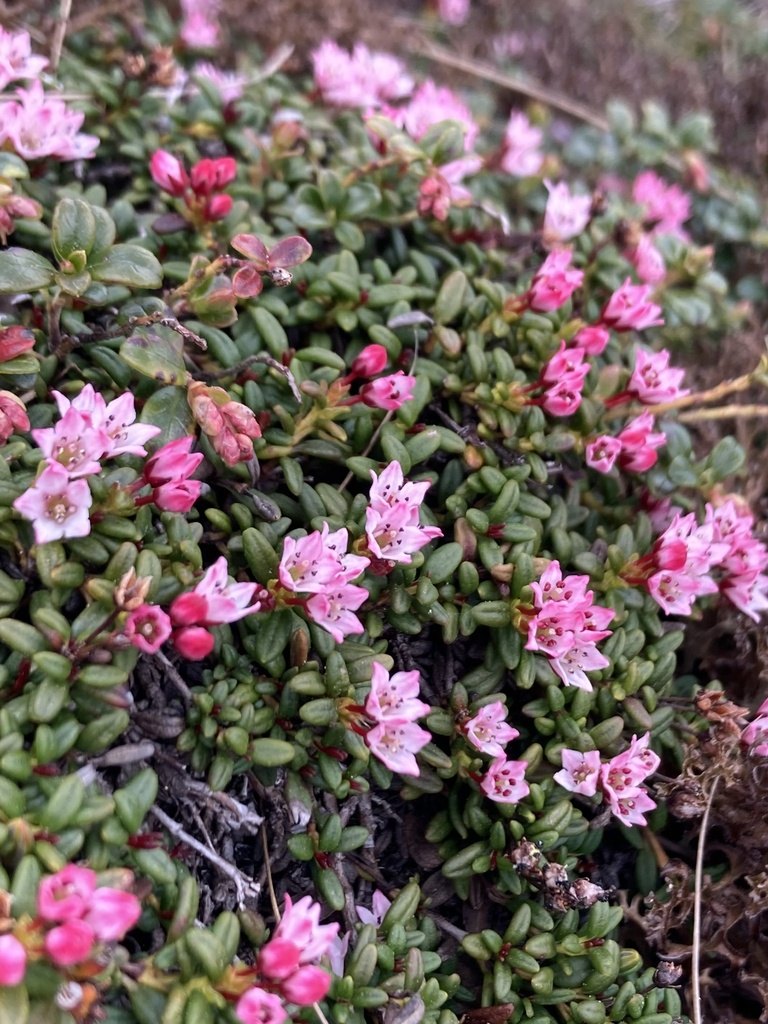
Loiseleuria procumbens, known as Alpine Azalea or trailing azalea, is a tiny evergreen shrub of arctic tundra and windswept mountaintops. It grows as a dense, flat mat just an inch or two tall, covered in small, leathery leaves, and in early summer it is studded with little pink, bell-shaped flowers. Despite its name, it is not a true azalea, though it belongs to the same heath family (Ericaceae).
It is circumpolar, found across the Arctic and in the high mountains of North America, Greenland, Europe and Asia. In the United States it is widespread in Alaska, while in the lower 48 states it is a rare relic of the Ice Age, surviving on the alpine summits of the White Mountains of New Hampshire, Mount Katahdin and other high peaks of Maine, and a few Adirondack summits in New York. Many botanists now place it in the genus Kalmia, as Kalmia procumbens, alongside mountain laurel and bog laurel.
Alpine azalea is a plant to admire where it grows rather than a garden plant. In New England and New York its tiny populations are rare and easily damaged by trampling, so hikers should stay on marked trails and rock. This guide covers how to identify alpine azalea, where it grows, why it is so hard to cultivate, and its role in tundra ecosystems.
Identification
Alpine azalea is easiest to spot in June and July, when its pink flowers stand out against the dark green mat. Out of bloom, look for tight cushions of tiny, opposite, leathery leaves on exposed, gravelly ground.
Growth Habit
It is a prostrate, evergreen dwarf shrub with many short, woody, much-branched stems that creep along the ground and root as they go. The result is a dense mat or cushion usually 1 to 3 inches tall and up to a foot or more across. Old mats can be many decades old.
Leaves
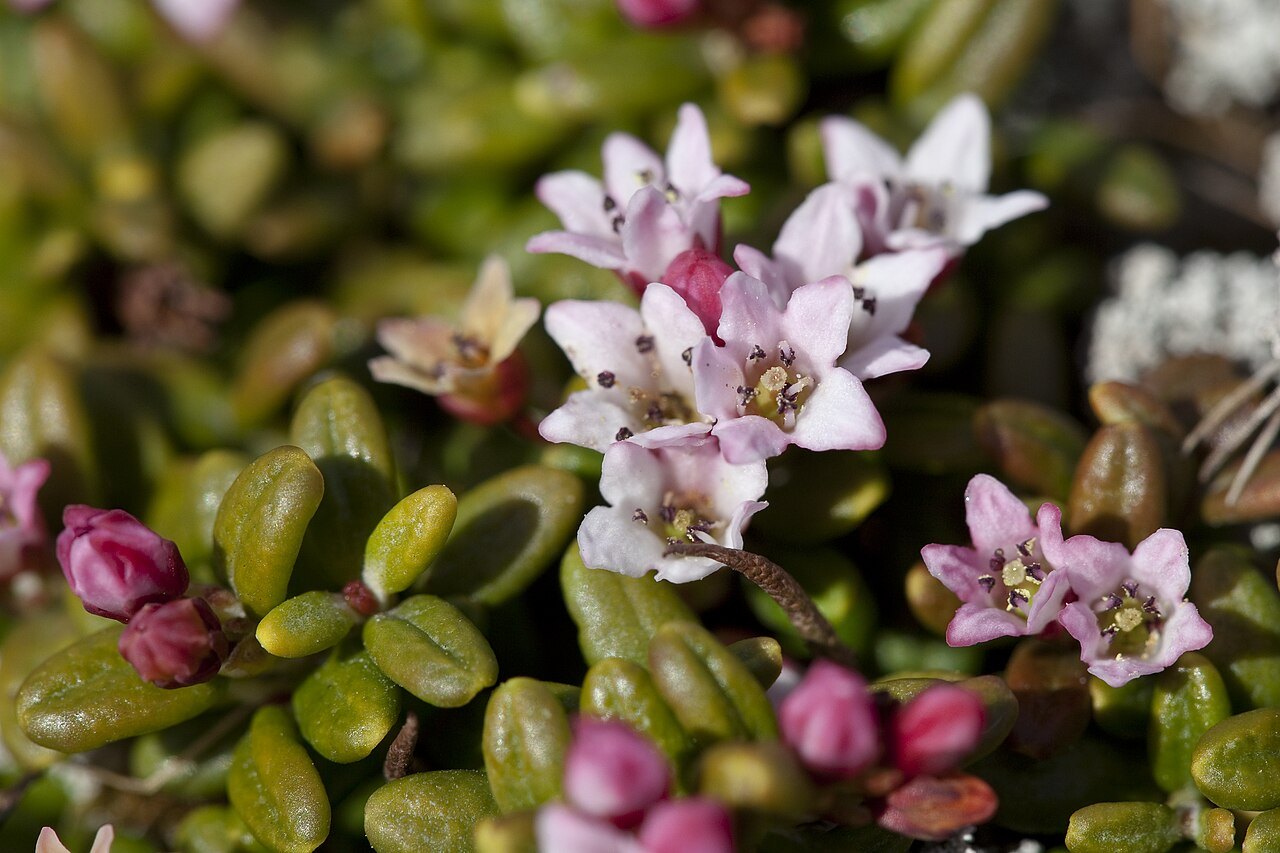
The leaves are tiny, about ¼ inch long, thick, leathery and oblong, with the edges rolled under. They are arranged in opposite pairs and crowded along the stems, shiny dark green above and paler, with a raised midrib, below. They stay on the plant through winter, sometimes turning reddish or bronze.
Flowers
Clusters of two to five small flowers appear at the branch tips from about late May to July, depending on latitude and snowmelt. Each flower is a five-lobed, open bell about ¼ inch across, pink to rose or nearly white, with five stamens. The buds and flower stalks are often deep red to pink, which adds to the display.
Fruit & Look-alikes
The fruit is a small, egg-shaped, reddish capsule that splits into two or three parts to release tiny seeds. Diapensia (Diapensia lapponica) forms similar cushions on the same summits but has white flowers and alternate, spoon-shaped leaves. Moss campion and crowberry also form mats, but alpine azalea’s opposite, rolled-edged leaves and pink bells set it apart.
Quick Facts
| Scientific Name | Loiseleuria procumbens (L.) Desv. (syn. Kalmia procumbens) |
| Family | Ericaceae (heath family) |
| Plant Type | Prostrate evergreen dwarf shrub |
| Mature Height | 1–3 in |
| Mature Spread | 6–18 in |
| Growth Rate | Very slow |
| Sun Exposure | Full sun |
| Water Needs | Moderate; moist but sharply drained |
| Soil Type | Thin, gravelly, acidic tundra and alpine soils |
| Soil pH | Acidic, about 4.0–5.5 |
| Bloom Time | Late May–July |
| Flower Color | Pink to rose, sometimes white |
| Fall Color | Evergreen; leaves may bronze in winter |
| Fruit | Small reddish capsule |
| Deer Resistant | Yes; grows where deer seldom browse, and heath-family foliage is unpalatable |
| USDA Hardiness Zones | 1–5 |
Native Range
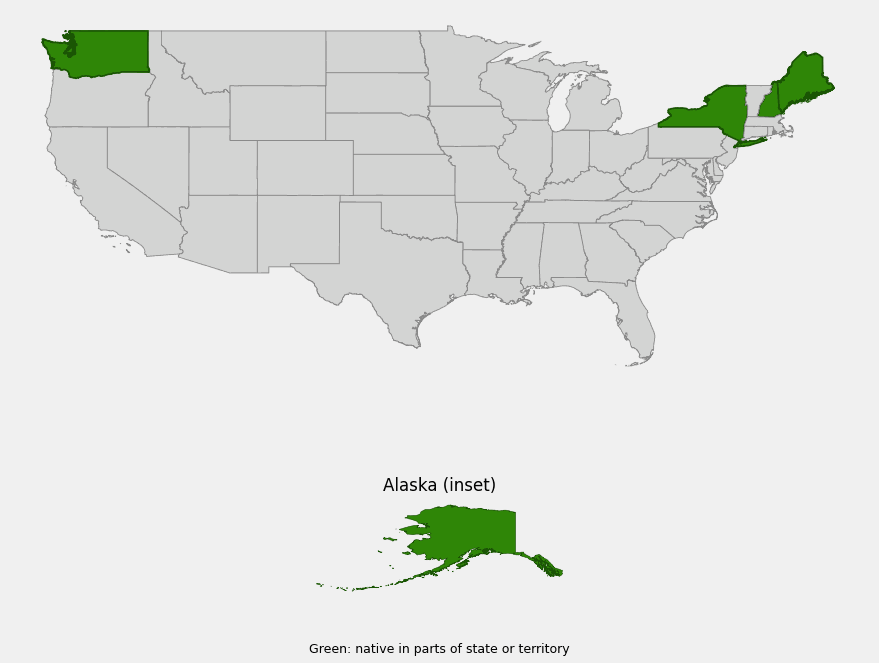
Alpine azalea has a circumpolar range across arctic and alpine regions of North America, Greenland, Europe and Asia. USDA PLANTS lists it from Alaska, Maine, New Hampshire, New York and Washington, as well as Alberta, British Columbia, Labrador, Manitoba, Newfoundland, the Northwest Territories, Nunavut, Quebec, Saskatchewan and Yukon, plus Greenland and Saint Pierre and Miquelon.
In Alaska it is common on tundra, rocky ridges and heath from the coast to the mountains. In the eastern United States it is an arctic-alpine relic: it survives above treeline on the Presidential Range and other high peaks of the White Mountains in New Hampshire, on Mount Katahdin and a few other summits in Maine, and on a handful of Adirondack summits in New York, where its populations are very small and rare.
The Washington record is an outlying one: it rests on a single 1963 herbarium collection from the North Cascades, and the plant is not known as an established part of the Washington flora today. Throughout its range it grows on exposed, windswept, often snow-free sites with thin, acidic, gravelly soil, where few taller plants can compete.
📋 Regional plant lists featuring Alpine Azalea: Alaska · New Hampshire, Maine & Vermont · New York, Pennsylvania & Northern New Jersey · Delaware, Southern New Jersey & Long Island
Growing & Care Guide
Alpine azalea is one of the most difficult plants to grow outside its native tundra and alpine habitats, and it is almost never available from nurseries. It needs cold summers, reliable winter snow cover or cold winds, constant moisture and perfect drainage, plus the soil fungi that heath-family plants rely on. In New England and New York it is rare, so never dig it from the wild; any plants should come only from specialist nurseries that propagate their own stock.
Light
It needs full sun and open, exposed conditions, as on alpine ridges and tundra. In warm climates it suffers from heat long before light becomes a problem, and light afternoon shade may help it survive in lowland gardens.
Soil & Water
Grow it only in very acidic, gritty, humus-rich soil that drains sharply yet never dries out, such as a peat-and-grit mix. Cool, steady moisture is essential, and stagnant or warm wet soil quickly kills it. It needs cold winters and cool summers; it does poorly where summer nights stay warm.
Planting Tips
Specialist growers keep it in a scree or trough garden, a cold frame, or an alpine house, among stones that keep the roots cool. It is suited only to cold, high-elevation or northern gardens. Lowland gardeners in most of the United States should not expect it to survive.
Pruning & Maintenance
No pruning is needed. Keep fallen leaves and debris off the mat, and do not fertilize, as it is adapted to very poor soils. Protect it from summer heat and from drying winter winds where there is no snow cover.
Propagation
Experienced growers root short cuttings of new growth in a cool, humid propagating frame in summer, or sow the tiny seed on the surface of an acidic, sandy, peaty mix. Growth is very slow, and like other heaths it depends on root fungi, so seedlings are hard to raise.
Landscape Uses
- Alpine and trough gardens: for specialist growers in cold climates who can provide cool, moist, perfectly drained acidic soil
- Where to see it: alpine zones of the Presidential Range, Mount Katahdin and the high Adirondacks, and Alaskan tundra, in June and July
- Tundra restoration: part of native mat-forming vegetation that stabilizes thin soils on ridges and tundra
- Native plant study: a classic arctic-alpine relic of the Ice Age in the northeastern mountains
- Nature photography: its pink-flowered mats are a highlight of early-summer alpine hikes
Wildlife & Ecological Value
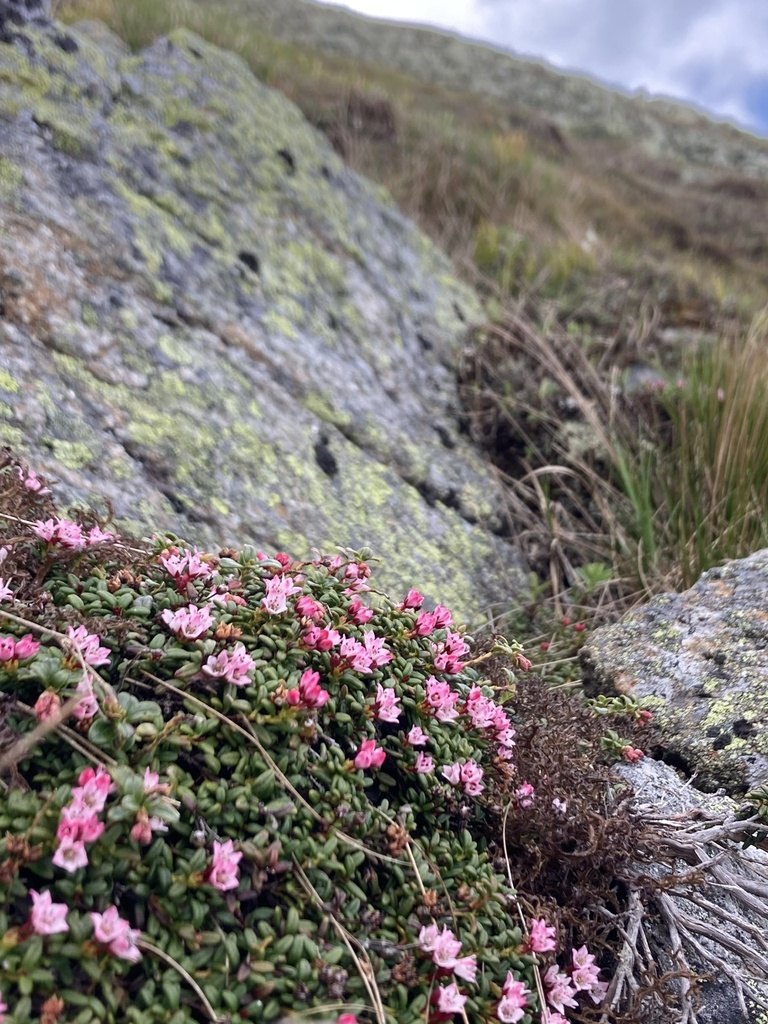
Alpine azalea is a small but important part of the evergreen mats that cover tundra and alpine ridges, where few plants can survive the wind, cold and short growing season.
For Pollinators
Its pink flowers, which bloom soon after snowmelt, are visited by bumble bees, flies and other insects active in the short alpine and arctic summer. Flowers can also self-pollinate, a useful backup where pollinators are scarce.
For Birds
Ptarmigan, which feed heavily on the buds, leaves and twigs of tundra shrubs, may eat alpine azalea. Ground-nesting birds of the tundra and alpine zone use its mats as part of their low cover.
For Mammals
Its leathery evergreen leaves are not a preferred food, but caribou and other tundra grazers may take some along with lichens and other dwarf shrubs. Small mammals such as voles shelter among the mats under snow.
Ecosystem Role
Its dense, evergreen mats hold thin soil and gravel in place on exposed ridges, trap windblown organic matter and create a sheltered microclimate for lichens, mosses and seedlings of other plants. Like other heaths it forms partnerships with root fungi that help it gather nutrients from very poor soils.
Cultural & Historical Uses
Linnaeus first described this plant as Azalea procumbens, from Lapland. The genus name Loiseleuria was later coined in honor of the French botanist Jean-Louis-Auguste Loiseleur-Deslongchamps. DNA studies have shown it is closely related to mountain laurel, so many botanists now call it Kalmia procumbens.
In the northeastern United States, alpine azalea is one of a group of arctic plants left behind when the glaciers retreated. They survive only on the coldest, most exposed summits, which act as islands of tundra far south of the Arctic. These alpine zones are among the rarest plant habitats in the region and are studied for signs of climate change.
On the summits of New Hampshire, Maine and New York, trail stewards and summit stewards ask hikers to stay on trails and bare rock to protect alpine azalea, diapensia and other fragile plants. A single careless step can damage a mat that has taken decades to grow.
Frequently Asked Questions
Is alpine azalea a real azalea?
No. It is in the same heath family (Ericaceae) as true azaleas and rhododendrons, but it belongs to a different genus. It is most closely related to mountain laurel and bog laurel, and is often called Kalmia procumbens.
Where can I see alpine azalea?
In the United States, it is widespread on Alaskan tundra and grows above treeline on the Presidential Range of New Hampshire, Mount Katahdin in Maine and a few Adirondack summits in New York. Look for it in June and early July, and stay on the trail.
Can I grow alpine azalea in my garden?
Only with great difficulty. It needs cold summers, constant cool moisture, perfect drainage and very acidic soil. It is a plant for specialist alpine growers in cold climates, and wild plants should never be collected.
Does alpine azalea grow in Washington?
USDA PLANTS lists Washington based on a single historic herbarium collection from the North Cascades in 1963. It is an outlying record, and the plant is not known as an established part of the state’s flora today.
When does alpine azalea bloom?
From about late May to July, depending on latitude, elevation and when the snow melts. The small pink bells last a few weeks.

Looking for a nursery that carries Alpine Azalea?
Browse our native plant nursery directory: Alaska · Maine · New Hampshire & New York · Washington

