
Dwarf Owl’s-Clover (Triphysaria pusilla)
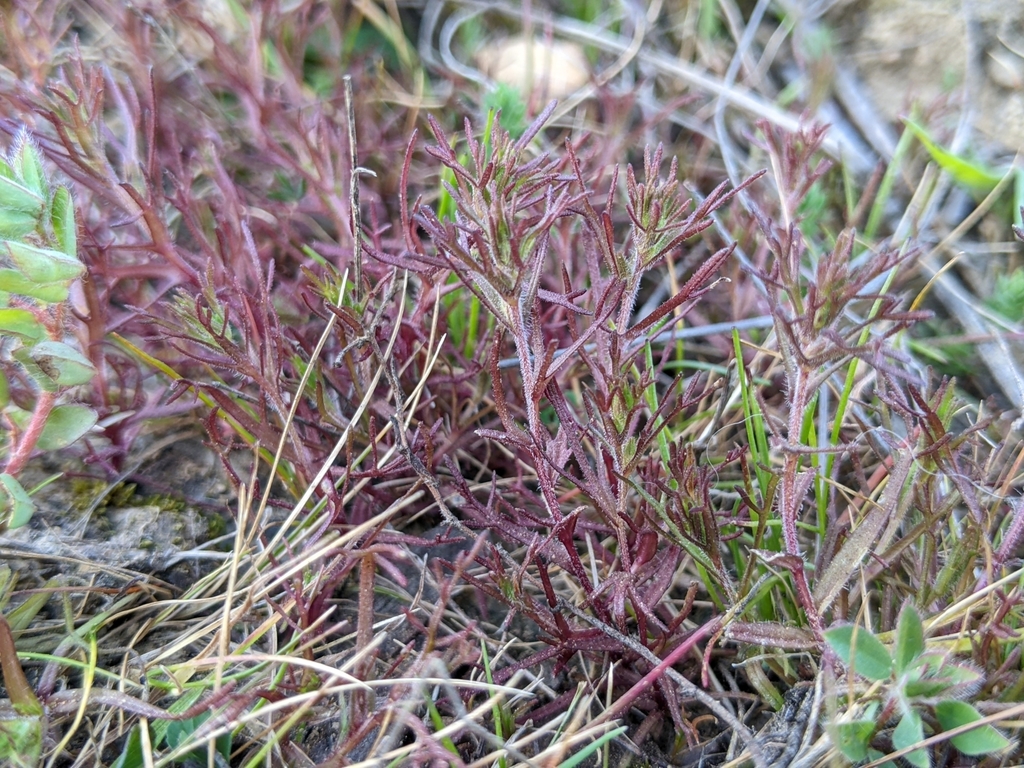
Triphysaria pusilla, known as Dwarf Owl’s-Clover (formerly Orthocarpus pusillus), is a tiny annual wildflower of the broomrape family (Orobanchaceae) native to the Pacific Coast from California to British Columbia. It forms small, reddish-purple tufts of threadlike, finely divided leaves, usually just 2 to 8 inches tall, with tiny dark purplish flowers tucked among the bracts.
Dwarf owl’s-clover is a root hemiparasite. It has green tissue and makes some of its own food, but it also attaches to the roots of nearby grasses and wildflowers to take water and nutrients. It grows in grassy meadows, coastal prairies, open slopes, vernally moist flats and even in lawns and mowed roadsides, blooming from March to June.
This is an identification and appreciation page. Dwarf owl’s-clover isn’t sold by nurseries and can’t be transplanted, because it depends on the roots of host plants. It’s best enjoyed where it already grows. Avoid mowing or herbicides there until it has set seed.
Identification
In spring, look closely in short grass for patches that look like a reddish-purple fuzz. Up close, each plant is a small tuft of hairlike leaf segments with short, dense spikes of tiny flowers.
Growth Habit
It is a small annual, usually 2 to 8 inches tall, with a single stem or several stems branching from the base. The whole plant is often tinged reddish-purple, especially in sun, and it can grow in dense patches.
Leaves
The leaves are alternate, about 1/2 to 1 inch long and divided into three to seven threadlike lobes, giving the plant a feathery look. The upper leaves blend into the bracts of the flower spike.
Flowers
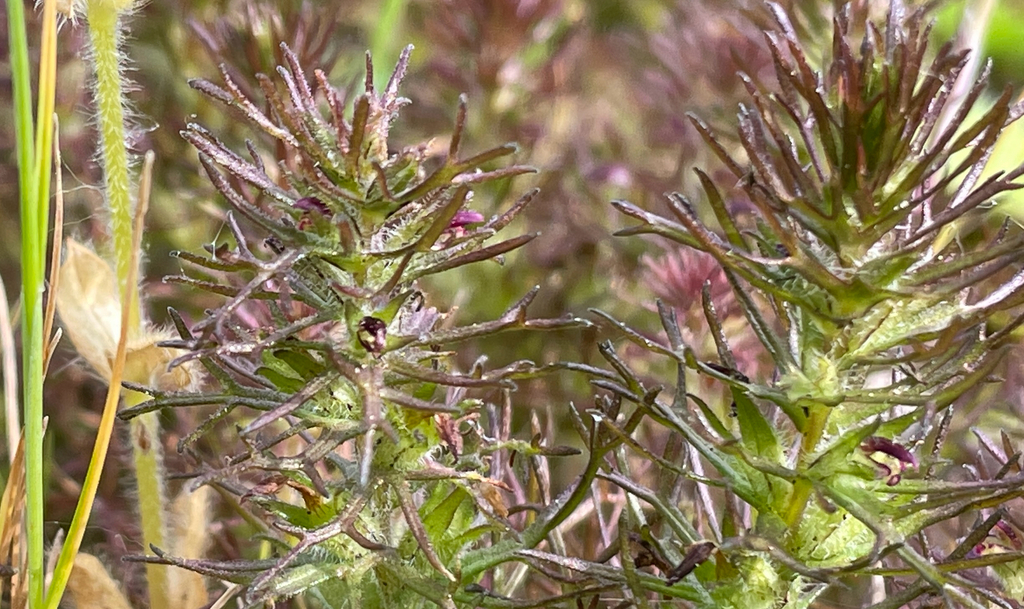
The flowers are tiny, about 1/8 to 1/4 inch long, and grow in short, leafy spikes. The two-lipped corolla is dark purplish-red to maroon, sometimes with a touch of yellow on the pouched lower lip, and it barely sticks out from the bracts. Bloom time is March to June.
Fruit
The fruit is a small capsule holding many tiny seeds, which fall near the parent plant.
Look-alikes
Butter-and-eggs (Triphysaria eriantha) is larger and has showy yellow-and-white pouched flowers. Other owl’s-clovers (Castilleja and Orthocarpus) have larger, colorful bracts. Dwarf owl’s-clover stands out for its tiny size, reddish-purple threadlike foliage and inconspicuous dark flowers.
Quick Facts
| Scientific Name | Triphysaria pusilla (syn. Orthocarpus pusillus) |
| Family | Orobanchaceae (broomrape family; formerly Scrophulariaceae) |
| Plant Type | Annual wildflower; root hemiparasite |
| Mature Height | 2–8 in |
| Mature Spread | 2–6 in |
| Growth Rate | Fast (completes its life cycle in spring) |
| Sun Exposure | Full sun to light shade |
| Water Needs | Moist in winter and spring, dry in summer |
| Soil Type | Grassland soils, sandy to clay loam, thin soils over rock |
| Soil pH | Slightly acidic to neutral (about 5.5–7.5) |
| Bloom Time | March–June |
| Flower Color | Dark purplish-red to maroon |
| Fall Color | None (dies back by summer) |
| Fruit | Small capsule with many tiny seeds |
| Deer Resistant | Not well documented |
| USDA Hardiness Zones | About 7–10 |
Native Range
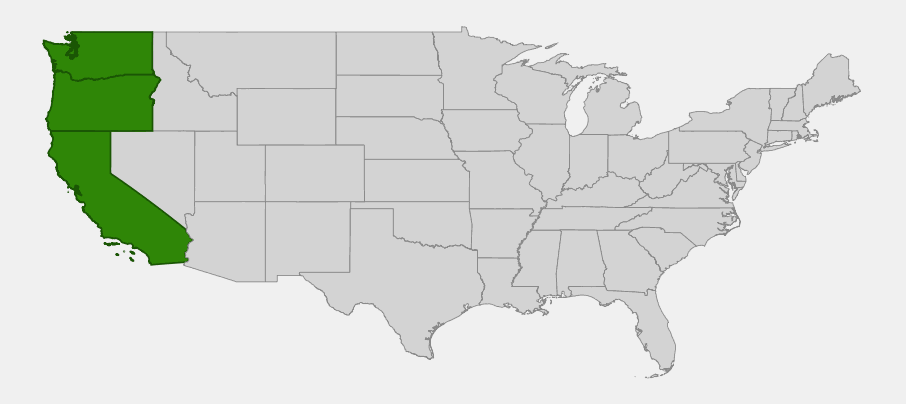
Dwarf owl’s-clover is native to the Pacific Coast of North America. USDA PLANTS lists it as native in California, Oregon and Washington, and in British Columbia, Canada.
In California it grows mainly in the Coast Ranges, the San Francisco Bay Area, the North Coast and the Sierra Nevada foothills. In Oregon and Washington it is found mostly west of the Cascades, in the Willamette Valley, the Puget Lowland, the San Juan Islands and along the coast, and it reaches southern Vancouver Island.
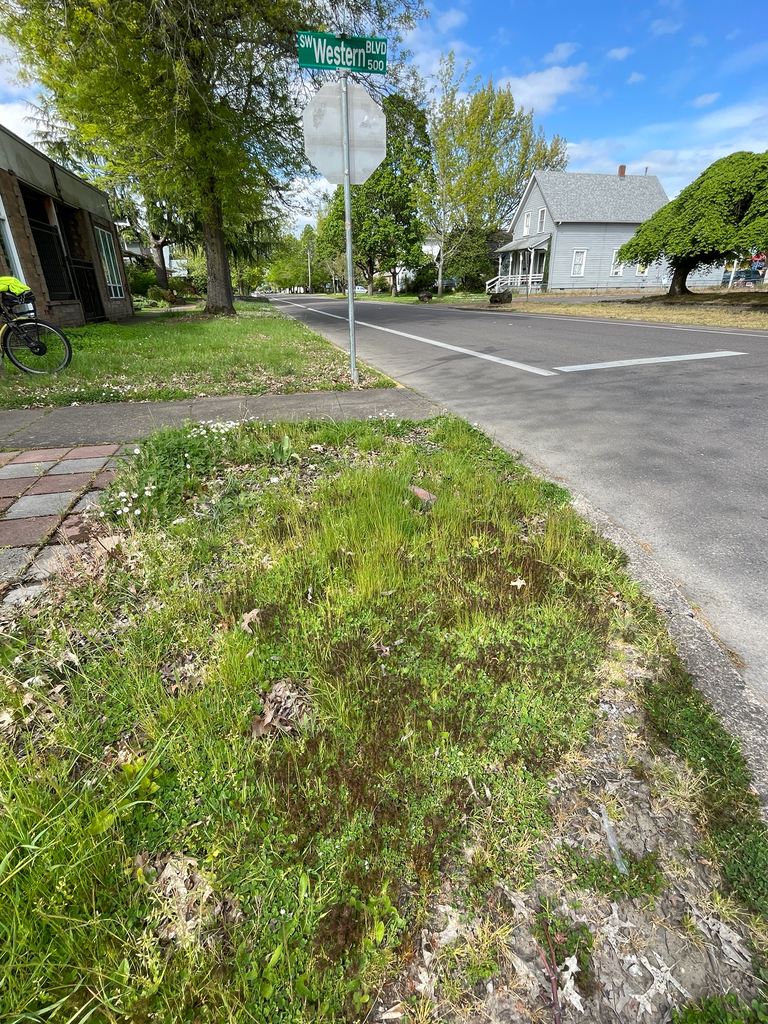
It grows in grasslands, coastal prairies and bluffs, open oak woodlands, rocky balds, meadows that are wet in winter and dry in summer, and in lawns, cemeteries, parks and mowed roadsides, from near sea level into the foothills.
📋 Regional plant lists featuring Dwarf Owl’s-Clover: California & Nevada · Western Oregon & Western Washington
Can You Grow It?
Not in the usual way. Dwarf owl’s-clover is not sold by nurseries, and plants can’t be dug and moved because they are attached to the roots of their hosts. The best way to have it is to protect a site where it already grows.
Light
In the wild it grows in full sun to light shade, usually in short, open grassland where taller plants don’t shade it out.
Soil & Water
It depends on winter and spring rain and finishes its life cycle before the summer drought. Summer watering does not help it and favors weedy competitors.
Planting Tips
If you are restoring a native grassland or meadow in its range, locally collected seed (gathered with permission and in small amounts) can be scattered in fall among native grasses and wildflowers, which act as hosts. Never dig up plants. They won’t survive transplanting.
Pruning & Maintenance
Where it appears in a lawn or meadow, delay the spring mowing until the plants have dried and dropped their seed, usually by early summer. Avoid broadleaf herbicides and heavy fertilizer, which favor turf grasses and weeds.
Propagation
It reproduces only from seed. Seedlings must attach to the roots of a nearby host plant soon after they sprout to grow well, so sow seed directly among established native plants.
Where to See It
- Coastal prairies and bluffs: from central California to Vancouver Island
- Willamette Valley and Puget Lowland prairies: often with camas and seablush
- Oak savannas and rocky balds: in thin soils among spring wildflowers
- Lawns, parks and cemeteries: look for reddish patches in short grass in April
- Native grassland restoration sites: a sign of a healthy native annual flora
Wildlife & Ecological Value
Dwarf owl’s-clover is easy to overlook, but it is part of the rich spring annual flora of Pacific Coast grasslands.
For Pollinators
The tiny flowers are visited by small native bees and other small insects, and the plants can also set seed by self-pollination.
For Birds
Seed-eating birds that forage on the ground in grasslands may eat the tiny seeds.
For Mammals
Small grazing animals may nibble the plants, but they are too small to matter much as food.
Ecosystem Role
As a root hemiparasite, it takes some resources from grasses and other hosts. This can slightly hold back dominant plants and leave room for other small wildflowers, helping keep the grassland diverse.
Cultural & Historical Uses
The genus name Triphysaria means three bladders, after the three small pouches on the lower lip of the flower. Pusilla means very small. The plant was long placed in Orthocarpus, the owl’s-clovers, until botanists separated Triphysaria in the 1990s.
Triphysaria has become a model genus for scientists studying how parasitic plants detect and attach to host roots. Its close relatives in the broomrape family include some of the world’s most damaging crop parasites.
The broomrape family includes many of the West’s familiar paintbrushes and owl’s-clovers, almost all of them root parasites to some degree. This is why so many of these colorful wildflowers are hard to grow in gardens.
Frequently Asked Questions
Is dwarf owl’s-clover a parasite?
Yes, a partial one. It is a root hemiparasite. It makes some of its own food but attaches to the roots of grasses and other plants to take water and nutrients.
Can I buy dwarf owl’s-clover for my garden?
No. It isn’t sold by nurseries and can’t be transplanted. Protect it where it already grows, or sow local seed in native grassland restorations.
When does dwarf owl’s-clover bloom?
From March to June, depending on location. The plants dry up by early summer.
Why is my lawn turning reddish-purple in spring?
In parts of California, Oregon and Washington, patches of dwarf owl’s-clover often appear in lawns and mowed areas in spring. It’s a native wildflower and dies back by summer.
How can I identify dwarf owl’s-clover?
Look for tiny tufts 2 to 8 inches tall with reddish-purple, threadlike leaves and short spikes of tiny dark purplish flowers.

Looking for a nursery that carries Dwarf Owl’s-Clover?
Browse our native plant nursery directory: California · Oregon · Washington

