
Sawtooth Sunflower (Helianthus grosseserratus)
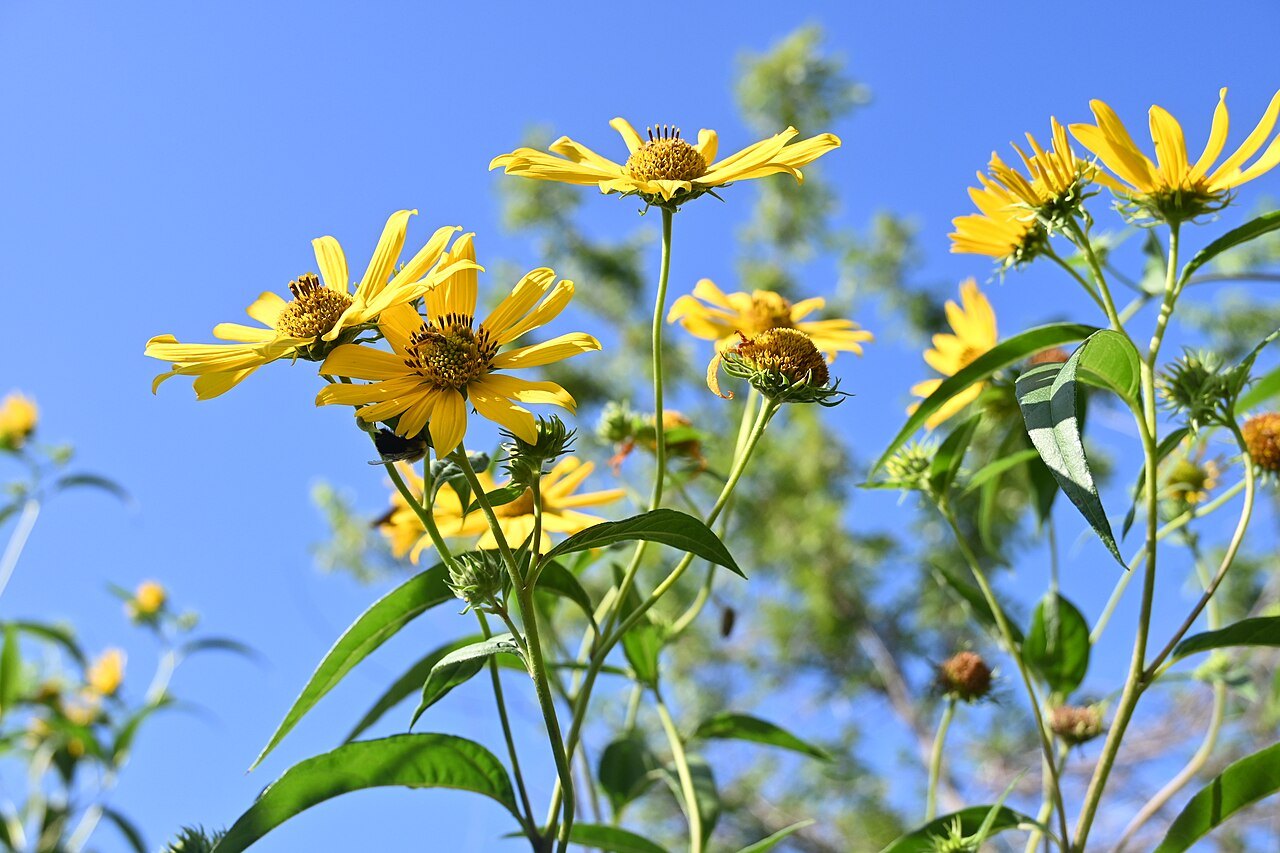
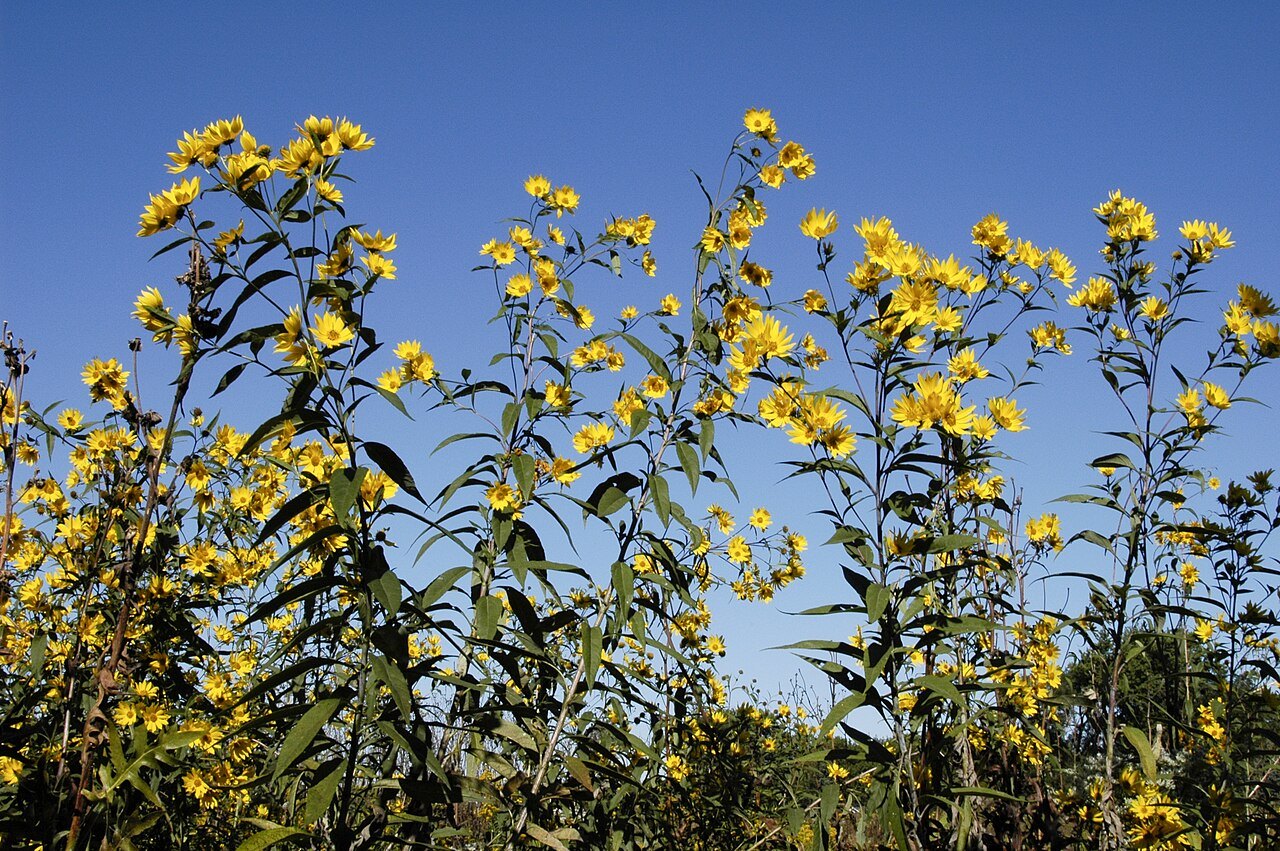
Helianthus grosseserratus, known as Sawtooth Sunflower or saw-toothed sunflower, is one of the tallest native sunflowers of the Midwest. Rising 6 to 10 feet or more on smooth, often bluish stems, it carries dozens of bright yellow, 2- to 3-inch flower heads from late summer into fall, above long, lance-shaped leaves with coarse, saw-like teeth that give the plant its name.
It belongs to the aster family (Asteraceae). Sawtooth sunflower is native to the tallgrass prairie region and the Midwest, from Ohio and Michigan west to the Dakotas and south to Kentucky, Tennessee, Missouri, Arkansas and Oklahoma. It has also spread as a roadside weed into the eastern and southeastern states, New England and parts of the West, where it is not native.
In wet prairies, moist meadows and along streams, it forms large, showy colonies that feed bees, butterflies and seed-eating birds. It is a superb plant for large naturalistic plantings, prairie restorations and rain gardens, but its spreading rhizomes make it too vigorous for small gardens. This guide covers how to identify it, where it is native, how to grow it, and its value for wildlife.
Identification
Sawtooth sunflower is identified by its great height, its smooth, often waxy, bluish to purplish stems below the flowers, and its long, coarsely toothed leaves that are pale and hairy underneath.
Growth Habit
It is a tall, rhizomatous perennial, usually 6 to 10 feet tall and sometimes taller, with several stout, erect stems branching near the top. The stems are smooth and hairless on the lower part, often covered with a whitish or bluish waxy bloom and tinged purple. Plants spread by rhizomes to form dense colonies.
Leaves
The leaves are long and lance-shaped, about 4 to 12 inches long, tapering to a point, on short stalks. The edges usually have coarse, sharp, forward-pointing teeth, though some leaves are nearly smooth-edged. The lower leaves are mostly opposite and the upper ones alternate. They are rough on top and pale, with fine soft hairs, underneath.
Flowers
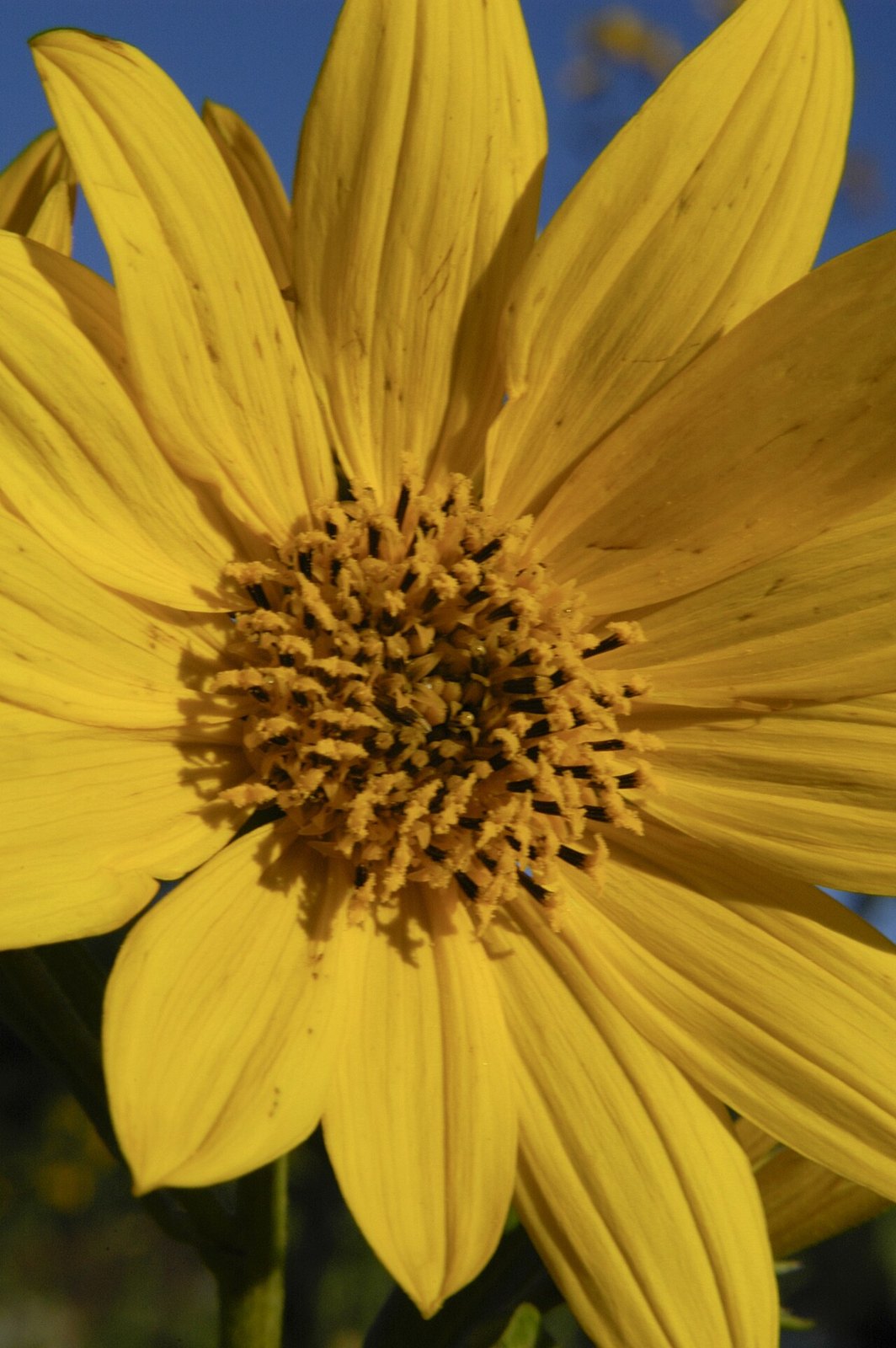
The flower heads are about 2 to 3 inches across, with 10 to 20 bright yellow ray flowers around a yellow central disk. The bracts beneath the head are narrow, pointed and loosely spreading. Plants bloom from about August to October, producing many heads at the tops of the stems.
Fruit & Look-alikes
The fruits are small, dark, flattened achenes eaten by birds. Giant sunflower (H. giganteus) is similar but has rough, hairy, usually reddish stems. Maximilian sunflower (H. maximiliani) has narrow, folded, mostly untoothed leaves and flowers in a long spike-like arrangement. Jerusalem artichoke (H. tuberosus) has broader, rough leaves and hairy stems. Sawtooth sunflower readily hybridizes with several of these.
Quick Facts
| Scientific Name | Helianthus grosseserratus M. Martens |
| Family | Asteraceae (aster family) |
| Plant Type | Tall, rhizomatous herbaceous perennial |
| Mature Height | 6–10 ft (sometimes to 13 ft) |
| Mature Spread | 3–6 ft or more (spreading by rhizomes) |
| Growth Rate | Fast |
| Sun Exposure | Full sun |
| Water Needs | Medium to high; moist soils |
| Soil Type | Moist loam, clay or alluvial soils |
| Soil pH | About 6.0–7.5 |
| Bloom Time | August–October |
| Flower Color | Bright yellow rays with a yellow disk |
| Fall Color | Seed heads and stems turn brown |
| Fruit | Small, dark achene |
| Deer Resistant | No; young shoots are browsed by deer |
| USDA Hardiness Zones | 4–9 |
Native Range
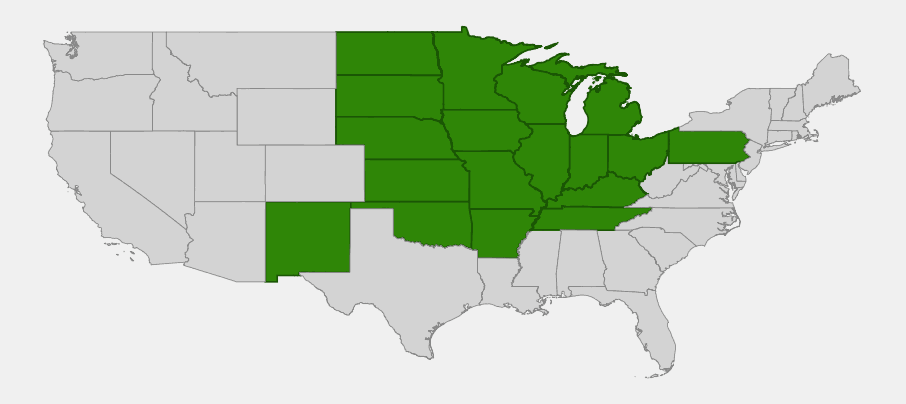
Sawtooth sunflower is native to the central United States. USDA PLANTS lists it from many states, but state floras, NatureServe and herbarium sources show that it is native mainly to the Midwest and tallgrass prairie region: Arkansas, Iowa, Illinois, Indiana, Kansas, Kentucky, Michigan, Minnesota, Missouri, North Dakota, Nebraska, Ohio, Oklahoma, Pennsylvania, South Dakota, Tennessee and Wisconsin. In New Mexico it is known from an outlying, mostly historic set of collections in the mountains of Lincoln County.
It has spread as a weed of roadsides and disturbed ground beyond its native range. NatureServe treats it as not native in Alabama, Connecticut, Delaware, Georgia, Louisiana, Maryland, Maine, Mississippi, North Carolina, New Hampshire, New Jersey, New York, Texas, Virginia, Vermont and West Virginia, and in Ontario and Quebec. The Native Plant Trust treats it as introduced in New England, including Massachusetts, and the Burke Herbarium treats it as introduced in Washington. Those states are left off the map.
Within its native range it grows in moist to wet prairies, wet meadows, floodplains, stream and pond edges, ditches, roadsides and old fields, usually in full sun on deep, fertile soils.
📋 Regional plant lists featuring Sawtooth Sunflower: Arkansas, Louisiana, Eastern Oklahoma & Eastern Texas · Illinois, Iowa & Missouri · Ohio & Indiana · Kentucky & Tennessee · Nebraska, Kansas & Eastern Colorado · North Dakota, South Dakota & Western Minnesota · Michigan, Wisconsin & Eastern Minnesota · New York, Pennsylvania & Northern New Jersey
Growing & Care Guide
Sawtooth sunflower is easy to grow in sunny, moist sites within its native Midwestern range, and it is widely available from prairie nurseries and seed companies. Its height and spreading rhizomes make it best for large spaces: prairie plantings, the back of big borders, rain gardens, pond edges and naturalized areas. Outside its native range, choose a sunflower native to your own region instead.
Light
Plant it in full sun. In shade it becomes leggy, flops and flowers poorly.
Soil & Water
It prefers deep, moist, fertile soil, including clay, and tolerates occasional flooding. It can survive drier soil once established but stays shorter. Very rich soil can make it grow extremely tall and floppy.
Planting Tips
Give it plenty of room and plant it where its rhizomes can spread without crowding smaller plants, or contain it with a root barrier. It holds its own with tall prairie grasses and forbs such as big bluestem, cup plant and giant goldenrod. In small gardens, choose a more compact native sunflower.
Pruning & Maintenance
Cut stems back by about half in early summer to reduce height and flopping. Divide or pull spreading shoots every few years to keep colonies in bounds. Leave seed heads standing in fall for birds, and cut back old stems in late winter.
Propagation
Sow seed outdoors in fall or cold-stratify it for about 60 days before spring sowing. Clumps are easily divided in spring, and rhizome pieces root readily.
Landscape Uses
- Prairie restoration: a tall, showy forb for moist tallgrass prairie and wet meadow plantings
- Rain gardens and pond edges: tolerates moist soils and occasional flooding
- Pollinator gardens: late-season nectar and pollen for bees and butterflies
- Wildlife plantings: abundant seeds for goldfinches and other birds in fall
- Screens and back borders: tall stems form a seasonal living screen
Wildlife & Ecological Value
Sawtooth sunflower is a powerhouse of late-season food for wildlife in Midwestern prairies and meadows.
For Pollinators
Its flowers attract many native bees, including bumble bees, long-horned bees and specialist sunflower bees, as well as butterflies such as monarchs and fritillaries on fall migration. Sunflowers are host plants for the caterpillars of the silvery checkerspot butterfly and many moths.
For Birds
American goldfinches, chickadees, sparrows and other seed-eating birds eat the seeds in fall and winter. Large colonies also provide cover for birds and other wildlife.
For Mammals
Deer browse young shoots, and small mammals eat fallen seeds. The dense stands provide shelter for rabbits and other small animals.
Ecosystem Role
Its spreading rhizomes help hold soil along streambanks and in wet meadows, and its abundant late flowers support insect communities in fall. In prairie restorations it can dominate moist sites, so it is often mixed with competitive grasses.
Cultural & Historical Uses
The species was described by the German botanist Martin Martens in the nineteenth century. The name grosseserratus means “coarsely toothed,” referring to the saw-like teeth of its leaves.
Sawtooth sunflower is one of the characteristic tall forbs of the Midwestern tallgrass prairie, where it once formed great stands in moist lowlands. As prairie was plowed, it persisted along roadsides, ditches and railroad rights-of-way, and from there it spread east and west as a roadside plant.
Prairie restorationists value it as a dependable, showy late-season bloomer, though its vigor means it must be balanced with other species. Its many hybrids with other sunflowers are a classic example of how freely sunflowers interbreed.
Frequently Asked Questions
How tall does sawtooth sunflower get?
Usually 6 to 10 feet, and sometimes taller in rich, moist soil. Cutting the stems back by half in early summer keeps it shorter and less floppy.
Is sawtooth sunflower aggressive?
It spreads by rhizomes and can form large colonies, so it is best for prairies, meadows and large naturalistic plantings rather than small gardens.
Where is sawtooth sunflower native?
In the central United States, mainly the Midwest and tallgrass prairie region from Ohio and Michigan to the Dakotas and south to Kentucky, Tennessee, Missouri, Arkansas and Oklahoma. It is introduced in New England, much of the East and Southeast, and the West.
How do I tell sawtooth sunflower from giant sunflower?
Sawtooth sunflower has smooth, often bluish or purplish waxy stems below the flowers, while giant sunflower has rough, hairy stems.
When does sawtooth sunflower bloom?
From about August to October, with many bright yellow heads at the tops of the tall stems.

Looking for a nursery that carries Sawtooth Sunflower?
Browse our native plant nursery directory: Arkansas · Illinois, Indiana, Iowa & Kansas · Kentucky, Michigan, Minnesota & Missouri · Nebraska, New Mexico, North Dakota, Ohio & Oklahoma · Pennsylvania, South Dakota & Tennessee · Wisconsin

