
Creeping Inchplant (Callisia repens)
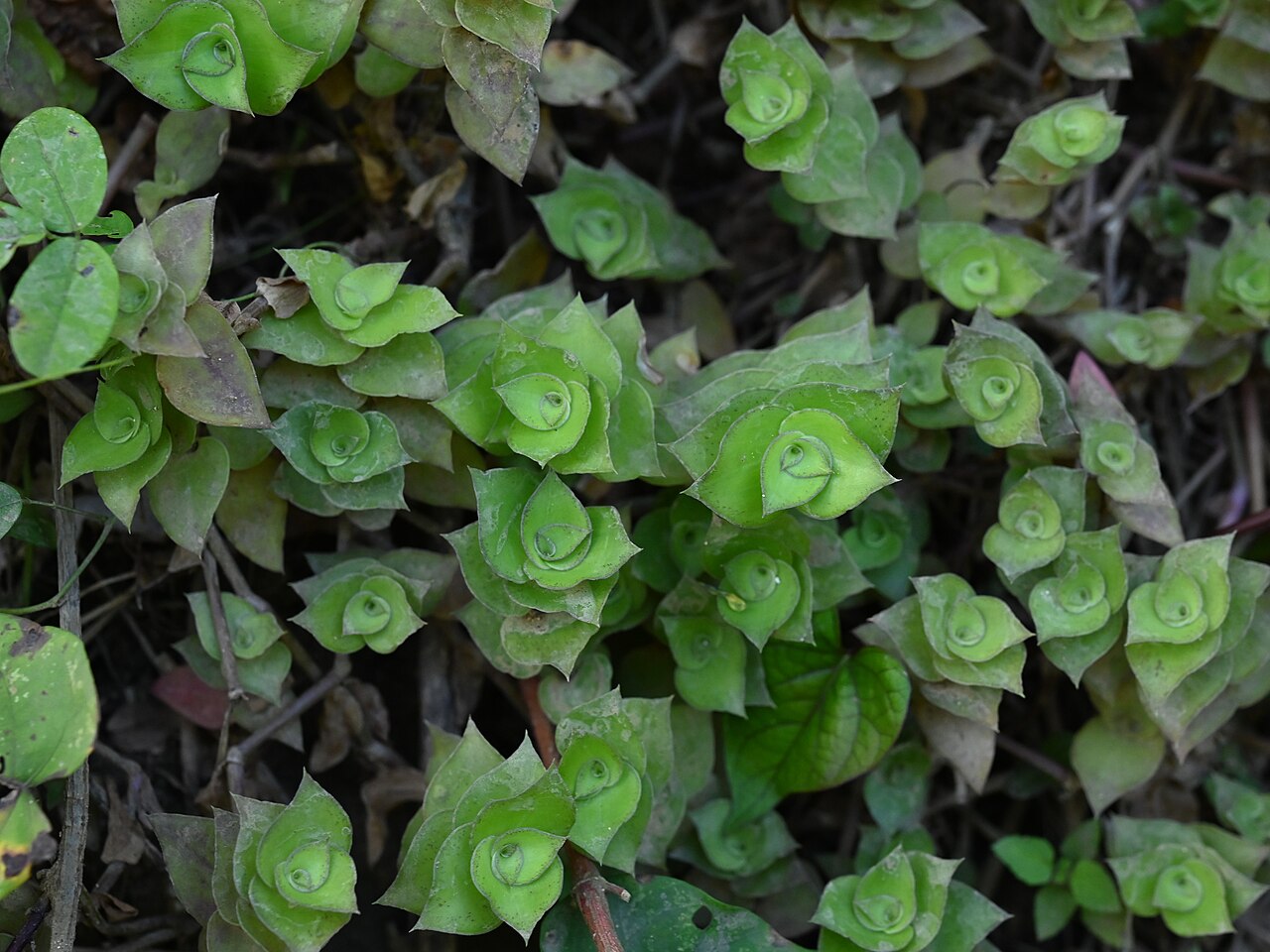
Callisia repens, the Creeping Inchplant, is a small, mat-forming member of the spiderwort family (Commelinaceae). Its creeping stems carry neat rows of glossy, fleshy little leaves, and they root wherever they touch the ground, inching across soil, rocks and walls. Houseplant growers know it as turtle vine, and colorful selections such as ‘Pink Lady’ and ‘Pink Panther’ have made it a popular trailing plant for pots and terrariums.
Within the United States, USDA PLANTS lists creeping inchplant as native to Puerto Rico and the U.S. Virgin Islands. Its natural range covers the American tropics, from Mexico through Central America and the Caribbean to South America. It is introduced in Florida, Louisiana and Texas, and naturalized in Hawaii and many other warm parts of the world, where it can carpet shady ground.
This guide covers how to identify creeping inchplant, where it grows wild in Puerto Rico, and how to grow it, outdoors as a groundcover in zones 10–13 and indoors as a houseplant. It also covers why pet owners should be careful: the sap can irritate the skin of dogs and cats that lie or walk on it.
Identification
Creeping inchplant looks like a miniature, tidier relative of the familiar wandering Jew (Tradescantia). Its smaller, closely packed leaves, low creeping habit and tiny white flowers set it apart from the larger spiderworts and dayflowers that grow in the same places.
Stems & Growth Habit
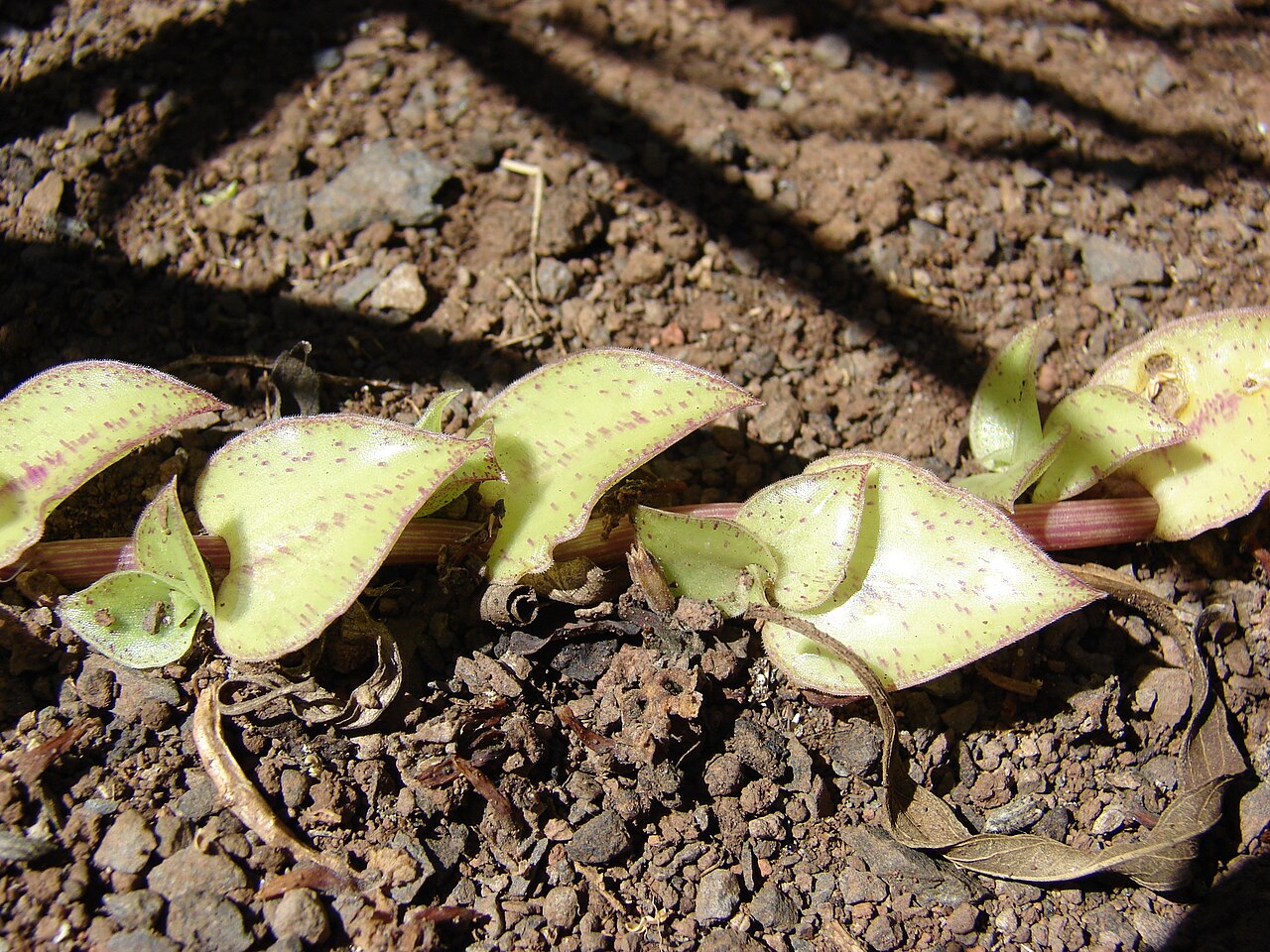
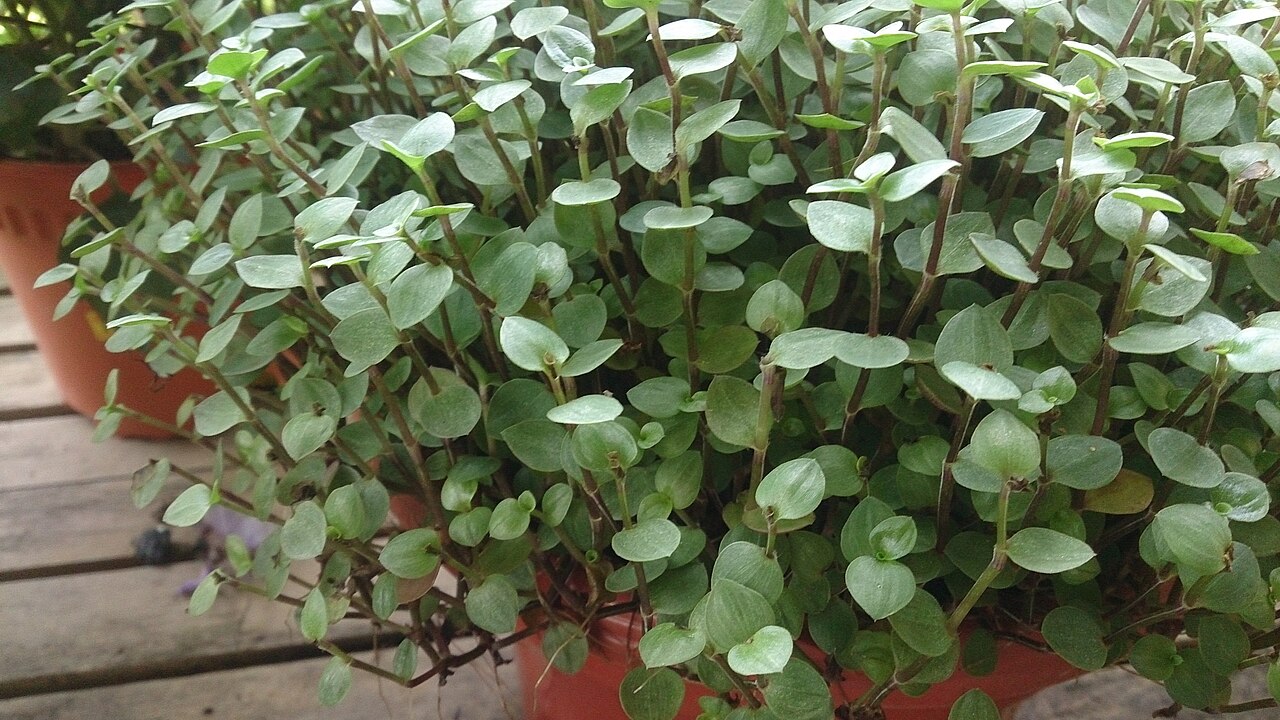
The stems are slender, succulent and often reddish or purplish. They creep along the ground, branch freely and root at the nodes, building a dense, low mat usually 2 to 6 inches tall. In pots and hanging baskets, the stems trail over the edge and can hang down a foot or more. A single plant spreads steadily outward as its rooted stems continue to grow.
Leaves
The leaves are alternate and set in two rows along the stem, so the shoots look flattened and neat. Each leaf is ovate to heart-shaped with a pointed tip, roughly ½ to 1½ inches long, slightly fleshy, glossy green above and often flushed or speckled purple beneath. The base of each leaf wraps around the stem in a short sheath, and the leaf edges and sheaths carry fine hairs. In bright light the leaves are small and tinged with purple; in shade they are larger and greener. Cultivars have pink-and-white or cream-striped leaves.
Flowers
The flowers are tiny and easy to overlook. Small clusters of white flowers sit in the leaf axils, each with three narrow petals and long white stamens that stick out well beyond them, giving the cluster a fuzzy look. They are most common in the warm months; indoor plants bloom only occasionally.
Fruit & Seeds
The flowers produce tiny capsules with one or a few small seeds, but creeping inchplant spreads mainly by its rooting stems. Any broken piece with a node can root, which is why it is so easy to propagate and why it can escape from gardens.
Quick Facts
| Scientific Name | Callisia repens (Jacq.) L. |
| Family | Commelinaceae (spiderwort family) |
| Plant Type | Creeping, mat-forming evergreen perennial; groundcover or trailing houseplant |
| Mature Height | 2–6 in |
| Mature Spread | 1–3 ft or more; spreads by rooting stems |
| Growth Rate | Fast |
| Sun Exposure | Part shade (bright, indirect light indoors); tolerates some morning sun |
| Water Needs | Moderate; keep lightly moist but not soggy |
| Soil Type | Loose, well-drained soil or potting mix; rocky or sandy ground in the wild |
| Soil pH | About 6.0–7.5 (slightly acidic to slightly alkaline) |
| Bloom Time | Mostly warm months; occasionally indoors |
| Flower Color | White, with long white stamens |
| Fall Color | None; evergreen (leaves blush purple in bright light) |
| Fruit | Tiny capsule; spreads mainly by stems |
| Deer Resistant | Moderately |
| USDA Hardiness Zones | 10–13 outdoors (killed by frost); houseplant everywhere |
Native Range
USDA PLANTS lists Callisia repens as native in Puerto Rico and the U.S. Virgin Islands. Its native range spans the American tropics and subtropics: Mexico, Central America, the Caribbean islands and South America south to Argentina. Jacquin first described it from the Caribbean in the 18th century.
In Puerto Rico it grows on shady rocks, cliffs and banks, along stone walls and roadsides, and in moist, open woodland, from the coast into the hills. It often grows with other low herbs such as pepper elder and basketgrass on damp, partly shaded ground.
USDA lists it as introduced in Florida, Louisiana and Texas, and it is widely naturalized in Hawaii, Australia and other warm regions as an escape from gardens. Because it spreads so easily from small stem pieces, gardeners in frost-free areas outside Puerto Rico and the Virgin Islands should grow it in containers and never dump trimmings in natural areas.
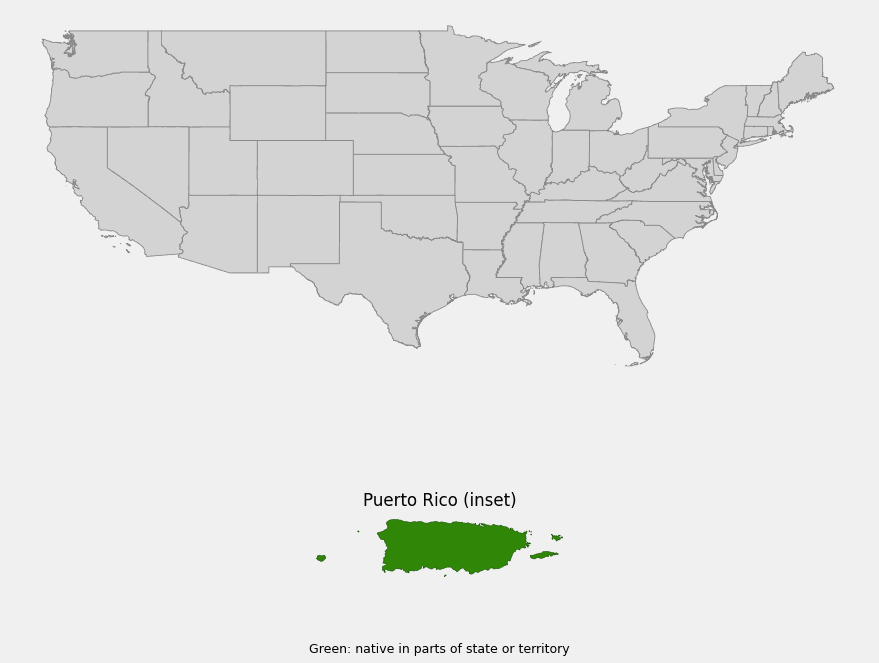
📋 Regional plant lists featuring Creeping Inchplant: Puerto Rico
Growing & Care Guide
Creeping inchplant is about as easy as houseplants get. It grows fast, roots from any piece, and forgives occasional neglect. The main things to get right are light (enough to keep it compact and colorful), water (moist but never soggy), and warmth. Outdoors it is only hardy in frost-free climates.
Light
Indoors, give it bright, indirect light, such as an east window or a spot near a south or west window but out of hot midday sun. Good light keeps the stems short, the leaves tight, and the purple and pink colors strong. In low light the stems stretch and the leaves turn plain green and widely spaced. Outdoors in zones 10–13, grow it in part shade or dappled light; full sun scorches it in hot, dry weather.
Soil & Water
Plant in a loose, well-drained potting mix in a pot with drainage holes. Water when the top half inch of soil starts to dry, and do not let the pot sit in water, because the fleshy stems rot easily at the base. It tolerates short dry spells but shrivels if left dry for long. Feed lightly once a month in spring and summer. It likes warmth, roughly 60–85°F (16–29°C), and moderate to high humidity, which makes it a good terrarium plant.
Planting Tips
For a full pot or hanging basket, plant several cuttings together. Shallow, wide pots suit its spreading habit. Outdoors in frost-free gardens, use it as a groundcover under shrubs or between stepping stones in light shade, or let it spill over a wall. In Puerto Rico it can be part of a native groundcover on shady banks. Elsewhere, keep it in containers or edged beds so it cannot creep into lawns and natural areas.
Pruning & Maintenance
Trim long or bare stems often to keep the plant dense; it responds quickly. Older plants tend to thin out in the center, so restart them from cuttings every year or two. Wear gloves if you have sensitive skin, because the sap can irritate. Watch indoors for mealybugs and spider mites, especially in dry air.
Propagation
Propagation is simple: snip a stem piece with a couple of nodes and lay it on moist potting mix or push it in lightly. Roots form within one to two weeks. Cuttings also root in a glass of water. Outdoors, mats can be divided at any time in warm weather. Bag or compost trimmings rather than discarding them in woods or wetlands.
Landscape Uses
- Houseplant: trailing pots, hanging baskets and shelves in bright, indirect light
- Terrariums and dish gardens: its small leaves and love of humidity suit closed and open terrariums
- Groundcover in frost-free gardens: in part shade under shrubs or between pavers in zones 10–13
- Native groundcover in Puerto Rico: for shady banks, rock walls and the edges of paths
- Reptile and amphibian enclosures: often used as a live plant in vivariums
Wildlife & Ecological Value
In Puerto Rico, creeping inchplant is one of many small herbs that cover shady, damp ground and rocks. It is modest ecologically but useful: its quick mats hold soil, shelter small animals and feed small insects.
For Pollinators
The tiny white flowers offer pollen and attract small bees and flies.
For Birds
It has little direct food value for birds, but its mats harbor insects and other small invertebrates that ground-feeding birds eat.
For Mammals
It is not an important food for mammals. Its sap can irritate the skin of some pets and other mammals.
Ecosystem Role
Its dense, low mats protect bare soil on shady slopes and banks, hold moisture and leaf litter, and shelter small invertebrates, snails, lizards and frogs. Because it roots from fragments, it quickly recolonizes ground disturbed by landslides, storms or road work in its native range.
Cultural & Historical Uses
Nikolaus von Jacquin described the plant from the Caribbean as Hapalanthus repens in the 1760s, and Linnaeus moved it to Callisia soon after. The genus name comes from the Greek kallos, beauty, and the species name repens means creeping. Its English name, inchplant, is shared with several Tradescantia species and refers to the way the stems seem to “inch” across the ground.
Houseplant collectors know it by many trade names, including turtle vine, and by a dated name that uses an offensive term; most growers and nurseries now avoid it. Its pink-and-cream cultivars became popular in the late 2010s, and it is now a common sight in hanging baskets and terrariums around the world.
Its close relative, Callisia fragrans (basket plant), is also widely grown. Both have been used in folk remedies in their native ranges and elsewhere, but these uses are not supported by medical evidence, and creeping inchplant should not be eaten.
Frequently Asked Questions
Is creeping inchplant toxic to cats and dogs?
It is not considered seriously poisonous, but its sap is a well-known skin irritant for pets. Dogs and cats that lie on or walk through it can develop red, itchy skin (contact dermatitis), especially on the belly and paws, and chewing it can irritate the mouth and stomach. Keep it in hanging baskets or out of reach, and call your veterinarian if a pet develops a rash or seems unwell.
Is Callisia repens native to the United States?
Yes, in Puerto Rico and the U.S. Virgin Islands, according to USDA PLANTS. On the mainland, USDA lists it as introduced in Florida, Louisiana and Texas. Its wider native range runs from Mexico through the Caribbean and Central America to South America.
Why is my turtle vine leggy and green?
Long stems with widely spaced, plain green leaves mean it needs more light. Move it to brighter, indirect light, trim the long stems, and replant the cuttings in the same pot to thicken it up. Pink and purple colors return in good light.
How do I propagate creeping inchplant?
Cut a 2- to 4-inch piece of stem with at least one or two nodes and lay it on moist potting mix, or put it in water. Roots appear within one to two weeks. It is one of the fastest houseplants to propagate.
Can I grow creeping inchplant as a groundcover?
Yes, in frost-free climates (zones 10–13) in part shade with moist, well-drained soil. In Puerto Rico it is a native groundcover. Outside its native range, keep it contained, because it roots from fragments and can spread into lawns and natural areas.

Looking for a nursery that carries Creeping Inchplant?
Our nursery directory does not yet include Puerto Rico. Browse the native plant nursery directory by state: Alabama–Arkansas · California · Colorado–Hawaii · Idaho–Kansas · Kentucky–Montana · Nebraska–Oklahoma · Oregon · Pennsylvania–Virginia · Washington · West Virginia–Wyoming

