
Alpine Aster (Aster alpinus)
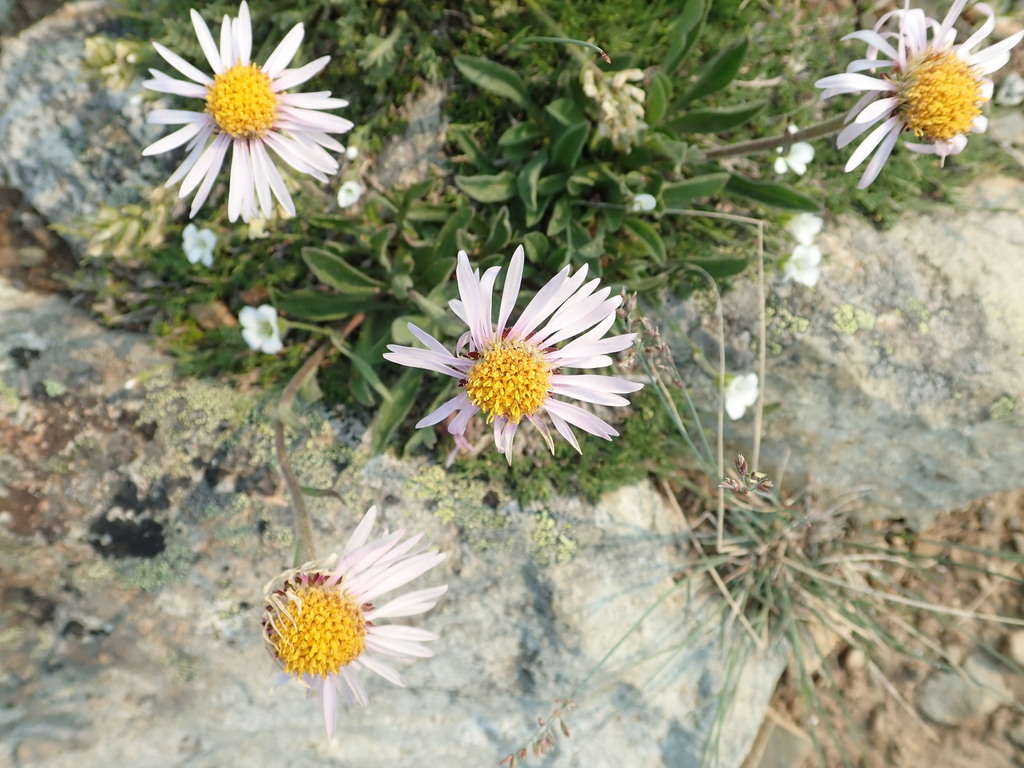
Aster alpinus, known as Alpine Aster (also blue alpine daisy), is a low, tufted perennial daisy of mountain and northern grasslands. Each slender stem, usually 4 to 12 inches tall, carries a single flower head about 1 to 2 inches across, with many narrow rays around a bright yellow center. It grows across the mountains of Europe and Asia, and a North American variety, Aster alpinus var. vierhapperi, ranges from Alaska and the Yukon south through the northern Rockies.
Gardeners know alpine aster as a classic rock garden plant. The forms sold in nurseries come from European stock and have purple, violet, pink or white rays. The wild North American plants are usually white to pale lavender, and they grow on dry, open, often rocky slopes, grassy bluffs and open woodland from lowland valleys up into the alpine zone.
Alpine aster has a special place in botany: when the big North American asters were moved into other genera such as Symphyotrichum and Eurybia, it was left as essentially the only native North American member of the true genus Aster. In the United States, USDA PLANTS lists it from Alaska and Colorado, and it is rare at the southern edge of its range.
Identification
Look for a low, tufted plant with narrow, hairy basal leaves and several unbranched stems, each topped with one daisy-like head with many white to lavender rays and a yellow center, blooming in early to midsummer.
Growth Habit
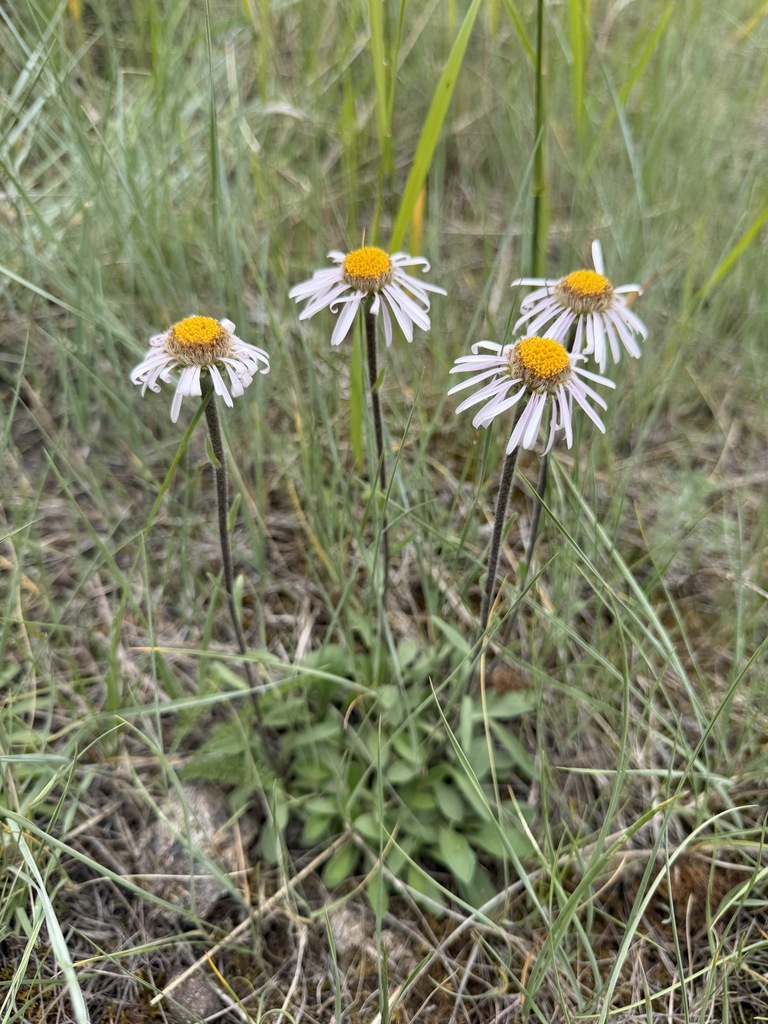
Alpine aster is a clump-forming (caespitose) perennial that grows from a short, branched rootstock. It forms a small tuft of leaves with one to several upright stems, usually 2 to 12 inches tall and sometimes up to about 16 inches. The stems are unbranched and somewhat hairy, and each ends in a single flower head.
Leaves
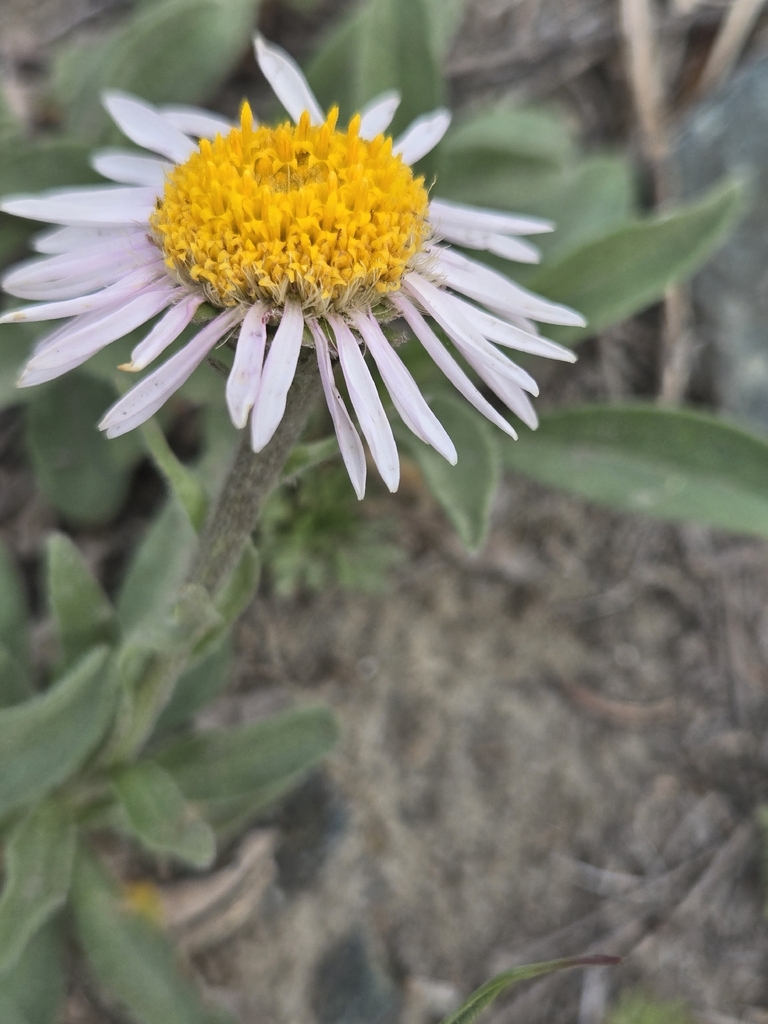
Most leaves are in a basal rosette. They are narrow and spoon-shaped (spatulate) to lance-shaped, 1 to 4 inches long, with smooth (untoothed) edges and a soft covering of hairs that gives them a gray-green look. The leaves on the stems are smaller, narrower and stalkless, and become fewer toward the top.
Flowers
Each head is about 1 to 2 inches across. There are roughly 20 to 40 narrow ray florets, white to pale lavender in wild North American plants (purple, violet or pink in many European and garden forms), around a dense, bright yellow disk. The green bracts beneath the head are hairy and arranged in two or three rows. Bloom is mainly in June and July.
Fruit & Seeds
The fruits are small, hairy achenes topped with a tuft of whitish bristles (pappus) that carries the seed on the wind, like a small dandelion clock.
Look-alikes
Fleabanes (Erigeron) look very similar and grow in the same places, including subalpine fleabane and cut-leaf daisy. Fleabanes usually have even more, very thread-like rays (often 50 to over 100) and bracts in one or two nearly equal rows, while alpine aster has fewer, broader rays and bracts in several overlapping rows. Cut-leaf daisy also has deeply divided leaves. Other North American “asters” such as smooth blue aster are taller, leafy-stemmed and carry many heads per stem rather than one.
Quick Facts
| Scientific Name | Aster alpinus (North American plants: var. vierhapperi) |
| Family | Asteraceae (aster or daisy family) |
| Plant Type | Low, tufted herbaceous perennial |
| Mature Height | 4–12 in (rarely to 16 in) |
| Mature Spread | 6–12 in |
| Growth Rate | Slow to moderate |
| Sun Exposure | Full sun to part shade |
| Water Needs | Low to medium; well-drained soil |
| Soil Type | Gravelly, rocky or sandy, well-drained soil |
| Soil pH | Slightly acidic to slightly alkaline (about 6.0–7.5) |
| Bloom Time | June–July |
| Flower Color | White to pale lavender (purple or pink in garden forms); yellow disk |
| Fall Color | None notable |
| Fruit | Hairy achenes with white bristles |
| Deer Resistant | Yes, generally |
| USDA Hardiness Zones | 3–7 (hardy much colder in the wild) |
Native Range
Alpine aster has a huge range across the mountains and northern grasslands of Europe and Asia, from the Pyrenees and the Alps east through Central Asia and Siberia. In North America it is represented by var. vierhapperi. USDA PLANTS lists it as native in Alaska and Colorado, and in Canada in the Yukon, the Northwest Territories, British Columbia, Alberta and Ontario. NatureServe also reports it from Wyoming.
The center of its North American range is the Yukon, northern British Columbia and the Rocky Mountain foothills of Alberta, and the Alaska records lie at the western edge of that range. South of Canada it is very rare: NatureServe ranks it as critically imperiled (S1) in both Colorado and Wyoming, and also in Ontario, where it is an outlying population far from the main range.
It grows in dry to moderately moist, open places: grassy and rocky slopes, south-facing bluffs, gravelly river terraces, open aspen and pine woodland, and subalpine and alpine meadows. It favors well-drained, often gravelly soil and does poorly in dense shade or soggy ground.
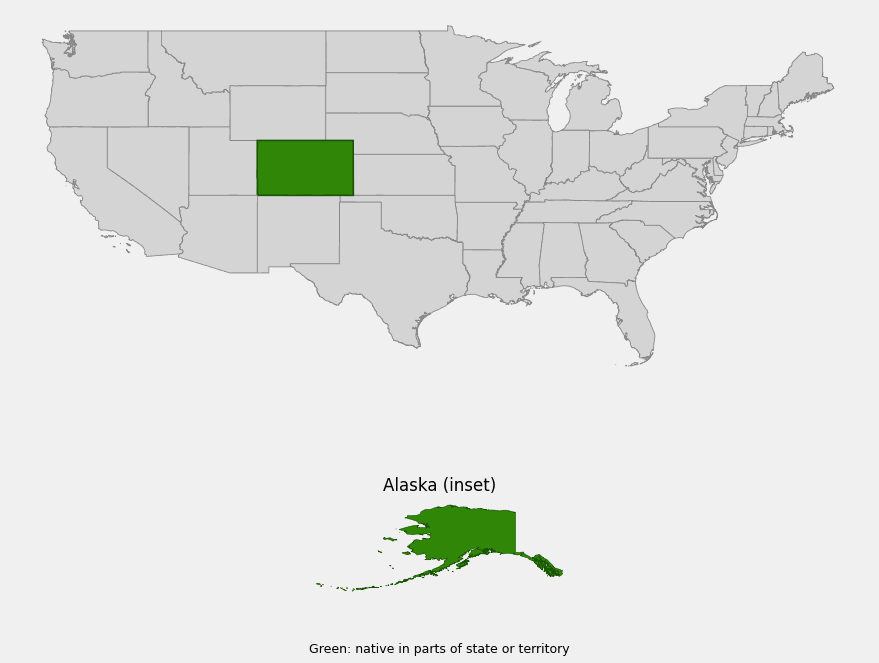
📋 Regional plant lists featuring Alpine Aster: Alaska
Growing & Care Guide
Alpine aster is a long-lived, easy rock garden plant in cool climates. Nursery plants are almost always European or garden selections; seed of the North American variety is occasionally offered by specialist seed exchanges. Never dig wild plants, especially in Colorado and Wyoming, where it is very rare.
Light
Full sun is best, especially in cool, northern gardens. In hot-summer areas it appreciates light afternoon shade.
Soil & Water
Give it lean, gritty, very well-drained soil, such as a rock garden, scree bed, raised bed or trough. It tolerates drought once established but appreciates occasional water in long dry spells. Wet soil in winter, heavy clay and high summer humidity are its main enemies, and it often struggles in the hot, humid South.
Planting Tips
Plant in spring, 8 to 12 inches apart, at the front of a border, among rocks or along a sunny path. It combines well with other low, early summer plants such as pasqueflower, cinquefoils, fleabanes and small bunchgrasses.
Pruning & Maintenance
Remove spent flower stems after bloom to keep plants tidy and sometimes to encourage a few late flowers. Clumps may die out in the center after a few years; lift and divide them in early spring to renew them. Watch for powdery mildew in humid weather, and keep mulch (gravel is best) away from the crown.
Propagation
Divide clumps in spring or early fall. Seed sown in fall or after a few weeks of cold, moist stratification germinates readily, and seedlings often bloom in their second year. Garden cultivars do not come true from seed.
Landscape Uses
- Rock gardens: a classic, long-lived plant for sunny rockeries
- Troughs and scree: stays small in gritty, lean soil
- Front of the border: low tufts with large early summer flowers
- Northern gardens: very cold hardy, including in Alaska
- Pollinator gardens: early summer nectar and pollen for small bees and flies
Wildlife & Ecological Value
In the short northern and mountain summer, alpine aster is one of the showy early-summer daisies that pollinators depend on.
For Pollinators
The open, flat heads are easy landing pads for small native bees, hover flies, beetles and butterflies. The Xerces Society notes it is of special value to native bees.
For Birds
Small seed-eating birds may take the seeds, but alpine aster is not an important bird food plant.
For Mammals
Ground squirrels, pikas and other small mammals may eat the leaves and flowers. Deer and elk tend to leave it alone, and it is generally deer resistant in gardens.
Ecosystem Role
On dry, rocky slopes and bluffs, alpine aster is part of a diverse community of low perennials that holds thin soils in place and provides flowers through the brief summer.
Cultural & Historical Uses
The name Aster is Greek for “star,” for the star-like flower heads, and alpinus means “of the Alps” or of high mountains. Linnaeus named the species in 1753.
For most of the 20th century, North America’s many wild asters were all in the genus Aster. DNA studies in the 1990s showed that they are not closely related to the Eurasian type species, and they were moved to genera such as Symphyotrichum, Eurybia, Doellingeria and Ionactis. Alpine aster was left behind as the only true Aster native to North America.
In Europe it has been grown in gardens since at least the 1700s, and garden forms such as ‘Dark Beauty’, ‘Happy End’ and the white ‘Albus’ are sold widely. The Royal Horticultural Society has given it its Award of Garden Merit.
Frequently Asked Questions
Is alpine aster native to North America?
Yes. A North American variety, Aster alpinus var. vierhapperi, is native from Alaska and the Yukon south through British Columbia and Alberta, with rare outlying populations in Colorado, Wyoming and Ontario.
What color are alpine aster flowers?
Wild North American plants usually have white to pale lavender rays with a yellow center. European and garden forms are often violet, purple or pink.
How tall does alpine aster grow?
Usually 4 to 12 inches tall, forming a small tuft about 6 to 12 inches wide.
When does alpine aster bloom?
Mainly in June and July, earlier at low elevations and later in the alpine zone.
Is alpine aster easy to grow?
Yes, in a sunny spot with gritty, well-drained soil and cool summers. It dislikes wet winter soil and hot, humid summers.


