
Dumb Cane (Dieffenbachia seguine)
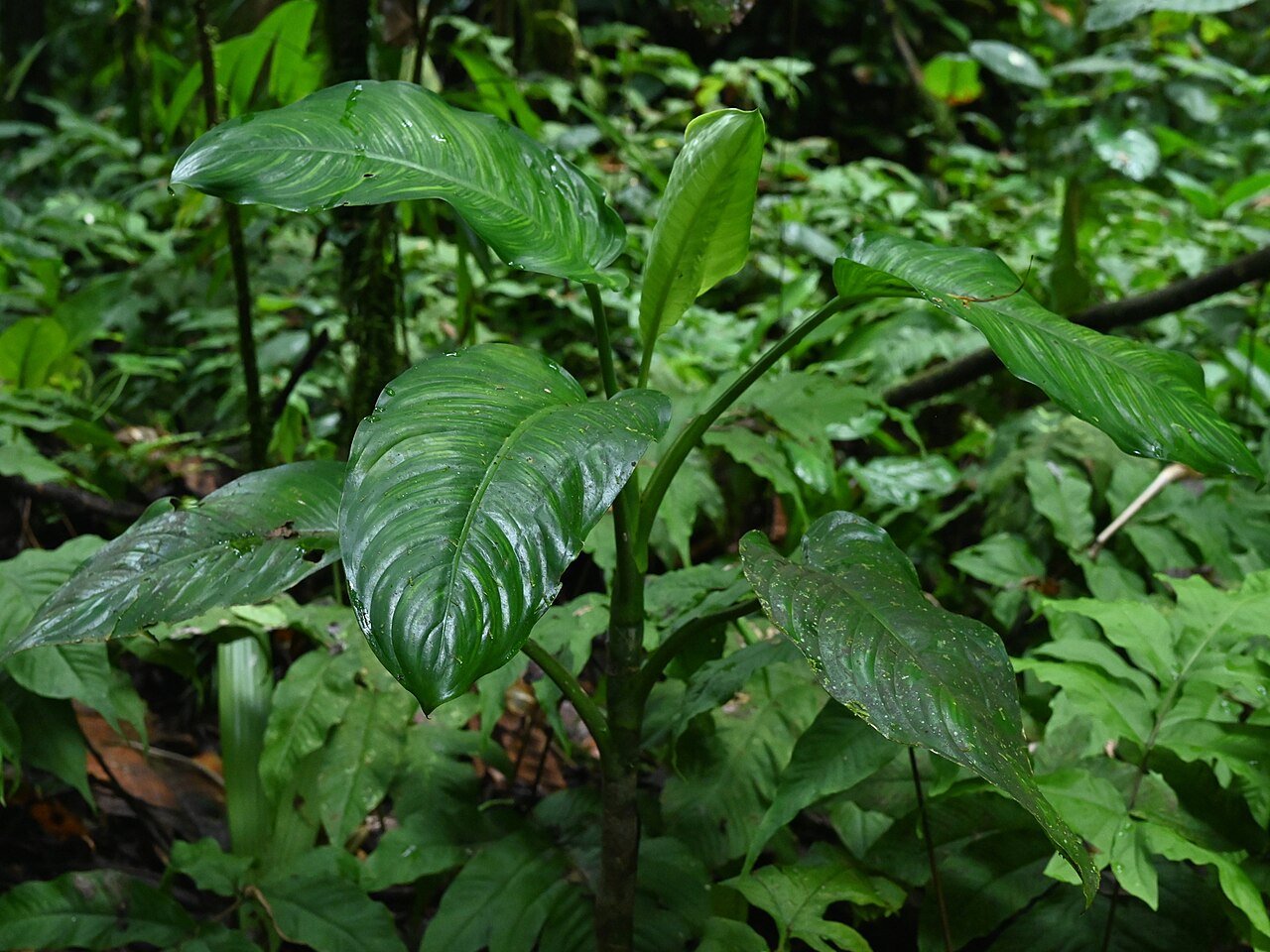
Dieffenbachia seguine, known as Dumb Cane or simply dieffenbachia, is a tropical perennial in the arum family (Araceae). It grows from thick, upright, cane-like green stems topped with large, oblong leaves that are often spotted or streaked with white or cream. It is one of the world’s most popular houseplants, and most dieffenbachias sold in garden centers are cultivars of this species, sometimes labeled with the older names Dieffenbachia maculata, D. picta or D. amoena.
Few people realize that dumb cane is a wild plant of the Caribbean. USDA PLANTS lists it as native in Puerto Rico and the U.S. Virgin Islands. Elsewhere its natural range covers the West Indies and tropical Central and South America. In Puerto Rico it grows in the shade of moist forests, especially along streams, in ravines and on wet slopes. In Florida it is grown outdoors and sometimes escapes, but there it is introduced.
Safety note: all parts of dumb cane are poisonous. The sap contains sharp needle-like crystals of calcium oxalate and irritating proteins that cause immediate, intense burning and swelling of the mouth and throat if a leaf or stem is chewed. Keep it away from small children, dogs and cats, and wear gloves when cutting it.
Identification
Look for a stout, unbranched green stem marked with leaf scars, bearing a crown of large, smooth, oblong leaves with a thick midrib, often splashed with white or cream.
Growth Habit
Dumb cane is an evergreen perennial with thick, succulent, cane-like stems. In the wild it usually grows 3 to 6 feet tall and can reach about 10 feet, with older stems leaning or sprawling along the ground and rooting where they touch. Houseplants are usually 2 to 5 feet tall. Older plants drop their lower leaves and become bare at the base, with only a tuft of leaves at the top.
Leaves
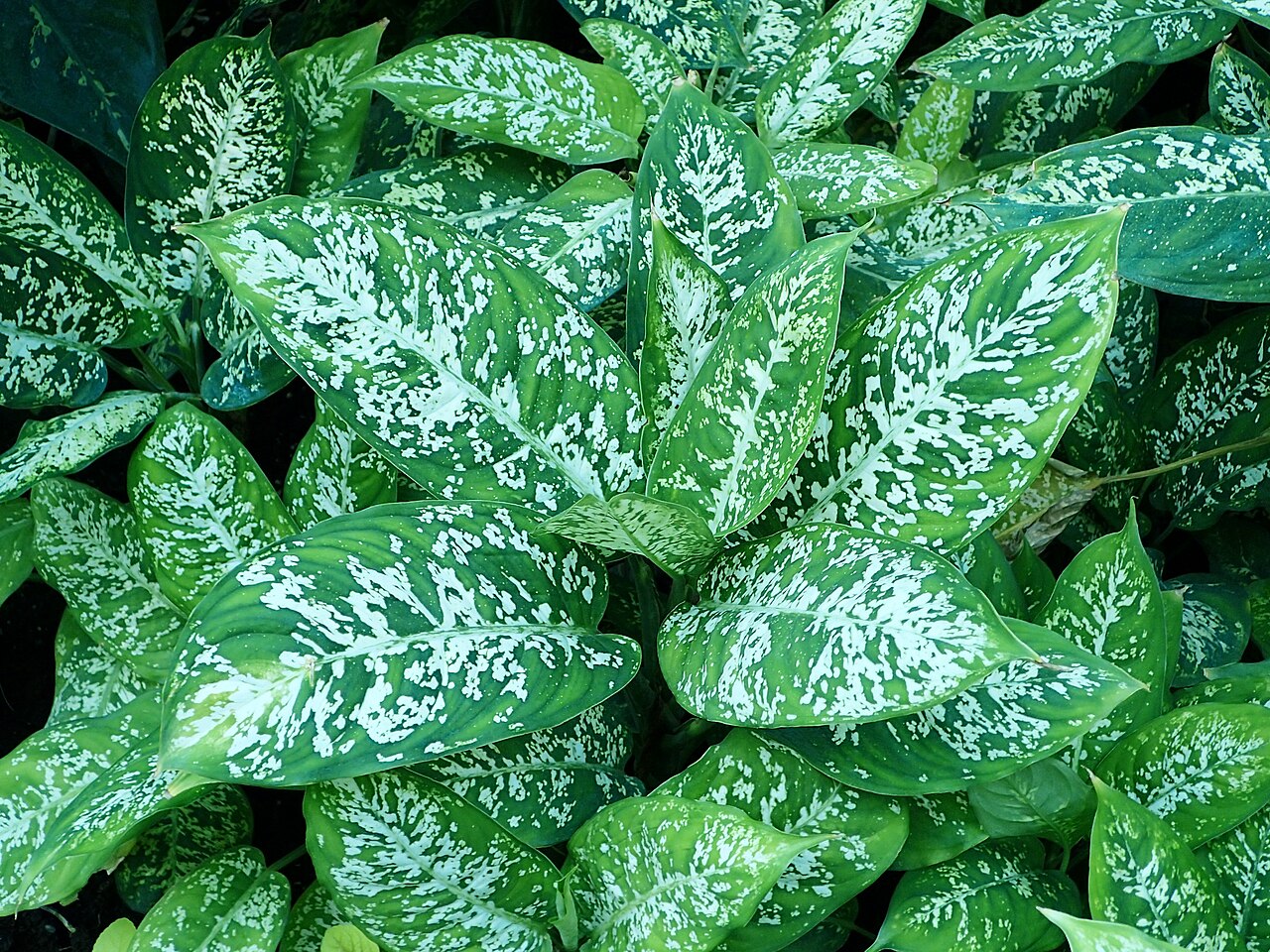
The leaves are large, simple and oblong to elliptic, usually 8 to 18 inches long and 4 to 8 inches wide, with a pointed tip and a sheathing stalk that wraps around the stem. The midrib is prominent and the side veins run in parallel curves toward the edge. Wild plants often have plain dark green leaves or a few pale streaks along the veins. Cultivated forms have bold white, cream or yellow-green spots, blotches and centers.
Flowers
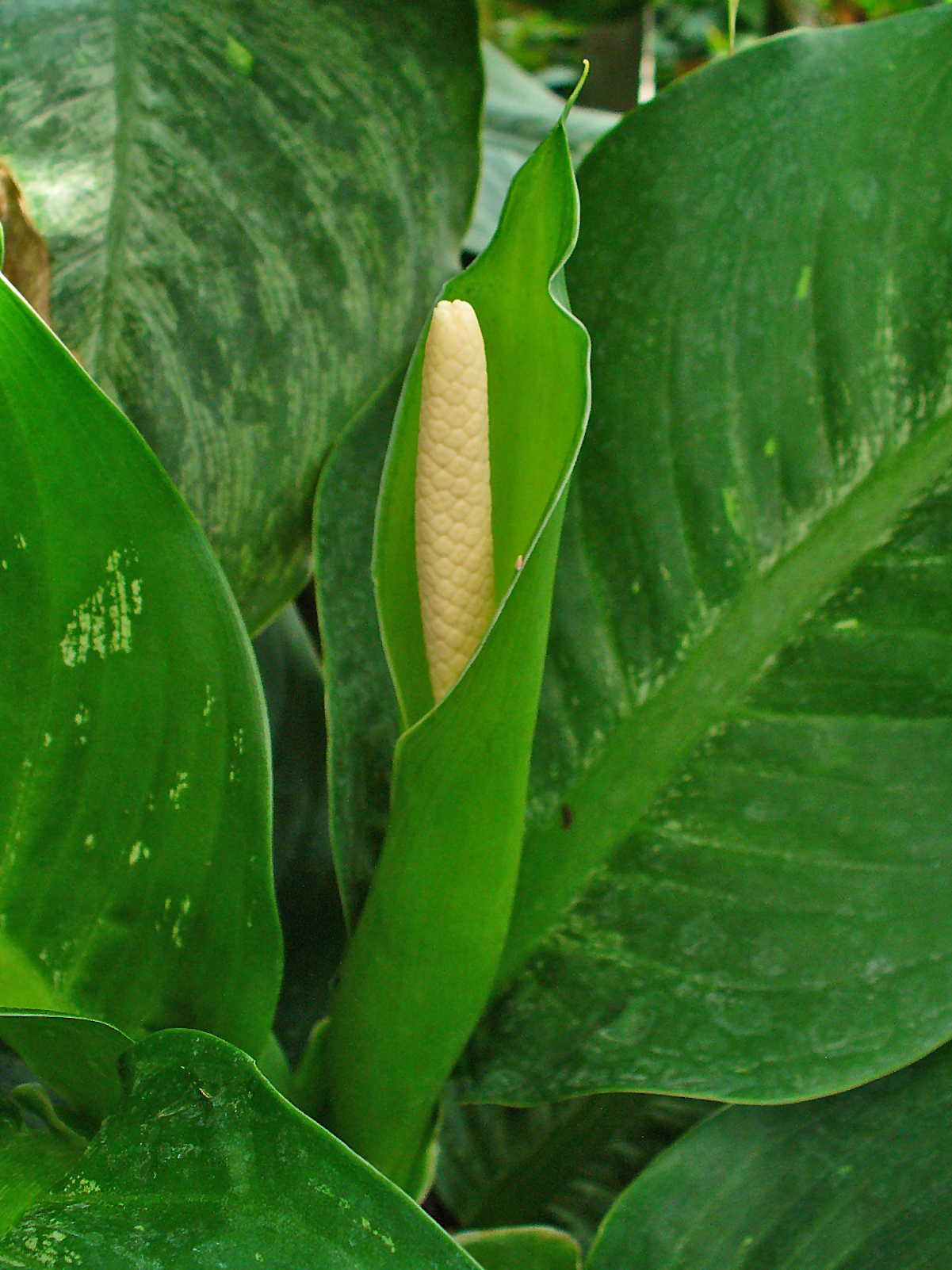
Mature plants bloom with a typical aroid inflorescence: a green, leaf-like spathe 6 to 10 inches long wrapped around a cream-colored spadix. Tiny female flowers sit on the lower part of the spadix, partly hidden in the spathe, and male flowers cover the upper part. Indoor plants seldom bloom.
Fruit & Seeds
After pollination, the lower part of the spadix develops into a cluster of small, orange to red berries, each holding a single seed. In the wild the berries ripen over several weeks and are eaten by birds.
Look-alikes
Aglaonemas (Chinese evergreens) are smaller, with narrower leaves, and are native to Asia. Plain-leaved wild dumb cane can resemble young philodendrons or anthuriums, but those plants climb or have heart-shaped leaves, while dumb cane has thick, upright, cane-like stems and oblong leaves with sheathing stalks.
Quick Facts
| Scientific Name | Dieffenbachia seguine (syn. D. maculata, D. picta) |
| Family | Araceae (arum family) |
| Plant Type | Evergreen tropical perennial with cane-like stems |
| Mature Height | 3–6 ft (to 10 ft in the wild) |
| Mature Spread | 2–3 ft |
| Growth Rate | Moderate to fast |
| Sun Exposure | Part shade to full shade (bright, indirect light indoors) |
| Water Needs | Moderate; evenly moist, never soggy |
| Soil Type | Rich, loose, well-drained soil or peat-free potting mix |
| Soil pH | Slightly acidic to neutral (about 5.5–7.0) |
| Bloom Time | Mostly spring and summer; rarely indoors |
| Flower Color | Green spathe, cream spadix |
| Fall Color | None (evergreen) |
| Fruit | Small orange to red berries |
| Deer Resistant | Yes (toxic) |
| USDA Hardiness Zones | 10b–13 (houseplant elsewhere) |
Native Range
USDA PLANTS lists Dieffenbachia seguine as native in Puerto Rico and the U.S. Virgin Islands, and as introduced in Florida and the Pacific islands. Its natural range covers the Greater and Lesser Antilles and the tropical lowlands of Central and South America, where it is a common understory plant of moist and wet forests.
In Puerto Rico it grows in shaded, humid places: the floor of moist lowland and lower montane forests, stream banks, ravines, wet limestone forest and shady roadsides and coffee farms. It spreads by fallen stems that root along the ground, so it often forms colonies. It is not found in dry forest or full sun.
Because it is so widely grown as an ornamental, dumb cane has escaped and naturalized in some tropical places outside its native range, including South Florida, Hawaii and Pacific islands. Grow it in containers or keep it in check in those areas.
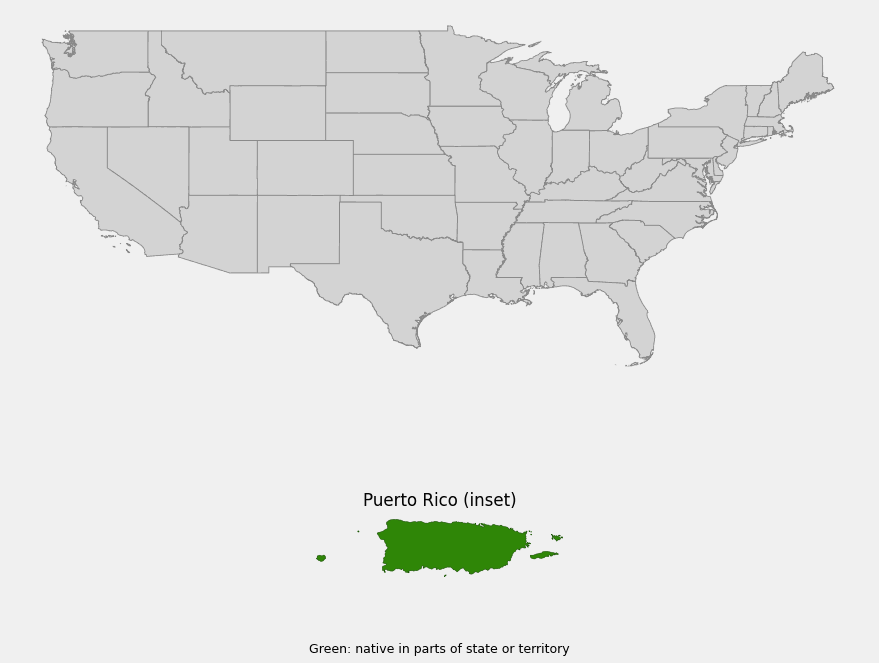
📋 Regional plant lists featuring Dumb Cane: Puerto Rico
Growing & Care Guide
Dumb cane is easy to grow as a houseplant and as a shade plant in frost-free gardens. Outdoors in the U.S. it is hardy only in Puerto Rico, the U.S. Virgin Islands, Hawaii and South Florida (zones 10b to 13). It is damaged below about 50°F and killed by frost.
Light
Indoors, give it bright, indirect light, such as near an east window or a few feet back from a south or west window. It tolerates lower light but grows leggy and loses variegation. Direct midday sun scorches the leaves. Outdoors, plant it in light to full shade, under trees or on the shady side of a building.
Soil & Water
Use a loose, well-drained potting mix with plenty of organic matter, in a pot with drainage holes. Water when the top inch of soil is dry, and water less in winter. Soggy soil causes stem and root rot, and very dry soil causes yellow, drooping lower leaves. It likes humidity; group it with other plants or set it near a humidifier in dry indoor air. Keep it away from cold drafts and keep temperatures above about 60°F.
Planting Tips
Feed it with a balanced liquid fertilizer every four to six weeks in spring and summer. Turn the pot regularly so it grows evenly. Repot every year or two in spring, one pot size larger. Outdoors in the tropics, plant it in rich, moist soil in shade, where it makes a bold, tropical groundcover or foundation planting. Place it where children and pets will not chew it.
Pruning & Maintenance
Remove yellow lower leaves at the base. When an old plant becomes tall and bare-stemmed, cut the cane a few inches above the soil; the stump will sprout new shoots, and the top can be rerooted. Always wear gloves and wash tools afterward, and avoid touching your eyes, because the sap is very irritating. Watch for spider mites, mealybugs and scale, especially in dry indoor air.
Propagation
Dumb cane is easy to propagate from cuttings. Root the leafy top in water or moist potting mix, or cut the bare cane into 2- to 3-inch sections with at least one node and lay them on their side, half buried, in moist mix. Keep them warm (70–80°F) and humid; new shoots appear in a few weeks. Wild plants can also be grown from fresh seed.
Landscape Uses
- Houseplants: a bold, easy foliage plant for bright rooms and offices
- Shade gardens: a tropical groundcover and accent in frost-free shade
- Native Caribbean gardens: understory planting under trees in Puerto Rico
- Containers: patios and porches in summer, indoors in winter
- Stream banks: helps cover moist, shaded soil in native plantings
Wildlife & Ecological Value
In Caribbean forests, dumb cane is part of the dense layer of large-leaved herbs on the shady forest floor.
For Pollinators
As in many aroids, the flowers are pollinated mainly by beetles, which are attracted by scent and shelter inside the spathe and carry pollen between plants.
For Birds
Birds eat the small orange-red berries and spread the seeds through the forest.
For Mammals
Most mammals avoid the leaves because of their stinging crystals. In its wider range some animals eat the fruit.
Ecosystem Role
Dumb cane colonies cover and shade moist forest floors and stream banks, helping hold soil in place on steep, wet slopes. Fallen stems root easily, so the plant can quickly cover gaps after storms and landslides.
Cultural & Historical Uses
The common name “dumb cane” comes from the effect of chewing the stem: the needle-like calcium oxalate crystals and irritating proteins in the sap cause such painful swelling of the tongue and throat that a person may be unable to speak for a time. Historical accounts describe it being used as a cruel punishment of enslaved people on Caribbean plantations.
The genus is named after Joseph Dieffenbach, head gardener at the imperial botanical gardens of Schönbrunn in Vienna in the 19th century. The species name seguine is an old French Caribbean name for the plant.
If someone chews dumb cane: rinse the mouth with water, give cold water or milk to drink, and contact Poison Control (1-800-222-1222 in the U.S.) or a doctor. Severe swelling of the throat is a medical emergency. If a pet chews it, rinse its mouth and call your veterinarian. Rinse sap out of the eyes with plenty of water and seek medical care.
Frequently Asked Questions
Is dumb cane native to the United States?
Within U.S. territory it is native in Puerto Rico and the U.S. Virgin Islands, according to USDA PLANTS. It is introduced in Florida and Hawaii.
Is dieffenbachia toxic to cats and dogs?
Yes. Chewing the leaves or stems causes immediate pain, drooling, pawing at the mouth, swelling and sometimes vomiting. Keep plants out of reach of pets and call your veterinarian if they chew one.
Why are the lower leaves on my dieffenbachia turning yellow?
Most often from overwatering, cold drafts or too little light. A few old lower leaves yellowing as the plant grows is normal.
Can dumb cane grow outdoors?
Yes, in frost-free climates (zones 10b–13) in shade and moist, well-drained soil. Elsewhere, put it outdoors in summer in a shady spot and bring it in before nights fall below about 55°F.
How do I fix a tall, leggy dieffenbachia?
Cut the cane back a few inches above the soil. The stump will resprout, and you can root the top and cane sections to make new plants. Wear gloves while doing it.

Looking for a nursery that carries Dumb Cane?
Our nursery directory does not yet include Puerto Rico. Browse the native plant nursery directory by state: Alabama–Arkansas · California · Colorado–Hawaii · Idaho–Kansas · Kentucky–Montana · Nebraska–Oklahoma · Oregon · Pennsylvania–Virginia · Washington · West Virginia–Wyoming

