
Slender Clubrush (Isolepis cernua)
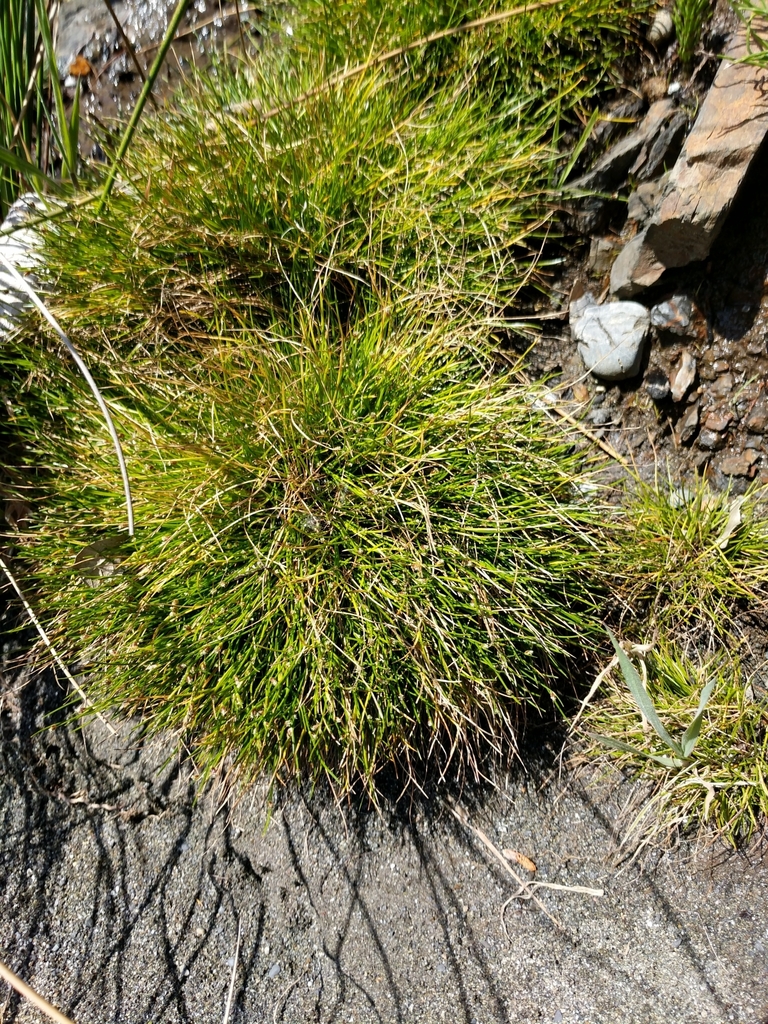
Isolepis cernua, called Slender Clubrush, low bulrush or nodding club-rush, is a tiny, tufted sedge of wet coastal places. Gardeners know it better as fiber optic grass, a popular container and water-garden plant whose fine, arching stems each end in a small, pale spikelet that catches the light like the tip of a fiber optic strand. Few people who buy it realize that it is a native plant of the Pacific Coast of the United States.
Despite its common names, it is neither a grass nor a true rush. It belongs to the sedge family (Cyperaceae) and was formerly placed in the bulrush genus as Scirpus cernuus. In the wild it forms soft, bright green tufts only 2 to 10 inches tall on seeping sea cliffs, wet sand, dune hollows, coastal marsh edges and stream banks, usually within sight or sound of the ocean.
This guide covers how to identify slender clubrush in the wild, where it grows naturally, and how to grow it as fiber optic grass in pots, bog gardens and water features, indoors or out.
Identification
Slender clubrush is small and easily mistaken for a young grass or rush until you look closely at the stem tips. The combination of hair-thin stems, a single small spikelet that appears to sprout from the side of the stem tip, and a wet coastal habitat is distinctive.
Habit & Stems
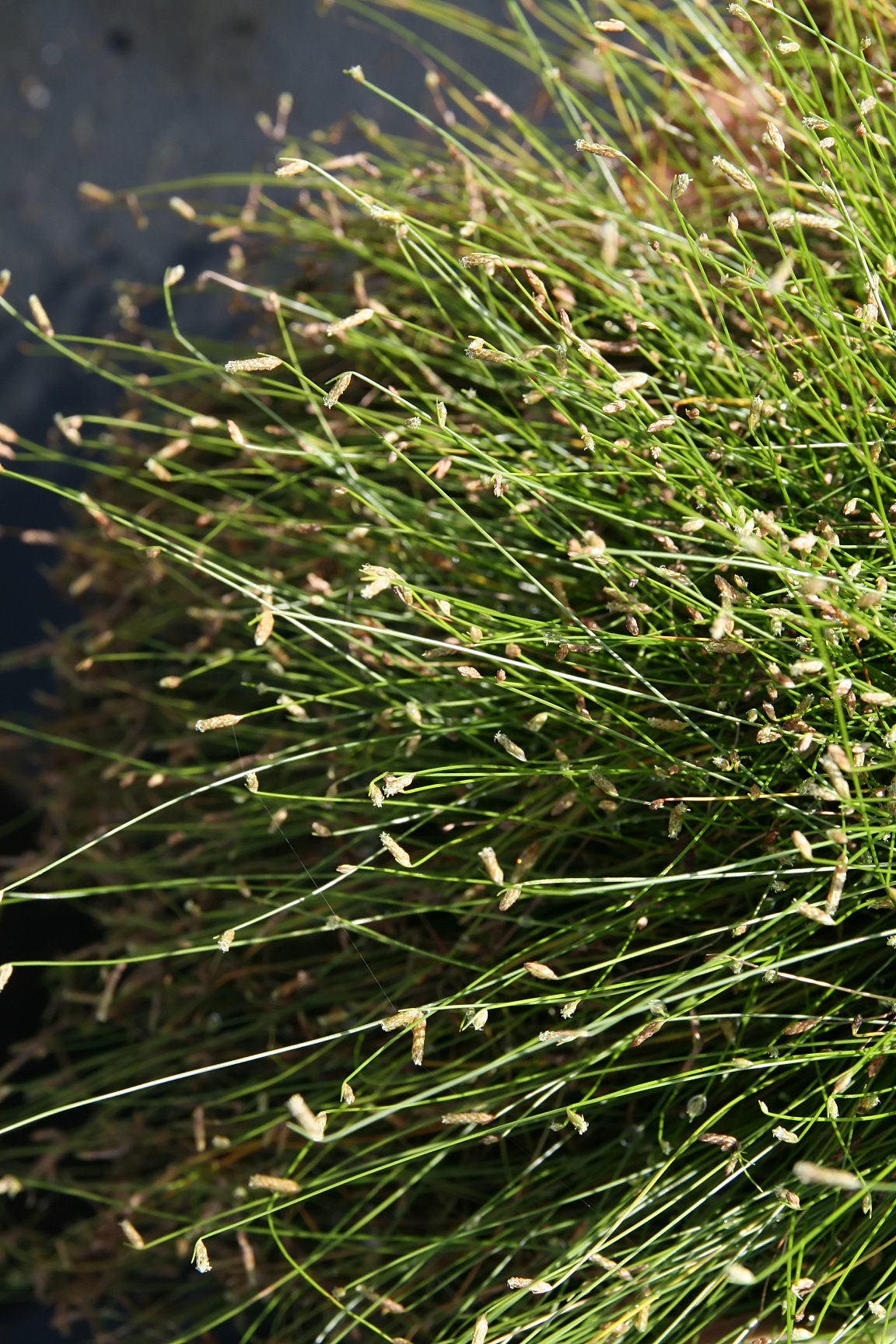
It grows in dense, soft tufts or small mats, usually 2 to 10 inches tall and sometimes taller in cultivation. The stems are thread-like, smooth, round, bright green and often arching or drooping outward, which gives the plant its fountain shape and the “nodding” (cernua) of its name.
Leaves
The leaves are reduced mostly to sheaths at the base of the stems, sometimes with a very short, thread-like blade. They are easy to overlook; almost all the green you see is stem.
Spikelets
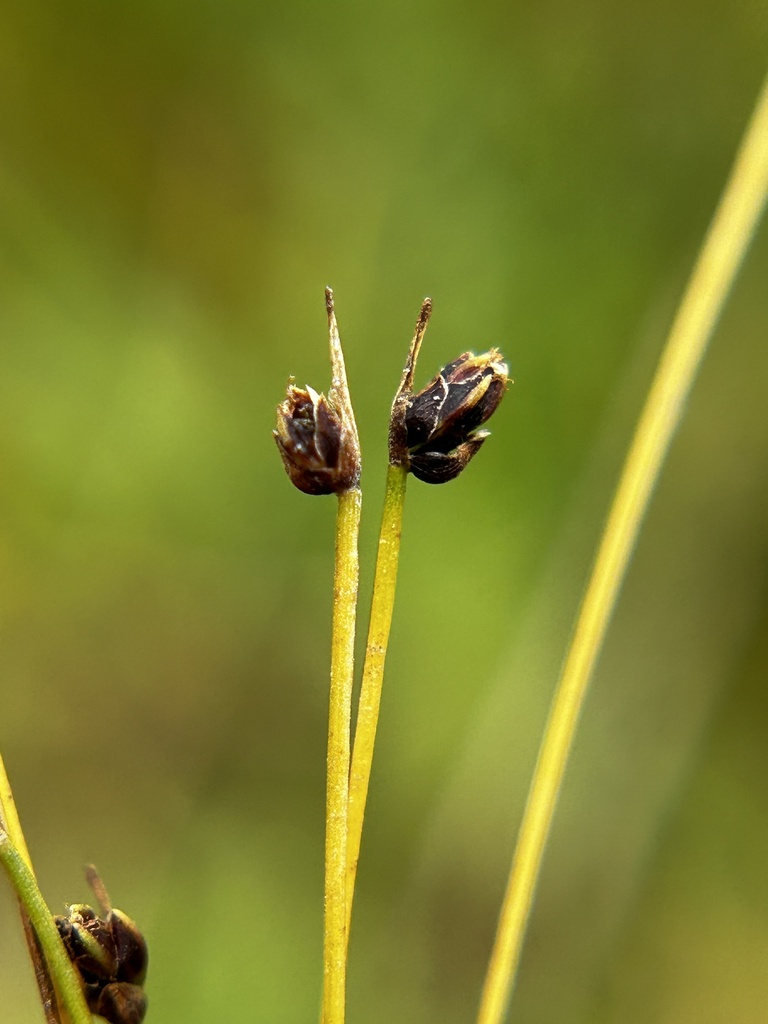
Each stem ends in a single small spikelet (occasionally two or three), egg-shaped and about ⅛ inch long, made of tightly overlapping green to brown scales. A short leafy bract continues past the spikelet, so the spikelet appears to grow from the side of the stem just below the tip. In cultivated plants the scales are pale and translucent, producing the “fiber optic” sparkle. Flowers are tiny and wind-pollinated, without petals.
Fruit
Each scale holds a minute achene (a seed-like fruit) about 1/25 inch long, brown and finely dotted. The fruits are shed through much of the year in mild coastal climates.
Quick Facts
| Scientific Name | Isolepis cernua (syn. Scirpus cernuus) |
| Family | Cyperaceae (sedge family) |
| Plant Type | Tufted annual or short-lived perennial sedge |
| Mature Height | 2–10 in (to about 16 in in cultivation) |
| Mature Spread | 4–12 in |
| Growth Rate | Fast |
| Sun Exposure | Full sun to part shade |
| Water Needs | High; constantly moist to wet, tolerates shallow standing water |
| Soil Type | Wet sand, peat, silt or seeping rock crevices |
| Soil pH | About 5.5–8.0; tolerates brackish conditions |
| Bloom Time | Spring through fall (nearly year-round in mild climates) |
| Flower Color | Inconspicuous; spikelets green to brown, pale in cultivated forms |
| Fall Color | None; evergreen in mild climates |
| Fruit | Minute brown achenes |
| Deer Resistant | Yes; too small and wet-sited to attract browsing |
| USDA Hardiness Zones | 8–11 (grown as an annual or houseplant elsewhere) |
Native Range
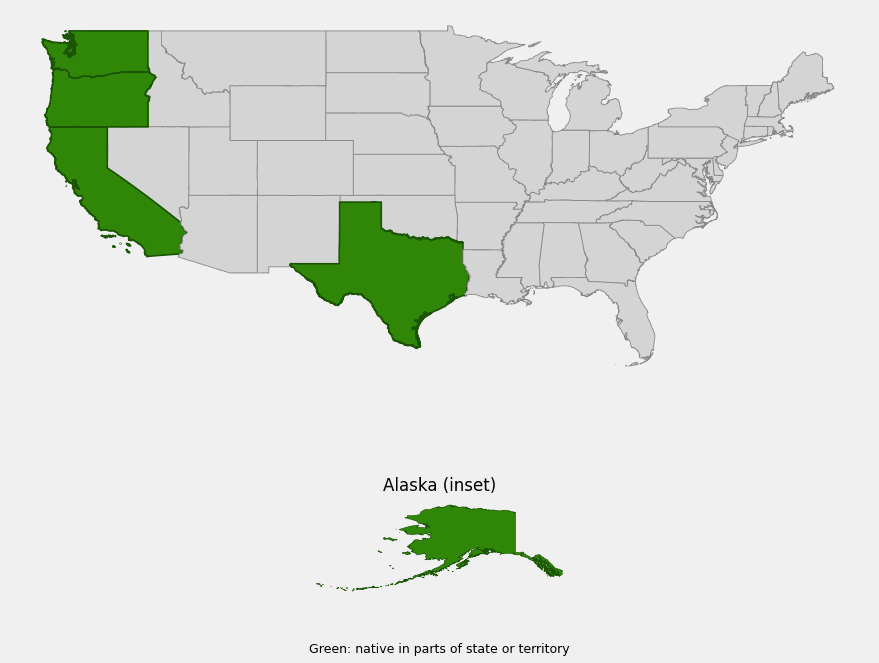
Slender clubrush has one of the widest natural ranges of any sedge. It grows on the coasts of western Europe and the Mediterranean, in Africa, Australia, New Zealand and South America, and on the Pacific Coast of North America. In the United States, USDA PLANTS lists it as native in California, Oregon and Washington, with additional records from Alaska and Texas. In Canada it reaches southwestern British Columbia.
Along the Pacific Coast it is a characteristic plant of seeping sea bluffs, coastal prairies, dune slacks, the margins of salt and freshwater marshes, and wet ditches near the coast, from southern California north to Washington. It also occurs inland in a few wet places in California, such as vernal pools and seeps.
The Alaska and Texas records are outlying and poorly documented; recent observations of the species in Texas come mainly from cultivated fiber optic grass. Because it is sold widely as an ornamental, garden escapes are also possible outside its natural coastal habitat.
📋 Regional plant lists featuring Slender Clubrush: California & Nevada · Western Oregon & Western Washington · Alaska
Growing & Care Guide
Slender clubrush, sold as fiber optic grass, is one of the easiest small water-loving plants to grow, as long as it never dries out. It is hardy outdoors only in mild climates, roughly USDA zones 8 to 11, but it is widely grown as a summer annual, a container plant overwintered indoors, or a houseplant.
Light
Outdoors, give it full sun to part shade. Along the hot interior, afternoon shade helps. Indoors, place it in a bright window with some direct sun; in low light it becomes floppy and pale.
Soil & Water
Keep the soil constantly moist to wet. A regular potting mix works if the pot stands in a saucer or tray of water. It can also be grown at the edge of a pond or water garden with its crown just at or slightly below the water surface. Even a single day of complete drying can turn the stems brown. It tolerates slightly brackish water.
Planting Tips
Use it in containers, mixed planters, bog gardens and water features, or as a fine-textured edging at a pond margin. In cold climates, grow it as an annual or bring the pot indoors before frost and keep it in a cool, bright room.
Pruning & Maintenance
Trim out brown stems as needed. If a clump becomes thin and tired, cut it back to about an inch in spring and it will regrow quickly. Feed container plants lightly with a balanced fertilizer during the growing season.
Propagation
Divide clumps in spring by pulling or cutting them into smaller tufts, each with roots. It can also be grown from seed sown on the surface of moist soil in warmth and light, and it sometimes self-sows in wet spots.
Landscape Uses
- Container plantings: a fine-textured “spiller” or centerpiece for pots kept moist
- Water gardens and pond edges: grows at or just below the water line
- Bog gardens: fills gaps between larger wetland plants
- Houseplant: a bright, airy plant for a sunny window if kept wet
- Coastal restoration: for seeps, bluffs and dune hollows within its native range on the Pacific Coast
Wildlife & Ecological Value
Slender clubrush is small, but in coastal seeps and dune hollows it is part of a specialized plant community that holds wet soil in place and shelters small animals.
For Pollinators
Like other sedges, it is wind-pollinated and offers little to bees or butterflies. Its dense tufts shelter small insects, spiders and other invertebrates in wet coastal habitats.
For Birds
Its tiny seeds may be eaten by small ground-feeding birds and shorebirds foraging along wet edges, but it is not an important food source.
For Mammals
It has little direct value for mammals, though its tufts give cover to small animals in seeps and marsh edges.
Ecosystem Role
Slender clubrush is a pioneer of wet, open ground. It quickly colonizes seeping rock faces, bare wet sand and disturbed marsh edges, where its fine roots help bind soil and create footholds for other plants and mosses.
Cultural & Historical Uses
The species was first described by the Danish botanist Martin Vahl in 1805 as Scirpus cernuus, and it was moved to the genus Isolepis by Roemer and Schultes. Isolepis comes from Greek words meaning “equal scales,” referring to the uniform scales of the spikelet. For much of the twentieth century American floras kept it in Scirpus, and that name still appears in older references.
The ornamental name “fiber optic grass” arose in the late twentieth century as the plant became a staple of garden centers and florists in Europe and North America. It is often sold under the old name Scirpus cernuus and sometimes simply as “Isolepis.” Most garden stock comes from cultivated strains rather than from Pacific Coast plants.
Because it is native to so many coastlines around the world, slender clubrush has been a puzzle for biogeographers. It is one of several small wetland plants thought to have spread long distances on the feet and feathers of migratory shorebirds and waterfowl.
Frequently Asked Questions
Is fiber optic grass a native plant?
Yes. Fiber optic grass is Isolepis cernua, which is native to the Pacific Coast of the United States (California, Oregon and Washington) and to coastlines on several other continents. Nursery plants are usually cultivated strains, but the species is native.
Is fiber optic grass a real grass?
No. It is a sedge, in the family Cyperaceae. Sedges differ from grasses in their solid, often three-angled stems and their tiny, scale-covered flowers.
How do I keep fiber optic grass alive indoors?
Give it a bright window and keep the soil wet at all times, ideally by standing the pot in a saucer of water. Drying out is the most common cause of browning.
Is fiber optic grass hardy?
It survives winters outdoors in mild climates, roughly zones 8 to 11. In colder areas grow it as an annual or overwinter it indoors.
Where can I see slender clubrush in the wild?
Look on seeping sea cliffs, wet coastal bluffs, dune hollows and marsh edges along the Pacific Coast from California to Washington, especially in spring and early summer.

Looking for a nursery that carries Slender Clubrush?
Browse our native plant nursery directory: Alaska · California · Oregon · Texas · Washington

