
Skunk Currant (Ribes glandulosum)
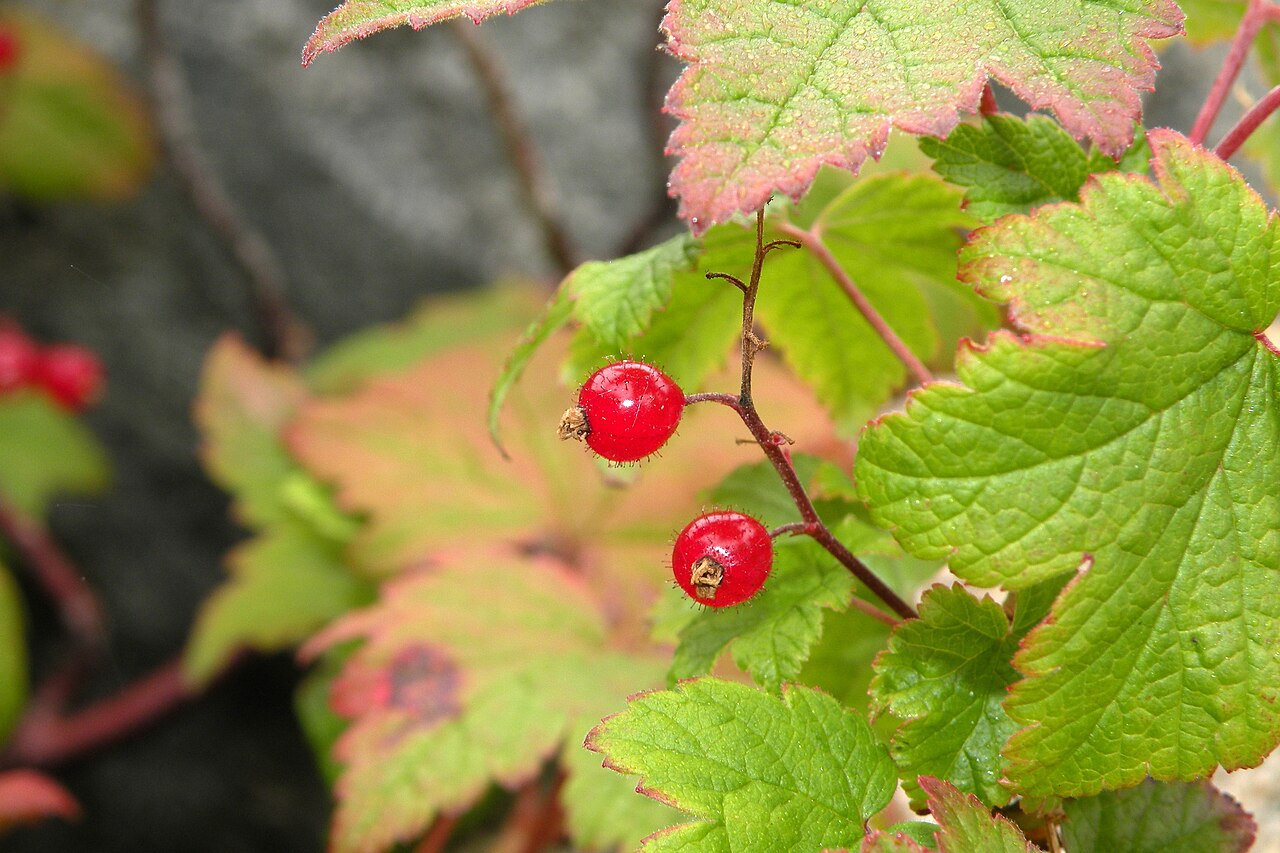
Ribes glandulosum, the Skunk Currant, is a low, sprawling currant of cool northern and mountain forests. It is named for the musky, skunk-like smell of its crushed leaves, stems and fruit, which comes from tiny glands on the plant. Despite the name, it is an attractive little shrub, with maple-like leaves that turn red in fall and bristly red berries that birds and other wildlife eat.
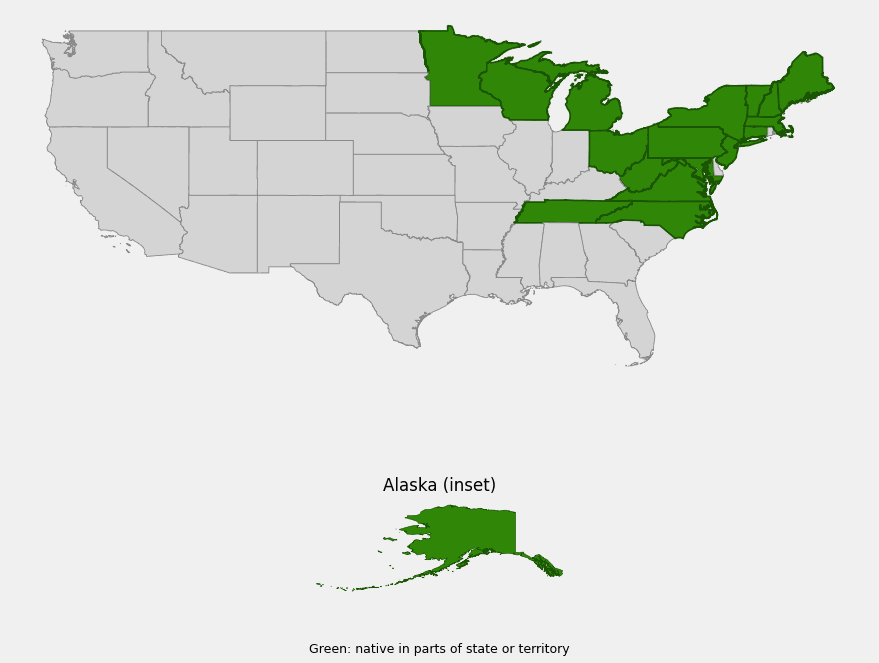
Skunk currant is one of the most widespread currants in North America. It grows across all of Canada, in Alaska, around the Great Lakes, in the Northeast, and south along the high Appalachians to the mountains of Virginia, North Carolina and Tennessee. It thrives in moist, mossy coniferous woods, rocky slopes, clearings and old burns.
This guide covers how to identify skunk currant, where it grows, and how to use it in cool, shady native gardens. It also explains the restrictions on planting currants and gooseberries in some areas, because they are alternate hosts of white pine blister rust.
Identification
Currants and gooseberries (Ribes) have alternate, palmately lobed leaves and small flowers in clusters. Skunk currant is a currant: its stems have no spines or prickles. It is identified by its low, sprawling or reclining stems, the skunky smell of crushed leaves, flower clusters that stand upright, and red berries covered in gland-tipped bristles. Compare the smooth black berries of American black currant (R. americanum) and the very prickly stems of swamp currant (R. lacustre).
Growth Form
A low, spreading deciduous shrub, usually 1 to 3 feet tall, with reclining or trailing stems that often root where they touch the ground, forming loose patches. The stems are smooth and unarmed, with no thorns or prickles. The bark of older stems is dark and slightly shreddy.
Leaves
The leaves are alternate and maple-like, about 1 to 3 inches wide, with 5 to 7 lobes and doubly toothed edges, on long stalks. They are bright green, thin and mostly hairless, with scattered glands that release a strong, musky, skunk-like smell when crushed. In fall they often turn red, orange and gold.
Flowers
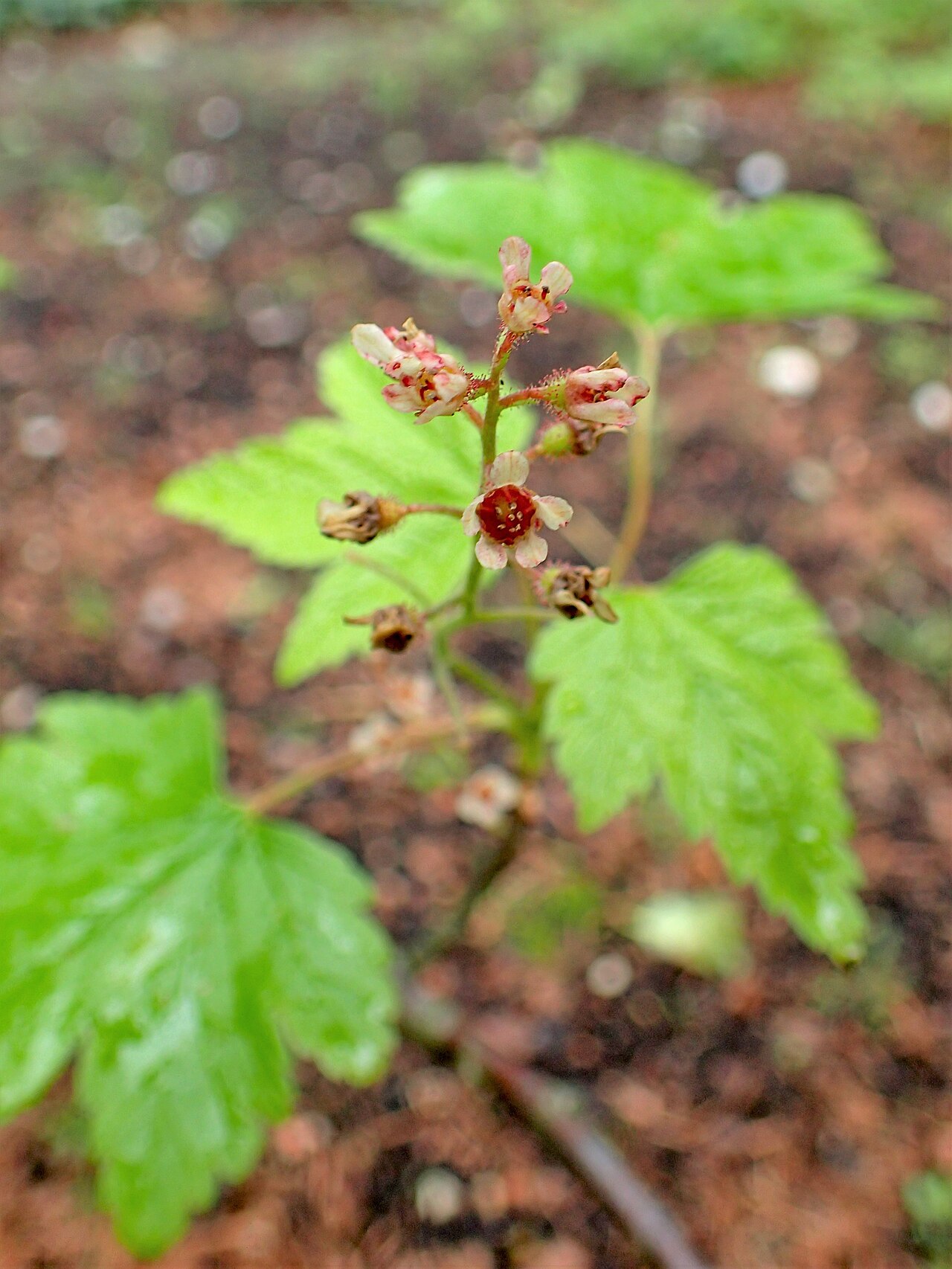
In late spring, usually May to June, short, upright racemes of 6 to 15 small, saucer-shaped flowers open on new shoots. The flowers are about ¼ inch across, whitish to pink or purplish, and the flower stalks are covered in sticky glandular hairs.
Fruit
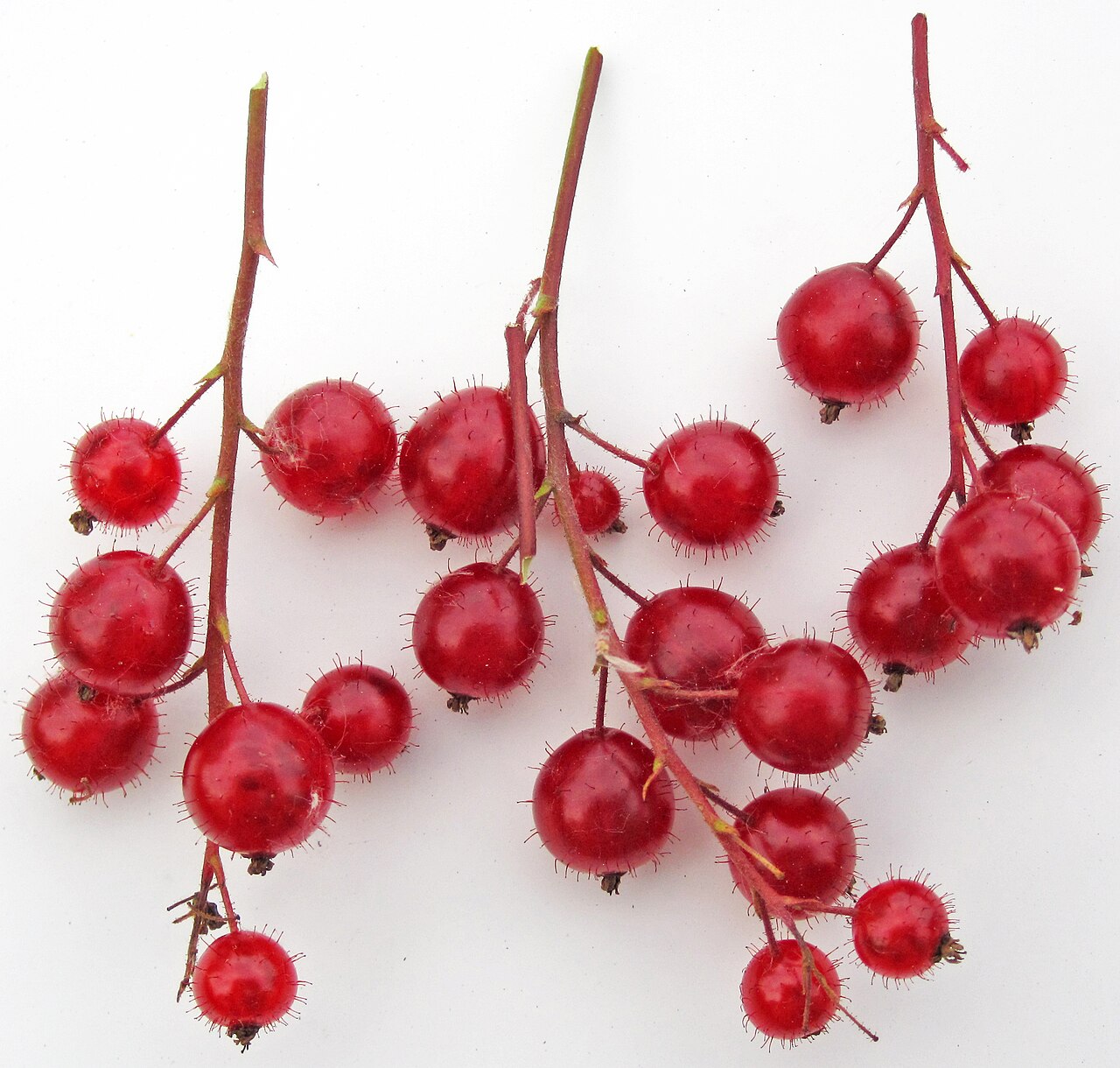
The fruits are round, bright red berries about ¼ inch across, covered with short, gland-tipped bristles. They ripen in mid to late summer. They are edible but have a musky, often unpleasant flavor, although some people find them palatable when cooked into jelly with other fruit.
Quick Facts
| Scientific Name | Ribes glandulosum Grauer |
| Family | Grossulariaceae (currant family) |
| Plant Type | Low, spreading deciduous shrub |
| Mature Height | 1–3 ft |
| Mature Spread | 2–4 ft, spreading by rooting stems |
| Growth Rate | Moderate |
| Sun Exposure | Part shade to full shade; sun in cool, moist sites |
| Water Needs | Moderate to high; consistently moist soil |
| Soil Type | Moist, humus-rich, acidic soils, rocky ground and mossy woods |
| Soil pH | Acidic (about 4.5–6.5) |
| Bloom Time | Late spring (May–Jun) |
| Flower Color | Whitish to pink or purplish |
| Fall Color | Red to orange and yellow |
| Fruit | Red, bristly-glandular berry |
| Deer Resistant | Moderately; the foliage has a strong odor |
| USDA Hardiness Zones | 2–6 |
Native Range
Skunk currant has a vast northern range. It grows across Canada from Newfoundland and Labrador to British Columbia and north into the Yukon, Northwest Territories and Nunavut, and in Alaska. In the lower 48 states it grows around the upper Great Lakes (Minnesota, Wisconsin, Michigan), across New York and New England, and south through Pennsylvania, New Jersey and Maryland along the Appalachians to the high mountains of West Virginia, Virginia, North Carolina and Tennessee.
It favors cool, moist sites: spruce-fir and northern hardwood forests, mossy rocky slopes, talus, clearings, swamp edges, logged areas and burns. At the southern end of its range it is a mountain plant found mainly at high elevations, as in the spruce-fir forests of the southern Appalachians.
Skunk currant is common in Canada and the northern states but rare at the southern and eastern edges of its range. NatureServe lists it as critically imperiled in New Jersey and vulnerable in Maryland, Virginia, West Virginia and North Carolina, and Connecticut lists it as endangered. In Ohio it is known only from historical records and is presumed extirpated.
📋 Regional plant lists featuring Skunk Currant: Alaska · Ohio & Indiana · Kentucky & Tennessee · Maryland, Virginia & West Virginia · Michigan, Wisconsin & Eastern Minnesota · North & South Carolina · New Hampshire, Maine & Vermont · Connecticut, Massachusetts & Rhode Island · New York, Pennsylvania & Northern New Jersey · North Dakota, South Dakota & Western Minnesota
Growing & Care Guide
Skunk currant is a plant for cool, moist, shady gardens in the north and in the mountains. It is easy to grow where summers are mild, and it makes a loose, wildlife-friendly groundcover under conifers. Before planting, check local rules: some states and counties restrict planting Ribes near white pine.
Light
Part shade to full shade is best in most gardens. In cool northern or coastal areas, and in moist soil, it also takes more sun, as it does in clearings and burns in the wild. In hot summers it needs shade.
Soil & Water
It needs moist, well-drained, humus-rich, acidic soil, like a mossy forest floor. Mulch with leaves or conifer needles and water during dry spells. It does not tolerate long drought, hot, dry sites or heavy, compacted clay.
Planting Tips
Plant in spring or fall. Space plants 2 to 3 feet apart for a groundcover. It suits woodland gardens, shady slopes and the edges of conifer plantings in USDA zones 2 to 6. It struggles in hot, humid lowland summers.
Pruning & Maintenance
Little care is needed. Remove dead or crowded stems in late winter. Like other currants, it can get powdery mildew or leaf spots in humid conditions, and the rooting stems can spread into nearby beds.
Propagation
Easiest by layering or by digging rooted stem sections from your own plants. Hardwood cuttings taken in late fall or winter and softwood cuttings in early summer root well. Seed needs several months of cold-moist stratification; sow cleaned seed outdoors in fall.
Landscape Uses
- Woodland groundcover: loose, low patches under conifers and northern hardwoods
- Shady slopes and rock gardens: in cool, moist, acidic soil
- Wildlife gardens: berries for birds and small mammals
- Restoration: revegetation of moist clearings and disturbed northern forest sites
Wildlife & Ecological Value
Skunk currant is a modest but useful plant in northern and mountain forests, providing early flowers for insects and summer berries for wildlife in habitats where food can be scarce.
For Pollinators
The small, open flowers are visited by bees, including bumble bees and small native bees, as well as flies, which are important pollinators in cool northern climates. Currants are also larval hosts for some moths and butterflies, including the gray comma (Polygonia progne).
For Birds
Grouse, thrushes, American robins, cedar waxwings and other birds eat the berries and help spread the seeds. The low, tangled stems provide ground cover for birds.
For Mammals
Black bears, chipmunks, squirrels and other small mammals eat the fruit. Moose and deer browse the stems, although the smell may make it less favored.
Ecosystem Role
Skunk currant is quick to colonize clearings, burns and logged areas, helping to stabilize soil after disturbance. It is also an alternate host of white pine blister rust (Cronartium ribicola), a fungal disease introduced from Asia that needs both a Ribes and a five-needled pine to complete its life cycle.
Cultural & Historical Uses
The species was described in 1784 by the German botanist Grauer. The name glandulosum means “glandular”, for the sticky, scented glands on the leaves, flowers and fruit that also give it its English name. In French Canada it is called gadellier glanduleux.
Indigenous peoples of the North used skunk currant. Ethnobotanical records note that the Algonquin and Woods Cree ate the berries, the Woods Cree made a bitter tea from the stems, and the Ojibwe used a root preparation as a medicine.
In the 20th century, foresters tried to control white pine blister rust by pulling up wild currants and gooseberries across huge areas of forest, and some states banned planting them. Those programs ended long ago, but some local restrictions remain. Skunk currant is listed as a noxious weed in Michigan, where planting Ribes is prohibited in certain areas. Check with your state agriculture department before planting.
Frequently Asked Questions
Why is it called skunk currant?
The leaves, stems, flowers and fruit have small glands that release a musky, skunk-like smell when crushed or brushed. The smell is strongest on warm days and is a good way to confirm the plant.
Are skunk currant (Ribes glandulosum) berries edible?
Yes, they are edible and not poisonous, and Indigenous peoples ate them, but many people find their musky flavor unpleasant raw. They are best cooked into jelly or mixed with other fruit. Only eat berries you have identified with certainty.
Can I plant skunk currant near white pines?
Check local rules first. Like other currants and gooseberries, it is an alternate host of white pine blister rust, and some states and counties restrict planting Ribes near white pine. If you grow white pines, avoid planting currants close to them.
Does skunk currant grow in shade?
Yes. It grows naturally in shady, moist coniferous and mixed forests and is well suited to part to full shade in cool climates.
Does skunk currant have thorns?
No. Unlike gooseberries and some currants, skunk currant has smooth stems without spines or prickles. Its berries, however, are covered in short, soft, gland-tipped bristles.

Looking for a nursery that carries Skunk Currant?
Browse our native plant nursery directory: Alaska · Connecticut · Maine, Maryland, Massachusetts, Michigan & Minnesota · New Hampshire, New Jersey, New York, North Carolina & Ohio · Pennsylvania, Tennessee, Vermont & Virginia · West Virginia & Wisconsin

