
Rainbow Hedgehog Cactus (Echinocereus rigidissimus)
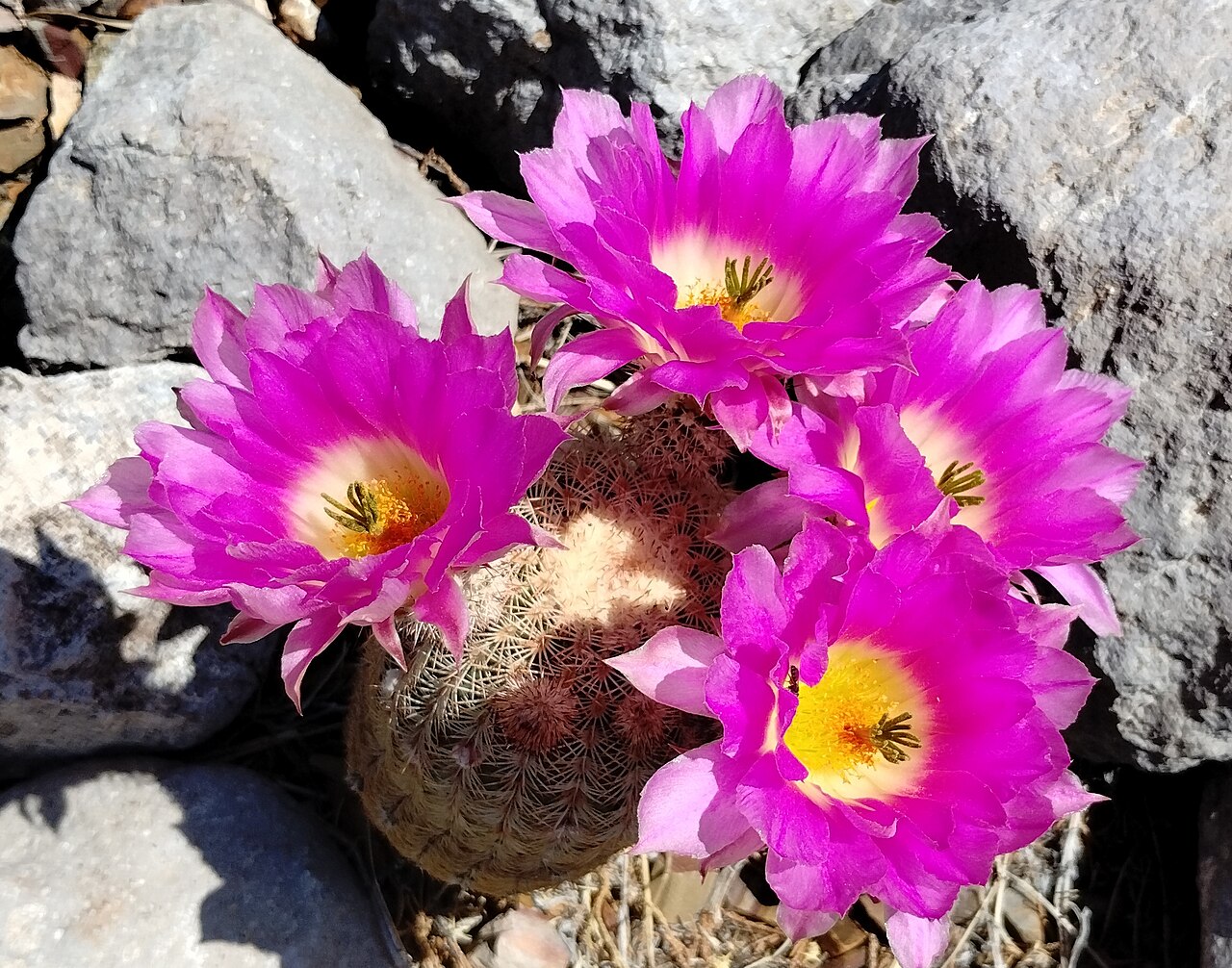
Echinocereus rigidissimus, the Rainbow Hedgehog Cactus, Arizona rainbow cactus or, in Mexico, cabeza de viejo, is a small, cylindrical cactus famous for its colorful spines. Flat, comb-like spines press against the stem in horizontal bands of pink, red, cream and white, so that each plant looks striped like a rainbow. In late spring it bears some of the largest and brightest flowers of any U.S. cactus: magenta-pink blooms with white throats, often as wide as the stem is tall.
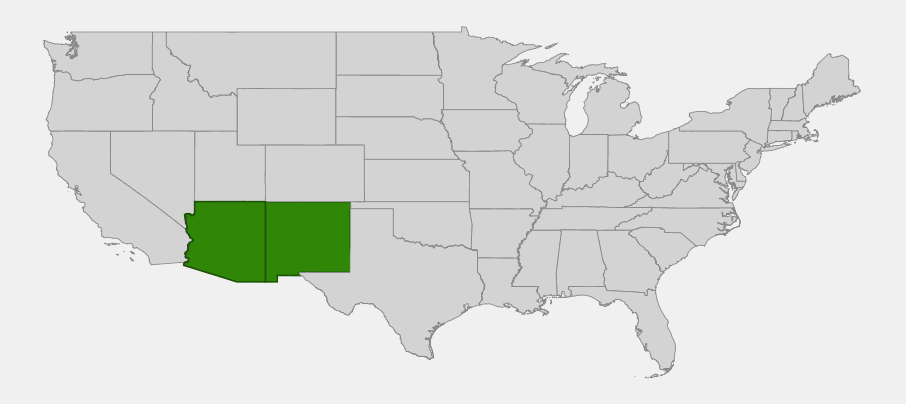
In the United States it is native only to southeastern Arizona and the bootheel of southwestern New Mexico, where it grows on rocky slopes in grassland and oak woodland, mostly between about 4,000 and 6,000 feet. It extends south into Sonora and Chihuahua, Mexico. A spectacular red-spined form, subspecies rubispinus, grows only in Mexico and is popular in cultivation.
It is a favorite of cactus collectors and a good choice for rock gardens and containers in the Southwest. Like all native cacti, it should never be dug from the wild: buy seed-grown or nursery-propagated plants. This guide covers identification, range, growing and wildlife value.
Identification
The rainbow hedgehog is one of the “comb-spined” hedgehog cacti. Its close relative, the Texas rainbow cactus (E. dasyacanthus), grows farther east and has yellow flowers and spreading central spines. The rainbow hedgehog has magenta flowers, and its spines lie flat with no central spines, so the stem looks neatly combed.
Stem & Growth Habit
Usually a single, upright, cylindrical stem, 3 to 12 inches tall and 2 to 4 inches thick, rarely branching. The stem has about 15 to 25 low, narrow ribs. It is often partly hidden among rocks and grass.
Spines
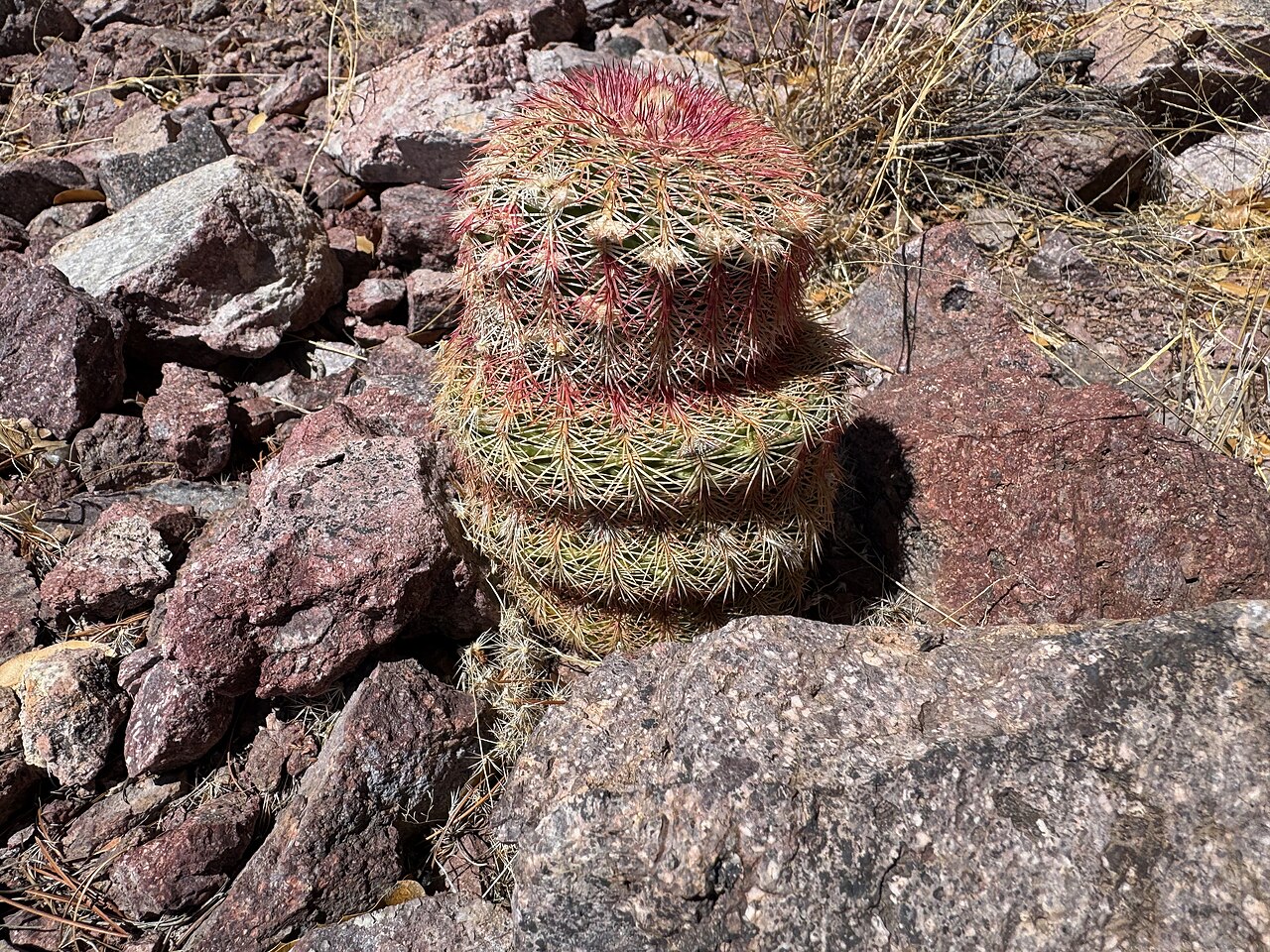
Each areole carries 15 to 35 short, stiff radial spines that spread sideways and lie flat against the stem like the teeth of a comb, interlocking with those of neighboring areoles. There are no central spines. Spine color changes with each season of growth, from pink and red to cream, white or tan, which creates the horizontal rainbow bands. The species name means “very stiff.”
Flowers
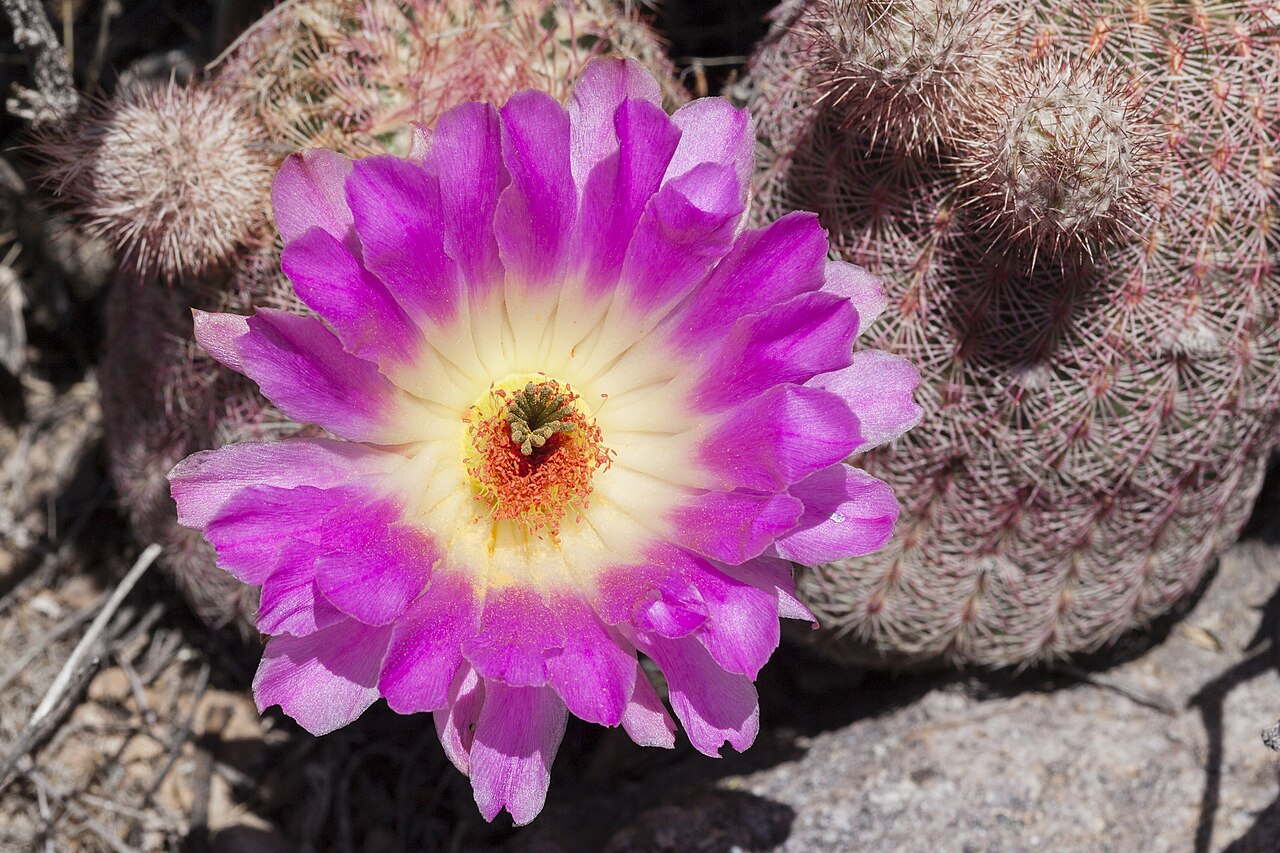
Flowers appear from about May to July, from areoles on the side of the stem near the top. They are funnel-shaped to wide open, about 2½ to 4½ inches across, bright magenta to rose-pink with a white to cream throat and a green, many-lobed stigma. They open in sunshine and close at night, each lasting a few days.
Fruit
The fruit is round, about 1 inch across, green to dark purple, and covered in short spines that fall off when ripe. The pulp is juicy and edible, like that of other hedgehog cacti, and is full of small black seeds.
Quick Facts
| Scientific Name | Echinocereus rigidissimus (Engelm.) F. Haage |
| Family | Cactaceae (cactus family) |
| Plant Type | Small, columnar perennial cactus |
| Mature Height | 3–12 in |
| Mature Spread | 2–4 in |
| Growth Rate | Slow |
| Sun Exposure | Full sun to light shade |
| Water Needs | Very low |
| Soil Type | Rocky, gravelly, very well-drained soil |
| Soil pH | About 6.5–8.5 |
| Bloom Time | May–July |
| Flower Color | Magenta to rose-pink with a white throat |
| Fall Color | None; spines banded pink, red and cream |
| Fruit | Spiny, green to purple, edible berry |
| Deer Resistant | Yes |
| USDA Hardiness Zones | 7b–10 (dry in winter) |
Native Range
USDA PLANTS lists Echinocereus rigidissimus as native in Arizona and New Mexico. In Arizona it grows in the southeastern mountains and their foothills, including the Chiricahua, Huachuca, Dragoon and Santa Rita Mountains and nearby ranges, mainly in Cochise, Santa Cruz and Pima counties. In New Mexico it occurs in the Peloncillo Mountains and nearby ranges of Hidalgo County in the bootheel.
It grows on rocky slopes, ridges and canyon sides, among boulders and in desert grassland, oak woodland and the lower edge of pine-oak forest, on both limestone and igneous rock, mostly from about 4,000 to 6,000 feet. South of the border it ranges through Sonora and Chihuahua, Mexico, where the red-spined subspecies rubispinus also grows.
Colorful cacti like this one have long been targets of illegal collecting. In Arizona, native cacti are protected by the Arizona Native Plant Law, which requires permits and tags to remove or sell them. Never dig plants from the wild, and buy only seed-grown or legally salvaged, tagged plants.
📋 Regional plant lists featuring Rainbow Hedgehog Cactus: Arizona & New Mexico
Growing & Care Guide
Rainbow hedgehog cactus is one of the most rewarding small cacti for Southwestern rock gardens and for containers anywhere. It is slow but tough, as long as it gets sun and perfect drainage. Buy seed-grown plants from reputable cactus nurseries.
Light
Give it full sun to light shade. Strong light keeps the spines brightly colored and the plant compact. In the low desert, afternoon shade or a site among rocks protects it from extreme summer heat. Indoors, give it the sunniest window available or grow lights.
Soil & Water
Plant in very fast-draining, gritty soil: for example, half coarse sand, pumice or decomposed granite and half sandy loam, or a commercial cactus mix with extra grit. In the ground, water occasionally from spring through the summer monsoon, then let it stay dry in winter. Wet, cold soil is the main cause of death.
Planting Tips
Plant it on a slope, a raised bed or among rocks, with the base of the stem at or slightly above grade and a gravel mulch around it. In containers use an unglazed pot with drainage holes. It tolerates frost and short freezes down to about 10–15°F if dry, but cold, wet winters rot it.
Pruning & Maintenance
No pruning is needed. Remove fallen leaves and debris from around the stem. Watch for mealybugs and scale, and for rot if soil stays wet. Repot container plants every few years in spring.
Propagation
It is grown from seed, sown on a gritty mix in warm conditions and kept lightly moist until seedlings establish. Seedlings grow slowly and take several years to flower. Because it rarely branches, it is seldom propagated from cuttings.
Landscape Uses
- Rock gardens: a colorful accent among boulders and gravel in sunny, dry gardens
- Containers: pots and troughs on sunny patios or windowsills
- Xeriscapes: needs little or no supplemental water once established in its native region
- Pollinator gardens: its large flowers attract native bees in late spring
- Cactus collections: prized for its banded spines and showy flowers
Wildlife & Ecological Value
Small as it is, the rainbow hedgehog cactus is part of the rich plant community of the Madrean Sky Islands, one of the most biologically diverse regions in North America.
For Pollinators
Its large, open flowers are pollinated mainly by bees, including cactus bees (Diadasia) and other native bees that roll in the abundant pollen. Beetles also visit the flowers.
For Birds
Birds such as cactus wrens, thrashers and finches eat the ripe fruit and help spread the seeds.
For Mammals
Rodents, javelinas and other mammals eat the fruit, and packrats and ground squirrels may gnaw on the stems in dry times.
Ecosystem Role
Seeds dispersed by birds and rodents often sprout in the shelter of rocks and grass clumps, which shade young cacti. Mature plants provide pollen and nectar for native bees in late spring, before the summer monsoon brings a flush of other flowers.
Cultural & Historical Uses
George Engelmann first described the plant in 1848 as a variety of Echinocereus pectinatus, the comb hedgehog, and the German nurseryman Ferdinand Haage raised it to species rank in the late 19th century. The name rigidissimus means “very rigid,” for its stiff, closely pressed spines.
In Mexico, it is often called cabeza de viejo, “old man’s head,” for its pale, combed spines. Its striped stems and huge flowers made it a popular collector’s plant early on, and today most plants sold are seed-grown, including the red-spined subspecies rubispinus from Chihuahua and Sonora.
In southeastern Arizona, its blooms in May and June are a highlight for hikers in the Chiricahua and Huachuca Mountains, where it grows alongside agaves and beargrass on sunny, rocky slopes.
Frequently Asked Questions
Where does the rainbow hedgehog cactus grow wild?
In the United States, only in southeastern Arizona and the bootheel of southwestern New Mexico, on rocky slopes in grassland and oak woodland at about 4,000 to 6,000 feet. It also grows in Sonora and Chihuahua, Mexico.
When does the rainbow hedgehog cactus bloom?
Usually from May to July. The magenta flowers open in sunshine, close at night and last a few days each.
How cold-hardy is the rainbow hedgehog cactus?
It tolerates frost and brief freezes to about 10–15°F if its soil is dry. Cold, wet soil kills it, so in wet-winter climates grow it in a container you can move under cover.
Can I dig a rainbow cactus from the wild?
No. In Arizona, native cacti are protected by the Arizona Native Plant Law, and removing them requires permits and tags. Wild plants also rarely survive transplanting. Buy seed-grown plants from reputable nurseries.
What is the difference between rainbow hedgehog and Texas rainbow cactus?
The rainbow hedgehog (E. rigidissimus) has magenta flowers and flat, comb-like spines without central spines, and grows in Arizona and New Mexico. The Texas rainbow cactus (E. dasyacanthus) has yellow flowers and spreading central spines, and grows in West Texas and southern New Mexico.

Looking for a nursery that carries Rainbow Hedgehog Cactus?
Browse our native plant nursery directory: Arizona · New Mexico

