
ʻĀkala (Rubus hawaiensis)
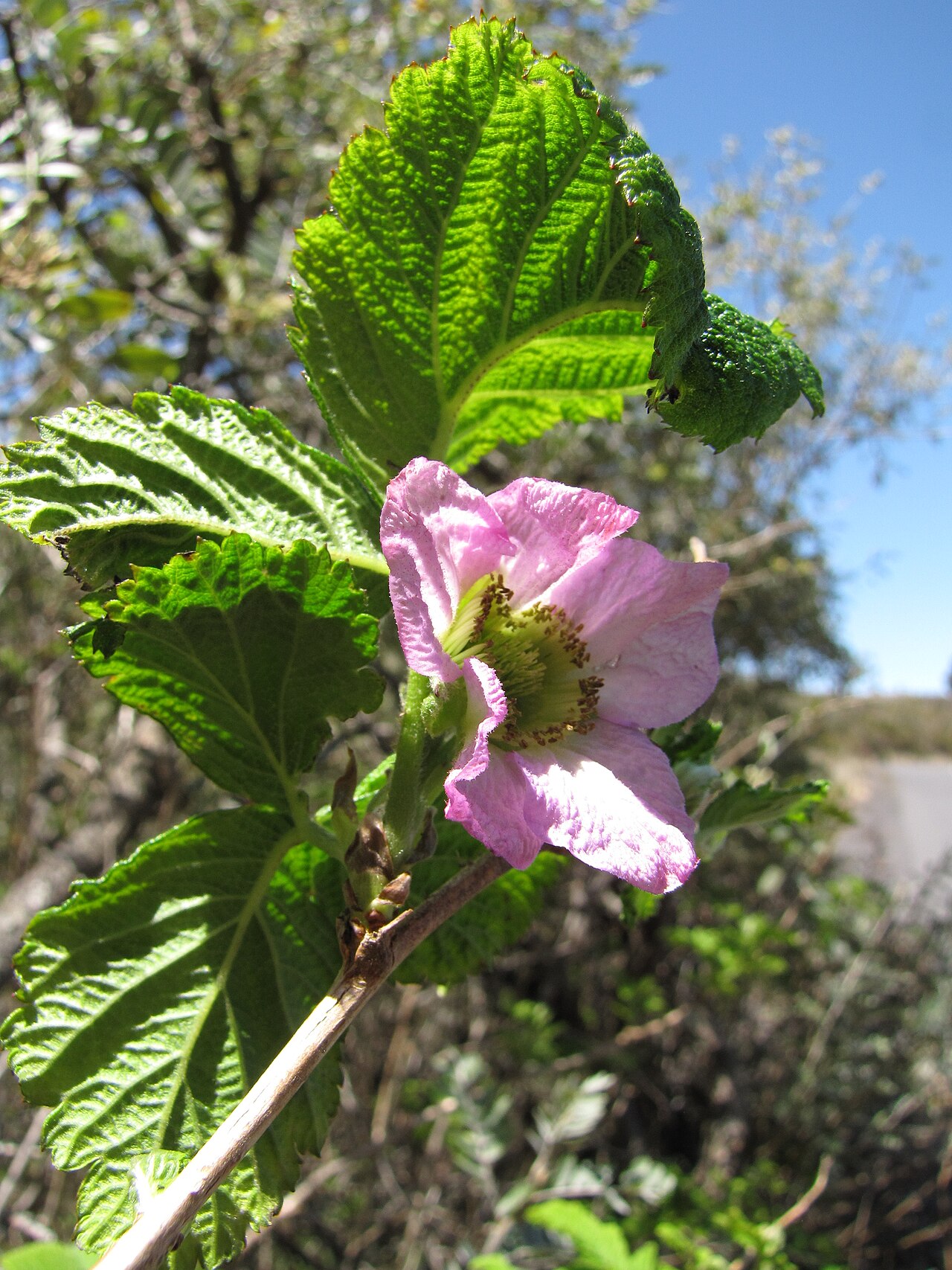
Rubus hawaiensis, known in Hawaiian as ʻĀkala and in English as the Hawaiian raspberry or Hawaiʻi blackberry, is a large native bramble found only in the Hawaiian Islands. It grows as a shrub with long, arching canes in the mountain forests and subalpine shrublands of Kauaʻi, Molokaʻi, Maui and Hawaiʻi Island. Its flowers are rose-pink, and its fruits are large, juicy, raspberry-like berries, often an inch or more across, that ripen red, dark wine-red or sometimes yellow-orange.
ʻĀkala is a classic example of how plants change on islands. Its ancestors reached Hawaiʻi from North America, and DNA studies point to a close relationship with Salmonberry of the Pacific Northwest. In the absence of native browsing mammals, ʻākala lost much of the armor of mainland brambles: its prickles are few, small and weak compared with those of the weedy blackberries introduced to Hawaiʻi.
The Hawaiian name ʻākala also means “pink,” and the fruit was used to dye kapa (bark cloth) in shades of pink and purple. Today ʻākala is a valued native plant for upland gardens and forest restoration in Hawaiʻi. This guide covers how to recognize it, where it grows, how to grow it, and its cultural and ecological importance.
Identification
Hawaiʻi has two native Rubus species, ʻākala (R. hawaiensis) and the smaller, creeping R. macraei, which also goes by ʻākala. Several introduced brambles, some of them serious invasive weeds, also grow in the islands, so it helps to know the native species well.
Canes & Growth Habit
ʻĀkala is an upright to sprawling shrub with arching canes usually 3 to 10 feet long, sometimes longer, that can form thickets. The canes are green to reddish and carry few, slender prickles or are nearly smooth. At high elevations plants may drop most of their leaves in winter, reflecting their temperate ancestry.
Leaves
The leaves are compound with three large leaflets, each typically 3 to 6 inches long, broadly oval with a pointed tip and doubly toothed margins. The surface is noticeably wrinkled along the veins, and the undersides are paler and often softly hairy. New growth is sometimes tinged red.
Flowers
Flowers appear mainly in spring and early summer, though some can be found in other seasons. They are borne singly or in small clusters at the ends of short side shoots, and are about 1 to 2 inches across, with five rose-pink to deep pink petals around a central boss of numerous stamens and pistils.
Fruit
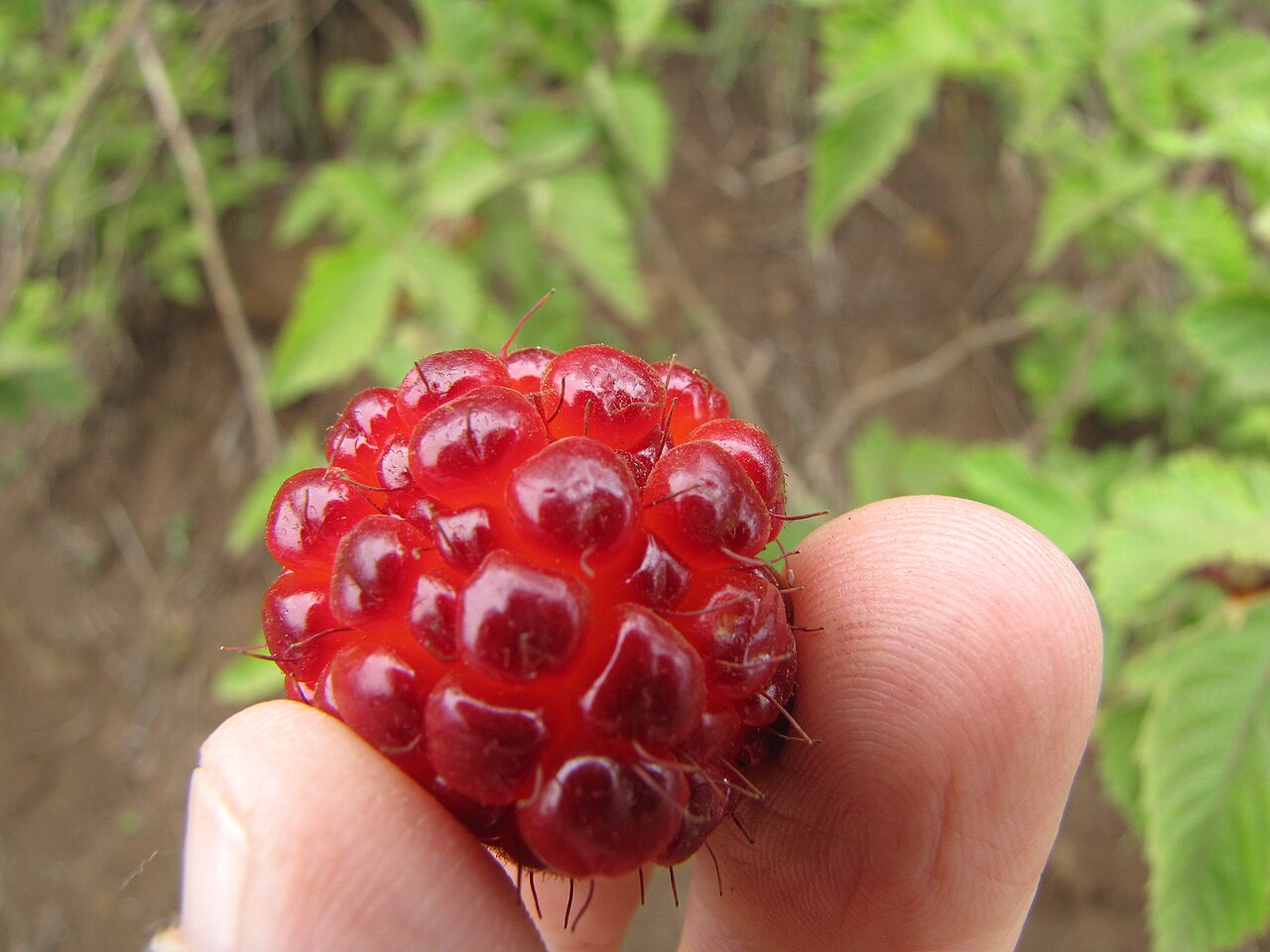
The fruit is an aggregate of drupelets, like a raspberry, and it separates from the receptacle when ripe. It is large, often 1 to 2 inches long, and ripens red, dark red to purplish, or sometimes yellow to orange. The flavor varies from sweet to tart and somewhat bland. Fruit ripens mostly in summer.
Similar Species
Rubus macraei, the other native ʻākala, is a smaller, trailing plant with more strongly prickly stems, found mainly in bogs and wet forests on Maui and Hawaiʻi Island. Introduced Florida prickly blackberry (R. argutus), yellow Himalayan raspberry (R. ellipticus) and thimbleberry (R. rosifolius) have many stout or hooked prickles, and most have white flowers.
Quick Facts
| Scientific Name | Rubus hawaiensis A. Gray |
| Family | Rosaceae (rose family) |
| Plant Type | Shrub with arching canes; endemic to Hawaiʻi |
| Mature Height | 3–10 ft (canes to about 10 ft long or more) |
| Mature Spread | 4–10 ft; can form thickets |
| Growth Rate | Moderate to fast |
| Sun Exposure | Full sun to part shade |
| Water Needs | Medium to high; regular moisture |
| Soil Type | Moist, well-drained volcanic soils rich in organic matter |
| Soil pH | About 5.0–6.5 |
| Bloom Time | Mainly spring to early summer (April–July) |
| Flower Color | Rose-pink to deep pink |
| Fall Color | None; may drop leaves in winter at high elevations |
| Fruit | Large red, wine-red or yellow-orange raspberry-like aggregate; edible |
| Deer Resistant | No; browsed by deer, goats and pigs where present |
| USDA Hardiness Zones | 10–12 (cool upland conditions) |
Native Range
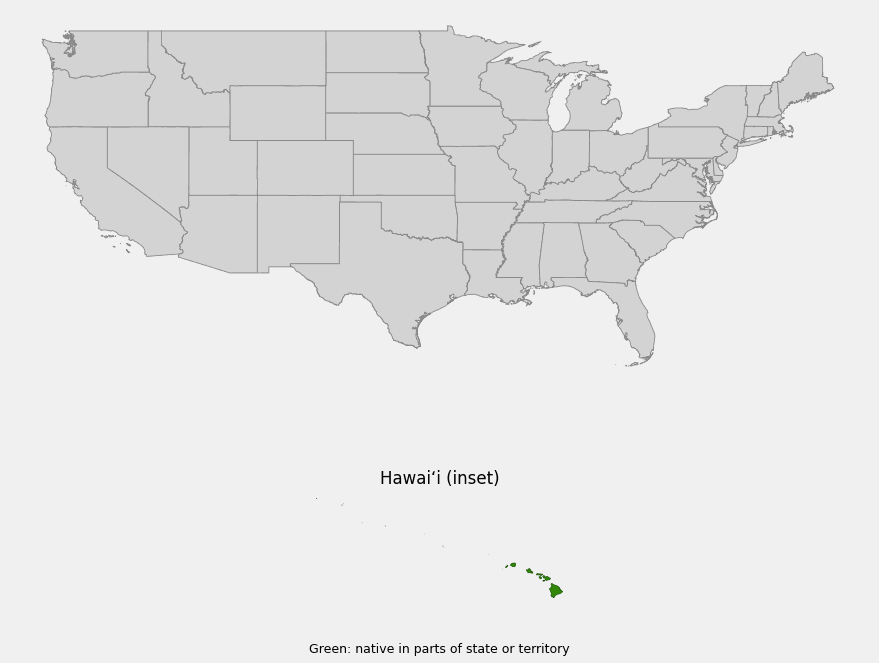
ʻĀkala is endemic to the Hawaiian Islands. USDA PLANTS records it only from Hawaiʻi, and it grows on Kauaʻi, Molokaʻi, Maui and Hawaiʻi Island. It is found mainly at middle to high elevations, roughly from about 2,000 feet to above 8,000 feet, where temperatures are cool and moisture is reliable.
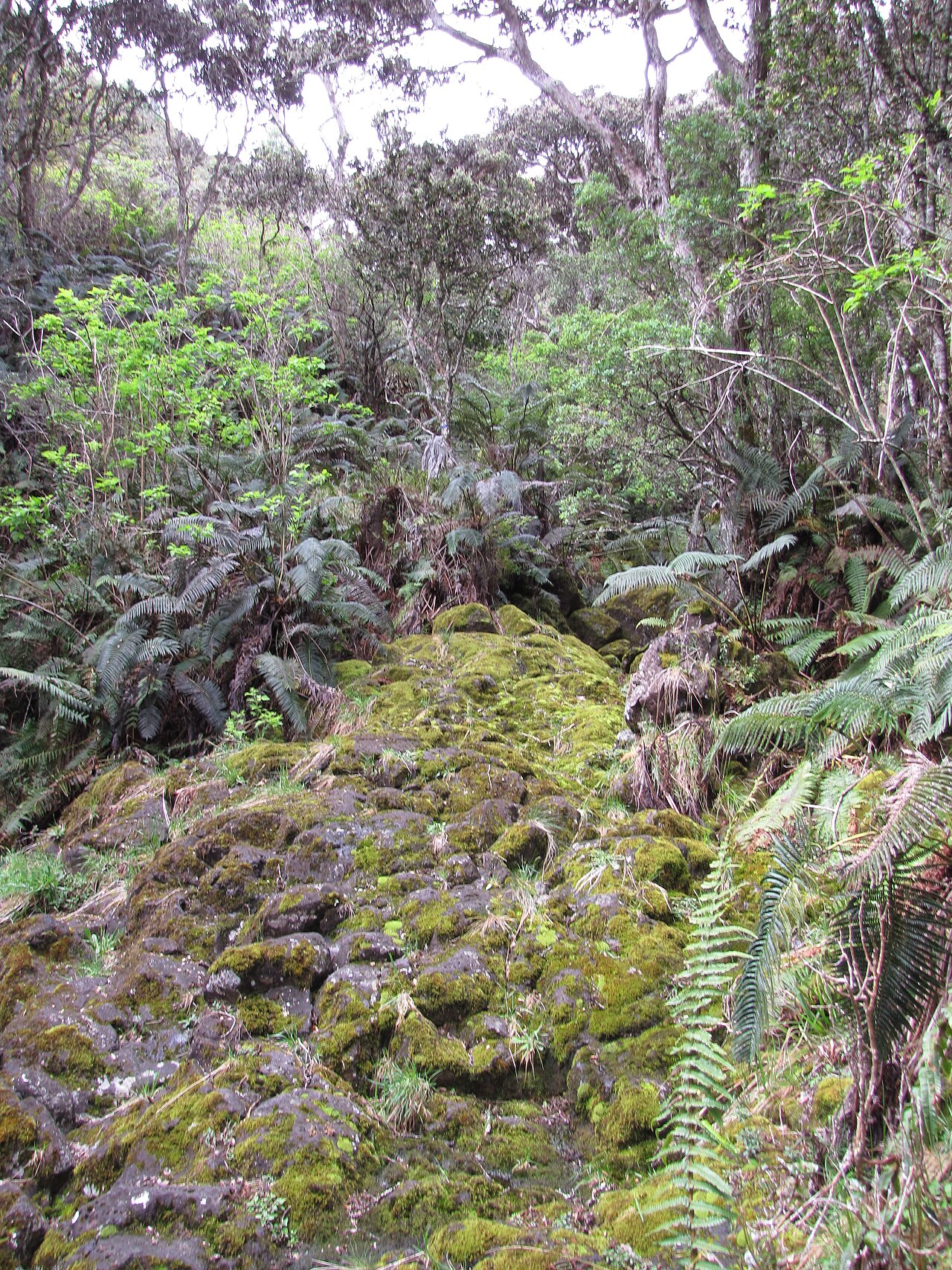
Its habitats include wet and mesic montane forests dominated by ʻŌhiʻa Lehua and Koa, forest openings, gulches, streambanks and subalpine shrublands. It is often common in disturbed openings within native forest, such as tree-fall gaps, burned areas and the edges of trails and roads, where it can form dense thickets.
ʻĀkala is not federally listed and remains fairly common in protected upland forests such as Haleakalā and Hawaiʻi Volcanoes national parks. Like many Hawaiian plants, though, it is affected by feral pigs and goats, by habitat loss and by competition with invasive plants, including introduced brambles that spread far more aggressively.
📋 Regional plant lists featuring ʻĀkala: Hawaii
Growing & Care Guide
ʻĀkala is a good choice for gardens and restoration plantings in cool, upland areas of Hawaiʻi, generally above about 2,000 feet. It struggles in hot, dry lowland gardens. Buy plants from native Hawaiian plant nurseries or propagate them from legally collected material; never collect from protected areas without permission.
Light
ʻĀkala grows in full sun to part shade. In the wild it does best in forest openings and edges with plenty of light, and plants in full sun produce the most flowers and fruit when moisture is adequate.
Soil & Water
Plant in moist, well-drained soil rich in organic matter, such as the volcanic soils of upland Hawaiʻi. Water regularly, especially during dry spells; it prefers consistently moist conditions and cool temperatures. Mulch helps keep roots cool and moist.
Planting Tips
Give ʻākala room to sprawl, about 6 to 10 feet, or train the canes on a fence or trellis. It can be planted as a hedge, along a forest edge or in a mixed native garden with ʻōhiʻa, māmane and native ferns. Protect young plants from slugs and, in rural areas, from pigs and goats.
Pruning & Maintenance
Like other brambles, canes bear fruit for a year or two and then decline. Cut old, spent canes to the ground after fruiting to make way for new ones, and shorten long canes to keep the plant tidy. Remove any invasive Rubus species that come up nearby, since they compete strongly with ʻākala.
Propagation
ʻĀkala can be grown from seed, cuttings or rooted suckers. Seeds benefit from cleaning and a cold or warm stratification, and germination can be slow and uneven. Semi-hardwood stem cuttings and tip layering are often more reliable. Rooted suckers can be separated from established plants.
Landscape Uses
- Upland native gardens: a fruiting native shrub for cool, moist gardens above about 2,000 ft
- Forest restoration: fills canopy gaps and openings in native montane forest
- Edible landscaping: large berries for fresh eating, jams and juice
- Cultural plantings: a traditional source of pink and purple dye for kapa
- Wildlife plantings: fruit for native and other birds
Wildlife & Ecological Value
ʻĀkala thickets are part of the living fabric of Hawaiian upland forests, feeding birds and helping forests recover after disturbance.
For Pollinators
The pink flowers are visited by native and introduced insects, including bees and flies. In the cool mountain forests, where many flowers are small and inconspicuous, ʻākala’s large, open blossoms are a ready source of pollen and nectar.
For Birds
The fruit is eaten by birds, which help disperse the seeds. Hawaiian forest birds forage for insects among the leaves and canes.
For Mammals
Hawaiʻi has only one native land mammal, the Hawaiian hoary bat, which forages for insects over forests where ʻākala grows. Introduced pigs, goats and deer browse ʻākala heavily, which is one reason it has partly lost its defenses against browsing.
Ecosystem Role
ʻĀkala is a quick colonizer of forest openings, tree-fall gaps and burned areas, where it helps hold soil and shades out some weeds while native trees regrow. Its fruits and seeds feed birds, and its thickets shelter ground-dwelling insects and other invertebrates.
Cultural & Historical Uses
The word ʻākala means “pink” in Hawaiian, and the plant shares its name with the color. Native Hawaiians ate the ripe fruit and used its juice to dye kapa (bark cloth) in pink and purple shades.
Botanically, ʻākala is one of the best-studied examples of island evolution. The species was described by the American botanist Asa Gray in the 19th century from specimens collected in Hawaiʻi. Genetic studies have shown that the Hawaiian brambles descend from North American ancestors, closely related to salmonberry, that likely reached the islands by bird dispersal, and that they partly lost their prickles in the absence of large native browsers.
In modern Hawaiʻi, ʻākala is a familiar plant to hikers in places like Haleakalā, Kōkeʻe and Hawaiʻi Volcanoes national parks, and the fruit is still picked for snacks and jams. Conservation groups use it in upland restoration, and it is a symbol of the distinctive, gentle native flora that evolved in isolation.
Frequently Asked Questions
Is ʻākala fruit edible?
Yes. The ripe fruit is edible, and it can be eaten fresh or made into jam or juice. Its flavor varies from sweet to tart and is often milder than mainland raspberries. Be sure not to confuse it with introduced brambles, and avoid picking in areas sprayed with herbicide.
Is ʻākala native to Hawaiʻi?
Yes. ʻĀkala (Rubus hawaiensis) is endemic to the Hawaiian Islands, which means it grows wild nowhere else. It is found on Kauaʻi, Molokaʻi, Maui and Hawaiʻi Island.
Why does ʻākala have so few thorns?
Its ancestors arrived in Hawaiʻi from North America, where prickles helped defend them against browsing mammals. Hawaiʻi had no native browsing mammals, and over time the native brambles evolved fewer and weaker prickles.
Can I grow ʻākala in a lowland garden?
It is difficult. ʻĀkala grows naturally in cool, moist upland forests, generally above about 2,000 feet. In hot, dry lowland gardens it usually struggles. For lowland gardens, choose native plants adapted to those conditions.
What does the name ʻākala mean?
ʻĀkala means “pink” in Hawaiian, after the color of the flowers and of the dye made from the fruit.

Looking for a nursery that carries ʻĀkala?
Browse our native plant nursery directory: Hawaii

