
Neneleau (Rhus sandwicensis)
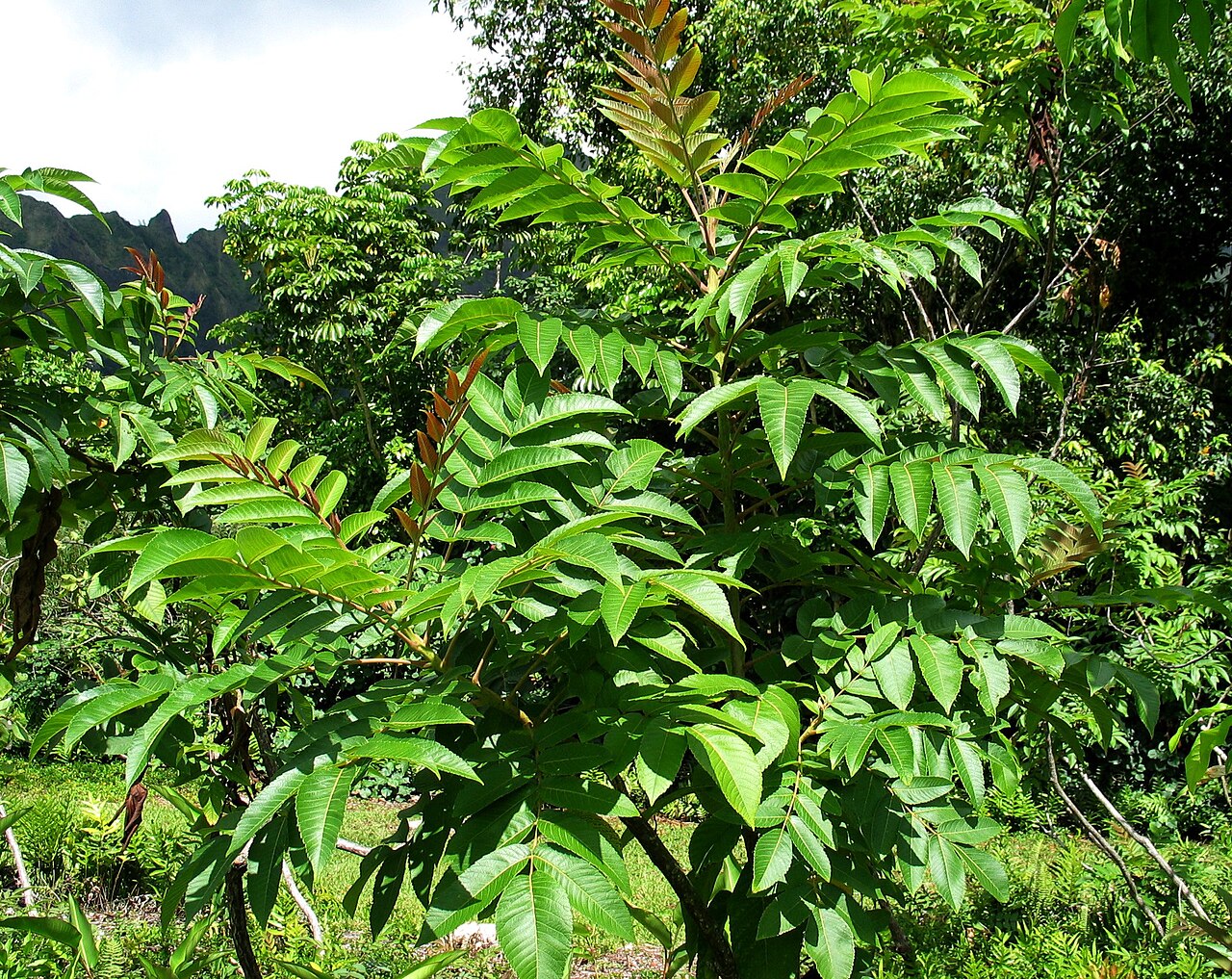
Rhus sandwicensis, Neneleau, also called neleau or Hawaiian sumac, is the only sumac native to Hawaiʻi. It is a fast-growing shrub or small tree, usually 15 to 25 feet tall, with long, feather-like leaves made up of many leaflets. The new leaves emerge in brilliant shades of red and coral, older leaves can redden again before they fall, and branch tips carry large clusters of small, creamy flowers followed by small reddish fruits.
Neneleau is endemic to the Hawaiian Islands: it grows wild nowhere else in the world. It is found on all the main islands, in dry, coastal mesic, mixed mesic and wet forests, mostly at low to middle elevations, and it is especially common along forest edges, in gulches and in open, disturbed places, where it can form small thickets. Its closest relatives are the sumacs of eastern Asia.
For Hawaiʻi gardeners, neneleau is a tough, adaptable native tree with year-round color, useful for screens, slopes and restoration plantings. This guide covers how to identify it, where it grows in the wild, how to grow it in zones 10 to 12, and its place in Hawaiian culture.
Identification
With its long compound leaves, neneleau can look like several other trees at first glance, including introduced ones. Its red new growth, its leaflets and its upright flower clusters help identify it.
Form & Bark
Neneleau is a shrub or small tree, usually 15 to 25 feet tall, with a trunk up to about a foot across and an open, spreading crown. Older trees have smooth to slightly rough gray-brown bark. Like many sumacs, it can sprout from its roots, so several stems often grow together in a small grove.
Leaves
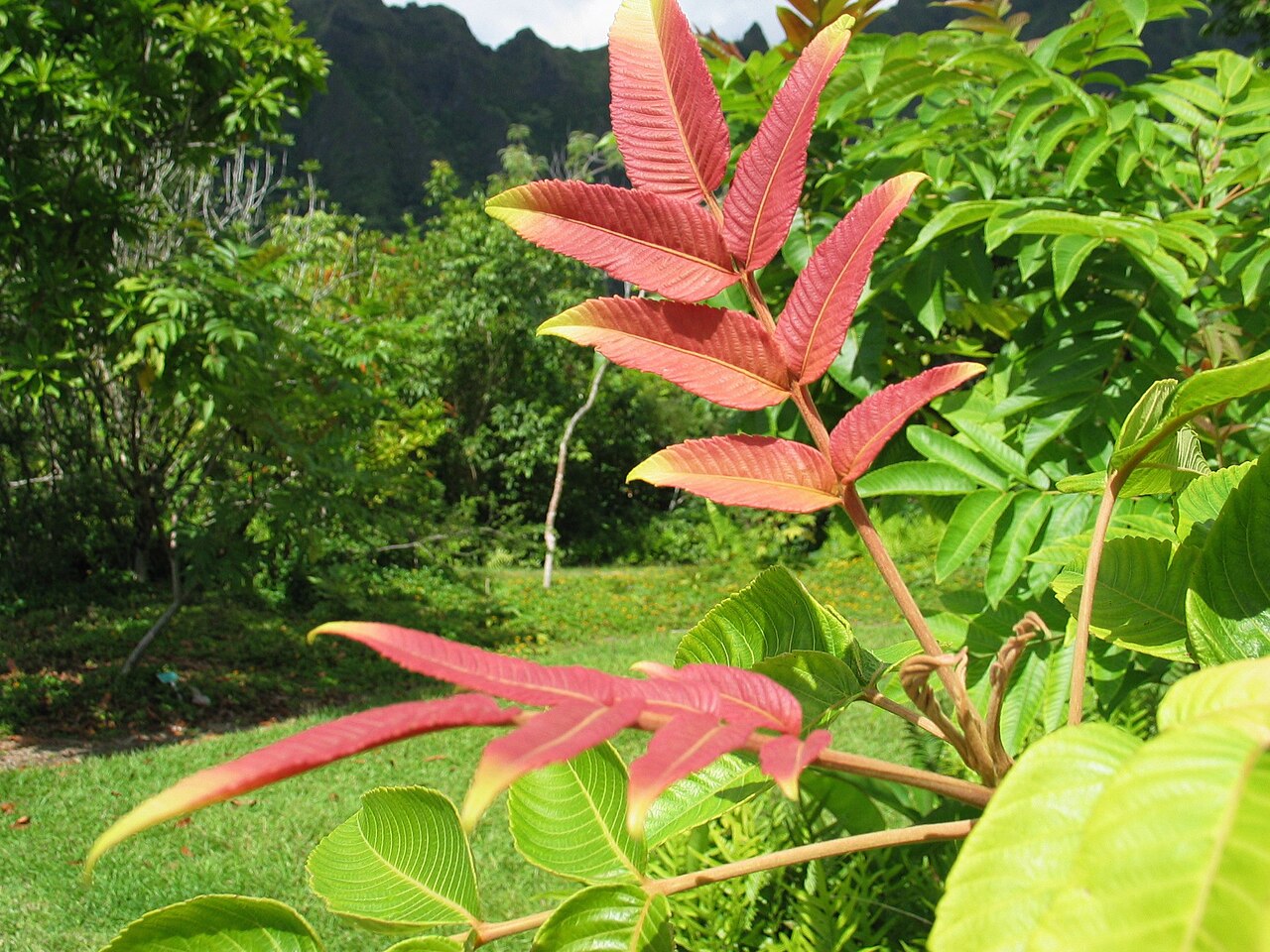
The leaves are alternate and pinnately compound, often 1 to 2 feet long or more, with many pairs of lance-shaped to oblong leaflets plus one at the tip. Leaflets are pointed, with smooth or slightly wavy margins, and often paler beneath. New leaves are bright red, coral or bronze, which makes young trees easy to spot in the forest.
Flowers
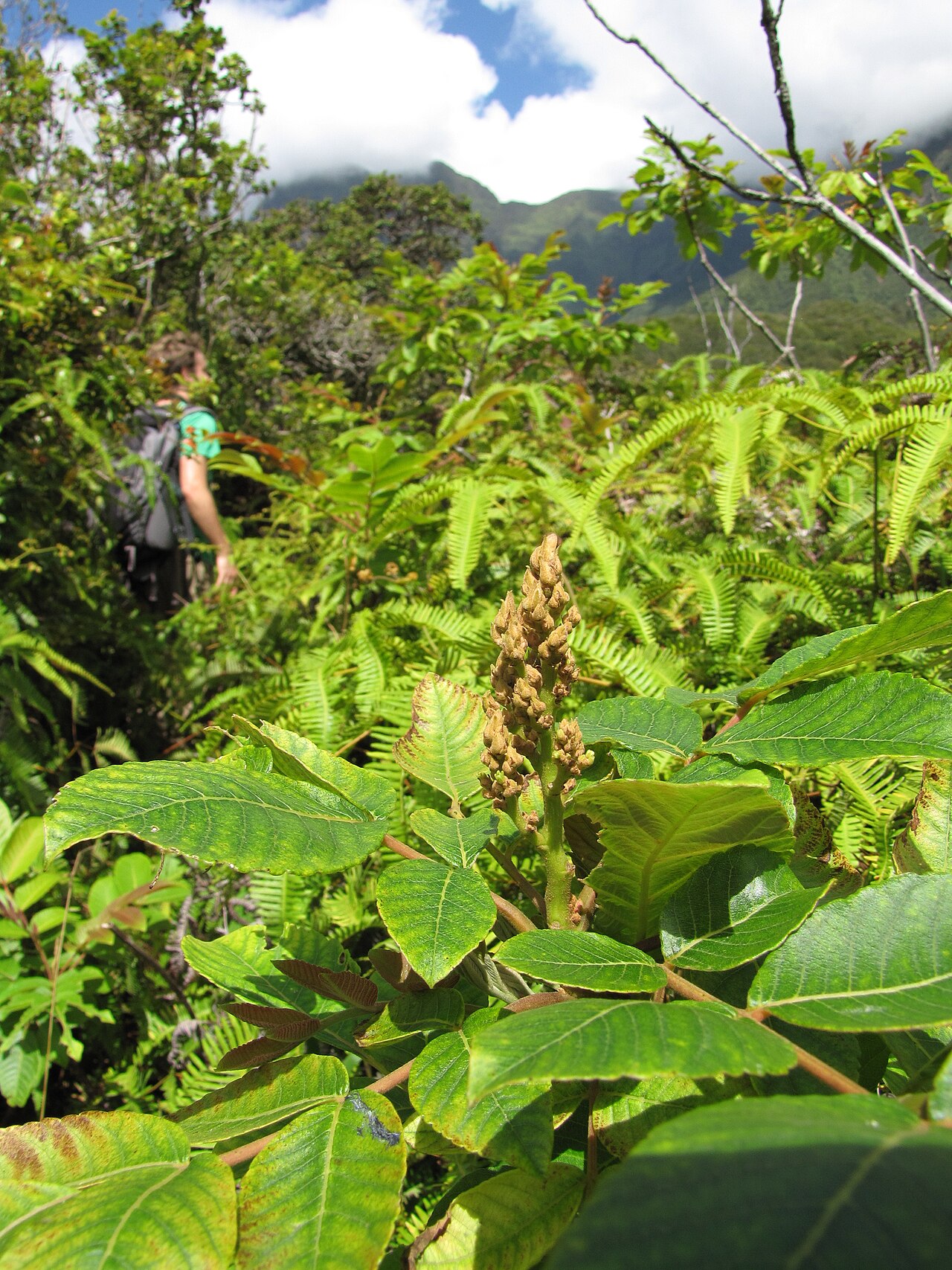
Large, branched, upright clusters (panicles) of tiny whitish to cream-colored flowers form at the branch tips. As in other sumacs, the flowers are small and open, and they are visited by many kinds of insects.
Fruit
The fruits are small, reddish, hairy drupes about the size of a lentil, carried in clusters. Each holds one hard seed.
Look-alikes
The invasive Christmasberry (Schinus terebinthifolia), a relative in the same family, also has compound leaves, but with fewer, shorter, toothed leaflets, and it bears bright red berries. Neneleau’s long leaves with many leaflets and its red new growth set it apart.
Quick Facts
| Scientific Name | Rhus sandwicensis |
| Family | Anacardiaceae (cashew or sumac family) |
| Plant Type | Deciduous to semi-evergreen shrub or small tree |
| Mature Height | 15–25 ft |
| Mature Spread | 10–20 ft; may sucker into thickets |
| Growth Rate | Fast |
| Sun Exposure | Full sun to part shade |
| Water Needs | Low to medium; drought tolerant once established |
| Soil Type | Adaptable: well-drained loams, clay, rocky and volcanic soils |
| Soil pH | About 5.5–7.5 |
| Bloom Time | Mainly spring and summer |
| Flower Color | Whitish to cream |
| Fall Color | Red new growth and reddening old leaves |
| Fruit | Small, reddish, hairy drupes |
| Deer Resistant | Moderately; browsed by goats and deer where present |
| USDA Hardiness Zones | 10–12 |
Native Range
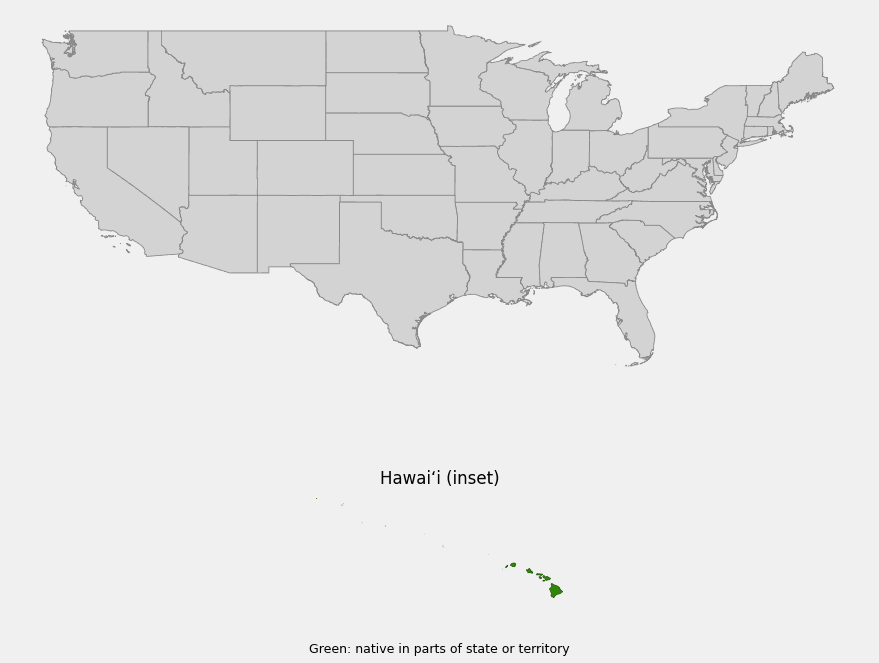
Neneleau is endemic to Hawaiʻi and grows on all the main islands: Kauaʻi, Oʻahu, Molokaʻi, Lānaʻi, Maui and Hawaiʻi Island. It is native to no other state, and it is shown on the map in the Hawaiʻi inset.
It grows in dry forest, coastal mesic and mixed mesic forest and the drier edges of wet forest, mainly between about 600 and 2,000 feet elevation, and occasionally higher. It is often most noticeable along forest edges, in valleys and gulches, on rocky slopes and in old clearings, where its root sprouts and fast growth let it fill gaps.
Neneleau is not considered rare, but like most Hawaiian lowland trees it has lost much of its habitat to development, fire, feral ungulates and invasive plants. Its ability to recover after disturbance makes it one of the more resilient native trees in Hawaiian forests.
📋 Regional plant lists featuring Neneleau: Hawaii
Growing & Care Guide
Neneleau is one of the easier Hawaiian native trees to grow and is offered by native plant nurseries in Hawaiʻi. Outdoors it suits frost-free climates, USDA zones 10 to 12, and it does best in Hawaiʻi itself. Buy nursery-grown plants rather than collecting from the wild. It is not grown as a houseplant.
Light
Full sun gives the most compact growth and the best red new growth. It also tolerates part shade, where it grows taller and more open.
Soil & Water
It adapts to most well-drained soils, including clay, rocky and volcanic soils. Water regularly until it is established; after that it tolerates dry periods well, although it looks fuller with occasional deep watering in dry areas. Avoid waterlogged soil.
Planting Tips
Plant at any time of year in Hawaiʻi, ideally at the start of the rainy season. Give it room: it grows quickly and can sucker, so plant it where a small grove is welcome, or use a root barrier near paths and foundations. It works well as a screen, on slopes, and in restoration plantings with other native trees.
Pruning & Maintenance
Prune after flowering to shape it or keep it as a large shrub. Remove unwanted root sprouts as they appear. It has few serious pests, though scale and other sap-feeding insects can occur.
Propagation
Grow it from seed: clean the seeds and soak or nick the hard seed coat before sowing to speed germination. It can also be propagated from root sprouts (suckers) and root cuttings.
Landscape Uses
- Native landscaping in Hawaiʻi: fast screens and specimen trees with red new growth
- Slope stabilization: root sprouts help hold soil on slopes and in gulches
- Forest restoration: a quick-growing native tree for lowland dry and mesic forest plantings
- Pollinator gardens: large flower clusters for native and other insects
- Cultural plantings: a plant named in the Kumulipo
Wildlife & Ecological Value
As a widespread, fast-growing native tree, neneleau provides flowers, fruit and cover in Hawaiian forests.
For Pollinators
The tiny, open flowers in large clusters attract a wide range of small insects, including bees, wasps and flies.
For Birds
Birds eat the small fruits and help spread the seeds, and the dense foliage gives cover and nesting sites for forest birds.
For Mammals
Hawaiʻi has only one native land mammal, the ʻōpeʻapeʻa (Hawaiian hoary bat), which hunts insects along forest edges like those where neneleau grows. Feral goats, pigs and deer browse the plant.
Ecosystem Role
Neneleau quickly colonizes forest gaps, landslides and clearings, sheltering slower-growing native trees and helping to hold the soil. That makes it a valuable native pioneer in a landscape where invasive trees often fill the same role.
Cultural & Historical Uses
The species name sandwicensis refers to the “Sandwich Islands,” the name Captain James Cook gave the Hawaiian Islands in 1778 in honor of the Earl of Sandwich. The Hawaiian names neneleau and neleau are both used for the tree.
Native Hawaiians used neneleau wood to make lāʻau lomilomi, massage sticks, and ʻumeke, bowls and calabashes. Neneleau is also named in the Kumulipo, the Hawaiian creation chant, which links many plants and animals of land and sea.
Neneleau belongs to the cashew family, which also includes mango, poison ivy and poison sumac. True sumacs in the genus Rhus are not known to cause poison ivy-like rashes, but some people are sensitive to sap from plants in this family, so wear gloves if you are pruning a lot.
Frequently Asked Questions
What is neneleau?
Neneleau (Rhus sandwicensis), also called neleau or Hawaiian sumac, is a small tree endemic to the Hawaiian Islands and the only sumac native to Hawaiʻi.
Is Hawaiian sumac poisonous?
It is a true sumac, not a relative of poison sumac in the genus Toxicodendron, and it is not known to cause poison ivy-like rashes. Like other members of the cashew family, its sap can irritate sensitive skin, and its fruits are not a food plant.
Can I grow neneleau outside Hawaiʻi?
Only outdoors in frost-free, tropical or near-tropical climates (USDA zones 10 to 12). It is a Hawaiian endemic, so it is best planted in Hawaiʻi, where it supports native ecosystems.
Does neneleau spread?
Yes. It grows quickly and can send up root sprouts that form small groves, which is useful for slopes and restoration but may need control in small gardens.
Why are neneleau leaves red?
New leaves emerge red to coral and turn green as they mature, and older leaves can redden before they drop, so the tree often shows red foliage at many times of the year.

Looking for a nursery that carries Neneleau?
Browse our native plant nursery directory: Hawaii

