
Dwarf Water-lily (Nymphaea leibergii)
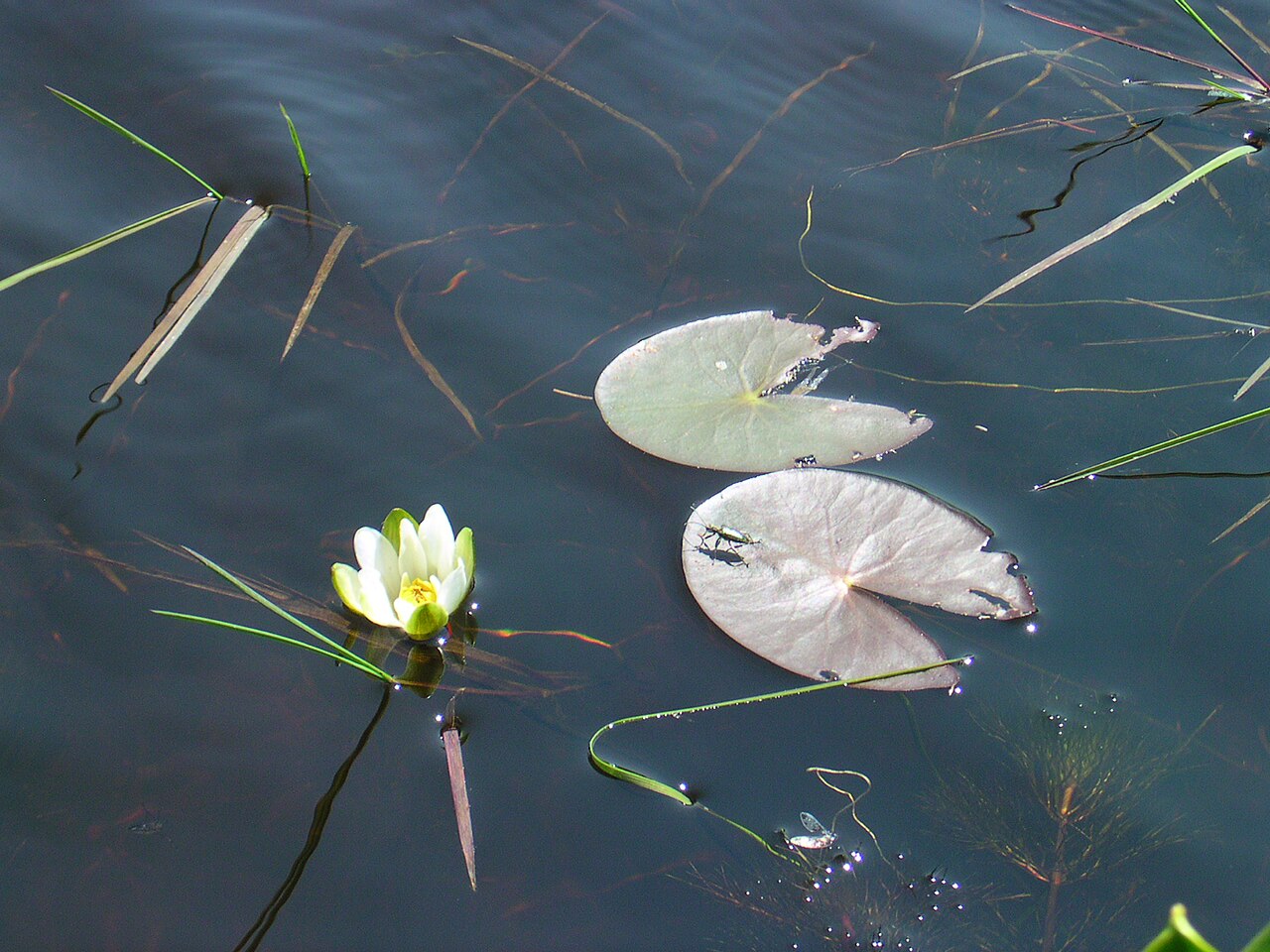
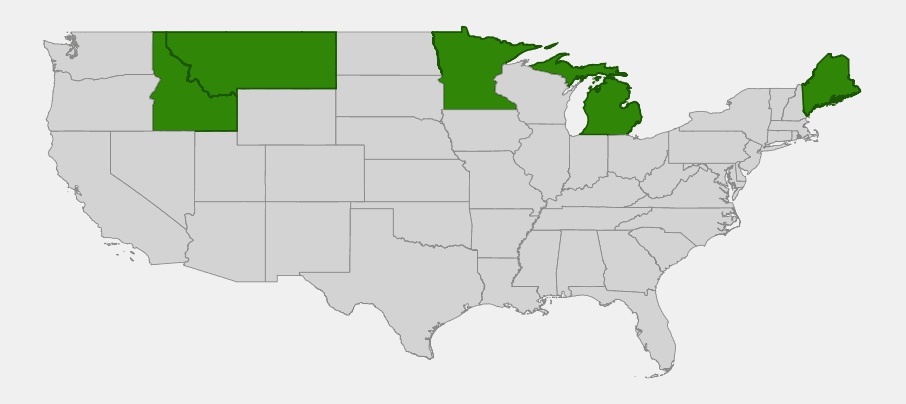
Nymphaea leibergii, the Dwarf Water-lily (USDA: Leiberg’s waterlily), is a small, cold-climate water-lily of northern ponds, lake margins and slow streams. It is a miniature version of the familiar white water-lily, with floating leaves only a few inches long and white flowers about the size of a silver dollar to a small teacup. It grows across boreal Canada and reaches the United States in northern Idaho, Montana, Minnesota, Michigan and Maine.
For a long time it was lumped with the circumboreal Pygmy Water-lily (Nymphaea tetragona). Botanists now treat the two as separate species: dwarf water-lily is more common in central and eastern North America, while pygmy water-lily is more common in the northwest. Dwarf water-lily is uncommon throughout its U.S. range and is listed as threatened in Maine, Michigan and Minnesota.
This guide covers how to identify it, where it grows, how it compares with its relatives, and its role in northern wetlands. Because it is rare in the U.S. and seldom propagated, it is mainly a plant to look for on a canoe trip. Never pull rhizomes from the wild; if you want a small native water-lily for a pond, buy only nursery-propagated plants.
Identification
Dwarf water-lily looks like a scaled-down white water-lily. Size, unscented flowers and a few details of the flower center separate it from its relatives.
Leaves
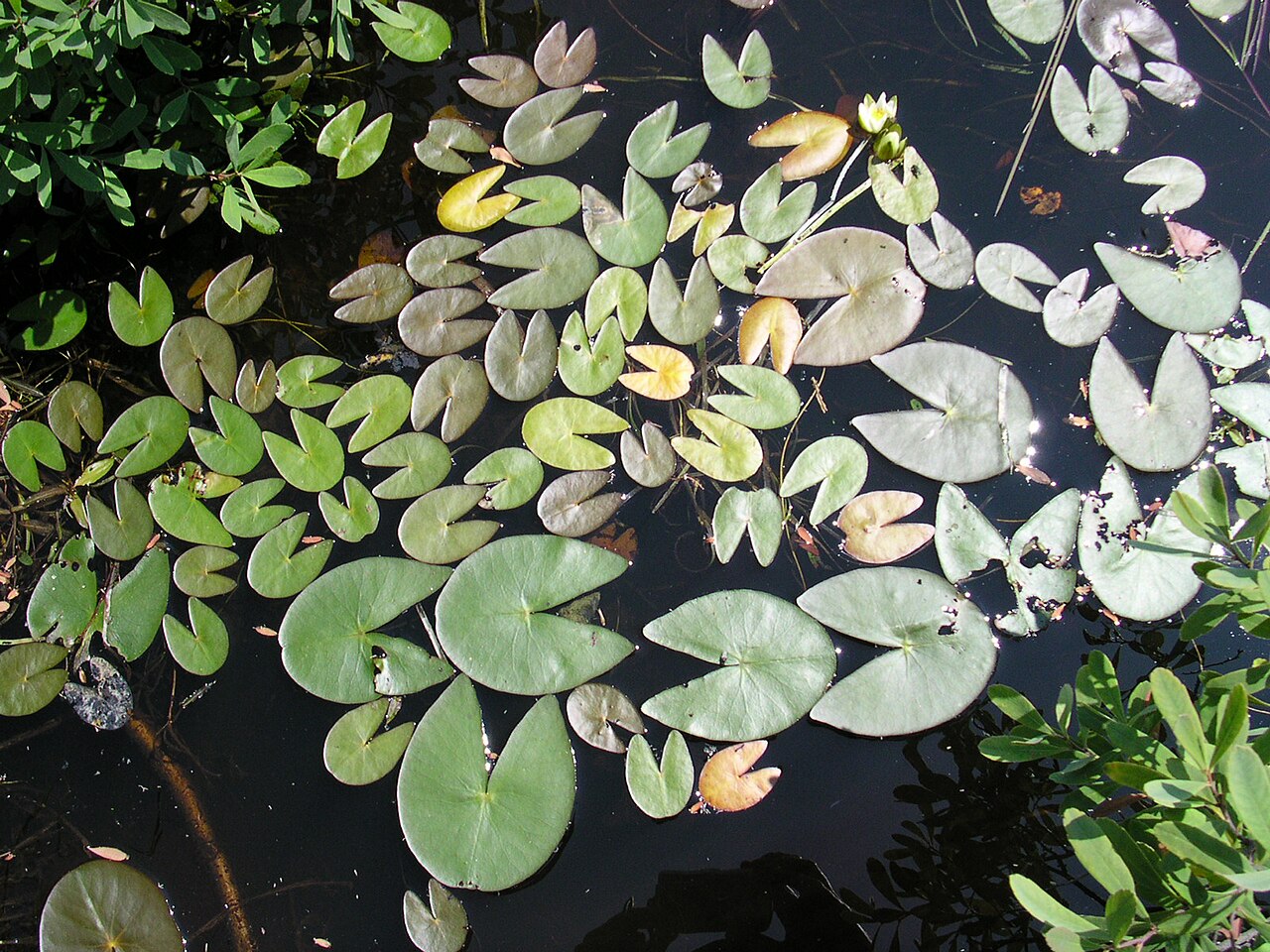
The floating leaves are oval to nearly round, usually 2 to 6 inches long, with a deep, narrow notch (sinus) at the base where the leaf stalk attaches. They are smooth, green above and often purplish or reddish below, with 7 to 13 veins radiating from the center. Long, smooth leaf stalks rise from an unbranched, upright rhizome rooted in the mud.
Flowers
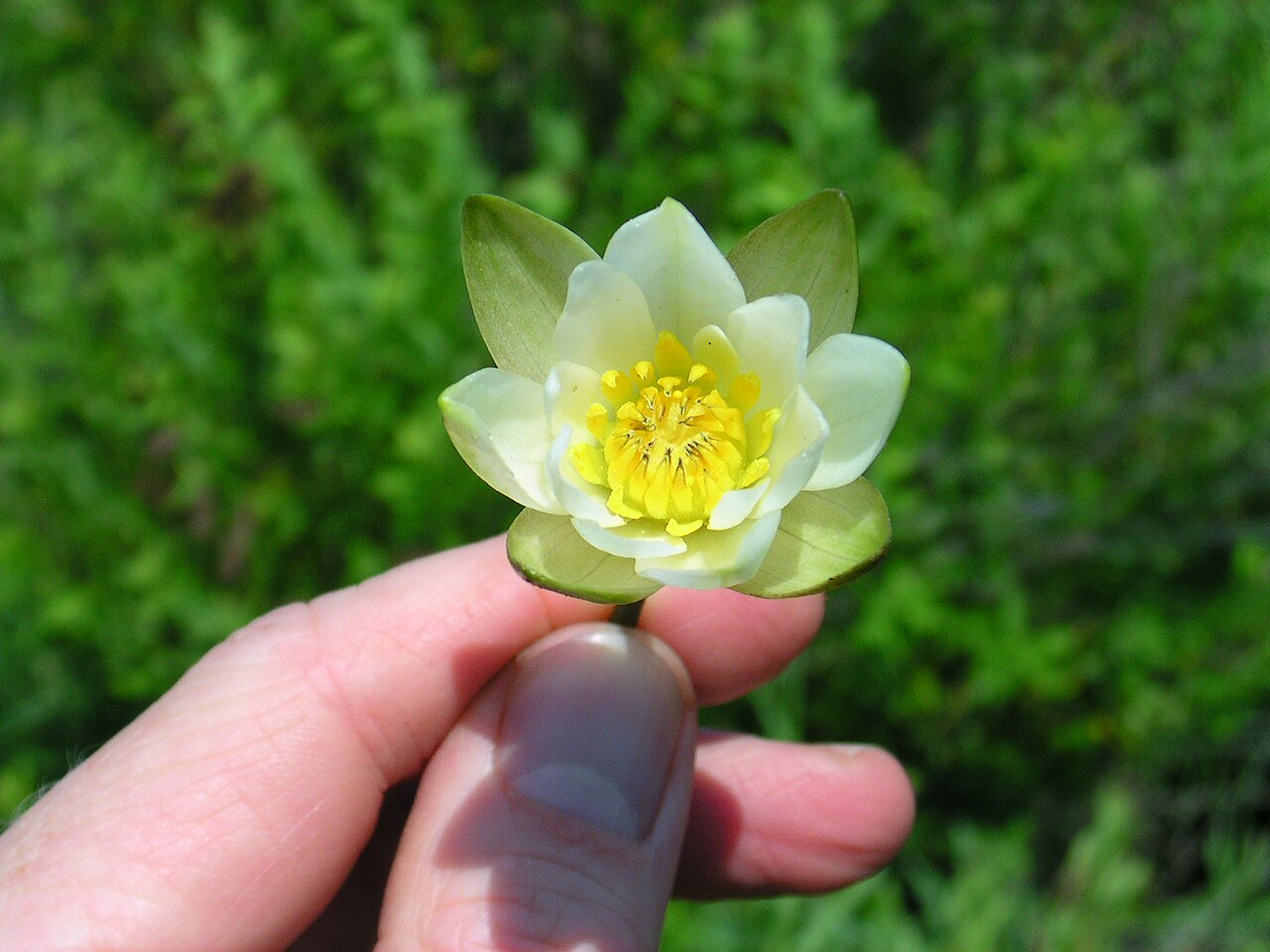
From June to August, single flowers float on the surface on long stalks. They are about 1½ to 3 inches across, with four green sepals, 8 to 15 white petals and a ring of yellow stamens. The stigma at the center is yellowish to brownish. The flowers are unscented or nearly so, open for several days and close at night.
Fruit
After flowering, the stalk coils and pulls the developing fruit underwater. It is a fleshy, berry-like capsule that ripens below the surface and releases seeds in a jelly-like coating, which float briefly before sinking.
Look-alikes
Pygmy Water-lily is very similar and their ranges overlap in Canada. It has a flower base (receptacle) that is distinctly four-angled, more petals and stamens, and a purple stigma; dwarf water-lily has a rounded base and a yellowish stigma. American White Waterlily is much larger, with fragrant flowers 3 to 6 inches across and leaves up to about 12 inches; it sometimes hybridizes with dwarf water-lily, producing sterile plants of intermediate size. Yellow pond-lilies such as Variegated Yellow Pond-lily have cup-shaped yellow flowers.
Quick Facts
| Scientific Name | Nymphaea leibergii Morong |
| Family | Nymphaeaceae (water-lily family) |
| Plant Type | Rooted aquatic perennial with floating leaves |
| Mature Height | Floating; leaves at the water surface |
| Mature Spread | 1–3 ft per plant |
| Growth Rate | Slow |
| Sun Exposure | Full sun to part shade |
| Water Needs | Aquatic; still water about 1–6 ft deep |
| Soil Type | Soft organic muck or silt under water |
| Soil pH | About 5.5–7.5 |
| Bloom Time | June–August |
| Flower Color | White petals with yellow stamens |
| Fall Color | Leaves yellow and die back in fall |
| Fruit | Berry-like capsule ripening underwater |
| Deer Resistant | High, though muskrats and moose eat it |
| USDA Hardiness Zones | 2–6 |
Native Range
Dwarf water-lily is a plant of northern North America. USDA PLANTS lists it as native in Idaho, Montana, Minnesota, Michigan and Maine, and in Alberta, British Columbia, Saskatchewan, Manitoba, Ontario, Quebec and the Northwest Territories. In the United States it is at the southern edge of its range, with scattered populations in northern Idaho and northwestern Montana, northeastern Minnesota, the Upper Peninsula and northern Lower Michigan, and northern Maine.
It grows in ponds, small lakes, beaver ponds, slow-moving streams and open-water channels through marshes and fens, usually in water up to about 6 feet (2 m) deep. It prefers cold, clear to tea-colored water with a soft, organic bottom, often in boreal forest landscapes alongside sedges, bur-reeds and pondweeds.
Populations are small and widely separated across its U.S. range, and it is listed as state threatened in Maine, Michigan and Minnesota. Shoreline development, changes in water level, nutrient pollution and competition from the larger white water-lily are concerns. Because it is easily confused with pygmy and white water-lilies, it is probably under-recorded in some areas.
📋 Regional plant lists featuring Dwarf Water-lily: Idaho, Eastern Oregon & Eastern Washington · Montana & Wyoming · Michigan, Wisconsin & Eastern Minnesota · New Hampshire, Maine & Vermont
Growing & Care Guide
Dwarf water-lily is rarely available in the nursery trade, and it is state-listed in three of its five U.S. states. Never dig rhizomes or collect seed from wild populations. If you find nursery-propagated plants from a reputable native aquatic nursery, it can be grown in a cool, still pond in the far north. Gardeners elsewhere usually get better results from the native American White Waterlily.
Light
Full sun gives the most flowers, though it tolerates a few hours of shade. In nature it grows in open water of ponds and channels.
Soil & Water
Grow it in a container of heavy, low-nutrient loam or clay topped with gravel, set in still water about 1 to 3 feet deep. It prefers cool, soft water and will not survive hot, shallow summer water. The rhizome must stay below the ice in winter.
Planting Tips
Plant in late spring with the growing tip just at the soil surface, then lower the container gradually as leaves reach the surface. A small pond or a large tub garden in a cold climate suits it better than a warm water garden.
Pruning & Maintenance
Remove yellowing leaves and spent flowers as needed. Keep larger water-lilies away; they will shade it out and can hybridize with it. Fertilize lightly, if at all, to avoid algae.
Propagation
Mainly by seed, since the rhizome rarely branches. Collect ripe fruits only from cultivated plants and sow seeds under an inch or two of water in pots of soil kept cool; they need cold, wet storage over winter to germinate. Do not let the seeds dry out.
Landscape Uses
- Small cold-climate ponds: a miniature native water-lily for northern gardens
- Wetland restoration: reintroduction in boreal ponds from propagated stock
- Wildlife ponds: cover for frogs, fish and aquatic insects
- Canoe and nature watching: a rare find in northern lakes and fens
Wildlife & Ecological Value
Like other water-lilies, dwarf water-lily provides food and shelter for wildlife in northern ponds and slow streams.
For Pollinators
Small bees, flies and beetles visit the flowers for pollen. The flowers are open during the day and close at night.
For Birds
Ducks eat the seeds, and the floating leaves are used as resting and hunting platforms by small wading birds and insect-eating birds that pick invertebrates from the pads.
For Mammals
Moose, muskrats and beavers eat water-lily leaves and rhizomes, and muskrats sometimes dig up the rhizomes in winter.
Ecosystem Role
The leaves shade the water, keeping it cooler, and their undersides are covered with snails, insect larvae and eggs. Frogs and small fish use the pads for cover, and dragonflies and damselflies perch on them.
Cultural & Historical Uses
Thomas Morong described the plant in 1888 as Castalia leibergii, and it was later moved to Nymphaea. The name honors John Bernhard Leiberg (1853–1913), a Swedish-American botanist, forester and plant collector who worked in Idaho and the Pacific Northwest and discovered the plant in the late 1800s.
Its identity has been debated for over a century. Many floras treated it as a variety or synonym of Nymphaea tetragona, the pygmy water-lily of northern Europe, Asia and northwestern North America. Later studies of their flowers and leaves supported treating them as separate species, and both belong to the small group of water-lilies adapted to cold climates.
The genus name Nymphaea comes from the Greek nymphs, spirits of springs and lakes. Native peoples across the north used the rhizomes and seeds of water-lilies for food and medicine, though dwarf water-lily is too small and rare to be a significant food plant.
Frequently Asked Questions
Is dwarf water-lily the same as pygmy water-lily?
No. They were once thought to be the same species, but today Nymphaea leibergii (dwarf or Leiberg’s water-lily) and Nymphaea tetragona (pygmy water-lily) are recognized as separate species. Pygmy water-lily has a four-angled flower base, more petals and stamens and a purple stigma.
Where does dwarf water-lily grow in the United States?
In northern Idaho, northwestern Montana, northeastern Minnesota, Michigan and northern Maine, in cold ponds, small lakes, beaver ponds and slow streams. It is much more widespread in Canada.
Is dwarf water-lily endangered?
It is not federally listed, but it is uncommon throughout its U.S. range and is listed as threatened in Maine, Michigan and Minnesota. Never collect it from the wild.
How big are dwarf water-lily flowers?
About 1½ to 3 inches across, with white petals and yellow stamens, much smaller than the fragrant 3- to 6-inch flowers of the American white water-lily.
Can I grow dwarf water-lily in my pond?
Only from nursery-propagated plants, which are rarely available, and only in a cool, still pond in a cold climate. In most gardens the American white water-lily is the better native choice.

Looking for a nursery that carries Dwarf Water-lily?
Browse our native plant nursery directory: Idaho · Maine, Michigan, Minnesota & Montana

